8 Best Tomato Cages for Determinate and Indeterminate Varieties
Compare eight tomato cages by height, gauge, and use case, plus extension-backed rules for determinate vs indeterminate vines, anchoring, and when to skip store-bought cones.
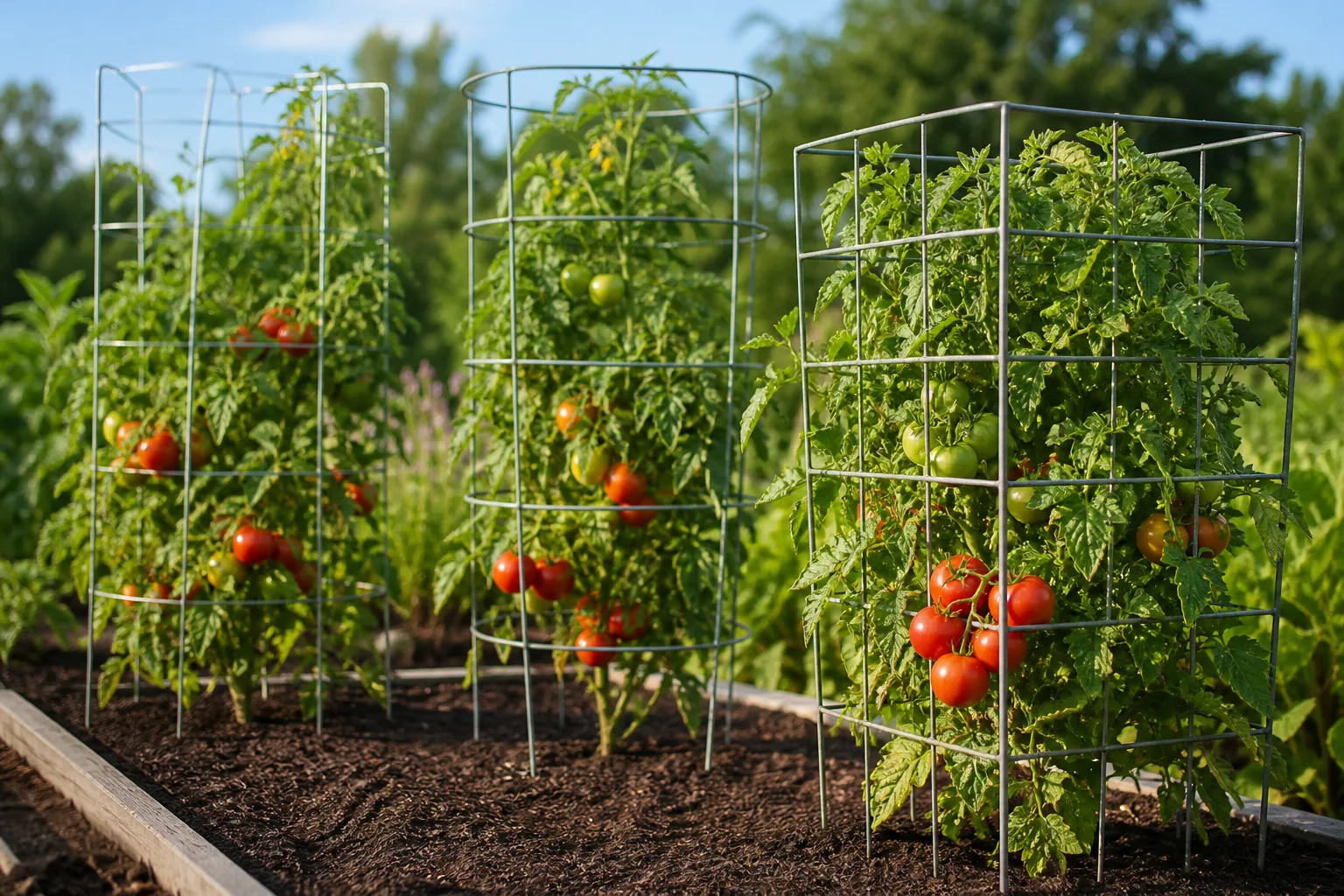
The best tomato cage is not the tallest option on the shelf. It is the support that matches your variety’s growth habit, your wind exposure, and how much room you have to reach fruit without snapping branches. A cone cage that works for a patio cherry tomato will collapse under a six-foot indeterminate heirloom loaded with August rain.
This guide ranks eight commercially available cages by real use case, then layers in extension-backed sizing rules, anchoring habits, and DIY alternatives when store-bought cones are simply too light. Product names, dimensions, and price ranges reflect common 2025–2026 listings; always confirm current specs before you buy.
Quick Picks: Match the Cage to Your Tomato Type
| Best for | Pick | Why it wins | Main trade-off |
|---|---|---|---|
| Balanced overall | Legigo Modular Tomato Cage | Adjustable height and shape; six-pack value | Less rigid than heavy-gauge square cages |
| Maximum durability | Gardener’s Supply Lifetime Tomato Cages | Powder-coated steel; pre-assembled | Only ~39 inches tall; short ground stakes |
| Tight spaces and seedlings | Toccyard 4-Pack Plant Support | 18-inch compact cones; adjustable rings | Not for full-size indeterminate vines |
| Tall indeterminate vines | K-Brands Tomato Cages | Extends to 68 inches | Plastic connectors flex under heavy loads |
| Budget modular system | Gardener’s Blue Ribbon Ultomato | Three cages; snap-on arms | Better for medium-height varieties |
| Large fruit loads | Happy Trees Heavy Duty Square Cages | Thick galvanized steel; 58 inches tall | Large footprint; premium price |
| All-in-one patio setup | GREEN MOUNT Raised Bed with Trellis | Self-watering planter plus trellis | Limited root volume for big vines |
| Grow bags and small pots | Mimeela Garden Plant Support | 24-inch rings; stable in containers | Too short for standard in-ground heirlooms |
Use the table as a shortcut, not a substitute for reading the variety tag. A cage that fits a determinate paste tomato in a raised bed may be useless for a vining cherry that doubles in height every two weeks.
Why Tomato Support Matters More Than the Brand Label
Tomatoes are not tidy upright shrubs. Even determinate (bush) types sprawl once fruit sets, and indeterminate vines keep adding stem length until frost or exhaustion stops them. Left on the ground, stems contact soil, splash carries fungal spores upward, and fruit rots where it cannot dry.
University of Georgia Cooperative Extension notes that staking and caging keep plants off the ground, improve air circulation, and make harvest and pruning safer — cultural practices that directly reduce disease pressure in humid summers. UGA Extension’s staking and pruning guide treats support as standard care, not an optional upgrade for perfectionists.
Airflow, fruit quality, and disease pressure
Elevated branches dry faster after rain and irrigation. That matters because many tomato leaf diseases spread in lingering moisture on lower foliage. Penn State Extension recommends fertile, well-drained soil and consistent care from transplant through harvest; keeping vines organized is part of that routine, especially when plants are spaced closely in raised beds. Penn State Extension’s tomato guide is a solid baseline for tying cultural practices to yield.
Clean fruit is the other payoff. Mud splatter, slug damage, and sun scald on fruit resting on hot soil are all more common when vines are unmanaged. A cage will not fix poor watering or overcrowding, but it removes one predictable failure mode.
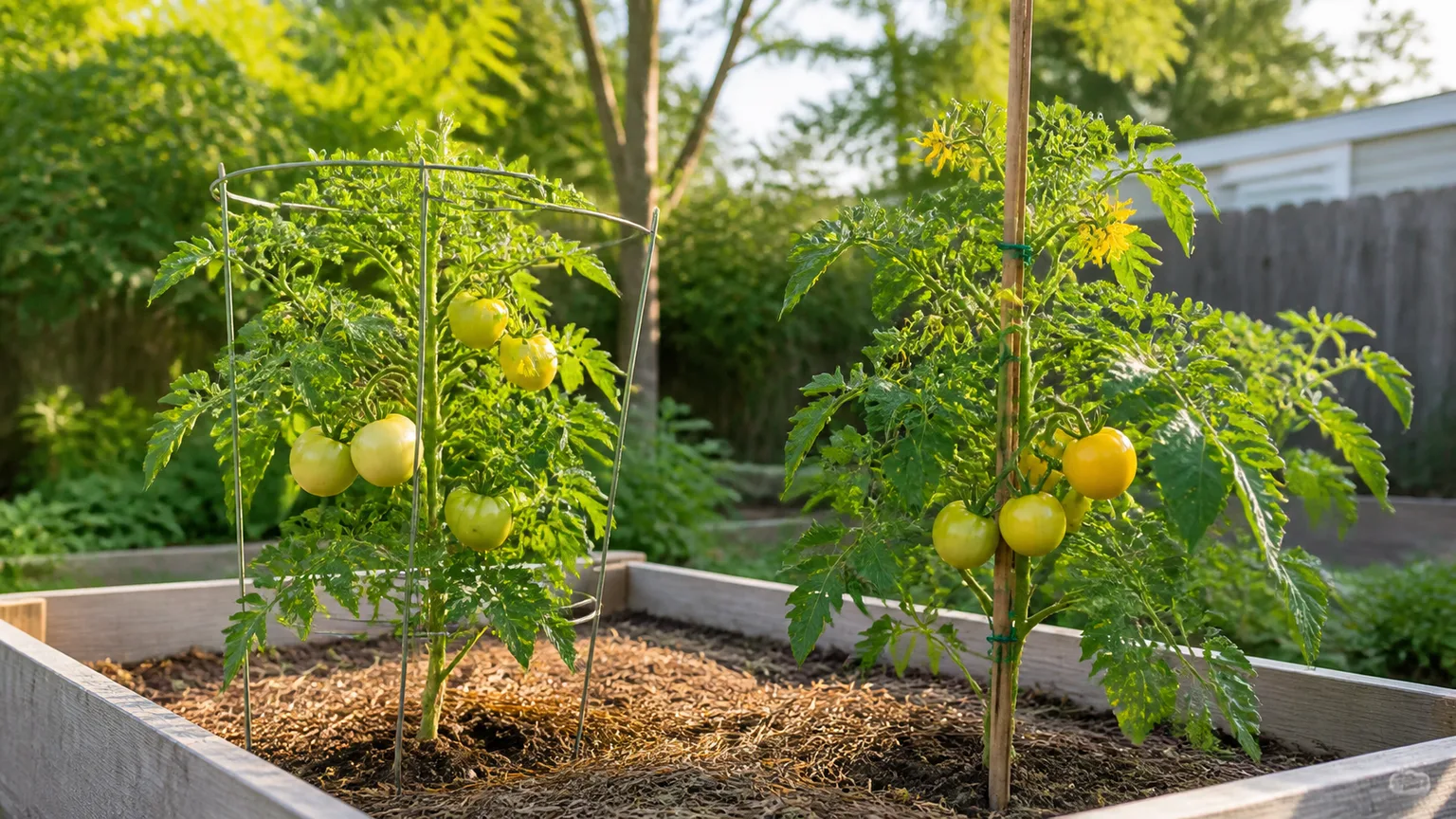
When a lightweight cone cage fails mid-season
The inexpensive cone-shaped wire cages sold at every garden center in spring are not evil — they are just misapplied constantly. UGA Extension warns that lightweight cones can work for determinate and patio tomatoes but are not strong enough for larger-growing plants without additional bracing. Indeterminate vines outgrow the top ring, shift the center of gravity, and pull the whole assembly sideways in a thunderstorm.
If you have already bought cones, treat them as seedling supports or determinate-only hardware. For six-foot vines, plan on square steel cages, modular tall trellises, stakes with disciplined pruning, or a DIY cage from heavy wire mesh.
Determinate vs Indeterminate: The Cage Decision You Cannot Skip
Growth habit drives cage height more than brand marketing does. Gardening Know How summarizes the split cleanly: determinate tomatoes grow to a genetically set height, set a concentrated fruit flush, and need less aggressive pruning; indeterminate tomatoes vine continuously and require sturdy support through the entire season.
Epic Gardening’s determinate vs indeterminate explainer adds a practical wrinkle many product pages ignore: indeterminate plants can eventually outgrow standard tomato cages and may need cattle panels, tall square cages, or stake-and-weave systems instead. That does not make cages useless — it means you must size up early rather than retrofit in July.
Use these working ranges when reading product specs:
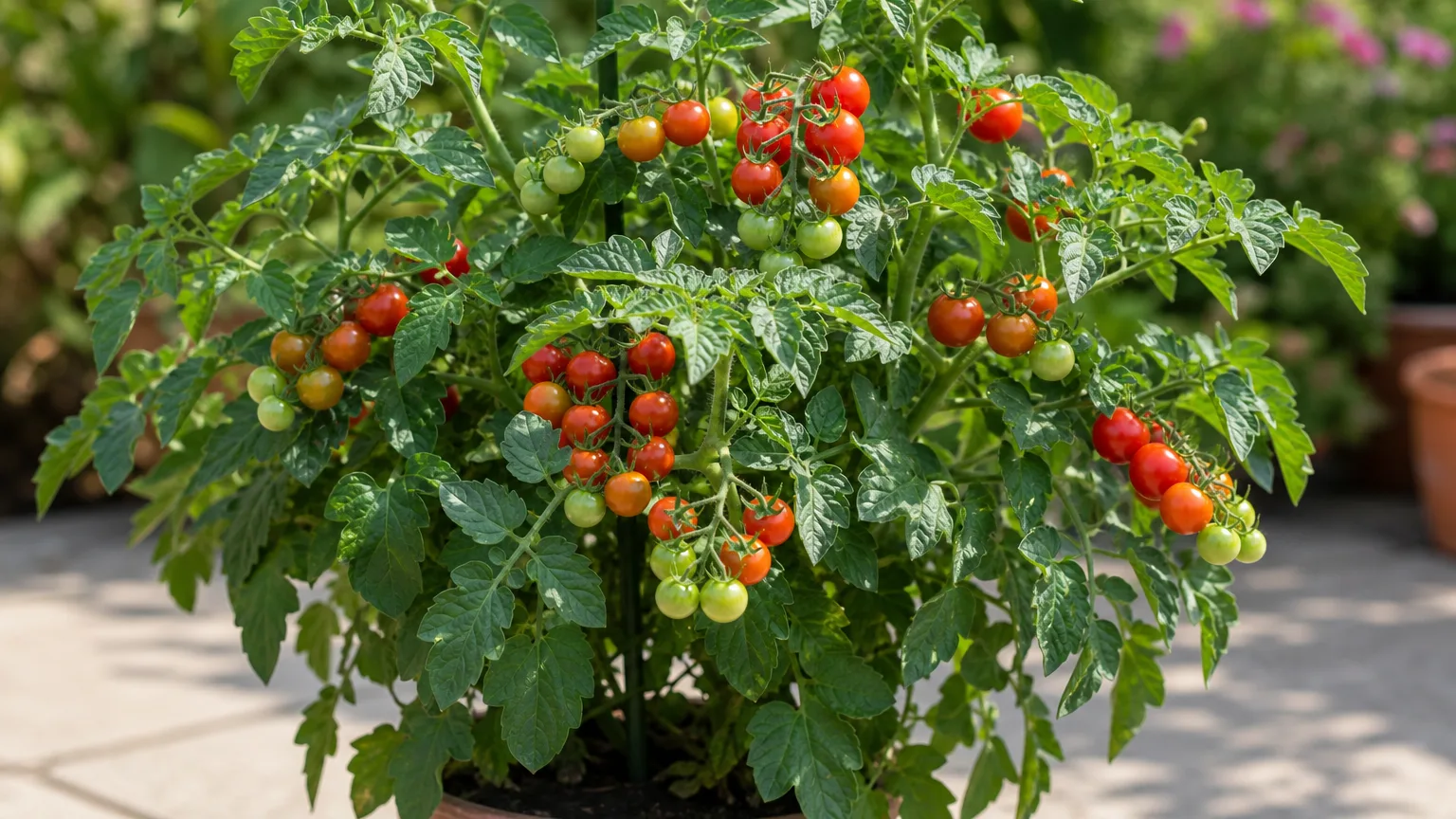
- Determinate and patio types (3–4 feet): 24- to 42-inch cages often suffice if gauge is stiff enough. Bush cherries in pots may top out near 18–30 inches.
- Medium indeterminate slicers (5–6 feet): Look for 54- to 68-inch adjustable or square cages, or plan supplemental stakes.
- Aggressive indeterminate cherries and heirlooms (6+ feet): Treat 48-inch cones as temporary. Prefer square heavy-gauge cages, concrete-wire DIY cylinders 5 feet tall, or switch to staking with regular tying every 8 inches as UGA recommends for single-stake systems.
Spacing matters too. Cages with an 18-inch square footprint need corresponding plant spacing so foliage does not form a wall that blocks airflow. In tight raised beds, modular systems you can reshape beat rigid cones that force branches outward into neighbors.
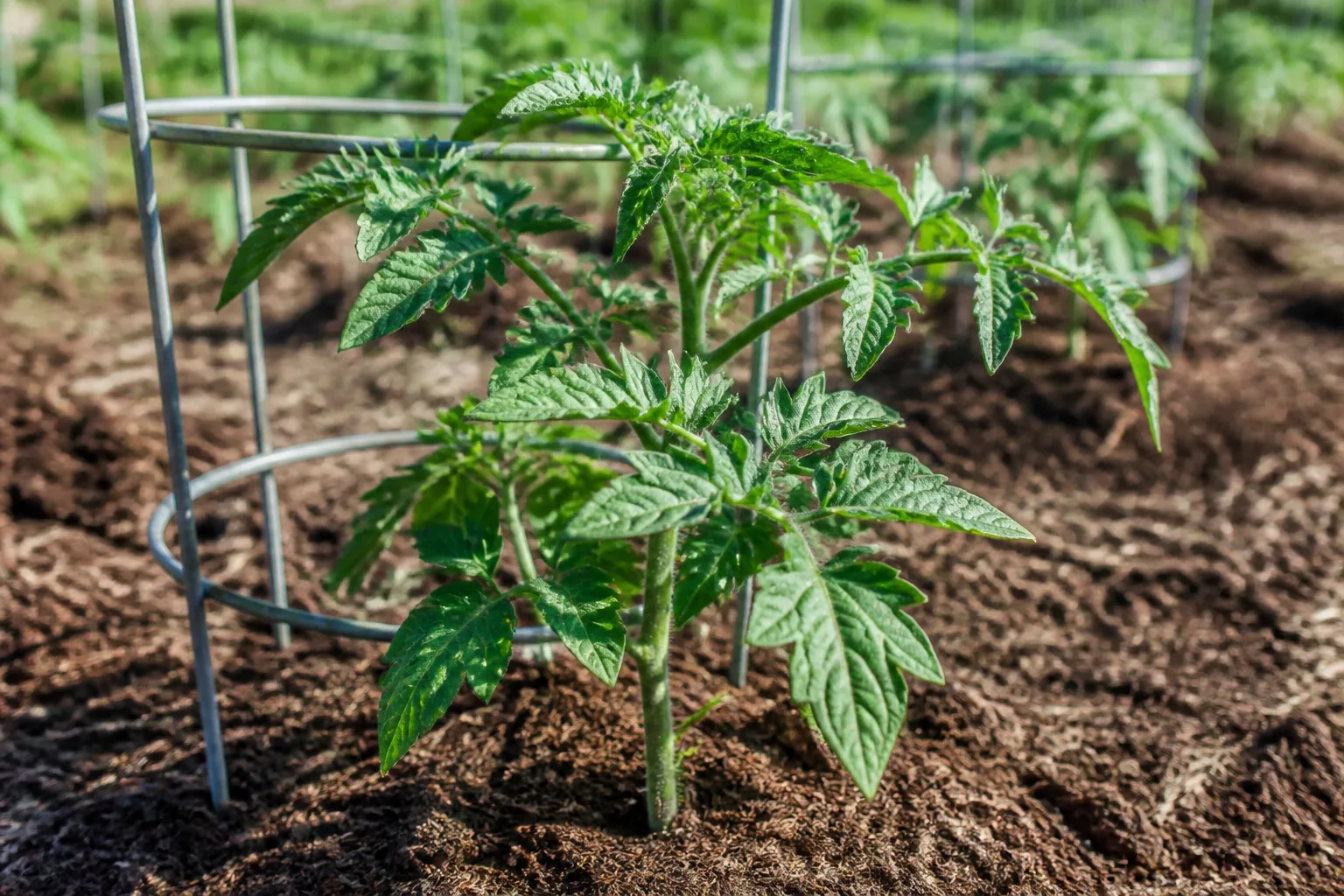
Cage Types Compared: Cones, Squares, Modular Kits, and Planter-Trellis Combos
Cone cages are fast to install and cheap in multi-packs. They suit determinate varieties and early-season tucking of stems behind wire rings. They lose on stability and height.
Square or rectangular wire cages distribute weight better than cones. Thick galvanized models resist bending when fruit clusters load one side. The trade-off is footprint and storage volume.
Modular stake-and-connector kits (plastic arms on steel stakes) let you change height and width as plants grow. They excel in mixed gardens with peppers and cucumbers sharing the same hardware. Wind and heavy fruit can flex connectors if you do not anchor legs.
Planter-trellis combos solve patio ergonomics: soil, reservoir, and support in one shipment. Root volume caps how large the plant can get, so match them to compact determinates or conscientiously pruned cherries.
Stakes and Florida weave are not cages, but they belong in the comparison. A single 6-foot stake with a pruned single leader is economical and strong when you tie every 8 inches. The Florida weave — rows of stakes with twine woven between plants — scales better than buying eight cages for a long row. Fine Gardening’s classic support overview (republished through community garden resources) still holds up: choose cages for encircling bushier plants, stakes when you will prune to one or two leaders, weave when you grow dozens of plants in rows.
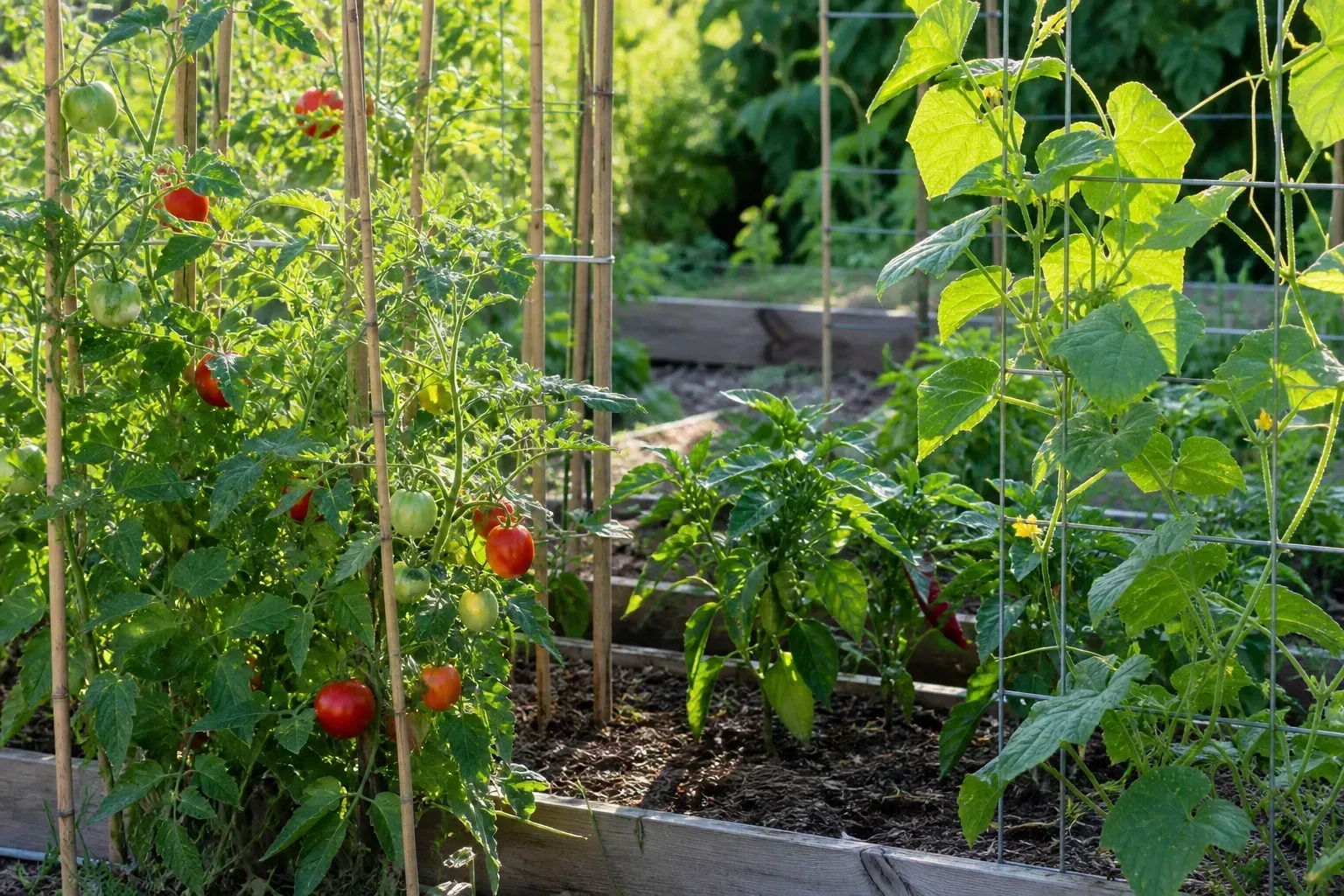
What to Look for Before You Buy a Tomato Cage
Height, gauge, mesh openings, and harvest access
Measure finished height against your variety, not the photo on the box. Adjustable kits should reach at least 60 inches if you grow standard indeterminate slicers in ground beds.
Wire gauge tells you how much spring-back the cage has under load. Thin cones flex visibly when you push them; heavy-gauge square cages barely move. Powder-coated or plastic-coated steel resists rust, but coating thickness varies — inspect welds and joints.
Mesh opening size affects harvest more than beginners expect. UGA Extension recommends livestock fencing or concrete reinforcement wire with 4- to 6-inch openings so you can reach through with a hand wrapped around a ripe tomato. Tiny diamond mesh looks tidy until you try to harvest a beefsteak through a four-inch hole.
Stability, anchoring, and off-season storage
Drive legs 6 to 12 inches into soil for rigid support, the same depth range UGA cites for stakes. Loose loam and raised beds with light mix need deeper setting or supplemental anchoring.
Top-heavy plants in wind need ground staples, cross-braces, or stakes lashed to the cage frame, not hope. If a cage wobbles when empty, it will tip when fruit loads one side.
Off-season storage is real square footage. Collapsible or fold-flat cages (Happy Trees, Lifetime foldables, modular kits disassembled) beat rigid cylinders if you garden from a shed or apartment closet. Homemade mesh rolls flat when untied — a reason many experienced growers build once and store a stack of wire sheets.
Best Overall: Legigo Modular Tomato Cage
Best for: Home gardeners who want one system for indeterminate tomatoes, peppers, and cucumbers without buying separate trellises.
The Legigo kit behaves more like modular scaffolding than a classic cone. Steel core stakes, snap-on arms, and connecting pipes let you build a cage tall enough for mid-season growth and reshape it when a branch needs clearance. The six-pack pricing makes it realistic to outfit a small raised bed row in one order.
Coated steel resists rust better than bare wire cones, and the included plant ties save a hardware-store run. Assembly is tool-free, which matters on the day transplants arrive and you are already behind on watering.
Trade-offs: Modular joints are not as rigid as a one-piece square cage welded from thick gauge steel. In exposed windy sites or with heavy heirloom fruit, anchor legs and expect to add a secondary stake before late July. For pure brute strength, jump to the heavy-duty pick below.
Typical specs: modular trellis; adjustable to roughly 48+ inches depending on configuration; alloy steel with plastic connectors; six cages per kit; street price often $28–$36.
Best Heavy-Duty: Gardener’s Supply Lifetime Tomato Cages
Best for: Shorter to medium indeterminate varieties and determinate plants that need a rigid frame without fussing with connectors.
These powder-coated steel cages arrive pre-assembled. Push the legs in, tuck stems, and you are done. The fold-flat design is genuinely useful if you lack barn rafters for storing cone piles.
Trade-offs: At about 39 inches tall, they are shorter than marketing photos suggest for tall heirlooms. Plan supplemental tying or a second extension stake when vines pass the top ring. Ground stakes are relatively short; firm anchoring is non-negotiable in storm-prone yards.
Typical specs: steel trellis; ~14 × 39 inches per cage; four per set; often $85–$105.
Best for Small Gardens and Seedlings: Toccyard 4-Pack Plant Support
Best for: Cherry tomatoes in pots, determinate patio varieties, and early-season seedlings that need something now, not a five-foot tower in May.
At 18 inches, these compact cones fit balcony rails and narrow raised-bed corners. Three adjustable rings slide up the stakes as plants grow, and the included twist tie helps secure whippy stems before they harden.
Trade-offs: Not a solution for full-size in-ground slicers. Treat them as starter supports or determinate-only hardware. If your cherry tomato proves unusually vigorous, graduate the plant to a taller cage by mid-June rather than fighting physics.
Typical specs: steel with plastic coating; 18-inch height; four cages; often $13–$18.
Best for Tall Indeterminate Vines: K-Brands Tomato Cages
Best for: Gardeners whose priority is vertical height on a budget without switching to stake-and-string pruning.
K-Brands kits extend toward 68 inches with snap-together poles and width adjustments via bridge connectors. That height range covers most backyard indeterminate varieties if you start tucking early and remove excess suckers when airflow gets dense.
Trade-offs: Plastic connectors and thinner poles flex more than welded square cages. They are a smart middle ground, not the final word for monster vines in coastal wind. Check connections after storms and replace cracked clips before they fail under fruit weight.
Typical specs: adjustable trellis; 16–68 inches height; three or six per pack; often $22–$30.
Best Value: Gardener’s Blue Ribbon Ultomato Cage
Best for: First-time tomato growers who want three complete cages with snap-on horizontal arms at a hardware-store price.
Ultomato cages use thick green-coated steel stakes in a circle with removable arms you position where branches need lift. Disassembly for storage is straightforward, and the arms make it easy to support lateral branches without creative twine engineering.
Trade-offs: Marketed dimensions near 60 inches assume ideal staking depth and arm placement; real-world height for unruly varieties may be closer to the mid-50s. Still not the pick for the tallest heirlooms unless you pair with a center stake.
Typical specs: trellis with snap arms; roughly 2 × 2 × 60 inches assembled; three cages; often $30–$38.
Best Square Cage: Happy Trees Heavy Duty Tomato Cages
Best for: Large indeterminate plants with heavy fruit clusters and gardeners tired of replacing bent cones every year.
Square silhouettes resist twisting better than cones. Happy Trees cages use thick galvanized steel, fold for storage, and provide about 58 inches of height with an 18-inch footprint. Open sides simplify pruning and harvest compared with tight diamond mesh.
Trade-offs: Price and space. Three premium cages cost far more than a stack of cones, and the footprint eats spacing in intensive beds. Buy these when you have already identified your keeper varieties, not when you are experimenting with six random seedlings.
Typical specs: square trellis; 58 × 18 inches; steel; three per set; often $100–$130.
Best Planter-and-Trellis Combo: GREEN MOUNT Raised Bed with Trellis
Best for: Patio and deck gardeners who want soil, drainage, and support in one purchase.
The GREEN MOUNT tower combines a raised planter box with an integrated trellis and self-watering reservoir. That matters on hardscape where you cannot drive cage legs into native soil. Food-safe polypropylene holds up to UV exposure, and the compact footprint fits outside a kitchen door.
Trade-offs: Root volume limits plant size. This is excellent for compact determinates, patio cherries, and trial plants — not for a prize Brandywine expecting five gallons of soil per plant. Monitor reservoir levels; self-watering does not replace checking for clogged drains after storms.
Typical specs: planter with trellis; roughly 10 × 41 inches; polypropylene and metal; single unit; often $35–$45.
Best for Grow Bags and Patio Pots: Mimeela Garden Plant Support
Best for: Grow bags, 5-gallon buckets, and narrow containers where a full square cage overhangs the pot rim.
Mimeela’s 24-inch circular cages include adjustable rings sized for container diameters, coated stakes with waterproof caps, and accessory clips. Self-watering spikes are a nice bonus for vacation weeks, though they do not replace checking bag drainage.
Trade-offs: Height ceiling again. Container cherries and bush types fit well; standard in-ground heirlooms will outgrow this by midsummer unless you prune aggressively.
Typical specs: round trellis; 24-inch height; four cages per set; often $18–$22.
DIY and Extension-Backed Alternatives When Store Cages Are Too Flimsy
When retail cages fail, build once:
- Concrete reinforcement wire cylinder: Roll a 4.5- to 6-foot length into a column 18–24 inches in diameter. Secure ends with wire. UGA Extension calls this heavy-gauge mesh among the most durable cage materials and notes large openings ease harvest.
- Livestock panel trellis: Five-foot panels bolted into arches or vertical grids support indeterminate cherries that laugh at cones. Epic Gardening and many regional growers use cattle panels when cages top out.
- Florida weave: For rows, drive T-posts at ends and stakes every three to four plants. Weave untreated twine at 8- to 12-inch vertical intervals as plants grow. UGA’s diagrams remain the clearest public step-by-step.
DIY costs more time than money, but a well-built mesh cage often lasts a decade. If you lack storage for rigid squares, unroll wire flat in fall.
How to Install and Maintain Tomato Cages Through the Season
At transplant: Install the cage when you plant, or within a week — pushing legs near established roots breaks feeder roots and stresses plants. UGA advises beginning stake ties once stems reach 10–12 inches.
As plants grow: Tuck stems inside rings rather than letting them sprawl outside where weight snaps them. For cages with wide openings, weave stems upward gently; do not crush tender tips.
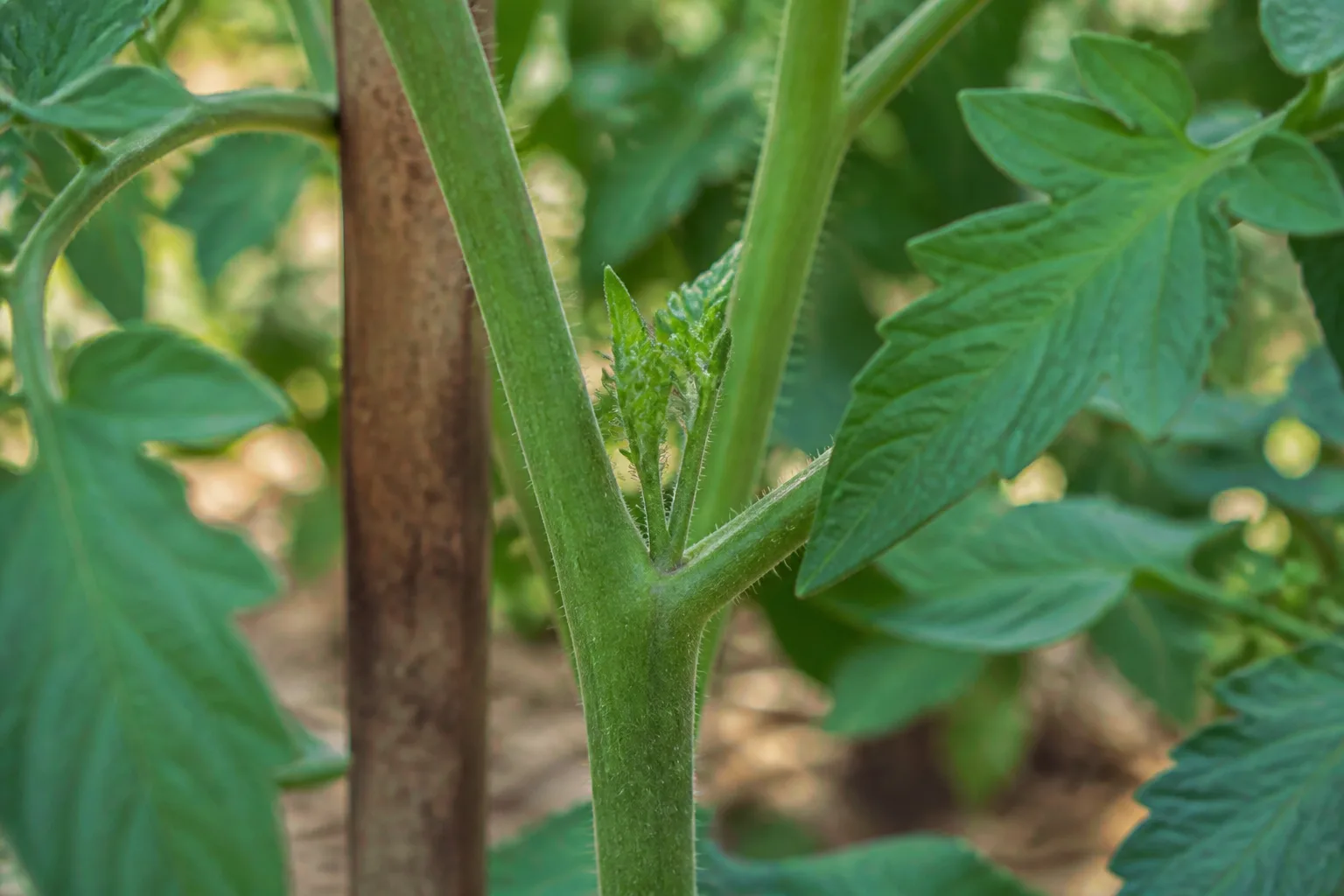
Mid-season: Remove lower leaves that touch soil to reduce splash disease, as extension guides recommend at planting and again when foliage densifies. Add anchoring before fruit load peaks, not after a leaning cage bends.
Harvest weeks: Reach through wide mesh openings from the outside in, supporting the cluster with your hand so the stem does not tear.
End of season: Cut plants at soil line, compost vines, and wash cages if you saw blight. Disinfect pruners between plants when removing diseased tissue.
One plant per full-size cage is the default. Doubling two slicers in one cylinder creates a humidity trap and guarantees tangled stems.
Conclusion
The right tomato cage is a support strategy, not a shopping impulse. Match height and gauge to determinate or indeterminate growth, anchor before storms arrive, and admit when a cone cage is a seedling placeholder rather than a season-long solution. The Legigo modular system offers the best blend of flexibility and value for mixed gardens; Gardener’s Supply Lifetime cages win on rigid simplicity; Happy Trees square cages justify their cost when fruit weight bends everything else.
If your variety tag says indeterminate and your summers are windy, skip the cheapest cone and either size up to square steel, build mesh cylinders from reinforcement wire, or switch to stakes with disciplined tying. Your harvest will still depend on water, spacing, and disease management — but the cage you choose decides whether those fruits ripen on the vine or rot in the mud.