Broccoli Plant Growing Stages (With Pictures)
See all four broccoli growth stages with pictures: seed sprout, transplant-ready seedling, vegetative crown button, and harvest-ready tight green buds before flowers open.
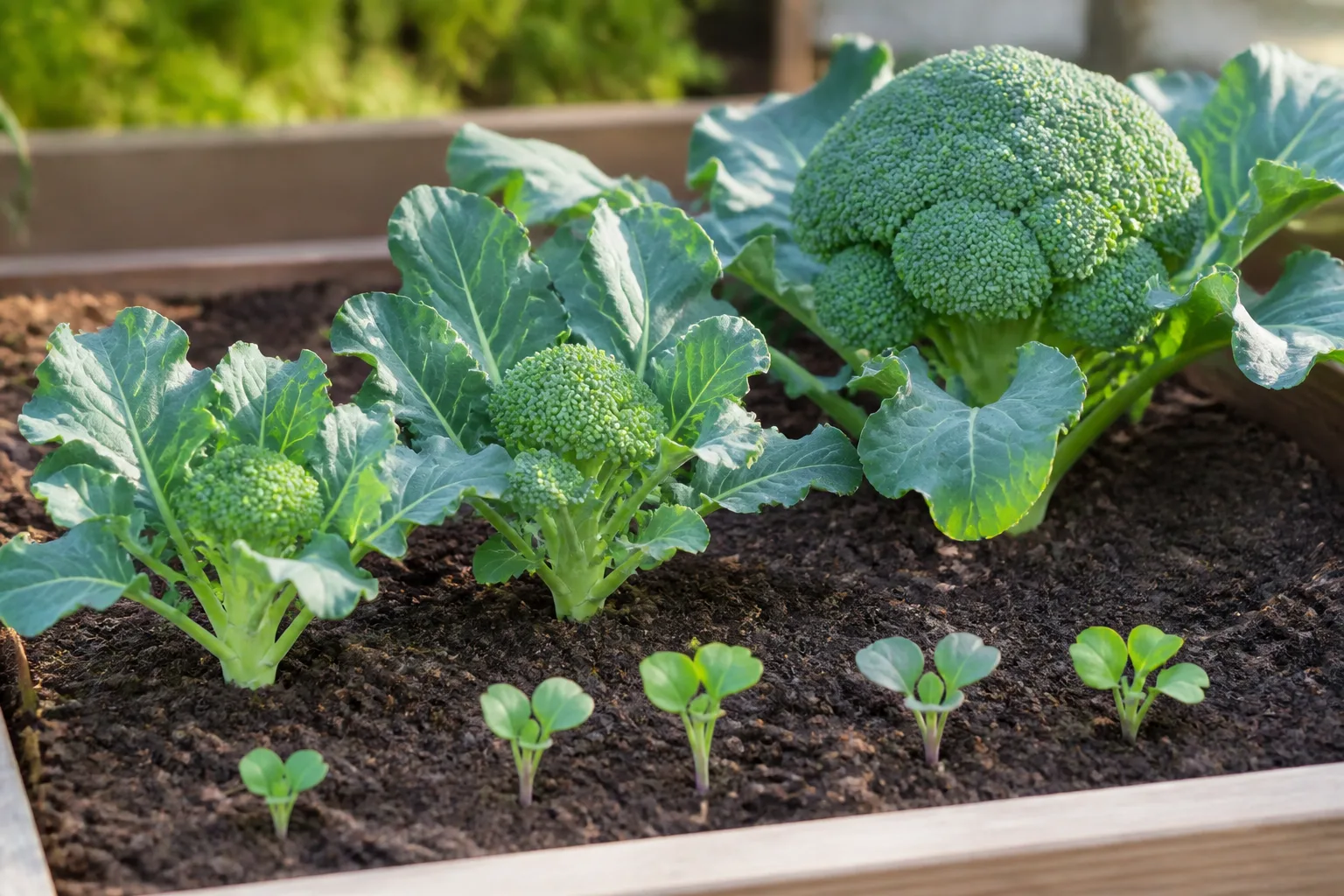
You started broccoli seeds three weeks ago, and the tray looks healthy—but the garden plants are tall, leafy, and still not showing a head. Are they behind schedule, or simply still in the vegetative stage? Broccoli plant growing stages follow a cool-season brassica rhythm: germination, seedling establishment, vegetative growth with crown initiation, then heading and harvest before yellow flowers open. Miss the window on any phase and you get bolted, bitter florets instead of tight green crowns.
Broccoli (Brassica oleracea, Italica Group) is more temperature-sensitive than many garden vegetables. Clemson Cooperative Extension notes that broccoli prefers average temperatures of 65 to 75°F and produces the best-quality heads in fall plantings, where spring swings can cause uneven or loose clusters. Knowing which broccoli growth stage you are in tells you whether to focus on warmth and moisture, transplant timing, steady feeding, or daily harvest checks.
If you are still at the seed step, pair this guide with our articles on how to start seeds indoors and soaking seeds before planting for tray setup basics.
Quick Stage ID Cheat Sheet
Use this table when you are standing in the garden trying to place your plant on the calendar. Days are approximate from sowing; check your seed packet days to maturity (DTM) because early varieties like Packman finish far faster than full-season types.
| Stage | Typical timing | What you see | Priority action |
|---|---|---|---|
| 1. Germination | Days 5–10 | Soil crack, pale shoot, cotyledons | Warm moist soil (60–85°F), thin to one seedling |
| 2. Seedling | Weeks 2–4 | True leaves, 4–6 inches tall | Cool bright growth (60–65°F), harden off |
| 3. Vegetative / head initiation | Weeks 4–8+ | Large leaves, button crown on main stem | Even moisture, P-K feeding, pest covers |
| 4. Heading & harvest | Weeks 8–14+ from sowing | Tight green head 3–6 inches, side branches swelling | Harvest before buds separate/yellow; cut main stem |
Most heading broccoli needs 50 to 90 days after transplanting to produce a harvestable crown, depending on variety. Clemson HGIC lists common cultivars from about 50 days (Packman) to 65 days (Belstar) after transplant. Count backward from your target harvest week using the packet number—not memory.
What Counts as a Broccoli Growth Stage
A growth stage is more than “the plant got bigger.” Each phase shifts the plant’s energy budget. Germination breaks dormancy and builds the first root anchor. The seedling stage develops true leaves and a root system that can survive transplant shock. Vegetative growth expands leaf area to fuel photosynthesis and triggers the crown button—the first cluster of unopened flower buds on the main stem. Heading and harvest is when those buds swell into the broccoli you eat; after the main cut, the plant reallocates energy to side shoots (smaller florets from leaf axils).
Some gardeners split “button stage” from full vegetative growth. That split is worth making: a pea-sized crown can appear while leaves still look modest, and that is your signal that heading has begun even if the plant is only knee-high.
Stage 1: Germination (Days 1–10)
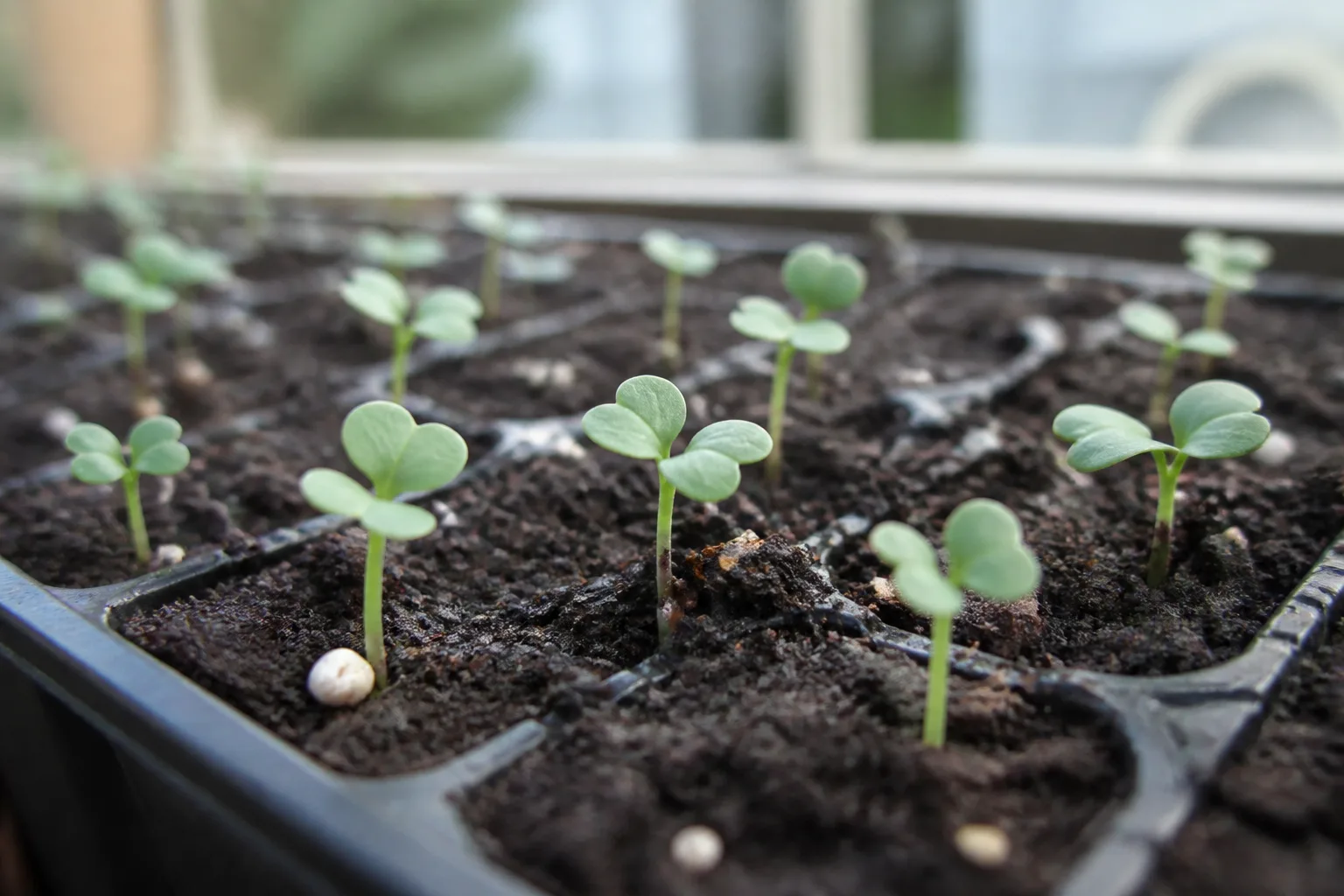
Germination begins when the seed coat absorbs water, swells, and splits. A radicle anchors downward while the hypocotyl pushes cotyledons toward light. Under favorable conditions, broccoli seeds often emerge in 7 to 10 days; cold or soggy soil stretches that window or rots the seed.
Harvest to Table lists broccoli’s germination range as 40°F minimum soil, 60–85°F optimum, and 95°F maximum, with 7–10 days to sprout at optimal temperature. That cool-season floor explains why broccoli can germinate in chilly spring soil—but emergence is dramatically faster on a heat mat indoors than in a 45°F garden bed.
Broccoli seeds are small and do not need deep burial. Sow about ¼ inch deep in fine, moist seed-starting mix or well-worked garden soil. First Tunnels recommends sowing two seeds per cell and thinning to the stronger seedling once true leaves appear.
Soil Temperature and Moisture Cues
At germination, soil warmth matters more than bright sun on day one. Indoors, a seedling heat mat held near 70–80°F can shave days off emergence compared with a cool windowsill. Outdoors, wait until soil consistently reads above 45–50°F for direct sowing, or start indoors 6 to 8 weeks before your last frost for spring crops.
Keep the seed zone evenly moist, not flooded. A light daily mist or bottom-watering prevents crusting. Hard dry spells after sprouting can kill seedlings before true leaves expand. If nothing emerges after 14 days in warm soil, dig up one spot: rotted seed means too wet; intact seed means too cold or too dry.
Soaking broccoli seed in lukewarm water for a few hours before sowing can speed imbibition, but 24-hour soaks are unnecessary and can invite rot. Standard moist soil contact is enough for most fresh seed.
Indoor vs Direct-Sown Germination
Indoor starting wins in short springs and when birds or rodents steal outdoor seed. Sow in cells or soil blocks so you can transplant without disturbing roots. Direct sowing works for fall crops or mild climates: drill seeds 2 cm (about ¾ inch) deep, initial spacing around 3 inches, then thin to final spacing once seedlings have several true leaves.
First Tunnels notes that direct-sown broccoli should be protected with row covers or cloches immediately—flea beetles and birds target tiny brassica seedlings within days of emergence.
Stage 2: Seedling Development (Weeks 2–4)
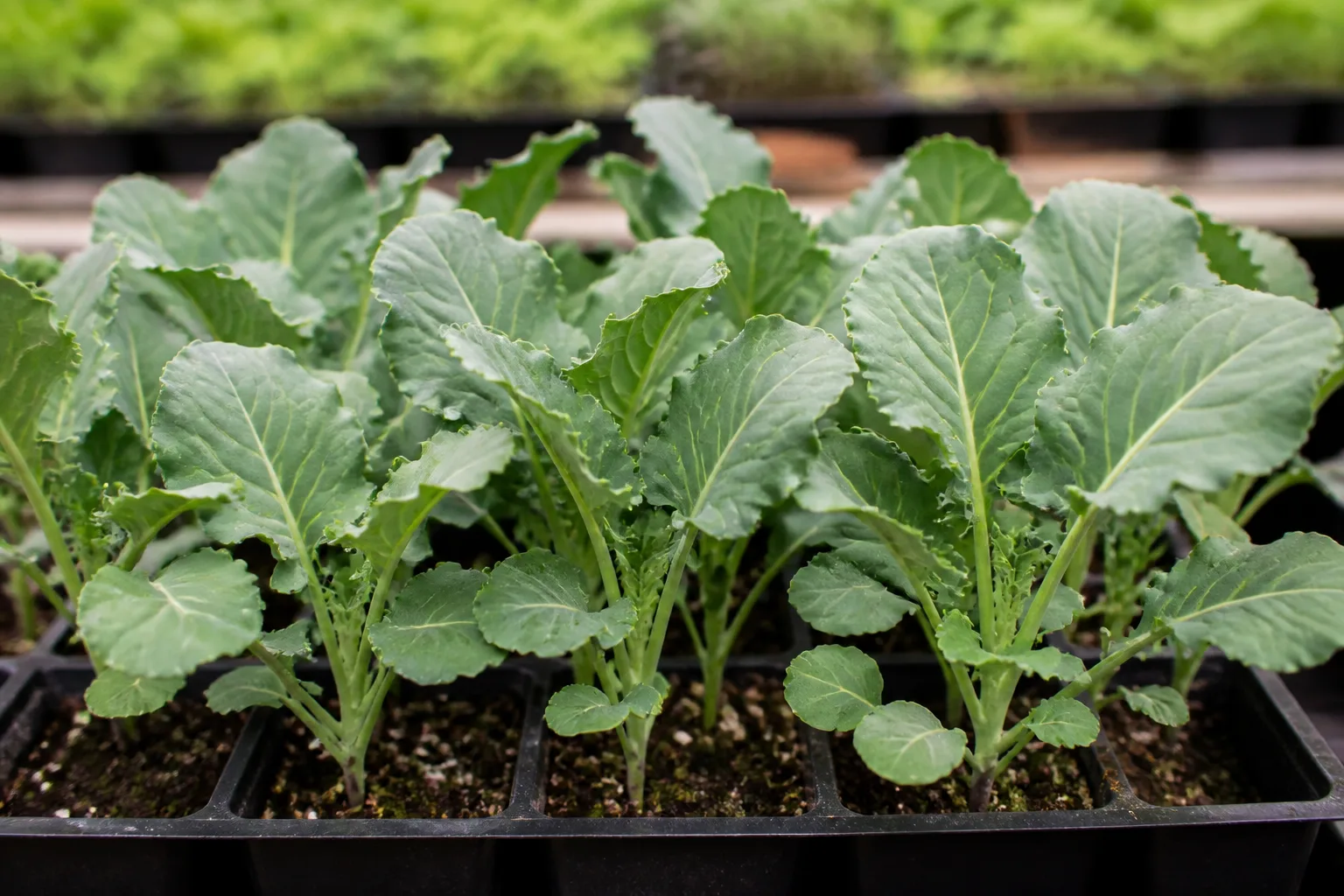
The first leaves above soil are cotyledons—smooth, oval seed leaves that do not look like mature broccoli foliage. Within 10 to 14 days after emergence, the first true leaves appear from the stem center: bluish-green, wavy, and distinctly cabbage-like.
During the seedling stage, broccoli builds the root and leaf framework that will later support a heavy head. Ideal air temperature for stocky seedlings is roughly 60 to 65°F with bright light. Leggy, pale stems usually mean insufficient light or excessive heat—common when trays sit on a heat mat without a grow light.
Cotyledons, True Leaves, and Transplant Size
Transplant when seedlings have at least three to four true leaves and stand 4 to 6 inches tall—typically 4 to 6 weeks after sowing for spring crops, or 5 to 6 weeks for fall transplants. Clemson HGIC notes that spring transplants need enough cold exposure to harden but must be protected from hard freezes while in trays.
Space heading types 18 to 24 inches apart in rows 24 to 36 inches apart so mature plants—which can reach 3 to 4 feet tall and wide—do not shade and compete. Tighter spacing yields smaller heads, not more crowns per plant.
Hardening Off Before the Garden
Seedlings started indoors need 7 to 14 days of hardening off: gradually increasing outdoor time and wind exposure so cuticles toughen. Set trays in shade the first day, then introduce morning sun, then full days outside before planting.
For spring broccoli, set transplants into the garden 1 to 2 weeks before your average last frost—broccoli tolerates light frost once hardened. For fall crops, transplant when daily highs sit in the 65 to 75°F range so plants size up before cool weather sweetens the heads. Our guide on spring transplant timing for seedlings walks through the frost-date math if you are juggling multiple crops.
Water transplants in thoroughly and firm soil around roots to eliminate air pockets. A light organic mulch and floating row cover immediately after planting reduces flea beetle damage during this vulnerable stage.
Stage 3: Vegetative Growth and Head Initiation (Weeks 4–8)
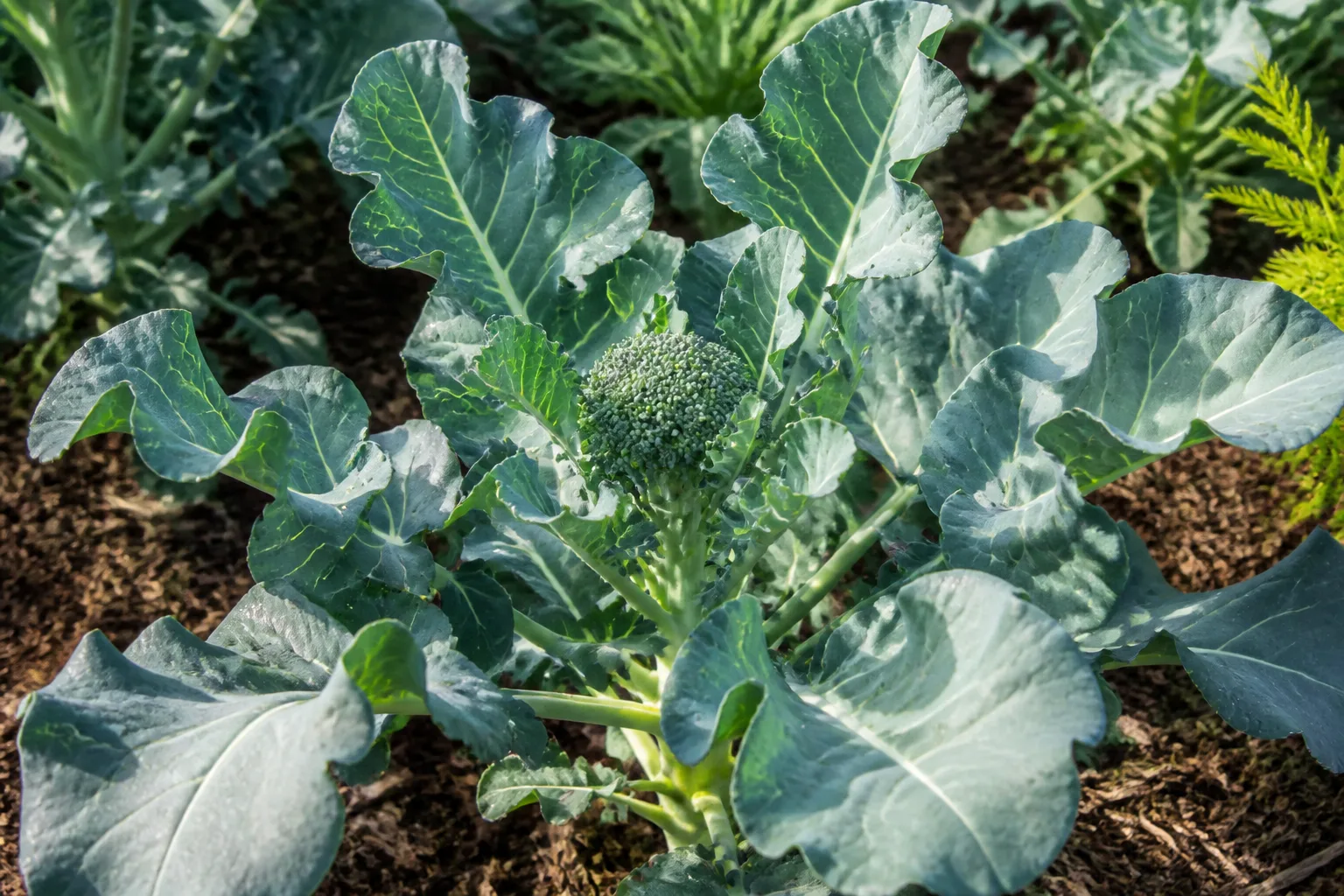
The vegetative stage is the plant’s growth spurt: large waxy leaves, thickening main stem, and expanding root mass. Over roughly three to five weeks after transplant, heading broccoli can reach 3 to 4 feet tall and wide in good soil. This is also when the first crown button—a tight cluster of green flower buds on the main stem—appears.
Ideal temperatures during vegetative growth remain 65 to 75°F. Clemson HGIC warns that spring temperature swings can produce uneven heads or loose bud clusters even when plants look healthy—one reason fall broccoli often outperforms spring plantings in warm-summer regions.
When the Crown Button Appears
Watch the center of the plant three to five weeks after transplanting (variety and weather dependent). The first sign of heading is a pea- to marble-sized green button at the stem tip, not yet the full broccoli head you harvest. Side branches will later develop their own smaller bud clusters.
If you see a head forming on a tiny plant, that can signal stress (drought, root-bound transplant, or premature cold exposure) rather than fast progress—sometimes called buttoning. Stressed plants may produce small, early heads that never size up. Steady moisture and adequate spacing prevent most buttoning.
Feeding and Water Through the Vegetative Stage
Broccoli is a heavy feeder. Clemson HGIC recommends a balanced starter fertilizer at planting and a nitrogen side-dress three to four weeks after transplant when plants are established—especially on sandy soil or after heavy rain leaches nutrients.
Balance matters: too much nitrogen late in vegetative growth can produce lush leaves with poor head formation, while phosphorus and potassium support bud development. A soil test is always the best guide; in absence of one, a complete vegetable fertilizer at label rates beats guessing.
Water deeply enough to moisten soil 6 inches down, preferably in the morning so foliage dries before night. Clemson HGIC identifies stand establishment and head development as the two critical moisture windows. Drought stress during head initiation invites bolting or small, bitter heads.
Keep row covers on through early vegetative growth if cabbage worms, loopers, or flea beetles are active in your area. Pest damage before heading is far easier to manage than insects hiding inside a forming crown. If you interplant herbs or flowers for pest confusion, see our broccoli companion plants guide for pairings that match broccoli’s cool-season needs.
Stage 4: Heading, Harvest, and Side Shoots
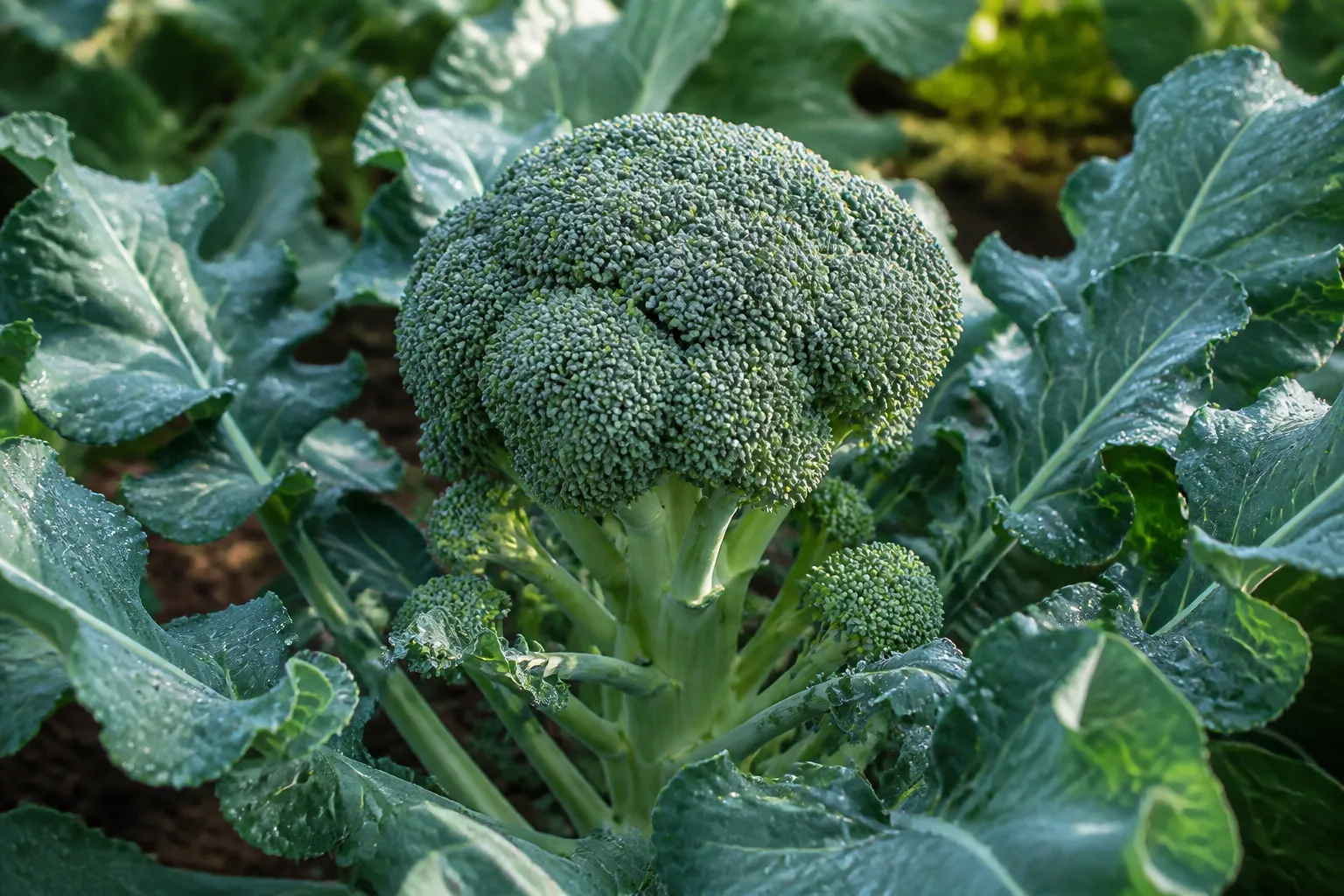
Heading is the harvest stage—even though botanically you are still catching the plant before full flowering. The central crown swells from a button into a domed head of tightly packed green buds. Side stems begin producing smaller bud clusters around the main crown. The entire job now is timing: pick while buds are closed, not after they stretch and yellow.
Heat accelerates the clock. When average daily temperatures climb above about 75°F, buds can begin separating and flowering within days—a process gardeners call bolting. Revisit your seed packet DTM and mark a harvest window on the calendar so you are checking plants daily as that date approaches.
Harvest-Ready Signs (Before Yellow Flowers)
Clemson HGIC recommends harvesting when the main head is 3 to 6 inches in diameter and flower buds remain tightly closed. Many home heads look smaller than grocery-store crowns but are perfectly ripe when buds are dense and dark green.
Stand in the row and look for these cues:
- Tight bud texture — individual florets should not gape open.
- No yellow tint — yellow is the bud preparing to bloom; bitterness follows quickly.
- Stem diameter — the stalk below the head should be firm, not hollow or pithy (hollow stem is a common disorder tied to rapid growth and nutrient imbalance).
Harvest in the cool morning when heads are firmest. If you see buds starting to separate on one plant, cut it that day—neighboring plants on the same schedule will follow within 48 to 72 hours.
Cutting the Main Head and Secondary Florets
Cut the main stem about 6 inches below the head at a slight angle with a sharp knife. Leave the rest of the plant in the ground. Many varieties—Packman, Green Magic, and others noted by Clemson HGIC—produce side shoots from leaf axils for two to four weeks after the central harvest.
Side shoots are smaller but equally edible. Harvest them when buds are tight, the same way you judged the main head. Regular cutting encourages more florets. Once side-shoot production slows and stems toughen, pull the plant and compost it—or harvest young leaves as cooking greens if pests are absent.
Store unwashed heads in a perforated plastic bag in the refrigerator for up to about a week. Blanch and freeze surplus florets if your side-shoot flush exceeds what you can eat fresh.
Spring vs Fall Timing by Climate
Broccoli timing is really climate timing. Match your sowing and transplant dates to the stage where temperatures cooperate.
Cool northern summers: Spring planting works well. Start seeds indoors 6 to 8 weeks before last frost, transplant 1 to 2 weeks before last frost, and aim to harvest before sustained 75°F+ weather arrives.
Hot summer regions (Zones 7–9 and similar): Treat broccoli as a fall crop. Sow indoors or in shaded nursery beds mid- to late summer (often July–August), transplant as heat breaks in early fall, and harvest through cool weeks when nights dip toward 40–50°F.
Mild maritime climates: You may succeed with both a spring and fall crop if summer highs stay moderate. Watch spring plants for early bolting if a late cold snap is followed by rapid warming—Clemson HGIC explains that 10 or more consecutive days between 35 and 50°F after favorable growth can trigger vernalization bolting in larger plants.
When in doubt, log daily highs during the month you plan to harvest. If the forecast shows a heat wave overlapping your DTM window, choose a faster variety or shift to fall.
Troubleshooting Stalled or Bolted Broccoli
Most broccoli failures are temperature or timing problems, not mysterious diseases. Use the stage you are in to diagnose.
Leggy seedlings with no garden progress — usually low light indoors or heat without airflow. Add grow lights and a fan before transplant.
Large plants, no head by expected DTM — check nitrogen overload, drought during initiation, root damage at transplant, or variety labeled for a different season. Confirm you did not accidentally grow sprouting broccoli, which produces many small shoots over months rather than one large crown.
Loose, ricey bud clusters — common in spring heat or after temperature swings. Still edible; harvest promptly.
Yellow flowers open — you waited too long. Florets turn gritty and bitter quickly. Side shoots may still be usable if you cut the flowering stem and catch secondary buds early.
No Head, Loose Heads, and Premature Flowering
Bolting has two common triggers: heat (average daily temps above ~75°F during heading) and vernalization (prolonged cool period on mature plants, then warming). Clemson HGIC recommends slow-bolting varieties such as Green Magic, avoiding stressed transplants, and harvesting spring crops before summer heat.
Hollow stem inside the stalk is a physiological disorder—not a pest. It links to rapid growth, excess nitrogen, warm spells, and low soil pH. Prevention beats cure: even moisture, balanced fertilizer with boron in the complete mix, proper spacing, and fall planting in hot climates.
Pest pressure on seedlings (flea beetles) or heading plants (caterpillars) can stall growth. Scout under row covers weekly. Damage during Stage 3 is far cheaper to fix than worms inside a nearly ready head.
Conclusion
Broccoli plant growing stages are easiest to manage when you treat them as four distinct jobs: warm germination, stocky seedling growth, steady vegetative feeding with crown watch, and a narrow harvest window before yellow flowers open. Use the stage-ID table at the top when you are unsure where your plants sit, count days from transplant using your seed packet, and favor fall plantings if spring heat has burned you before.
Harvest the main head at 3 to 6 inches with tight green buds, cut 6 inches down the stem, and keep picking side shoots while they stay closed. Get those basics right and one plant delivers a central crown plus weeks of smaller florets—far more return than treating broccoli as a single-cut crop and walking away.