How to Choose a Coffee Table For Your Living Room
Learn how to choose a coffee table that fits your sofa and routine, with practical guidance on height, length, clearance, shape, materials, and features.

Start with the open space between your seats, not the table you saw in a showroom. A coffee table has to fit the sofa, the people using it, and the route through the room; its style comes after those jobs are clear. Measure first, mock up the footprint, then compare shapes and materials that fit the way you live.
Decide what the coffee table needs to do
Think about a regular day in the room. Does the table mainly hold drinks and a remote, give everyone somewhere to set a book, corral toys, support a snack while watching television, or serve as a desk-height surface for a laptop? If the main task is a place to put a mug beside one seat, a full-width central table may solve a problem you do not have.
List the two or three uses that matter most, and be honest about frequency. A lift-top sounds useful if you routinely eat or work from the sofa, but its raised panel and mechanism take space and can make the table feel heavier; a plain top is simpler if it mostly holds a lamp tray and a few books. A lower shelf can store baskets or magazines, while closed drawers hide small items but may be awkward to open when the table is crowded.
Who uses the room matters as much as what gets placed on the surface. A household with young children or active pets may prefer a stable base, rounded corners, and a finish that tolerates daily wiping; a formal sitting room may prioritize a lighter visual profile or a stone surface. Think about cleaning, spills, feet, toys, and how often you need to move the table before choosing its construction.
Measure the seating zone before browsing
Measure the sofa and the space around it before comparing product listings. A useful first sketch shows the sofa, chairs, chaise, doors, and the route people use to cross the room. Write down three things separately: the table footprint that can fit, the gap from the seats to the table, and the open path around the grouping.
One commonly used proportion puts the table at about one-half to two-thirds of the sofa’s length. Pottery Barn’s buying guide uses roughly two-thirds as a starting point, while Apartment Therapy gives a broader half-to-two-thirds visual range. These are useful first estimates, not a rule that can override legroom or a room’s shape.
Find the usable length and depth
For a straight sofa, measure its full outside length, then calculate one-half and two-thirds of that number to make a shortlist. For example, an 84-inch sofa suggests a table roughly 42 to 56 inches long as a starting range. If the room is narrow, the shorter option may leave a better route; if several people regularly use the sofa, a longer top may put drinks within easier reach.
For an L-shaped sectional, do not automatically size the table to the full length of both sofa runs. Measure the open inside area in front of the seats, including the chaise, and choose a footprint people can reach from the seats without stepping around a corner. A round or square table, or two smaller tables, may serve that interior opening better than a long rectangle that extends beyond one side of the sectional.
Depth is easy to overlook because product pages emphasize length. Measure from the sofa’s front edge toward the opposite chair, media unit, fireplace, or walkway; the top must be deep enough to be useful without turning the center of the room into a barrier. The table’s base can also project differently from its top, so check both dimensions if legs or a pedestal flare outward.
Current retail listings show how varied the available sizes are. World Market’s 2026 dimensions guide lists many tables in broad bands around 30–60 inches long, 18–30 inches deep, and 16–18 inches high, but a common size is not a promise that it will fit your seating zone. Use the product measurements, not the words “small,” “standard,” or “oversized,” to decide.
Set the height and reach gap
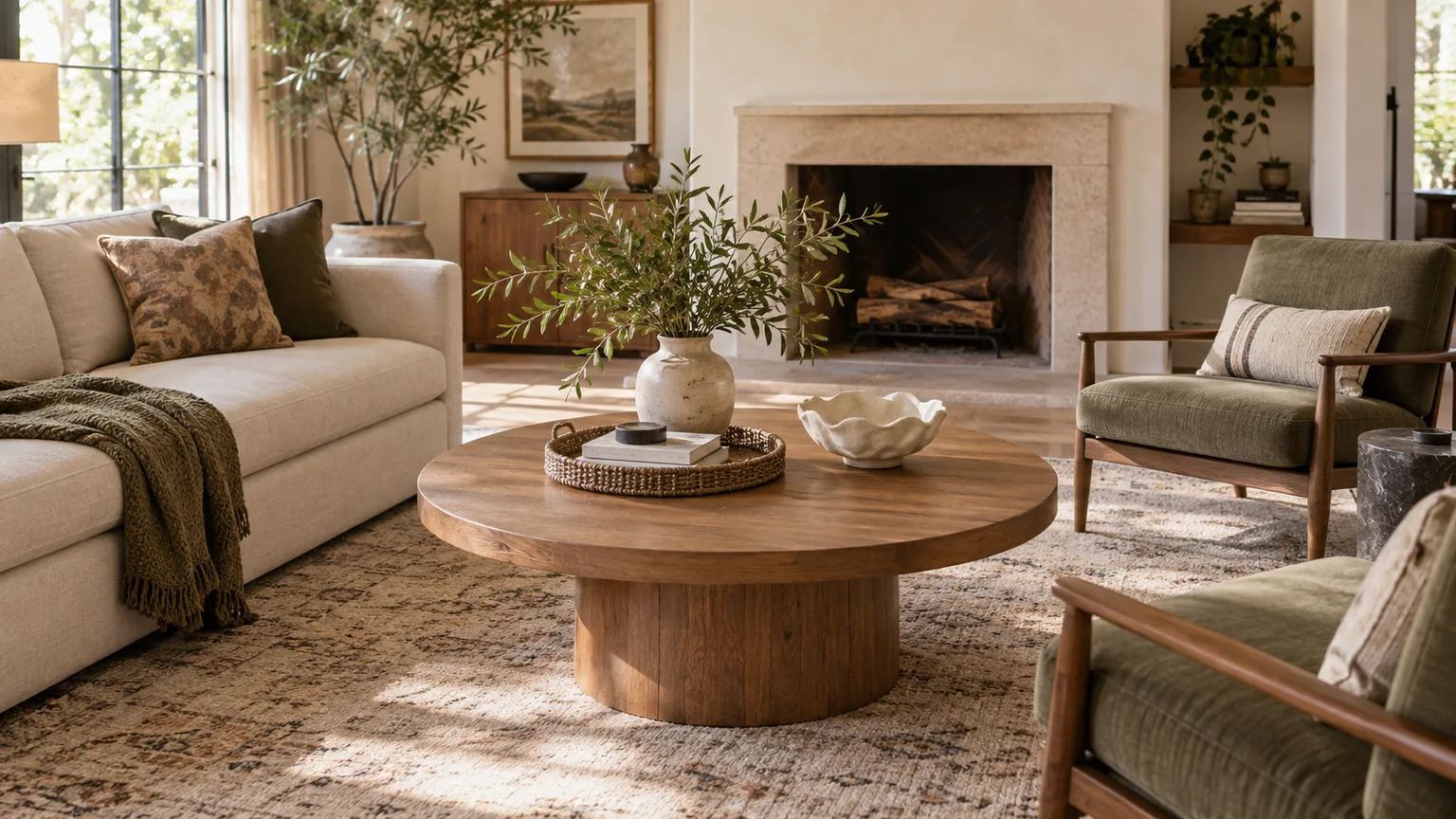
Measure the sofa seat from the floor to the top of the cushion where a person actually sits. A coffee table around the same height as the seat or slightly lower is a practical starting point; it lets someone set down a drink without reaching up over the cushion. Pottery Barn recommends a table level with or just below the sofa seat, while Apartment Therapy allows a wider height difference. Sofa cushions, body posture, and the table’s use differ, so sit down and test the reach rather than trusting one number.
Leave enough space between the table edge and the forward edge of the sofa for knees, feet, and standing up. Interior-design advice often lands around 14 to 18 inches, with a narrower gap sometimes useful in a compact room and a little more space helpful for deep sofas or loungers. Livingetc’s interior stylist describes roughly 40–50 centimeters as a comfortable working gap, while Homes & Gardens reports designers commonly using about 16–18 inches. Treat the range as a test zone, then adjust for the people and furniture in your room.
Protect the walking route
The coffee table should not block the route between a doorway, hallway, balcony, or the other side of the living room. Measure the path people actually take, including the angle needed to pass a chair or open a cabinet, and keep it separate from the sofa-to-table reach gap. A table can be the right size for the sofa but still be too large for the room’s traffic pattern.
Where space allows, design sources often suggest roughly 30 to 36 inches for a main walkway. Apartment Therapy uses 30–36 inches as a general pass-through range, and Homes & Gardens cites 36 inches for primary circulation paths. These are planning guides, not accessibility guarantees; door swings, mobility devices, household members, and local requirements may call for more space. If the walkway becomes pinched, choose a narrower top, a movable nesting set, or no central table.
Choose a shape that fits the seating plan
Shape affects more than appearance. It determines where people can sit, how far they have to reach, whether knees meet corners, and whether the table leaves a natural path through the room. Match the outline to the arrangement of seats and the room’s circulation before matching it to a style label.
Rectangular or oval for a sofa and straight path
A rectangular table often works well in front of a straight sofa because it repeats the sofa’s long line and provides a broad surface. It suits narrow rooms when its shorter depth preserves the route behind or beside it, but square corners can feel abrupt in a tight path. Measure from the nearest sofa edge and from the table’s far side to the next fixed object; if either gap is uncomfortable, shorten the top or try an oval.
An oval keeps much of a rectangle’s usable length while softening the ends people walk around. That can help when a larger table is needed but the room has a narrow circulation lane or children move through the seating area. A rounded rectangle offers a similar compromise when a pure oval looks too soft beside angular furniture.
Round or square for grouped seats
A round table can work well in a conversation area with chairs around a central point, or inside an L-shaped sectional where seats approach from more than one side. Its lack of corners can make the route feel easier to navigate, but a small round top may leave the ends of a long sofa without a reachable surface. Compare its diameter with the seats that will actually use it and consider a side table if some guests sit too far away.
A square table can anchor a deep seating group, a compact sectional, or two sofas facing each other. It uses the center of a square room efficiently, but a large square can crowd the aisle and its far corners may be hard to reach from a straight sofa. Try sitting in each main seat and reaching to the proposed tabletop; if the center is convenient only from one place, choose a smaller shape or divide the surface into two tables.

Nesting or split tables for flexible layouts
Nesting tables are useful when the seating arrangement changes or when the room needs extra surfaces only during company. Keep the smaller table tucked away for everyday floor space, then pull it next to a chair when more guests need somewhere to set a drink. Check that the nested pieces are easy to lift and return, and that their bases do not make it difficult to reach the larger table.
Two separate tables can serve a long sectional more evenly than one oversized piece. They can be spread along the seating edge or moved aside for a board game, exercise, or floor play, but they also create more legs and edges to navigate. If moving furniture is inconvenient, choose a single table with enough surface area and a predictable footprint instead.
Pick a material for daily use, not showroom photos
Material determines how a table looks in the room, how it wears, and how much care it asks of the household. A retailer’s coffee-table guide compares wood, glass, metal, and marble by appearance and use; the best choice still depends on the finish, construction, and manufacturer’s care instructions. Ask what will happen to the surface after a drink ring, toy impact, hot dish, or weekly cleaning before deciding that one material is “low maintenance.”
| Material or surface | Why it may fit | What to check |
|---|---|---|
| Solid wood or veneer | Warm, versatile look; a wood top can suit casual or formal rooms | Finish care, scratch and water-mark tolerance, edge finish, weight, and whether veneer can be repaired |
| Glass | Visually light and lets more of the rug show | Fingerprints, chips, edge shape, attachment to the base, and the product’s safety information |
| Metal | Slim profile and often straightforward to wipe down | Sharp corners, finish scratches, heat feel, and whether the frame wobbles |
| Stone or stone-look | Strong visual presence and a substantial surface | Weight, staining or etching care, base capacity, and how the top is secured |
| Upholstered ottoman | Soft edge and can double as a footrest or extra seat | Fabric cleaning, firmness, stability, and whether you need a separate tray for drinks |
This comparison is a screening tool, not a claim that every table in a category behaves the same way. A sealed stone top may need different care from an unsealed one, and a veneer product may be easier to move than a thick solid-wood slab. Read the maker’s instructions for the exact finish and ask how the top attaches to the frame.
Weigh maintenance, weight, and edge safety
Glass can make a crowded room feel less visually dense because more of the rug remains visible, but it shows fingerprints and needs secure support. Tempered glass is designed to reduce the harm caused by breakage; it is not unbreakable. The U.S. Consumer Product Safety Commission’s tempered-glass safety alert discusses horizontal tabletops and the voluntary standard for tempered glass, and the agency has recalled a specific glass table after reports of its top shattering. That recall is not evidence that all glass tables are unsafe; it is a reminder to check the exact model, recall status, construction, and care instructions.
If a child is learning to walk or the room is an active play area, prioritize a stable table with a forgiving edge and think carefully before adding a glass surface. Round corners can reduce sharp points but do not remove the risk of collision, and a heavy stone top can be difficult to reposition or secure. For any home, gently test for rocking, exposed fasteners, loose tops, and edges that catch clothing or skin before purchase.
Add storage and special features only if they will work
Storage is useful when it solves a recurring clutter problem. A lower shelf keeps baskets, board games, or blankets within reach without opening a drawer; drawers hide remotes and chargers but take clearance to open. A lift-top table may bring a surface closer for laptop work or a meal, while also adding weight and moving parts that should be tested in person if possible.
Match the feature to the item you plan to store. Measure a game box, laptop, controller, or basket and compare it with the usable interior, not just the table’s outside size. Check whether the lift-top can open without hitting the sofa, whether fingers can be pinched at the hinge, and whether you can reach the compartment when the table is against the couch.
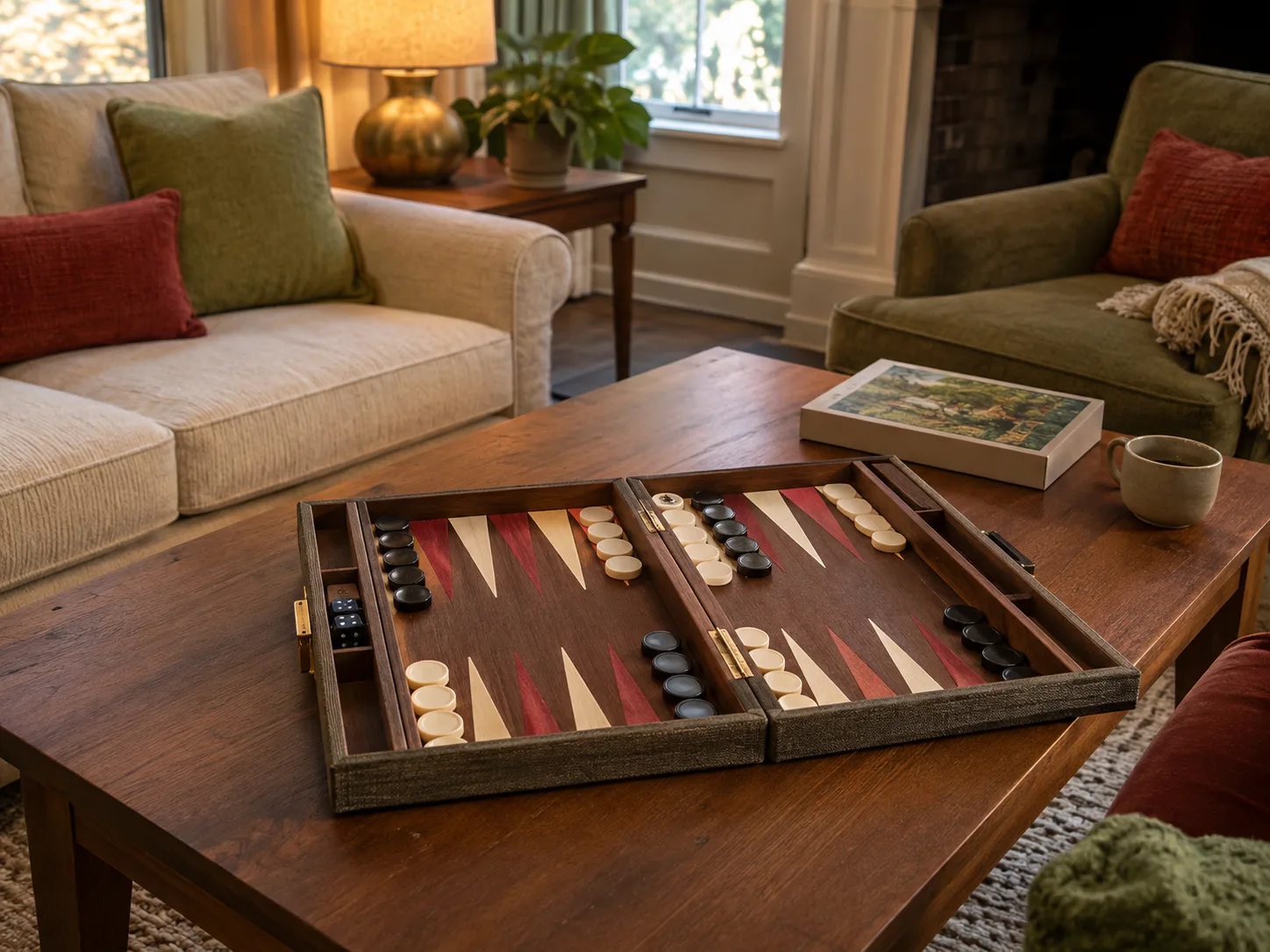
Some storage tables are visually bulky even when their footprint is small. If the room already has a storage ottoman, media console, or built-in shelves, choose a simpler table and keep the center lighter. Paying for drawers that remain blocked by a rug or seldom get opened adds complexity without improving the room.
Match the table visually to the room
The table does not have to match the sofa or every other wood tone exactly. A room often feels more intentional when one or two details repeat—such as a metal finish, wood undertone, or rounded shape—while another feature provides contrast. A pale rug and low sofa can take a visually solid table; a dark, heavy sectional may benefit from a thinner base or a top that lets the rug remain visible.
Look at visual weight as well as measured size. A thick solid top on block legs may feel more imposing than a slim metal frame with the same length and depth. If the sofa has a low profile, a tall bulky table can overpower it; if the sofa has a deep seat and broad arms, a tiny delicate table may feel disconnected even when it meets a length ratio.
Finish also changes how visible a table’s wear will be. High-gloss black or clear glass may show dust, fingerprints, or scratches more readily than a textured, matte, or mid-tone surface. The best color and material are the ones you can maintain and enjoy in the room’s actual light, not only under a showroom’s brighter lighting.
If you are choosing between finishes, compare them with the largest fixed pieces in the room: the sofa, rug, and flooring. A small wood sample placed beside all three can reveal whether its undertone reads pink, yellow, gray, or orange in your daylight. Aim for a related undertone or a deliberate contrast rather than trying to match two woods exactly; nearly matching finishes can look accidental when their grain or color differs. In a compact room, a lighter top or open base may keep the floor visually continuous. In a large room with pale upholstery, a darker or more substantial table can give the seating group a clear center. These are visual options, not rules: choose what looks balanced from the doorway and from the seats where you spend the most time.
Test the layout and table before buying
Before checkout, verify that the table fits both the floor plan and the way people sit. Check the listed dimensions, table weight, assembly requirements, warranty, delivery method, and return conditions. The displayed price is only part of the decision if delivery, assembly, or return pickup costs extra.
Buying in person lets you test the seated reach, knee clearance, edge, finish, and stability. Online shopping can offer more dimensions and styles, but compare the specification sheet with your measurements and look for photos that show the table beside seating; color and scale can appear different on a screen. If a detail matters and the listing does not answer it—such as glass type, stone care, or the weight of the top—ask the retailer before ordering.
Tape out dimensions and check the delivery path
Use painter’s tape or paper on the floor to mark the table’s full top dimensions, then mark the sofa gap and the route around it. Pottery Barn’s furniture-measuring guidance also recommends taping out dimensions and checking delivery passageways. Sit in every main seat, reach for an imaginary glass, stand up, and walk the usual route; a few minutes of testing can reveal a table that looks right on a screen but feels awkward in the room.
Test more than one footprint if you are undecided. Mark the shorter and longer length options separately, and try a rectangle and a circle with paper or painter’s tape; a round tabletop’s diameter can be easier to assess than its listed visual scale in a product photo. Place a temporary box at the proposed height to check whether the surface feels reachable without leaning forward. If the room has a rug, test with the rug in its normal position and make sure the table legs can sit securely rather than rocking on a thick edge or bunching the pile. Include the full footprint of a pedestal, splayed legs, or nesting pieces, not only the outline of the top.
Use the same mock-up to test the room at busy moments: two people passing, someone opening a drawer, or a child playing on the rug. A layout that works when the room is empty may become awkward when an ottoman, pet bed, or side chair is in its everyday spot. Take a photo from the doorway and from each seat; the pictures can make scale problems easier to notice than standing over the tape marks.
Check the product and package dimensions against the doorway, hallway, stair turn, elevator, and any tight corner between the entrance and living room. A coffee table may be smaller than a sofa, but a thick top or fixed legs can still make the package difficult to bring upstairs. Confirm whether the legs detach, whether assembly is required, and what happens if the piece cannot be delivered through the route.
Set a spending limit for the total delivered cost, including assembly and any likely return fee. If your budget is tight, compare simple tables, secondhand pieces with sound joints, or an existing ottoman plus a sturdy tray; spend for the feature that solves a real problem rather than for a storage mechanism you may not use. Retail policies change, so read the current terms for the seller and model you choose.
When a coffee table is not the best choice
You do not need a coffee table just because a living room has a sofa. In a narrow room, a central table can interrupt the only walking route; in a family room, children may need clear floor space; in a conversation area, a small side table beside each seat may be more useful than one large surface that only the middle seats can reach.
Try a C-shaped side table if one person needs a laptop or drink close to the sofa, nesting tables if you need a spare surface occasionally, or an ottoman with a tray if you want a soft footrest and removable tabletop. A side table or a pair of drink tables can also keep cups within reach when the main sofa and chairs sit far apart. A current interior-stylist guide notes that a small central table can work when side or drinks tables handle the practical reach for other seats.
Leave the center open when the room already functions well without a table. That choice preserves circulation and makes the layout easier to rearrange; it does not make the seating area incomplete. If you later find that people keep setting drinks on the floor, add a small movable surface where it is actually needed.
Conclusion
The right coffee table is the one that fits your seats, clears the route through the room, and does the jobs your household needs. Measure the sofa and open floor area, use common proportions as a starting point, and test height and reach by sitting down. Then choose a shape, surface, and feature set that you can maintain, bring into the room, and live with comfortably.