13 Best Flowers for Cut Arrangements to Grow at Home
Choose 13 cut flowers by bouquet role, season, and vase life, then learn when to harvest and how to condition stems for fuller, longer-lasting arrangements.

A good cutting garden is less about finding one flower that lasts forever than growing stems for different jobs. A handful of strong focal blooms, some upright spikes, and lighter flowers to soften the gaps can make a convincing bouquet even when the garden is producing only a few stems at a time.
These 13 choices cover spring through fall, easy annuals and longer-lived plants, and both reliable workhorses and short-season favorites. Bloom timing and vase life depend on cultivar, weather, harvest stage, and handling, so use the recommendations as a practical starting point rather than a guarantee.
Choose Flowers by Season and Bouquet Role
Before you buy seed or tubers, decide what you want to cut. Focal flowers such as dahlias, peonies, roses, and sunflowers draw the eye; line flowers such as snapdragons, gladiolus, and lisianthus give an arrangement height and direction; fillers such as cosmos and statice add movement and connect the larger blooms. This role-based mix is more useful than planting 13 varieties that all make the same round, dense flower head.
Match that mix to your local season and the space you have. Zinnias, cosmos, and sunflowers are annuals you can sow each year, while peonies, roses, and established alstroemeria can return for multiple seasons in climates they tolerate. A cutting bed is easier to weed, support, and harvest when flowers are planted in accessible blocks or rows; Fine Gardening also points out that a cutting garden can include perennials as well as annuals, so it does not need to be replanted in full every spring. The RHS selection guide groups useful cutting plants by season, while Fine Gardening’s cutting-garden guidance offers examples of mixing annual and perennial choices.
Think of the bed as a relay rather than a simultaneous display. Cool-season snapdragons and sweet peas can start the year; peonies add a brief spring focal window; warm-season zinnias, cosmos, and sunflowers carry summer; and dahlias and statice help bridge late summer into fall. Those windows slide with latitude, frost dates, heat, and cultivar, so use local planting calendars and seed-packet maturity notes instead of planning around a fixed month. For single-stem sunflowers, small successive sowings can stretch the supply; leave room in the plan for the slower, permanent plants you most want to keep. This spreads the harvest and makes it less likely that every flower peaks before you have a vase ready. A sunny, well-drained strip and a bucket are enough to begin; a dedicated cutting bed is convenient, but not required.
Zinnias
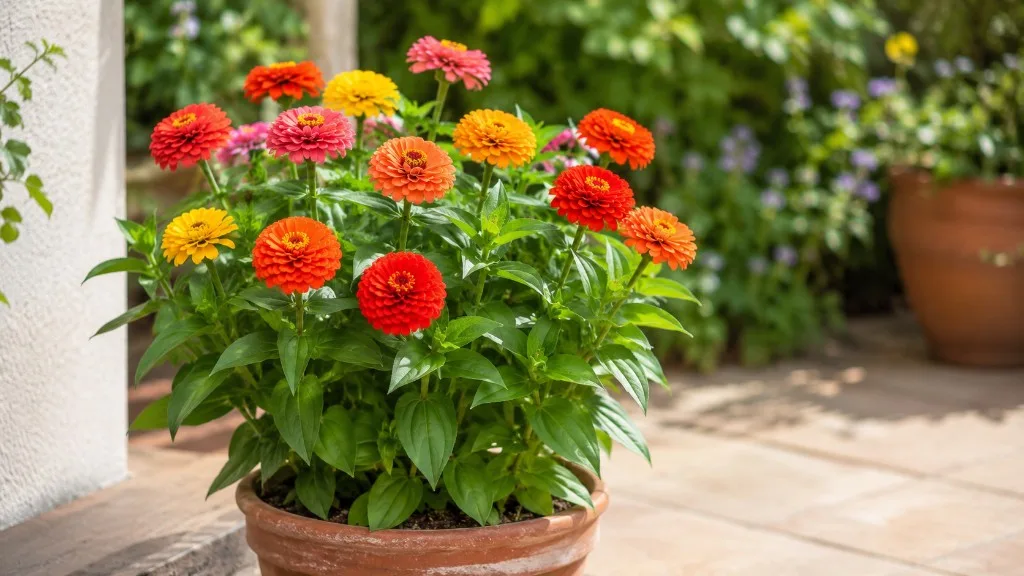
Best for: a first cutting garden, bright summer color, and repeated harvests. Zinnias produce sturdy stems in many colors and forms, and regular cutting encourages a well-branched plant to make more flowering stems. They are a practical choice when you want plenty of bouquet material without waiting several years for a shrub or perennial to mature.
Give them sun, airflow, and enough room for the mature plants; crowded foliage can stay damp and become more vulnerable to disease. Cut a stem when the flower is open and the stem below it feels firm rather than floppy. If you cut only the top bloom and leave a long bare stem, the next flush may branch lower down, so harvest above a pair of leaves where new growth can develop.
Cosmos
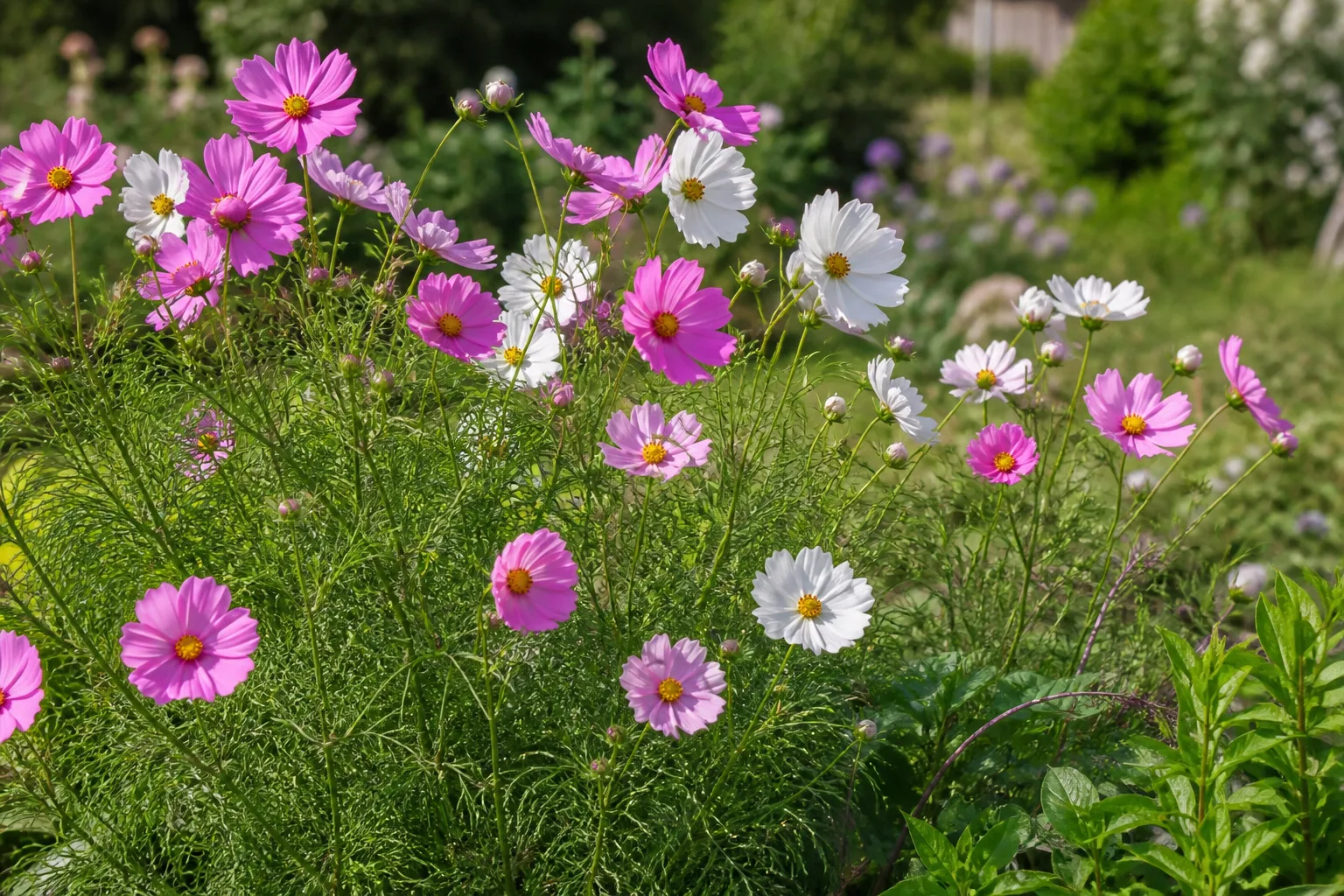
Best for: airy filler and easy movement in a relaxed bouquet. Cosmos flowers sit above fine, fern-like foliage on branching stems, which makes them useful between denser blooms such as dahlias and carnations. They are annuals and can provide a generous run of flowers through warm weather once established.
Cosmos often grow tall and leafy in very rich soil, so prioritize sun and drainage instead of feeding heavily to force growth. Harvest individual stems once the petals have opened and the stem is reasonably firm; flowers picked too young may not develop well in the vase. Leave some flowers to form seed if you want volunteers next season, but deadhead the rest to keep the plant focused on new blooms.
Snapdragons
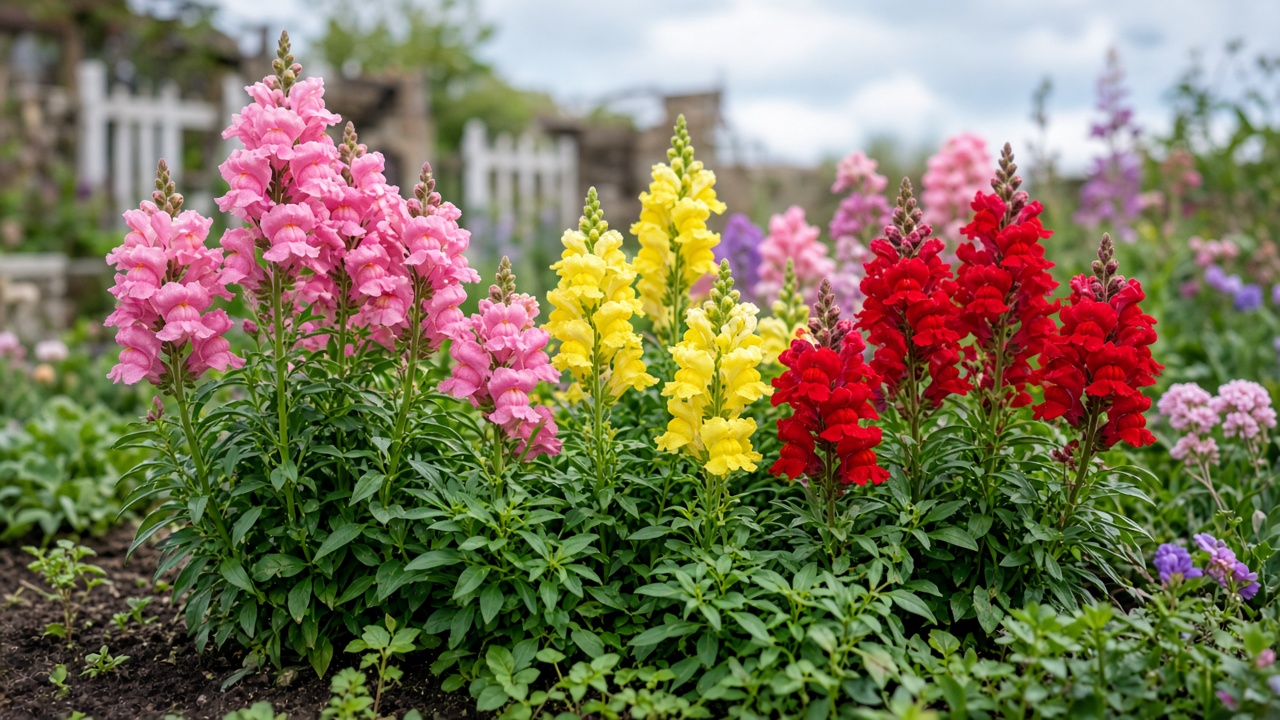
Best for: vertical structure and cool-season color. The tall flower spikes add a clean line that breaks up rounded blooms, and a group of snapdragons can make a small arrangement look taller without adding much bulk. In many climates, they perform best in spring or fall rather than the hottest part of summer, though cultivar and local weather make a difference.
For the longest display, cut a spike when the lower flowers have opened and the upper buds still show color. In a UF/IFAS container trial in central Florida, snapdragons were cut with roughly one-third to one-half of the florets open; that gives a useful benchmark, although its cool-season calendar is specific to that climate. Remove the lower leaves that would sit in vase water and place the stem in water promptly. Sturdy support can help taller varieties in windy beds; if you want long stems for bouquets, choose a cut-flower or tall cultivar rather than a compact bedding type. The UF/IFAS trial also found that established snapdragons continued producing smaller spikes after the first cut, until summer heat began to limit flowering.
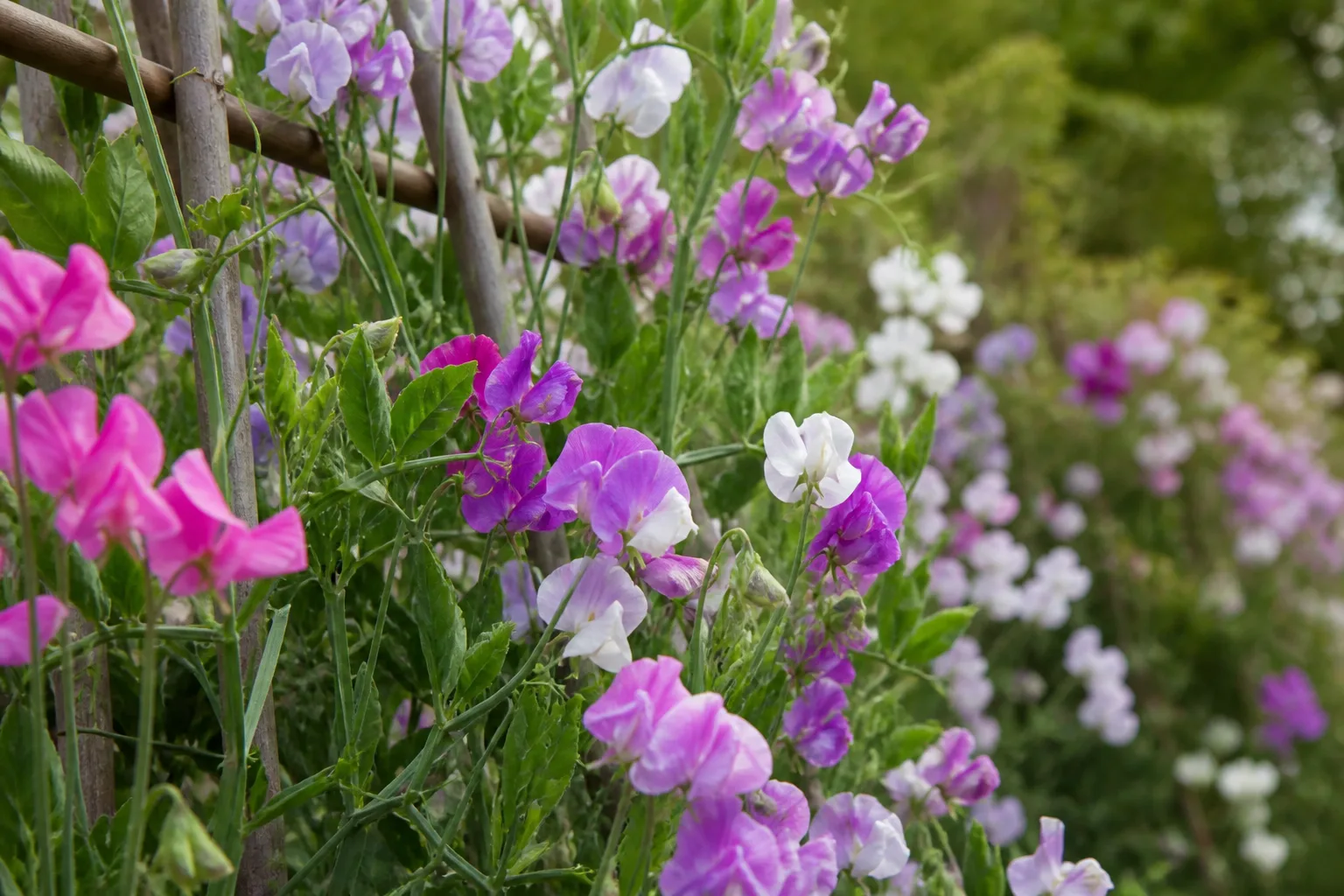
Sweet Peas
Best for: fragrance and delicate, romantic stems. Sweet peas climb rather than stand independently, so a trellis or mesh support is part of the planting plan, not an optional extra. Their flowers are less visually heavy than roses or dahlias, which makes them especially useful in a small vase or an informal hand-tied bouquet.
Keep picking the flowers instead of letting pods mature if you want the vines to keep producing. Cut when several flowers on a stem have opened and more buds remain, then put the stems straight into water; the more mature blooms provide immediate color while the buds can continue opening. Sweet peas are not the right crop when you need thick, rigid stems or a heat-proof summer performer, but their scent and lightness are hard to replace.
Sunflowers
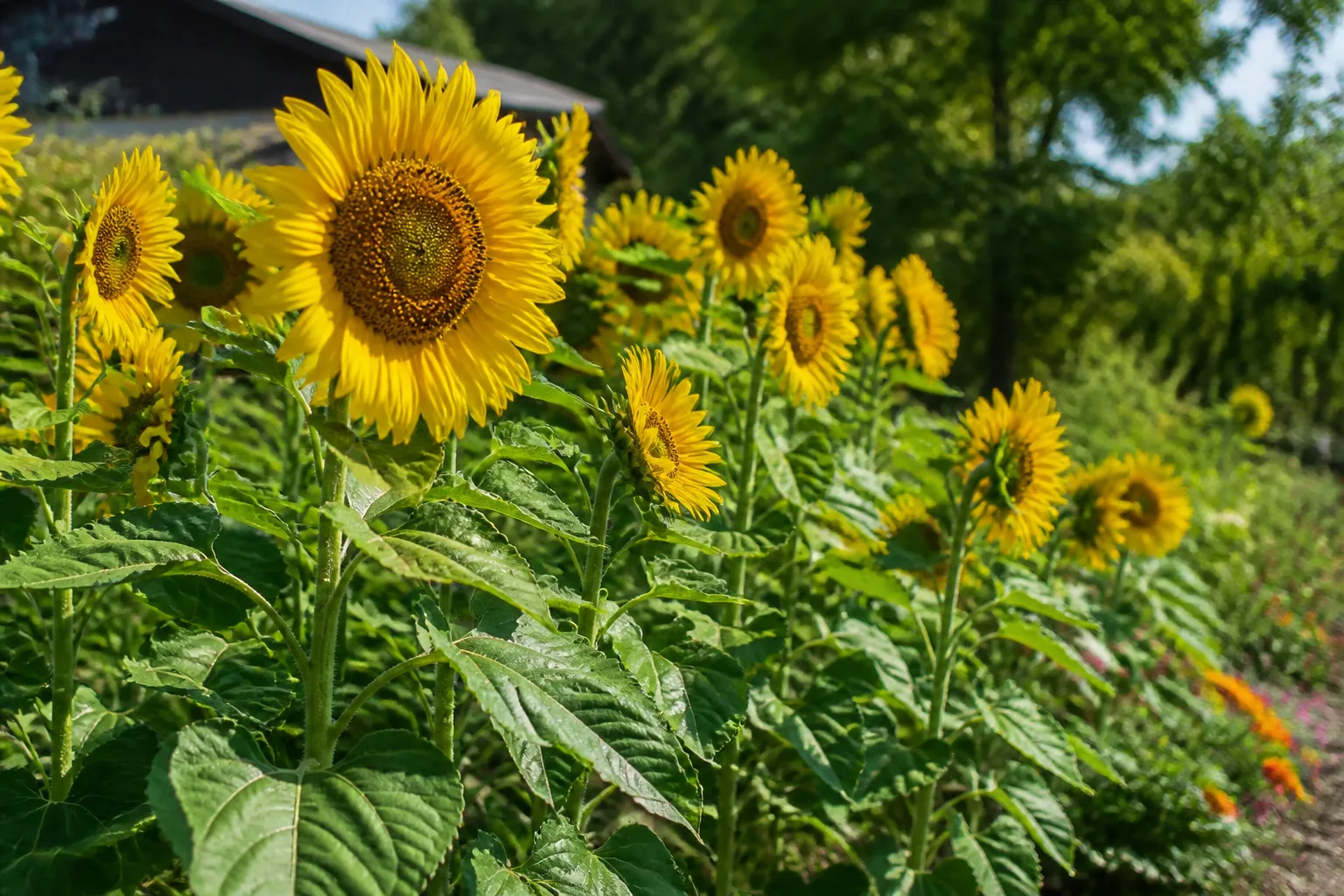
Best for: a bold focal bloom and easy summer harvests. Single-stem varieties usually give one main flower per plant, so sowing another small batch every week or two can extend the supply; branching types produce multiple shorter stems over a longer period. Utah State University Extension describes these as different production choices: single-stem cultivars give longer stems and often pollenless blooms, while branching forms trade some stem length for several flowers per plant. Local performance varies, so check the cultivar notes for your climate.
For a cut stem that opens well in the vase, harvest when the outer petals begin to lift and the flower starts to cup, before the center disk turns fuzzy. Cutting after the bloom is fully open shortens its useful display. USU Extension’s sunflower production guide includes a clear harvest-stage sequence and explains how cultivar type affects stem production.
Dahlias
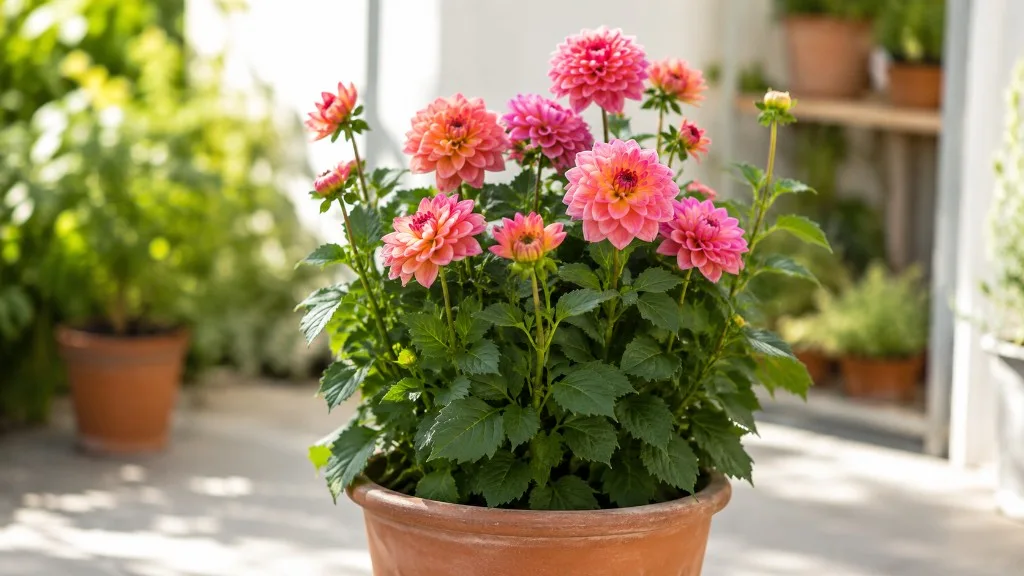
Best for: late-summer drama and a wide range of flower shapes. Dahlias produce everything from small, tidy blooms to dinner-plate heads, so choose a size that your vase and stems can support. A large bloom is a natural focal flower, while smaller varieties are easier to mix into everyday arrangements without taking over.
Do not cut a tight dahlia bud expecting it to finish opening indoors; wait until the bloom is open enough to show its form, but before its petals begin to age. Cut in the cool part of the day and place the stems in water quickly, especially in hot weather. Dahlias need a longer warm season than many annuals and may require lifting or winter protection in colder regions, so check local growing guidance before choosing them as the backbone of a small garden.
Peonies
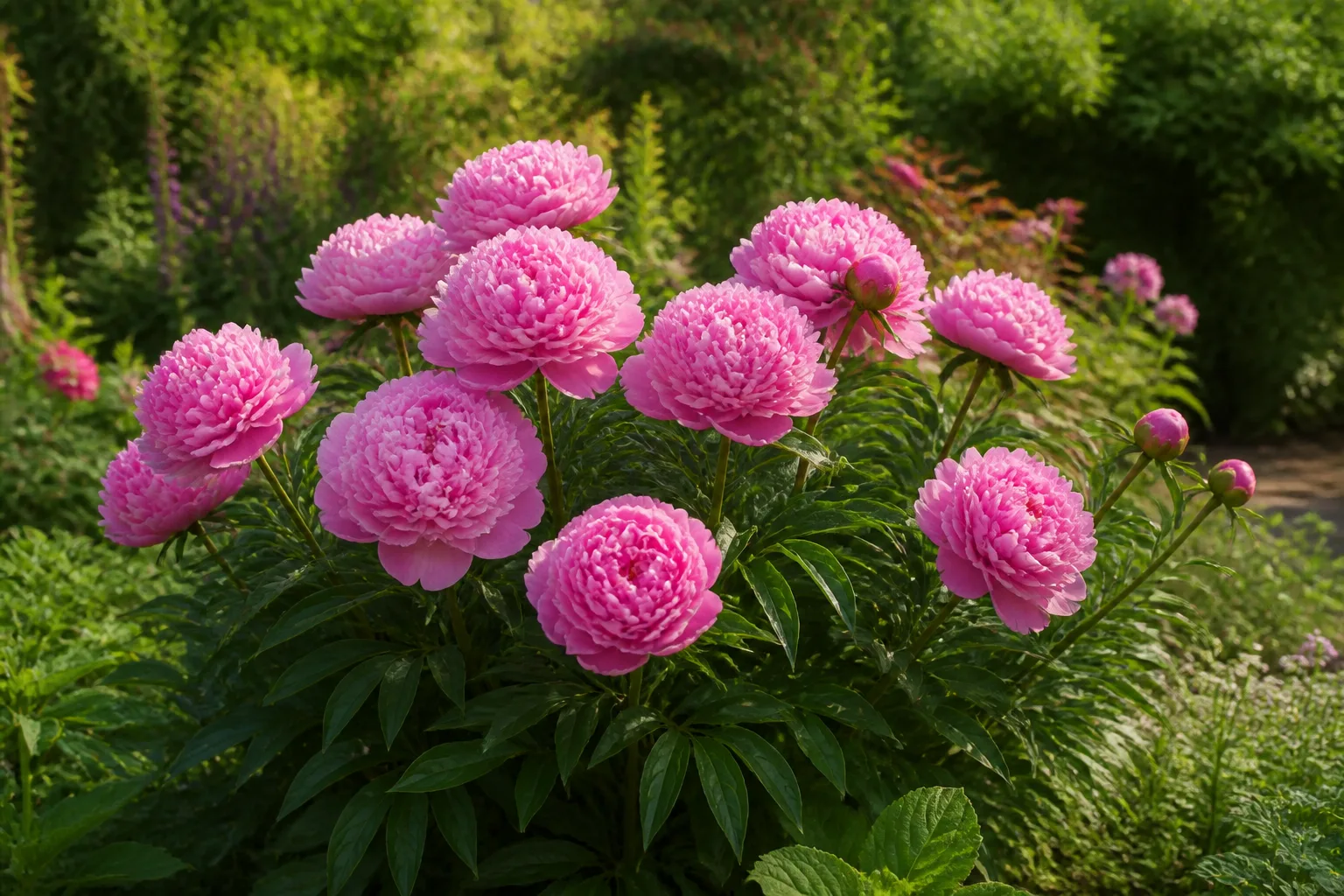
Best for: a short, luxurious spring season. Peonies bring a large, soft focal bloom and are perennial, so an established planting can return year after year. Their main limitation is timing: the flowering window is brief, and one peony plant will not supply fresh stems continuously through summer.
If you want to enjoy the flowers indoors, cut buds when they feel soft and show color, not when they are rock-hard and green. Very tight buds may fail to open after cutting, while fully open flowers have less display time remaining. Leave plenty of foliage on the plant after flowering so it can replenish energy for the next season; if the border display matters more than a vase, cut only a few stems.
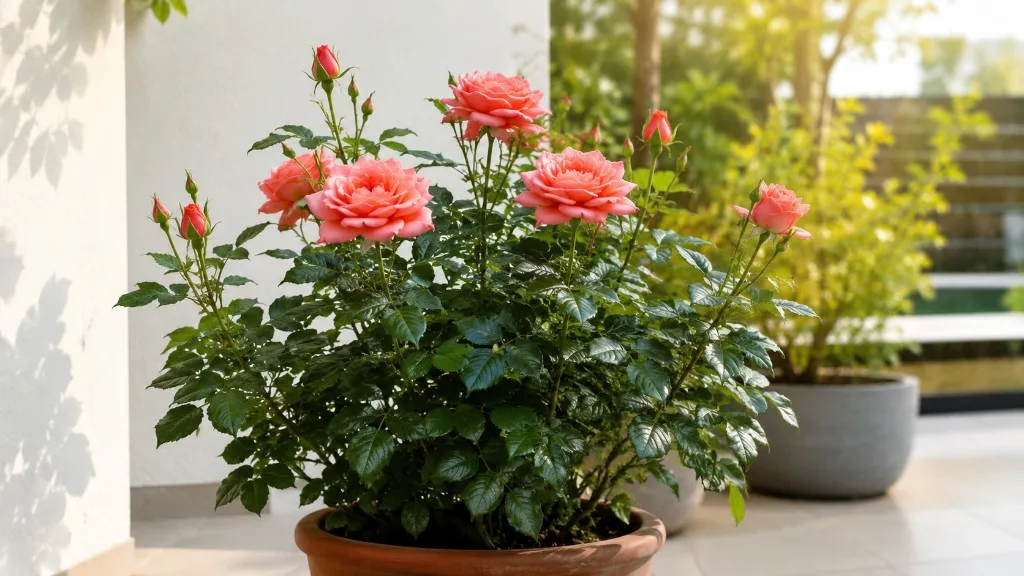
Roses
Best for: a classic focal bloom, fragrance, and a long season from repeat-flowering varieties. Garden roses vary enormously: some have short stems or many petals that open slowly, while cut-flower cultivars are selected for stem length and vase use. If bouquets are the goal, choose a repeat-blooming rose with strong stems rather than assuming every landscape rose will cut well.
Harvest when the outer petals have loosened and the bud is beginning to open; a very tight rose may not open fully after cutting. Use sharp, clean pruners, avoid taking too much from a newly established plant, and remove foliage that would sit below the vase waterline. Roses are woody plants, so treat cutting as light pruning and avoid sacrificing the next flush of flowers for one oversized bouquet.
Carnations
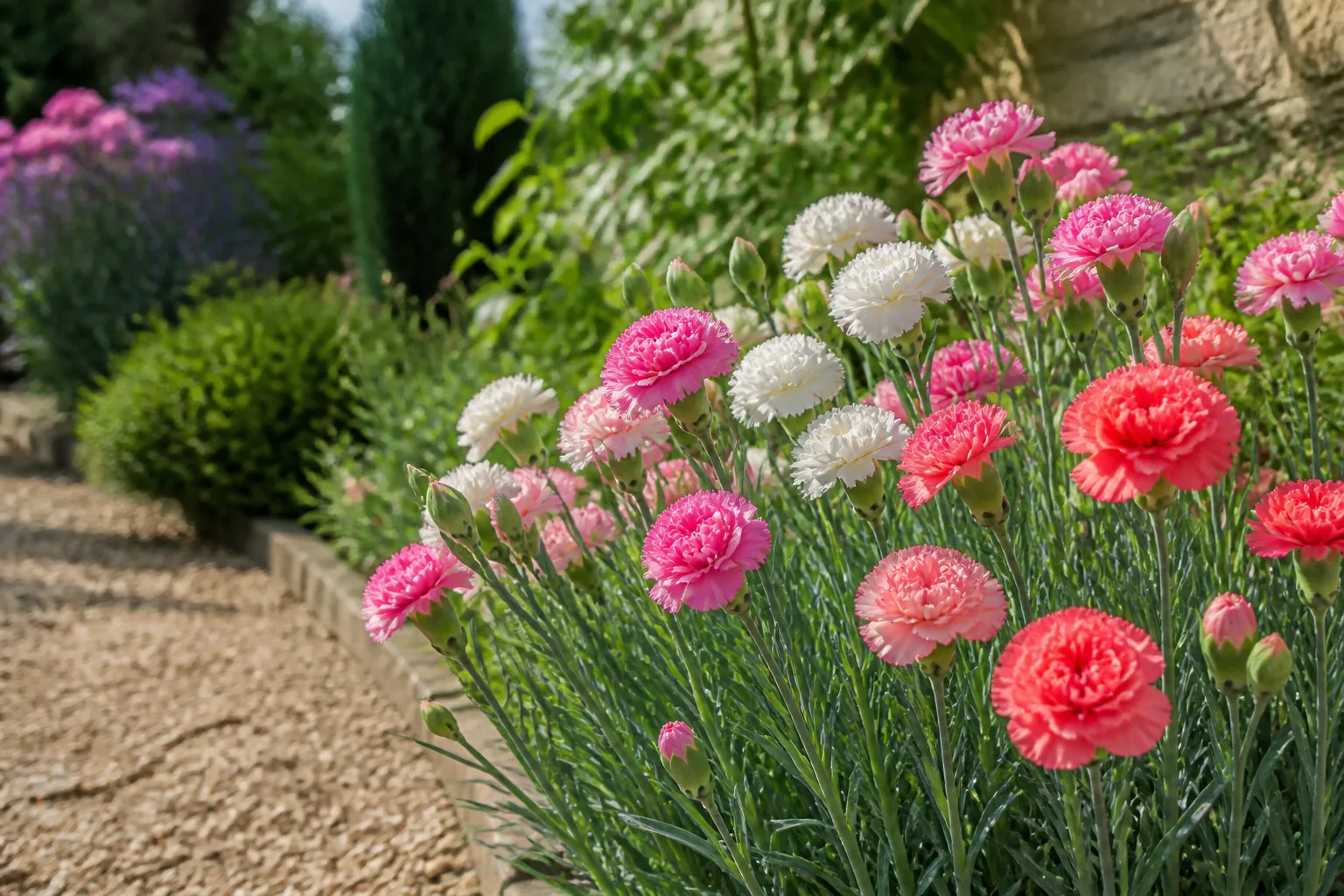
Best for: durable stems, clove-like fragrance, and a long vase display. Carnations can be grown as annuals or perennials depending on the type and climate, and spray varieties carry several buds along a stem for a fuller look. They are less trendy than some novelty blooms, but that misses their practical strength: they combine easily with nearly any focal flower and can hold up during transport and arranging.
Harvest stage depends on the type. Utah State University Extension recommends cutting standard carnations when the bud shows color or the petals are beginning to open, while spray carnations need at least one open flower and additional buds starting to open. Their trials report long potential vase life under proper handling and storage, but a home bouquet will vary with cultivar and care. USU Extension’s carnation guide explains why a spray stem should not be cut at the same stage as a single-bloom stem.
Lisianthus
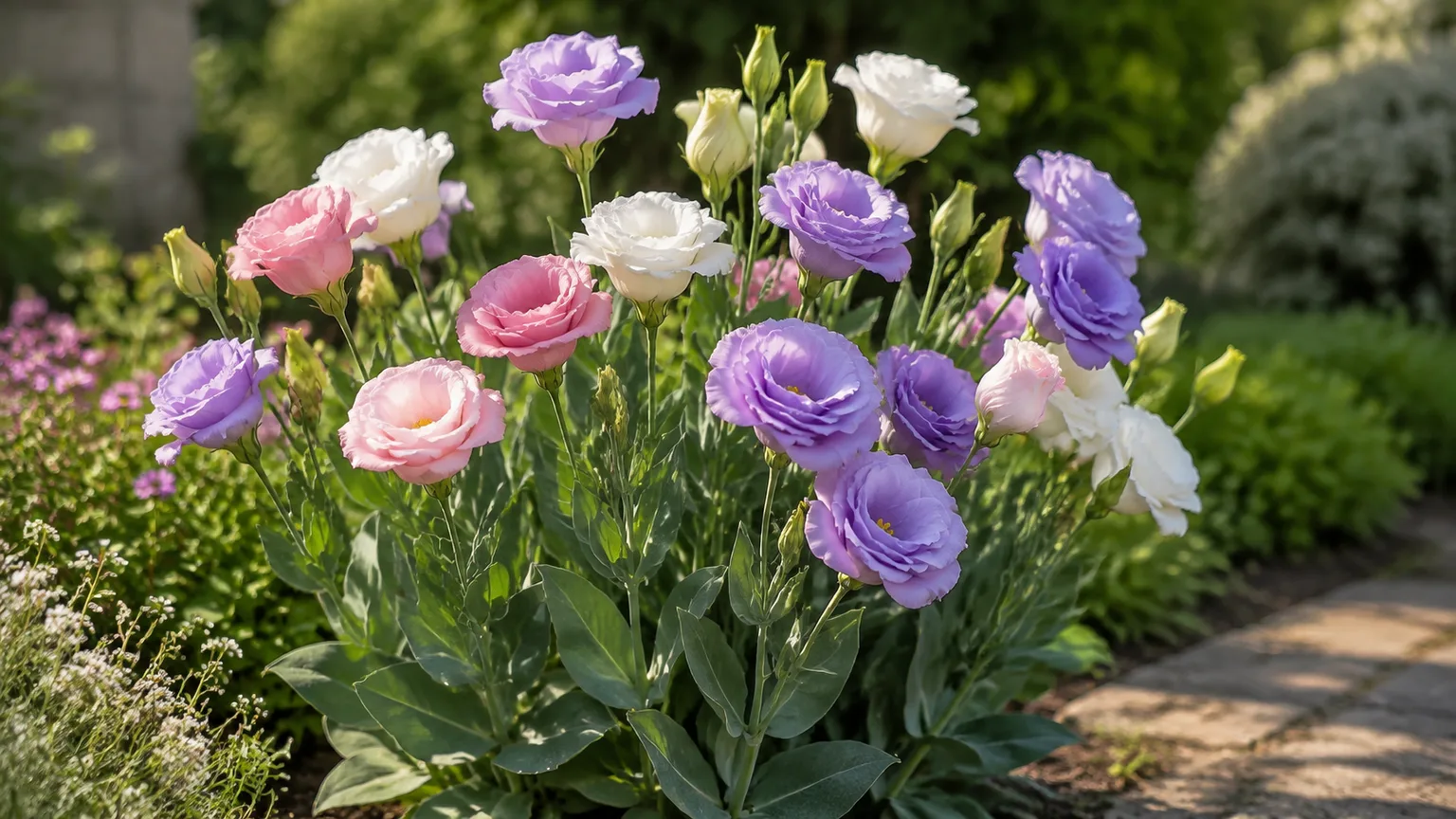
Best for: refined, rose-like blooms with a lighter garden feel. Lisianthus stems carry multiple elegant flowers, so one harvested stem can contribute several blooms to an arrangement. They also suit bouquets where you want a softer outline than a large dahlia or sunflower but need more structure than a small filler flower.
The trade-off is patience. Lisianthus is slow from seed and can be frustrating for a first-time grower, so buying established plugs is often more practical than starting late from seed. Give it a long, warm growing season and steady moisture without waterlogged soil; choose it when you are willing to plan ahead for a polished bloom, not when you need fast results from direct-sown seed.
Alstroemeria
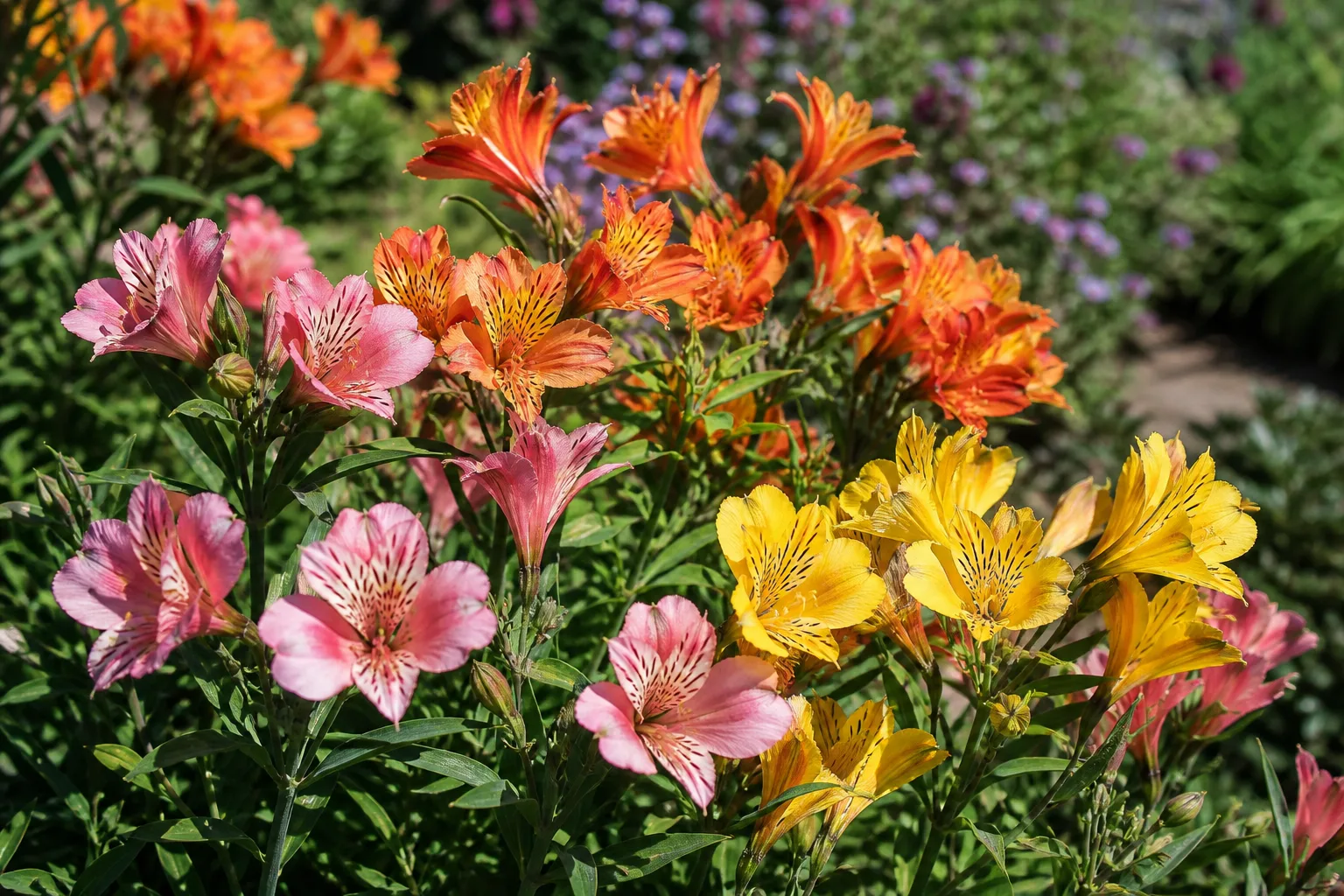
Best for: a dependable spray flower that bridges focal blooms and filler. Alstroemeria, also called Peruvian lily, has several flowers on each stem and a broad color range, making it useful in mixed arrangements. Established clumps can provide recurring stems in suitable climates, though the exact flowering window depends on variety and local conditions.
Avoid cutting the entire plant down just to gather a few flowers. Select mature flowering stems and leave healthy foliage to support new growth. A useful safety distinction: Alstroemeria is not a true lily in the genus Lilium. The ASPCA says Peruvian lilies can cause stomach upset if eaten but are not expected to cause the severe kidney injury associated with true lilies; still, keep any plant material out of reach of pets that chew flowers.
Gladiolus
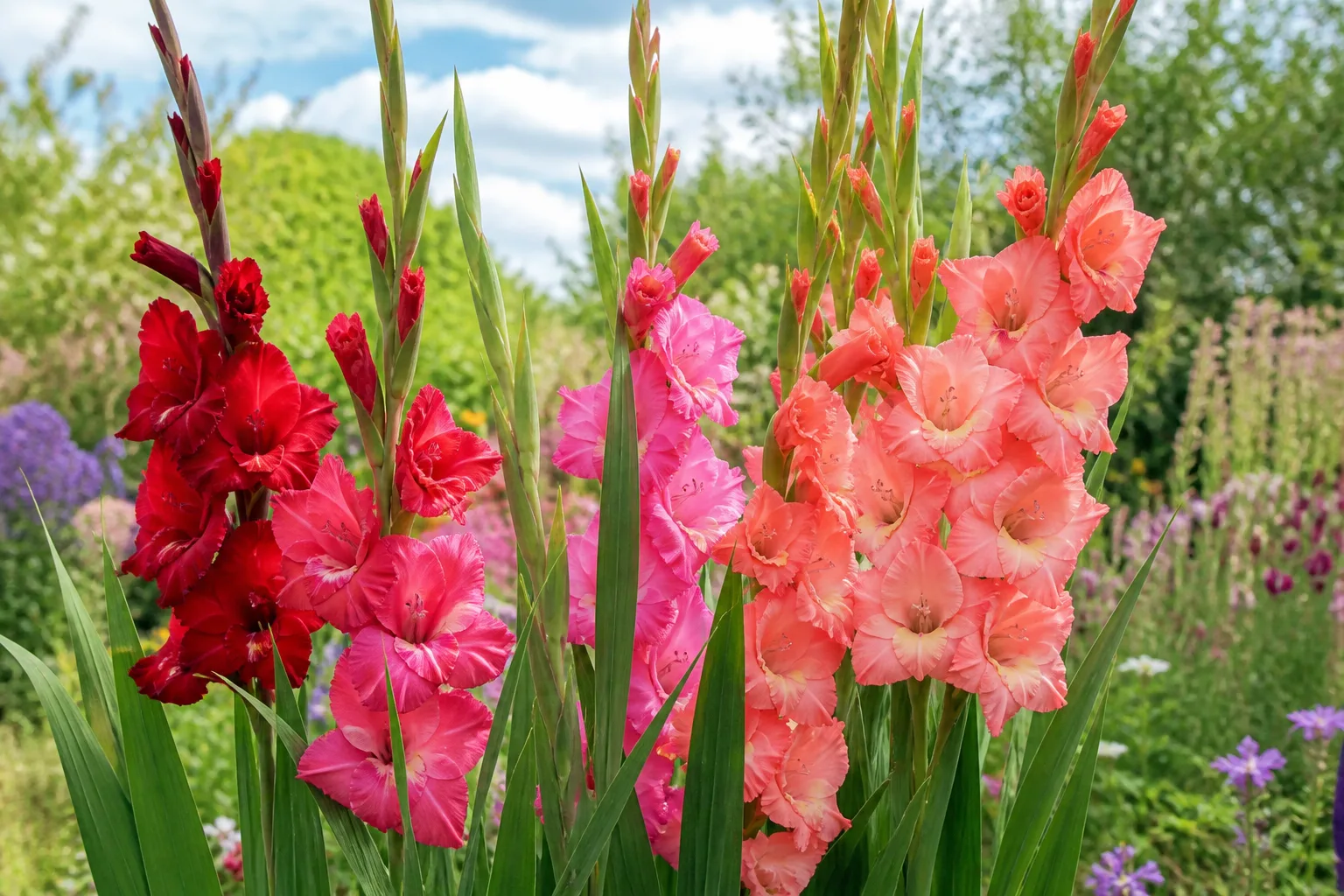
Best for: height, clean vertical lines, and staged summer color. Gladiolus grows from corms and sends up a flower spike that can serve as the tallest element in a bouquet. Planting corms in batches instead of all at once helps avoid a single crowded flush followed by weeks without stems.
Cut when the lowest florets have just opened and the upper buds are still closed. The remaining flowers can open progressively in the vase, giving the spike a longer display. Leave the foliage in place after bloom so the corm can recharge for another season, and support the stems if wind or heavy blooms make them lean. This is a better choice for a gardener who wants height than for someone looking for a bushy, repeated-cut annual.
Statice
Best for: long-lasting texture and a useful flower to dry. Statice (Limonium) produces branched sprays of papery-looking flowers that add color without competing with roses or peonies. It fills the practical gap in a garden list: most other choices make a focal bloom or line, while statice makes the bouquet look finished around the edges.
Harvest stems when most of the tiny flowers are showing color and the branches feel firm. Statice is valued for drying because its papery bracts retain their appearance after moisture leaves the stem; hang small bunches upside down in a dry, airy place if you want material for later arrangements. It still needs a sunny, well-drained site, and its color can fade with age or direct sun, so use dried stems indoors rather than expecting them to stay bright in a sunny window.
Harvest Flowers at the Right Stage
The best time of day is usually early morning, when stems are hydrated and the garden is cool. If morning is not possible, harvest in the evening after plants have recovered from heat; avoid cutting flowers at midday during a hot spell. Keep a clean bucket of water beside you and place each stem in it as soon as it is cut.
Bloom stage depends on the flower. Many kinds are best cut as color first appears, but the rule is not universal: a tight rose or dahlia bud may not open reliably, while a spike such as gladiolus is often cut after its lowest flowers open. Delphinium-type spikes may need more flowers open before harvest. The RHS conditioning advice gives these useful contrasts, so look up the specific flower instead of using one maturity rule for every stem. RHS guidance on cutting and conditioning recommends morning harvest and a species-aware approach to bloom stage.
Use sharp snips or pruners, and cut above a healthy leaf node when the plant will branch from that point. For a one-stem crop, such as a single-stem sunflower, that first cut may be the entire harvest from the plant. For repeat bloomers, remove faded flowers before they set seed unless you are intentionally saving seed or want birds to feed on the seedheads.
Condition Stems for Longer Vase Life
Start with a clean vase, clean tools, and fresh water. Remove leaves that would sit underwater, trim the stem ends with a sharp blade, and put the flowers into water promptly. Conditioning does not mean using a complicated homemade mixture; it means reducing avoidable water stress and decay before the arrangement reaches the table.
Use a commercial flower-food packet if you have one, mixing it with the exact amount of water on the label. NC State Extension notes that floral preservatives may fail or damage flowers when the concentration is wrong, and that the best preservative can vary by species and water quality. Do not guess at bleach, sugar, vinegar, soda, or aspirin recipes; clean water is a better fallback than an improvised formula. NC State Extension’s postharvest guidance explains the roles of clean handling, water balance, temperature, ethylene, and correctly mixed preservative.
Keep the vase out of hot direct sun, away from heating vents, and away from ripening fruit. Check the water daily, top it up if the stems have drunk it down, and replace it if it turns cloudy or develops debris. Recut the stem ends when they look dry or water uptake slows rather than cutting every stem on an arbitrary daily schedule. A cool location and fresh water cannot reverse an old or overheated bloom, but they can prevent avoidable decline.
Build a Balanced Bouquet Without Stripping the Garden
Use an easy formula: choose one or two focal flowers, add a few upright stems for height, then soften the gaps with smaller blooms and foliage. For example, a sunflower or dahlia can anchor the arrangement, snapdragons or gladiolus can create a vertical line, and cosmos or statice can fill the spaces around them. A single color family with varied flower shapes often looks more cohesive than a dozen unrelated colors and forms.
Cut more stems than you think you need, but harvest selectively. Remove a few stems from several plants rather than taking every bloom from one perennial or rose bush; this keeps the garden looking intentional and leaves enough foliage to support regrowth. Put the flowers in water while you decide on the vase and trim them to final length only after you have chosen a container.
Safety and Common Mistakes to Avoid
Do not assume that a bouquet is pet-safe because it came from a florist or because the flower is commonly grown in gardens. True lilies (Lilium) and daylilies (Hemerocallis) are especially dangerous around cats; the ASPCA warns that all parts of true lilies, pollen, and even vase water can cause severe kidney injury in cats. If a cat may have chewed or contacted a true lily, contact a veterinarian or animal poison-control service immediately rather than waiting for symptoms. Peruvian lily (Alstroemeria) is a different plant and has a different risk profile, but it can still cause gastrointestinal upset if eaten. The ASPCA’s lily guidance distinguishes these plants and advises immediate veterinary help after possible true-lily exposure.
Other avoidable mistakes are cutting during heat, putting foliage below the waterline, using a dirty vase, picking every flower too young, or expecting a bouquet to last according to one fixed number. Some blooms open after harvest and others do not; some varieties keep producing after a cut and single-stem crops will not. Read the seed or plant label, learn the growth habit, and keep notes about which flowers actually thrive in your own garden.
Conclusion
For reliable home arrangements, begin with a few annuals that make repeated stems—zinnias, cosmos, and a succession of sunflowers—then add one or two seasonal perennials or specialty blooms that you love. Use carnations, alstroemeria, or lisianthus when durability matters, and add snapdragons, sweet peas, or statice to give bouquets shape and texture.
Harvest in cool weather, cut each flower at its own useful stage, and move stems into clean water right away. A thoughtfully chosen mix will give you better arrangements and a longer cutting season than planting many varieties without considering when they bloom or what job each stem will do.