Bringing Potted Plants Indoors for Winter: What to Move
Not every potted plant belongs in your living room. Learn which containers must move before frost, which can stay outside, and how to transition them without shock.
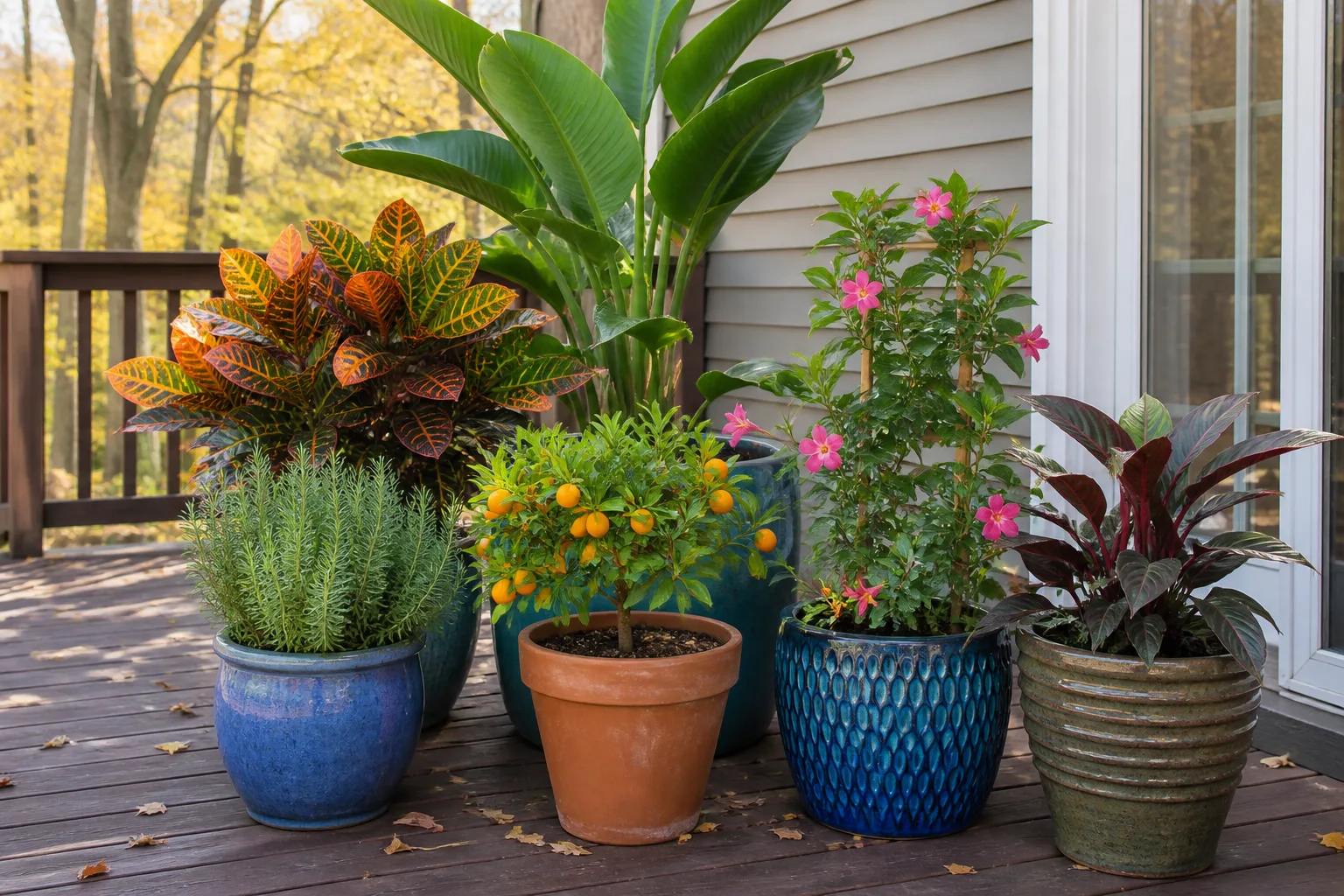
Your patio looked perfect in July — mandevilla spilling over the railing, rosemary by the grill, a citrus tree catching afternoon sun. Then the forecast shows 32°F (0°C) three nights from now and every pot on the deck suddenly feels like a crisis. Do they all need to crowd your living room?
No — but many do, and the wrong choice costs you next year’s display. Potted plants are not small copies of in-ground plants. The pot limits insulation, changes drainage, and exposes roots to cold from every side. What survives planted in the border may die in a container three feet away.
This guide gives you a practical decision tree: which pots must cross the threshold before frost, which can overwinter in a cool garage or sheltered corner, and which hardy containers can stay outside with protection — plus how to move them without dragging pests, rot, or a month of leaf drop into the house.
The Short Answer: It Depends on the Plant, Pot, and Climate
Bring a potted plant fully indoors when it is not cold-hardy in your USDA zone, when you want it actively growing through winter, or when no cool sheltered space exists. Move it to an unheated garage, shed, or porch when the plant needs dormancy or cool rest but your climate is too harsh for the root zone in a pot. Leave it outside only when the species is hardy at least one zone below yours, the pot is large and frost-proof, and you can group, wrap, or plunge it against wind and standing water.
That is the whole game. Everything else is detail — but the detail is what keeps you from losing a $80 citrus tree because you guessed wrong about a snake plant.
Why Containers Change the Winter Survival Math
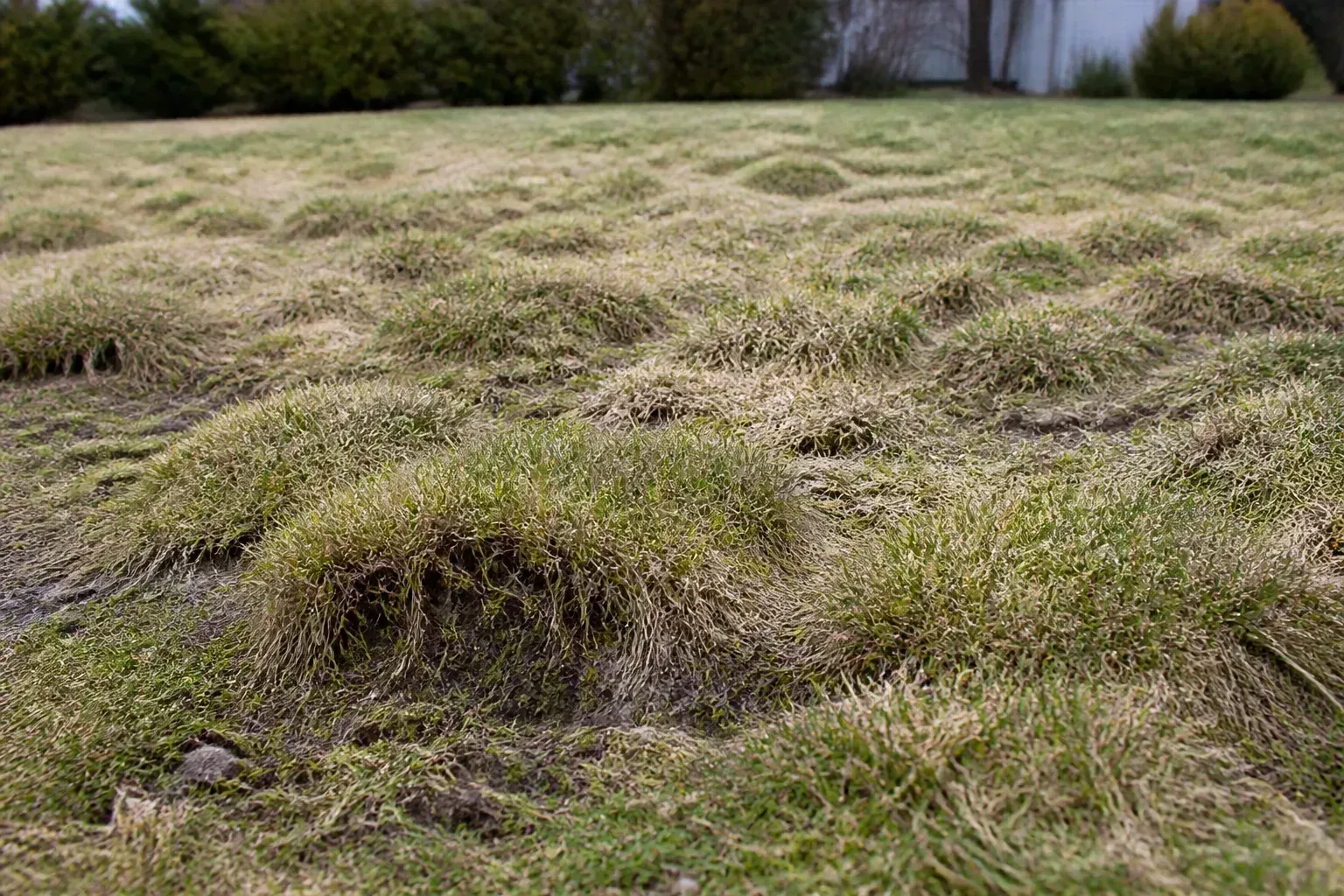
In the ground, roots spread outward and downward. Soil volume insulates. Frost may nip top growth while the crown stays alive below the surface. In a pot, the entire root zone sits in a small, exposed volume the sun can warm by day and cold can penetrate by night.
The RHS notes that container plants are more susceptible to cold because roots are more exposed than those buried in the earth, and they are also prone to waterlogging in winter when drainage fails (RHS). Freeze-thaw cycles push roots upward — the same frost heave that lifts unprotected perennials — while melted ice can block drainage holes and leave roots sitting in cold, saturated mix.
University of Nevada Extension puts the zone rule plainly: if a plant is hardy to one zone below yours and sits in a large, winter-tough pot, it may stay outside when grouped near the house and sheltered from wind. Small or thin-walled containers often need a garage even for hardy species, because fragile roots get colder than the same plant in the ground (University of Nevada Extension).
Pot material matters too. Terracotta and ceramic absorb water and can crack through repeated freezing; the RHS recommends frost-proof rather than merely frost-resistant clay (RHS). Plastic and metal survive winter structurally but insulate poorly, so tender roots still need moving or wrapping. A beautiful pot that survives the season empty may still kill the plant inside it.
Three Winter Destinations for Potted Plants
Think in three buckets instead of a binary inside/outside choice. Most overwintering failures happen when a plant lands in the wrong bucket — tropicals in a freezing garage, or dormant hostas in a heated bedroom.
Full Indoor Overwintering
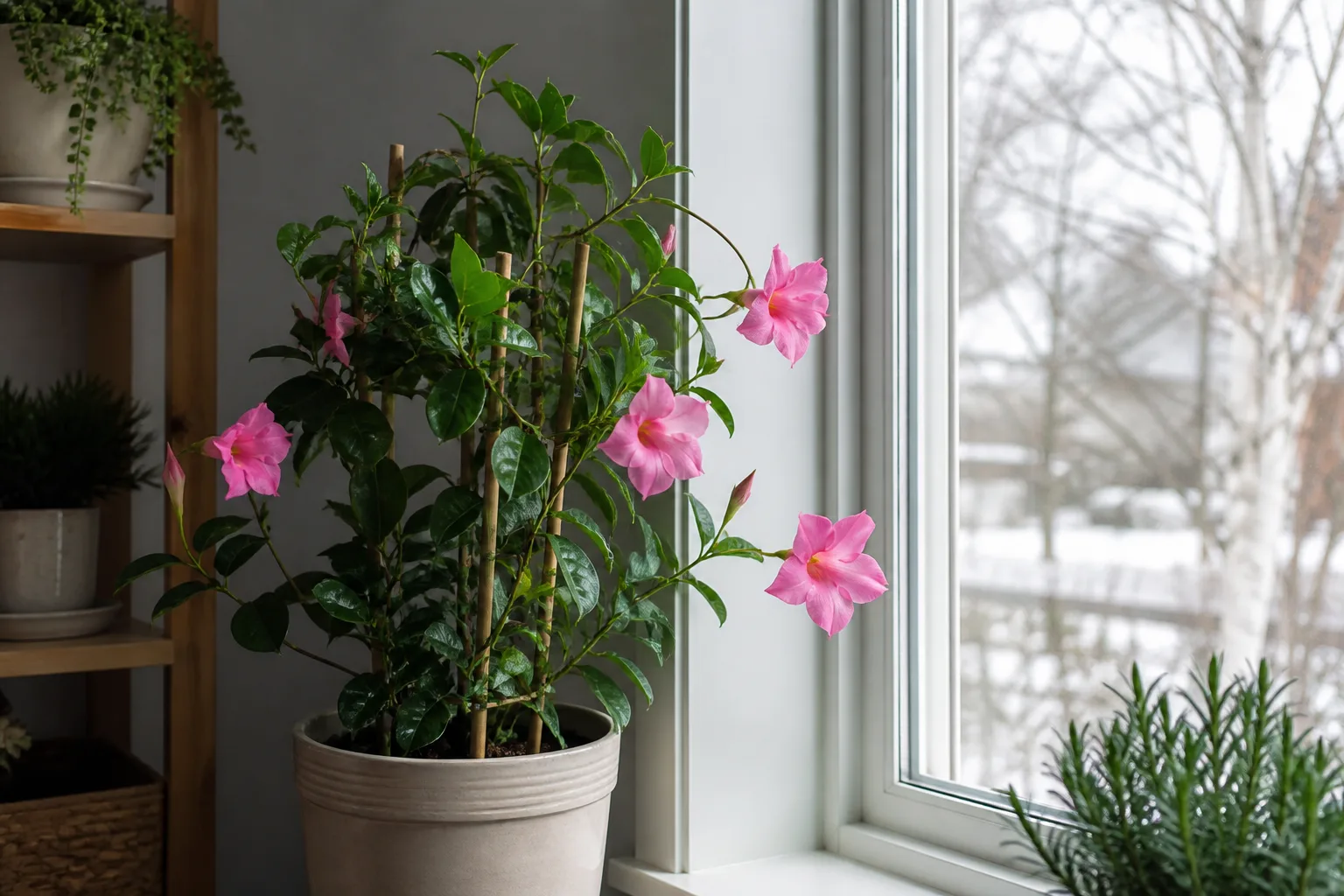
Choose heated indoor space for tropical foliage, citrus, tender culinary herbs, and any plant you want to keep growing or blooming through winter. These species expect warmth, stable humidity, and bright light — conditions a garage cannot provide.
Indoor overwintering works when you have:
- A bright window, supplemental grow light, or sunroom
- Room to isolate new arrivals for pest monitoring
- Realistic expectations about leaf drop during the first two weeks (common on figs, citrus, and schefflera after a light/humidity shift)
- A watering plan that slows down with shorter days — not the summer schedule on autopilot
Houseplants that spent summer on the patio — pothos, philodendron, peace lily, snake plant — belong here too once nights stay consistently cool. They are not “hardy outdoor plants”; they are indoor plants on summer vacation. For seasonal watering traps after the move, see winter houseplant watering mistakes and the broader winter houseplant care checklist.
Cool-Dry Garage, Shed, or Unheated Porch
A cool, dark, frost-free shelter is the right answer for many tender perennials that need dormancy, not living-room heat. Geraniums (pelargoniums), dormant figs, cannas, dahlias in pots, and some brugmansia selections overwinter best at roughly 35–45°F (2–7°C) with minimal water — awake enough to survive, asleep enough to rest.
The RHS winter container guidance: grouping pots close together near a house wall protects roots, and remove saucers so pots are not standing in water through wet months (RHS). In a garage, push pots against a wall shared with the house for a few extra degrees (University of Nevada Extension).
This destination fails when:
- Temperatures drop below freezing inside the structure
- You water on a summer schedule into cold, idle roots
- You expect flowers on a plant that needs bright light to perform
Grouped, Wrapped, or Plunged Pots Left Outside
Hardy and borderline-hardy plants in large, frost-proof containers can often stay outdoors if you manage exposure. The RHS recommends keeping containers in dry, sheltered areas, grouped for mutual protection, and preventing roots from freezing by wrapping with bubble polythene or straw — or plunging the pot into the ground with the rim just showing (RHS).
Horticulturist Melinda Myers, writing for Birds & Blooms, advises bringing non-hardy plants and vulnerable containers indoors or under cover, and for pots that must stay out, surrounding roots with wood chips or bagged potting mix to keep them snug through temperature swings (Birds & Blooms).
Use outdoor overwintering when:
- The plant’s rated hardiness is at least one zone colder than your garden
- The pot is large (more soil = more insulation)
- You can lift pots onto pot feet and confirm drainage stays open
- You accept that evergreens in pots may still need occasional winter watering when rain cannot reach them under cover (RHS)
Plant Groups That Usually Must Move Before Frost
Frost tolerance is always species + zone + pot size. Still, these groups reliably need action before the first hard freeze in most temperate gardens.
Tropicals and Tender Subtropicals
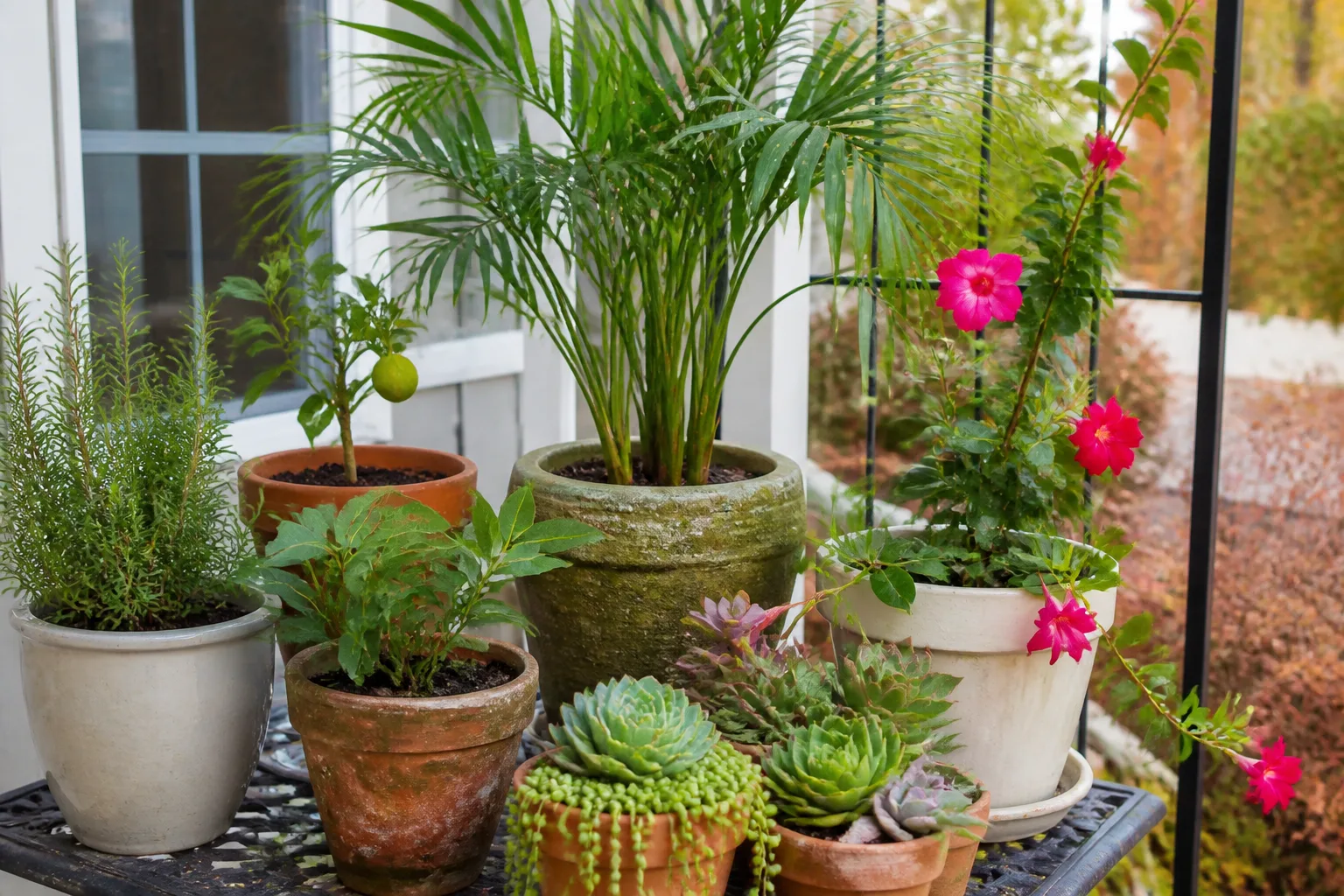
Palms, monsteras, alocasias, scheffleras, birds of paradise, bougainvillea, cordyline, jasmine, and mandevilla are frost-intolerant. Move them before nights hover near 50°F (10°C) if you want zero damage — definitely before 32°F (0°C). Mandevilla and similar vines need indoor shelter in any zone that sees frost; our mandevilla container guide walks through the 50°F threshold in detail.
Citrus, avocados, and other subtropical fruit trees in pots are high-stakes moves: one frozen night can kill wood you spent years growing. Plan indoor floor space or a bright cool room before autumn, not the night of the freeze warning.
Tender Herbs, Citrus, and Kitchen-Garden Pots
Rosemary and bay laurel in containers are classic borderline cases. In USDA zone 7 and colder, pots routinely die outdoors while in-ground specimens sometimes survive. Bring them to a cool bright window or an unheated porch that stays above freezing. Parsley and thyme in small pots are easier to move fully indoors for winter harvests than to rescue from frozen soil.
Basil, lemongrass, and other true annuals are not overwintering projects — harvest and compost unless you have bright indoor light and patience for weak winter growth.
Summer Flowering Perennials Worth Saving
Hibiscus, fuchsias, begonias, and pelargoniums are often sold as annuals in cold zones but overwinter well with the right destination. Pelargoniums may live in a cool garage with stems cut back and soil kept barely moist. Hibiscus and fuchsias often prefer cool indoor light over a dark garage if you want early spring blooms.
Succulents need a split decision: dry-loving types (many cacti, jade, haworthia, hens-and-chicks) hate wet winter roots more than moderate cold. In rainy climates, move them under an eave or indoors to a bright, cool, dry window. Aloe and soft succulents in small pots should cross the threshold before hard frost; a large hardy sedum in a frost-proof bowl may stay out in zone-appropriate gardens.
Plants That Should Not Move Into Your Living Room
This is the section most quick guides skip — and it saves you from killing plants with kindness.
Hostas, lavender, many small conifers, and peonies in pots often need winter cold and dormancy, not a heated living room. Bringing them indoors can force weak growth, invite pests, and prevent the chilling hours they require for next year’s performance. Store these in an unheated garage, cold frame, or plunged outdoor bed with mulch, watering sparingly so roots do not desiccate.
Large trees and shrubs you cannot physically move are a planning problem, not a last-minute shove. If you cannot lift it, decide in spring whether to keep it in a pot or plant it in the ground before the next winter.
Plants with active pest infestations should not enter your house unchecked. A porch quarantine beats discovering spider mites on every windowsill in February. More on the seasonal stress loop in things that are killing your houseplants in winter.
When to Move Pots: Timing Beats Panic
The best overwintering move is early and boring. The worst is one panicked night after frost has already hit the leaves.
Frost Dates, Microclimates, and the First Cold Night
Start watching forecasts when nighttime lows approach 45–50°F (7–10°C) for tender tropicals. For hardy-but-potted specimens, focus on your area’s average first frost date — then subtract 7 to 14 days as your personal deadline. USDA zone maps show average minimums, not the coldest night your yard will see; patio corners, wind tunnels, and heat radiating from a house wall all shift the real number (University of Nevada Extension).
One night at 30°F (-1°C) can kill top growth on a plant that would have tolerated gradual cooling. Move before the first hard freeze (roughly 28°F / -2°C for several hours), not after you see blackened leaves.
Priority order when time is short:
- Smallest pots and thinnest plastic — they chill fastest
- Tropical foliage and citrus
- Succulents in rainy autumns (wet+cold is lethal)
- Houseplants that summered outside
- Borderline hardy shrubs in terracotta
Hardy pots can wait until consistent frosts, but do not wait until saucers freeze solid or drainage holes ice over.
How to Transition Pots Indoors Without Shock
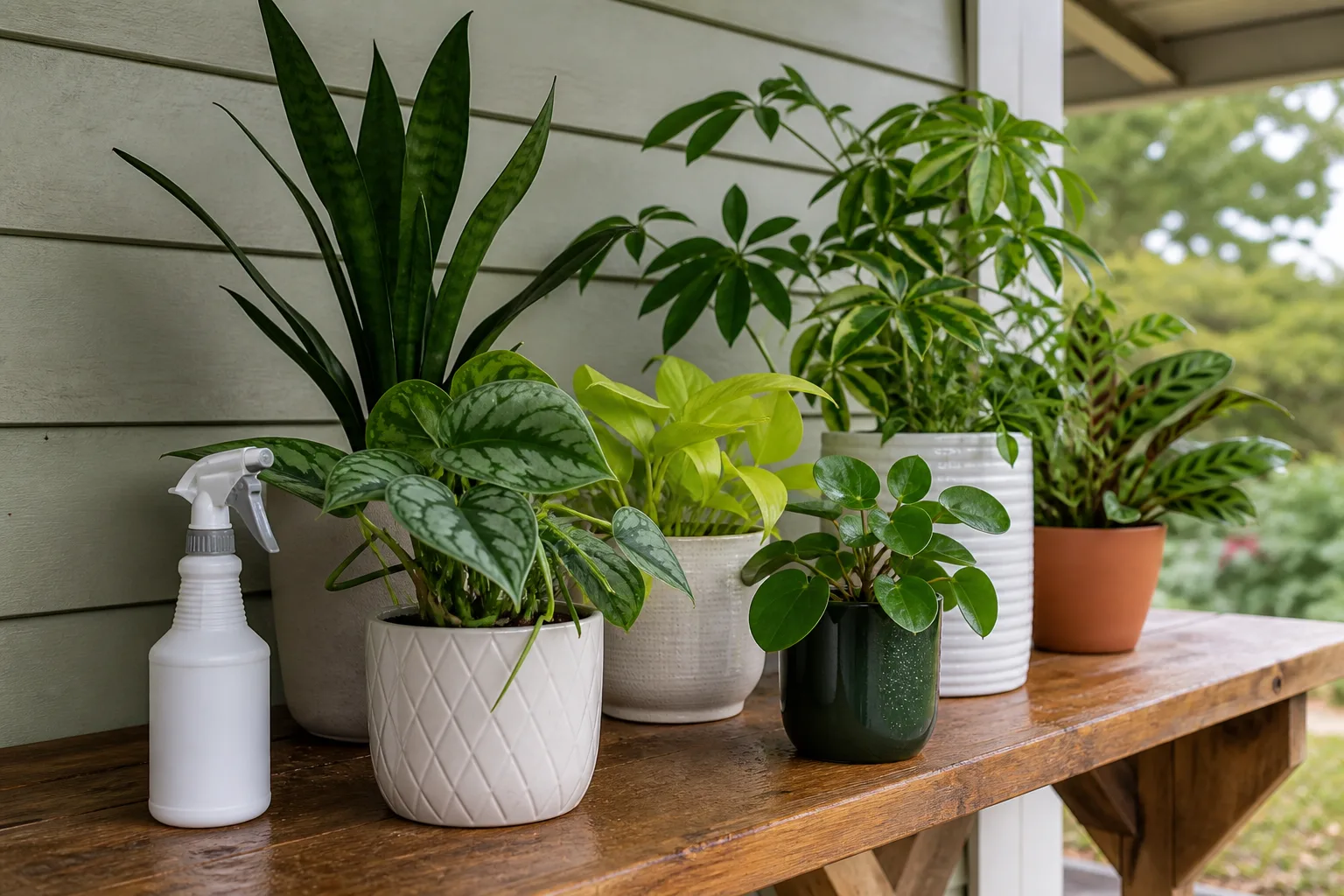
Abrupt light, humidity, and temperature swings cause leaf drop, bud abort, and pest flare-ups. Reverse the hardening-off logic the RHS describes for spring: plants need two to three weeks to adjust between environments (RHS).
Pest and Soil Cleanup Before the Threshold
Before any pot crosses the doorsill:
- Inspect leaf undersides, stem joints, and soil surface for aphids, spider mites, scale, and slugs
- Remove spent flowers, dead leaves, and weeds from the soil surface
- Wash the pot exterior and rinse foliage with insecticidal soap or a mild soap solution; rinse clean and let dry
- Repot only if urgent — root-bound is fine; fresh wet soil plus low winter light is not
Quarantine new arrivals for 10–14 days in a spare room or closed porch if possible. One hitchhiking mite colony is cheaper to treat on one plant than on twelve.
A One-Week Acclimation Routine
Days 1–2: Move pots to a shaded porch or under an eave — less sun, slightly cooler nights, still outdoors.
Days 3–4: Bring pots indoors overnight, back outside for the brightest part of the day if weather allows.
Days 5–6: Extend indoor hours. Watch for wilting in midday sun outdoors — back off if leaves scorch.
Day 7+: Set permanent winter placement — bright indirect light for active growers; cool garage for dormant stores.
Expect some yellowing or leaf drop especially on figs, citrus, and schefflera. Withhold fertilizer. Water only enough to keep soil from going bone-dry until new growth or stable foliage returns — usually one to two weeks. Our plants dropping leaves in winter guide explains when drop is normal versus a care alarm.
Winter Care After the Move Indoors
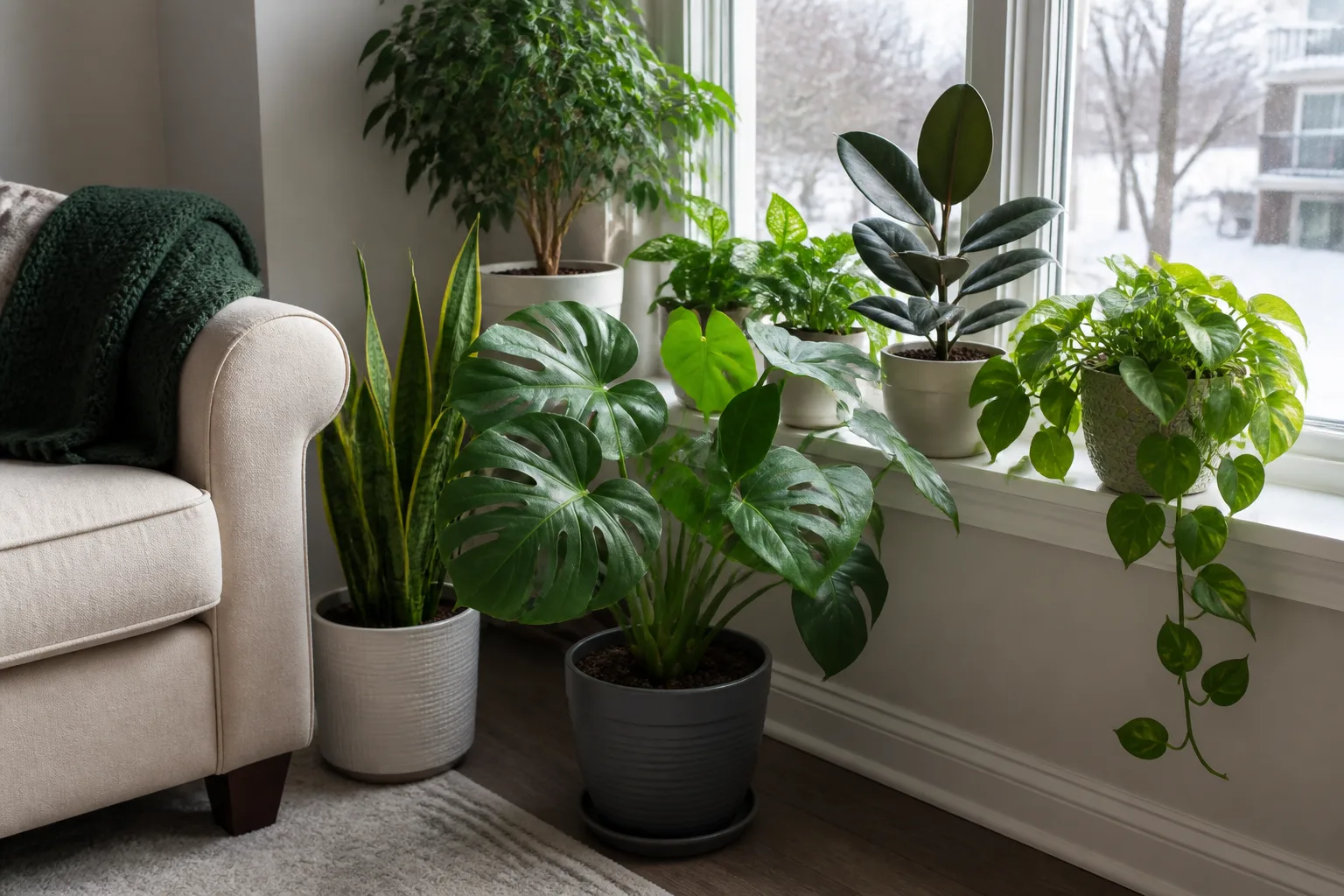
Indoor winter is lower light, drier air, and slower growth — not a smaller version of summer patio life.
Light: Push active plants to the brightest window or add a grow light. Rotate pots weekly. UW-Madison Extension notes most foliage houseplants prefer roughly 65–70°F by day and 60–65°F at night, away from heat vents and cold drafts (UW-Madison Extension).
Water: Check soil before every drink. The RHS winter guidance: with lower light and temperatures, plants grow less and need less water; pots sitting in saucers of excess are a common failure point (RHS). Evergreens under cover — including conifers moved to a garage — may still need occasional watering when rain cannot reach them.
Humidity: Heated rooms dry air fast. Group plants, use a humidifier, or pebble trays for tropicals — but do not confuse humidity work with overwatering the root zone. See how to water indoor plants the right way for the moisture-check habit that prevents rot.
Feed: Pause fertilizer until you see active new growth in late winter or spring. Salt buildup in idle soil stresses roots already coping with low light.
Garage/dormant pots: Keep soil barely moist — a dry rootball kills as surely as rot. Check monthly. No fertilizer. No heat unless the species requires it.
Common Mistakes That Kill Overwintered Container Plants
Treating in-ground hardiness as pot hardiness. A zone-6 shrub in the border is not automatically safe in a zone-6 12-inch pot.
Moving after damage. Blackened leaves mean cells already ruptured. Recovery is possible; death is more likely than if you had moved on time.
Skipping the pest wash. Outdoor season is when mites and scale board. Indoors is when they boom.
Overwatering in winter. The number-one container killer year-round, worse when roots are cold and idle (RHS).
Heated-room storage for dormancy plants. Hostas and lavender in the living room often etiolate, then collapse in spring.
Leaving saucers on outdoor pots. Ice dams and waterlogged roots follow (RHS).
Ignoring pot material. A cracked terracotta pot shards the rootball you tried to save.
Conclusion
Potted plants do not share one winter fate. Tropicals, summered-out houseplants, and tender culinary pots usually need a planned move indoors or into a bright cool room before frost. Dormant tender perennials often do better in a cool, frost-free garage than on your kitchen table. Hardy specimens in large, frost-proof containers can stay outside when grouped, elevated, drained, and — where needed — wrapped or plunged for root protection.
Match the plant to the destination, move a week or two before your first hard freeze, acclimate instead of shocking, and cut winter watering to what the roots actually use. Get those three calls right and next spring’s patio starts in November — not at the clearance rack.



