Winter Houseplant Watering Mistakes That Cause Root Rot
The biggest winter houseplant mistake is not the cold window — it is overwatering. This guide explains why roots fail in winter and how to water safely until spring.

Your pothos looked perfect in August. You watered every Sunday, the leaves stayed glossy, and you felt like you had finally cracked houseplant care. Then January arrived. The days shortened, the heat kicked on, and the same Sunday pour that worked all summer left the soil damp two weeks later. Lower leaves turned yellow. The plant wilted. You watered again because wilting looks like thirst — and that is exactly how a healthy collection starts losing roots underground while everything above still looks like a watering problem.
The winter mistake that wrecks houseplant roots is not mysterious. It is overwatering on a summer schedule when growth, light, and transpiration have all slowed down. Cold soil holds moisture longer. Roots sit in saturated mix for days instead of hours. Oxygen gets pushed out. Stressed roots become an open door for the fungi that cause root rot. The cruel part is the symptom loop: a rotting plant wilts even though the soil is wet, so many owners water again and accelerate the damage.
This guide focuses on that single failure mode — winter watering that destroys roots — and the habits that prevent it. For the full seasonal picture including pest checks and light moves, see our winter houseplant care guide. For the year-round watering method, start with how to water indoor plants the right way.
Why Winter Is When Overwatering Does the Most Damage
Houseplants do not read calendars. They respond to light, temperature, and humidity. In winter, all three push water demand in the same direction: down. If your hand keeps reaching for the watering can on the old rhythm, the pot becomes a cold, airless sponge long before you notice anything wrong above the soil line.
Growth Slows, But Your Watering Routine May Not
Most foliage houseplants throttle back as days shorten. Many tropicals keep their leaves but push little new growth. Some species enter a genuine rest period. A plant that is not building leaves and roots simply does not need the same water supply it drank in July (Growli). Photosynthesis — the process that pulls water up through the plant and out through the leaves — idles when winter light drops. Less light means less transpiration means less water leaving the pot.
University of Wisconsin-Madison Extension notes that plants in active growth require more water than during slow-growth periods such as winter (UW-Madison Extension). Chippewa County horticulture educator Margaret Murphy puts the practical rule plainly: even if you prefer a schedule, plants should be watered only when they need it, and for most houseplants that is when the top inch or so of soil is dry to the touch — with reduced needs through winter (UW-Madison Extension). A pot that went dry in four days in August might still feel damp two weeks later in December. Same plant. Different season. Completely different demand.
Cold, Wet Soil Stays Saturated Longer
Cooler rooms and cooler soil slow evaporation. Water that would have moved through a warm summer root zone in a day or two can linger for a week or more in January. Roots need both water and oxygen. When soil pores stay filled with water, air cannot reach the root surface. Extension guidance is blunt: excess water causes roots to suffocate and contributes to root rots, with yellowing foliage and eventual wilting or death (UW-Madison Extension). Winter makes that sequence more likely because the soil stays wet longer and the plant is using less of what is there.
Add a drafty window or a heat vent and you get another layer of stress. UW-Madison Extension recommends keeping most foliage houseplants at roughly 65–70°F by day and 60–65°F at night, and avoiding placement near heat vents, fireplaces, or cold drafts (UW-Madison Extension). A plant chilled at the glass and overwatered at the roots is fighting on two fronts.
The Winter Mistake That Wrecks Roots From the Inside Out
The mistake is not caring too much. It is applying summer kindness in a winter environment. Watering because the calendar says so. Watering because leaf tips look crispy. Watering because the plant wilted — without checking whether the soil is already wet. Each of those choices keeps roots in the danger zone.
What Happens Underground When Soil Stays Too Wet
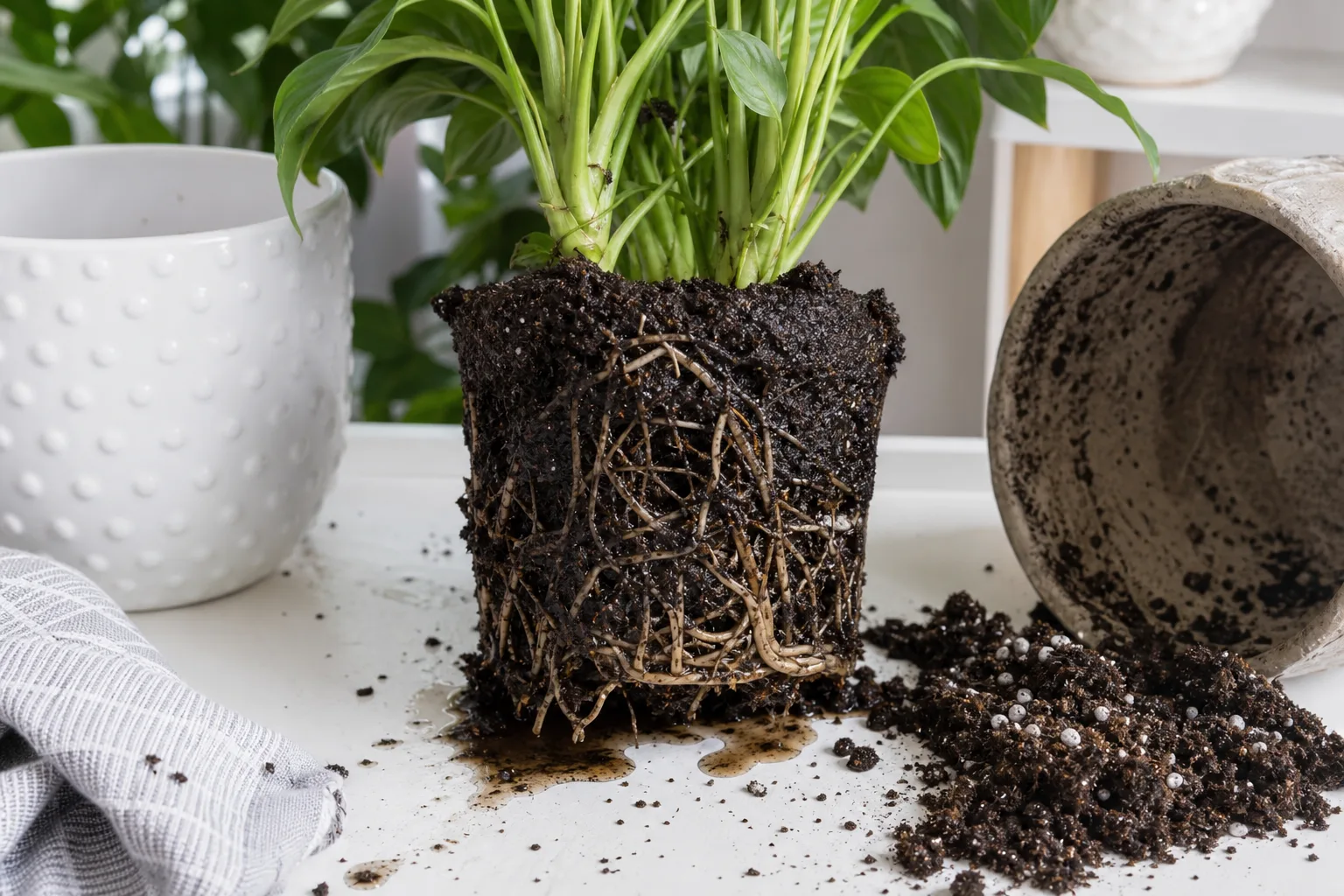
Healthy roots are firm and pale. Rotting roots turn dark, soft, and foul-smelling. The process usually starts with oxygen starvation in saturated soil, then accelerates when soil-borne fungi such as Pythium and Fusarium colonize weakened tissue (Missouri Botanical Garden). Once enough fine roots die, the plant cannot move water to the leaves even though the pot is full of it. That is why overwatered plants look thirsty while sitting in wet soil.
B.B. Barns Garden Center, a regional nursery with decades of indoor plant troubleshooting, lists the winter pattern clearly: yellow leaves that drop easily, mushy stems near the soil line, soil that stays wet for many days, a musty smell, and fungus gnats hovering over the pot — all tied to keeping a summer watering rhythm when plants drink less (B.B. Barns). Gnats are not just annoying. Their larvae feed in damp soil and create entry points for pathogens. Persistent gnats plus declining growth should put root health on your checklist.
How to Check Soil Moisture Before You Water
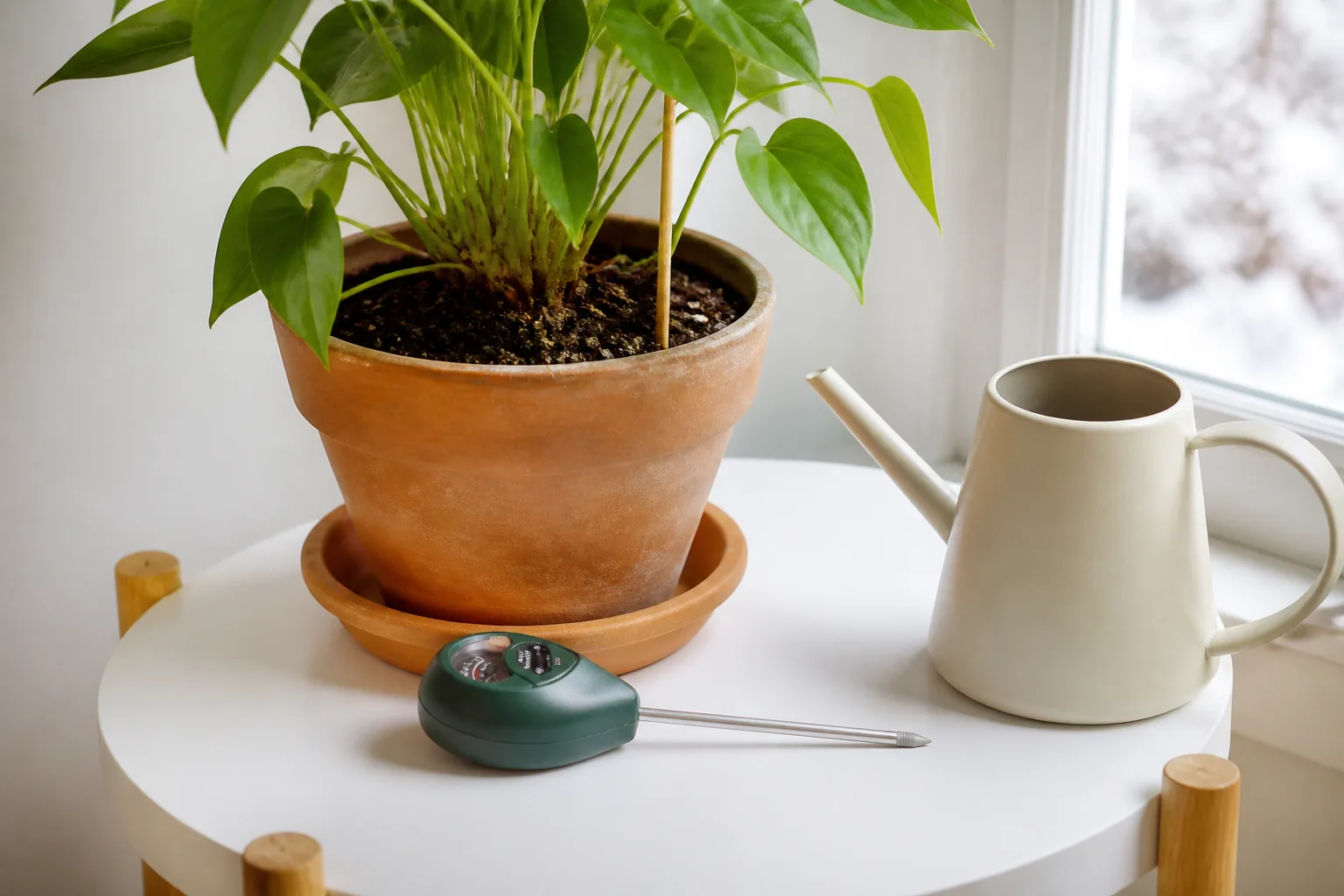
Break the calendar habit first. The reliable winter method is simple: test the soil, then decide. For most leafy houseplants, check the top 1–2 inches. If it is still damp, wait. If it is dry to that depth — and for many plants a bit deeper — water thoroughly.
Three checks work better than one:
The finger test. Insert your finger to the second knuckle. Dry means go. Damp means stop. This is the baseline Extension services recommend (UW-Madison Extension).
Pot weight. Lift the container after a proper watering and again when the soil has dried appropriately. A light pot is the fastest signal on large floor plants where the surface can lie to you.
Go deeper on big pots. A dry surface can hide wet middle soil. Push a wooden skewer several inches down and leave it a minute. If it comes out dark and cool, the center is still holding moisture.
When you do water, water well: soak the entire root ball until a little runs from the drainage holes, then let the pot drain. Little daily splashes are especially harmful in winter because they keep the top permanently damp while never fully hydrating the root mass (Growli). Thorough, less frequent watering beats frequent sips every time.
How to Tell Overwatering From Thirst, Dry Air, or Weak Winter Light
Winter symptoms overlap, which is why the wrong fix is so common. Yellow leaves, slow growth, and drooping can point to underwatering, low light, dry air, cold drafts, or root rot. Context matters.
Underwatering usually comes with dry, lightweight soil and crispy leaf edges. Low winter light produces leggy stems, smaller new leaves, and plants leaning hard toward the window — see why houseplants struggle in winter for the full light-and-growth picture. Dry heated air crisps leaf tips and margins even when the soil is still moist; that is a humidity problem, not a root thirst problem.
The Wet-Soil-Wilted-Leaves Clue
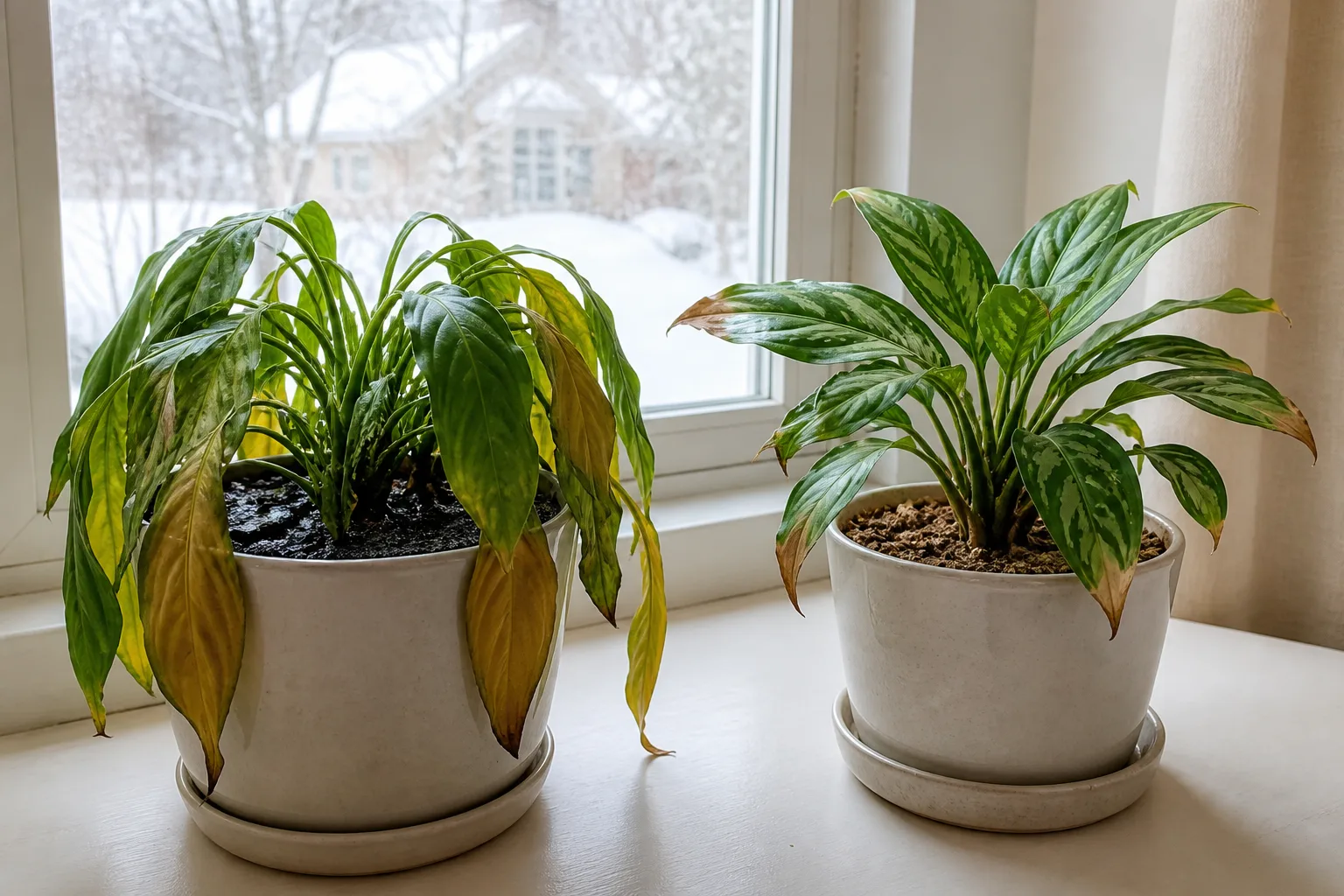
The single most reliable winter warning sign is a mismatch: limp, yellowing, or dropping leaves while the soil feels wet or heavy days after you last watered. That pattern means the roots are failing to take up water. Watering again will not fix it. It will make the soil more anaerobic and give rot more room to spread. If you recognize this pattern, treat it as a root emergency, not a drought emergency. Our overwatered plant rescue guide walks through the stop-water, inspect, and repot sequence in detail.
Other overwatering flags include soft stems at the soil line, a sour or musty smell when you lift the plant, brown patches appearing in the middle of leaves rather than only at tips, and fungus gnats that will not go away. If several appear together, assume roots are involved until proven otherwise.
How Much Less Should You Water in Winter?
There is no universal winter interval. Anyone who gives you one number for every plant is guessing. As a rough sanity check, many leafy houseplants land around every 10 to 21 days indoors through winter — often roughly half as often as in summer — but the only rule that holds is water when the soil test says yes (Growli). Your job is to notice the stretch between dry readings growing longer as light fades, then tightening again in spring.
Desert Plants vs Moisture-Loving Tropicals
Winter cutback applies to everyone, but the size of the cut varies.
Cacti and succulents rest hard. Many want only occasional water from late autumn to late winter; some mature cacti stay nearly bone-dry until spring. Overwatering a dormant succulent in January is one of the fastest routes to rot.
Ferns, calatheas, peace lilies, and other moisture-lovers still slow down but should not be treated like desert plants. They are the ones most likely to be under-watered if you cut back too aggressively. Keep checking soil moisture and adjust to the plant, not just the season.
Plants under grow lights, recently repotted specimens, and winter bloomers may keep drinking closer to their summer rate. Water to behavior — new growth, dry soil, pot weight — not to the month on the calendar.
Drainage Rules That Matter More in Cold Months
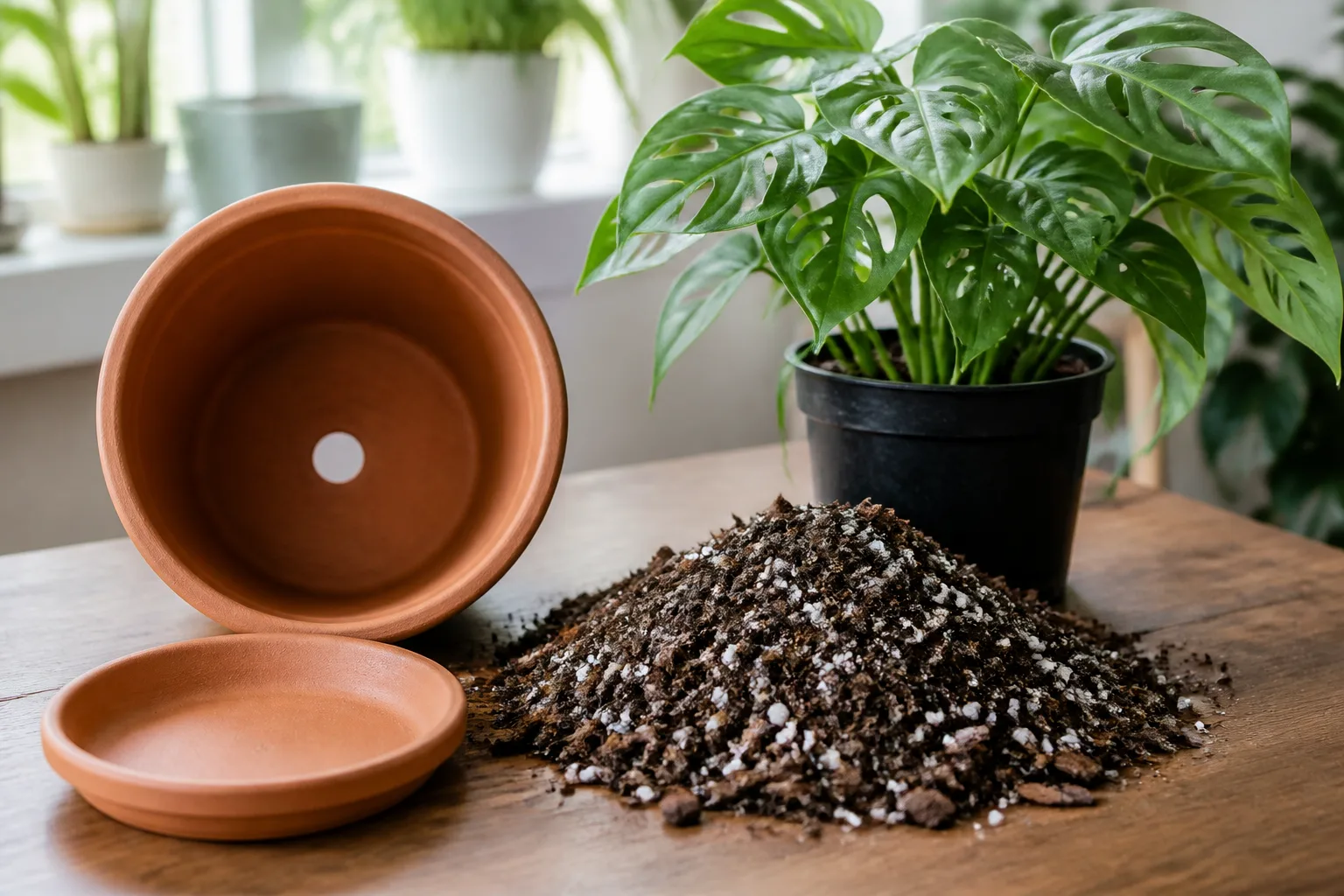
Good drainage is a year-round requirement. In winter it becomes urgent because slow-drying soil has less margin for error. Every pot needs drainage holes. Water must be able to leave the root zone. Cachepots, saucers, and decorative outer pots should never hold standing water against the bottom of the inner pot.
UW-Madison Extension recommends letting excess water drain into the saucer for 15 to 20 minutes, then discarding what remains so roots are not sitting in a puddle (UW-Madison Extension). Chippewa County guidance matches: do not let plants stand in water unless the species specifically requires it. Heavy, peat-rich mixes, oversized pots, and glazed containers that hold moisture all extend drying time — exactly what you do not want in winter. If your setup traps water, fix the container before you tweak the watering calendar. Our poor drainage houseplants guide explains the fix order when pots, mix, or saucers are the real bottleneck.
Winter Watering Details That Protect Roots
Use tepid water, not a cold winter tap shock. Room-temperature water — mid-60s to low-70s°F — is easier on tropical roots than water straight from a cold pipe (Growli). Fill the can and let it stand near the plants for a few hours. Standing also lets some chlorine dissipate, which UW-Madison Extension notes can reduce tip burn on sensitive species (UW-Madison Extension).
Water in the morning when you can. A morning soak gives the pot the warmer, brighter part of the day to equilibrate. Night watering in a cool room leaves soil cold and damp for many hours — conditions rot enjoys.
Cut frequency first; cut volume only if pots stay soggy for weeks. Most winter problems are solved by watering less often, not by giving tiny drinks more often.
When in doubt, wait a day. Underwatering by 24 hours is easy to correct. A rotted root system often is not.
Stop Fertilizing When Growth Pauses
Overwatering is the primary winter root killer, but fertilizing dormant plants makes the soil chemistry worse. Salts from unused fertilizer build up around roots that are not taking nutrients up. Chippewa County Extension advises fertilizing only when houseplants are actively growing, with reduced or no feeding through winter when most plants are resting (UW-Madison Extension). UW-Madison horticulture guidance aligns: fertilization is generally necessary only during active growth, for most plants between spring and fall (UW-Madison Extension). Resume at half strength when you see reliable new spring growth, not on a fixed March date. For a full feeding calendar, see how often to fertilize indoor plants.
Support Plants Without Overwatering: Light, Humidity, and Temperature
Roots fail faster when the whole plant is stressed. You can support winter health without pouring more water into the pot.
Move plants to the brightest safe window, rotate pots weekly, and wipe dust from leaves so scarce winter light actually reaches the chlorophyll. Light-hungry species may need a grow light to keep transpiration and growth in balance — plants under supplemental light will need more water than neighbors in a dim corner.
Keep plants out of the blast zone of heat vents and away from single-pane glass on the coldest nights. Stable, moderate temperatures reduce the whiplash that makes marginal roots give up entirely.
Fix Dry Air Without Adding Water to the Pot
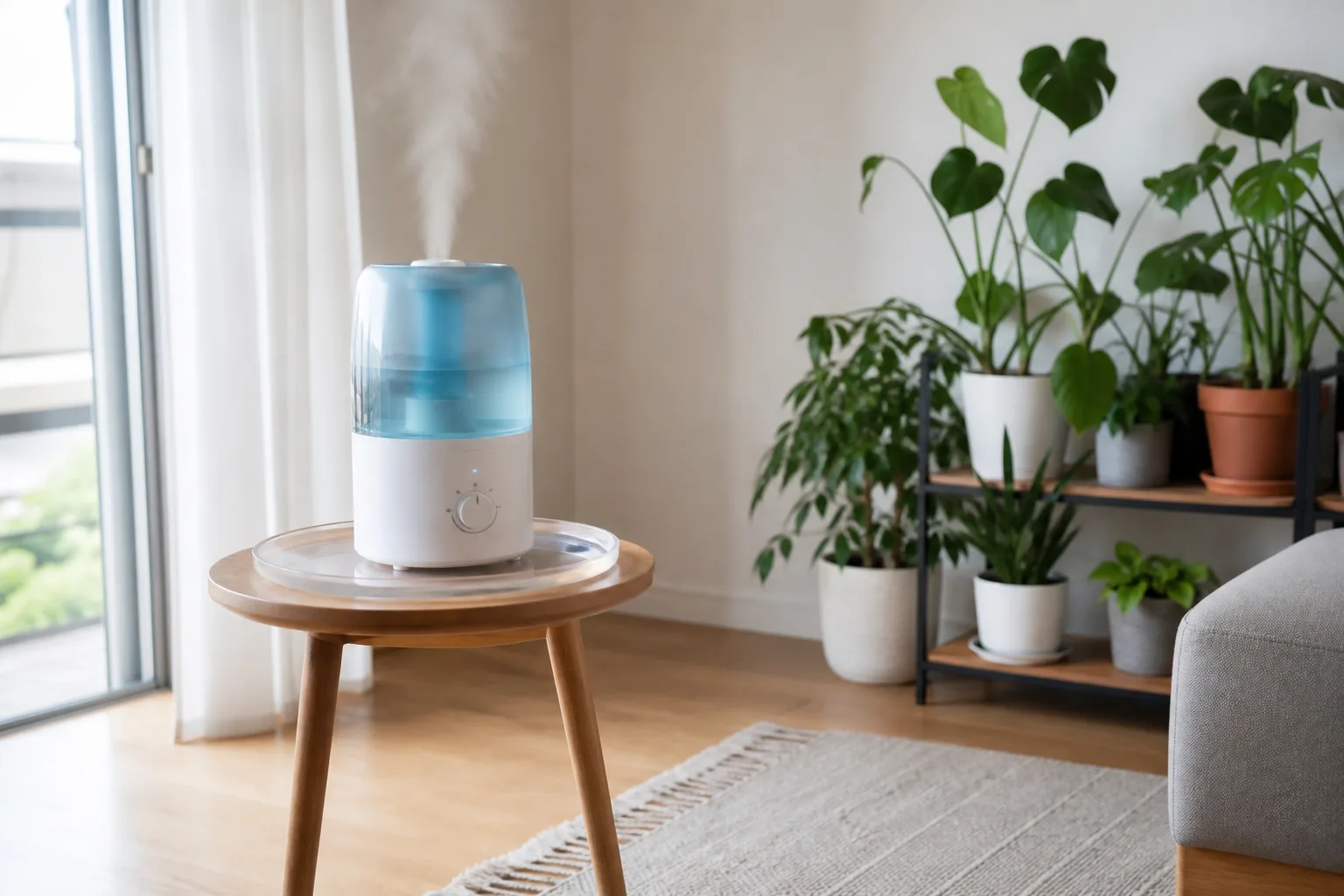
Central heating drops indoor humidity well below what many tropicals prefer. UW-Madison Extension notes that many houseplants favor 40–50% relative humidity, higher than the average heated home provides in winter (UW-Madison Extension). Brown, crispy leaf tips in January are usually dry air, not thirsty roots. If the soil is still moist, more water risks rot.
Raise humidity instead: group plants to create a shared microclimate, run a humidifier, or use a pebble tray with the pot base above the waterline. Extension guidance is clear that occasional misting does little unless you do it constantly through the day — a humidifier or tray is the practical fix (UW-Madison Extension). For placement and safety details, see humidifier placement for houseplants.
If You Suspect Root Rot, Act in This Order
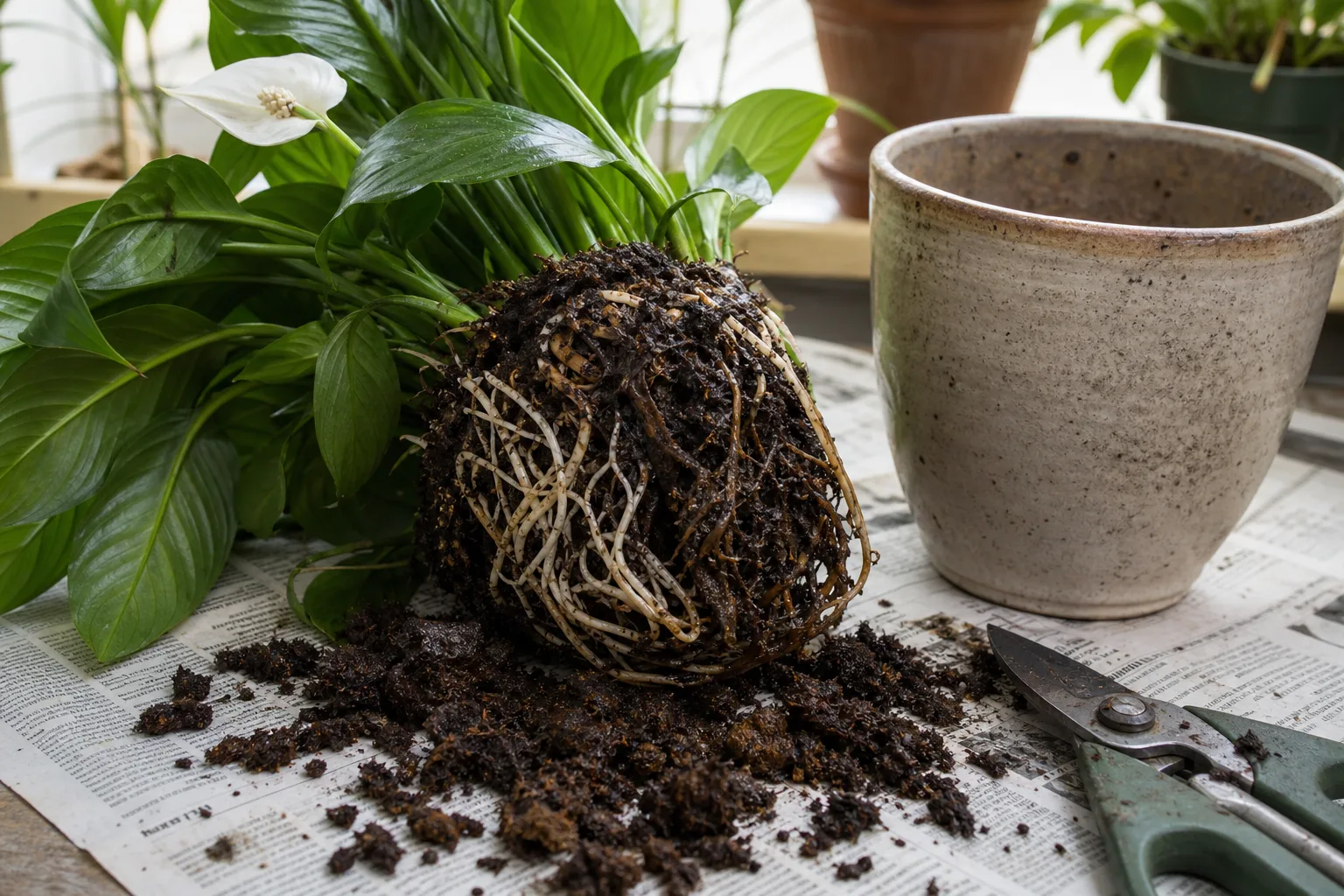
Speed matters once roots are involved, but panic watering or panic repotting without diagnosis makes things worse.
Stop watering immediately. Let the soil dry to an appropriate level for that species before any other intervention.
Confirm the pattern. Wet soil, wilt, yellowing lower leaves, mushy base stems, or a bad smell from the pot are enough to inspect.
Unpot and look at roots. Healthy roots are firm and pale. Rotted roots are dark, slimy, and fall apart when touched. Trim dead tissue with clean scissors, discard heavily contaminated soil, and repot into fresh, well-draining mix in a clean pot with drainage holes.
Reduce stress while recovering. Bright indirect light, stable temperatures, and no fertilizer until you see new growth. Recovery can take weeks.
If more than half the root system is gone, propagation from healthy cuttings may be more realistic than saving the mother plant. Our dedicated root rot houseplants guide covers inspection, smell diagnosis, hydrogen peroxide rinses, and prevention in depth.
Conclusion
The winter habit that wrecks houseplant roots is not neglect. It is watering as if it were still summer when light is low, growth has slowed, and cold soil holds every drop longer. Check the soil before you pour. Learn the weight of a dry pot. Treat wet soil plus wilt as a root problem, not a thirst problem. Drain saucers, pause fertilizer, and fix dry air without adding water to the mix.
You do not flip back to summer watering on a calendar date in March. As days lengthen and pots dry faster, the interval tightens naturally. Follow the soil, protect the roots, and your collection will still be here when spring growth returns.



