Amaryllis Didn't Bloom? Causes and Rebloom Fixes
Your amaryllis skipped holiday blooms? Diagnose low energy vs. missed dormancy, fix the bulb this winter, and set up spring-to-fall care for flowers next year.
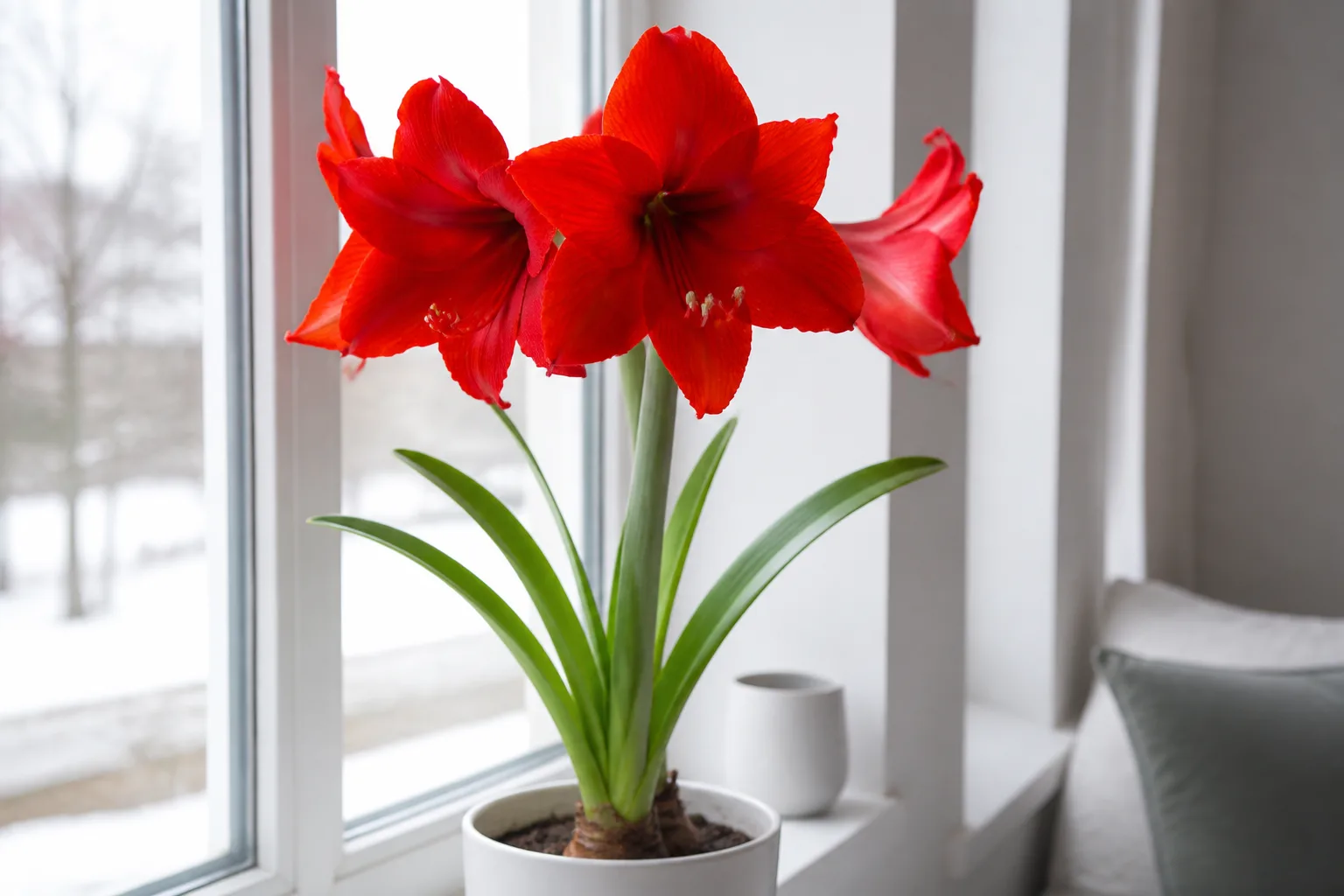
The holidays passed and your amaryllis never staged the red trumpet show you bought it for—or it sent up a fountain of strap-shaped leaves and nothing else. That disappointment is common, and it rarely means the bulb is trash. Most no-bloom cases trace to two fixable problems: the bulb did not store enough energy during its last growing season, or it never got a long enough cool, dry rest to trigger a new flower bud. Once you know which failure you are dealing with, the repair plan is straightforward—even in January, when many gardeners assume they missed the window entirely.
First, Confirm What You’re Growing (Hippeastrum vs. True Amaryllis)
Nearly every bulb sold as “amaryllis” around the holidays is a Hippeastrum hybrid, not the true hardy Amaryllis belladonna grown outdoors in mild climates. Hippeastrum are tropical tender bulbs native to Central and South America. They alternate active growth with a rest period and typically bloom once or twice a year in nature—often in spring—after leaves have rebuilt starch reserves inside the bulb.
That biology matters because rebloom indoors is a manual simulation of their cycle. You cannot treat a Hippeastrum like a paperwhite you pot and forget, nor like a tulip that needs months of refrigerator chill. The RHS Hippeastrum growing guide describes the indoor rhythm: grow leaves in warmth and bright light, then induce semi-dormancy for eight to ten weeks around 13°C (55°F) with reduced water, then wake the bulb for flowers about six to eight weeks later. If your plant skipped blooms, one of those phases broke down—not because the species is finicky, but because indoor life does not automatically deliver tropical wet seasons and cool dry winters.
Why Amaryllis Bulbs Fail to Flower
Bulb experts often reduce failure to two buckets. Energy problems mean the bulb could not photosynthesize and store starch during leaf growth. Dormancy problems mean the bulb never received—or did not complete—the environmental cues that switch internal chemistry from “grow leaves” to “produce a flower scape.” Many frustrated growers hit both in the same year.
| Symptom pattern | Likely primary cause | What to fix first |
|---|---|---|
| Leaves only, no stalk ever appeared | Low energy last summer OR skipped dormancy | Bright light + feed now if leaves are green; plan full dormancy next fall |
| Stalk started then aborted | Stress during bud formation (heat, drought, low light) | Stable temps; brighter spot; do not overwater |
| First-year gift bulb bloomed late or never | Grower conditioning too short before sale | Run full recharge + dormancy cycle yourself |
| Soft, shrinking bulb | Rot or exhaustion | Discard if mushy; repot firm offsets only |
Low Energy From Last Year’s Growing Season
After flowers fade, the bulb’s job is not rest—it is recharging. Strap leaves act like solar panels, converting light into starch stored in bulb scales. If the plant sat in a dim corner, received sporadic water, or was fed with high-nitrogen fertilizer that pushed leaf size without building bloom reserves, the bulb enters autumn light, papery, and unable to fund a flower stalk.
Hippeastrum bulbs need several hours of direct bright light daily during spring and summer growth—not merely “houseplant bright.” A south or west window, or supplemental LED grow light, is the difference between a bulb that feels like a firm onion when squeezed and one that feels hollow. Phosphorus supports flowering chemistry; an all-nitrogen diet produces lush leaves and shy blooms. Monthly balanced liquid feed during active leaf growth, as extension programs recommend for post-bloom care, keeps the recharge honest without salt buildup in a small pot.
A Dormancy Period That Was Too Short—or Never Happened
Indoors, Hippeastrum will happily grow leaves year-round in warm, watered conditions. That looks healthy but suppresses rebloom because the bulb never registers autumn. A proper rest is not true cold stratification—tropical bulbs do not need freezing—but it is a stretch of cool, dry, low-input weeks that mimics their dry season.
The University of Wisconsin Extension forcing-bulbs guide notes that amaryllis does not require pre-chill like tulips, yet rebloom depends on a dry dormant period after the growing season. Stop watering in early September, let foliage die back, and keep the bulb dry until you intentionally restart the cycle—typically November or December for holiday timing. UMaine Extension summarizes the same eight-to-twelve-week cool, dark basement or garage break before warming and watering again. Rest periods under eight weeks often produce leaves without flowers because the internal flower bud never fully forms.
Leaves Without Flowers: What That Pattern Means
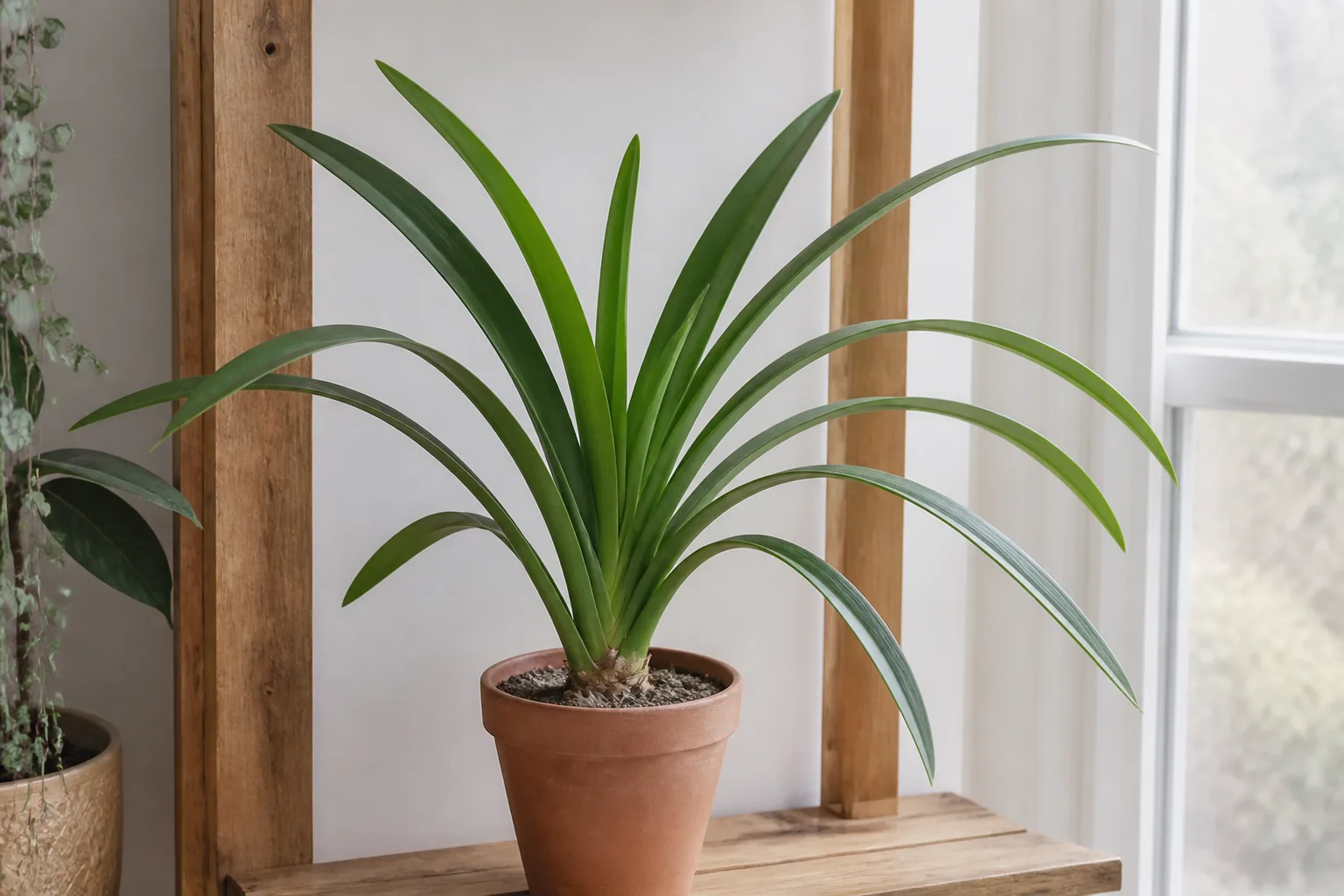
“All leaves, no scape” is the signature of a bulb stuck in vegetative mode. It spent its current reserves growing foliage—possibly because you watered and fed through fall without forcing rest, or because last summer’s recharge was thin. The plant is not being dramatic; it is doing the only growth it can afford. You cannot coax a flower stalk from that bulb mid-winter by adding more fertilizer. The fix is sequential: finish charging if leaves are still green, then run a full dormancy, then wake for blooms four to six weeks later per RHS and extension timing.
Diagnose Your Bulb in Five Minutes
Start with the squeeze test. A healthy bulb feels firm and heavy, like a good onion. Soft, spongy, or foul-smelling tissue indicates rot—discard the bulb and sanitize the pot if salvage is impossible. A firm bulb with yellowing leaves in late summer is likely entering natural dormancy, not dying.
Check what is growing now. Green strap leaves mean the bulb is still in recharge or confused vegetative growth. A bare neck above dry soil suggests dormancy—or a bulb you stopped watering on purpose. A green nub at the top after weeks of cool storage means wake-up is beginning.
Review last year’s care in honest terms. Did the plant sit outdoors or in your brightest window May through August? Did you stop water in September? Did the pot spend eight-plus weeks below about 60°F? If you answered no to any of those, you already know which lever failed.
Finally, note bulb age and pot size. Hippeastrum like to be slightly pot-bound, but overcrowded offsets competing in depleted mix can stall blooms. Repot every two to three years after flowering into fresh, well-draining mix, leaving the top third of the bulb exposed—burying too deep invites neck rot.
If you are staring at a pot in January and still unsure which branch to take, use this quick decision path. Green leaves present → charge through spring and summer, then schedule dormancy next fall. Bare pot, eight or more weeks cool and dry → wake now for late winter blooms. Bare pot, only a few weeks dry → keep resting. Leaves only all winter → do not cut; recharge and run full dormancy next cycle. Mushy bulb → compost and start fresh next fall with a firm bulb from a reputable source.
What to Do Right Now (January Through Spring)
January feels late for holiday blooms, but it is not too late to save the bulb for next winter—and sometimes for a late winter or early spring show if the bulb is still dormant.
If Your Bulb Still Has Green Leaves
Keep growing. Move the plant to the brightest available spot immediately—south-facing glass or a grow light on a timer. Water when the top inch of mix is dry; never leave the bulb standing in saucer water. Feed monthly with balanced liquid fertilizer until you intentionally start dormancy in late summer—not now, if leaves are still productive.
Your goal through spring and summer is leaf photosynthesis, not flowers this month. If weather allows, many growers place pots outdoors after frost risk passes, which supercharges growth. Choose a spot with morning sun and afternoon protection in hot climates so leaves do not scorch. Bring pots inside before nights drop below about 50°F (10°C). Outdoor summer is optional but powerful: longer days and brighter light often produce the heaviest bulbs.
Watch leaf color and length as a crude energy gauge. Deep green, moderately stiff leaves that hold themselves up suggest adequate light. Pale, floppy, or dramatically leaning leaves mean the bulb is still underfed on photons even if you are watering faithfully. Adjust light before you adjust fertilizer.
For broader seasonal bulb work, our spring bulb forcing guide covers chill math for other species; Hippeastrum is the exception that skips refrigerator vernalization.
If Your Bulb Is Bare and Dormant
If you already dried the bulb down and it has rested in cool storage for at least eight weeks, you can wake it now for late winter flowers. Bring the pot into bright light, water once thoroughly, and place it in a warm room around 70°F (21°C). Expect a flower scape in roughly four to six weeks, sometimes longer in cool rooms.
If dormancy has lasted only a few weeks, keep resting. Returning the bulb to warmth too soon is how you get another round of leaves without blooms. Patience here is cheaper than another year without flowers.
If You Only Got Leaves and No Flower Stalk
Treat this as an incomplete cycle. Continue bright light and feeding through summer unless leaves yellow on their own. Do not cut green leaves to “force” bloom—that removes the solar panels you need. When foliage yellows naturally in late summer, trim spent leaves, stop water, and start the full cool rest you skipped. You are unlikely to get holiday timing this year, but you can target January or February blooms next year by waking bulbs in late November after a proper rest.
Rebuild Bulb Energy From Spring Through Summer
Think of May through August as bulb banking season. Every week of strong leaf growth deposits starch you will spend on next winter’s flowers.
Light That Actually Charges the Bulb
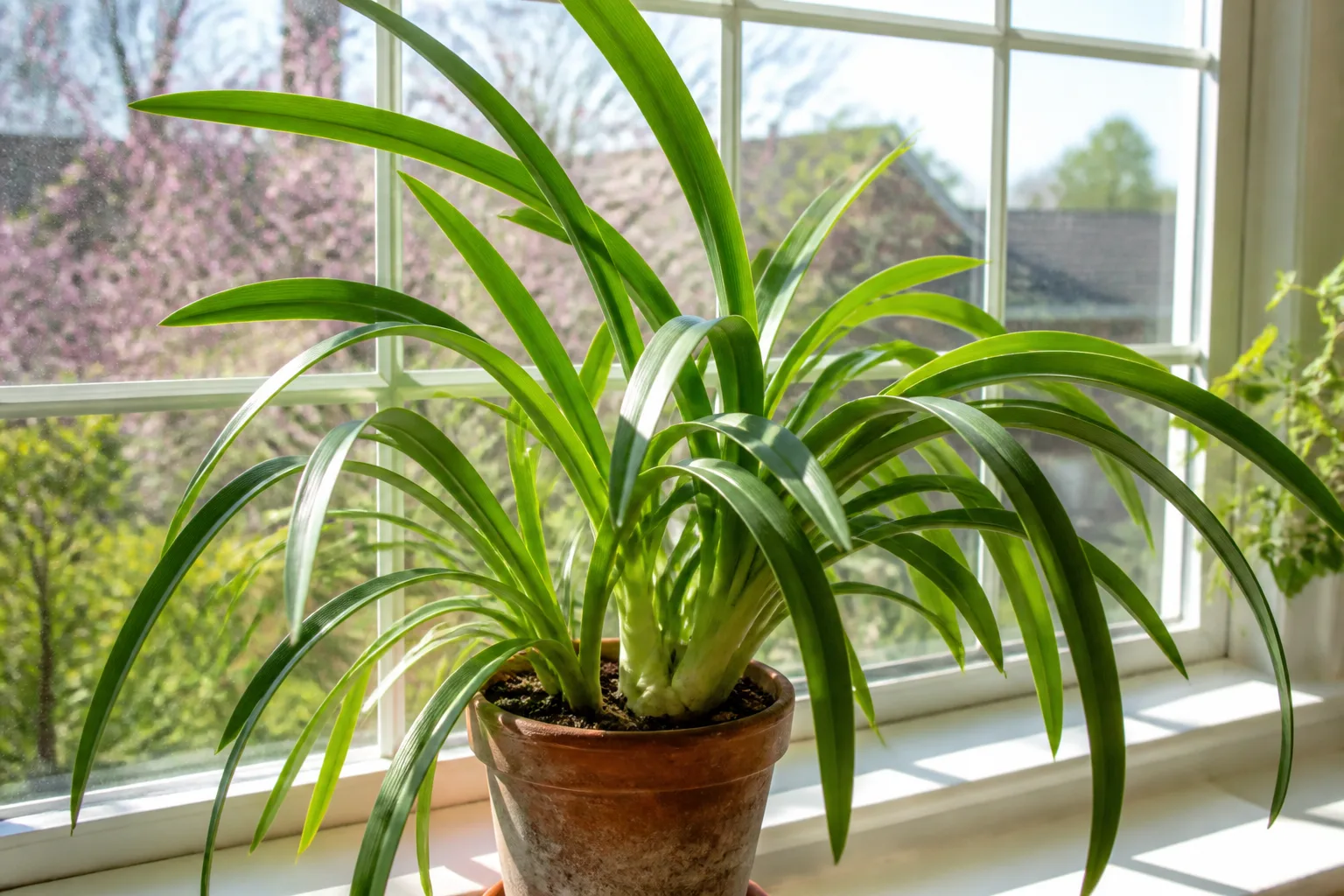
Hippeastrum evolved under long, bright tropical days. Indoors, that translates to at least six hours of strong light, including direct sun for much of the day. Rotate the pot weekly so leaves do not lean and waste energy twisting toward one window. If stems were leggy last year, light—not fertilizer—was probably the bottleneck.
Watering and Fertilizer Rules for Leaf Growth
Water deeply when the mix is dry an inch down, then let excess drain freely. Bulbs rot quickly in soggy, airless mix—especially when temperatures cool in fall. During active leaf growth, a balanced liquid feed every two to four weeks supports steady recharge without the nitrogen spike that favors foliage over flowers. Stop all fertilizer when you begin the dry-down for dormancy.
A practical feeding rhythm looks like this: first feed when new leaves are several inches long, then repeat on the same day each month through August. Dilute liquid fertilizer to half the label strength if your pot is small; salt buildup in a tight root zone burns tender bulb tissue. If white crust appears on the soil surface, flush the pot with plain water once before the next feed.
Repot after flowering if roots circle the pot or offsets crowd the surface. Choose a container only one to two inches wider than the bulb diameter. Use porous mix with perlite or grit for drainage. The neck should sit above the soil line. When you repot, gently brush away old mix but avoid damaging healthy white roots—torn roots slow recharge for weeks.
How to Force Dormancy for Holiday Blooms
Dormancy is how you schedule blooms. Skip it and Hippeastrum may flower occasionally; run it deliberately and you can target Christmas week.
When to Start (Backward Bloom Math)
Work backward from your target bloom week. Add four to six weeks for growth after wake-up, then add eight to ten weeks of rest. For Christmas flowers, Cornell’s Fruition program recommends waking dormant bulbs ten to twelve weeks before desired bloom—roughly early October for late December flowers. That implies starting the dry rest in late August or September.
| Target bloom window | Start dry rest (approx.) | Wake bulb (approx.) |
|---|---|---|
| Late December / Christmas | Late August–early September | Early October |
| January | Mid-September | Late October |
| February | Early October | Mid-November |
| March | Mid-October | Early December |
Stagger several bulbs by two weeks if you want a parade of flowers through winter instead of one burst—professional growers at botanic gardens use the same stagger trick for continuous display. Label each pot with the wake date so you do not accidentally pull a bulb out of cool storage early when you are juggling multiple varieties.
Stop Watering and Cool the Bulb Down
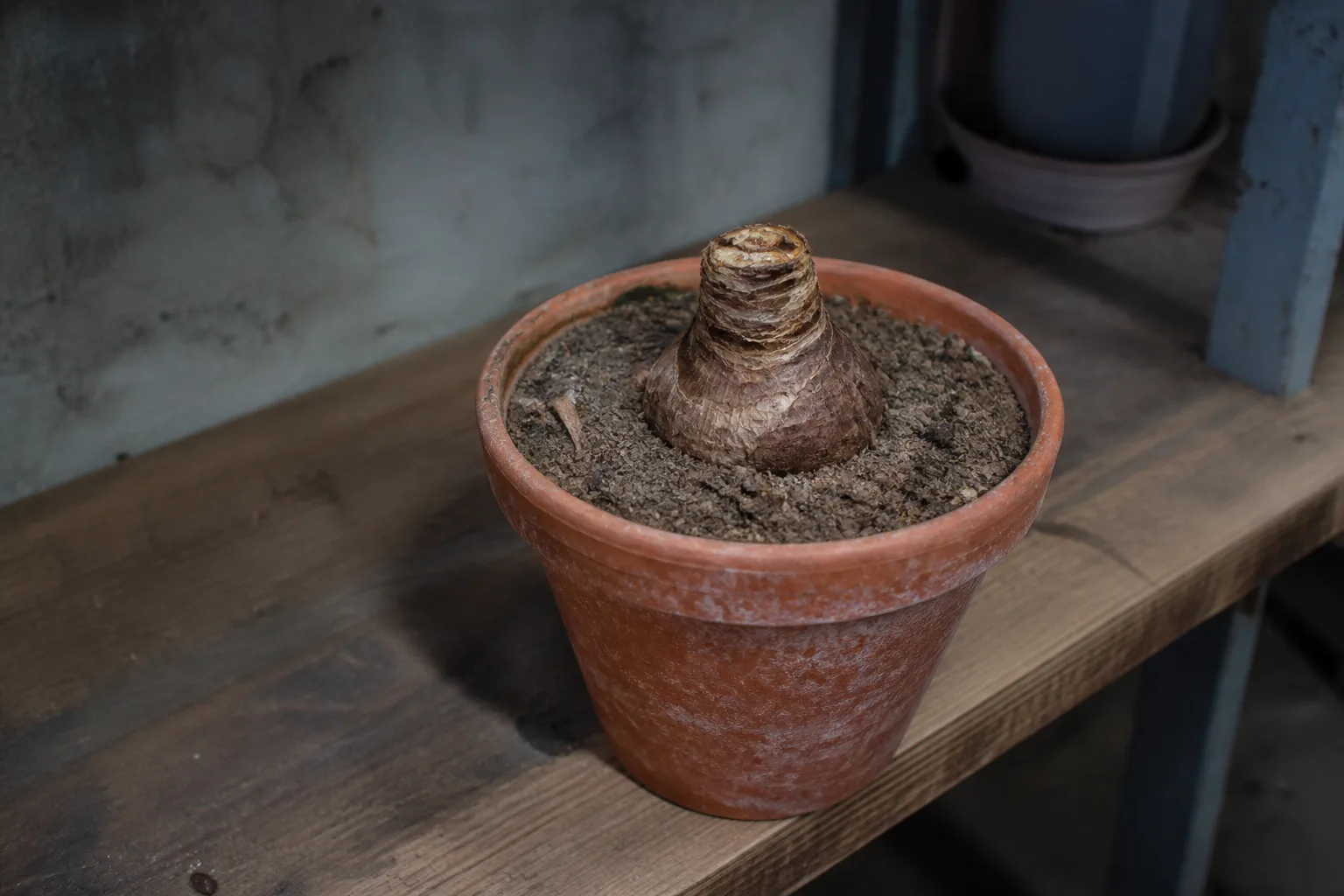
In late summer, taper water as leaves yellow. Once foliage is dry, cut it one to two inches above the bulb if it has not already collapsed. Move the pot to a cool, dry location between 45 and 55°F (7–13°C)—an unheated garage that stays above freezing, a basement, or a cool spare room. Light is not required during rest; consistent cool temperature matters more.
Do not water during dormancy unless the bulb shrivels noticeably; then mist lightly rather than soaking. Keep bulbs away from ripening fruit in shared storage areas—ethylene gas from apples and pears can damage flower buds inside other forcing bulbs, a caution Wisconsin Extension highlights for refrigerator forcing.
Wake the Bulb and Bring Flowers Back
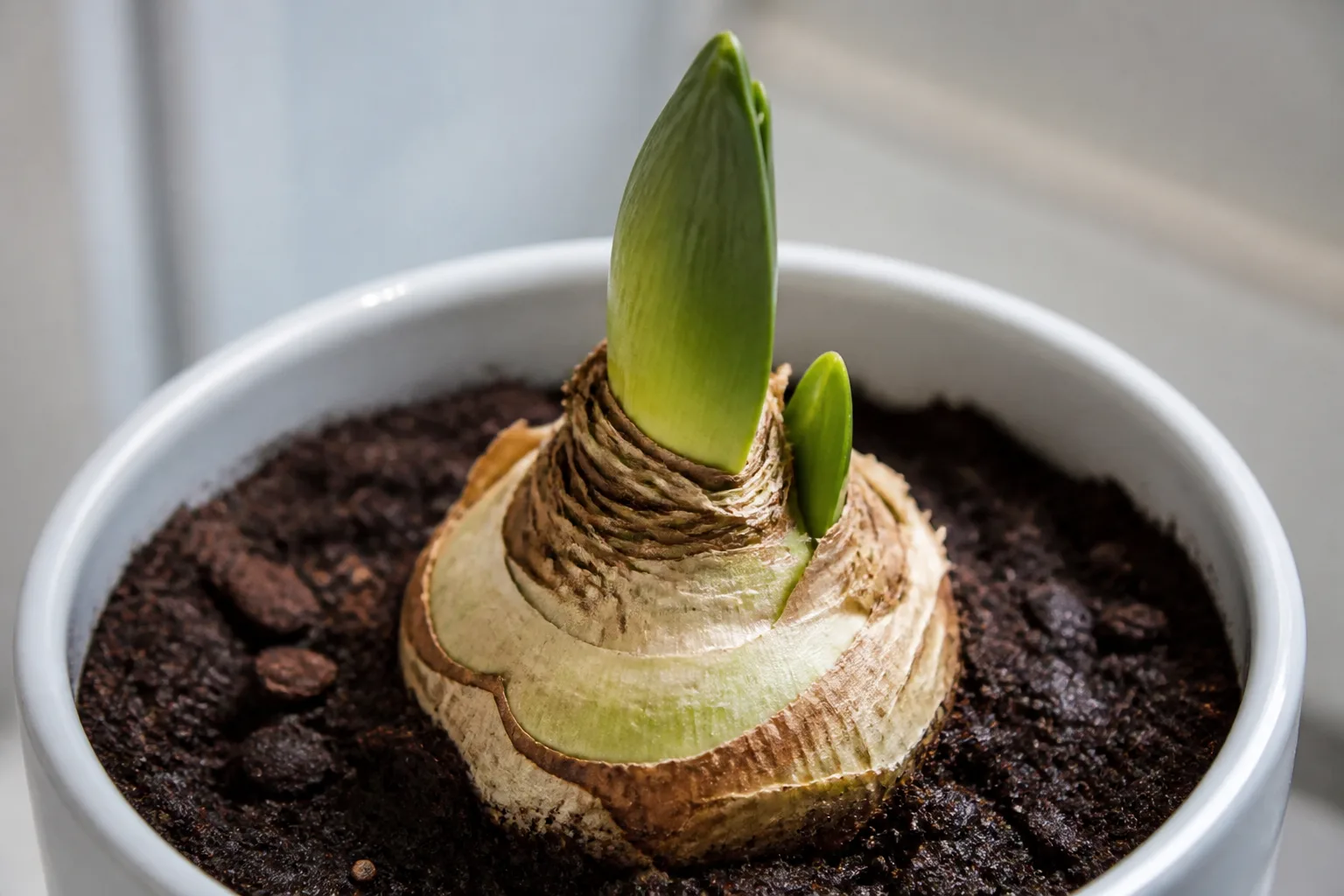
After eight to ten weeks of rest—or when you see a green tip emerging—return the pot to bright light and warmth. Replace the top inch of mix if it is crusty, water once thoroughly, and resume feeding when active growth appears. Turn the pot a quarter turn daily as the scape elongates to keep stems straight.
Flowers typically open four to six weeks after wake-up, though cool rooms slow the show. Avoid drafty windows and radiator heat spikes while buds form—temperature swings abort scapes. Snip faded flowers to prevent seed formation, which drains reserves, but leave the stalk while it stays green; it photosynthesizes until it yellows.
Special Cases: Waxed Bulbs and Store-Bought Gift Plants
Waxed amaryllis bulbs bloom without soil or water because growers pre-charged them. After bloom, peel wax and any wire base carefully. If the bulb is still firm, pot it in drainable mix with the top third exposed, moisten lightly, and grow leaves like any other Hippeastrum. Expect a harder first rebloom year—wax removed late plus depleted reserves means you may need two full recharge cycles before spectacular flowers return.
Peel wax in thin strips rather than gouging the bulb scales. Check the basal plate for mold or softness where moisture may have collected under wax. If roots never formed during the waxed display, the first month after potting is about root establishment, not bloom pressure—bright light, light moisture, no heavy feed until new leaves lengthen.
First-year gift plants that failed to bloom on schedule were often conditioned at the grower for holiday forcing. If that eight-to-ten-week pre-treatment was short or the box sat in a warm store aisle, the bulb may arrive tired. You are not failing—the supply chain missed the cue. Run the full leaf summer and fall dormancy yourself; second-year blooms are usually more predictable when you control timing.
Gift bulbs shipped in decorative foil sleeves often rot because foil traps water against the bulb neck. If your plant arrived in foil, remove it or punch drainage holes immediately—even if flowers are still open. A bulb that sat in a warm display case through November may have begun leaf growth without blooming because heat advanced vegetative mode. Treat it like a green-leaf January bulb: maximize light now and commit to the full calendar next year.
When a Bulb Is Too Weak to Rebloom
Discard mushy bulbs—they will not recover. Borderline bulbs that feel slightly soft but not rotten can sometimes be saved with bright summer growth, but bloom may be weak or absent for another year. Very old bulbs—beyond five to seven years—may produce smaller shows even with perfect care; divide vigorous offsets into their own pots to carry the genetics forward.
Offsets—the daughter bulbs forming at the base—can steal energy from a parent that is already marginal. If your main bulb bloomed weakly or skipped flowers but offsets are large, pot the offsets separately after leaves yellow. A young offset may need two full leaf summers before it produces its first scape, but it can outperform an exhausted parent.
If rot was the issue, review drainage and watering—not just dormancy length. A firm bulb with good care almost always rewards patience. Sanitize reused pots with a diluted bleach rinse if fungal smell lingered in old mix, and always use fresh potting medium when repotting after rot scares.
Conclusion
An amaryllis that skipped this winter’s flowers is sending a clear message: either last year’s leaves did not bank enough starch, or the bulb never finished its cool dry reset. Diagnose with the squeeze test and an honest review of light, feed, and rest timing. Grow green leaves hard through spring and summer, force eight to ten weeks of cool dryness starting in late summer, then wake the bulb for blooms four to six weeks later. January is the perfect moment to stop mourning missing holiday trumpets and start the calendar that makes next winter’s show likely—firm bulb, bright leaves, disciplined rest, and blooms you timed yourself.