Clover Lawns: 15 Things to Know Before Growing
Clover lawns can cut mowing and fertilizer needs, but they have limits. Learn when to plant, how to establish one, and what can go wrong.
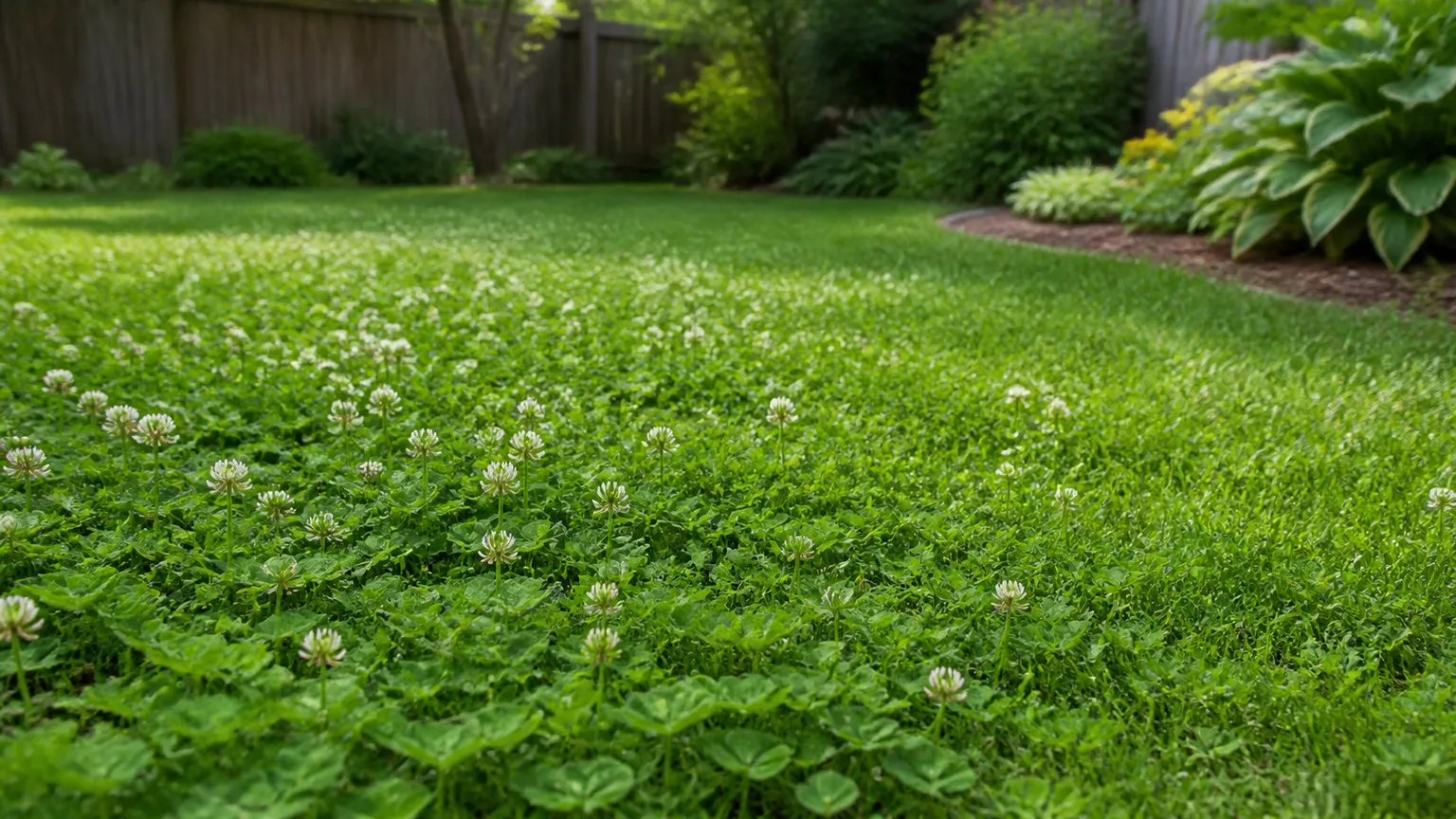
A clover lawn can be a smart alternative to an all-grass yard, but it is not a magic carpet that grows anywhere without care. The best results come when you match the plant to the site, decide whether you want flowers or a more manicured surface, and accept that establishment takes more attention than mature maintenance.
The most useful decision is often not “clover or grass?” It is “where, which clover, and how much?” A sunny front lawn with light traffic may suit white clover. A cool-season grass yard that needs a little more summer resilience may be better with microclover mixed into turf. A shaded, heavily played-on, or warm-season lawn may need a different ground cover altogether.
This guide covers the 15 practical points that determine whether a clover lawn succeeds: what the plant is, how to choose seed, when to sow, how to prepare the soil, why nitrogen fixation is helpful but not a blank check, and how to handle bees, bare spots, winter dormancy, and spread.
The short verdict: who should grow a clover lawn
Grow clover intentionally if you want a lower-input lawn with a softer, less uniform look; can provide several hours of sun; and are comfortable with flowers, seasonal changes, and occasional reseeding. It is a particularly good candidate for a low-use area, a mixed lawn, a slope that needs living cover, or a yard where reducing nitrogen fertilizer and mowing matters more than achieving a perfectly grasslike texture.
Think twice if the lawn is the household’s sports field, stays shaded most of the day, sits in very loose sand, or must remain green and uniform through a cold winter. Think twice as well if you plan to use broadleaf weed killer as part of routine lawn care. Clover is a broadleaf plant, so a product designed to remove broadleaf weeds can remove the clover you planted.
Here is the quick decision rule:
| Your priority | Most sensible starting point |
|---|---|
| Flowers and a relaxed, pollinator-friendly yard | White clover, alone or blended with compatible turfgrass |
| A shorter, tidier look with fewer flowers | Microclover, usually in a cool-season grass mix |
| Heavy play, repeated running, or a dog path | A grass-dominant mix with clover, plus durable paths or hardscape |
| Full shade, hot-season grass, or extremely sandy soil | Test a small area first; consider another lawn alternative |
Clover lawn basics: species, habit, and role
Most lawn clover is white clover, Trifolium repens, a low-growing perennial in the legume family. It has three-part leaves, rounded white flower heads, and creeping stems called stolons that root where they touch the soil. NC State Extension describes it as a prostrate, mat-forming plant about four to six inches tall that spreads a foot or more through freely rooting stems. (NC State Plant Toolbox)
That growth habit explains both the charm and the complaint. A rooted runner can knit a thin lawn together and cover bare soil, but it can also cross a bed edge, enter a driveway crack, or form a patch that looks different from the surrounding turf. White clover is not grass, and it will not behave like a grass simply because you mow it.
“Clover” is also a broad label. Red clover, crimson clover, strawberry clover, black medic, and other plants may be sold or discussed alongside white clover, but they differ in height, life cycle, flowers, and lawn suitability. For a residential lawn, read the seed label for the actual species and cultivar instead of buying a packet that only says “clover.”
The plant’s nitrogen-fixing reputation needs a precise explanation. Clover forms a symbiotic relationship with Rhizobium bacteria in root nodules; the bacteria convert atmospheric nitrogen into a form the plant can use. That can reduce the need for added nitrogen in a lawn, especially over time, but it does not mean every grass plant immediately receives a measured dose of free fertilizer. Penn State Extension confirms the root-bacteria relationship while also describing white clover as a common perennial that thrives in thin or under-fertilized turf. (Penn State Extension)
Choose white clover, microclover, or a mix
White clover is the classic choice when you want visible flowers, fast lateral spread, and a forgiving ground cover. It can be mowed, but its flower heads rise above the leaves and its runners create a more informal, sometimes patchy appearance. It is often the better choice for a deliberately flowered lawn or a low-maintenance area where a few inches of growth are acceptable.
Microclover is a dwarf form of white clover selected for smaller leaves, shorter growth, and fewer flowers. It can blend more quietly with turfgrass, but “micro” does not mean indestructible. Horticulturist Logan Hailey’s review at Epic Gardening highlights its useful low-growing habit and nitrogen fixation while also noting winter dormancy in northern climates, weaker performance in sandy soil, and lower tolerance for heavy foot traffic. (Epic Gardening)
| Trait | White clover | Microclover | Grass-clover blend |
|---|---|---|---|
| Visual style | Larger leaves and obvious white flowers | Finer leaves and fewer flowers | Grass texture with clover filling gaps |
| Spread | Vigorous runners; can be assertive | Dense but generally tidier when mowed | Varies with grass and mowing |
| Best use | Informal lawn, pollinator value, low-input cover | Manicured-looking cool-season lawn | Traffic, winter appearance, and transitional yards |
| Main caution | Flowers, spread, stains, and informal texture | Heat, shade, drought, and winter dieback | Grass may outcompete clover if overfed |
Seed marketed as “microclover” is not interchangeable with any cheap white-clover seed. Check the cultivar, purity, coating, recommended seeding rate, and the climate guidance supplied by the grower. If the label is vague, trial a small section before committing the whole yard.
Why the mix is often the practical compromise
A clover-grass mix usually handles the widest range of household needs. Grass contributes upright density and better recovery under repeated foot traffic; clover contributes low-growing cover, flowers if allowed, and a source of biologically fixed nitrogen. In a cool-season region, grass can also keep the lawn looking greener when clover slows or goes dormant in winter.
The balance is not permanent. If you apply large amounts of nitrogen, Purdue horticulture professor Cale Bigelow explains that you shift the competition toward grass because the grass now has more available nitrogen while clover’s special advantage matters less. (Purdue University) If you want clover to remain a meaningful part of the mix, base feeding on a soil test and the grass species’ actual needs rather than an automatic fertilizer calendar.
Check sun, soil, traffic, and expectations
The first three months of a lawn conversion are when most failures are decided. A seed packet cannot compensate for deep shade, a compacted surface, aggressive perennial weeds, or a family that needs a sports field. Walk the site at different times of day before you buy seed and mark the places that behave differently.
Three site tests that prevent failure
1. Measure usable light. White clover can handle full sun to partial shade, but a lawn that receives only dappled light for a short time is not the same as one that gets several hours of direct sun. Microclover is usually less forgiving of shade and heat. If tree shade covers one corner, plan a different treatment for that corner instead of expecting one seed mix to perform uniformly.
2. Inspect the topsoil. Push a trowel into several spots. If the surface is hard, water runs off, roots are shallow, or the soil is extremely sandy, fix the root zone before blaming the seed. Clover tolerates a range of textures, and NC State lists clay, loam, good drainage, and moist conditions among white clover’s cultural settings, but tolerant does not mean “happy in permanently wet or bone-dry soil.”
3. Map the traffic. Light walking is different from a shortcut worn into a path. Repeated play, turning wheels, and dogs using the same route can thin even a vigorous stand. Put stepping stones or a durable path through high-use areas, and choose a grass-dominant blend where the lawn must absorb constant impact.
Decide how much visual change you can accept. A clover lawn may show flowers, different shades of green, small leaf stains on clothing, and seasonal browning. None of those is automatically a problem; each is a design and lifestyle question that is easier to answer before planting.
Weigh the real benefits
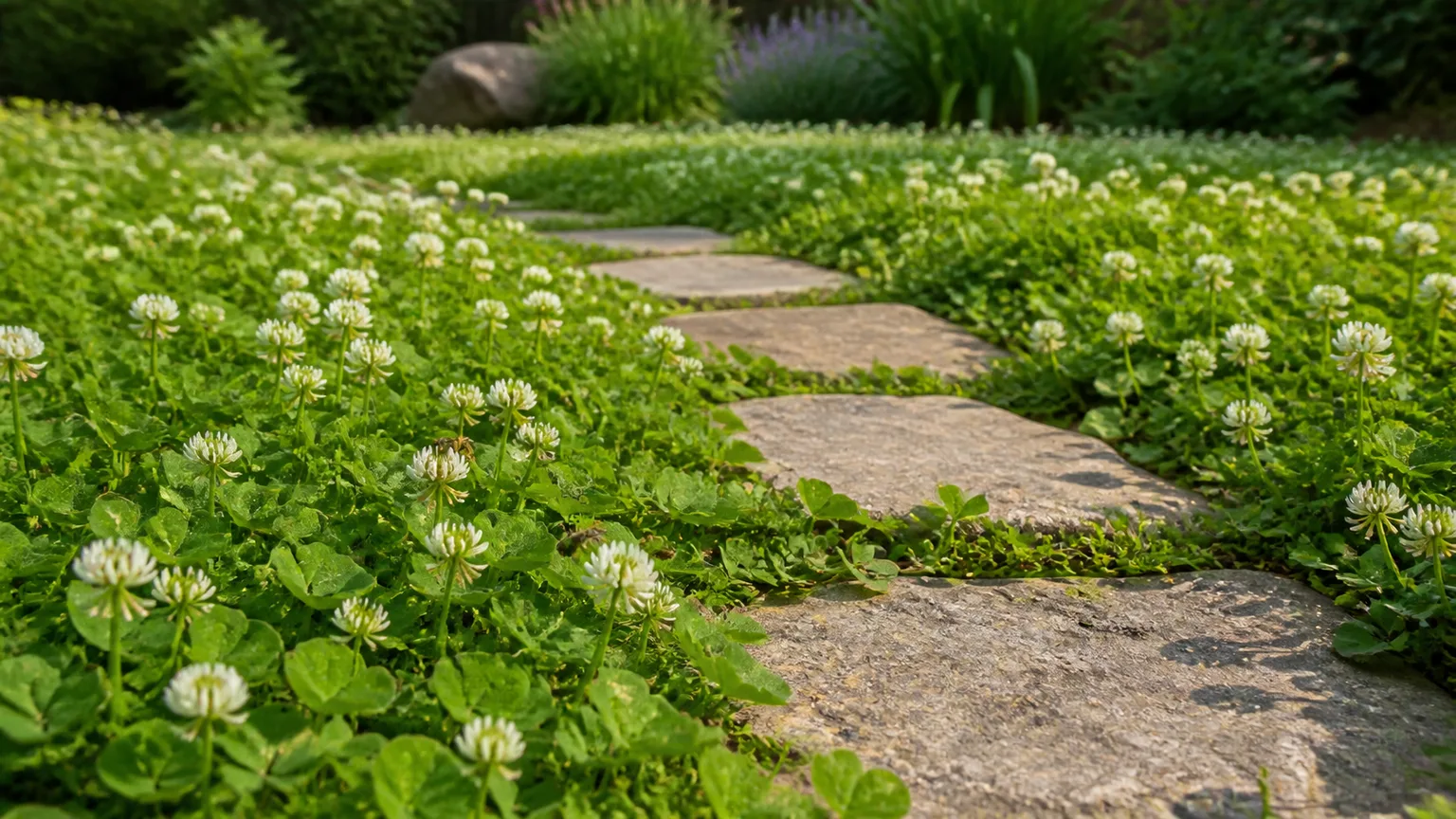
1. Less mowing is possible, not zero mowing. A dense clover stand can stay acceptably low for longer than fast-growing turf, and microclover is suited to regular mowing. However, mowing frequency still depends on rainfall, fertility, temperature, mower height, and your preferred appearance.
2. Fertilizer demand can fall. The nitrogen-fixing partnership is the central ecological benefit, particularly when clover is mixed with grass. The realistic goal is fewer unnecessary nitrogen applications, not a promise that every lawn will never need a soil correction or any fertilizer.
3. Flowers support pollinators. White clover flowers provide nectar and pollen, and NC State lists the plant as attractive to bees and butterflies and as a host for clouded sulphur butterfly larvae. (NC State Plant Toolbox) This makes the lawn more biologically active than a frequently sprayed, flowerless grass monoculture.
4. Clover covers thin soil. Creeping stems and a dense canopy can shade the soil surface, reduce open gaps, and help slow erosion on suitable slopes. That is useful where turf is repeatedly failing because the soil is compacted or nutrient-poor, although the underlying site problem still deserves attention.
5. Dog urine is less visually dramatic. Clover often avoids the bright yellow “burn” rings that urine can create in grass. It is not a sanitation solution, and a concentrated traffic or waste area can still thin any plant community, but clover may be a more forgiving visual partner for pet owners.
6. Chemical dependence can be lower. A healthy, dense stand leaves fewer openings for weeds, and a homeowner who accepts clover does not need to remove every clover plant with an herbicide. The biggest reduction comes from changing the lawn goal, not from assuming clover itself controls every weed.
Accept the trade-offs before planting
7. Establishment is the labor-heavy phase. Mature clover may be easygoing, but seed must contact soil, remain evenly moist, and compete with neither a thick turf mat nor a flush of weeds. Expect to watch the surface for the first weeks instead of scattering seed and forgetting it.
8. Seedlings still need water. Adult clover can survive dry periods better than a shallow-rooted, stressed lawn, but newly germinated plants have tiny roots. Drought tolerance begins after establishment; it does not cancel the germination requirement.
9. Flowers bring insects close to the ground. Bees and other pollinators are a benefit, but a flowering lawn is not the right place for every barefoot game or picnic. If a household member has a serious sting allergy, use their clinician’s safety plan and consider a flower-free route or a different surface rather than treating mowing as a complete safety measure.
10. Heavy traffic exposes the weak point. A mixed lawn generally recovers better than all-clover cover. In wet weather, repeated footfall can compact the soil and turn thin areas muddy; in dry weather, plants competing closely for water can brown or die back.
11. Winter may change the picture. White clover foliage can die back in cold conditions and remain visible through mild winters, while microclover may lose its green appearance in colder regions. A grass component helps bridge that seasonal gap, but no seed mix can guarantee the same color in every climate.
12. Weed control becomes a different job. Clover is a broadleaf plant. Many selective lawn herbicides used against broadleaf weeds will also injure or kill the clover, so a clover lawn requires hand-weeding, cultural control, or a willingness to accept some diversity. Read every pesticide label before applying anything; never assume a product is compatible because it is marketed for lawns.
13. Runners can cross the boundary. Clover may move into adjacent beds, pavers, or cracks. A clean edge and occasional hand removal keep the plant where you want it. If the lawn borders a delicate low-growing ground cover, leave a buffer or use a physical edge.
Pick the right planting window
Clover seed germinates best when temperatures are cool to mild and the surface can stay moist. In much of the United States, that means spring after the last hard frost or late summer to early fall with enough time for roots to develop before the first hard freeze. The best calendar date depends on local weather, soil temperature, the clover type, and whether you are overseeding or renovating the yard.
Spring gives seedlings a long growing season but can be followed quickly by summer heat and drought. Fall often supplies gentler temperatures and more natural moisture, but sowing too late leaves young plants vulnerable before they have rooted. Use your local frost dates as a starting point, then move the date around the actual forecast: do not seed immediately before a washout, a heat wave, or a week when you cannot irrigate.
If the lawn is a cool-season grass and you are adding microclover, match the clover window to the grass’s best seeding period. Avoid treating “early spring” or “fall” as universal instructions for warm-season lawns; the grass and clover may not share the same growth cycle.
Establish a clover lawn step by step
Start with a small test plot if you are uncertain. A 100- to 200-square-foot trial lets you see the flower level, winter color, traffic response, and spread before you commit to the entire property.
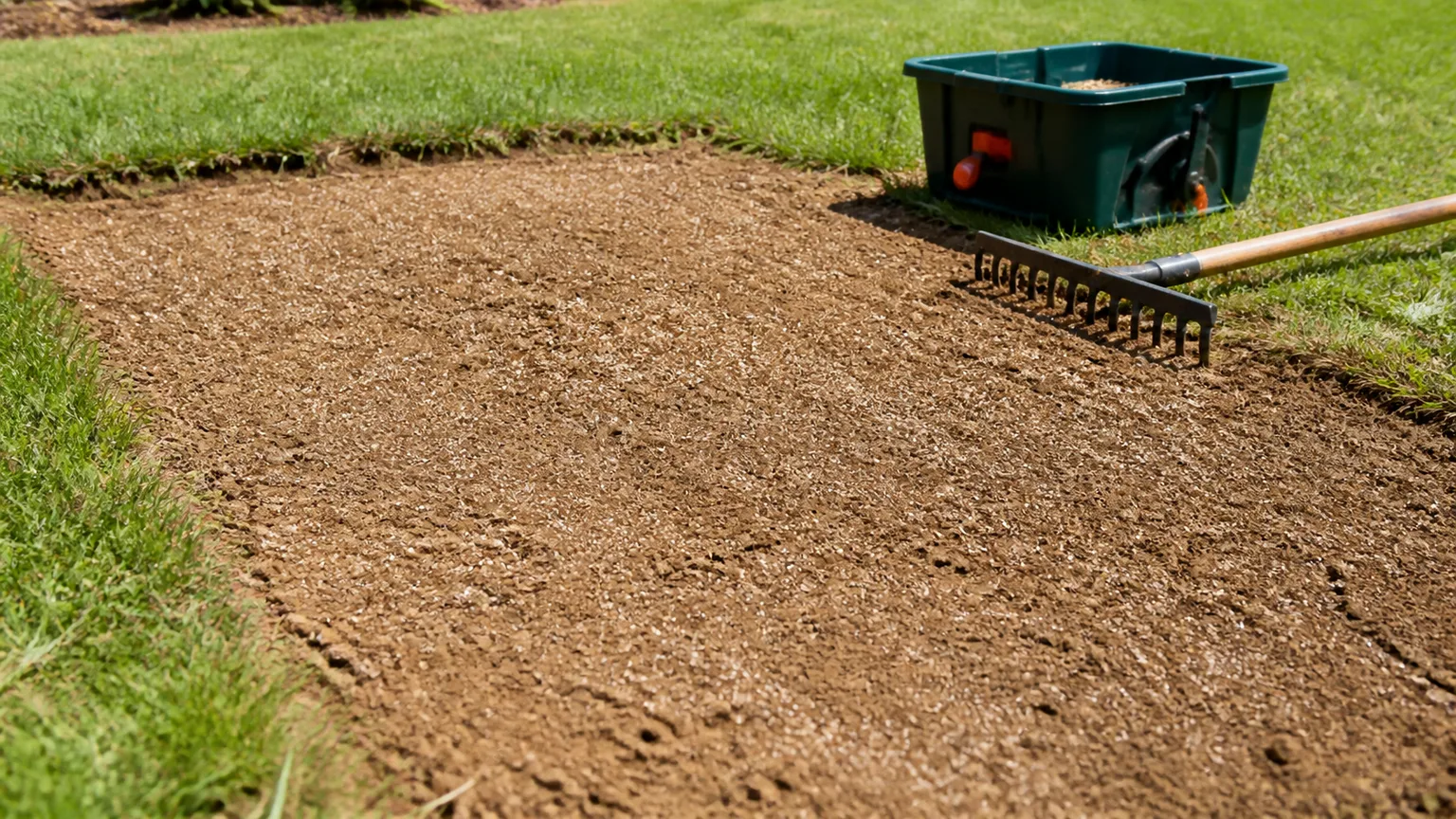
Measure the area and follow the seed supplier’s rate. Published recommendations vary by species, whether the seed is coated, and whether the goal is a pure stand or an overseed. As a practical scale, one commonly cited white-clover rate is about six to eight ounces per 1,000 square feet (Gardening Know How), while pure microclover products may call for a different amount. The label for the seed in your hand controls; do not convert a rate from a different cultivar or coating without checking.
Prepare the surface by removing leaves and thick thatch, mowing existing grass shorter than normal, and scratching or aerating the top layer so seed can reach soil. Clover seed is tiny. It should sit at the surface or be covered only very lightly—about one-eighth inch is safer than burying it deeply. A thin dusting of soil can protect seed, but a heavy layer can block emergence.
Mixing seed with a dry, inert carrier such as clean sand can make a small quantity easier to distribute evenly. Divide the mixture into two batches and broadcast in crossing directions. That simple two-pass method reduces the dense clumps and bare lanes that happen when a handful of tiny seeds is thrown only once.
Overseeding an existing lawn
Overseeding is the least disruptive route, but it works best when the existing grass is thin enough to expose soil and not so vigorous that it shades every seedling. Mow, remove clippings, dethatch only if a real thatch layer blocks the surface, and rake shallow grooves through the lawn. A core aerator can help on compacted ground, but aeration alone does not make a dense sod disappear.
Broadcast the clover seed, press or roll it lightly for contact, and water with a gentle spray. Keep the seed zone evenly damp through germination. Walk around the area during this phase; tender seedlings are easy to flatten, and repeated traffic can undo the surface preparation.
Expect a blend, not a takeover on demand. Grass that is already thick will continue to compete, while a thin lawn may allow clover to fill rapidly. That is why overseeding is best for a homeowner who wants a mixed lawn and can tolerate an evolving ratio.
Replacing a failing lawn with a seedbed
If the old lawn is dense, badly weeded, uneven, or repeatedly fails in the same places, renovating the whole surface can be more predictable. Remove sod with a shovel or sod cutter, or smother it with an opaque cover or sheet mulch when time allows. Avoid rototilling perennial weeds such as bindweed or quackgrass into smaller pieces; that can multiply the problem.
Once the old vegetation is gone, correct the obvious root-zone problems. Level low spots, loosen compacted soil without pulverizing it, and use a soil test before adding lime or fertilizer. Compost can improve structure, but it is not a universal cure and thick imported layers can change drainage or bury the seed too deeply.
Rake the surface smooth, broadcast the seed in two directions, lightly press it, and water immediately. Keep the top layer damp until seedlings emerge, which may take roughly one to two weeks under suitable conditions. After emergence, lengthen the interval between waterings gradually so roots explore deeper soil, while still preventing young plants from drying out.
Maintain it without losing the point
The maintenance shift is from “feed and mow on autopilot” to “watch the stand and respond to its condition.” A clover lawn still benefits from a sharp mower, a level surface, sensible watering, and quick repairs where traffic opens the soil.
14. Mowing is still a management choice. Cutting before flowering gives you a shorter, flower-light surface; waiting longer supports pollinators and may allow reseeding. Set the mower high enough to leave useful leaf area, and do not scalp a stand simply because it looks different from turf.
15. Watch the mix instead of chasing a fixed ratio. A grass-clover lawn changes with light, rainfall, fertility, and traffic. Track which areas are thinning, then adjust mowing, watering, paths, or feeding before scattering more seed. The right ratio is the one that supports how your household uses the space.
Mowing, flowering, and height
Do not mow new clover immediately because the seedlings look tall enough. Wait until the stand is rooted and dense, then make the first cut conservatively. A setting around three to three and a half inches is a safer first pass than scalping tender crowns. Once the plants recover, adjust height to the look you want while leaving enough leaf area for regrowth.
Mow before flowering if your priority is a short, flower-light surface. Wait longer if pollinator value and reseeding matter more. Purdue researchers also note a practical mowing issue that many generic lawn guides miss: clover is succulent, so infrequent mowing can leave moist clippings clumped on the surface. If that happens, mow more regularly at a sensible height or spread the clippings rather than letting a wet mat smother the stand.
One or two seasonal cuts may be enough for an informal white-clover lawn, while a mixed or microclover lawn can be mowed more often for a uniform appearance. The right schedule is the one that preserves the crown, keeps the surface usable, and fits your flower and texture preference.
Water, fertility, weeds, and containment
After establishment, water deeply when the plants show drought stress rather than running a shallow daily cycle. Newly seeded areas are the exception: they need frequent, light moisture until roots are established. Water in the morning when practical, and check the soil instead of following a timer that ignores rain.
Do not fertilize by habit. Test the soil and observe the grass component. If a mixed lawn is pale because it lacks nitrogen, a measured, appropriate application may be justified; if the grass is already dense and vigorous, additional nitrogen can push it ahead of the clover. Never use a fertilizer claim as a substitute for a soil test.
Pull large weeds while the soil is moist and the clover is young. Later, a dense stand can suppress some opportunistic weeds, but it cannot outcompete every perennial invader or repair a persistent drainage problem. Hand removal, mowing, and better turf density are usually more compatible with a clover lawn than routine broadleaf herbicide.
Keep edges tidy with a spade, string trimmer, or physical edging. Remove runners that enter beds before they root, and leave a narrow maintenance strip where the clover meets a patio or garden. Containment is easier when done a few minutes at a time than after runners have filled a neighboring planting.
Troubleshoot bare patches and seasonal dieback
Bare spots after germination usually point to moisture, contact, or competition. If seed sprouted in some areas but not others, compare the surface: did water run off a slope, did birds move the seed, did a thick thatch layer block contact, or did a nearby tree dry the soil? Scratch the bare patch, add a light layer of seed, press it, and keep it damp. Do not simply throw more seed onto a crusted surface.
Bare spots in midsummer may be heat, drought, or traffic. Microclover can be especially vulnerable to peak heat, and a dense stand competing for water can fail even when a few isolated plants look green. Reduce traffic, water deeply when the soil is dry, and wait for milder weather before reseeding. If the same spot fails every year, change the use or the plant rather than repeating the same seed purchase.
Brown winter foliage is not automatically dead. In cold regions, clover may go dormant and return when conditions improve. Protecting the site from winter traffic and avoiding a late, stressful mowing gives the crowns a better chance. If winter color is non-negotiable, keep a compatible cool-season grass component or choose a different lawn system.
A clover patch that keeps expanding needs boundaries, not panic. Trim runners, edge the lawn, and remove plants from beds while they are easy to lift. Do not spray a broadleaf herbicide across the lawn to stop spread; that solves the boundary problem by creating a clover-and-grass injury problem.
A lawn that becomes too grassy may simply be overfed. Revisit the fertilizer program, light, and mowing height before adding more clover seed. Conversely, a clover-heavy, thin lawn may need a durable grass overseed in traffic zones, not another pure clover application.
Conclusion
A clover lawn is best understood as a design choice and a management system, not a shortcut. White clover brings flowers and vigorous cover; microclover offers a finer texture but can be less forgiving; and a grass-clover mix often handles traffic, winter appearance, and household expectations most gracefully.
Before planting, test sunlight, soil, drainage, and traffic. Sow in a cool, moist window, keep the tiny seed shallow and evenly damp, and give new plants time to root before mowing. Once established, let the soil test—not habit—guide fertilizer, let your use determine the grass-to-clover balance, and reserve space for flowers, seasonal dieback, and occasional reseeding. Those choices are what turn clover from a hopeful lawn trend into a lawn that actually fits your yard.