Everything You Always Wanted to Know About Hickory Trees
Identify hickory trees by bark, leaves, and nuts. Compare 12 North American species, learn which nuts are edible, and decide if a hickory fits your yard.
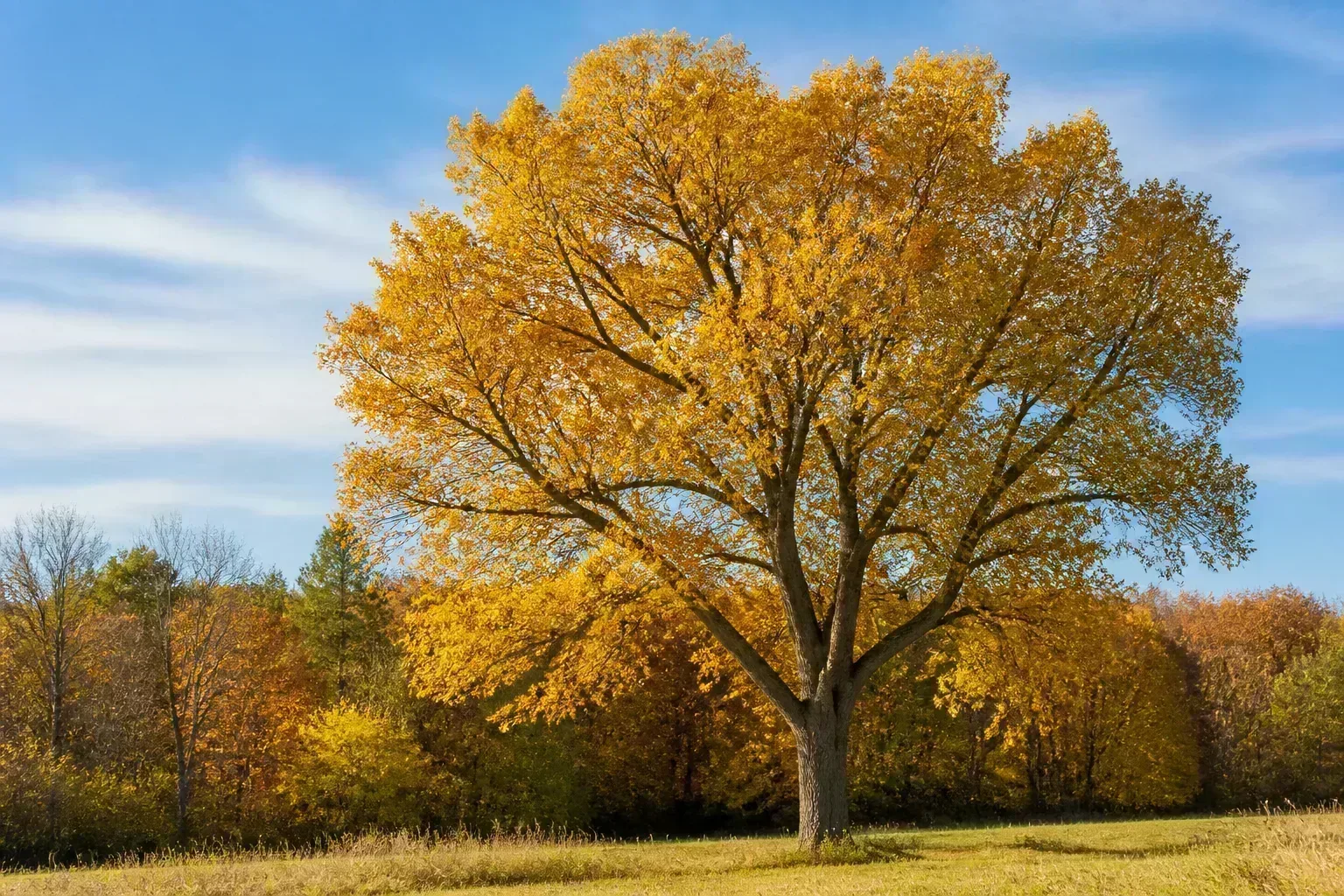
Hickory trees are the kind of native hardwood people walk past for years before they finally notice them. Then one fall day the leaves turn deep gold, the nuts start dropping, and the bark on an older trunk suddenly looks unmistakable. At that point the questions pile up fast. Is this shagbark or pignut? Are the nuts worth cracking? Should I keep the tree, plant another, or steer clear because of the mess?
This guide is built to answer those questions in order. Hickories belong to the genus Carya in the walnut family Juglandaceae, and Plants of the World Online currently recognizes 19 accepted species, with about 12 native to North America and the rest native to eastern Asia. They are slow-growing, long-lived trees valued for shade, mast crops, timber, and wildlife habitat. They are also easy to misidentify if you look at only one trait.
What hickory trees are and why they matter
Hickories are deciduous hardwood trees with pinnately compound leaves, thick-shelled nuts enclosed in a four-valved husk, and wood that ranks among the hardest and toughest in North American forests. The common name comes from Algonquian words for the nut or a drink made from it, while the genus name Carya comes from the Greek word for nut.
That combination of traits makes hickories important in ways a generic shade-tree article often misses. Ecologically, they produce hard mast, the calorie-dense nuts that feed squirrels, mice, deer, turkeys, and many other animals. Culturally and commercially, they have supplied food, tool handles, flooring, furniture stock, and smoke flavor for generations. In the landscape, mature hickories can be magnificent, but they are not tidy small-yard trees.
If you remember only one thing before trying to name a tree, remember this: hickory identification works best as a bundle of clues, not a single feature. Bark alone can mislead you. Leaflet count alone can mislead you. Nuts alone can mislead you. Put bark, leaves, buds, twigs, habitat, and fruit together and the picture gets much sharper.
Hickory tree identification: the traits that actually help
Most field guides list hickory traits in isolation. That is why so many beginners confidently call every furrowed tree a shagbark. A better approach is to run through a short checklist every time.
Bark patterns from smooth young trunks to shaggy plates
On young hickories, bark is often smooth and gray. With age it develops ridges, furrows, plates, or shaggy peeling strips depending on species. Shagbark hickory (Carya ovata) is famous because older trunks develop long, loose plates that curl outward, giving the tree a shaggy look (NC State Extension). Shellbark hickory (Carya laciniosa) also develops platy bark, but the plates are often thicker and the tree produces the largest nuts in the genus.
Not every peeling bark equals shagbark. Mockernut, pignut, bitternut, and several other hickories have furrowed or interlacing bark without the dramatic shag of C. ovata. Purdue Extension’s red hickory profile notes long, interlacing gray bark and compound leaves with about seven leaflets as key field characters (Purdue Extension). If the bark is shaggy, verify it with leaf and bud characters instead of stopping at bark.
Compound leaves, leaflet counts, and fall color
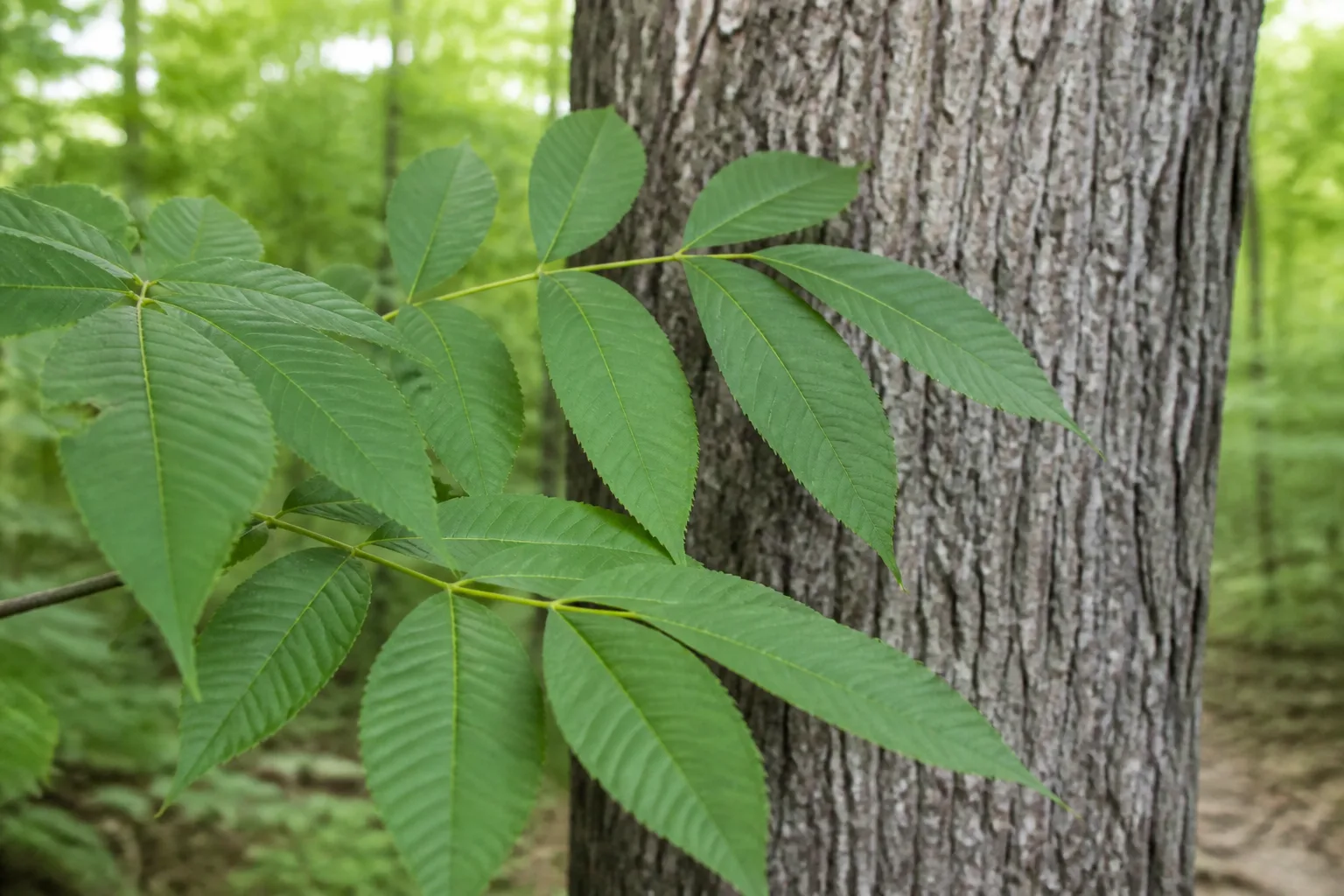
Hickory leaves are odd-pinnately compound, meaning several leaflets line a central stalk and one leaflet sits at the tip. Most native hickories have 5 to 9 leaflets, though pecan (Carya illinoinensis) commonly has 9 to 17. Leaflets are usually lance-shaped to oblong, with serrated edges.
Leaflet number helps, but it is not a perfect species key because counts overlap and hybridization happens. Use it as supporting evidence:
- 5 to 7 leaflets are typical on shagbark, pignut, mockernut, and several upland species.
- 7 to 9 leaflets are common on bitternut, sand hickory, and red hickory.
- 9 to 17 leaflets strongly suggest pecan or a pecan hybrid.
In fall, many hickories turn golden yellow. That color is one of the genus’s best landscape traits, especially when the tree has room to show off a broad crown.
Nuts, husks, buds, and twig details
Hickory fruit is a nut inside a four-part husk that usually splits partway or fully at maturity. The husk may be thin or thick, and the shell inside may be easy or maddeningly hard to crack. Size, shape, husk thickness, and flavor vary by species.
Two twig details solve more IDs than most people expect:
- Bitternut hickory (Carya cordiformis) has long, yellow, scaly buds that stand out in winter and even from a distance on bare twigs (NC State Extension). If you remember one winter ID trick, remember yellow buds for bitternut.
- Mockernut hickory (Carya tomentosa) often has hairy leaf stalks and buds in spring, which Purdue Extension uses as a primary field mark (Purdue Extension).
If you are comparing hickory to walnut, check the leaf arrangement and fruit. Walnuts in the genus Juglans also have compound leaves, but walnut husks are generally round and not split into four obvious hickory-like valves, and walnut bark does not produce the same shagbark plate pattern.
True hickories vs pecan hickories: taxonomy in plain English
Plant taxonomy can feel like extra homework until you realize it explains why some hickories behave differently in the kitchen and landscape. Botanists divide North American Carya into major groups, commonly described as true hickories and pecan hickories.
True hickories include species such as shagbark, shellbark, pignut, mockernut, sand hickory, and scrub hickory. They tend to have thicker shells and slower nut development, and many are primarily valued as timber or wildlife trees rather than orchard crops.
Pecan hickories include pecan (Carya illinoinensis), bitternut hickory (Carya cordiformis), and water hickory (Carya aquatica). Yes, pecan is a hickory. Bitternut belongs to this group even though its common name sounds like a true hickory. That is why bitternut shares certain bud and fruit traits with pecan rather than with shagbark.
This split matters for growers. Pecan is bred as a crop tree. Bitternut is often encountered in wetter bottomland woods. True hickories dominate many upland oak-hickory forests. If someone says they want a “hickory nut tree” for eating, they usually mean shagbark, shellbark, or pecan, not bitternut.
Where hickory trees grow in North America
North American hickories are mostly eastern and central trees, though exact ranges differ sharply by species. Shagbark hickory spans much of the eastern United States and into southern Canada. Pecan is strongly associated with the south-central and southeastern United States, where it is both a native tree and a major commercial crop. Sand hickory and scrub hickory are more regional, reflecting dry sandy soils or Florida peninsula habitats.
Most hickories prefer deep, fertile, well-drained soils and full sun, though individual species tolerate wetter or drier sites. You often find them at woodland edges, on slopes, in mixed hardwood forests, and in old fields transitioning back to forest. Because many species develop a strong taproot, they are far more common as established wild trees than as recent transplants in garden centers.
Hardiness depends on species. Shagbark hickory is often listed around USDA zones 4 to 8, while pecan ranges roughly zones 5 to 9, with cultivar choice mattering a lot for northern limits. Always match the species to your region instead of treating “hickory” as one uniform plant.
12 North American hickory species to know
There are more names in field guides than most people need day to day, but a dozen native species cover the majority of real-world encounters in North America. The profiles below focus on the traits that help you recognize the tree in the field and understand what it is good for.
Shagbark and shellbark hickories
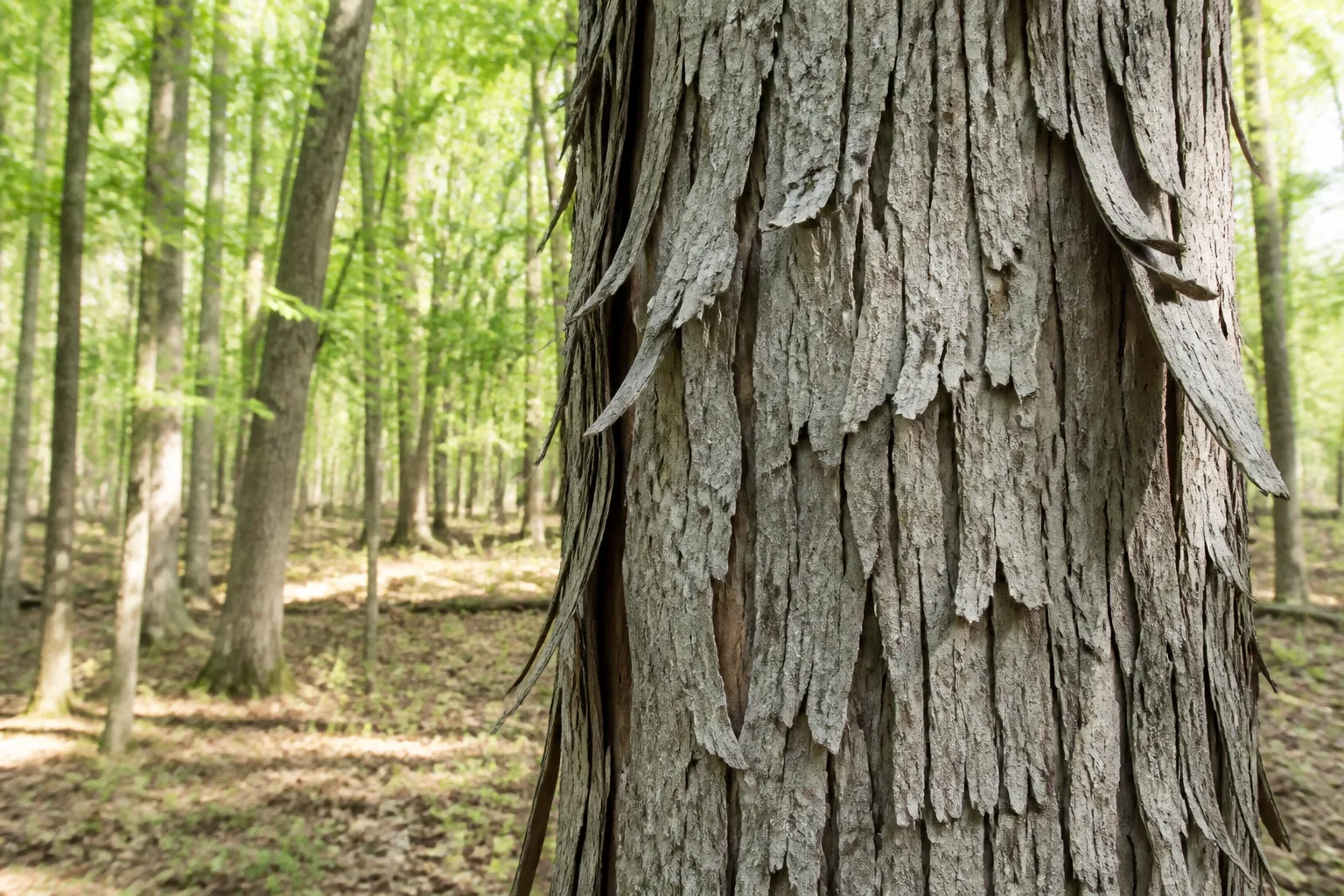
Shagbark hickory (Carya ovata) is the classic eastern hickory. Mature bark peels in long, outward-curving plates. Leaves usually have 5 leaflets, sometimes 7. The nut is sweet and highly prized, though wild trees vary in size and shell thickness. NC State Extension notes that shagbark hickory can reach 70 to 90 feet, prefers well-drained soil, and supports native moths such as luna moth and hickory hornworm (NC State Extension). It is an excellent shade and wildlife tree if you have space.
Shellbark hickory (Carya laciniosa) is often confused with shagbark because both can develop platy bark. Shellbark tends to be associated with bottomlands and moist rich soils, grows slowly, and produces the largest nuts in the genus. Its common names include big shellbark and kingnut. If you find a huge hickory nut in rich floodplain woods, shellbark belongs on your short list.
Southern shagbark hickory is now usually treated as shagbark hickory var. australis rather than a separate species. It overlaps in appearance with shagbark and is most relevant if you are splitting hairs across the Southeast.
Pignut, mockernut, and bitternut hickories
Pignut hickory (Carya glabra) is common in eastern oak-hickory forests. Its bark forms interlaced ridges rather than shaggy plates. The nut is usually small to medium, often bitter or variable in flavor, and the shell can be hard. Pignut is valuable timber and wildlife food even if it is not the best backyard eating hickory.
Mockernut hickory (Carya tomentosa), also called white hickory, is common on dry ridges and upland sites. The name mockernut refers to nuts that look promising but are extremely hard to extract from thick shells. Identification clues include large hairy buds, hairy leaf stems, and a silvery, tightly furrowed bark pattern on many mature trees.
Bitternut hickory (Carya cordiformis) is one of the easiest hickories to recognize in winter because of its bright yellow buds. It tolerates a wider range of soils than many hickories and is often found in mixed forests and bottomlands. The nuts are bitter and mainly of interest to wildlife or historical processing uses rather than casual snacking. NC State notes it can take many years to reach fruiting age and develops a strong taproot that makes transplanting difficult (NC State Extension).
Pecan, water hickory, and southern specialties
Pecan (Carya illinoinensis) is the most economically important hickory and the one people most often forget is in the genus Carya. It has long compound leaves with more leaflets than most true hickories, oblong nuts in clusters, and a broad native range across the southern United States. In cultivation, pecan selection is all about cultivar, spacing, pollination, and disease pressure. In the wild, it is simply the most recognizable “sweet hickory” across much of the South.
Water hickory (Carya aquatica), also called bitter pecan, grows in wet bottomlands and swamps in the South. It is more of a wetland specialist than a yard tree, but it helps explain why “pecan hickory” names show up on trees that are not true orchard pecans.
Sand hickory (Carya pallida) is tied to dry, sandy soils and is easier to recognize when you flip a leaflet and see silvery hair on the underside. Scrub hickory (Carya floridana) is a smaller Florida species often found in sandy scrub habitats. Nutmeg hickory (Carya myristiciformis) is relatively rare, with a limited southeastern and south-central range. Black hickory (Carya texana) is a slow-growing southern tree valued for hard wood and heat tolerance. Red hickory (Carya ovalis) occupies upland sites and is often confused with pignut; Purdue notes seven leaflets, interlacing bark, and nuts with husks that split fully down the sides (Purdue Extension).
Which hickory nuts are worth eating
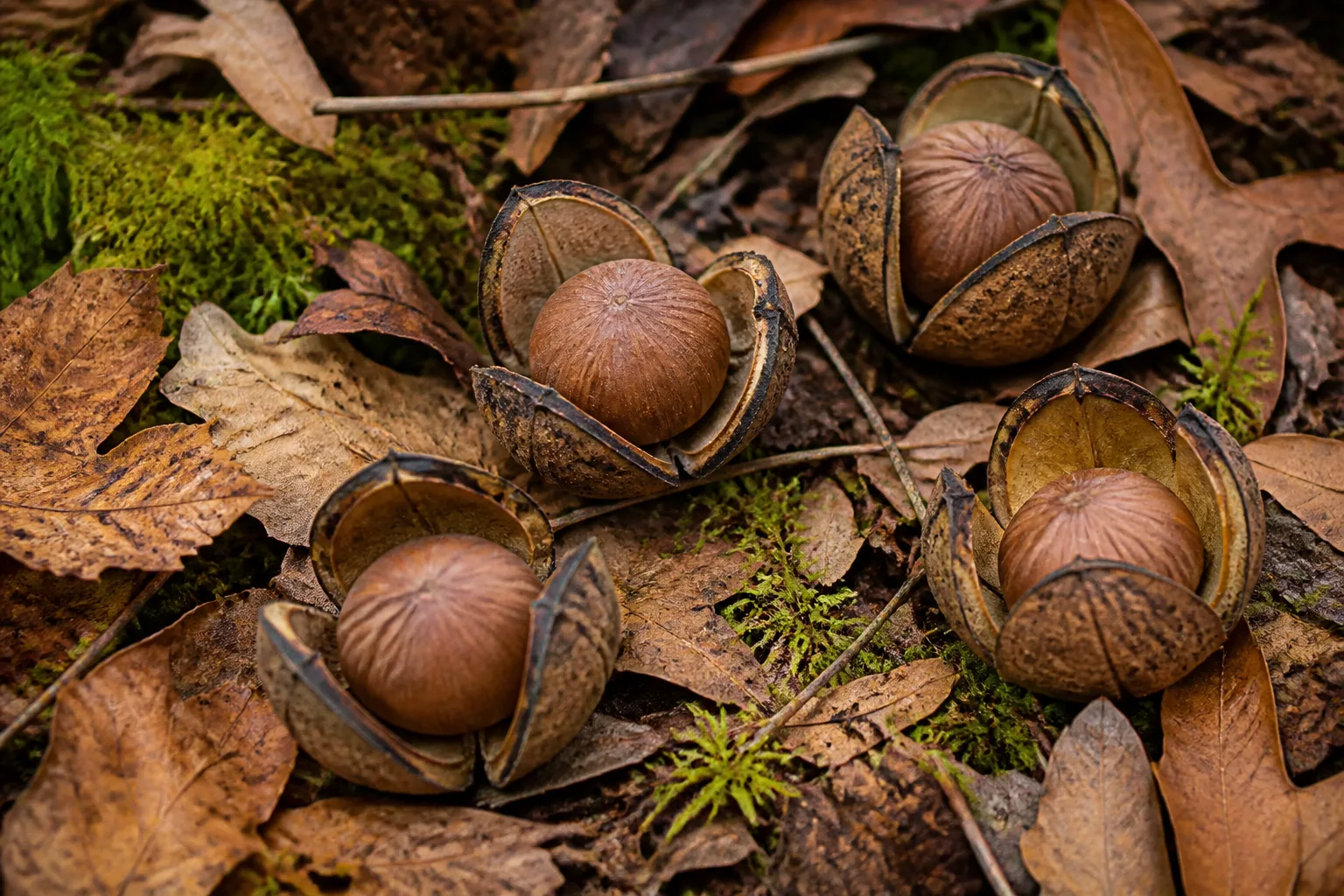
Most hickory nuts are technically edible. That is not the same as worth the effort.
Best eating hickories for most people:
- Pecan (Carya illinoinensis) — the standard for commercial nuts and the easiest entry point if you want real hickory flavor without wilderness labor.
- Shagbark hickory (Carya ovata) — sweet wild nuts with strong flavor; quality varies tree to tree.
- Shellbark hickory (Carya laciniosa) — large nuts, often excellent, though harder to find.
Edible but often disappointing:
- Mockernut hickory — kernel may be fine, but the shell defeats most crackers.
- Pignut hickory — variable; some trees produce bitter kernels.
- Sand hickory — sometimes sweet, but small.
Mainly wildlife food:
- Bitternut hickory — bitter enough that humans usually pass unless processing into flour or historical recipes.
- Water hickory — bitter pecan, not a snack tree.
If you are foraging, collect from the ground after they fall naturally, crack a few test nuts before investing time in a heavy harvest, and leave plenty for wildlife. Hickory mast is a major late-season food source, not a bonus crop for squirrels alone.
Hickory wood: strength, grain, and common uses
Hickory wood is famous because it is hard, dense, shock-resistant, and flexible compared with many hardwoods. That is why it has long been used for tool handles, ladder rungs, wheel spokes, sporting goods, flooring, cabinetry, and furniture. It also remains a favorite smoke wood for barbecue because it delivers a strong, classic flavor.
Not every hickory on your property is a lumber payday. High-value use depends on species, trunk straightness, defect load, and local markets. Still, understanding wood value helps explain why hickories were historically left standing in farm woodlots even when faster-growing trees were cut more aggressively.
For homeowners, the practical issue is usually falling limbs and nut drop, not selling timber. Mature hickories produce heavy wood, and storm breakage can be significant on older trees with included bark or old wounds.
Wildlife, moths, and ecological value
Hickories punch above their weight ecologically because they feed both wildlife and insects at meaningful scale. Squirrels cache hickory nuts. Deer, turkeys, small mammals, and birds consume mast. Insects use hickories as larval hosts, including notable moths such as luna moth, hickory hornworm, and walnut sphinx.
That insect value is not a flaw. It is part of why hickories belong in native landscapes and food webs. If you want a sterile, low-life landscape tree, hickory is the wrong genus. If you want a native tree that supports woodland biodiversity and seasonal food, hickory is one of the better candidates—provided you accept the litter and long timeline.
Should you plant a hickory in your yard?
This is the question many hickory articles skip because the answer is not always flattering.
A hickory can be a great yard tree if:
- You have a large lot and want a long-lived native shade tree.
- You value fall color, winter bark character, and wildlife use.
- You are patient enough to wait years or decades for meaningful nut crops.
- You can place the tree where nut and leaf drop will not annoy walkways, roofs, or neighbors.
Think twice if:
- You want a tidy, low-maintenance lawn tree.
- Your yard is small, with limited root and canopy space.
- You need fast shade or quick results.
- You plan to move the tree later; hickories resent transplanting because of the taproot.
For most homeowners, the smartest path is often to keep and manage an existing native hickory rather than planting a new one. If you do plant, choose species and seed source for your region. Pecan only makes sense where cultivars reliably ripen. Shagbark and shellbark are better ornamental-food trees in many eastern landscapes than bitternut or pignut.
How to grow hickory trees successfully
Hickories are not difficult because they are fussy. They are difficult because they are slow, large, and deep-rooted.
Site selection, spacing, and transplant reality
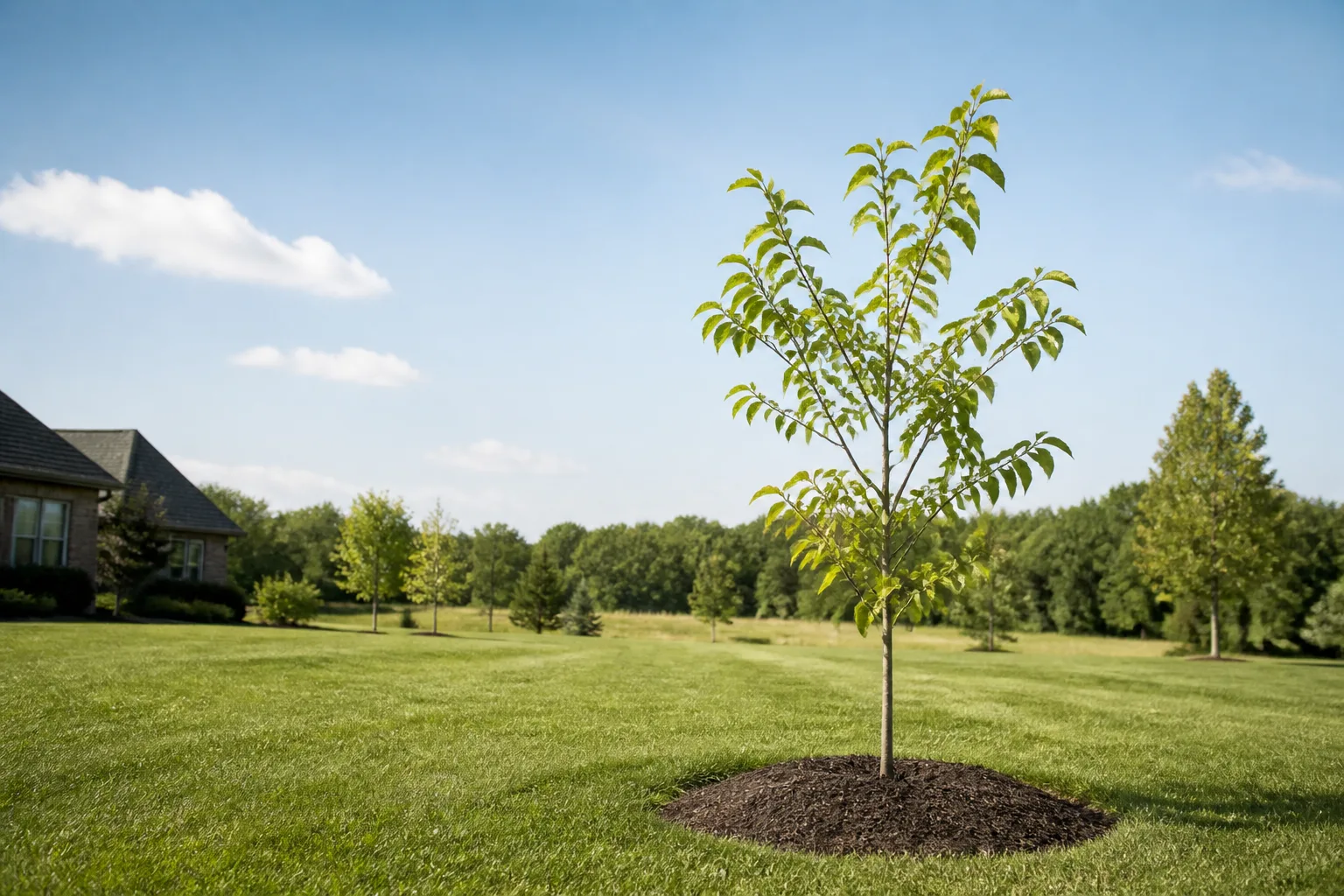
Choose a site with full sun and deep, well-drained soil unless you are deliberately matching a wetland species like water hickory. Give the tree room for a mature spread that may reach 40 feet or more on large species. Plant far from foundations, driveways, and overhead lines.
If you buy a nursery tree, smaller container or balled-and-burlapped specimens establish better than oversized specimens. Even then, expect taproot behavior. Direct seeding in place works for patient growers and restoration projects, but it is not a quick landscaping strategy.
Watering, fertility, and time to nut production
Young hickories benefit from consistent moisture during the first few years, especially in drought. Once established, many species tolerate dry periods well. They usually do not need heavy fertilization in decent native soil. Overfeeding young trees can produce soft growth without solving the basic issue that hickories simply grow slowly.
Nut production timing varies:
- Pecan orchard trees can produce sooner under cultivation, but still not overnight.
- Shagbark may need 15 to 20 years or more for reliable crops.
- Bitternut can take 25 years or longer to reach fruiting age in some cases (NC State Extension).
That timeline is normal. Hickories invest in wood and roots before they become generous nut producers.
Common hickory problems and look-alike mistakes
Hickories are generally sturdy trees, but they are not problem-free. NC State lists hickory bark beetle, pecan weevil, and twig girdler as occasional insect issues on several species, along with diseases such as leaf spot, anthracnose, and crown gall depending on site stress (NC State Extension). Stressed trees are more vulnerable, especially during drought or after root injury from construction.
The most common mistakes are identification errors:
- Calling every furrowed tree shagbark without checking leaflets and buds.
- Confusing pignut and red hickory, which overlap in range and appearance.
- Assuming peeling bark always means edible nuts.
- Mixing up hickory and walnut because both have compound leaves.
When in doubt, inspect winter buds, leaflet count and underside texture, husk split pattern, and habitat. Take photos of bark, leaves, nuts, and buds together rather than relying on one close-up.
Conclusion
Hickory trees reward attention more than they reveal themselves at a glance. Once you learn the genus pattern—compound leaves, four-part husks, tough wood, and often outstanding fall color—the individual species become much easier to sort out. Shagbark and pecan may get the glory, but pignut, mockernut, bitternut, sand hickory, and the rest each tell you something about the soil and landscape where they grow.
Use hickories for shade, wildlife, timber character, and, on the right tree, outstanding nuts. Just go in with open eyes about size, litter, slow growth, and taproots. Whether you are naming a tree on a hike or deciding whether to keep one in your yard, the best results come from looking at the whole plant, not one catchy trait in isolation.