How to Grow and Care for an Areca Palm Indoors
Learn areca palm care indoors, from bright filtered light and watering cues to repotting, brown-tip diagnosis, pests, and safe summer placement.
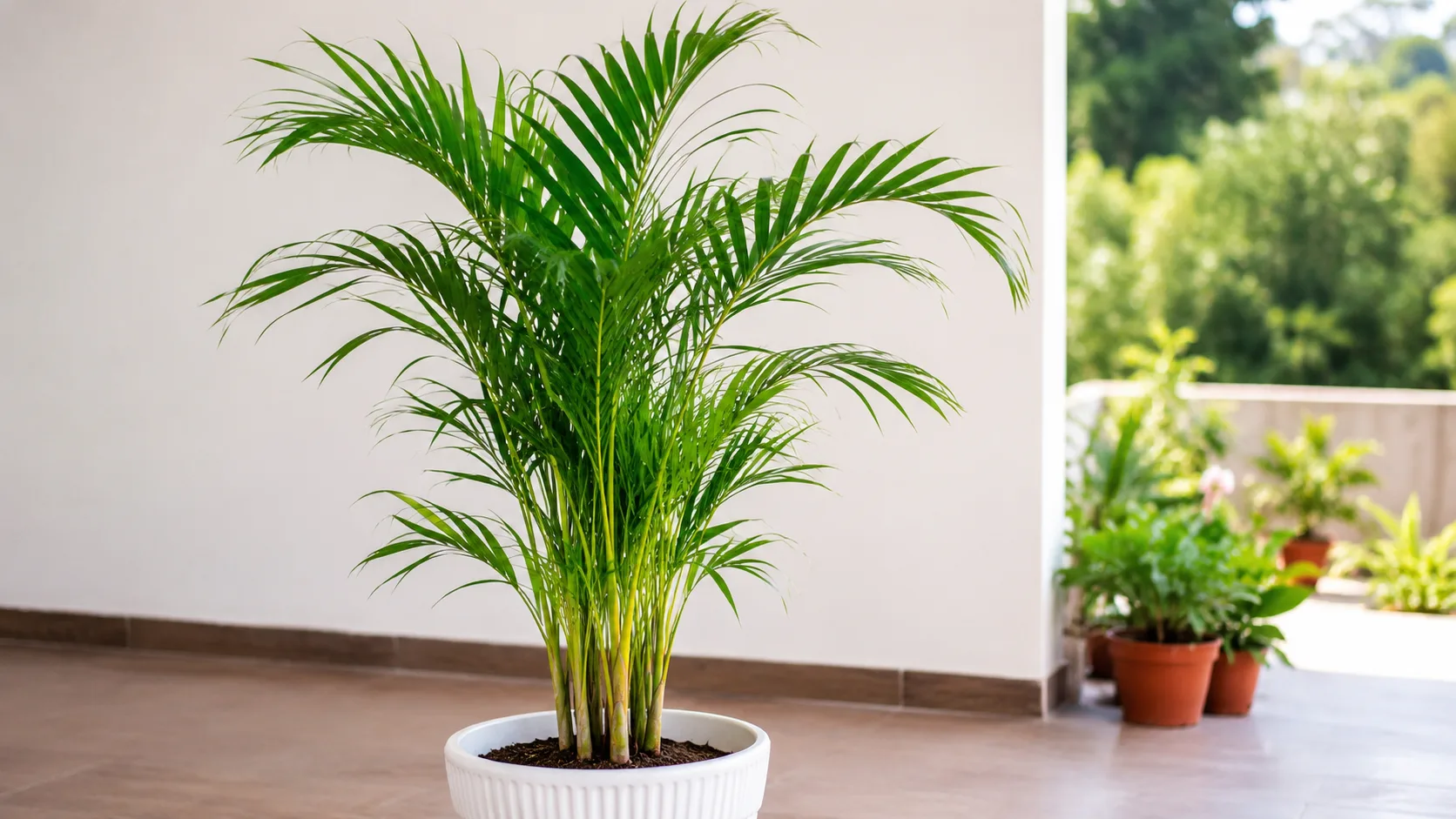
An areca palm is a clump of slender, golden-green canes topped with long, arching fronds. It can turn an empty corner into a leafy focal point, but it is a poor fit for a dim nook or a room with no floor space: a healthy indoor plant can reach several feet tall and nearly as wide as its foliage spreads.
The reliable routine is simple but specific: give it bright filtered light, water when the upper mix begins to dry, then let the pot drain completely. The plant appreciates humidity, yet a humidifier will not compensate for dark placement or roots sitting in water. Treat the plant as a slowly expanding clump, not a palm you can trim down whenever it outgrows its room.
Areca Palm Care at a Glance
| Need | Practical target | What to watch |
|---|---|---|
| Light | Bright indirect or filtered light | Scorch on the window-facing fronds; slow, sparse growth in dim corners |
| Water | Evenly moist but never waterlogged mix | Feel below the surface; drain the saucer after watering |
| Soil and pot | Airy mix and a pot with open drainage | Mix staying wet for many days or roots emerging from holes |
| Temperature | Warm, stable room away from cold drafts | Chilling injury, sudden browning after a cold-air event |
| Feeding | Palm fertilizer with micronutrients during active growth | Brown tips or salt crust after repeated heavy feeding |
| Space | A broad, bright location with room for arching fronds | Fronds pressed against walls or walkways |
Use the table as a starting point, not a rigid schedule. The time between waterings changes with the plant’s light, season, pot, soil, and root mass, so observe the pot before acting.
Know the Plant Before You Choose a Spot
You may see this palm labeled Dypsis lutescens or Chrysalidocarpus lutescens. The names refer to the same Madagascar-native species; NC State Extension currently lists Chrysalidocarpus lutescens and recognizes areca, butterfly, golden butterfly, golden feather, and yellow palm as common names. Its multiple canes rise from a shared base, while the leaflets line a central frond in a feather-like pattern. NC State Extension
The plant’s potential size matters more than its tabletop appearance at the nursery. Clemson Cooperative Extension reports that indoor areca palms commonly reach 6 to 7 feet and may add about 6 to 10 inches a year in favorable conditions. Their fronds also arch outward, so allow clear space around the canopy and keep the palm out of the path of doors, curtains, and children. Clemson Cooperative Extension
This is a clumping palm, not a single trunk with branches that can be cut back to a shorter height. If you want a compact plant that will stay on a table, choose another species; if you have a bright corner and can accommodate a widening canopy, an areca can provide a substantial screen without a woody tree trunk.
Give It Bright, Filtered Light
Place an indoor areca within a few feet of a bright window, where it receives strong daylight without hours of harsh, unfiltered midday sun. An east-facing window often gives a forgiving mix of bright light and gentler morning sun; a west or south window can work if a sheer curtain, distance from the glass, or an exterior overhang softens the strongest rays. Clemson Extension recommends bright indirect light near east-, west-, or south-facing windows. Clemson Cooperative Extension
The same practical distinction appears in Quirky Plants’ areca care guide: the palm can grow in sun, but midday exposure can burn foliage. For a plant raised indoors, use the fronds’ response to gradual exposure as your guide instead of assuming it is already acclimated to direct sun.
“Indirect” does not mean a plant should sit in a dark room. If the canes lean sharply toward the window, new fronds become smaller, or the lower interior of the clump thins, the location may not provide enough usable light. Move the palm closer in stages, then rotate the pot a quarter turn every couple of weeks to balance growth rather than repeatedly shifting it to a new room.
An outdoor summer break can help a container palm, but sunlight through a window and direct outdoor sun are not equivalent. Acclimate it over a week or two, starting in open shade and gradually increasing exposure to bright filtered light; do not set an indoor-grown palm straight into midday sun. If the fronds pale or develop dry tan patches on the exposed side, return it to more shade and let the plant settle before changing anything else.
Water for Even Moisture, Not a Fixed Schedule
Areca palms use water more quickly in warm, bright weather and much more slowly in winter or a dim room. Clemson Extension’s practical rule is to water thoroughly when the soil surface dries, without letting the palm stand in water or dry out completely. NC State similarly describes the preferred growing-season mix as moist but not soggy. Clemson Cooperative Extension NC State Extension
When it is time to water, pour slowly over the surface until water exits the drainage holes. Let the pot finish draining, then empty the saucer or decorative cachepot. This wets the root ball more evenly than frequent small splashes, while the open drainage path helps restore air around the roots between drinks.
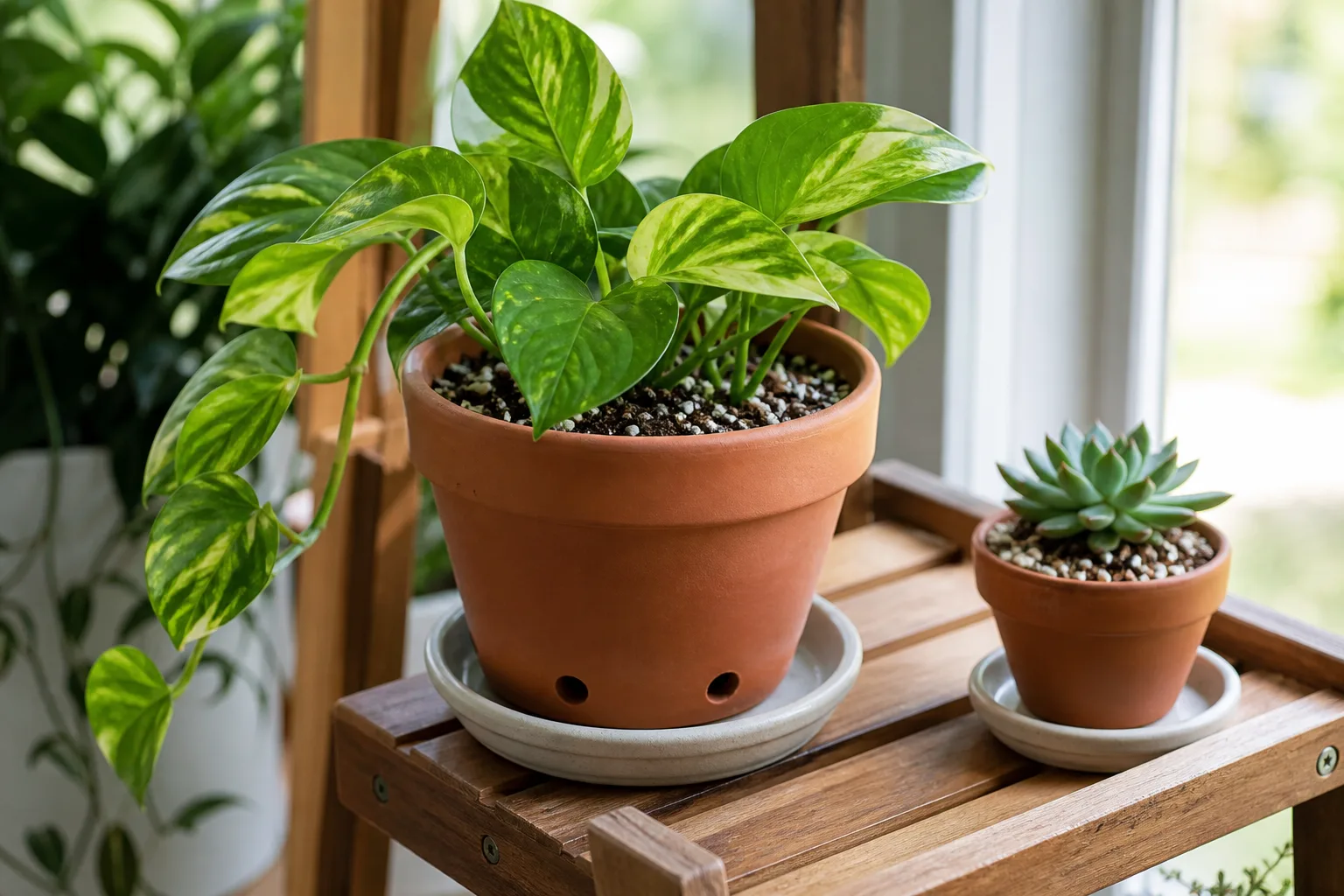
A reliable check before each watering
Press a finger into the mix about an inch or two below the surface. If it still feels cool and damp, wait and check again later; if the upper layer has dried and the pot feels noticeably lighter, water fully. A wooden skewer pushed partway into a large pot can help you see whether the deeper mix is still wet, but it is a guide rather than a precise moisture meter.
Do not use drooping fronds as your only watering signal. A plant with dry roots may droop, but roots damaged by prolonged saturation can also fail to supply water, producing a similar limp look while the soil remains wet. Check the mix first, and do not respond to every droop by adding water.
Choose an Airy Mix and a Draining Pot
Use a well-draining indoor potting mix that retains some moisture without compacting into a dense, airless mass. A commercial palm mix is convenient; a quality houseplant mix can also work if it drains freely. If it stays soggy, blend in a modest amount of coarse perlite or fine orchid bark to add air space. A heavy layer of gravel at the bottom does not fix a compact mix; drainage holes and a suitable mix do the real work.
The pot needs at least one unobstructed drainage hole. A snug container is usually easier to manage than a much larger pot, because excess volume can stay wet long after the roots have used the water. Keep the root crown at the same soil level it had before; burying cane bases deeply can trap moisture where the plant is least able to tolerate it.
Mineral salts from water and fertilizer may collect as a pale crust on the soil or pot rim. If the plant is otherwise growing well, occasionally water thoroughly enough to flush the mix and let it drain outside or over a sink. If the crust keeps returning, review fertilizer strength and water quality before adding amendments or repotting.
Keep Temperatures Steady and Humidity Practical
Warm, stable indoor conditions suit an areca palm better than rapid swings. Clemson Extension gives ideal conditions of about 65 to 70°F at night and 75 to 85°F by day, while emphasizing protection from cold drafts near doors, windows, and air-conditioning vents. Avoid a spot where chilled winter glass, a heating register, or a frequently opened exterior door creates a sharp temperature change. Clemson Cooperative Extension
Moderate to higher humidity can reduce stress on the fine leaflets, particularly when indoor heat makes the air dry. A room humidifier is the most predictable way to raise humidity around a large plant; grouping plants can help a little. Misting briefly wets leaves but does not hold room humidity at a stable level, so it is not a substitute for a humidifier when the room is persistently dry.
If you use a pebble tray, keep the pot on top of the stones and the water below the pot base. The tray should not turn into standing water beneath the drainage holes. Good air circulation also matters: avoid wedging the palm tightly into a corner, where crowded fronds stay damp and are harder to inspect.
Fertilize Lightly During Active Growth
Feed in spring and summer while the palm is making new fronds, using a slow-release fertilizer formulated for palms and containing micronutrients. Clemson Extension recommends palm fertilizer with micronutrients two or three times during active growth; it also warns that excessive fertilizer can brown leaf tips and that excess iron can cause spotting. Follow the product label for the pot size and formulation instead of applying a landscape rate to a houseplant. Clemson Cooperative Extension
More fertilizer does not create more light or healthier roots. A plant that is pale and barely growing in a dark position needs a brighter location first; a plant whose mix is waterlogged needs root-zone correction, not a nutrient boost. Stop routine feeding in winter when growth slows, and avoid combining a fertilizer change with repotting unless the existing mix is clearly failing.
If fronds show yellow translucent spots, or older leaves yellow while new growth remains weak, do not diagnose a deficiency from color alone. UF/IFAS notes that potassium deficiency is common in landscape areca palms, but the plant also has naturally yellowish canes and leaf structures. For a houseplant, inspect light, root health, and feeding history before choosing a fertilizer response. UF/IFAS Extension
Repot Only When the Root Ball Needs It
Areca palms tolerate a slightly snug pot, and a crowded root ball helps keep a large plant manageable indoors. Repotting every two or three years may be reasonable, but the calendar is only a prompt to inspect the roots. Repot when roots densely circle the bottom, water runs through almost immediately because the pot is root-packed, or the mix has broken down and stays wet or dries unevenly. Clemson Extension advises repotting when roots fill the pot, generally in spring or early summer. Clemson Cooperative Extension
Choose a container only one size larger, with drainage holes. Moving into an oversized pot can leave a large ring of damp soil around a small root ball; the plant may then show yellowing or drooping even though it has been watered regularly. The fine roots can be damaged during handling, so keep the root ball intact where possible and avoid teasing or spreading roots just to fill the new container.
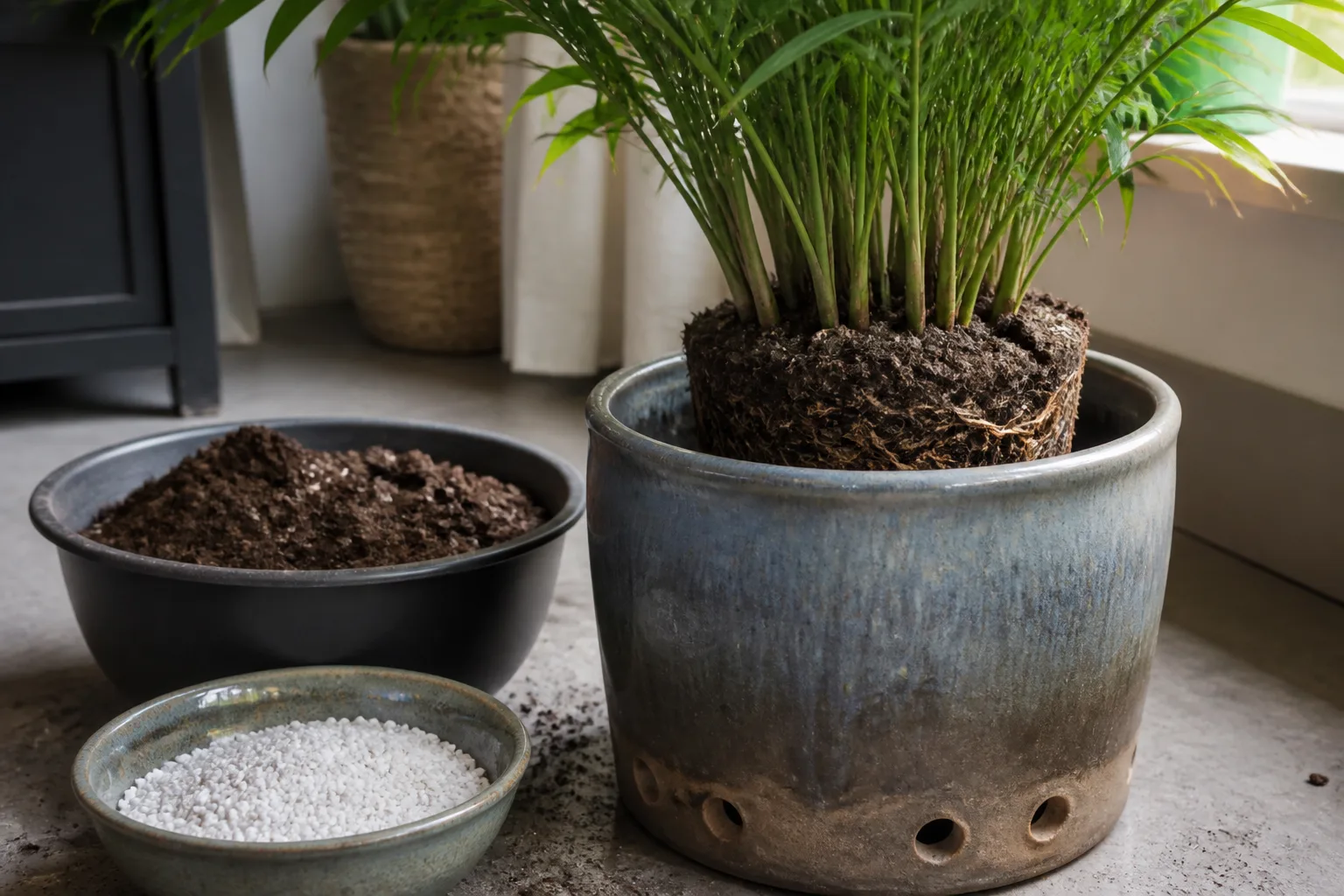
A low-stress repotting sequence
Water the palm lightly a day before the move if the mix is very dry, then slide the root ball out while supporting the base of the clump. Loosen only circling roots that release easily, set the plant at its previous depth, and fill the gaps with fresh mix. Water once to settle the soil, allow full drainage, and return the palm to its familiar bright location rather than adding a second stress by moving it into stronger sun.
Do not split an areca palm at the same time as a routine repot unless propagation is the goal and the clump is large enough to tolerate division. If the plant has recent yellowing or root damage, stabilize its light and watering first; a healthy plant recovers from root disturbance more reliably than one already under stress.
Prune for Health, Not Height
Remove a frond only when it is fully brown, broken, or clearly spent. Use clean pruners and cut the stalk near its base without injuring the neighboring cane. Leave fronds that are still partly green: palms can move nutrients from aging leaves into newer growth, and removing discolored but functional foliage can make a deficiency worse. UF/IFAS Extension cautions that over-pruned landscape palms are more susceptible to nutrient deficiencies, pests, and diseases. UF/IFAS Extension
Do not cut the top of a cane to stop the palm getting taller. Palms grow from a central growing point at the crown; cutting that point kills the affected stem, and it will not branch like a hedge. If an areca outgrows its room, move it to a larger, brighter area, divide a healthy clump carefully, or choose a naturally smaller palm next time.
The narrow fronds collect dust, but leaf-shine products can injure palm foliage. Wipe individual leaflets with a damp soft cloth or rinse the plant gently in a shower when the pot can drain fully. Let the foliage dry with airflow before returning it to a crowded location.
Propagate by Dividing a Healthy Clump
Division is the practical home method when an areca has several well-rooted canes. Seed propagation is possible but slow, and seed requires suitable maturity and warm, consistent conditions; it is rarely the quick route to another room-sized plant. Gardening Know How describes both seed and division as options, while extension guidance notes that only some palms divide readily. Gardening Know How Clemson Cooperative Extension
Divide during active growth, preferably when you are already repotting. Remove the clump from its pot and identify a section with several canes plus a meaningful set of its own roots. Separate it with a clean, sharp knife rather than pulling forcefully; a division with few roots may remain limp or fail to establish even if its leaves look healthy on day one.
Pot the division in a snug container with drainage and fresh, airy mix. Keep it warm in bright indirect light and evenly moist, not saturated. Some initial leaf stress is possible because the root system has been reduced; do not try to compensate with stronger fertilizer, intense sun, or constant watering. Wait for stable new growth before resuming a normal feeding routine.
Move a Container Palm Outdoors Gradually
In a warm climate, an areca palm can grow outdoors in a protected site with filtered light and moisture-retentive but well-drained soil. In temperate regions, a container can spend warm months outside, then return indoors before chilly nights. NC State lists outdoor growing in USDA Zones 10 to 11 and says the species prefers partial shade despite tolerating more sun in suitable climates. NC State Extension
Do not take a plant from indoor light and place it straight into full afternoon sun. Start it in bright open shade, then increase filtered exposure over several days while watching for pale or scorched patches. Place the pot where wind will not repeatedly whip the fronds and where rainwater can drain; an outdoor saucer that stays full can keep the root ball wet for days.
Before planting an areca permanently in a warm landscape, check the current recommendation from your local extension service. UF/IFAS describes the species as a caution plant for South Florida because of invasive-species concerns, so advice for a potted plant in a colder region should not automatically be used to justify outdoor landscape planting there. UF/IFAS Extension
Diagnose Common Areca Palm Problems
One brown leaflet does not identify a single cause. Start by checking the whole pattern: which fronds are affected, whether the damage faces a window or vent, how the mix feels below the surface, and whether you recently moved or fed the palm. Change the most likely condition first and wait for new growth; damaged tissue usually stays damaged even after the cause is corrected.

Brown tips and edges
Dry tips across multiple fronds can follow inconsistent watering, low humidity, excess fertilizer, or mineral buildup. Feel the mix before watering: a dry root ball points toward missed or insufficient watering, while wet mix plus droop suggests root stress rather than thirst. If a pale crust is present or tip burn began after feeding, flush the mix once and pause fertilizer until active growth resumes.
Brown patches mainly on the window-facing side after a sunny move suggest scorch; move the palm back from harsh rays and acclimate more slowly. Damage near an air-conditioning or heater vent points to dry, fluctuating airflow. Trim only the dead edge for appearance, following the natural leaf shape and leaving a fine brown margin so the cut does not enter healthy green tissue.
Yellowing or drooping fronds
An occasional lower frond that yellows as the clump grows is different from several leaves yellowing at once. If the soil remains wet for days, roots may lack air or be starting to rot; confirm drainage and inspect the root ball if the odor is sour or the cane base is soft. If the mix is very dry and compacted, rehydrate slowly and adjust the next watering check rather than leaving the pot submerged.
New growth that is small, pale, or absent often calls for a light and root check before fertilizer. Move a dim plant closer to a bright window, confirm that the pot drains, and give the plant time to respond. Do not keep changing the room, pot, water, and feeding schedule in the same week; that makes it harder to identify which correction helped.
Spider mites, scale, and mealybugs
Inspect the undersides of leaflets and the tight joints where fronds meet canes. Fine webbing and speckled, dull foliage can indicate spider mites; fixed bumps may be scale, and cottony clusters can signal mealybugs. Clemson Extension identifies areca palms as especially susceptible to spider mites and lists scale and mealybugs among common indoor palm pests. Clemson Cooperative Extension UF/IFAS Extension
Isolate an infested plant and rinse the foliage, including the undersides, if you can do so without flooding the pot. Recheck every few days, because one rinse may miss eggs or insects tucked into the clump. If you use a pesticide or insecticidal soap, choose a product labeled for the pest and plant, follow its directions, and test a small area first; palms can react badly to unsuitable oils or concentrated products.
Areca Palm Safety Around Pets
The ASPCA lists areca palm as non-toxic to cats and dogs, which makes it a more pet-conscious choice than many common houseplants. “Non-toxic” is not the same as edible: chewing can still cause mouth or stomach irritation, and a large clump may be damaged quickly by a curious animal. Keep the pot stable and block access if a pet digs in soil or repeatedly shreds the fronds. ASPCA Animal Poison Control
NC State notes that the palm’s terminal growing bud contains cyanogenic compounds and should not be eaten. This is a reason to keep plant parts away from children and pets, not a reason to treat ordinary contact with intact foliage as poisoning. If an animal has chewed a substantial amount or shows symptoms, contact a veterinarian or animal poison-control service with the plant name. NC State Extension
Conclusion
An areca palm thrives when its care follows what the pot and fronds show: bright filtered light, a mix that drains, and a thorough drink only after the upper soil begins to dry. Keep it warm, feed modestly during active growth, and leave partly green fronds in place while you diagnose a problem. These habits prevent the most common cycle of overwatering, browning, and unnecessary pruning.
Before bringing one home, measure the corner as well as the pot. With room for arching foliage and time to acclimate after moves, this cane-forming palm can become a long-lived feature; without the light or space it needs, choose a smaller, more shade-tolerant palm instead.