Why Not Grow Butterfly Bush in Your Garden
Should you grow butterfly bush? See invasion risk, the nectar-vs-host-plant gap, sterile cultivar limits, and native replacements that support full butterfly lifecycles.
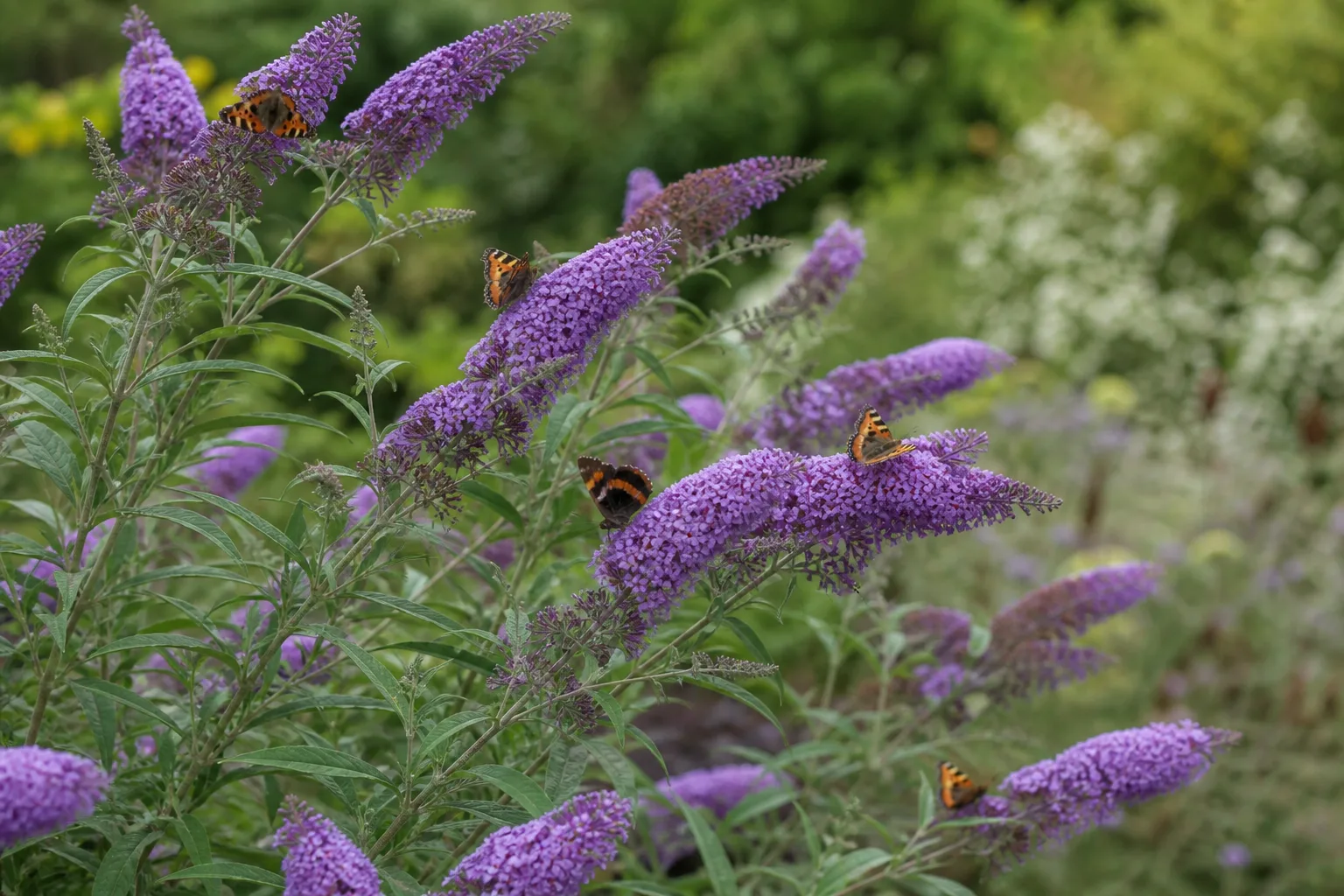
Walk through a garden center in June and you will see Buddleja davidii marketed as a pollinator must-have: fragrant purple panicles, a steady stream of butterflies, and a reputation for blooming when other shrubs are quiet. That marketing is not entirely wrong. Adult butterflies do sip nectar from butterfly bush flowers. The trouble starts when you ask what the plant does for the rest of the year — and what happens when its seeds leave your bed.
Gardening pros, extension educators, and native-plant advocates increasingly steer homeowners away from butterfly bush not because the flowers are ugly, but because the shrub often fails the ecological job gardeners think they are buying. It can escape cultivation, colonize disturbed ground, and compete with native plants that actually feed caterpillars. If your goal is a butterfly garden in the full sense — eggs, larvae, pupae, and adults — butterfly bush is a weak centerpiece.
Butterfly Bush Looks Like a Pollinator Win
The appeal is obvious. Butterfly bush is fast-growing, sun-loving, long-blooming, and visually dramatic. A single mature shrub can produce hundreds of honey-scented flower spikes from midsummer into fall, and on a warm afternoon the visiting swallowtails and skippers make for an easy photo. Nurseries lean into that story because it sells.
What the label rarely explains is that attracting adult butterflies is not the same as supporting them. A butterfly that nectars on your shrub still needs leaves somewhere else to lay eggs and feed its larvae. Butterfly bush does not fill that role for North American butterflies in any meaningful way. Penn State Extension notes that no native caterpillar can feed on it, which means every square foot devoted to Buddleja davidii is a square foot not growing milkweed, asters, goldenrods, or the woody host plants local moths and butterflies depend on (Penn State Extension on avoiding invasive butterfly bush).
What Butterfly Bush Actually Is
Butterfly bush — also called summer lilac or orange eye — is a woody shrub in the figwort family, native to central and southwestern China, not to North America. It was introduced to Western gardens in the late 1800s and spread through the nursery trade on the strength of its flower show and perceived wildlife value.
In favorable climates it behaves like a vigorous colonizer: arching stems, gray-green leaves, and prolific seed set on spent flower panicles. Mature plants can reach 10 to 15 feet in height in mild regions, though many garden cultivars are bred smaller. Hardiness is generally cited as USDA Zones 5 through 9, which covers a huge share of U.S. residential landscapes — and a huge share of places where seedling escape has become a problem.
Where It Comes From
Because butterfly bush evolved in Asia, it arrived here without the insects, diseases, and browsing pressure that help keep plants in balance within their home range. That mismatch matters. When a plant faces few checks on growth and reproduction, it can outpace native competitors on roadsides, riverbanks, rail trails, and any disturbed soil with decent sun.
The USDA Forest Service invasive plant profile for butterfly bush documents naturalized populations across much of the temperate United States, with particular concern along transportation corridors and in open, gravelly, or recently cleared ground where native plant communities are still establishing.
Why It Spreads So Fast
Butterfly bush reproduces primarily by seed. Individual flower panicles can produce enormous numbers of tiny, winged seeds that travel on wind, wash into ditches, and germinate on bare soil. The plant also roots readily from stem fragments in some situations, which is one reason dumped yard waste and sloppy pruning can spread it beyond the original planting.
Once established outside the garden, seedlings form dense thickets that shade out lower-growing natives. Because caterpillars cannot use the foliage, those thickets are essentially ecological dead ends for the butterfly species gardeners meant to help. The adult nectar stop remains; the habitat function does not.
The Nectar Trap: Adults Visit, Caterpillars Starve
This is the core misunderstanding behind most “butterfly garden” kits. Butterflies need two different plant communities:
Nectar plants fuel flying adults. Host plants provide leaves for egg-laying and caterpillar feeding. A healthy population needs both, often on the same property.
Butterfly bush is overwhelmingly a nectar plant. Garden Design, summarizing guidance from the North American Butterfly Association’s Butterfly Gardener publication, lists trees, shrubs, and perennials that support caterpillars — milkweeds, asters, spicebush, violets, dogwoods, and others — and explicitly notes that butterfly bush is not a caterpillar food source (Garden Design’s butterfly bush guide). That distinction is not subtle. Without host plants, you get visitors, not residents.
Host Plants vs Nectar Plants
Think of monarchs. Adults drink nectar from many flowers, but their caterpillars feed almost exclusively on milkweeds (Asclepias spp.). Plant butterfly bush alone and you may photograph a monarch on a purple spike. Plant common milkweed, swamp milkweed, or butterfly weed nearby and you give that same monarch a reason to stay, lay eggs, and complete a generation on your property.
The same pattern repeats across native butterflies. Pipevine swallowtails need pipevine. Spring azures use dogwood, blueberry, and ninebark. Fritillaries need violets. A single non-native nectar shrub cannot substitute for that web of relationships. Ecologist Douglas Tallamy’s host-plant research — widely cited in native-gardening circles — shows that native woody plants alone can support hundreds of caterpillar species compared with the near-zero value of many popular exotic ornamentals.
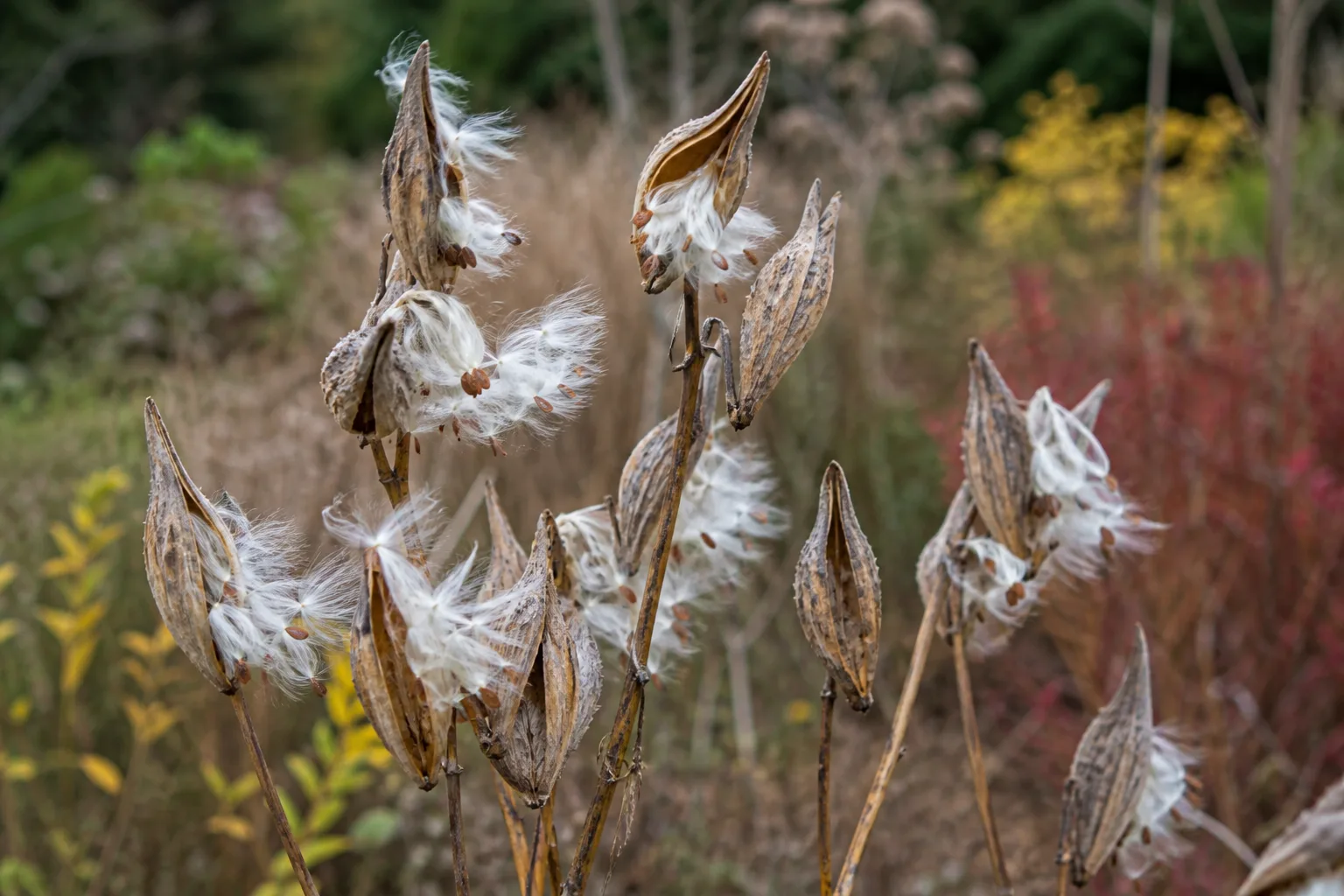
If your yard backs up to woods, a stream buffer, a park, or a neighbor’s meadow, replacing exotic nectar-only plants with regionally appropriate natives has outsized impact. You are not just decorating for adults; you are adding nodes to a food web birds, wasps, and other predators also rely on.
When Butterfly Bush Becomes an Invasive Problem
“Invasive” is a geographic word. A plant can be well-behaved in one yard and damaging across a county. Still, butterfly bush checks enough invasion boxes that it appears on state noxious-weed lists, university do-not-plant advisories, and cooperative-extension caution lists across large parts of the U.S., U.K., New Zealand, and other temperate regions.
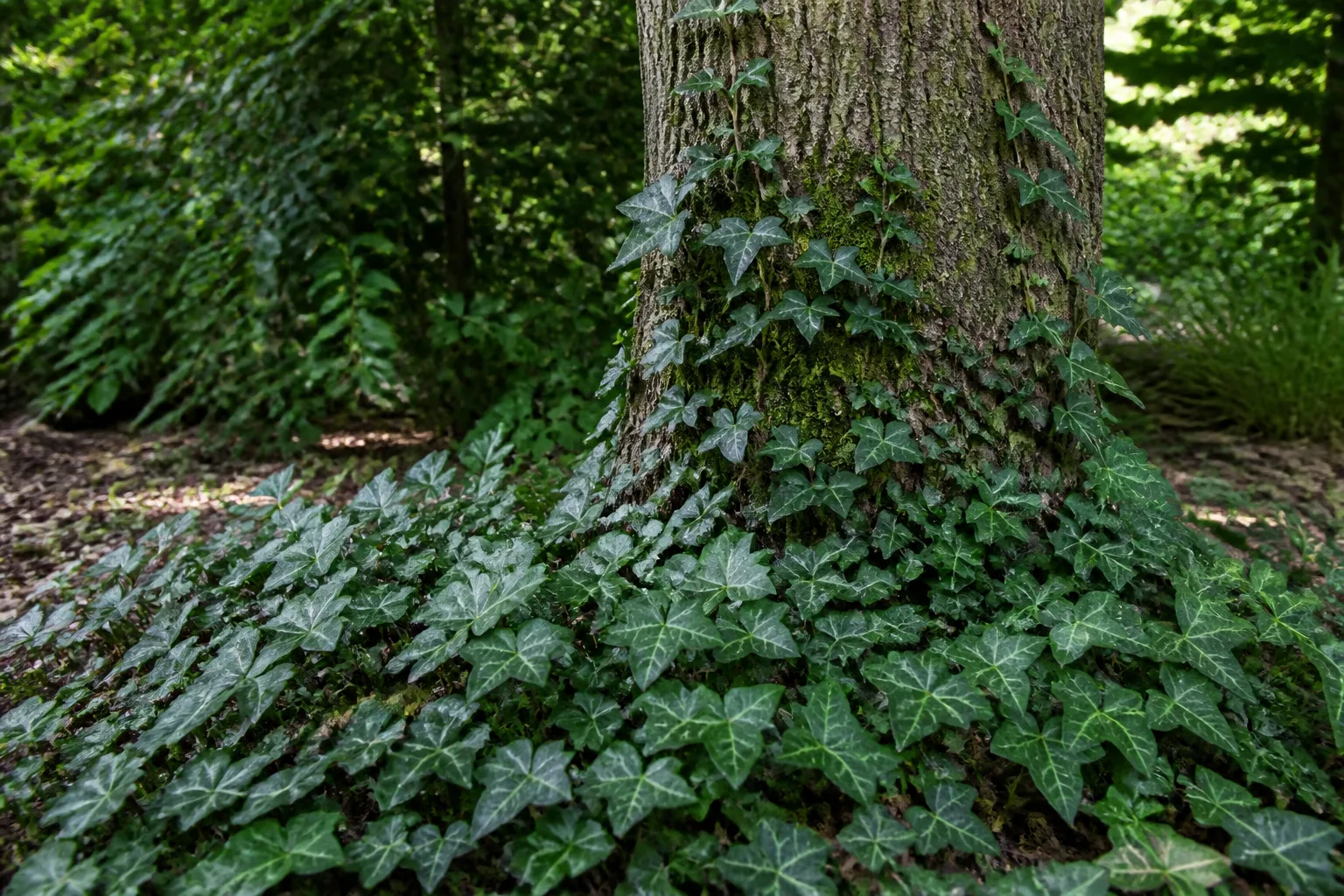
Penn State Extension describes watching butterfly bush move from highway margins into ditches, commercial edges, and popular trails — spread accelerated precisely because the plant is common in gardens (Penn State Extension on avoiding invasive butterfly bush). The Invasive Plant Atlas tracks Buddleja davidii as an established invader across much of the eastern and western U.S., with ongoing expansion into suitable climates.
How Seeds Escape Gardens
Even conscientious gardeners lose seeds to the wind. Spent panicles left on the shrub into autumn shed thousands of seeds. Seeds also hitch rides in storm runoff and establish in gravel driveways, construction sites, and unmowed verges — exactly the disturbed habitats where native asters and goldenrods would otherwise get a foothold.
Deadheading helps but only if it is relentless. Remove flower spikes as soon as color fades, before capsules dry and split. Mow or cut back root suckers around the base if the shrub spreads vegetatively in your climate. Monitor fence lines, alley edges, and any bare soil within a few hundred feet. None of that turns a seed-producing specimen into a zero-risk plant; it merely slows the leak.
Why “Not Listed Here Yet” Is Weak Comfort
Many gardeners hear “it is not invasive in my state” and treat that as a green light. Invasion listing often lags behind damage. A species usually has to reach noticeable population density before agencies invest in formal assessment — by which time roadsides and riparian zones may already be colonized.
Climate change compounds the lag. Warmer winters and longer growing seasons let butterfly bush establish farther north and at higher elevations than historical maps suggest. Planting a known seeder today because your county list has not caught up is a bet against your future self — and against adjacent wild land.
For a broader context on how popular ornamentals become landscape problems, see our guide to invasive garden plants and better alternatives.
Sterile and Dwarf Cultivars Do Not Fix Everything
Plant breeders responded to butterfly bush’s seed problem with sterile or low-fertility cultivars — marketing names often include “Lo & Behold,” “Miss Ruby,” “Miss Molly,” and similar series. Garden Design notes that these near-sterile types dramatically reduce reseeding and are the focus of responsible retail in many regions (Garden Design’s butterfly bush guide).
Reduced seed set is real progress on the invasion front. It is not a complete ecological upgrade. A sterile butterfly bush is still not a caterpillar host plant. You have traded one problem — escape — for a smaller one, while the nectar-trap limitation remains.
Regulation underscores the nuance. Oregon treats Buddleja davidii as a noxious weed and maintains an approved list of low-seed cultivars rather than banning the genus outright — evidence that even regulators distinguish between seedy legacy varieties and newer hybrids (Oregon Department of Agriculture noxious weed program). Labels at big-box stores are not always precise about fertility, though, and reversion or mislabeling happens. If you live near sensitive habitat, “probably sterile” is a weaker standard than “native host plus nectar.”
Dwarf habit also does not change biology. A 2-foot patio butterfly bush still occupies space that could hold liatris, asters, or a young ninebark. Smaller size mainly helps with placement, not ecosystem function.
Should You Remove a Butterfly Bush You Already Have?
You do not need to panic-yank a healthy shrub that is not seeding and sits in an urban courtyard with no wild interface. Pros generally recommend a tiered approach:
Keep and manage when the plant is contained, you deadhead consistently, you see no volunteers on your property or adjacent lots, and local guidance does not prohibit it.
Plan replacement when seedlings appear in gravel or lawn, the bed borders a natural area, or your primary goal is caterpillar support rather than a single summer nectar bar.
Remove promptly when the species is regulated where you live, volunteers are already established off-site, or you are redesigning a pollinator garden and want maximum habitat value per square foot.
Management if You Keep It
Treat an existing butterfly bush like a high-maintenance exotic, not a set-and-forget wildlife plant. Deadhead every spike before seeds mature. Cut back hard in late winter in cold climates to control size and encourage flowers on new wood. Inspect the root zone each spring for seedlings and dig them while small. Do not compost spent flower heads or pruned stems if your compost does not reliably heat-kill seeds.
Pair the shrub with real host plants nearby — milkweed for monarchs, spicebush for swallowtails, violets for fritillaries — so you are at least supplying the missing half of the lifecycle. That hybrid approach is a compromise, not an ideal, but it beats nectar alone.
Removal When Replacement Makes Sense
Removal timing depends on climate. In mild regions, cut the shrub to the ground in late fall or winter, then treat regrowth if needed. In colder zones, wait until late winter dormancy, cut stems low, and dig the root crown if you want permanent removal rather than repeated cutting.
Butterfly bush regrows vigorously from stumps. Expect follow-up: new shoots for one or more seasons. Smothering with cardboard and mulch after cutting can work for small plants; large specimens may need staged cutting plus careful monitoring. Dispose of material off-site rather than piling it in a wild edge where stems might root.
Once the space opens, plant replacements immediately so bare soil does not invite new weeds. Water new natives through their first year; ecological value starts when roots establish, not when the nursery pot arrives.
Native Plants That Do More Than Butterfly Bush
The best replacement depends on sun, soil moisture, and your regional native range — not on matching purple flower color alone. Below are widely useful North American natives that combine nectar with caterpillar value or superior habitat structure. Verify species and cultivars with your state extension office or native plant society before buying.
Shrubs for Structure and Caterpillar Support
Buttonbush (Cephalanthus occidentalis) thrives in wet or average soil and produces spherical white flowers that bees and butterflies love. It is a documented host for numerous moth and butterfly species and makes a stronger pond-edge or rain-garden shrub than butterfly bush ever could.
Coastal sweet pepperbush (Clethra alnifolia), also called summersweet, offers fragrant summer blooms in sun to part shade and tolerates damp feet. Use it as a backbone shrub behind lower perennials — the same design role butterfly bush often fills.
New Jersey tea (Ceanothus americanus) suits drier, well-drained sites with fluffy white summer flowers and value as a caterpillar host. Mature height stays modest, which helps smaller beds.
Ninebark (Physocarpus opulifolius) brings arching stems, spring flowers, and leaves that support azure butterflies and other specialists. Cultivars with dark foliage still feed larvae even when the ornamental trait is bred for color.
Perennials for Long Bloom and Nectar
Milkweeds (Asclepias spp.) are non-negotiable if monarchs matter to you. Match species to soil: common milkweed for average ground, swamp milkweed for moisture, butterfly weed for lean, sunny beds.
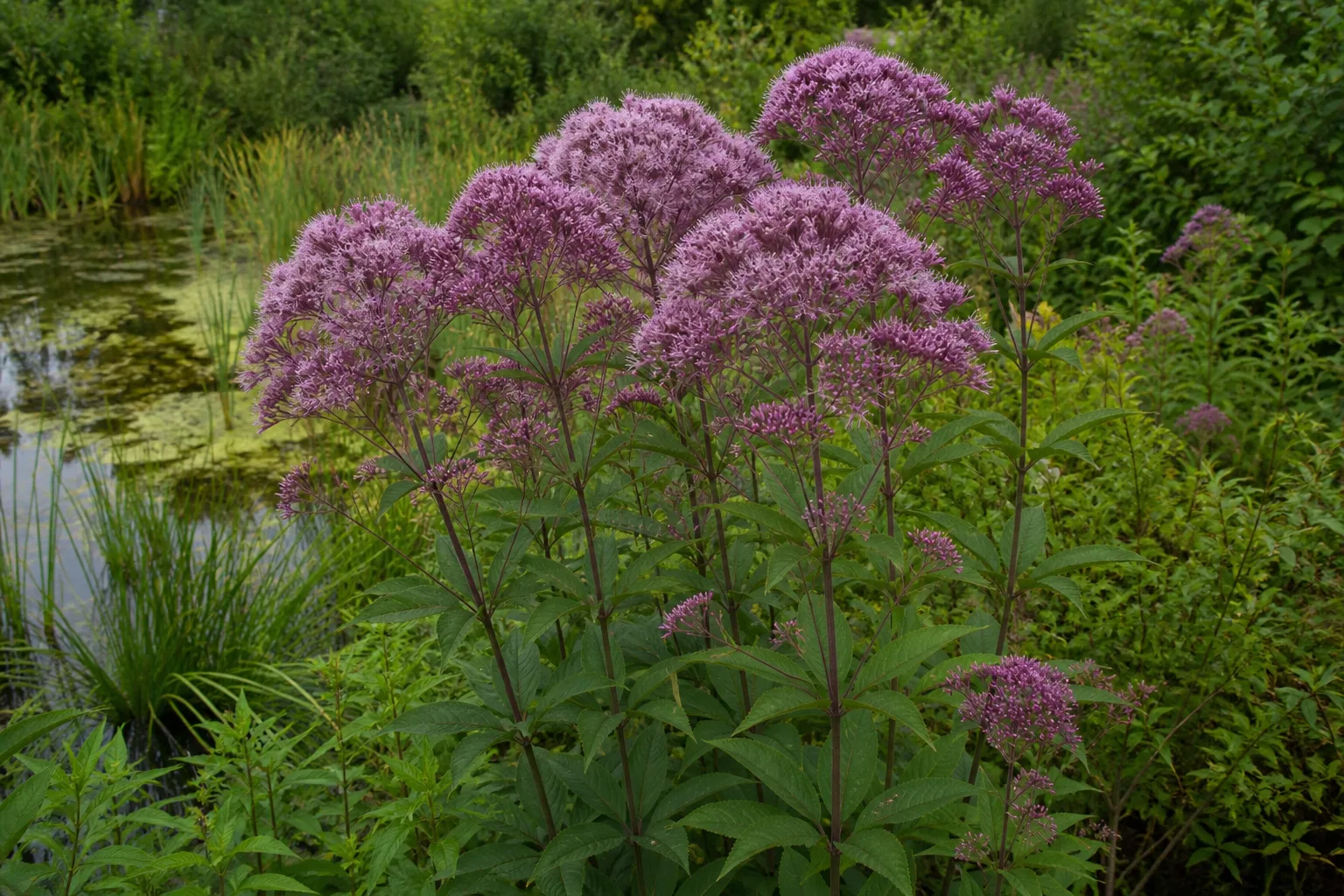
Joe Pye weed (Eutrochium spp.) delivers tall pink-purple domes in late summer and handles damp soil many butterfly bushes tolerate. It supports bees, butterflies, and beneficial wasps without invasive seed rain.
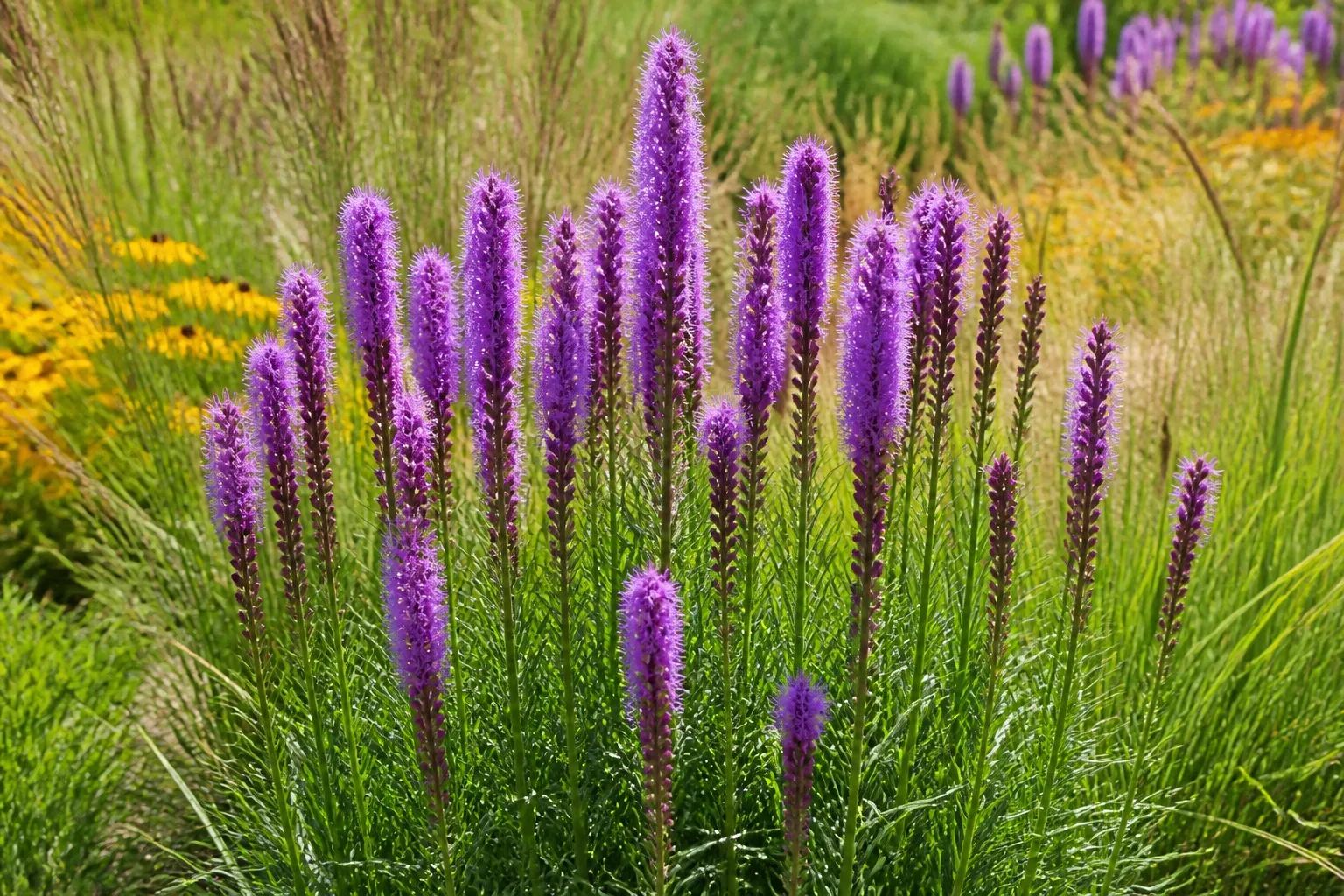
Blazing star (Liatris spp.) adds upright purple spikes in full sun and pairs well with grasses in meadow-style designs. Multiple native species exist across the U.S.; choose one local to your ecoregion.
Asters and goldenrods (Symphyotrichum and Solidago spp.) extend nectar into fall when butterfly bush is still blooming — but unlike butterfly bush, they also host specialist larvae and feed migrating insects. They are the backbone of late-season habitat.
Meadowsweet (Spiraea alba or Spiraea tomentosa, depending on region) and steeplebush offer summer flowers, modest height, and moth host value in moist to average soils.
For a wider list of ornamentals that cause more trouble than their flowers are worth — including butterfly bush in context — see high-maintenance garden plants to rethink.
How to Choose the Right Replacement for Your Site
Start with site conditions, not Instagram photos. Full sun and dry soil? Lean toward butterfly weed, liatris, or New Jersey tea. Heavy clay that stays wet? Buttonbush, Joe Pye weed, or swamp milkweed. Part shade along a foundation? Summersweet or ninebark may outperform any butterfly bush cultivar.
Then layer bloom time. No single native replaces butterfly bush’s long summer-to-fall nectar window by itself. Instead, combine early-season woody hosts (spicebush, violets under trees), mid-summer perennials (milkweed, mountain mints), and late-season asters and goldenrods. The result is steadier pollinator support and a garden that changes through the year rather than peaking on one exotic shrub.
Check legal status last. Search your state plus “invasive plant list” or “noxious weed list” using the scientific name Buddleja davidii. If the species is restricted, assume seed-bearing varieties are off the table unless your state publishes an explicit approved-cultivar list.
When in doubt, ask a local native plant nursery or extension Master Gardener program for a short list of host-plus-nectar plants for your ZIP code. That 10-minute conversation usually saves years of managing seedlings in the alley.
Conclusion
Butterfly bush is not evil, and you are not a bad gardener if one has lived in your yard for a decade. It is simply a poor default for modern pollinator gardens: too mobile as a seed producer, too limited as a caterpillar plant, and too often substituted for the native shrubs and perennials that actually build butterfly populations.
The practical recommendation most pros land on is straightforward. Do not plant seed-producing butterfly bush near wild land, shared open space, or anywhere you cannot deadhead religiously. If you want real butterfly habitat, spend the bed space on host plants first and treat long-bloom nectar species as complements, not replacements. And if you are starting fresh, choose natives that feed larvae and adults — buttonbush, milkweed, liatris, asters, goldenrods, and the many regional options your extension office can name in one breath.
That is how you get the butterflies — and the next generation they depend on.



