11 High-Maintenance Garden Plants to Rethink
Some gorgeous plants are poor fits for ordinary yards. See why 11 high-maintenance garden plants cause trouble and how to choose a safer, easier match.
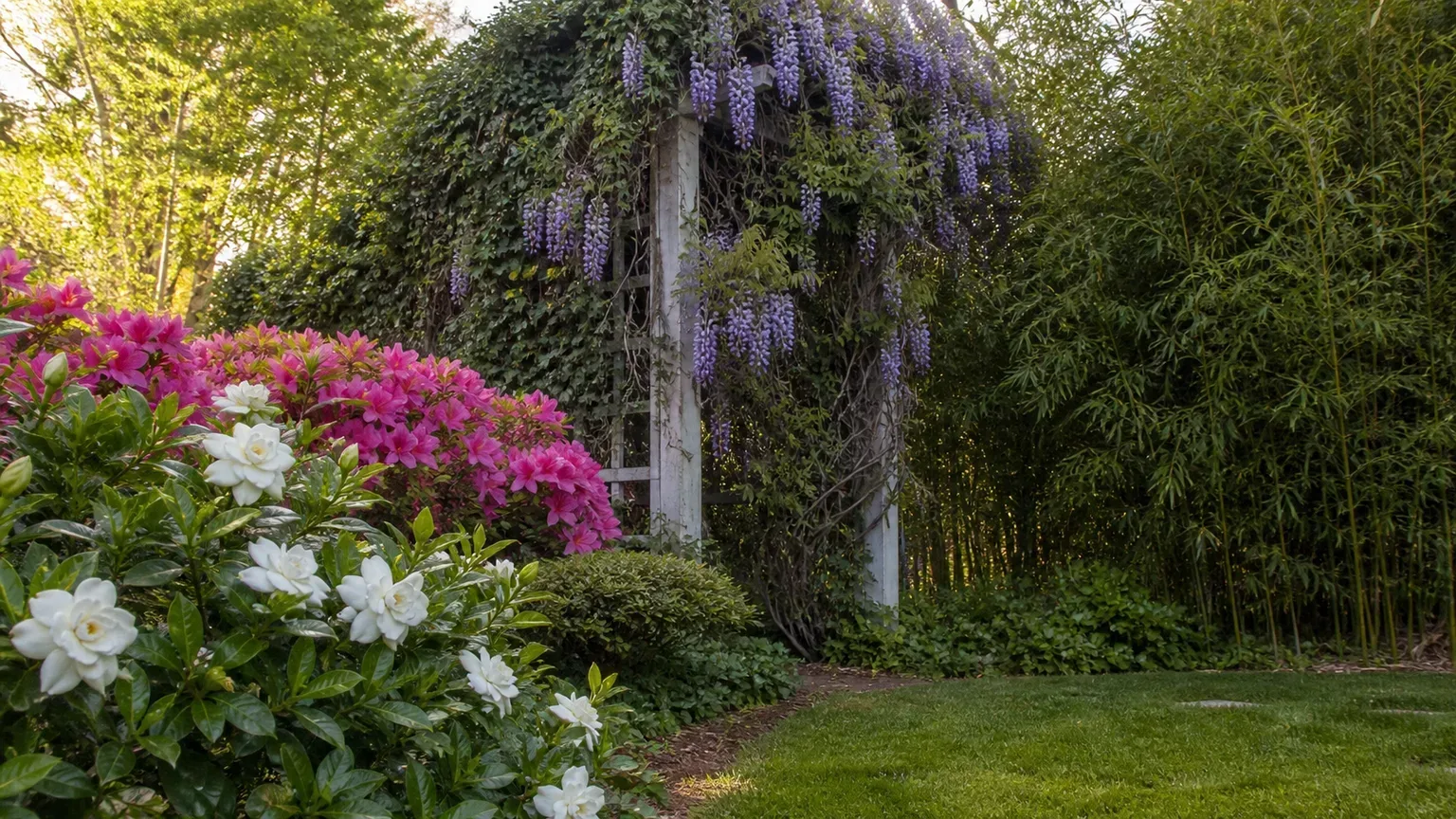
A gorgeous plant is not automatically a good garden plant. The real question is whether your soil, climate, household, nearby landscape, and available time can support it without constant correction or an expensive removal job.
The 11 plants below are not universally impossible. Several are excellent in the right region or in a carefully managed collection. They become poor choices when the gardener is buying the flower photo but inheriting the plant’s hidden requirement: acidic soil, year-round moisture, a serious root barrier, toxic sap, specialized water, or weekly pruning.
That distinction matters. A gardenia can be rewarding in a sheltered acidic bed and miserable in alkaline compacted soil. Oleander can be a low-maintenance screen in an appropriate warm landscape but a serious liability beside a play area or grazing animals. Use the list as a fit test, not a blanket ban.
How to judge whether a difficult plant is a bad fit
“High maintenance” is too vague to make a buying decision. I look for the specific burden: does the plant need conditions your yard cannot supply, spread beyond the bed, create a safety concern, or demand attention at the exact time you are least likely to give it?
A plant is usually not worth the hassle for your site when failure is predictable rather than accidental. If it needs wet roots but your yard dries out, or it needs fast drainage but your bed stays saturated, more fertilizer and more watering will not fix the underlying mismatch. Likewise, a plant that is invasive in your area is not made responsible by being pretty or popular.
The five-minute filter before you buy
Ask five questions before bringing one home:
- Can I supply the plant’s non-negotiables? Check moisture, drainage, light, temperature, and soil pH rather than relying only on a hardiness zone.
- What happens if I miss a week? Some plants pause; others wilt, drop buds, spread, or become a safety problem.
- Will it stay where I put it? Running roots, bird-dispersed seed, and climbing stems can turn one specimen into a property-wide project.
- Who shares the space? Children, dogs, cats, horses, and livestock change the acceptable risk.
- What is the replacement? If you want fragrance, shade, a vine, a privacy screen, or pollinator flowers, compare plants by that job instead of by appearance alone.
1. Gardenia: fragrant, beautiful, and exacting
Gardenia (Gardenia jasminoides) earns its place on this list because its payoff — glossy evergreen leaves and intensely fragrant white flowers — depends on a narrow combination of conditions. NC State Extension recommends bright indirect light or partial shade, shelter from cold and strong wind, and rich, acidic, well-drained soil; it also notes that gardenias have shallow roots and dislike root disturbance (NC State Extension’s gardenia profile).
The trap is trying to solve a site problem with a care product. A gardenia in alkaline soil may show chlorosis even when it is watered faithfully, while one in a soggy bed can develop root trouble despite looking thirsty. In a hot, dry, exposed yard, the plant may need regular irrigation and afternoon protection at the same time that its roots demand excellent drainage.
Skip it when: your soil is alkaline and you are unwilling to test and amend the root zone, your summers are dry with no reliable irrigation, or the planting spot is windy and exposed. A potted gardenia is easier to move and monitor, but it is not a no-work option: containers dry faster and need winter protection in cold climates.
It is worth it when: you have a sheltered patio or acidic woodland-style bed, can keep moisture even without waterlogging, and genuinely value the fragrance enough to monitor the plant. Treat it as a placement-sensitive specialty shrub, not as a carefree foundation plant.
2. Monkshood: a safety problem before it is a care problem
Monkshood (Aconitum spp., including Aconitum napellus) has architectural blue-purple flowers and a cool-climate perennial’s charm. The safety question comes first, though. The University of Washington’s plant data sheet states that the roots, leaves, and sometimes flowers contain strong poisons and that the whole plant is highly toxic; it also notes that skin contact can cause numbness in some people (University of Washington plant data sheet).
Poison Control describes swallowing any part of A. napellus as potentially deadly and lists rapid-onset symptoms that can include numbness, gastrointestinal distress, and dangerous heart-rhythm changes (Poison Control’s monkshood article). This is not a plant to place where children might pick flowers, pets can dig, or edible greens are harvested by touch and memory.
Skip it when: the bed is near a play area, path, outdoor dining space, kitchen garden, or a household where gloves and plant identification cannot be managed reliably. “I will wear gloves when pruning” does not address a child or pet encountering fallen material.
It is worth it when: an experienced gardener has a clearly marked, restricted ornamental bed with no casual access and a deliberate handling and disposal routine. Even then, the aesthetic benefit is not unique. A safer blue-flowering perennial may be the better decision for an ordinary family garden.
3. Butterfly bush: flowers for adults, few host leaves for caterpillars
Butterfly bush (Buddleja davidii) is easy to admire: long flower spikes, fast growth, and a steady parade of adult butterflies. The problem is that nectar for adult butterflies is only one part of a functioning habitat. Penn State Extension explains that the plant’s wind-borne seed can escape into roadsides, fields, trails, and other open areas, and that native caterpillars generally cannot use its foliage as a host plant (Penn State Extension on avoiding invasive butterfly bush).
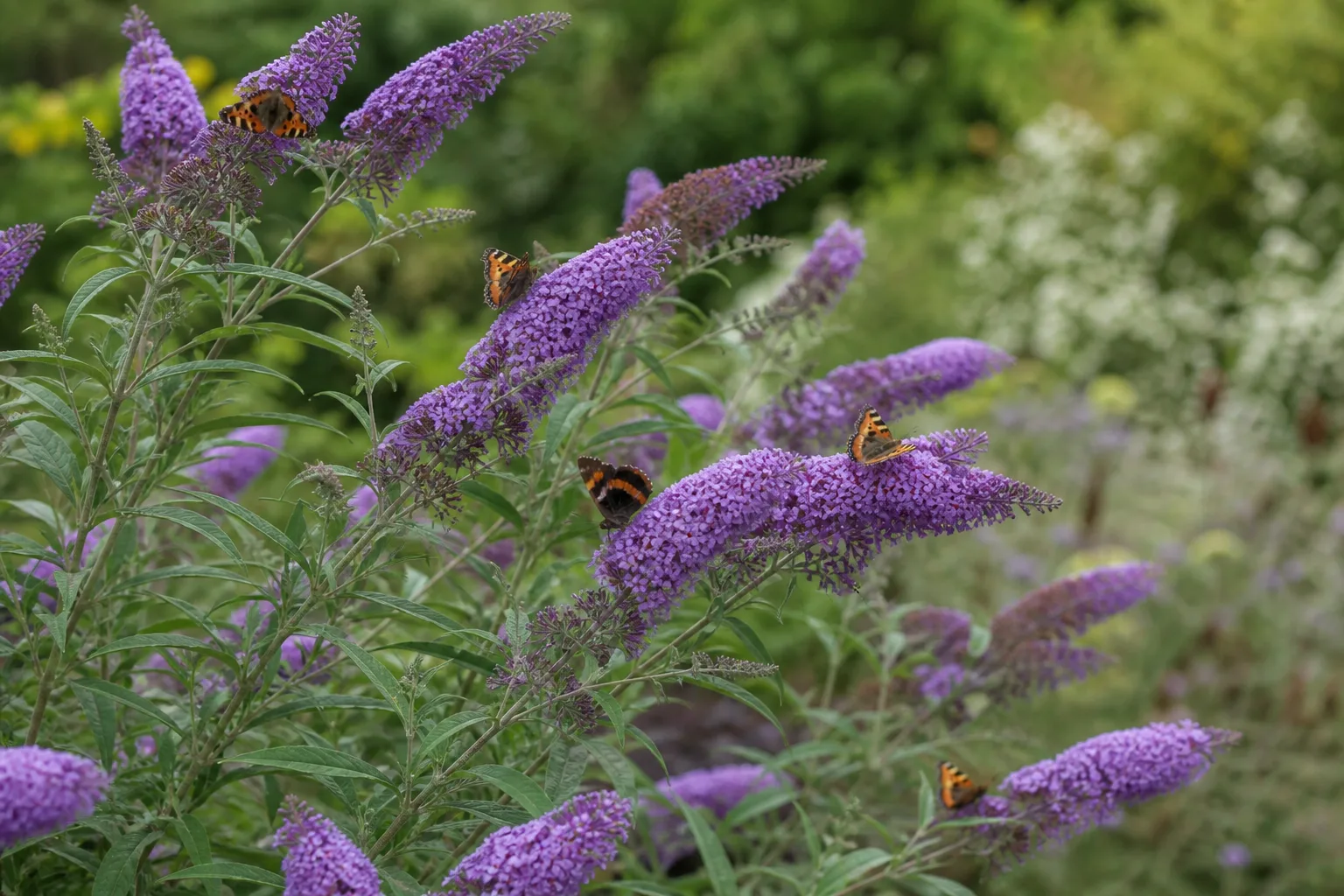
That makes the verdict regional rather than universal. A sterile or low-seed cultivar may reduce one pathway of spread, but “non-invasive” marketing is not a substitute for checking your state or province’s current invasive-plant guidance. The broader design question is whether the space would do more ecological work with native host plants that feed both caterpillars and adult pollinators.
Garden Design makes the same practical distinction: sterile or nearly sterile cultivars can change the spread question, but butterfly bush still is not a caterpillar host, so it belongs beside — not instead of — host plants (Garden Design’s butterfly bush guide).
Skip it when: it is invasive or escaping in your region, your garden borders a natural area, or your main goal is to support the full butterfly life cycle. Also skip it if you need a compact shrub; butterfly bush can become a pruning project faster than its nursery pot suggests.
It is worth it when: your local guidance permits the cultivar, you will deadhead before seed dispersal where appropriate, and you are pairing it with native host and nectar plants. Think of it as one ornamental component, not a complete butterfly garden.
4. Running bamboo: fast privacy with a long removal bill
Running bamboo solves a privacy problem quickly, which is exactly why it becomes such a difficult landscape problem. Golden bamboo (Phyllostachys aurea) can reach about 30 feet, spreads aggressively through rhizomes, and forms stands that prevent native plants from growing; NC State Extension lists it as invasive in North Carolina and recommends considering native plants instead (NC State Extension’s golden bamboo profile).
The key word is running. New shoots can appear away from the original clump, find gaps along hardscape, and move toward wetter or less crowded soil. Pruning the visible canes does not remove the underground system. A container or purpose-built barrier can help, but only when installed before planting and inspected for escapes.
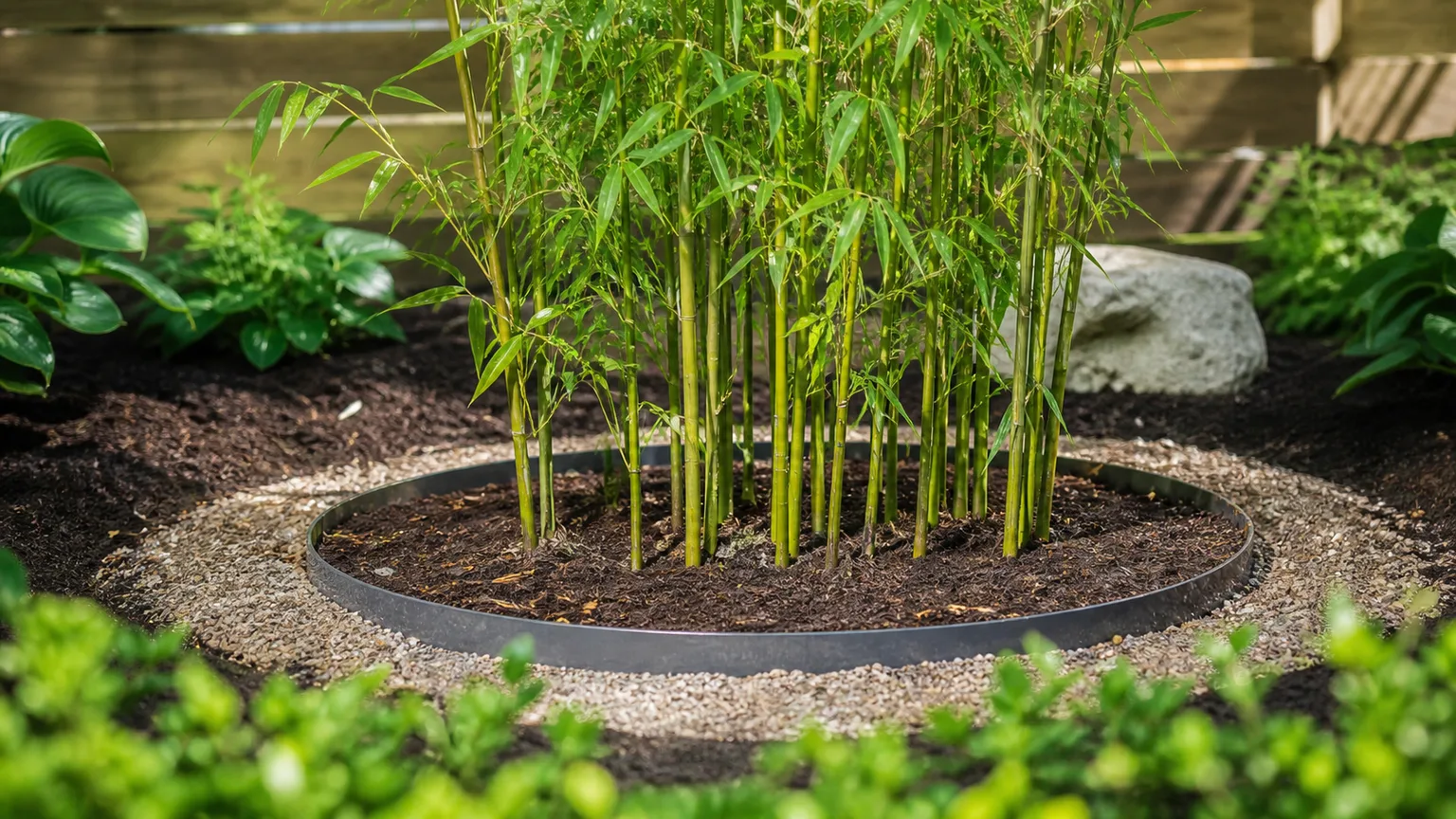
Skip it when: you want a plant-and-forget screen, the bed is next to a fence or paving, you cannot inspect the perimeter each season, or it is listed as invasive where you live. The cheapest bamboo is often the one you never plant.
It is worth it when: you have confirmed a non-running or genuinely clumping species, enough space, and a containment plan suited to the mature plant. Never assume the word “bamboo” tells you the growth habit; verify the botanical name and local behavior before buying.
5. Chinese or Japanese wisteria: a vine that can outgrow its support
Chinese wisteria (Wisteria sinensis) and Japanese wisteria (Wisteria floribunda) can make an arbor look like a storybook in bloom. They are also woody vines that demand a strong support, regular pruning, and a willingness to manage the plant for decades. NC State Extension identifies Chinese wisteria as a rapid-growing invasive weed and notes that flowers may take several years to appear; Rutgers Cooperative Extension documents spread by seed and runners, with roots left in the ground able to resprout (NC State Extension’s Chinese wisteria profile; Rutgers Cooperative Extension’s wisteria guidance).
The support is not decorative. A mature woody vine can twist tightly around trees, cover a canopy, and overload a weak trellis. If it grows into a tree, pulling the dead vine down can strip bark or break branches. The more honest maintenance plan is repeated pruning, monitoring for runners and seedlings, and training before stems become thick and unmanageable.
Skip it when: the vine would be planted beside a tree, a lightweight fence, a neighbor’s boundary, or a natural area. Also skip it if you want flowers without a pruning calendar; wisteria’s vigor is part of the bargain.
It is worth it when: you have a freestanding, engineered arbor, room around the root zone, and time for seasonal training. In regions where it fits, American wisteria (Wisteria frutescens) is a less vigorous native option, but “native” still does not mean maintenance-free.
6. English ivy: easy groundcover that escapes its job
English ivy (Hedera helix) is often sold on its strengths: evergreen foliage, shade tolerance, and quick coverage. Those same traits make it hard to reverse. NC State Extension describes it as an invasive vine that can spread 20 to 80 feet high, climb trees and shrubs, smother forest-floor plants, and damage gutters, siding, loose mortar, and other home features (NC State Extension’s English ivy profile).
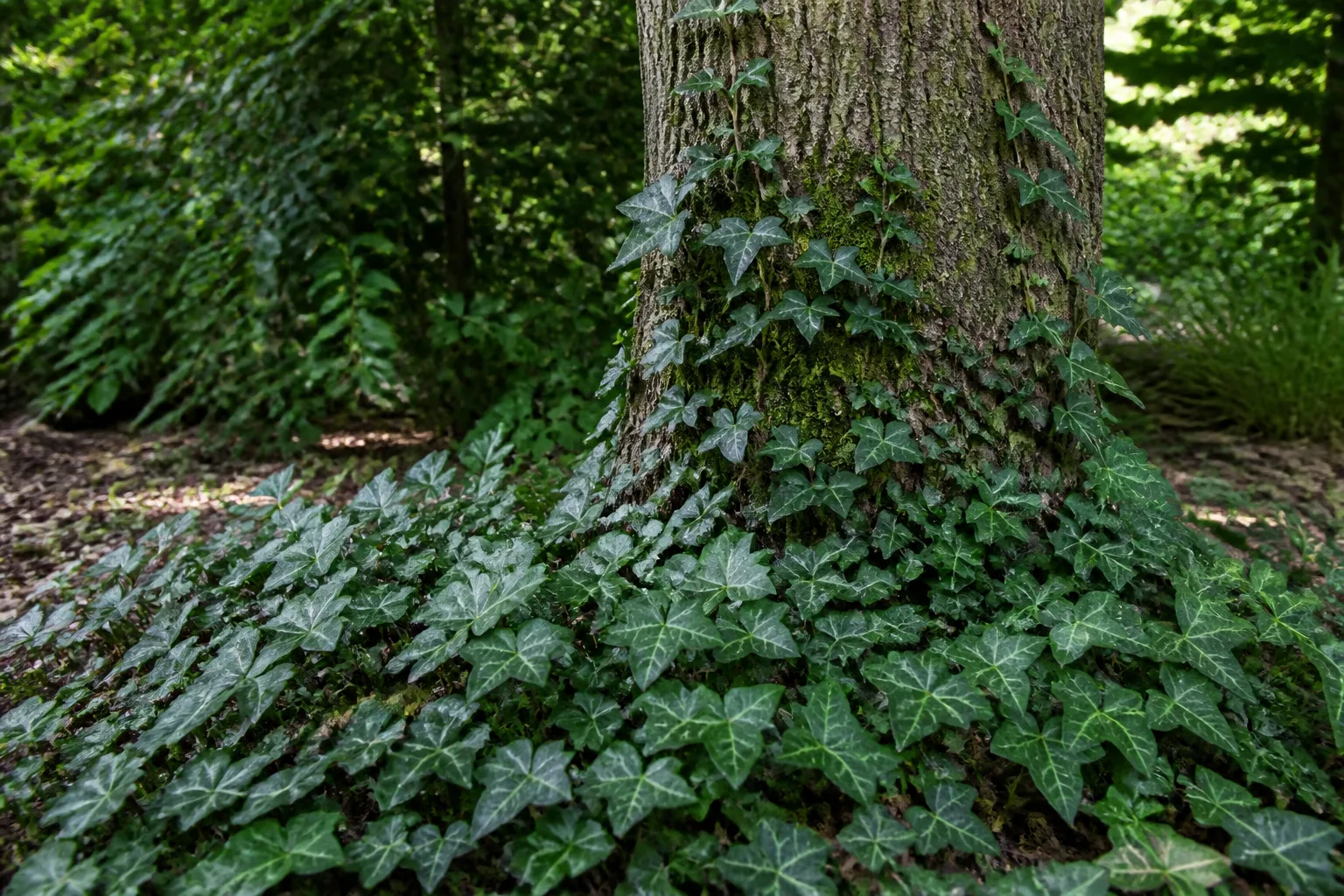
The juvenile vine and mature flowering form also complicate control. Once it reaches the adult stage, its berries can be moved by birds. Cuttings can root, so a cleanup pile left on damp soil is not necessarily dead. NC State Cooperative Extension additionally warns that the plant is toxic to people, pets, and livestock and that sap can irritate skin (N.C. Cooperative Extension’s English ivy guidance).
Skip it when: you need a low-maintenance groundcover near trees, siding, gutters, or a property boundary. It is a particularly poor choice when the “solution” is to let it climb a living tree for a finished look.
It is worth it when: you grow it as a contained houseplant or patio container and prevent cuttings from entering the landscape. For an outdoor shade bed, choose a plant that stays a groundcover in your conditions rather than one that can switch jobs and climb.
7. Oleander: tough in the right climate, toxic in the wrong household
Oleander (Nerium oleander) is a useful reminder that low maintenance and low risk are different measurements. UF/IFAS describes oleander as fast-growing, drought-tolerant, heat-tolerant, and suitable for warm landscapes, but it also warns that all parts are toxic if ingested, sap can irritate skin and eyes, and pruned branches should not be burned (UF/IFAS oleander guidance).
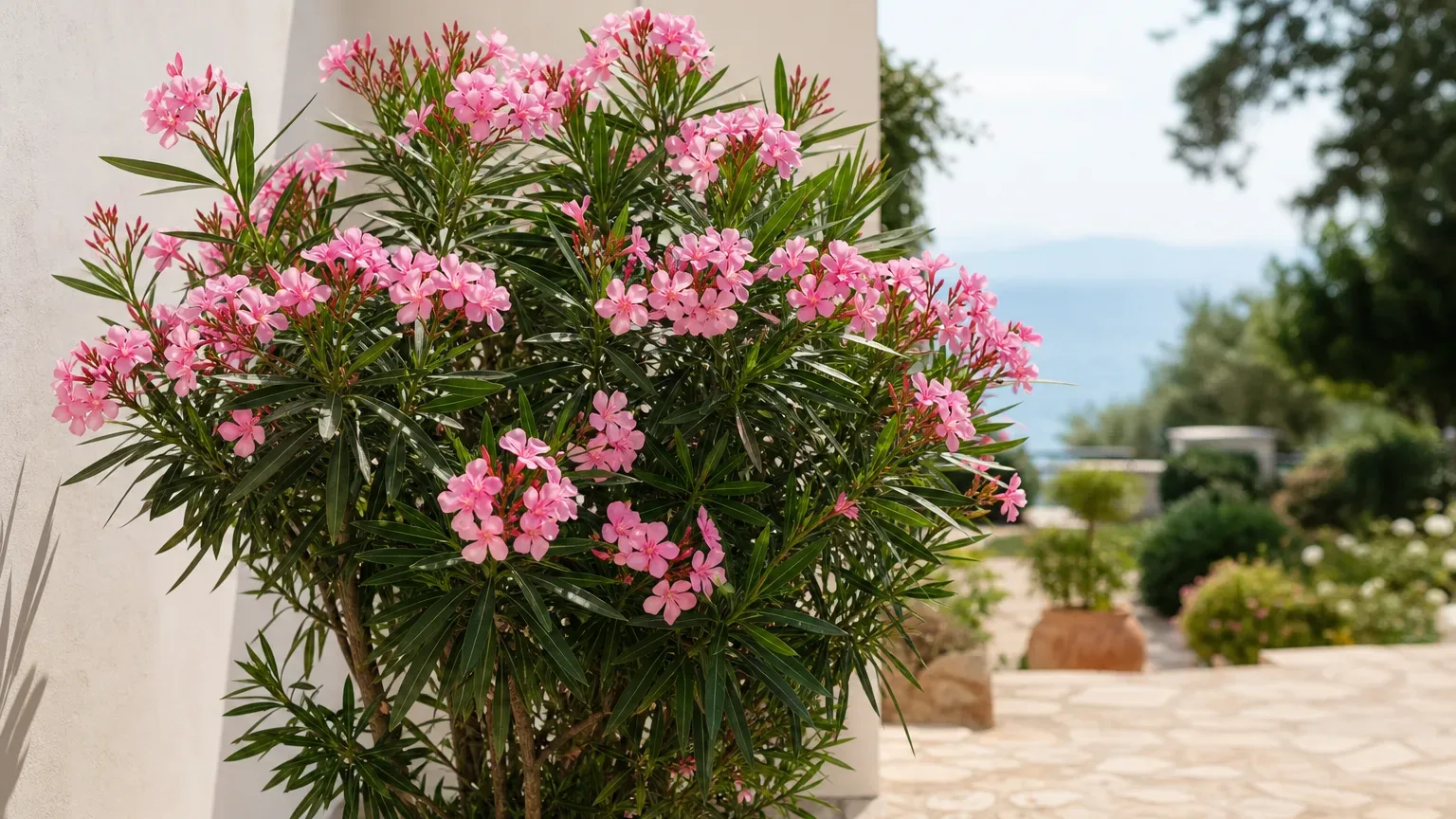
ASPCA lists oleander as toxic to dogs, cats, and horses and identifies cardiac glycosides as the toxic principle (ASPCA’s oleander listing). That does not mean every household in a warm climate must remove a healthy oleander. It does mean the plant belongs behind a deliberate safety boundary, not beside a child’s path or where livestock can browse.
Skip it when: children or pets can reach fallen leaves and prunings, grazing animals share the property, or you are likely to burn yard waste. A “pet-resistant” fence is only useful if it really prevents access to the plant and its debris.
It is worth it when: you need a heat- and drought-tolerant screen in a suitable climate, can place it away from daily traffic, and will wear gloves and dispose of cut material responsibly. If the site’s only advantage is that oleander survives neglect, a safer tough shrub may offer the same function.
8. Carnivorous plants: specialized water, soil, and light
Carnivorous plants are not difficult because they are delicate ornaments; they are difficult because their natural nutrient strategy reverses ordinary houseplant advice. Venus flytraps (Dionaea muscipula) evolved in wet, nutrient-poor bog habitats. NC State Extension says they need wet, sandy soil, should not be allowed to dry out, should not be fertilized, and should be watered with rainwater or distilled water because treated or hard water can kill them (NC State Extension’s Venus flytrap profile).
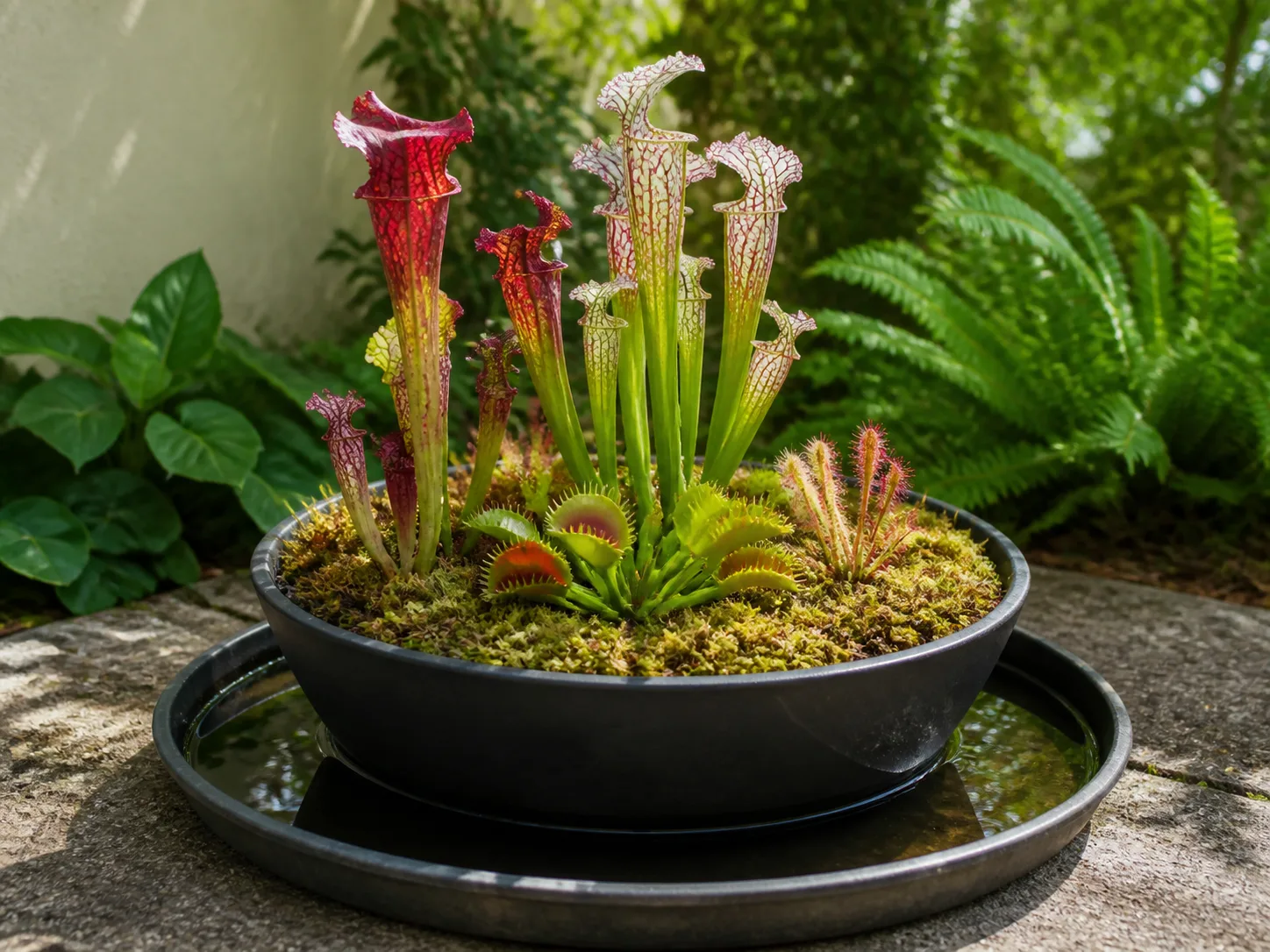
That is a complete system, not a single trick. Ordinary potting soil can be too rich, tap water can add minerals, and a sunny windowsill may still be too dim or too dry for long-term health. Missouri Botanical Garden also notes the plant’s specialized bog-culture needs and its distinctive trap behavior (Missouri Botanical Garden Plant Finder).
Skip it when: you want a plant that tolerates missed waterings, your only water source is hard or softened tap water, or you plan to feed it fertilizer. Do not buy a flytrap as a casual “bug catcher” for an ordinary dry room.
It is worth it when: you enjoy maintaining a small bog garden or a controlled collection, can use appropriate water and media, and are buying nursery-propagated plants. Venus flytraps are endangered in the wild; the responsible choice is cultivated stock, never wild collection.
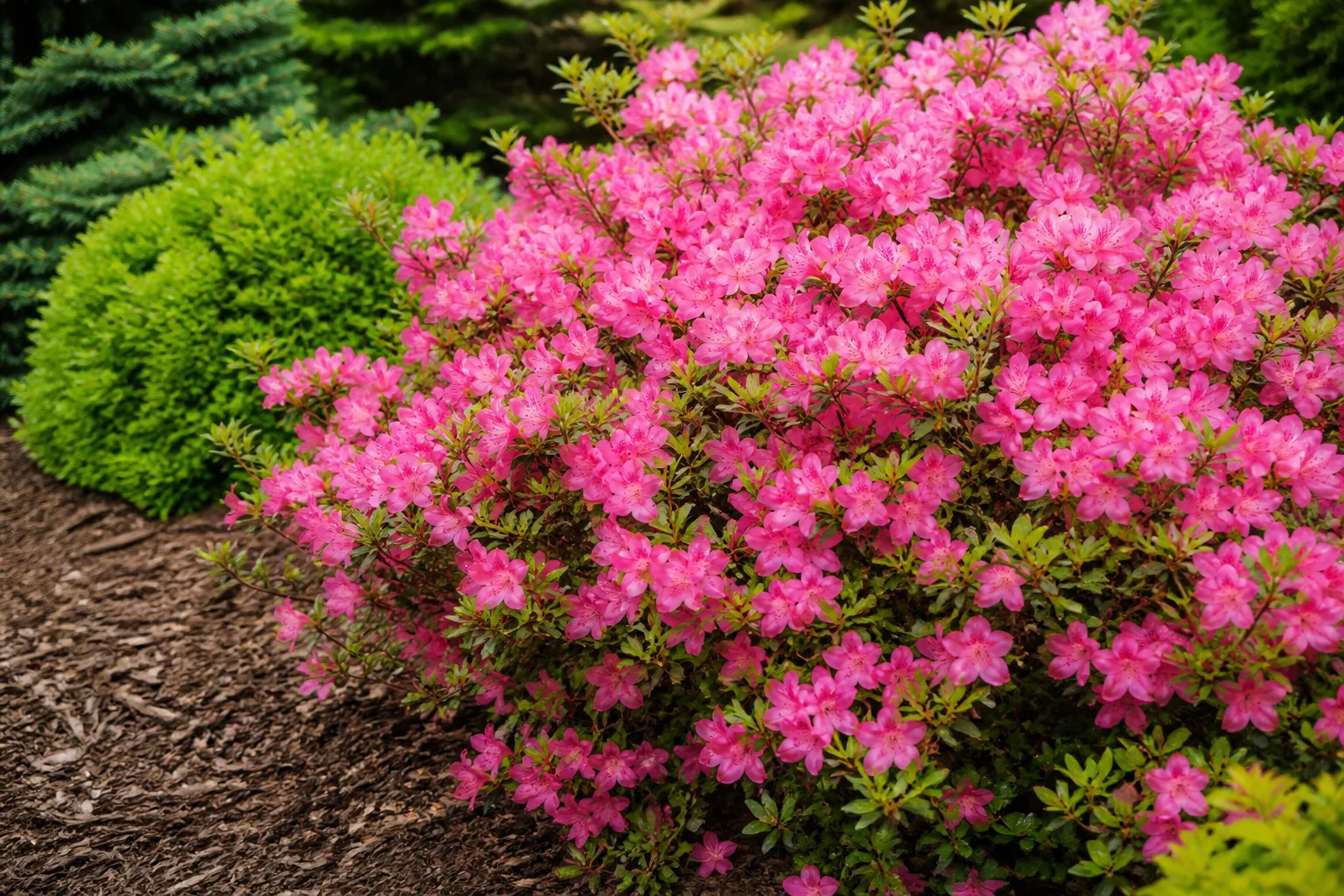
9. Azaleas: beautiful only when the root zone cooperates
Azaleas are not inherently fussy, but they are unforgiving of a bed that fights their roots. They prefer acidic, well-drained soil and consistent moisture; in the wrong site, the symptoms can look like a long list of unrelated problems — yellow leaves, poor flowering, root stress, mildew, and pest pressure.
The bigger issue is that an azalea is a woody perennial. You cannot quickly move an established shrub every time the soil pH, drainage, or shade proves wrong. Planting in a shallow hole over compacted clay, watering the foliage late in the day, or pruning at the wrong time can turn a potentially easy shrub into a yearly rescue project. An azalea also looks especially disappointing when it is reduced to bare stems between bloom seasons.
Skip it when: you have alkaline or poorly drained soil and no realistic plan to improve the full root zone, or the only available site receives harsh reflected afternoon heat. Do not assume a handful of acidic mulch will permanently change unsuitable soil.
It is worth it when: you can test the soil, provide filtered light and drainage, mulch without burying the crown, and choose a cultivar suited to the local climate. In a woodland-style bed that already has the right conditions, azaleas may be easier than their reputation suggests.
10. Camellias: slow, long-lived, and unforgiving of bad placement
Japanese camellia (Camellia japonica) rewards patience with glossy evergreen leaves and late-winter or early-spring flowers. It is also slow to establish, sensitive to placement, and easy to prune at the wrong time. NC State Extension recommends shade to part shade, protection from drying winter winds, organic well-drained soil, and a slightly acidic pH of about 5.5 to 6.5 (NC State Extension’s camellia profile).
Camellias bloom on old growth, so a late pruning session can remove the next season’s flower buds. Excess sun, cold, drought, overwatering, or insufficient acidity can reduce performance, and the plant’s slow establishment means that a poor first placement is costly in time even if the shrub eventually survives.
Skip it when: the bed is exposed to hot afternoon sun or drying winter wind, you need a fast screen, or you tend to prune shrubs whenever they look untidy. Skip it as well when you cannot keep the root zone evenly moist but well drained.
It is worth it when: you can give it a sheltered, acidic woodland edge and let the plant grow at its own pace. A camellia is a long-term design choice, not a quick seasonal color fix.
11. Wasabi: a two-year crop that needs a stream-like microclimate
Real wasabi (Eutrema japonicum, formerly Wasabia japonica) is often sold as a novelty edible, but it is closer to a specialized water-garden crop than to a standard shade vegetable. Utah State University Extension calls it challenging in Utah’s hot, arid climate and freezing winters; its fact sheet describes moist to wet organic-rich soil, heavy shade, cool temperatures, continuous or frequent moisture, and roughly two years for a full-size rhizome (USU Extension’s wasabi guide).
This is where the usual gardening advice collides. Wasabi wants abundant moisture but not stagnant, disease-promoting conditions; it needs shade but also airflow; and it dislikes heat while requiring care through winter. Epic Gardening describes the crop as a cool-weather, semi-aquatic grower that needs very consistent water, shade, and a highly draining medium (Epic Gardening’s wasabi guide).
Skip it when: your summers are hot, your water supply is intermittent, or you are hoping for a quick harvest. A shaded corner alone is not enough if the root zone repeatedly dries or overheats.
It is worth it when: you have a cool, humid microclimate, deep shade, reliable water, and patience for a long experiment. Growing it in a movable container can make temperature management easier, but it does not remove the crop’s need for careful moisture and drainage.
Which easier plant should replace the look you want?
The best replacement is not “a plant that looks almost the same.” It is a plant that delivers the same job with a risk and maintenance load your site can carry. Start with the function, then filter possible plants by local native status, mature size, light, water, and safety.
For fragrance, evergreen leaves, or flowers
If gardenia’s fragrance is the draw, compare other fragrant shrubs that suit your soil and winter temperatures instead of forcing an acid-loving shrub into alkaline ground. If you want an evergreen flowering shrub, look at locally recommended cultivars of plants already proven in your climate. For camellia or azalea color, choose the right species and site before shopping for flower form; the planting location matters more than the catalog photograph.
For vines, shade, privacy, or pollinator value
For a flowering vine, look for a non-invasive native or regionally appropriate climber and give it a support that can be inspected. For shade cover, choose a groundcover that stays low and does not switch into a tree-climbing phase. For privacy, compare mature width, root behavior, and pruning frequency with a mixed screen of shrubs rather than defaulting to running bamboo.
For pollinators, build habitat rather than buying one butterfly-attracting flower. Native host plants such as milkweed, asters, goldenrods, pawpaw, spicebush, or regionally appropriate equivalents can support caterpillars as well as adult insects. The best list of alternatives depends on your ecoregion, so a local extension plant database is more useful than a universal “top ten.”
If one of these plants is already in your yard
Do not panic and do not start by cutting everything at ground level. First identify the plant and check its current invasive and safety status with your local extension service or natural-resources agency. Photograph the leaves, stems, flowers, and seed pods, then decide whether the issue is poor care, poor placement, or a genuine risk that justifies removal.
For invasive vines growing into trees, Rutgers Cooperative Extension advises cutting the vine rather than pulling it from the canopy, because dead stems can damage bark and branches when they are ripped down. Small infestations may require repeated cutting and monitoring because roots and runners can resprout; do not compost seed-bearing material or cuttings. For a large infestation, a licensed landscape or pesticide professional can help select a legal, site-appropriate control plan.
For toxic plants, restrict access first, wear protective clothing, keep prunings away from children and animals, and never burn oleander or other suspect plant material. If a person or pet may have ingested monkshood or oleander, contact Poison Control, a veterinarian, or emergency services promptly rather than trying home remedies. Removal is not a substitute for immediate medical guidance after an exposure.
Conclusion
These plants are not “bad” because they are beautiful, unusual, or demanding. They are bad purchases when the hidden demand does not fit the site or the household. Gardenia, azalea, camellia, carnivorous plants, and wasabi need a gardener who can reproduce specific conditions; wisteria, running bamboo, and English ivy need containment and monitoring; monkshood and oleander require a level of safety awareness that many family yards cannot provide.
Before you buy, name the job you want the plant to do, check the mature behavior rather than the nursery photo, and decide what happens if you miss a week of care. A slightly less dramatic plant that stays safe, stays put, and thrives where you plant it will usually make the more beautiful garden over time.