Heavy Rain After Planting? Can Seeds Still Germinate?
Can vegetable seeds germinate after heavy rain? Learn how to check for washout, rot, buried seeds, soil crusting, and when to reseed.
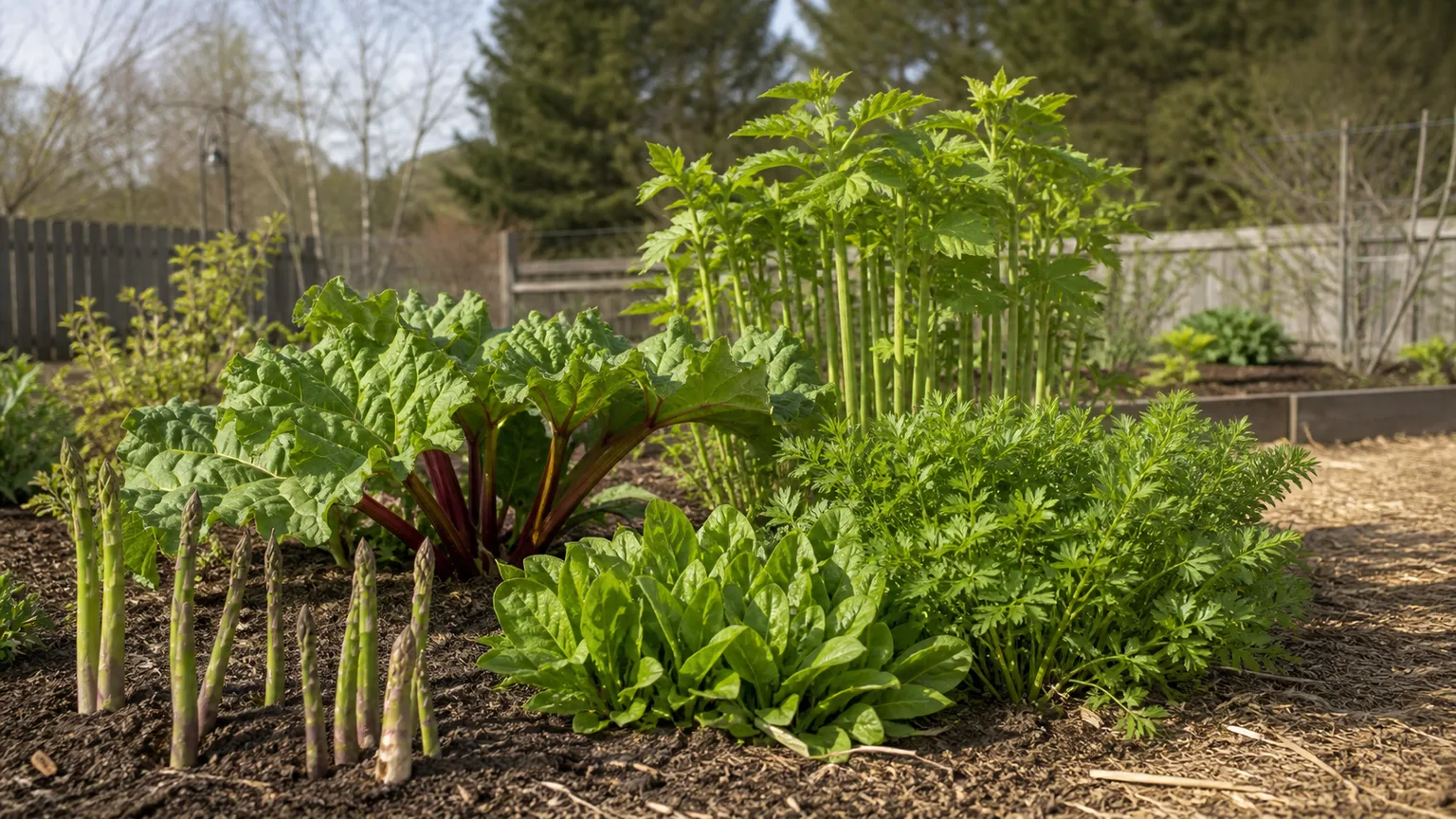
A heavy rain right after sowing does not automatically mean your vegetable seeds are gone. Some will germinate normally if they stayed in place, the bed drains, and the soil temperature is suitable; others may be washed downhill, buried too deeply, rotted in a puddle, or trapped under a hard surface crust.
The useful question is not simply how many inches of rain fell. Check what the storm did to your particular row: Is water still standing? Did runoff carve a channel? Is the seed still near its intended depth? Did the surface dry into a lid? Those observations tell you whether to wait, intervene lightly, or reseed a gap.
The short answer: rain helps until soil stays saturated
Seeds need moisture to start germination, but moisture is only one part of the equation. They also need oxygen around the seed and a temperature range that supports the crop. A gentle rain can supply the first requirement evenly; a hard downpour can remove air from pore spaces, move the seed, and rearrange the soil around it.
So yes, vegetable seeds can germinate after heavy rain, and many do. The odds are best in a well-drained bed where the seeds were covered to the packet’s depth and the rain did not create flowing runoff or a lasting puddle. The odds fall when the row is low, the soil is fine-textured and easily sealed, or the seed is tiny and shallow.
The Royal Horticultural Society’s seed-sowing guidance is a useful baseline: sow at the crop’s recommended depth, firm the soil lightly, and water without disturbing the seed. Heavy rain is a much less controlled version of that watering step, so the bed’s condition afterward matters more than the rain itself.
What a downpour changes below the surface
A storm can create several different problems at once, but they are not interchangeable. A seed that moved into a clump needs a different response from a seed sitting in an airless puddle, and neither should be treated like a seed waiting under a surface crust.
Seeds can move, wash away, or end up too deep
Raindrops strike bare soil with enough force to break apart weak soil aggregates. Flowing water then carries loose particles and seeds toward the lower end of the row. On a slope, the main clue is often a thin channel, a fan of sediment, or a cluster of seeds and soil at the row’s downhill edge.
Seeds do not have to leave the bed to be lost. A carrot, lettuce, beet, or herb seed can be pushed sideways into a clump, covered by sediment, or exposed on the surface. A seed that is only slightly out of place may still grow; one buried far beyond its recommended depth may use up its stored energy before its shoot reaches light.
Do not rake the whole row flat while it is wet. That can move surviving seeds again and smear the soil into a denser layer. Wait until the surface is workable, then repair only obvious channels or bare pockets with a small amount of fine soil.
Saturated soil reduces the oxygen seeds need
Water fills the spaces that normally hold air in the soil. A seed may be fully wet but still unable to respire normally if the surrounding pore spaces remain filled with water. Prolonged saturation also creates conditions that favor decay and seedling disease, especially in cool weather or where drainage is slow.
This is why a large bean or pea seed is not automatically safe after a storm. Its size makes it less likely to disappear into runoff than a lettuce seed, but a bean sitting in a low spot for days can still become soft and nonviable. The decisive detail is not seed size alone; it is how long the seed stays in saturated soil.
If a puddle is still present, do not pump or scoop water across the row. Clear a blocked outlet, open a path for water along the bed’s edge, or empty a container saucer without cutting through the planted strip. The aim is to let excess water leave while leaving the seed zone undisturbed.
A drying crust can trap an otherwise healthy sprout
Heavy rain can break soil aggregates into fine particles. When the surface dries quickly, those particles can bind into a hard, thin layer. The University of Minnesota Extension’s explanation of soil crusting notes that this risk is greater in soils with many fine particles and that small-seeded crops have a harder time breaking through the resulting cap.
Crusting creates a particularly frustrating failure: the seed may have germinated under the soil, yet no green shoot appears. The young stem keeps elongating below the crust, spending its stored energy while the gardener assumes the seed was washed away.
Look for a surface that is smoother, lighter, and harder than the surrounding soil. A crust may be only a few millimeters thick, but it can still block a shallow seedling. It can also make the next watering run across the bed instead of soaking in evenly.
Which seeds and growing setups are most vulnerable?
The seed’s size, the depth you sowed it, the shape of the bed, and the way water moves through the growing medium all change the outcome. Use the following comparisons as a starting point, not a guarantee.
| Seed or setup | Main storm risk | What to look for |
|---|---|---|
| Carrot, lettuce, beet, parsley, or parsnip | Washout, burial, and crusting | Missing row, sediment, hard surface, delayed emergence |
| Bean, pea, corn, cucumber, squash, or watermelon | Standing water and clumping | Puddles, swollen or mushy seeds, low spots |
| Raised bed | Runoff over the edge or surface sealing | Eroded corners, exposed seed, crust across the top |
| Container or grow bag | Drainage-hole blockage and saturation | Full saucer, slow draining, seed shifted to one side |
| Sloped in-ground row | Downhill displacement and erosion | Channel, sediment fan, seed clusters below the original row |
Small, shallow seeds are easiest to disrupt
Tiny seeds are often sown close to the surface because their seedlings do not have enough stored energy to push through a deep covering. That placement is efficient in calm weather and vulnerable in a downpour. Carrots and lettuce are common examples, but the same logic applies to many herbs, salad greens, and flowers.
Their small size also makes them hard to find after rain. A missing-looking row may contain scattered seeds under a thin layer of silt, or it may contain nothing where runoff passed through. That uncertainty is a reason to wait for the crop’s normal emergence window before assuming failure.
Large seeds handle impact but not standing water
Beans, peas, corn, cucumbers, squash, and melons usually have more mass and are planted deeper. They are less likely to be carried away by a short burst of surface flow, and their emerging shoots often have more stored energy to work with.
They are not storm-proof. A large seed in a poorly drained pocket may rot, and a seed covered with a heavy layer of sediment can still emerge unevenly. Check the low points first, especially where the soil stayed shiny or muddy long after the rest of the bed began to dry.
Containers, raised beds, and low spots behave differently
Containers can be moved under a roof or porch before the next storm, but their small volume can become saturated quickly. Confirm that drainage holes are open and that the pot is not standing in a full saucer. Do not move a container from a storm directly into harsh midday sun if the seedlings have already emerged; give the young plants bright, gentle conditions and airflow.
Raised beds often shed water more effectively than flat ground, but a compacted surface or blocked exit can still leave them waterlogged. Their corners and downhill edges can lose soil quickly. In-ground beds with a slight slope may drain well if the water has somewhere to go; a low pocket in the same bed may remain saturated for days.
What to do in the first 24 hours
Your first response should preserve evidence and prevent a second hit. The most common mistake is digging immediately to see whether the seeds are still there, which disturbs the seeds that were already fine.
Keep off wet soil and restore outside drainage
Stay out of the seeded area while the soil is soft. Footprints and wheelbarrow traffic press air out of the soil and can turn a temporary wet spell into compaction. Farm Progress’ storm-recovery guidance also emphasizes looking for uneven rows and sealed soil before disturbing the bed.
Walk on paths or lay a board beside, not across, the row if you must reach the far side. From the edge, remove leaves or debris blocking a drain, empty container saucers, and direct clean runoff around the bed. Avoid trenching through a planted row or plunging a fork four to six inches into saturated soil; those actions can slice, bury, or relocate the seeds you are trying to save.
Do not add fertilizer because the bed looks washed out. A wet seed cannot be rescued with extra nutrients, and fertilizer applied to saturated soil does not restore oxygen or correct seed placement. Wait until the crop has emerged and the soil is back to a normal moisture condition, then follow the crop’s feeding needs or a soil-test recommendation.
Shield the row if another storm is coming
For a forecasted second downpour, cover the row with a lightweight row cover, cloche, or tarp held above the soil on hoops or stakes. The cover should shed the strongest impact without touching the seed line, crushing seedlings, or creating a sealed, hot pocket. Secure the edges so wind cannot turn the cover into a sail that scrapes the bed.
An upturned pot or bucket can protect a small container, provided it has enough ventilation and is removed after the storm. A plank supported above the row can break the force of falling water, but do not lay wood directly on newly seeded soil. The goal is to soften the impact, not to block all light or airflow for days.
Remove temporary covers when the rain threat passes. Exposed soil needs to dry and exchange air, and emerging seedlings need light. Leaving plastic tight over a bed can create a second problem even if it prevented the first one.
How to tell whether seeds survived
Give the bed time to tell you what happened. The right waiting period depends on the crop, soil temperature, and whether the seeds moved, but a storm the night before is not enough evidence to justify starting over.
Read the row before disturbing it
Check the bed once the surface is no longer shiny and muddy. Look for the following clues:
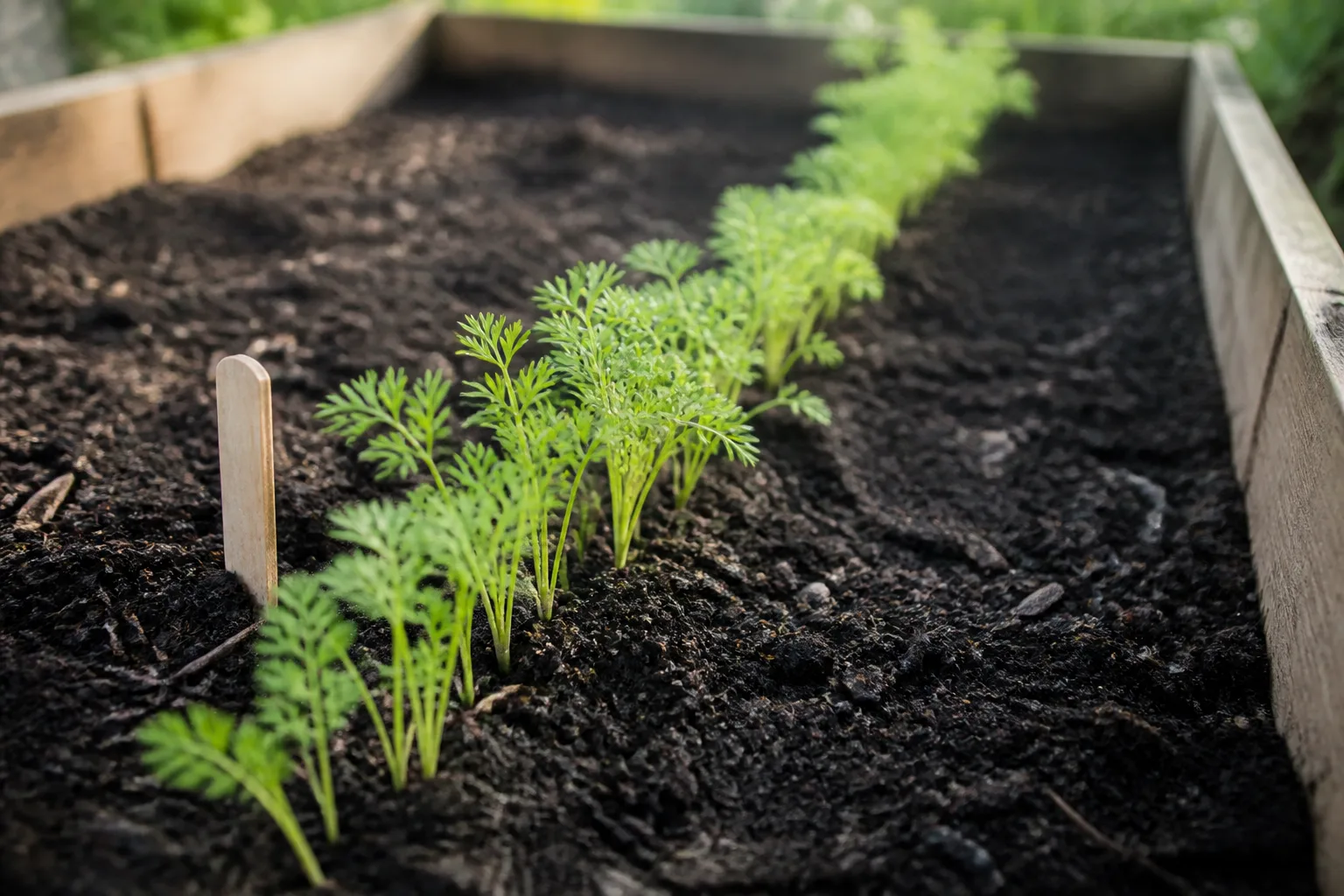
- Even emergence: green seedlings appearing along the original line are the best evidence that the seed zone stayed intact.
- Uneven gaps: a missing section may reflect washout, a crust, a low pocket, or simply slower germination.
- Runoff marks: channels, exposed roots, or a fan of fine sediment point to movement rather than delayed germination.
- A hard cap: a continuous, brittle surface suggests crusting and possible trapped seedlings.
- Persistent water: a puddle that remains after nearby soil has drained is the strongest sign that saturation, not timing alone, is the problem.
Compare the row with the seed packet’s germination range. Cool soil can extend the wait, and a storm can lower soil temperature as well as add water. The RHS notes that many seeds will not germinate below about 7°C (45°F), but crop requirements vary, so use the packet and local conditions rather than a universal deadline.
Take one careful sample only if the timing calls for it
If the crop is beyond the expected emergence window and a section remains empty, sample one seed at the end of the row. Brush away a little soil with your fingers or a pencil, following the sowing depth rather than digging a broad trench.
A firm seed that has swollen but remains intact may still be alive, especially if the soil has been cool. A soft, mushy, slimy, or foul-smelling seed is a practical sign of decay. A completely dry seed may have missed the moisture it needed, while a seed found on the surface may have been displaced and lost its contact with the soil.
One sample is enough to guide the next action. Do not excavate the full row: a surviving seed with a developing root can be damaged by a well-intentioned inspection. If the surface is crusted, inspect the crust and the timing first; the seed may be alive below it.
Should you break the crust over planted seeds?
Sometimes, but only shallowly and only when the timing makes it worthwhile. The University of Minnesota Extension guidance on crusting and emergence explains that a crust can block emerging seedlings and that the response depends on how close seedlings are to the surface.
If the seed has not yet germinated and the crust is clearly above the seed zone, lightly scratch or crumble only the crust with a hand cultivator, the edge of a plant label, or your fingertips. Work no deeper than the hard layer. You are trying to open air and light pathways, not remix the seed bed.
If seedlings are likely to be at the surface, skip cultivation. A fine spray of water can soften the cap, allowing the shoot to push through with less breakage. Repeat gently only as needed; a forceful stream can recreate the erosion that formed the crust.
Timing matters because a seedling trapped under a crust is spending stored energy. Warm weather can make it reach that limit faster, while cool weather may slow both the seedling and the drying of the soil. If you cannot tell whether the crop is about to emerge, a light softening spray is safer than deep disturbance.
Do not use a garden fork or rototiller on a freshly seeded row to “aerate” it. Deep loosening can destroy germinating seeds and bring them to the wrong depth. If the bed needs structural repair, wait until the current crop is established or work the paths and unplanted areas separately.
When to reseed and how to do it without repeating the problem
Reseed when you have evidence of a real gap, not simply because the surface looks different after rain. The best decision point is when the soil is workable, the crop’s normal emergence window has passed or a sample is clearly dead, and the location has stopped collecting water.
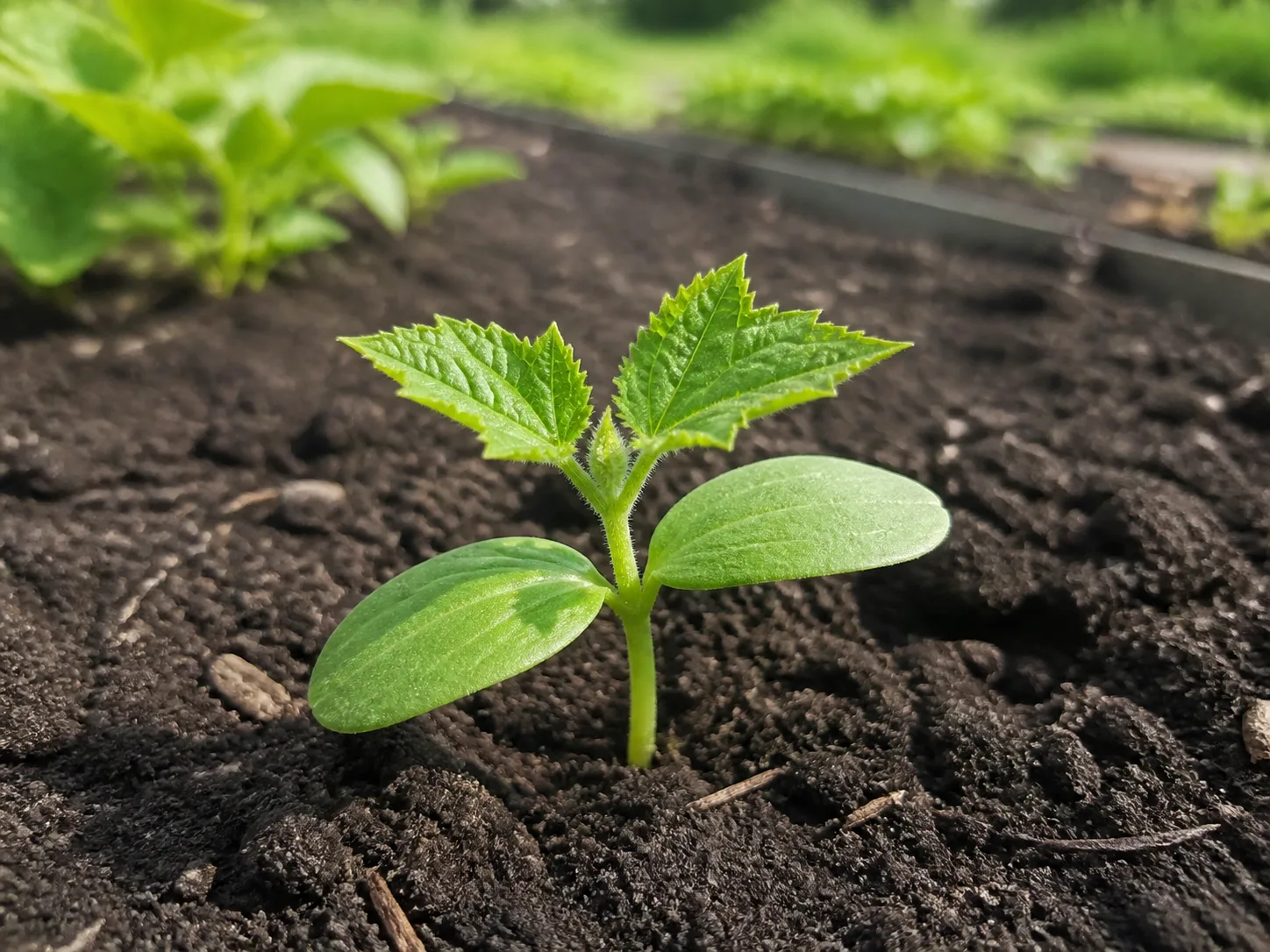
Start with the empty sections. Level a small washout, restore the row shape, and sow fresh seed at the packet’s recommended depth. Firm it lightly so the seed has contact with the soil, then water with a fine rose or gentle spray. Do not bury a shallow seed under extra soil just because the surface was eroded; repair the grade first and replace the covering carefully.
If surviving seedlings are clustered together after displacement, leave them until they are large enough to handle and thin them then. Pulling them immediately can turn a recoverable patch into a bare one. The exception is a dense mat that will compete before you can thin it or a seedling that is clearly growing in a path where it cannot mature.
For a short growing season, compare the new sowing date with the crop’s days to maturity and your first expected frost. A slower crop may be better replaced with a quick salad green or radish, while a warm-season crop may not have enough time to recover from a second failure. That is a planning decision, not proof that the original seeds were dead.
Prevent the next washout
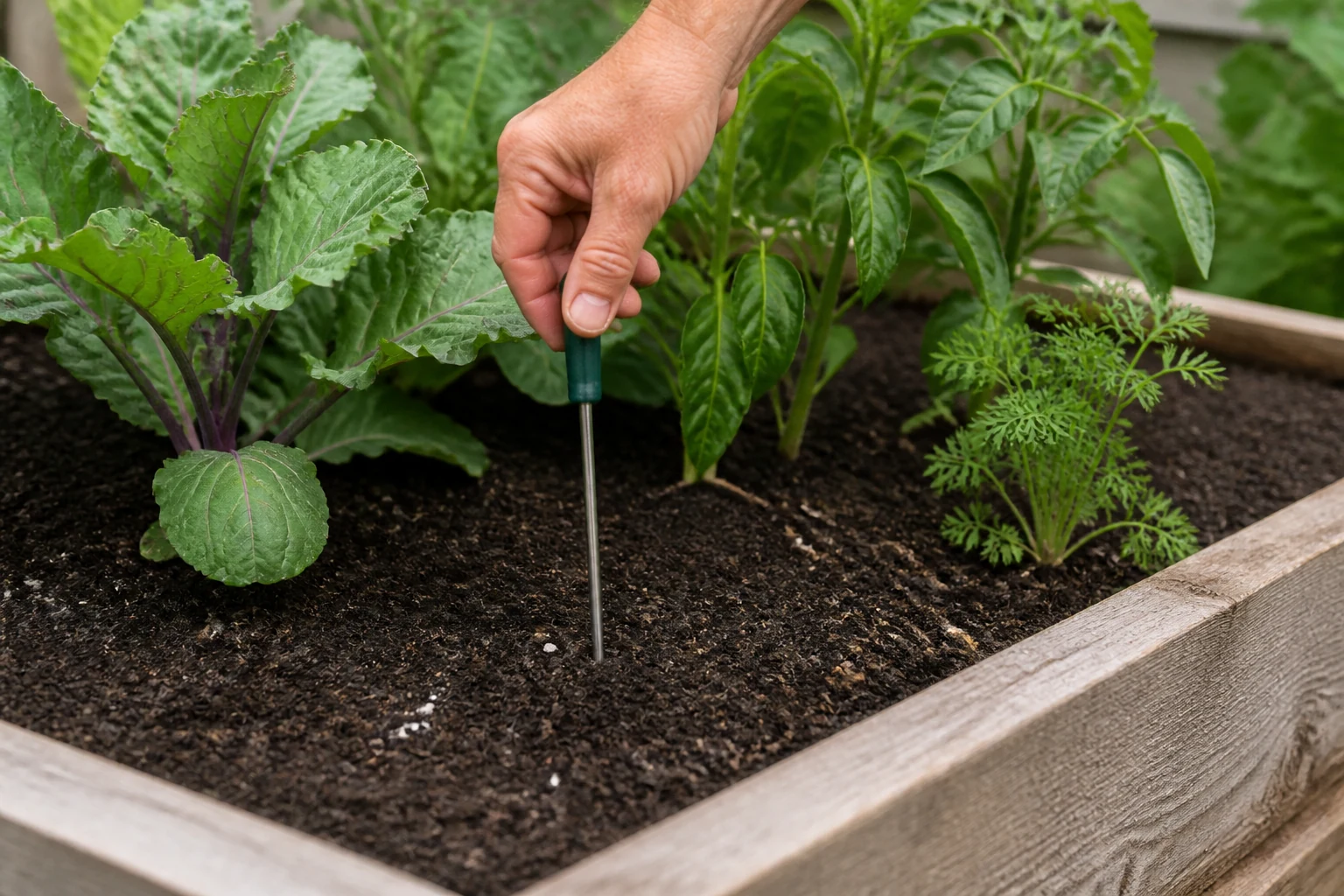
The easiest storm to recover from is the one you have prepared for before sowing. Start with a bed that is friable rather than muddy, and avoid working soil when it sticks to your tools or forms a ribbon when squeezed. A loose surface with stable aggregates accepts water more evenly than a fine, powdery surface that seals when struck by rain.
Before sowing, shape the bed so water can leave without running along the seed line. Keep rows across a slope where practical, use a shallow contour, or place a low berm and an intentional overflow route. Persistent puddling is a drainage design problem; it is not solved by adding more seed.
Cover seed rows when the forecast calls for intense rain. A lightweight row cover or supported sheet is more predictable than scattering a thick layer of bark or wood chips over tiny seeds. If you use mulch, keep it light and away from the seed line. Harvest to Table’s vegetable-garden mulching guidance describes mulch as a way to reduce erosion, compaction, and surface splash, but coarse or thick material can hold too much water or block a small seedling.
Build soil structure between crops with finished compost, living roots, and minimal unnecessary disturbance. Organic matter and stable aggregates can make a bed less prone to crusting over time. Add amendments before planting rather than dumping them onto a saturated row after a storm, and do not assume sand is a universal fix for clay soil.
Sow in short succession rather than putting every seed in one long row at once. Staggered plantings spread the risk of one storm, one cold snap, or one drainage failure, and they let you adjust the next sowing after seeing how the bed handles weather. Mark each row with the crop and sowing date so you can compare the storm’s timing with the packet’s emergence range.
Conclusion
Vegetable seeds can germinate after heavy rain when they remain near the correct depth, the soil drains, and the temperature supports the crop. A downpour becomes dangerous when it moves seed, leaves it underwater, seals the surface, or sends sediment over the row.
For now, keep off wet soil, clear outside drainage, protect the bed from another storm, and watch the row rather than digging it up. Once the soil is workable, use the crop’s expected emergence window and one careful sample to separate delayed seeds from genuine losses. Reseed only confirmed gaps, then change the bed’s drainage, cover, or surface protection before the next forecast tests it again.