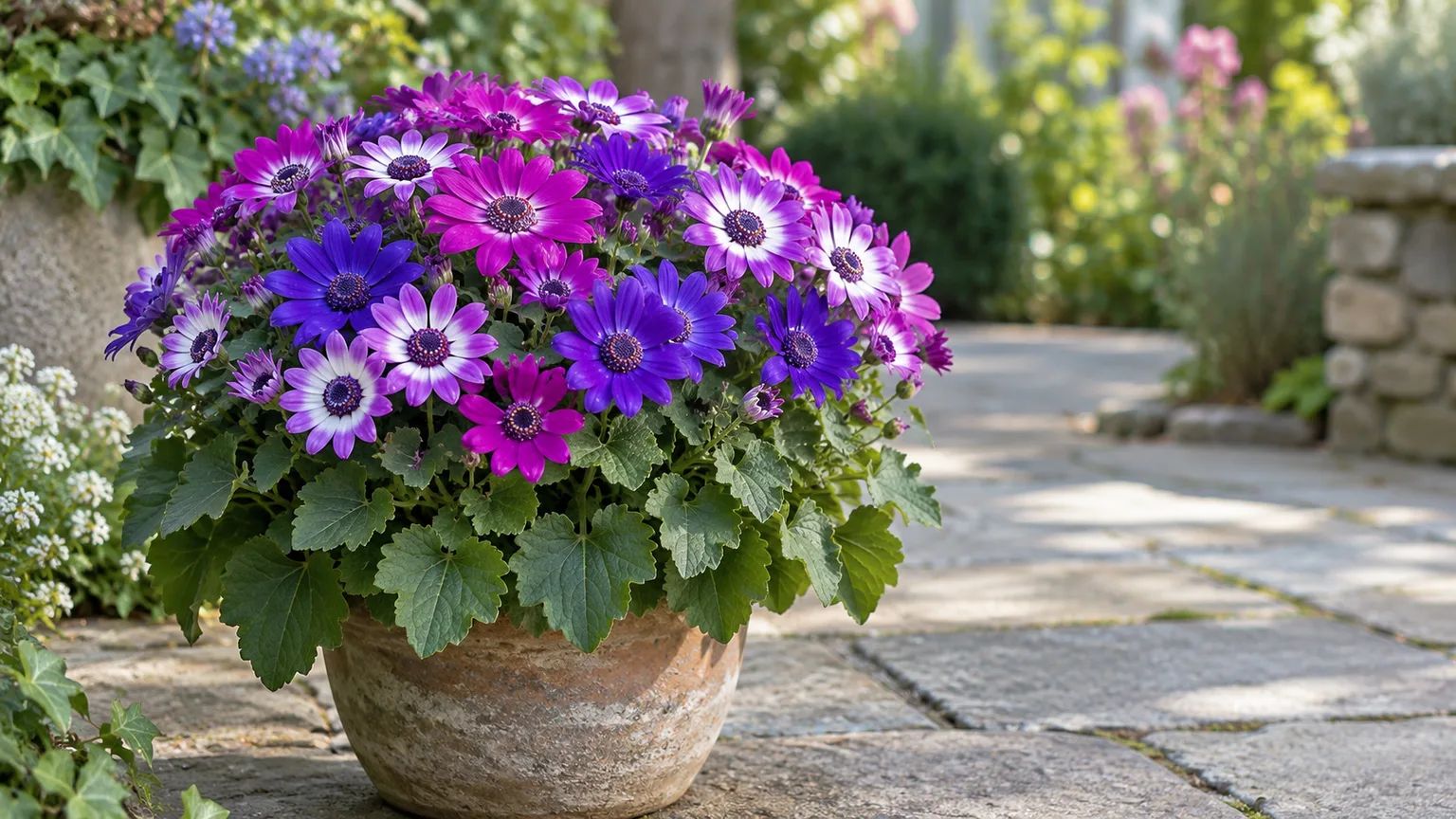
7 Shade-Loving Perennials for Bright Garden Color
Choose bright shade-loving perennials for dry, moist, or woodland beds. Get bloom timing, placement advice, maintenance tips, and a foxglove safety warning.
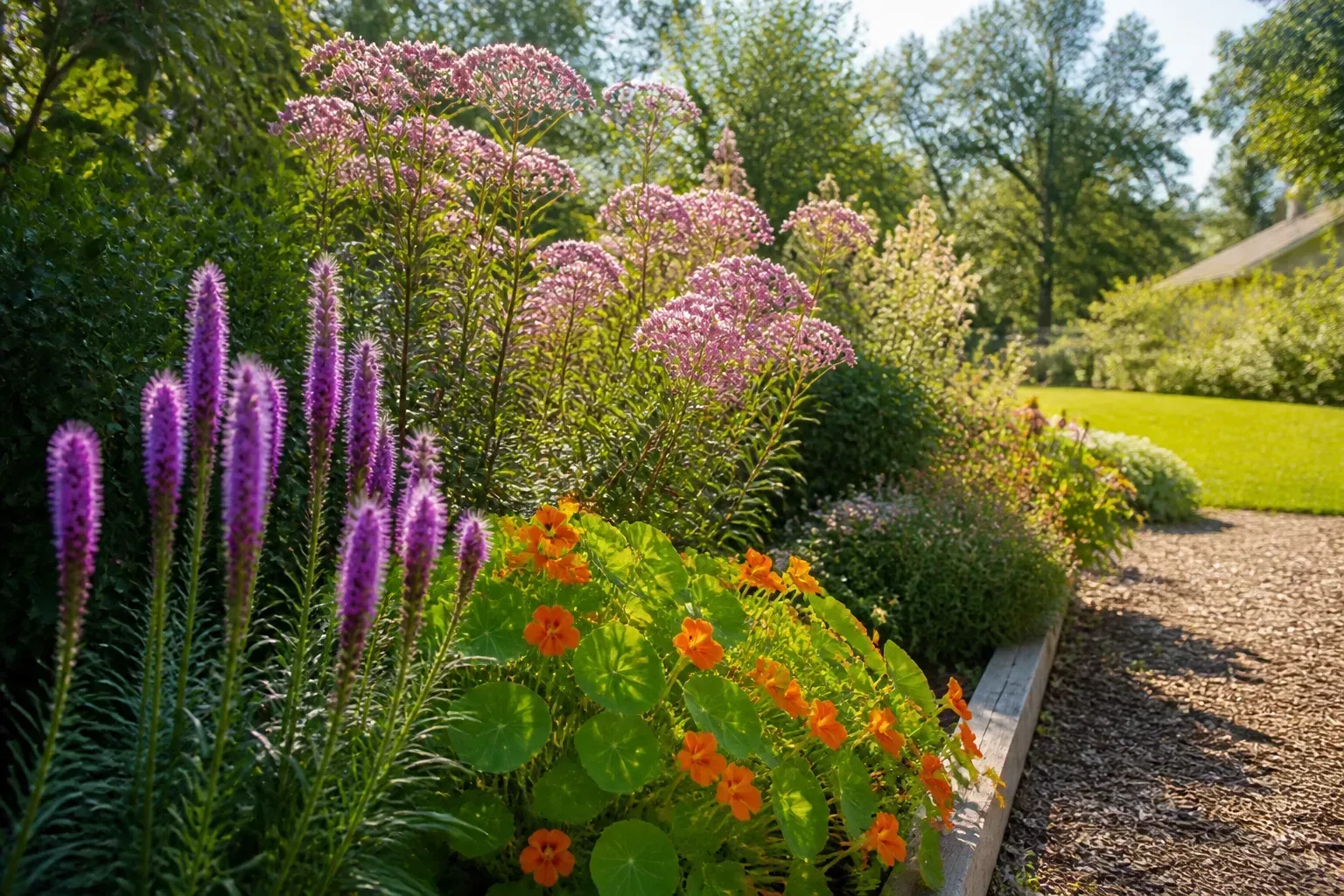
Shade does not have to mean a bed of green leaves with one short burst of flowers. The best shade-loving perennials bring color in different ways: feathery plumes, tall bells, silver foliage, spotted flowers, and bold leaves that stay attractive after the blooms finish.
The important catch is that shade is not a growing condition by itself. A cool, damp border beside a pond is nothing like the dry soil beneath a mature maple, and a few hours of gentle morning sun can produce very different results from hot afternoon light. Use the seven plants below as a shortlist, then match each one to the light, moisture, scale, and safety profile of your actual yard.
Match the Plant to the Kind of Shade You Actually Have
Begin by watching the bed for a full day rather than trusting a label such as “shady.” Note when direct sun reaches the soil, whether it is morning or afternoon, and whether tree leaves change the pattern between spring and midsummer. A north-facing wall may stay cool and evenly shaded, while a bed under a deciduous tree can be sunny in April, dark in June, and surprisingly dry all summer.
Full Shade, Part Shade, and Dry Shade Are Not Interchangeable
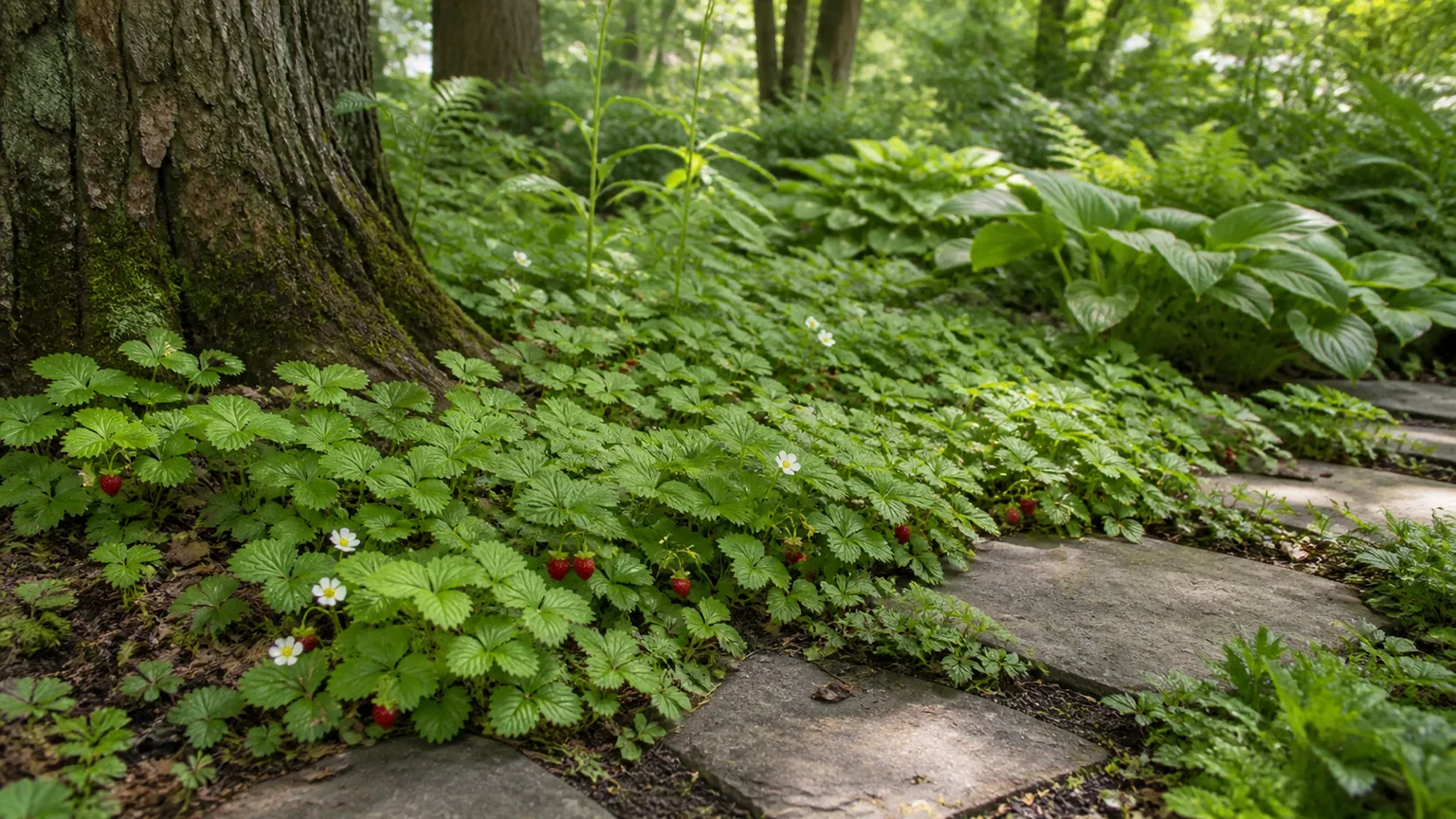
Part shade usually means protection from the strongest midday or afternoon sun, often with a few hours of direct light or a dappled canopy. Full shade still receives reflected or filtered daylight; it does not mean a site is pitch-black. The distinction matters because some perennials tolerate shade but flower best with gentle morning light, while others are comfortable blooming in much darker conditions.
There is also dry shade, a category that defeats many otherwise good recommendations. Tree roots intercept rainfall, dense canopies shed water, and the soil surface can look damp after a storm while the root zone is already dry. Astilbe, ligularia, and toad lily are poor bets for a chronically dry bed; if you cannot irrigate, choose a plant adapted to dry shade or improve the site before planting.
Colorado State University Extension makes the same useful distinction from another angle: foliage plants can thrive in shade, but moisture-loving choices such as astilbe and foxglove belong in a better-watered site. Its shade perennial guidance also recommends using contrasts in leaf shape, texture, and color rather than relying on flowers alone.
Test the Bed’s Moisture Before You Shop
Dig a small hole two to three inches deep and squeeze a handful of soil. If it forms a cool, cohesive ball that breaks apart with a tap, you have some available moisture; if it is dusty or barely holds together, you are planning for dry shade. If it smears into a shiny ribbon or smells sour, drainage may be the problem rather than a lack of water.
Most of the plants in this list prefer evenly moist but well-drained soil. That phrase is not a contradiction: roots need water available in the soil, but they also need air-filled pore space. Add finished compost to improve structure, mulch the surface after planting, and use a soil test before adding lime, sulfur, or fertilizer based on a generic recommendation.
A Simple Planting Plan for Color From Spring to Fall
A colorful shade bed works better when you plan a relay race instead of asking one plant to flower all season. Lungwort and bleeding heart can start the display in spring, astilbe and primrose carry it into late spring and summer, ligularia adds midsummer presence, and toad lily takes over when many shade borders are fading.
Use height and texture to keep the display readable. Put foxglove and tall ligularia toward the back, astilbe and toad lily in the middle, and primrose or lungwort near a path where their smaller flowers and foliage can be seen up close. Bleeding heart can sit in the middle of the border, but leave room for its foliage to disappear without exposing a visual hole.
| Plant | Best fit | Main color window | The trade-off to plan for |
|---|---|---|---|
| Astilbe | Part to full shade with reliable moisture | Spring to summer | Leaf edges brown and foliage may go dormant when it dries out |
| Foxglove | Light or dappled shade with moist, well-drained soil | Early summer | Common foxglove is often biennial, and the plant is toxic |
| Bleeding heart | Cool woodland shade | Spring | It naturally goes dormant by midsummer |
| Toad lily | Part to full shade with moist organic soil | Late summer to fall | Drought can stop flowering; early frost can shorten the show |
| Primrose | Cool, evenly moist shade | Spring or summer, by type | “Primrose” covers many species with different habits |
| Ligularia | Moist shade, pond edge, or rain-garden margin | Midsummer to fall | Large leaves wilt quickly in heat or dry soil |
| Lungwort | Part to full shade with moisture but no standing water | Spring | Its strongest contribution after flowering is foliage |
The table is a starting point, not a guarantee of identical performance in every climate. Hardiness, mature height, bloom timing, and tolerance of sun can change substantially between species and named cultivars, so check the plant tag against your local conditions before buying several of one type.
That foliage-and-bloom balance is also a practical theme in Gardener’s Path’s shade perennial guide, which separates plants by light level and includes both early and late-season choices. In a small yard, that is more useful than filling the whole bed with one color that peaks for two weeks and then leaves a blank.
1. Astilbe: Feathery Plumes for Reliably Moist Shade
Astilbe earns its place when you want a clear burst of color above finely textured foliage. Depending on the cultivar, the plumes can be white, pink, red, lavender, or peach, and the plants range from compact edging forms to varieties taller than three feet. Clemson Extension lists astilbe as hardy across Zones 3 to 9 and notes that it can take more sun when the soil stays moist; its astilbe guide is a useful reminder that “shade-tolerant” does not mean “drought-tolerant.”
Choose astilbe for a bed that stays cool and does not dry sharply between rains. It looks especially strong in groups of one cultivar or in repeated drifts, where the plumes read as a mass of color instead of isolated bottlebrushes. Pair the flowers with ferns or broad-leaved plants so the bed still has structure before and after bloom.
How to Keep Astilbe Blooming
Water new plants deeply and consistently while they establish, then check them during the hottest weeks rather than following a fixed calendar. Brown leaf margins are an early warning that the root zone is drying; if the foliage collapses into summer dormancy, more fertilizer will not solve the problem.
Astilbe does not need a complicated feeding program. Work a modest amount of finished compost into a new bed, use an all-purpose fertilizer only when a soil test or visible growth problem supports it, and leave the dried seedheads in place if you like winter texture. Cut old foliage back in late winter, and divide crowded clumps in early spring or fall every few years when vigor declines.
2. Foxglove: Vertical Bells for Dappled Light
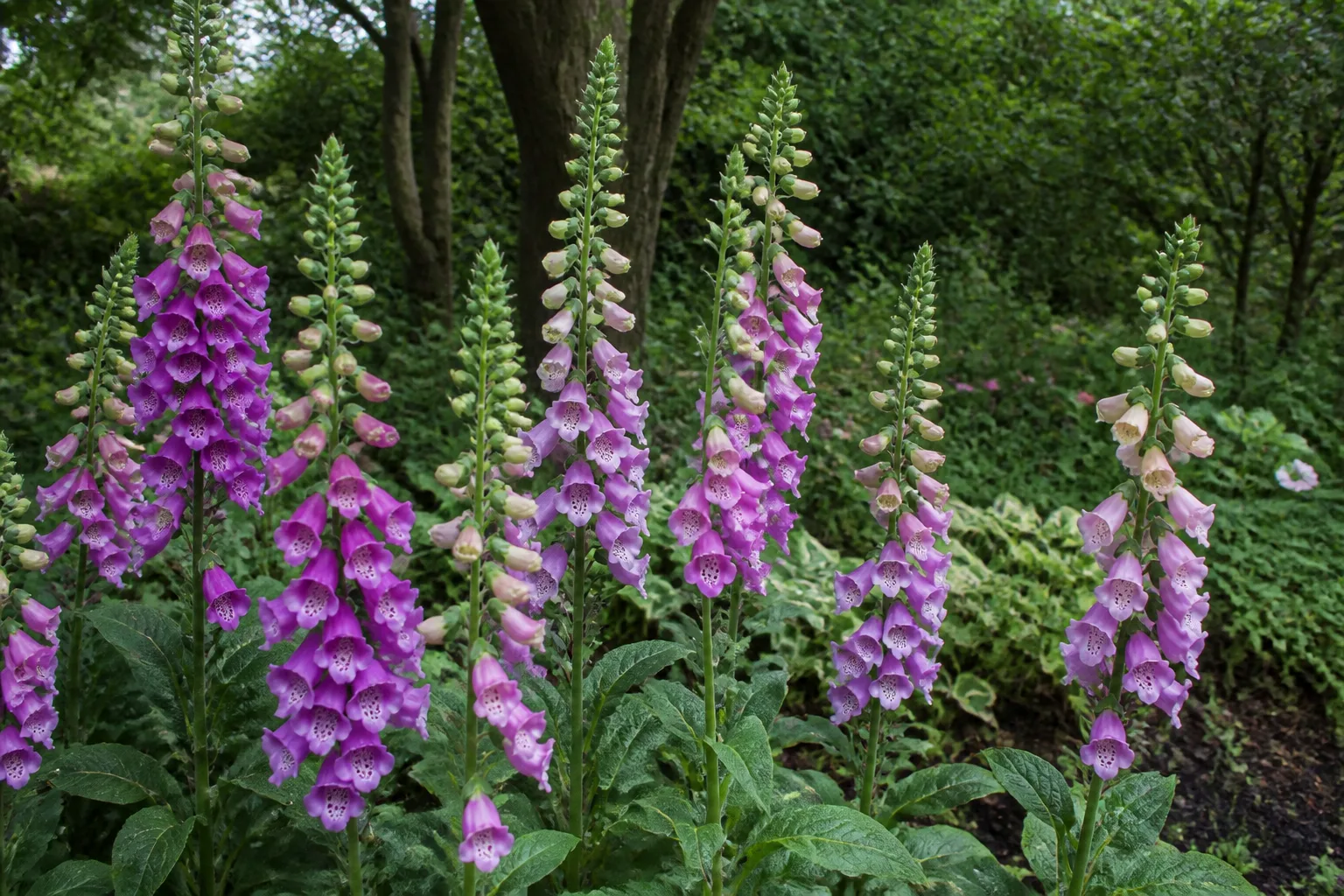
Foxglove supplies the vertical punctuation that many shady borders lack. Perennial foxgloves produce slender spikes of tubular flowers in colors such as soft yellow, rusty orange, and dusky pink, while common foxglove is best known for tall purple or white bells. The RHS perennial foxglove guide recommends light shade and organic matter, with soil that stays moist but is neither permanently wet nor allowed to dry for long periods.
Treat “foxglove” as a group name, not a promise of one growth cycle. Digitalis purpurea, the common foxglove, is generally biennial or short-lived, but it can self-sow; other Digitalis species and hybrids are more reliably perennial. If returning clumps matter to your design, read the species or hybrid name on the label instead of assuming every foxglove will behave the same way.
Use foxglove at the back of a dappled border, where its height can be seen above lower perennials. It usually performs better with gentle morning light than in dense, root-dry shade, and hot afternoon exposure can scorch its soft foliage. Remove spent flower spikes only if you want to reduce self-sowing; leave a few if you are comfortable with seedlings appearing in nearby soil.
The Non-Negotiable Foxglove Safety Rule
Foxglove is not a pet-safe choice. The ASPCA lists common foxglove as toxic to dogs, cats, and horses, with cardiac glycosides associated with signs including vomiting, diarrhea, weakness, and dangerous heart effects; its foxglove safety listing advises contacting a veterinarian or poison control promptly after suspected ingestion.
Wear gloves when handling plants or seed, wash your hands afterward, and do not place foxglove beside a child’s play area or along a path where pets browse. If children, dogs, cats, or grazing animals have access to the bed, choose one of the other six plants or verify a safer substitute with a local extension office and your veterinarian.
3. Bleeding Heart: An Early-Season Woodland Show
Bleeding heart, commonly sold as Lamprocapnos spectabilis, makes a shade garden memorable in spring. Its arching stems carry pink-and-white or white heart-shaped flowers above soft, divided foliage, and it suits the cool, woodland character of a tree border better than a hot, exposed bed. The RHS includes it among perennials for lighter or dappled shade, with a typical height of roughly two to three feet depending on the plant (RHS shade-planting guide).
Give bleeding heart a soil that is rich in organic matter, evenly moist, and not waterlogged. Morning light or bright filtered light is useful, but strong direct sun can shorten the display and stress the foliage. It is a good plant for the center of a border where the flowers can be seen without forcing it to compete with the tallest plants.
Plan for Its Summer Dormancy
Bleeding heart is a spring ephemeral in the practical garden sense: after flowering, its foliage gradually yellows and the plant retreats underground by summer. That is a normal seasonal rhythm, not proof that the plant has died or needs more water.
Do not fill the empty space with a plant that has aggressive roots or requires frequent digging. Instead, mark the location, let the foliage fade naturally, and place a later-emerging companion nearby—such as toad lily or ligularia—so it takes over the visual job without disturbing the dormant crown. This simple handoff is more reliable than trying to force bleeding heart to remain leafy all season.
4. Toad Lily: Late Color When the Border Is Fading
Toad lily is the specialist for the end of the shade-garden season. Its small, orchid-like flowers are usually white to pale purple with dark spots, appearing in late summer and early fall when spring bloomers are finished. Wisconsin Horticulture describes Tricyrtis hirta as a part- to full-shade perennial for moist, organic soil, with plants commonly reaching about 12 to 36 inches; its toad lily profile also notes that different species and hybrids vary in hardiness.
Site toad lily where visitors can get close enough to notice the flowers. It works along a woodland path, at the middle of a shady border, or in a container that can be protected from an early frost. Keep the soil evenly moist while it is forming buds; drought can cause brown leaf edges, premature dormancy, and a disappointing absence of flowers.
Avoid planting it in a low pocket that stays stagnant and waterlogged. Good air circulation, careful watering at the soil line, and removal of fallen diseased leaves reduce the chance of leaf-spot trouble, while a sheltered position helps late flowers last longer when nights turn cold.
5. Primrose: Compact Color for Cool Beds
Primrose is a useful choice when you need bright color near the front of a border. Primula is a large genus, so the flowers may be yellow, pink, red, purple, white, or bicolored, and the bloom season can range from early spring to summer depending on the species and cultivar. RHS shade recommendations include both compact primroses and taller candelabra types, including moisture-loving forms with flower stems around two feet tall (RHS shade-planting guide).
Choose the primrose by site and scale rather than by flower color alone. A small rosette is suited to an edge or trough, while a candelabra form needs more vertical room and a reliably moist pocket. In a hot climate, give primroses afternoon protection and keep the root zone mulched; in a cool climate, bright filtered light can produce a fuller display than deep, stagnant shade.
Primrose likes moisture that is available but not trapped around the crown. Water when the surface begins to dry, improve heavy soil with organic matter, and avoid burying the crown under mulch. If a plant struggles despite adequate moisture, compare its tag with your local winter and summer conditions before assuming the entire genus is a failure.
6. Ligularia: Bold Foliage and Yellow Flowers by Water
Ligularia is the dramatic option on this list. Its large leaves give a shady border a strong architectural shape, while species and cultivars produce either yellow flower spikes or daisy-like flowers in midsummer and fall. The RHS profile for Ligularia dentata ‘Desdemona’ describes bronze-green leaves with purple undersides and orange daisy-like flowers from midsummer to autumn, with a mature size near three to four feet.
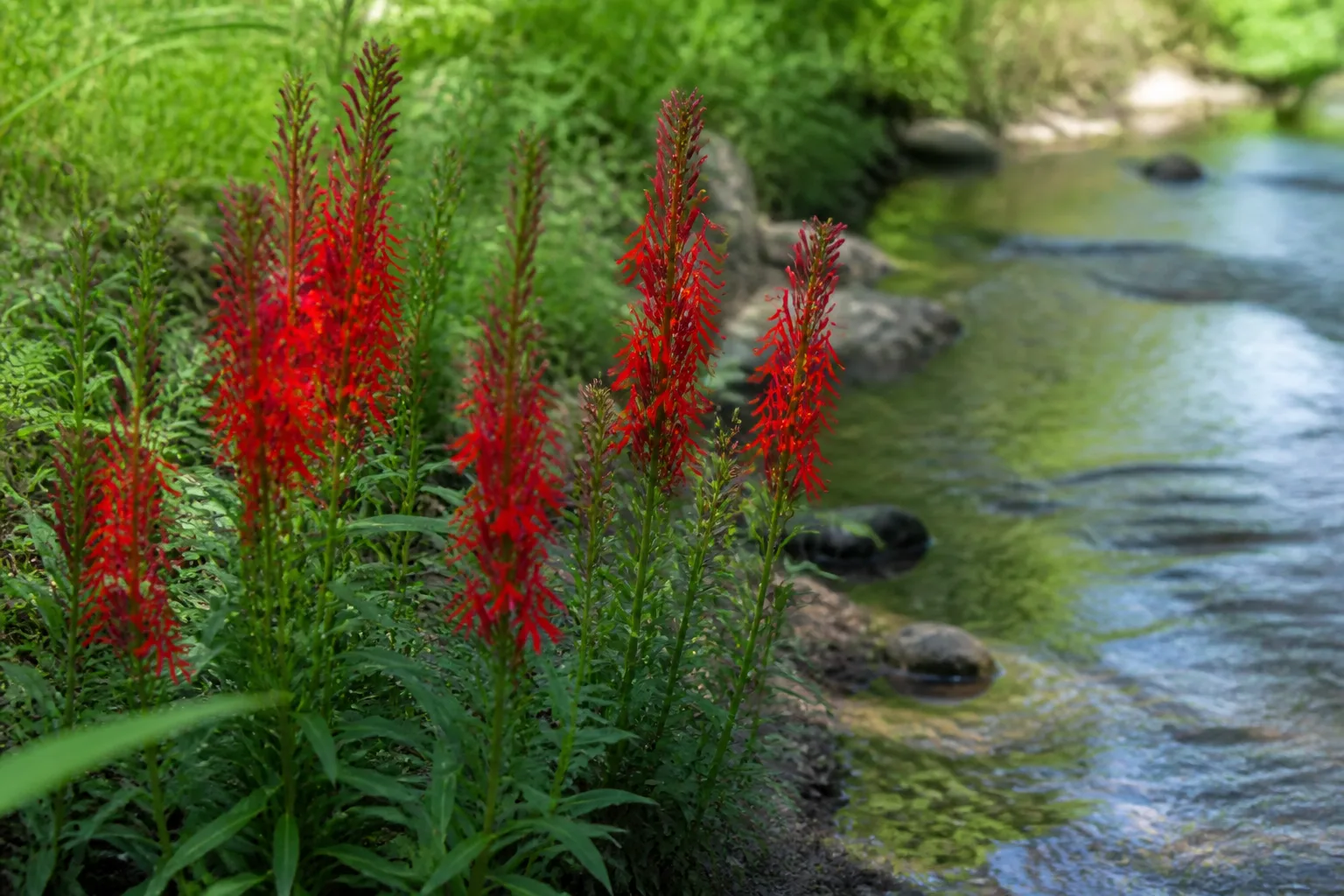
Use ligularia where the soil is naturally moist: beside a pond, at the edge of a rain garden, or in a low bed that drains slowly without remaining submerged. It can become an expensive disappointment in a dry ornamental border because its large leaves lose water quickly. A thick layer of compost and surface mulch helps, but neither replaces irrigation in a root zone that dries every week.
Prevent Ligularia’s Midday Wilt
Some ligularias wilt dramatically during hot afternoons even when they recover by evening. That temporary response is a heat-and-water-loss signal, not automatically a dead plant. Check the soil several inches down after sunset: if it is cool and moist and the leaves recover overnight, improve afternoon protection rather than watering constantly.
Persistent wilt is different. If the plant remains limp at night, the soil is dry, or new leaves are shrinking, give it a slow, deep soak and add shade from the hottest light if possible. If the soil is saturated and the plant still collapses, investigate poor drainage or root damage instead of adding more water.
7. Lungwort: Flowers Plus Silver Foliage
Lungwort, or Pulmonaria, earns its spot by doing two jobs well. In spring it produces bell-shaped flowers that may open pink and mature toward blue or violet, while the silver-spotted foliage continues to brighten a dark corner after the flowers fade. The RHS lists Pulmonaria ‘Blue Ensign’ among its deep-shade perennials in the RHS shade-planting guide, and Savvy Gardening’s flowering shade perennial guide highlights the combination of spring flowers and silver-marked leaves.
Plant lungwort where the soil stays cool and moderately moist, especially beneath deciduous trees or beside a path. It is more forgiving of shade than many showy bloomers, but it is not a reason to ignore drainage or summer heat. Give each clump enough room for air to move around the leaves, and remove tired foliage after flowering if fresh growth is already emerging.
Lungwort is also a useful visual bridge between flowers. Its pale foliage can separate dark green ferns from pink astilbe, and its low mound can soften the base of foxglove or ligularia. Think of it as a season-extender for the design, not just another plant waiting for spring flowers.
Planting and Maintenance Mistakes That Flatten a Shade Garden
The most common failure is choosing by flower color and ignoring water. A bright tag cannot compensate for ligularia in dry soil, astilbe that is never watered during a hot spell, or toad lily planted where buds form just before a predictable drought. Start with the site, then choose the color.
The second mistake is treating every shade perennial as a heavy feeder. Most of these plants benefit more from stable moisture, good soil structure, and a surface mulch than from repeated fertilizer. Over-fertilizing can create soft, lush growth that needs more water and is more vulnerable to stress; use a soil test if growth is weak instead of adding nutrients by guesswork.
Do not bury crowns under mulch, pile compost against stems, or water shallowly every day. Spread two to three inches of organic mulch over the root zone while keeping it away from the crown, then water slowly enough to wet the soil below the surface. During the first growing season, check newly planted perennials by hand because a timer cannot see the difference between a cool rain and a tree canopy that intercepted it.
What to Do When the Bed Is Under a Mature Tree
Tree-root competition changes the planting method. Do not raise the soil level around the trunk or cut large roots to make planting holes; both actions can injure the tree. Instead, locate smaller gaps between roots, use small plants, add a thin surface layer of compost, and water slowly at several points across the bed.
Under a dense evergreen canopy, assume the site is both darker and drier than it looks. Of the seven plants here, lungwort and some primrose selections may be easier to manage than ligularia, but none should be planted without checking actual moisture. If the bed cannot be irrigated, redesign the palette around plants proven for dry shade in your region rather than trying to make a moisture-lover survive on hope.
Finally, leave room for seasonal change. Bleeding heart will disappear, foxglove may move around by seed, toad lily emerges later than expected, and ligularia can look oversized in midsummer. A shade border feels intentional when those changes are part of the plan, not when every plant is forced to stay the same size and color from May through October.
Conclusion
The best bright perennial for shade is the one that matches the site you actually have. Choose astilbe, primrose, or ligularia for moist ground; use foxglove and bleeding heart in a cool, dappled woodland setting; reserve toad lily for late-season color; and let lungwort carry both spring flowers and silver foliage.
Before buying, spend one day observing light and one quick test checking soil moisture. Then plant in layers, protect the root zone with compost and mulch, and treat dormancy or temporary wilt as information rather than an automatic reason to dig up the plant. That approach gives a shady yard color that is brighter, longer-lasting, and much easier to maintain.