Beetroot Care Guide: Sun, Water, Soil and Harvest
Beta vulgaris
Grow beetroot in sun or light shade with even moisture, fertile well-drained soil, successional sowing, and harvest at golf-ball size for tender roots.
Beetroot Care Guide: Sun, Water, Soil and Harvest
Start with wateringThe most common care mistake for BeetrootWatering guide → →Beetroot care essentials
Light
Water
Keep the root zone evenly moist without saturation. Established plants tolerate some dry spells, but drought makes roots woody and uneven watering can cause splitting.
Soil
Fertile, organic-rich, well-drained loam or potting mix. Stones and compaction cause forked roots, so use deep, loose mix in containers.
Humidity
Temperature
Fertilizer
About Beetroot
Beetroot is native to Europe and the Mediterranean, typically reaches About 20–40 cm tall foliage; roots typically harvested at 4–8 cm diameter indoors, with moderate — often 50–60 days from sowing to harvestable roots growth. Beetroot has a herbaceous annual (biennial in nature) growth habit and part of the Amaranthaceae family. It is also known as Beet, Garden beet, and Chukandar.
| Detail | Information |
|---|---|
| Also known as | Beet, Garden beet, Chukandar |
| Native region | Europe and the Mediterranean |
| Mature size | About 20–40 cm tall foliage; roots typically harvested at 4–8 cm diameter |
| Growth rate | Moderate — often 50–60 days from sowing to harvestable roots |
| Growth habit | Herbaceous Annual (Biennial In Nature) |
| Scientific name | Beta vulgaris |
| Family | Amaranthaceae |
Beetroot Care Guide: Sun, Water, Soil and Harvest
Beetroot care starts with a simple shift in focus: you are growing a swollen taproot, not a long-lived leafy herb. Beta vulgaris Garden Beet Group (chukandar, garden beet) forms a low rosette of edible leaves above a round or cylindrical root that only sweetens and softens when moisture, temperature, and spacing stay in range. Lush tops with pencil-thin roots usually mean season, water, or nitrogen is off — not that the plant needs more “general fertilizer.”
The Beetroot plant hub summarizes species traits for your climate; this page is the full-path overview before you open topic-specific guides on light, watering, and soil.
Beetroot care at a glance
Give beetroot full sun where possible, cool-season timing in hot districts, even root-zone moisture, and stone-free, fertile soil that drains without drying to dust. Sow seed clusters in place, thin gently, and harvest while roots are still small — roughly golf-ball size — before texture turns woody.
NC State Extension notes that garden beets do best in full sun to partial shade with moist, rich, well-drained soil, need consistent moisture for a good crop, and are usually ready 50 to 80 days after germination when roots reach about 1.5 to 3 inches (roughly 4–8 cm) in diameter. Those ranges are cultivar and weather dependent, but they set realistic expectations before you blame the seed packet.
What garden beetroot is and how it grows
Garden beetroot is the same species as sugar beet and Swiss chard, bred for a storage root rather than continuous leaf harvest. Penn State PlantVillage describes Beta vulgaris as a herbaceous biennial root vegetable usually grown as an annual and harvested in one season — which matches how most kitchens use chukandar.
Beta vulgaris and the swollen taproot
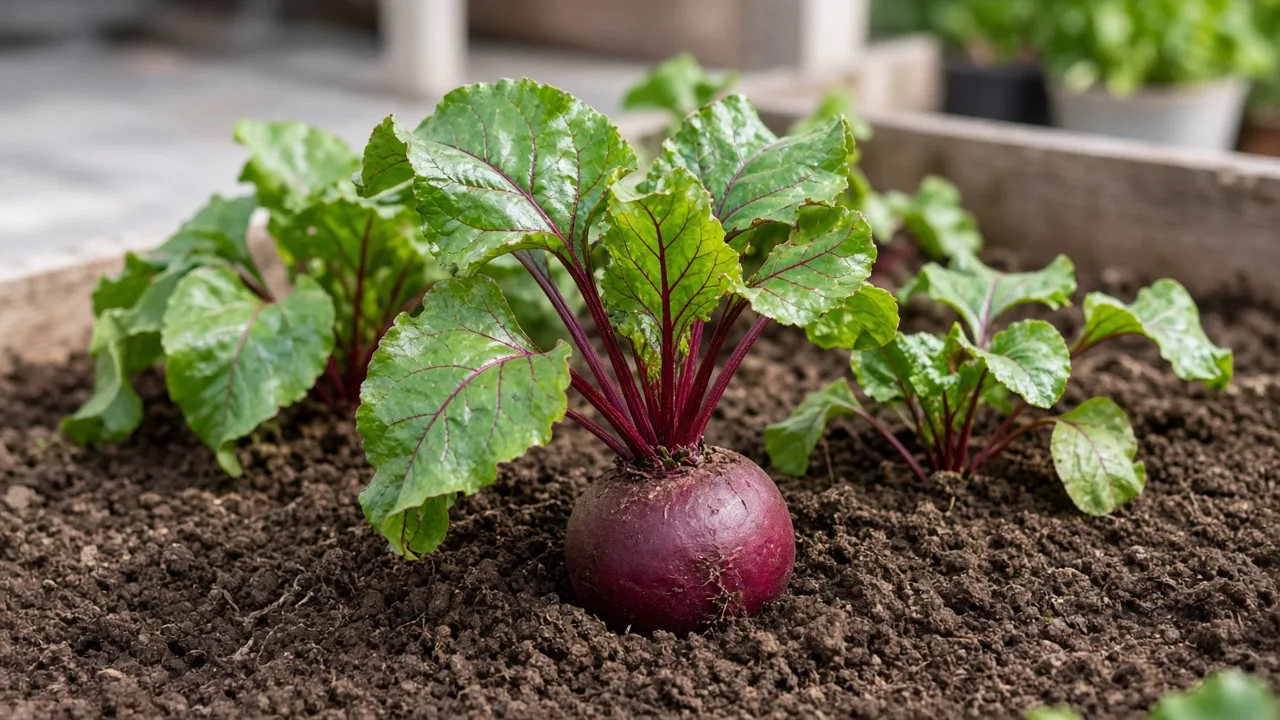
Above ground you will see oval leaves on short stems; below, the root swells when soil is loose, competition is low, and the plant is not racing toward flowering. Stones, compaction, and root disturbance during thinning cause forked or stunted shapes long before any disease appears. Round cultivars suit containers; long cylindrical types need deeper, finer soil — read the seed label as the final authority.
Annual harvest vs biennial biology
In nature, beets can live into a second year and flower. In the garden, bolting — premature flowering — often follows heat stress or lengthening days, after which roots stop improving. Treat beetroot as a single-season root crop: sow, grow, harvest, then sow again in the next cool window rather than trying to “keep the same plant” through a hot summer.
Cool-season timing in India and warm climates
Beetroot is a cool-season vegetable. The RHS recommends sowing in temperate gardens from spring through mid-summer for staggered harvests, with soil temperature at least 7°C (45°F) for outdoor sowings and bolt-resistant varieties for early sowings that might otherwise flower too soon.
India does not share one national sowing month. A Pune terrace, a Delhi raised bed, and a humid coastal plain differ in night temperature and drying speed. The transferable rule is to sow so most root filling happens while days are mild and nights are not punishingly hot:
- Cool hill regions and north Indian winter often give the longest, most forgiving window for outdoor beds.
- Warm lowlands usually do better in late autumn through winter, or in a brief pre-summer slot where local nights stay cool enough for steady growth.
- Peak summer heat commonly triggers bolting or woody, stalled roots even if seedlings survive; afternoon shade on containers may help roots survive, but it does not replace choosing a cooler sowing month.
Successional sowings every few weeks inside your cool period extend harvests, as the RHS suggests for continuous beetroot harvests. Watch local soil moisture and forecast rather than copying a UK calendar verbatim.
Light and temperature
For the fastest, sweetest roots, prioritize bright light. NC State lists garden beet as full sun (six or more hours of direct light) to partial shade, noting that plants can grow in partial shade but take longer to reach harvestable size. Practical guides often cite about six hours of sun per day as a useful minimum for home beds.
In intense summer sun on terraces, morning light with light afternoon shade can reduce heat load on container roots without replacing cool-season timing. Heat and drought stress push the plant toward flowering; once a thick flower stalk appears, plan on harvesting whatever root is usable soon rather than waiting for further swelling.
For window placement, reflectivity on paved terraces, and grow-light limits, use the dedicated Beetroot light guide.
Water and even root-zone moisture
Beetroot quality is tightly linked to steady moisture in the root zone. NC State emphasizes consistent moisture to produce a good crop. Established plants tolerate some dry weather, but drought can make roots woody, and a sudden soak after drought may split them — the classic crack you see after a dry week followed by heavy rain or overwatering.
After seedlings are established, many in-ground growers check beds every 10–14 days during dry spells, while containers in warm weather may need attention every day or two because limited mix dries quickly. Feel soil 5–8 cm below the surface; water when it is slightly dry but not dusty, before leaves wilt severely. The Beetroot watering guide walks through overwatering versus underwatering signs and the first fix when you are unsure.
Soil, pH and spacing for round roots
Prepare a loose, stone-free root zone. Target roughly pH 6.0–7.5 (neutral to slightly alkaline), in line with NC State’s soil pH guidance for garden beet. Avoid fresh manure and heavy nitrogen that fuel leafy tops at the expense of swollen roots and can encourage forking.
Space matters because each root needs room to expand. The RHS sows clusters in drills about 2.5 cm (1 in) deep with seeds about 10 cm (4 in) apart in the row, or grouped for baby beets. NC State advises thinning to about 2 to 3 inches apart once seedlings compete. Mix recipes, compost rates, and diagnosis of compacted beds live in the Beetroot soil guide.
Sowing clusters, germination and thinning
Beet “seeds” are often corky clusters that sprout several seedlings. Sow about 2.5 cm deep in the final bed or container rather than planning repeated transplants of mature roots. NC State recommends sowing directly in the ground when possible because transplanting can disturb root development.
Germination can be slow in cold soil; soaking clusters in warm water for an hour before sowing is a common RHS tip for reluctant beetroot germination. Keep the seedbed evenly moist until seedlings appear — crusted or dry surface soil is a frequent reason for patchy stands.
When thinning, snip or pull the weakest seedlings early, leaving one strong plant per station (or a deliberate clump for baby beets). Disturb remaining roots as little as possible. Successional sowing every few weeks inside your cool window beats one large planting that matures all at once. Step-by-step sowing cadence and seed handling are covered in the Beetroot propagation guide; the Beetroot repotting guide explains why “moving up a pot” is rarely the right frame for this crop.
Containers and terrace growing
Beetroot suits deep containers when you choose round-rooted cultivars and keep moisture steady. The RHS advises a container at least 40 cm (16 in) wide in a sunny spot, filled with peat-free multi-purpose compost. NC State lists a minimum of about 2 quarts volume and 8 inches depth for container culture — a floor, not a ceiling, for quality roots on a terrace.
Space plants about 10 cm apart in the pot, mulch lightly once seedlings are established, and expect more frequent watering than in-ground beds. If mix dries to wilting within hours on a hot day, the container is too small or too exposed for the cultivar you chose.
Harvest timing and quality
Flavor and texture peak while roots are still modest. The RHS recommends harvesting for best eating when roots are 4–7 cm (1⅓–3 in) across — often described as golf-ball to small tennis-ball size — and notes many sowings are ready in about 50 to 60 days, though some can be quicker. Oversize roots often turn woody or fibrous; younger roots are usually sweeter.
Twist off tops rather than cutting to limit bleeding, leaving a short stem attached. Outer leaves can be picked lightly for kitchen use if enough foliage remains to support the root. Light leaf harvest is not the same as repeated hard stripping; see the Beetroot pruning guide for harvest-time top management.
Feeding without leafy overload
Beetroot needs fertile soil, not constant high-nitrogen feeding. Mature compost at planting usually carries most of the nutrition for home crops. If growth is pale after temperature and moisture look correct, feed lightly and prefer balanced or slightly lower-nitrogen options — excess nitrogen is a common reason for lush leaves with little root swelling. Timing, products, and warning signs for burn or deficiency are detailed in the Beetroot fertilizer guide.
Common beetroot care mistakes
Sowing in peak heat produces bolting or stalled roots. Shade and extra water may help containers survive, but they rarely fix a sowing month that was too warm.
Irregular watering splits roots and pushes woody texture after drought. Containers amplify swings — check them before in-ground beds during windy warm weather.
Skipping thin or pulling carelessly leaves crowded roots that stay small or fork when disturbed.
Heavy nitrogen or fresh manure grows tops at the expense of roots and encourages misshapen taproots.
Harvesting too late trades sweetness for fiber. When shoulders look like a golf ball, lift a test root rather than waiting for cricket-ball size unless your cultivar is bred for larger storage roots.
Pets, garden beds and kitchen use
Beetroot roots and young leaves are human food, but that does not make the living crop unlimited safe forage for pets. NC State describes edible roots and leaves for people while the LeafyPixels hub treats species-specific pet grazing as unverified. Keep dogs and cats from digging in beds, especially if plants were treated with pesticides, and ask a veterinarian before deliberately feeding beet parts to pets.
Wash harvests, follow label restrictions on any crop protectants, and store roots with greens trimmed for longer fridge life as NC State notes for harvest handling.
When to use this page vs other Beetroot guides
Use this overview to choose season, cultivar type, and the direct-sow workflow. When one variable needs depth, open the matching topic page: light for sun and heat management, watering for moisture diagnostics, and soil for mix, pH, and stone removal.
Use fertilizer when growth is pale after temperature and water look correct. Use propagation for sowing cadence and seed clusters, repotting for why beets stay in one final container, and pruning for harvest-time leaf handling — not hedge trimming.
Related Beetroot guides
Start at the Beetroot plant hub for the species profile and grower notes. Terrace growers should read Beetroot watering next because pots dry faster than raised beds. Before your first sowing, read Beetroot soil and Beetroot propagation together — soil prep and seed placement are one continuous job for round roots.
Conclusion
Good beetroot care is cool-season timing, even moisture, and harvest while roots are still small. Sow clusters in loose, stone-free soil; thin without disturbing neighbors; and match round cultivars to container depth on terraces. In India, success usually means using the coolest realistic local window rather than forcing chukandar through peak heat.
When roots stall, fork, or stay tiny, fix season, spacing, soil texture, and watering swings before chasing fertilizer. The cluster guides below this overview carry step-by-step detail for each lever.
How to care for Beetroot?
When should you water Beetroot?
Keep the root zone evenly moist without saturation. Established plants tolerate some dry spells, but drought makes roots woody and uneven watering can cause splitting.
- Feel soil 5–8 cm below the surface - Keep the root zone evenly moist without saturation.
- water when it is slightly dry but not dusty - Established plants tolerate some dry spells, but drought makes roots woody and uneven watering can cause splitting.
- before leaves wilt
- Drain excess water - Established plants tolerate some dry spells, but drought makes roots woody and uneven watering can cause splitting.
What soil works best for Beetroot?
Fertile, organic-rich, well-drained loam or potting mix. Stones and compaction cause forked roots, so use deep, loose mix in containers.
- 50% quality potting mix or light garden loam - Fertile, organic-rich, well-drained loam or potting mix.
- 30% mature compost
- 20% coarse sand, perlite, or fine bark for aeration - Stones and compaction cause forked roots, so use deep, loose mix in containers.
Grower notes for Beetroot
Grow for the root, not just leaves
Beetroot (Beta vulgaris Garden Beet Group) is a cool-season root vegetable, not a leafy herb like basil. Sweet, tender roots need even moisture and fertile, stone-free soil. Too much nitrogen or fresh manure pushes leafy tops at the expense of swollen roots and can encourage forking.
Give sun and cool-season timing
Choose a sunny site with at least 6 hours of direct light for the fastest, sweetest roots; light afternoon shade is acceptable where summers are intense. In hot Indian regions, sow during the cooler months when nights are mild. Heat and drought stress can trigger bolting, after which roots become less useful.
Sow clusters, then thin
Beet “seeds” are often corky clusters that produce several seedlings. Sow about 2.5 cm deep, then thin to one strong plant per spot (or leave a small clump for baby beets). Disturb roots as little as possible when thinning. Successional sowings every few weeks extend the harvest window.
Use deep containers on terraces
Round-rooted cultivars suit pots at least 40 cm wide and deep filled with peat-free multi-purpose compost or a loose homemade mix. Space plants about 10 cm apart and keep moisture steady — limited compost in pots dries quickly and stresses roots.
Harvest at golf-ball size
Pull roots when they are roughly 4–7 cm across for the best texture. Larger roots can turn woody. Twist off tops rather than cutting to limit bleeding, leaving a short stem attached. Baby leaves are edible, but leave enough foliage on each plant to keep roots growing.
Pet-aware note for beetroot
Roots and young leaves are human food, but that does not make the living crop safe unlimited pet forage. Prevent dogs and cats from digging in beds or chewing treated garden plants, and ask a veterinarian before deliberately feeding beet parts to pets.
Edible crop, but limit pet access
Beetroot roots and leaves are grown as human food, but species-specific pet safety for grazing the living plant was not verified. Keep pets out of garden beds and ask a veterinarian before offering beet parts.
NC State Extension describes garden beet roots and leafy tops as edible for people. That does not establish the crop as verified pet-safe forage; prevent unrestricted access to plants and any pesticide-treated material.
Watering Beetroot
For Beetroot, feel soil 5–8 cm below the surface; water when it is slightly dry but not dusty, before leaves wilt and water check containers every 1–2 days in warm weather; in beds, water every 10–14 days during dry spells once seedlings are established. Containers need the most attention in hot weather; reduce supplemental watering during cool, rainy seasons.
| Detail | Information |
|---|---|
| How often | Check containers every 1–2 days in warm weather; in beds, water every 10–14 days during dry spells once seedlings are established |
| How to check | Feel soil 5–8 cm below the surface; water when it is slightly dry but not dusty, before leaves wilt |
| Seasonal changes | Containers need the most attention in hot weather; reduce supplemental watering during cool, rainy seasons |
Signs of overwatering
- lush leaves with little root swelling
- persistently wet soil and seedling damping off
- soft crowns on young plants
Signs of underwatering
- woody or fibrous roots
- roots splitting after a dry spell followed by heavy water
- stalled growth while foliage looks pale
Soil & potting for Beetroot
Use a mix of 50% quality potting mix or light garden loam, 30% mature compost, 20% coarse sand, perlite, or fine bark for aeration for Beetroot. Good drainage with steady moisture; avoid waterlogged beds or pots. Target soil pH around 6.0–7.5 (neutral to slightly alkaline). Repot usually direct-sown into final beds or containers; thin rather than repeatedly transplant mature plants, ideally in cool season — sow when soil is workable and temperatures are mild.
| Detail | Information |
|---|---|
| Recommended mix | 50% quality potting mix or light garden loam, 30% mature compost, 20% coarse sand, perlite, or fine bark for aeration |
| Drainage | Good drainage with steady moisture; avoid waterlogged beds or pots |
| Soil pH | 6.0–7.5 (neutral to slightly alkaline) |
| Repotting frequency | Usually direct-sown into final beds or containers; thin rather than repeatedly transplant mature plants |
| Best season to repot | Cool season — sow when soil is workable and temperatures are mild |
Signs it needs repotting
- seedlings crowded enough that leaves overlap
- roots circling a small nursery cell before final spacing
- container mix drying out within a day in warm weather