Beetroot Fertilizer Guide: When and How to Feed
Beetroot Fertilizer Guide: When and How to Feed
Beetroot Fertilizer Guide: When and How to Feed
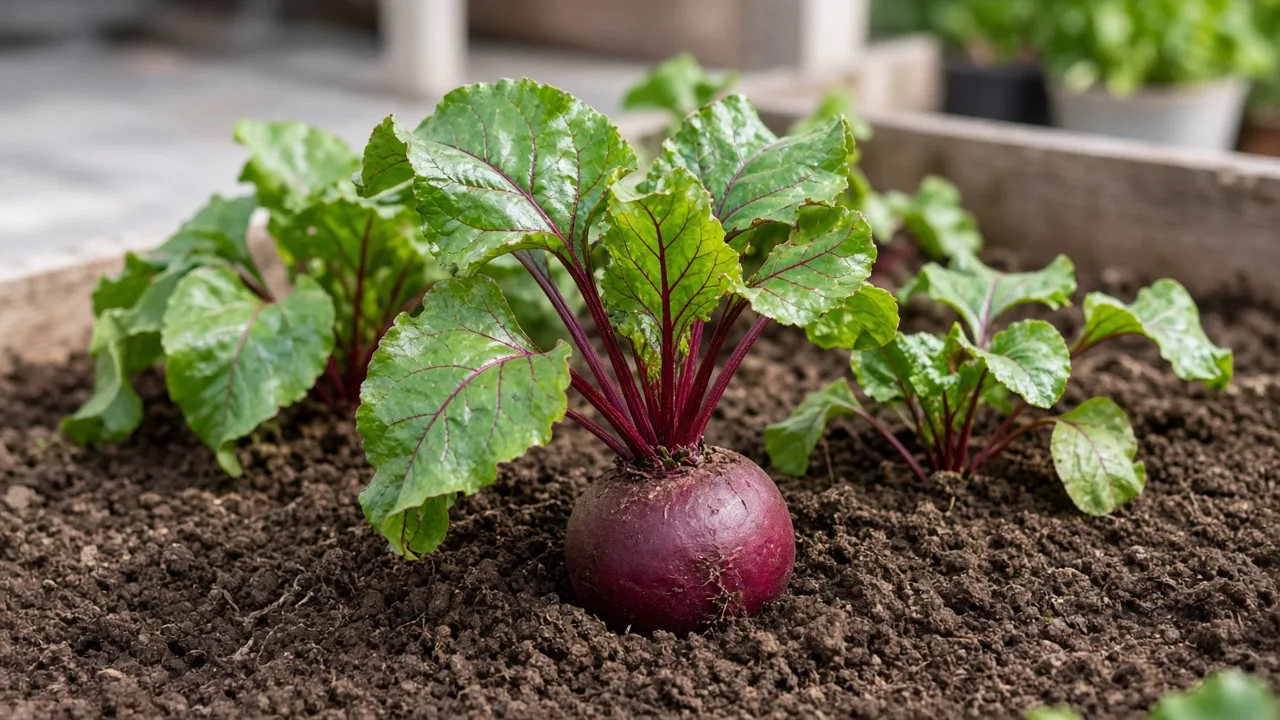
Beetroot (Beta vulgaris Garden Beet Group) is grown for the swollen root under a rosette of edible greens, yet most fertilizer mistakes show up in the leaves first. A dark, vigorous canopy above a pencil-thin or forked chukandar usually means nitrogen arrived too early, too strong, or on top of fresh manure — not that the crop is starving. Sweet, tender roots need even moisture and steady, modest nutrition timed to cool active growth, as outlined in the Beetroot overview.
Start with what is already in the bed or container. Mature compost worked into loose, stone-free soil — the foundation in the Beetroot soil guide — releases nitrogen slowly and improves moisture retention. Bottled fertilizer should close a gap you can see: pale seedlings after thinning, exhausted reused potting mix, or a lean sandy bed — not a reflex every week.
Why beetroot feeding is root-crop logic, not spinach logic
Spinach, fenugreek, and other leaf harvests reward steady nitrogen because the goal is foliage. Beetroot finishes on root size, smooth skin, and flavor, not leaf volume. Extension guidance for root vegetables repeatedly warns that pushing fertility too hard shifts growth upward.
Taproot crops need measured nitrogen
Nitrogen drives chlorophyll and top growth, which matters while seedlings are small. Once plants should be sending energy into the taproot, extra high-nitrogen feeds rarely improve harvest quality. Phosphorus supports early establishment; potassium helps overall plant function as roots swell. The Beetroot overview ties straight roots to loose soil and even watering — fertilizer only helps when those basics are already in place.
How excess nitrogen changes chukandar shape
Heavy nitrogen — especially from fresh or hot manure — often produces lush tops, forked roots, and delayed bulbing. Virginia Cooperative Extension root-crop guidance notes that beets need balanced pre-plant fertility and a measured sidedress when plants are 4–6 inches tall, not continuous heavy feeding. NC State Extension describes garden beets as thriving in moist, rich, well-drained soil — “rich” does not mean unlimited soluble nitrogen on a weekly schedule.
Build fertility before you open a fertilizer bottle
Long before choosing an NPK ratio, improve the root zone. Fork or loosen soil 20–30 cm deep, remove stones, and blend mature compost into the top few inches so seed clusters land in a fine, moist seedbed. The RHS grow-your-own beetroot guidance recommends adding garden compost or well-rotted manure before sowing to improve drainage and enrich the soil.
Mature compost and well-rotted organic matter
Compost feeds soil biology, buffers moisture, and releases nitrogen gradually — benefits a strong liquid feed cannot replace. Many kitchen-garden beds perform well with compost incorporated one to two weeks before sowing, then little or no additional nitrogen if leaves stay healthy green after thinning. On terraces, use a light, free-draining mix with compost rather than dense garden soil that compacts in monsoon rains.
Fresh manure, forking, and rank tops
Fresh cow or poultry manure is high in available nitrogen and salts. Worked into a beet row at sowing, it encourages side roots and branching while tops run ahead of the root. If manure is your main organic input, compost it until crumbly and earthy-smelling, then mix it shallowly before planting. Never band fresh manure directly under the seed line.
Soil pH and tests for beetroot beds
Target pH roughly 6.0–7.5 for garden beets, matching the plant profile and extension ranges. Gardening Know How’s beet feeding guide stresses pH near 6.0–6.8 for efficient nutrient uptake. A soil test is the most reliable way to learn whether phosphorus or potassium are already high so you do not keep adding balanced 10-10-10 out of habit.
Macronutrients beets use through the season
Think in three macronutrients, but apply them across time, not at maximum strength on day one.
Nitrogen for leaves without a leaf explosion
Pale, yellowing leaves on an otherwise well-watered plant in full sun can indicate low nitrogen, especially in sandy beds leached by daily irrigation. Once tops are deep green and seedlings stand 10–15 cm tall after thinning, additional high-nitrogen feeds rarely improve the harvest. The RHS grow-your-own beetroot guidance suggests an organic high-nitrogen liquid fertiliser only if plants are not growing strongly and need a boost — a useful default for home growers: feed weakness you can see, not the calendar alone.
Phosphorus, potassium, and root fill
Phosphorus supports early growth; potassium helps as roots approach maturity. You do not need specialty “root booster” products — a modest sidedress of balanced fertilizer beside the row, watered in gently, is enough when compost alone runs thin. Virginia Tech recommends broadcasting 2 pounds of 10-10-10 per 100 square feet before planting and sidedressing with 1 pound of 10-10-10 per 100 square feet four to six weeks after sowing or when plants are 4–6 inches tall — rates you can scale down for a 1 m² terrace box by proportion.
Boron and micronutrient cautions
Boron deficiency can cause internal black spotting in beet roots in some soils. Gardening Know How notes boron corrections only when a soil test indicates need — excess boron harms other crops. Most home gardeners in compost-rich beds never need borax; test before treating.
Read the NPK label and extension rates
The three numbers on a bag describe percentages of nitrogen, phosphate, and potash in that product, not what your soil already holds. A 10-10-10 and a 5-5-5 are both “balanced,” but the first is twice as concentrated; dose must follow the label and your bed area.
Pre-plant broadcast for garden beets
Two weeks before sowing, spread mature compost or a measured granular vegetable fertilizer across the bed and rake it into the top 8–10 cm. Keep concentrated product away from where seeds will sit. In-ground growers can follow Virginia Tech’s broadcast approach; container growers should use less total product because the volume of mix is small.
Sidedressing after seedlings are established
Wait until beets have true leaves and you have thinned to one strong plant per station — usually when tops are a few inches tall. Scatter granular fertilizer beside the row, not on the crown, and water in. One light sidedress mid-season is enough for many beds; a second is optional only if leaves pale and growth is clearly slow in cool weather. Do not sidedress during germination; salts can stall tender seedlings.
Organic liquids, granules, and slow-release options
Fish emulsion, seaweed extracts, and compost tea release nutrients gradually and demand half-strength dilution on young seedlings. Slow-release vegetable granules mixed into the top 5 cm at planting suit busy growers, but read whether your potting mix already includes fertilizer — doubling up is a common container mistake. Synthetic soluble feeds act faster but raise salt risk; pair them with consistent moisture from the Beetroot watering guide.
When to fertilize from sowing to harvest
Align feeding with cool active growth, not waterlogged soil or heat-stalled roots.
Pre-plant incorporation in beds
Incorporate compost or granular feed before sowing, not on germinating seed clusters. Gardening Know How suggests broadcasting about three weeks before planting when using granular products — the same “feed the soil first” principle as compost incorporation.
Feeding after thinning in rows and wide beds
Beet “seeds” are often corky clusters; thinning is mandatory for round roots. After snipping extras and leaving roughly 10 cm spacing (or as your cultivar label recommends), watch leaf color for two weeks. If growth is steady and green, skip extra nitrogen. If plants look pale despite good light and moisture, apply one diluted liquid feed or a light granular sidedress, then wait.
Terrace containers and reused potting mix
Deep pots at least 40 cm wide, filled with peat-free multi-purpose compost as the RHS advises, dry and leach faster than in-ground rows. After monsoon weeks of daily rain, a pale canopy may reflect nutrients washed out, not true nitrogen hunger. When soil drains and plants are actively growing in cool weather, a diluted balanced liquid feed once can help — but fix waterlogging first. Reused mix from a previous tomato or cucumber crop may already be rich; favor compost top-ups over another high-nitrogen program.
Warning signs of over- and under-feeding
Over-feeding shows as crusty fertilizer on the soil surface, leaf tip burn, exceptionally dark tops with thin or slow-swelling roots, or sudden splitting when irrigation follows a heavy dose. The RHS grow-your-own beetroot guidance also links excessive watering to leafy growth at the expense of roots — another reason rank tops may be a culture problem, not only fertilizer. Pause all feeds, confirm drainage, and resume only at lower strength if new growth pales after several weeks of normal watering.
Under-feeding on depleted sand or old potting mix appears as overall yellowing, stalled seedlings after thinning, or roots that never reach expected size despite good light and moisture. Compost incorporation or one measured sidedress usually corrects it; chronic pale leaves on alkaline clay may need a soil test before piling on nitrogen.
Growing beetroot in India and similar climates
Sow chukandar in the cool window when nights are mild — often October–November or late winter into early spring on many plains, depending on your city. Heat stalls root fill; extra nitrogen cannot fix a crop baking on a west-facing terrace in May. Where afternoons are intense, light shade on containers pairs better with moderate feeding than brute-force fertilizer.
Heavy monsoon rain leaches soluble nutrients from raised beds and pots. Favor compost structure and occasional measured feeds after soil drains rather than a large pre-season nitrogen load that washes away and still leaves tops rank. Successional sowings every few weeks, as described in Beetroot propagation, let you feed each cohort only while it is actively growing in mild weather.
When to use this page vs other Beetroot guides
Use this page when you are choosing what to feed, how much, and when after soil is prepared. For seedbed texture, pH, and mix recipes, start with the Beetroot soil guide. For how often to irrigate so fertilizer does not burn roots, see Beetroot watering. Sowing depth, spacing, and thinning mechanics live in Beetroot propagation and the overview; repotting is rarely relevant because beets are direct-sown.
Related Beetroot guides
- Beetroot overview — full-season habits, cultivar notes, and harvest timing
- Beetroot soil — loose, stone-free mixes for round roots
- Beetroot watering — moisture checks that make fertilizer safe
- Beetroot light — sun and heat limits that affect root fill
- Beetroot propagation — direct sowing, thinning, and successional crops
Conclusion
Beetroot fertilizer is less about chasing high NPK numbers and more about restraint timed to root growth. Build fertility with mature compost before sowing, use balanced or modest feeds only while plants are actively growing in cool weather, and stop when tops look dark green but roots lag. Extension rate examples, soil tests, and your own leaf color beat any generic “feed every week” calendar — especially in containers where salts do not disappear on their own.