Beetroot Light Needs: Full Sun Hours & Shade Limits
Beetroot Light Needs: Full Sun Hours & Shade Limits
Beetroot Light Needs: Full Sun Hours & Shade Limits
Beetroot (Beta vulgaris Garden Beet Group) — chukandar in many Indian kitchens — is judged underground. The low rosette of leaves you see is the plant’s only way to fuel a swelling taproot. Without enough direct sun through the cool growing window, roots stay small, slow, or woody even when watering and soil look fine. Beetroot is a cool-season root crop, not a shade-loving leafy herb; it wants open sky for most of the day when temperatures cooperate.
Start with the Beetroot overview for sowing clusters, thinning, and harvest size. This page covers how much sun beetroot needs, where to place beds and deep pots, when brief afternoon shade helps containers in heat, and the first fixes when foliage runs ahead of the bulb.
Beetroot light needs: the quick answer
Plan for at least six hours of direct sun on the beet row or container each day while roots are actively swelling. NC State Extension lists garden beets as full sun (six or more hours of direct sunlight daily) and notes they also grow in partial shade, though plants in shade take longer to reach harvestable size. Epic Gardening summarizes the trade-off plainly: full sun promotes healthy roots and greens, while partial shade may yield smaller roots.
On an open terrace, that usually means the brightest unobstructed strip, not a courtyard that only catches a midday slice. Measure light before you direct-sow; beets resent root disturbance, so you cannot easily move a struggling row mid-season. See propagation for sow-in-place timing.
Six or more hours of direct sun for harvest speed
Full sun means unobstructed light long enough for a sharp hand shadow on soil from mid-morning through afternoon. Six hours is a workable minimum for round cultivars in the 50–60 day window on the plant hub. Eight or more hours on a clear cool-season day supports faster root fill when moisture stays even. Align your brightest weeks with mild nights so light becomes fuel instead of heat stress.
Partial shade as a slower path, not a failure
Partial shade — direct sun only part of the day, in extension terms about two to six hours (NC State Extension) — can still produce edible beets. Expect longer days to golf-ball size and smaller average roots. Epic Gardening notes you can grow beets for greens in shadier spots because leaf production matters more than bulb size there. Do not expect competition-sized roots from a permanently dim balcony unless you harvest young.
Why light drives beetroot root size
Beets store sugars and pigments in the taproot built weeks after germination. Leaves convert light into carbohydrates that move downward when temperatures stay in the cool growth band and moisture stays steady. Hot, bright weather without enough water pushes stress responses — including bolting — that make roots less useful, even when sun hours are high.
Low rosette leaves are the only solar panels
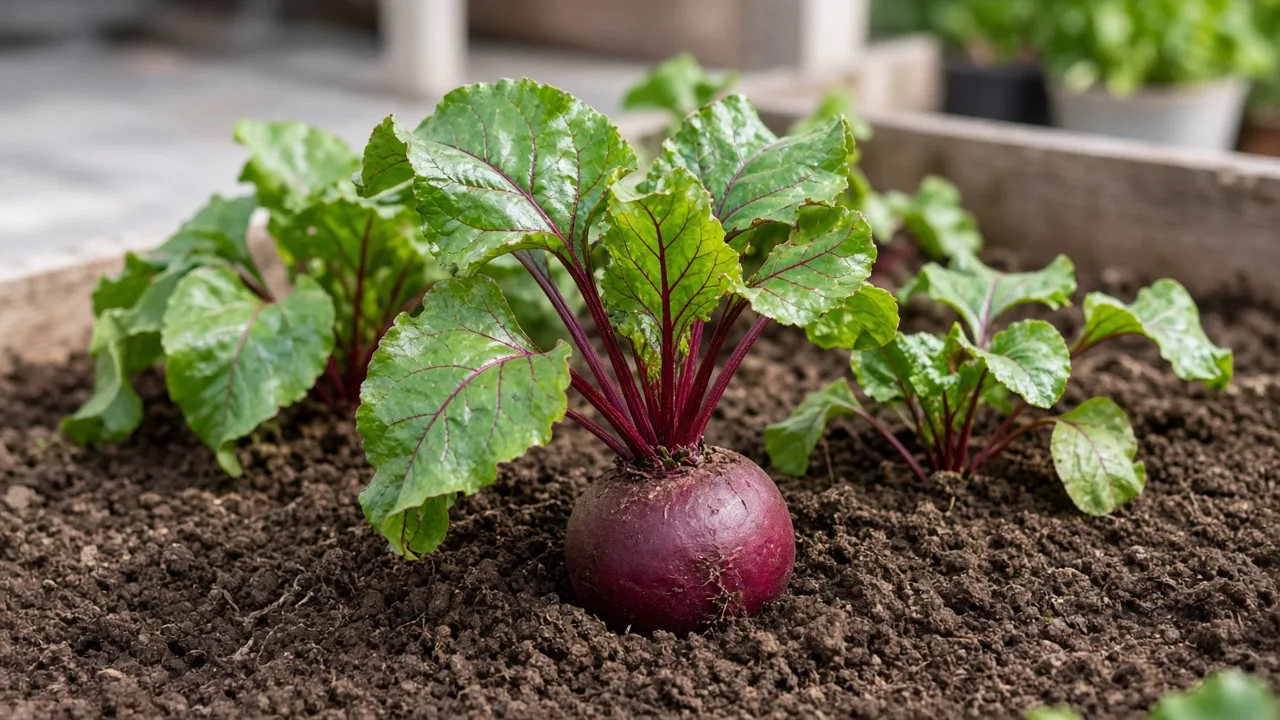
Unlike vining crops with tall canopies, beetroot keeps collectors close to the soil. Shaded plants often push taller, paler tops while underground growth slows — a pattern growers mistake for excess nitrogen alone. Heavy nitrogen in fertilizer can worsen leafy tops, but dim sites produce the same silhouette: plenty of foliage, disappointing roots.
Cool-season timing changes how sun feels to the crop
RHS advises a sunny site with fertile, well-drained soil and describes sowing into warming ground in spring. That combination works in cool UK springs, not automatically in blazing pre-monsoon afternoons on the plains. Treat season and sun as one decision: sow in the cool window when long sun hours help roots fill, and manage container heat when radiation outpaces the plant’s comfort zone.
How much sun beetroot needs each day
Full sun versus partial shade in extension terms
NC State Extension places beets in full sun to partial shade with consistent moisture for a good crop. Full sun is the default for sweetest, fastest roots; partial shade is tolerance language, not an equal outcome. If your site fails a clear-day shadow test, choose baby-beet spacing and early harvest rather than waiting for tennis-ball roots.
Shade-grown beets and baby-leaf harvests
In light-challenged spots, sow thicker, thin aggressively per pruning, and pull roots young. You may harvest tender baby beets while tops are still catching limited light. For standard round cultivars meant for 4–7 cm roots, fix placement on the next sowing instead of hoping a shaded row catches up.
Best placement on beds, terraces, and balconies
The morning–noon–afternoon shadow test
On a clear day, check three times: Does sun hit the sowing row at 9 a.m.? Is midday light blocked by parapets, water tanks, or tree branches? Does late-afternoon sun still reach the bed? Beet foliage is low; a wall that shades only the afternoon can still cut daily totals below six hours. Raised beds on rooftops often outperform ground courtyards because they sit above rim shadows — pair brightness with stone-free depth in soil.
Rim walls, tanks, and low foliage
Terrace layouts hide light from the crop’s height, not yours. Walk the perimeter at seedling height or lay a board where leaves will spread. RHS recommends sowing beetroot in a large container at least 40 cm wide in a sunny spot for round roots — the same sun rules apply whether the crop sits in ground or peat-free compost.
Seasonal light strategy for India and tropical growers
Rabi and cool-month sowings in open sun
In hot lowlands, the best light strategy is often when you sow, not how you shade. Rabi sowings (October–November) and cool hill or winter terrace crops catch bright, mild days that match beet biology. Give those plantings all the sun the bed offers — cool air makes long sun hours an asset. Avoid peak-summer sowings where heat stalls root filling even under strong light; the hub’s grower notes target cool months when nights stay mild to limit bolting.
Afternoon shade on hot containers only
For container beetroot during warm spells, moving pots to afternoon shade can reduce soil heat when full sun on dark tile becomes stressful. That is heat management, not permission to grow in shade all season. Return pots to the brightest morning-to-midday exposure once weather cools. Shallow trays on hot surfaces need relief more than in-ground rows, but a shaded pot all summer still yields small roots.
Light for deep containers on rooftops
Match pot depth and width to cultivar on the hub: at least 40 cm wide and deep for round types, with plants spaced about 10 cm apart. Bright sun on a shallow pot heats soil faster than a deep bed, which changes watering more than light — but a deep pot in shade still fails. Place containers where they receive the longest uninterrupted sun arc you can manage. Beets are direct-sown in final position; see repotting for why mature plants should not be moved to chase light.
Grow lights for short seedling bridges
Beetroot is a poor long-term houseplant. Indoors works briefly for germination and early growth if you lack a bright veranda: a sunny window plus even moisture, or full-spectrum LEDs on a 12–14 hour timer while nights outdoors are still cool. Move to outdoor full sun as soon as temperatures allow; mature taproots need greenhouse-level light most rooms cannot supply. For indoor experiments, choose round or mini cultivars and harvest young.
Warning signs of too little light
Watch for pale, taller-than-usual tops, slow root swell after 50+ days, and rows that stay lush but undersized at harvest. Leggy foliage with deep green color can also trace to excess nitrogen — but if your site fails the shadow test, fix placement on the next sowing before escalating feed. Beets cannot be dug and replanted sunward without forked or stunted roots.
Warning signs of too much sun or heat stress
Bolting — a tall flower stalk — after heat waves points to temperature and day-length stress compounded by bright weather, not a need for permanent shade. Wilting at midday on dry soil is a watering signal on sunny terraces. Bleached or crisp leaf edges on young seedlings mean harden off gradually from nursery shade to open sun. Mature cool-season plantings in their proper window rarely sunburn leaves; they stop filling or bolt when heat wins.
Light, watering, and soil working together
Sun drives transpiration. A full-sun container in warm weather may need daily moisture checks while a shaded pot dries slowly yet still yields poor roots. Loose, stone-free soil lets roots descend quickly while tops capture light; compaction wastes a sunny site. Thin on schedule so each plant’s leaves get light without overcrowding neighbors at the soil line — crowded canopies shade each other even on bright terraces.
When to use this page vs other Beetroot guides
- Beetroot overview — identity, cool-season calendar, cultivar choice, and harvest basics before you tune light.
- Beetroot watering — even moisture at germination and steady depth checks when full sun dries containers faster.
- Beetroot soil — loose mixes and pH; poor roots in shade can mimic rocky soil symptoms.
- Beetroot fertilizer — balanced feeding after you confirm the bed is bright enough.
- Beetroot propagation — direct sow dates into the sunniest final bed or pot.
- Beetroot repotting — why beets stay put after sowing and how depth interacts with light-heated pots.
- Beetroot pruning — thinning so foliage does not shade neighbors at the soil line.
Related Beetroot guides
- Beetroot overview — chukandar growing framework for beds and deep containers
- Beetroot watering — even moisture when bright sun pulls water from shallow mix
- Beetroot soil — stone-free depth so sun-fed tops can fill round roots
- Beetroot propagation — sow in place in the brightest spot you have
- Beetroot fertilizer — feed lightly once light and moisture support growth
Conclusion
Beetroot rewards cool weather plus long, direct sun on an immovable sowing site. Aim for six or more hours of unobstructed light during the growing window, run the morning–noon–afternoon shadow test before you sow, and use brief afternoon shade on hot containers only as heat relief — not as a full-time location. Read lush tops with small roots as a placement problem on the next batch if this row was too dim. When foliage stays compact and roots size steadily toward golf-ball harvest, your light and season match Beta vulgaris biology; when growth stalls or plants bolt in heat, chase timing and temperature before you blame the sun alone.