Beetroot Repotting Guide: Containers, Thinning & Timing
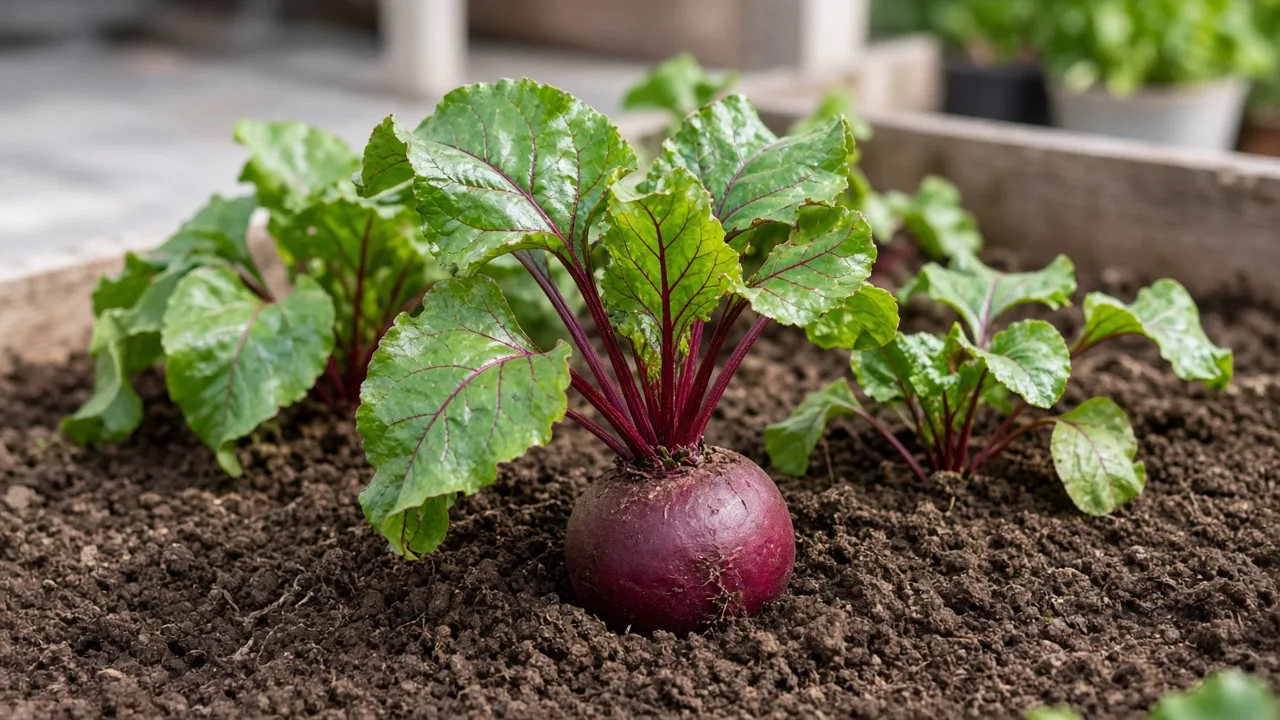
Beetroot Repotting Guide: Containers, Thinning & Timing
Beetroot Repotting Guide: Containers, Thinning & Timing
If you searched for beetroot repotting after lifting crowded seedlings into a bigger pot, you are already close to the real rule for Beta vulgaris Garden Beet Group: the swollen root is the crop, and every unnecessary move costs days you do not have in a 50–60 day cool-season clock. NC State Extension notes that direct sowing is preferable when possible because transplanting can disturb root development—yet beets also tolerate careful moves from modules when seedlings are still small, unlike many taproot crops rated harder to shift.
This guide reframes repotting for chukandar as choosing the final container at sowing, thinning in place, and replacing mix between crops—not stepping plants up mid-season the way you would a pothos. You will see when a terrace setup truly needs fixing, how deep pots should be, and how India’s cool sowing window fits container culture.
Beetroot repotting: the quick answer
Routine mid-season upsizing is not part of beetroot care. Plan the final pot or bed before seeds go in, keep drainage open, and when the harvest ends empty, clean, and refill the container for the next sowing rather than disturbing swelling roots. The RHS beetroot grow guide recommends outdoor containers at least 40 cm (16 in) wide and deep for direct sowing, filled with peat-free multi-purpose compost, using round-rooted cultivars rather than long cylindrical types.
If seedlings are overcrowded, thin by snipping weak stems at soil level instead of transplanting established plants. Need more roots? Succession-sow a second pot every few weeks in your cool window. Module or plug transplants are the exception: slide the whole root ball into the final container with minimal disturbance while plants are still small, as the RHS planting section describes for modular seedlings.
Why beetroot is not on a houseplant repotting schedule
Houseplant repotting assumes a perennial that recovers for months. Beetroot is an annual root crop harvested young—often from golf-ball to cricket-ball size—so a week of wilt after a rough move can erase the crop. Containers also dry faster than in-ground beds, which changes the problem: you are usually managing mix volume and moisture, not “root bound” houseplant roots circling for years.
Taproot habit and transplant flexibility
Beets form a swelling taproot, but UF/IFAS Extension’s vegetable guide classifies beets as transplant ability rating I—they move well if set out small—whereas carrots and similar crops are far less forgiving. A UF/IFAS Leon County blog on direct seeding vs transplanting explains that beet “seed” is a dried fruit holding several embryos, which is why clusters need thinning. That biology matters more than generic “never move root vegetables” advice copied from carrot pages.
Still, NC State Extension prefers direct sowing when you can, and warns that transplanting can disturb roots—so treat plug moves as a timed exception, not the default path.
Signs the container—not the seedling—needs attention
Repotting language still helps when the vessel or mix is wrong, even if individual plants should stay put.
- Mix dries out before noon on a warm terrace—often too little volume or collapsed structure; pair container fixes with the Beetroot watering guide.
- Water runs down the sides without wetting the root zone, common when peat-free mix shrank away from the rim.
- Drainage is blocked or missing, leaving sour-smelling mix while tops wilt.
- Crowded overlapping leaves with stunted roots usually mean density, not a need for a bigger pot—thinning solves this more often than lifting plants.
- Shallow decorative planters stall round roots early even when foliage looks lush; depth was wrong at sowing.
If poor drainage and wilting appear together, fix the container before assuming fertilizer deficiency.
Choose the final pot before you sow
Depth, width, and spacing for terrace chukandar
Match the pot to mature root shape on the seed packet. The RHS advises a container at least 40 cm wide and deep for outdoor sowing, with round cultivars for pots. NC State Extension gives a smaller minimum for containers—about 2 quarts volume and 8 inches (20 cm) depth—which can work for baby harvests or very round types, but Indian terrace heat often punishes small volumes that dry twice daily.
Horizontally, plan to finish at roughly 10 cm (4 in) between plants if you want larger roots, or leave tighter groups only if you harvest young golf-ball sizes. Savvy Gardening’s container beet guide suggests sowing about 1.3 cm (½ in) deep and thinning as clusters germinate, then again as roots crowd.
Drainage holes and usable mix volume
Use multiple drainage holes and empty saucers after watering so roots are not sitting in runoff. On hot balconies, a 40 cm planter holds moisture longer than a shallow window box and reduces the “repot for more soil” impulse mid-crop. Fill with the loose, stone-free blend from the Beetroot soil guide—quality potting mix plus mature compost and grit—not heavy garden clay that compacts in pots.
Direct sowing vs module transplants
The dependable path is sow in the final container once soil is workable and temperatures suit germination. The RHS suggests outdoor sowing when soil reaches at least 7°C (45°F), with bolt-resistant varieties and fleece if sowing very early. In warm Indian lowlands, that usually means the cooler sowing months—often autumn through winter in the north and winter into early spring on many terraces—rather than peak summer heat that pushes bolting.
Seed clusters and why one “seed” becomes several seedlings
Each corky beet seed cluster can produce several seedlings. If you want larger roots, thin to one strong plant per station once seedlings are about 2.5 cm (1 in) tall, spacing survivors about 10 cm apart, as the RHS thinning section describes. Eat the thinnings in salads rather than pulling them, which disturbs neighbours’ roots.
Moving plug plants without splitting the clump
For an earlier harvest, start modules indoors and transplant without splitting multi-seed clumps if you sowed several per cell—the RHS shows planting whole clusters 15 cm apart for baby-beet groups. Transfer each module straight into the container, firm gently, and water well. Savvy Gardening notes transplanted beets can mature two to three weeks ahead of direct-sown pots when handled carefully, but only if seedlings were thinned to one beet per cell before the move.
Best season to set up or refresh a beet pot in India
Set up or scrub pots at the start of your local cool sowing window, not during a heat wave when disturbed roots recover slowly. Align light with season: full sun in cool months supports the fastest roots; see the Beetroot light page when shifting containers to afternoon shade during warm spells. Stagger sowings every few weeks for continuous harvest—the RHS succession guidance applies on balconies as multiple pots, not one endlessly upsized planter.
How to refresh a container between harvests
Between crops, full mix replacement is the closest analogue to “repotting” beets. Empty the planter, brush away old roots, wash with mild soap, rinse, and dry. Refill with fresh, free-draining blend before the next sowing. Savvy Gardening recommends refreshing nutrients in reused mix by incorporating balanced compost rather than planting again in depleted, collapsed medium.
Do not reuse compacted, stone-filled mix—forked roots often trace back to obstacles and old root channels, not just “small pots.” Check feeding plans on the Beetroot fertilizer page before loading extra nitrogen into a refreshed pot; lush tops with small roots often trace to fertility imbalance rather than pot size alone.
Thinning is spacing work, not repotting
When tops overlap, snip extras at soil level instead of transplanting survivors. The RHS notes you may skip aggressive thinning only if you harvest every root at small golf-ball size; for tennis-ball or cricket-ball harvests, thinning to 10 cm is worthwhile. If the pot is still too dense after thinning, harvest baby beets early or sow a second container on a staggered schedule rather than moving established plants.
Aftercare when you had to move young beets
If you planted a whole plug—perhaps rescuing module-grown seedlings—water immediately with room-temperature water, firm mix gently without burying the crown, and shelter plants from harsh midday sun for several days. Hold fertilizer until new growth looks steady. Expect some delay in root swelling; if the season is short or heat is rising, a fresh direct sowing in a refreshed pot may outperform nursing stressed plants.
Common terrace mistakes that look like repotting problems
Starting in tiny cups “to repot later” lets roots circle before you move them, even though beets tolerate transplants better than carrots. Pulling thinnings to open space disturbs the seedlings you meant to keep. Upsizing during peak heat pairs disturbed roots with fast-drying foliage. Sowing long cylindrical cultivars in shallow planters then blaming fertilizer—cultivar and depth were wrong from day one. Decorative outer pots without holes trap water; use them as cachepots only.
When not to move or upsize beetroot
Skip disturbance when roots are near harvest size—loosen and lift instead of repotting. Avoid moves during active heat stress when containers already need twice-daily checks. Do not transplant overcrowded, leggy trays that should have been thinned weeks ago; sow anew in fresh mix. If you only want a prettier outer pot, slide the entire intact inner planter into a cachepot without touching roots.
When to use this page vs other Beetroot guides
Use this page when the question is container choice, mix refresh between crops, overcrowding, module transplant limits, or post-move wilting—not daily watering or feeding. Use Beetroot watering for moisture checks and seasonal adjustments. Use Beetroot soil for mix ratios, pH, and bed preparation. Use Beetroot light for sun, shade, and bolting pressure. Use Beetroot propagation for seed priming, sowing depth, and succession detail. Start at the Beetroot overview if you have not yet matched cultivar to container depth.
Related Beetroot guides
- Beetroot overview — identity, harvest timing, and cool-season fit
- Beetroot watering — even moisture for tender roots
- Beetroot soil — loose, stone-free mixes for beds and pots
- Beetroot light — full sun on terraces and heat management
- Beetroot fertilizer — balanced feeding without leafy excess
- Beetroot propagation — direct sowing, clusters, and succession
Conclusion
Beetroot repotting is container planning, thinning, and soil renewal for a short-lived root crop—not periodic upsizing of a perennial houseplant. Choose a deep enough pot for your cultivar before you sow, direct-seed into that final mix when possible, and refresh the entire container between harvests. Thin by cutting, succession-sow for continuous chukandar, and treat module transplants as a small-seedling, whole-plug exception with realistic odds of delay if roots were disturbed. That approach matches how Beta vulgaris actually grows on Indian terraces and keeps roots tender without the wilt-and-stall cycle that follows mid-season moves.