Beetroot Soil Guide: Mix, pH and Drainage
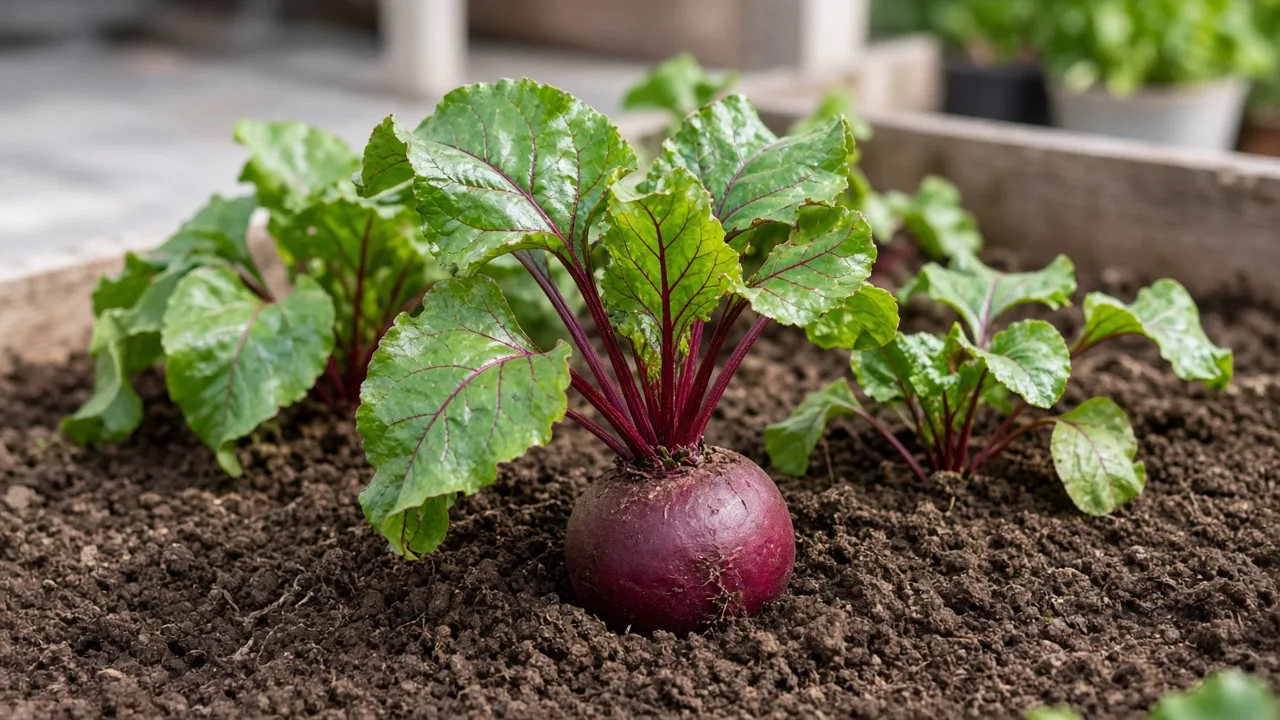
Beetroot Soil Guide: Mix, pH and Drainage
Beetroot Soil Guide: Mix, pH and Drainage
Beetroot (Beta vulgaris Garden Beet Group) is grown for a swelling taproot, not for a permanent leafy houseplant in a moisture-holding pot. The soil you prepare before sowing sets the shape, texture, and size of every chukandar you pull. Unlike many ornamentals you can repot and rescue, beets are almost always direct-sown into the bed or container they will finish in—so drainage, stones, and nitrogen in that root zone matter for the whole crop.
This guide covers texture, pH, compost and manure rules, container depth, and the early warning signs that your mix is working against you. For sowing timing and moisture through germination, pair this page with the Beetroot overview and Beetroot watering guide.
Why beetroot soil is not houseplant potting mix
Bagged indoor potting soil is engineered to stay moist around fibrous roots in small pots. Beetroot needs the opposite in the root zone: fertile, organic-rich soil that drains well yet holds steady moisture between waterings. NC State Extension describes garden beets as thriving in moist, rich, well-drained soil with high organic matter and good drainage—moist, not waterlogged.
On a terrace, dumping pure multipurpose compost into a shallow pot often gives lush leaves and disappointing roots. You want a loose runway for the taproot to expand, with enough compost to feed steady growth without turning the profile into a nitrogen-heavy sponge.
Taproot swelling needs loose, stone-free depth
The edible beet is an enlarged taproot. When the tip meets compaction, gravel, or a sudden wet anaerobic layer, it may branch or stall—producing forked, rough, or small roots that are still edible but harder to peel. Epic Gardening’s beet guide recommends loamy, well-draining soil, picking rocks, and blending compost into hard clay so roots are not slowed.
Beets are more forgiving of moderately heavy loam than long carrots, but stones and fresh manure in the root zone still show up as misshapen harvests. Fine hairlike lateral roots extend from the main root; Epic Gardening warns that heavy cultivation can disturb those feeders—another reason to prep the bed once, then thin and weed gently.
Direct sow means prep happens once
Beet “seeds” are corky clusters that often produce several seedlings; you sow, then thin. Disturbing established roots by transplanting mature plants usually sets growth back. Soil preparation is therefore the highest-leverage step in the Beetroot propagation workflow—there is no reliable “fix the mix later” escape hatch like moving a houseplant to better soil mid-season.
If you start modules indoors, move seedlings to their final mix while still small, as the RHS beetroot guide outlines for hardened-off plants. The final container or row should already match the texture and fertility described below.
Ideal texture and drainage for Beta vulgaris
Loamy, well-drained soil with high organic content is the shorthand extension services repeat. For home growers, translate that into two field tests before sowing: a crumble test for tilth and a soak test for drainage.
Loam, sand, and the crumble test
Target a sandy loam to loam feel: crumbs that break apart when squeezed, not a slick ribbon that smears when wet. UF/IFAS Gardening Solutions notes that beets prefer well-drained soil with high organic content. Sandier profiles can work well for beet development when they are nutrient-dense—compost supplies structure and slow fertility rather than raw sand alone drying out in a day.
The RHS advises a sunny site with fertile soil that drains well and does not become waterlogged, with plenty of organic matter such as garden compost or well-rotted manure worked in to improve drainage and enrich the soil. That combination—open pores plus organic matter—is what keeps roots tender without constant flood.
Crust test: If your native soil seals into a hard cap after rain or overhead watering, incorporate fine mature compost and avoid walking on prepared rows. Crusting makes emergence from beet seed clusters harder and stresses seedlings; gentle watering helps, but the seedbed texture still has to be right.
Depth, stones, and forked roots
Work garden soil at least 20–25 cm deep before sowing, removing stones, clods, and old root debris as you go. Round and globe cultivars need less depth than long cylindrical types, but shallow preparation still produces stunted shoulders when the taproot hits a pan.
Match container depth to cultivar habit: the RHS recommends pots at least 40 cm (16 in) wide and deep for container beets, with round-rooted varieties rather than long types. Drainage holes must stay open; a rich mix with no exit path rots roots during monsoon spells on Indian balconies.
pH range and soil testing
Beetroot tolerates a moderately wide pH band. The LeafyPixels plant profile targets pH 6.0–7.5 (neutral to slightly alkaline). NC State lists neutral soil pH of 6.0–8.0 for garden beets. Epic Gardening cites 6.0–7.5 as optimal, from slightly acidic to slightly alkaline.
Slightly acid to slightly alkaline targets
Most kitchen gardens on neutral to mildly alkaline loam should prioritize texture and manure discipline over chasing a decimal on pH. If leaves show chronic deficiency patterns or growth stalls on otherwise loose soil, a simple soil test beats guessing with lime or sulphur.
Do not confuse beetroot’s earthy flavor with soil acidity. A plant in compacted, saturated ground will not be rescued by minor pH tweaks. Fix drainage and tilth first, then adjust pH only from a measured result—especially before cool-season sowings when germination depends on workable, aerated soil.
Organic matter: compost, manure, and nitrogen balance
Organic matter feeds soil biology and buffers moisture. For beets, what you add matters as much as how much.
Why fresh manure ruins beets
Fresh manure is high in nitrogen and salts. It encourages lush tops at the expense of swollen roots and commonly contributes to forking when concentrated in the sowing row. The plant-detail hub for beetroot warns that too much nitrogen or fresh manure pushes leafy growth and can encourage forking—aligning with Epic Gardening’s note that excess nitrogen spurs leafy greens without developing the storage root.
Well-rotted manure mixed through the bed months ahead is different from fresh droppings where seeds will sit. When in doubt, use mature compost for structure and plan gentle feeding via the Beetroot fertilizer guide instead of a nitrogen-heavy seedbed.
Phosphorus and gentle potassium at planting
Beets benefit from phosphorus for root initiation and germination. Epic Gardening highlights phosphorus-rich amendments such as bone meal or soft rock phosphate when tests show need—not blanket high-nitrogen feeds at sowing.
Potassium supports general plant health; small amounts of clean wood ash can raise potassium on acid soils, but Epic Gardening cautions against ash when pH is already above about 6.5 because ash can push alkalinity quickly. Detailed rates belong on the fertilizer page; on soil day, think structure first, balanced fertility second.
Rare boron deficiency can cause “black heart” with woody internal spots. Epic Gardening links this to low boron and suggests compost and careful amendment before planting—not random borax without a test. Most home gardeners fix black heart by improving overall organic matter and even moisture rather than chasing micronutrients blindly.
DIY bed recipes and bagged mixes
You do not need a specialty “beet soil” bag. You need uniform structure to full depth.
Raised beds on clay in India
Heavy clay is common in many Indian kitchen gardens. Beets can grow there if the root zone sits in amended, raised soil above a compacted pan—not in raw, smeared clay rows. Build raised beds or mounded rows 20–25 cm above grade, mix in mature compost, and ensure water has somewhere to go during monsoon downpours.
A practical bed blend aligned with the beetroot hub:
- 50% screened loam or quality garden soil
- 30% mature compost or leaf mold
- 20% coarse sand, perlite, or fine horticultural grit
Rework until the profile is uniform to sowing depth—do not sand only the top 5 cm while leaving compacted clay below. On the RHS advice for heavy clay in early spring, warming the soil under cloches helps germination; in warm Indian lowlands, align sowing with cool nights in the overview rather than fighting baked crust in peak summer.
Container blends for terrace chukandar
For pots, use peat-free multipurpose compost loosened with grit, as the RHS suggests for container beets—not moisture-retentive houseplant mixes alone. A workable starting recipe:
- 50% quality potting mix or light garden loam
- 30% mature compost
- 20% coarse sand, perlite, or fine bark for aeration
Fill a container at least 40 cm wide and deep, space plants about 10 cm apart, and cover seed clusters about 2.5 cm deep as the RHS describes. Place pots where light is strong; weak light plus a soggy mix is a common terrace failure mode.
Store-bought vegetable or outdoor-container mixes are fine if fresh and free-draining. Pre-moisten blended components before filling; the finished mix should hold together briefly when squeezed, then crumble when touched.
Preparing the seedbed before sowing
Clear weeds and debris. Dig or fork to full depth, removing stones larger than your thumbnail. Spread mature compost (and lime only if a soil test required it) and mix evenly. Rake to a level surface without compacting into a brick. Water once lightly if the bed is dusty dry, then sow when soil temperature is workable—the RHS notes outdoor sowing once soil reaches at least about 7°C (45°F), while Epic Gardening cites 50°F (10°C) as a germination minimum.
Do not walk on prepared rows; compaction shows up as sudden forks exactly where your footprint stopped. If you practice no-dig, mulch with fine compost as the RHS describes, but the seed zone still must be loose at beet depth.
Warning signs your soil mix is wrong
Soil problems often appear as root shape and leaf-to-root balance, not always as yellow foliage.
| Symptom | Likely soil cause | First fix |
|---|---|---|
| Forked or rough roots | Stones, clods, fresh manure, compaction | Deepen and clean bed next crop |
| Lush tops, small roots | Excess nitrogen, fresh manure | Stop manure; review fertilizer |
| Woody or stalled roots | Drought-prone sand without compost, heat stress | Add compost; steady watering |
| Seedling damping off | Waterlogged, cold wet soil | Improve drainage; sow in cooler, workable window |
| Internal black woody spots | Possible boron deficiency | Test; improve compost and even moisture |
Persistently wet soil with a sour smell points toward poor aeration—common in sealed terrace pots during monsoon. If water runs down the pot edge while the centre stays dry, the mix may have shrunk and repelled water; break the crust gently and re-moisten evenly rather than flooding repeatedly.
When to use this page vs other Beetroot guides
Use this soil guide when you are building beds, filling pots, testing pH, or diagnosing forked and stunted roots. Use the Beetroot watering guide for moisture rhythm and split roots after drought. Use Beetroot light for sun hours, shade, and bolting risk in heat. Use Beetroot fertilizer after the seedbed is set—especially if tops explode but roots stay ping-pong sized. Use Beetroot propagation for sowing clusters and thinning, Beetroot repotting for why mature beets should not be moved, and Beetroot pruning for thinning greens without stealing the root’s energy.
Related Beetroot guides
- Beetroot overview — identity, cool-season timing, and cluster map
- Beetroot watering — even moisture and split-root prevention
- Beetroot light — sun and heat on root filling
- Beetroot fertilizer — phosphorus-focused feeding after soil prep
- Beetroot propagation — direct sow and seed spacing
- Beetroot repotting — container depth and transplant limits
- Beetroot pruning — thinning and harvest-ready tops
Conclusion
Great beetroot soil is straightforward: work it loose, keep it fertile with mature compost, drain it fast, remove stones, and avoid fresh nitrogen bombs. Aim for roughly pH 6.0–7.5, favor loamy, organic-rich structure, and give round cultivars at least 40 cm of depth in pots. Do that once before seed hits the ground, and the rest of the crop—water, light, thin snips—has a fair chance to produce tender chukandar worth pulling at golf-ball size.