Cucumber Care Guide: Light, Water, Soil and Support
Cucumis sativus
Grow cucumbers in full sun with steady moisture, fertile well-drained soil, trellis support, and frequent harvest while fruit is still green.
Cucumber Care Guide: Light, Water, Soil and Support
Start with wateringThe most common care mistake for CucumberWatering guide → →Cucumber care essentials
Light
Water
Cucumbers have high water needs, so keep the root zone consistently moist but never saturated. Water deeply at the soil line rather than over the foliage, especially in humid or crowded plantings.
Soil
Rich, organic, moisture-retentive but well-drained loam or container mix. Aim for slightly acidic to neutral pH around 6.0–7.0.
Humidity
Temperature
Fertilizer
If leaves yellow while the root zone stays wet, fix drainage and watering before reaching for fertilizer.
About Cucumber
Cucumber is native to Himalaya to northern Thailand, typically reaches 20–45 cm tall at the crown and 90 cm to 2.4 m spread, depending on cultivar and support indoors, with rapid in warm weather when sun, moisture, and fertility are adequate growth. Cucumber has a annual climbing or spreading vine growth habit and part of the Cucurbitaceae family. It is also known as Kheera, Kakdi, Garden Cucumber, and Gherkin.
| Detail | Information |
|---|---|
| Also known as | Kheera, Kakdi, Garden Cucumber, Gherkin |
| Native region | Himalaya to northern Thailand |
| Mature size | 20–45 cm tall at the crown and 90 cm to 2.4 m spread, depending on cultivar and support |
| Growth rate | Rapid in warm weather when sun, moisture, and fertility are adequate |
| Growth habit | Annual Climbing Or Spreading Vine |
| Scientific name | Cucumis sativus |
| Family | Cucurbitaceae |
Cucumber Care Guide: Light, Water, Soil and Support
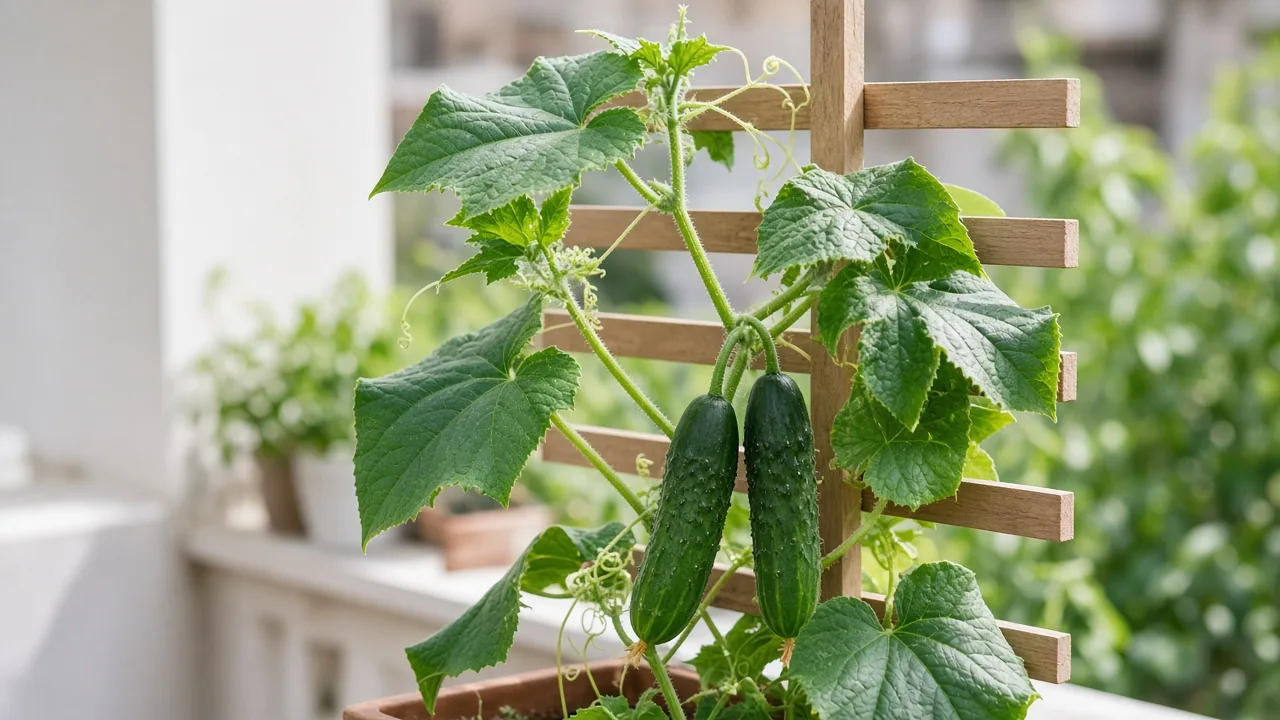
Cucumber (Cucumis sativus) is a fast-growing annual vine in the gourd family, grown for crisp green fruit eaten fresh or pickled. Unlike compact herbs or foliage houseplants, it sends out hairy stems with tendrils and large lobed leaves, so planning vertical space early matters as much as watering. In Indian kitchens the crop often appears as kheera or kakdi on seed packets and market stalls, but the same species rules apply whether you sow in a terrace pot or a kitchen-garden bed.
Cucumber care at a glance
Treat cucumber as a warm-season crop that wants full sun, fertile well-drained soil, and steady root-zone moisture without waterlogging. Install a trellis or net at planting so tendrils climb instead of sprawling across damp soil. Read the seed packet for days to harvest, fruit size, and whether the type needs bee pollination or is parthenocarpic (sets fruit without pollination in protected culture). Harvest young green fruit often; overripe cucumbers that turn yellow become seedy and tough. For any single lever—light depth, watering rhythm, mix recipes, feeding, transplant timing, or vine training—use the sibling guides linked below rather than guessing from generic “vegetable plant” advice.
What cucumber is and how it grows
Scientific identity and Indian names
Garden cucumber belongs to Cucurbitaceae, the same family as pumpkin, ridge gourd, and bottle gourd. UF/IFAS Gardening Solutions notes that cucumbers grow on vines with long, broad leaves and produce fruit on new growth through the season. Common retail names include garden cucumber, slicing cucumber, pickling or gherkin types for smaller fruit, and regional labels such as kheera and kakdi. Those names describe culinary use, not different species—always keep the cultivar name from the packet when comparing spacing or container size.
Vine habit, size, and annual life cycle
Cucumber is an annual: one warm season from seed (or transplant) to final harvest, then the vine is replaced. Stems climb with tendrils and can spread 90 cm to 2.4 m depending on cultivar and support. The RHS describes cucumbers as tender climbing or scrambling plants that crop heavily when warmth and moisture stay adequate. Left on the ground, vines act like a living groundcover; trained upward, they use far less floor space on a balcony—though trellised plants often dry out faster and need more frequent moisture checks.
Why cucumbers need warm weather
Temperature limits and frost sensitivity
Cucumber is a warm-season vegetable, not a cool-weather green like spinach or kale. UF/IFAS reports that cucumbers grow best around 80–85 °F (27–29 °C) with abundant sunlight, and that outdoor plants are very sensitive to temperatures below about 31 °F (0 °C). Cold, wet soil slows germination and invites seedling rot; heat with even moisture supports rapid leaf and fruit development. Unseasonable cool nights on a terrace can stall growth even when days feel warm.
Sowing windows for Indian plains and terraces
On most Indian plains, sow or transplant cucumber after the coolest nights have passed and soil stays warm—often late winter through spring for a main crop, with some growers attempting a second sowing after heavy monsoon rain eases where humidity and disease pressure can be managed. Hill and coastal microclimates differ, so local last-frost or night-temperature patterns matter more than a single national date. Protect young plants from waterlogging during unseasonable rain, and avoid sowing into cold, saturated mix in a shaded corner. If you are unsure whether soil has warmed, the Cucumber propagation guide covers direct sowing versus starting seedlings indoors.
Light needs in brief
Cucumbers want full sun—at least six hours of direct light daily, with many growers aiming higher for maximum fruit set. Epic Gardening notes that warm-season fruiting crops such as cucumber prefer six to ten hours of sun when possible. Deep shade produces weak vines, sparse flowers, and poor fruit. On a hot terrace, reflected heat from walls or paving can stress containers before vines wilt from drought, so pair strong light with steady moisture and good airflow.
For window orientation, grow-light options, and heat-stress signs, use the dedicated Cucumber light guide. This overview only establishes the rule: bright sun during the active warm season, not a dim indoor shelf.
Water and root-zone basics
Cucumbers have high water needs because large, thin leaves lose moisture quickly. UF/IFAS warns that cucumbers are sensitive to flooding yet require frequent watering; The RHS advises keeping soil or potting compost evenly moist, especially while fruit forms, and watering at the base to limit wet foliage that encourages mildew.
A practical rhythm is to check the upper 2–3 cm of mix or soil, then water deeply when the surface dries while lower layers still feel slightly cool and moist—not rock hard, not soggy. Trellised vines and small pots dry faster than sprawled plants on mulched ground. Many guides suggest roughly 1–2 inches (2.5–5 cm) of water per week from rain plus irrigation, adjusted upward in heat and wind Epic Gardening. Wilting from drought and wilting from saturated roots can look similar, so always verify moisture depth before adding more water. Full frequency charts and saucer habits live in the Cucumber watering guide.
Soil, fertility, and containers
Cucumbers thrive in rich, organic, moisture-retentive but well-drained soil. LeafyPixels hub data targets slightly acidic to neutral pH around 6.0–7.0, which matches typical vegetable-garden ranges. The RHS recommends digging in compost or well-rotted manure before planting, or mulching the surface in no-dig beds. Dense, airless mixes cause trouble even when fertilizer is generous: if leaves yellow while the root zone stays wet, fix drainage and watering before feeding harder.
UF/IFAS cautions that too much nitrogen can drive leafy growth at the expense of flowers and fruit, while phosphorus and potassium support flowering and fruiting—another reason to follow a balanced approach and read the Cucumber fertilizer guide once light and moisture are sound.
Container size versus cultivar labels
Extension minimums for cucurbits can sound tiny on paper, but a single slicing cucumber for steady harvest usually needs a large, stable pot—often 20 L or more—with a trellis anchored separately. The RHS lists 30 cm (1 ft) wide and deep containers as a technical minimum; bush or patio cultivars exist, yet most garden types still need room and support. Match the container to the packet’s mature spread and days to harvest, and refresh mix between seasons rather than reusing diseased cucurbit soil. Pot-up timing and root handling are covered in the Cucumber repotting guide.
Support, spacing, and airflow
Install stakes, netting, or a trellis at planting so you are not wrestling a mature vine later. The RHS explains that vertical training saves ground space, keeps fruit cleaner, and reduces slug access compared with vines on damp soil. Tie stems loosely at first if tendrils miss the support; outdoor growers often use bamboo wigwams, stout netting, or trellis panels on a sunny wall.
UF/IFAS suggests row spacing on the order of 2 feet between plants in field rows, with wider beds for irrigation—on a balcony, one well-supported vine per large container is usually wiser than crowding three plants into one pot. Good airflow between leaves helps limit powdery and downy mildews, which are common cucurbit issues in humid weather. Pruning and side-shoot management differ for greenhouse versus outdoor types; see the Cucumber pruning guide rather than copying tomato rules.
From seed to harvest
Most home growers start cucumbers from seed, either direct-sown into warm soil or started indoors a few weeks before transplant weather. UF/IFAS recommends planting seeds about ½–¾ inch deep, keeping the bed moist for at least a week to aid germination, and expecting harvest roughly 40–65 days later depending on cultivar. The same source notes that purchased transplants are very sensitive to root damage, so handle seedlings gently and prefer direct seeding when possible.
Pick cucumbers while they are still green and firm at the size your cultivar describes. The RHS advises cutting the stem with a sharp knife or secateurs rather than pulling, checking plants every few days because fruit size changes quickly, and harvesting regularly to stimulate more fruit. Fruit that turns yellowish, soft, or bulbous is usually overripe for fresh eating.
Pollination, flowers, and fruit set
Cucumber plants bear separate male and female flowers on most outdoor varieties. UF/IFAS explains that female flowers carry a tiny fruit at the base and that outdoor crops rely heavily on bees for pollination; poor bee activity on an isolated balcony can cause misshapen or absent fruit. Greenhouse parthenocarpic cultivars (often all-female) follow different rules—male flowers may need removal to avoid bitter fruit in protected culture The RHS. Hand-pollinate with a small brush if insects are scarce, and include flowering companions nearby.
Common cucumber care mistakes
Planting into cold or waterlogged soil is the most common early error—germination stalls and seedlings collapse. Skipping trellis planning leads to tangled vines on wet terrace tiles and more disease on lower leaves. Overhead watering late in the day keeps foliage damp overnight; switch to base watering and morning irrigation when possible.
Letting soil swing between bone dry and saturated produces bitter or misshapen fruit and flower drop. Harvesting too rarely signals the plant to slow production, while leaving overripe yellow fruit drains energy from new cucumbers. Feeding heavy nitrogen while flowers form can boost leaves at the expense of fruit UF/IFAS. Crowding multiple full-size vines into one small pot guarantees daily wilt and mildew pressure.
Pets and edible fruit
The ASPCA lists garden cucumber (Cucumis sativus) as non-toxic to cats, dogs, and horses. That does not mean pets should graze the whole vine or dig in treated soil—ripe fruit is the human crop, and pesticide-free practice still matters on terraces where dogs or cats explore. Discourage routine chewing of garden plants and confirm any sprays used are pet-safe.
When to use this page vs other Cucumber guides
Use this overview when you need the whole picture—identity, warm-season timing, light and water summary, soil and container basics, support, pollination, harvest, and mistake avoidance—before opening a single-topic guide. Open the Cucumber light guide for exposure, heat, and shade decisions. Use Cucumber watering when wilt, saucer habits, or monsoon frequency need troubleshooting.
Cucumber soil and Cucumber fertilizer cover mix recipes, pH, and feeding schedules without repeating here. Cucumber repotting and Cucumber propagation walk through seed starts, transplant timing, and gentle root handling. Cucumber pruning explains greenhouse versus outdoor shoot management once vines are running.
Related Cucumber guides
- Cucumber hub — profile, grower notes, and tools
- Cucumber light — sun hours, balcony placement, heat stress
- Cucumber watering — finger-test depth, container frequency, wilt clues
- Cucumber soil — mixes, pH, drainage, wrong-soil signs
- Cucumber fertilizer — nitrogen timing, fruit-stage feed, excess leaf growth
- Cucumber propagation — sowing dates, seedlings, direct seed
- Cucumber pruning — side shoots, greenhouse types, airflow
Conclusion
Cucumber rewards growers who treat it as a warm-season, moisture-hungry vine—not a forgiving desk plant. Match sowing to warm soil, give full sun, keep moisture even at the root zone, build fertile drained soil, and train stems upward early. Harvest green fruit often, watch pollination on outdoor balconies, and step into the detailed guides when one system—light, water, soil, feed, roots, or vine training—clearly needs attention.
How to care for Cucumber?
When should you water Cucumber?
Cucumbers have high water needs, so keep the root zone consistently moist but never saturated. Water deeply at the soil line rather than over the foliage, especially in humid or crowded plantings.
- Press a finger into the mix near the stem and water deeply when the surface feels dry while the soil below stays slightly cool and moist - Water deeply at the soil line rather than over the foliage, especially in humid or crowded plantings.
- Drain excess water - Cucumbers have high water needs, so keep the root zone consistently moist but never saturated.
What soil works best for Cucumber?
Rich, organic, moisture-retentive but well-drained loam or container mix. Aim for slightly acidic to neutral pH around 6.0–7.0.
- 50% quality potting mix or loam - Rich, organic, moisture-retentive but well-drained loam or container mix.
- 30% mature compost
- 20% perlite or coarse coco chips for aeration - Aim for slightly acidic to neutral pH around 6.0–7.0.
Grower notes for Cucumber
Grow cucumber as a warm-season vine
Cucumis sativus is an annual cucurbit, not a compact herb. It climbs with tendrils and can spread several feet unless trained upward. In most Indian plains, sow or transplant after the coolest nights have passed and soil stays warm. Cold, wet soil slows germination and invites seedling rot, while heat with steady moisture supports fast vine growth.
Install a trellis before the vine runs
Vertical training improves airflow, keeps fruit straighter, and saves balcony space. NC State Extension notes that trellised cucumbers lose moisture more quickly, so check pots often. Put stakes, netting, or a trellis in place at planting so you are not wrestling a mature vine later. Bush or patio cultivars exist, but most garden types still need room and support.
Keep moisture steady and leaves drier
Cucumbers need consistent moisture for leaf and fruit development, but wet foliage encourages powdery mildew and other cucurbit diseases. Water at the base in the morning when possible, use mulch in beds, and avoid crowding vines so air can move through the leaves. Wilting from drought and wilting from saturated roots look similar, so check soil depth before adding more water.
Match the container to the cultivar
Extension guidance lists a technical minimum around 1 gallon and 8 inches deep, but a single slicing cucumber for regular harvest usually needs a much larger, stable pot—often 20 L or more—with a trellis anchored separately. Read the seed packet for spacing, days to harvest, and whether the type is suited to containers or needs pollinator-friendly planting.
Harvest young and often
Pick cucumbers while they are still green and at the size your cultivar targets. Fruit that turns yellow is overripe and becomes tough. Cut the stem with clean snips rather than twisting, and harvest frequently to encourage more fruit. Poor pollination can cause odd shapes, so include flowering companions or hand-pollinate if bees are scarce on a balcony.
Pet-aware note for cucumber
ASPCA lists garden cucumber as non-toxic to cats, dogs, and horses. That does not mean pets should graze the whole vine or dig in treated soil. Ripe fruit is the human crop; keep pesticide-free plants out of reach if pets shred leaves or knock over containers.
Safe for cats and dogs
ASPCA lists garden cucumber (Cucumis sativus) as non-toxic to cats, dogs, and horses. Prevent damage to vines and avoid pesticide-treated fruit around pets.
ASPCA classifies Cucumis sativus as non-toxic to cats, dogs, and horses. Ripe cucumber is the edible crop for people; discourage routine chewing of garden plants and confirm any sprays used are pet-safe.
Watering Cucumber
For Cucumber, press a finger into the mix near the stem and water deeply when the surface feels dry while the soil below stays slightly cool and moist and water check daily in hot weather or on a trellis; water when the upper 2–3 cm of soil begins to dry. Increase frequency during flowering and fruiting in heat; trellised plants dry out faster than sprawled vines.
| Detail | Information |
|---|---|
| How often | Check daily in hot weather or on a trellis; water when the upper 2–3 cm of soil begins to dry |
| How to check | Press a finger into the mix near the stem and water deeply when the surface feels dry while the soil below stays slightly cool and moist |
| Seasonal changes | Increase frequency during flowering and fruiting in heat; trellised plants dry out faster than sprawled vines |
Signs of overwatering
- persistently wet soil with yellowing leaves
- wilting despite wet roots
- fungal leaf spots on damp foliage
Signs of underwatering
- limp vines and dry, pulling soil
- bitter or misshapen fruit
- flowers drop before fruit sets
Soil & potting for Cucumber
Use a mix of 50% quality potting mix or loam, 30% mature compost, 20% perlite or coarse coco chips for aeration for Cucumber. Good drainage with steady moisture; waterlogged soil weakens roots and invites cucurbit diseases. Target soil pH around 6.0–7.0. Repot usually direct-sown or moved once into the final bed or large container for the season; plants are replaced after harvest, ideally in warm season, after nights stay mild and soil has warmed.
| Detail | Information |
|---|---|
| Recommended mix | 50% quality potting mix or loam, 30% mature compost, 20% perlite or coarse coco chips for aeration |
| Drainage | Good drainage with steady moisture; waterlogged soil weakens roots and invites cucurbit diseases |
| Soil pH | 6.0–7.0 |
| Repotting frequency | Usually direct-sown or moved once into the final bed or large container for the season; plants are replaced after harvest |
| Best season to repot | Warm season, after nights stay mild and soil has warmed |
Signs it needs repotting
- seedlings fill nursery cells before transplant weather arrives
- roots circle a small pot and stall growth
- a production container is smaller than about 20 L for one full-size vine
Humidity & temperature for Cucumber
Fertilizer & pruning for Cucumber
Use if leaves yellow while the root zone stays wet, fix drainage and watering before reaching for fertilizer. for Cucumber.
| Detail | Information |
|---|---|
| Fertilizer type | If leaves yellow while the root zone stays wet, fix drainage and watering before reaching for fertilizer. |