Cucumber Light Needs: Full Sun Hours & Terrace Tips
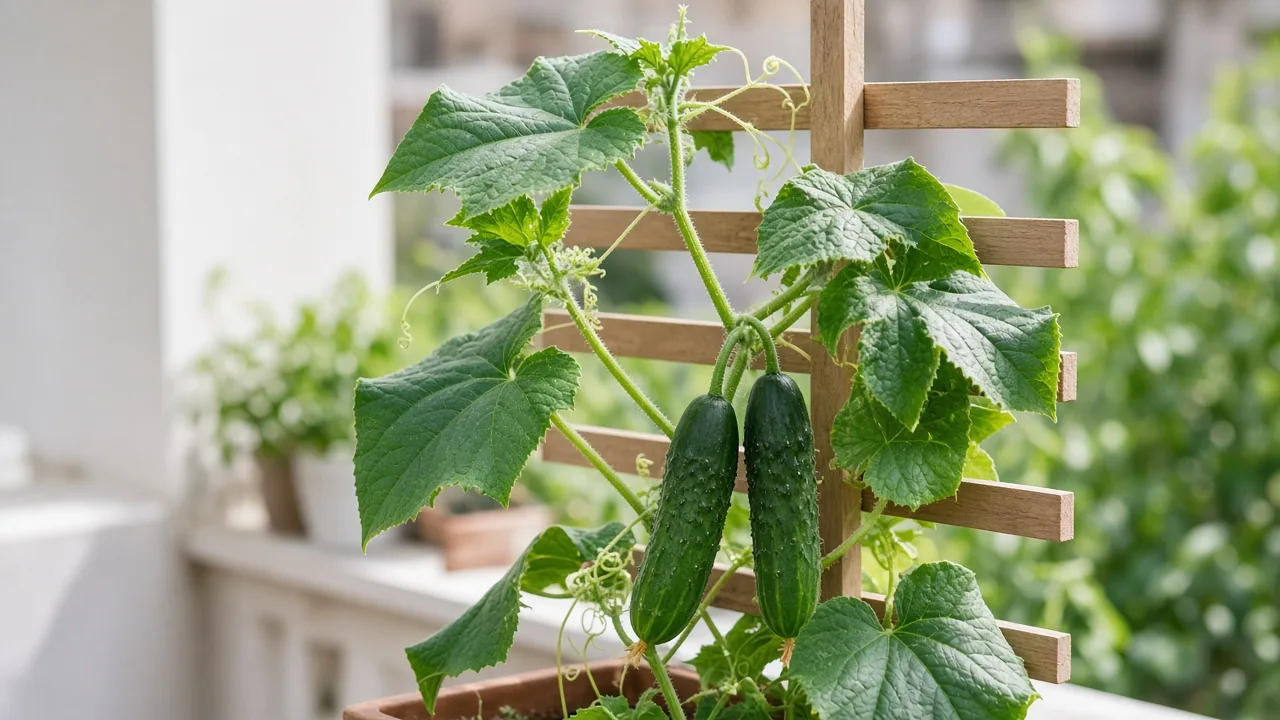
Cucumber Light Needs: Full Sun Hours & Terrace Tips
Cucumber Light Needs: Full Sun Hours & Terrace Tips
Cucumber (Cucumis sativus)—kheera or kakdi on Indian terraces—is a warm-season cucurbit vine, not a low-light houseplant. It builds large leaves, long stems with tendrils, and steady fruit only when the canopy receives full sun for most of the day. NC State Extension lists cucumber as growing best in full sun with moist, rich, well-drained soil and notes that vertically grown plants lose moisture more easily—so bright exposure and watering move together on a trellis. If you are wondering whether a shaded courtyard is “bright enough,” read this before you sow; light mistakes show up weeks later as thin vines, dropped flowers, and bitter or misshapen fruit.
For identity, sowing timing, and trellis basics, start with the overview. This page covers how much sun cucumbers need, where to place vines on rooftops and balconies, grow lights for seedlings, and the first fixes when growth looks weak.
Cucumber Light Needs: The Quick Answer
Plan for at least six hours of direct sun on the leaf canopy each day as a working minimum. NC State Extension defines full sun as six or more hours of direct sunlight daily. Warm-season fruiting crops often produce more reliably toward eight to ten hours when heat, water, and fertility stay steady (Epic Gardening). On an open Indian terrace, that usually means the sunniest outer rail or south-west corner, away from parapet walls, water tanks, and neem trees that throw long afternoon shadows.
Partial shade may keep a vine alive but rarely supports the flower and fruit load slicing cucumbers need. If your site fails a simple shadow check at morning, noon, and late afternoon, expect small harvests or none—before you blame watering or fertilizer.
How Much Light Cucumber Actually Needs
Cucumbers are full-sun vegetables through their growing season (Veggie Knowledge). They use light to fuel rapid vine extension, leaf expansion, and the carbohydrate budget behind fruit fill. Unlike leafy greens that tolerate dim corners, Cucumis sativus is bred for open-field and greenhouse production under high light.
Six Hours as Extension Minimum
Six hours of unobstructed direct sun—when a sharp hand shadow appears on soil or pot surface—is the baseline NC State Extension cites for full sun. “Bright indirect” light reflected off walls does not count the same way; cucurbit leaves need photons hitting the upper leaf surface for hours, not a briefly lit corner.
Eight to Ten Hours for Heavy Fruiting
Home-garden guidance for warm-season fruiting crops often targets eight to ten hours of direct sun for maximum yield (Epic Gardening). On a clear pre-monsoon day on the plains, an open rooftop may exceed that. In a walled courtyard with only a strip of noon sun, you may technically hit six hours while the lower trellis run stays in shade—still a weak setup for fruit.
Why Cucumbers Are Not Shade-Tolerant Crops
Vine Biology and Large Leaves
Each cucumber leaf is a solar panel. Shade forces the plant to stretch stems toward brighter zones, spacing leaves farther apart and weakening tendril grip on supports. The vine looks “tall and healthy” while producing little usable fruit—a pattern growers often misread as nutrient deficiency.
Female Flowers and Fruit Set
Female flowers need strong photosynthesis in the days before and after opening, plus pollinator visits or hand pollination. Deep shade reduces flower number and increases flower drop when the plant cannot support fruit. Poor light and poor pollination both cause odd or absent cucumbers; fix placement toward unobstructed sun before escalating propagation or feed changes.
Seasonal Light Strategy for Indian Growers
Cucumber is a warm-season annual. Sow or transplant after cool nights have passed and soil stays warm—common windows include late winter through spring and, in many regions, a monsoon-side crop when rain and humidity are manageable. Cold, dim weather slows germination; heat with steady moisture and bright sun drives the fast vine growth described in the overview.
Pre-Monsoon and Post-Monsoon Sowing Windows
February–April sowings on the plains often catch long, bright days before peak summer haze. A second sowing after heavy monsoon rain can work where drainage and disease pressure are controlled, but cloud cover lowers daily light integrals even when air feels warm. Vines may stay green yet set fruit slowly; more sun on the upper trellis matters more than extra nitrogen in dim weeks.
Monsoon Cloud Cover and Stretching Vines
During extended overcast spells, check whether new growth at the growing tip is paler or internodes longer than earlier in the season. That is a light-stress signal compounded by humidity. Improve what you can—prune overcrowding per pruning, open airflow—but accept that no fertilizer replaces missing sun.
Best Balcony, Rooftop, and Trellis Placement
The RHS describes cucumbers for a warm sunny site outdoors or greenhouse culture for indoor types. On a terrace, replicate that openness: ridge and slicing types for open air; greenhouse cultivars only if you can offer protected bright conditions.
The Morning–Noon–Afternoon Shadow Test
On a clear day, note when direct sun first hits the pot, whether midday shade from walls or laundry covers the leaves, and whether late-afternoon sun still reaches the top third of the trellis. Cucumbers climb; light at soil level at 9 a.m. does not help fruit hanging at 1.8 m unless the whole column stays lit for hours.
Training Vines Without Shading the Bed
If you grow cucumbers with other crops, trellis vines on the sunward side so they do not cast afternoon shade on shorter plants—and so neighboring tall plants do not steal their sun (Epic Gardening). Install the trellis at planting, as noted in grower guidance on the hub, so you are not dragging a mature vine into a brighter spot later.
Direct Sun, Heat, and Young Transplants
Hardening Seedlings Into Terrace Glare
Young transplants moved straight from a dim nursery tray to bare tile at noon can scorch leaves even though mature vines want full sun. Harden seedlings with gradual exposure: start with morning sun, increase hours over a week, and use brief afternoon shade cloth only during that transition. After roots establish and new leaves form in outdoor conditions, keep the mature vine in all-day sun when possible.
Mature Vines in Hot Dry Weather
Established cucumbers tolerate hot, humid weather when roots stay moist. Intense radiation plus dry soil produces wilted, silvered, or crisp leaf edges that look like sunburn but trace to water stress. Trellised plants dry faster in sun (NC State Extension); pair bright placement with watering checks at depth, not calendar guesses.
Grow Lights for Indoor Cucumber Seed Starts
Indoor culture works as a short bridge before warm nights arrive outdoors—not as a permanent home for a 2 m vine. The RHS recommends warm germination near 21 °C (70 °F) and keeping young plants in bright light after emergence.
Run full-spectrum LED grow lights about 12–14 hours per day for stocky seedlings; many seed-start guides suggest 14–16 hours for cucurbits when natural windows are weak. Keep foliage close enough to prevent stretching, then harden off and transplant to the sunniest outdoor trellis as soon as temperatures allow. A mature cucumber cannot live on windowsill brightness alone.
Warning Signs of Too Little Light
Watch for long internodes, small new leaves, pale green color, and vines that climb but set few female flowers. Fruit that starts then stalls small often pairs with weak light or pollination gaps. Move the pot or shift the trellis row toward open sky before increasing fertilizer. Leggy indoor starts need brighter lamps or sooner transplant—not more nitrogen.
Warning Signs of Too Much Sun or Heat Stress
Bleached or silver patches, crisp brown leaf margins, and midday wilting on dry soil point to radiation plus moisture stress on young or root-limited plants. Wilting with wet soil is a root problem—see soil drainage—not a call for more sun. Fix water first; use brief shade only while hardening tender transplants.
Light, Watering, and Trellis Training Together
Bright sun increases transpiration, especially on vertical vines. A trellised cucumber in six hours of direct sun on a windy terrace may need water daily in May; the same cultivar in marginal light may dry slowly yet still fail to fruit. Match repotting and container size to the cultivar so roots can support a sun-fed canopy. Large pots in full sun need stable support separate from the trellis so wind does not topple a top-heavy vine.
When to use this page vs other Cucumber guides
- Cucumber overview — species identity, seasonality, trellis planning, and harvest basics before you tune light.
- Cucumber watering — moisture checks when bright sun dries trellised vines faster than sprawled plants.
- Cucumber soil — mix and drainage when wilting could be waterlogging rather than light stress.
- Cucumber fertilizer — feeding calendar after you confirm the canopy receives enough sun.
- Cucumber propagation — sowing dates, indoor starts, and transplant timing into full sun.
- Cucumber pruning — opening the canopy for airflow without stripping leaves that feed fruit.
- Cucumber repotting — final container moves before vines are too large to shift into a brighter corner.
Related Cucumber guides
- Cucumber overview — warm-season vine framework and Indian terrace context
- Cucumber watering — deep watering at the base when full sun dries pots quickly
- Cucumber soil — fertile, well-drained mixes that support sun-driven growth
- Cucumber propagation — seed starting under bright light before outdoor hardening
- Cucumber fertilizer — feed when light is adequate, not as a substitute for sun
Conclusion
Cucumbers reward open, all-day sun on a sturdy trellis—not a permanently shaded balcony or a dim indoor corner. Aim for at least six hours of direct light on the climbing canopy, with eight to ten hours ideal when water and heat stay steady. Harden seedlings into terrace glare gradually, re-check shadows as vines climb, and move plants toward sky when stems stretch and fruit stalls. When new leaves stay dark green and female flowers set crisp fruit, your light placement is working; when vines run tall with empty flowers, fix sun before you change anything else.