Sow Kheera Right: Cucumber Germination Tips
Sow Kheera Right: Cucumber Germination Tips
Sow Kheera Right: Cucumber Germination Tips
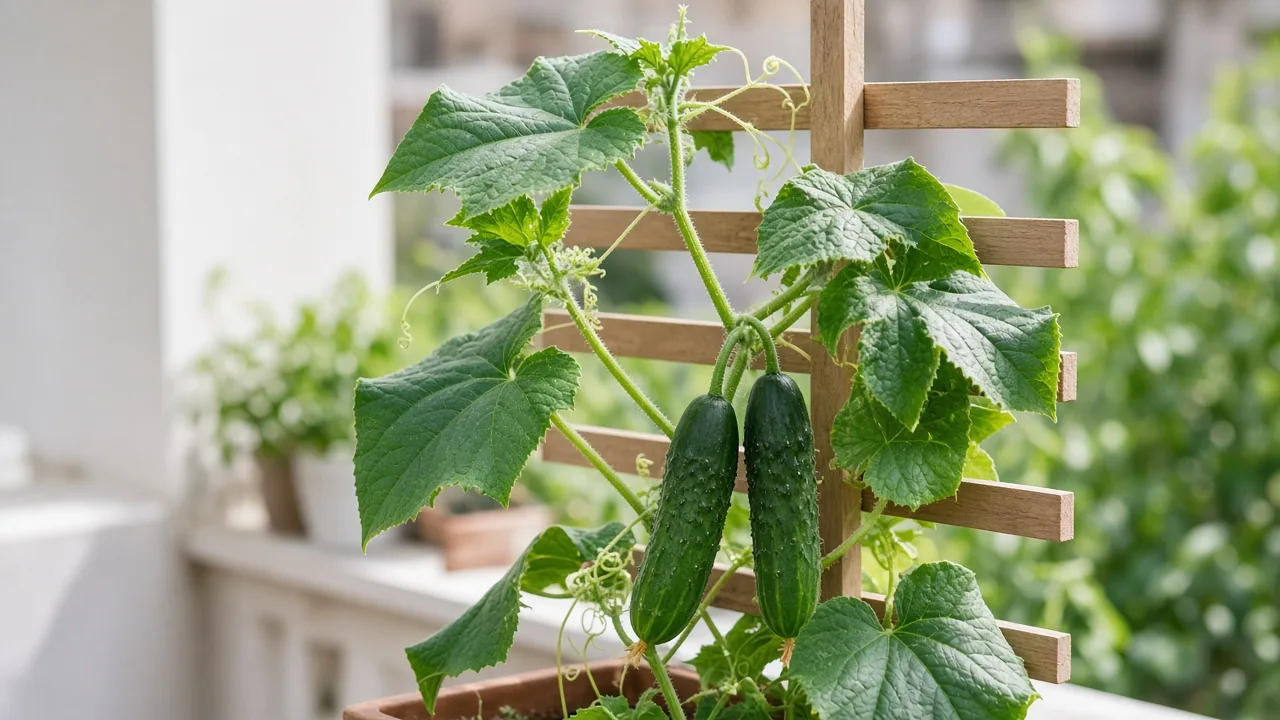
Cucumber propagation for Cucumis sativus—the crisp kheera or kakdi vine on Indian terraces—means starting from seed. Garden cucumber is a fast annual cucurbit with tendrils and separate male and female yellow flowers; it does not behave like a perennial you can reliably clone from a stem cutting. Every warm season begins with viable seed, warm soil, and a trellis plan in place before vines lengthen. UF/IFAS Gardening Solutions describes cucumbers as vining warm-season crops that continually fruit on new growth, planted in spring after frost danger passes and often sown again in late summer where seasons allow.
If you are searching for “propagate cucumber” hoping to root a kitchen scrap or vine tip, redirect that effort into sowing. The reliable path is seed—direct in a warmed bed or large pot, or indoors a few weeks earlier when you can provide heat and bright light. The cucumber overview summarizes how this species fits a sunny balcony; this page walks through sowing through first flowers.
How garden cucumber reproduces
Cucumber completes its life in one warm season: germinate, climb, flower, set fruit, finish. There is no woody crown to divide and no standard home practice of rooting stem segments the way you might with some houseplants.
Why home growers propagate from seed only
Commercial and backyard growers multiply cucumber almost exclusively from seed. UF/IFAS notes that while transplants are sold, plants are very sensitive to root damage, and the service recommends direct seeding as best for this crop. Stem cuttings and water-rooting tricks you see on generic “propagate anything” lists rarely produce vigorous, fruiting vines for C. sativus in real garden conditions. Treat any cutting experiment as a bonus, not your main plan.
Greenhouse types vs outdoor ridge cucumbers
Seed packets matter because cucumber cultivars split into greenhouse types (often parthenocarpic, bred for protected culture) and outdoor or ridge types for sunny, open beds. The RHS explains that greenhouse varieties crop longer under cover, while outdoor ridge types depend more on weather and often need insect pollination for fruit set. Match the packet to your setup—a greenhouse F1 on a windy open terrace may flower without setting fruit if pollination is missing, while an outdoor ridge type may struggle in a humid closed balcony without airflow. Light and placement details live in the cucumber light guide.
When to sow cucumber in India and warm climates
Cucumber is a warm-season crop. Seeds idle in cold, waterlogged mix; heat plus even moisture drives emergence once nights stay mild.
Spring and post-monsoon windows on the plains
On most Indian plains, sow or transplant after the coolest nights have passed and soil stays warm—often late winter through spring for a main crop. Some growers sow again after heavy monsoon rain eases if they can manage humidity and mildew on leaves. Hill stations and coastal microclimates shift those windows; local night temperatures matter more than a single national calendar date. UF/IFAS lists regional Florida planting ranges from winter through early spring and again in late summer—use that as a climate analogue for “when soil is warm,” not as an India-specific schedule.
Soil temperature checks before sowing
Hold off until soil at sowing depth feels warm and stays roughly 21°C (70°F) or higher for reliable germination—The RHS uses that propagator temperature for indoor starts, and the same logic applies outdoors. Press a finger into mix or bed soil in the morning; if it feels cool and clammy for days on end, wait or warm a container in full sun before sowing. Cold snaps after sowing stall emergence and invite rot in cucurbit seedlings.
Pick seed and read the packet first
Propagation success starts with fresh, labeled seed and realistic expectations about hybrids.
Parthenocarpic, hybrid, and bee-pollinated cultivars
Read whether your cultivar is parthenocarpic (sets fruit without pollination in protected culture), monoecious with both male and female flowers, or gynoecious types bred for mostly female blooms. Outdoor slicers and picklers usually need bees or hand help; UF/IFAS warns that outdoor cucumbers rely heavily on pollinators, and fruit failure often traces to poor pollination—not watering alone. Hybrids do not “come true” from saved seed; for predictable fruit size and disease traits, buy new seed each season unless you deliberately grow an open-pollinated line and accept variation.
Direct sowing in beds and large containers
When frost is past and soil is warm, direct sowing is the simplest propagation path—and the one extension services favor for cucumbers.
Depth, spacing, and the first moist week
UF/IFAS recommends planting seeds ½ to ¾ inch (about 1–2 cm) deep, irrigating the bed, and keeping it moist for at least one week after planting to support germination. The RHS suggests sowing outdoor types 1–2 cm deep, sometimes three seeds per station outdoors, then thinning to the strongest seedling. In field rows, UF/IFAS cites roughly 6–12 inches between plants in prepared rows; on a balcony, one well-supported vine per large container—often 20 L or more for a slicing type—usually beats crowding three plants in one pot. Work compost into the top layer as in the cucumber soil guide, install a trellis at sowing time, and water at the base so leaves stay drier.
Indoor seed starts for early terraces
When you need an earlier start or controlled germination on a windy terrace, raise seedlings indoors, then move them once—gently—to final pots or beds.
Heat, light, and one seed per cell
The RHS advises sowing one seed per 10 cm (4 in) pot of peat-free seed compost, 1–2 cm deep, ideally on its side, in a heated propagator at 21°C (70°F) or a warm bright windowsill under a vented cover until seedlings emerge. Move plants to their final site after about a month when they are growing strongly—not while still cotyledon-only. Provide bright light immediately after emergence; weak, leggy stems rarely recover into productive vines. Optional 12–24 hour soaking in room-temperature water can soften the seed coat; drain and sow promptly rather than leaving seed submerged for days.
Transplanting without stalling the vine
Transplanting is possible and common in nurseries, but cucumbers punish rough handling.
Hardening off and root-friendly handling
Harden seedlings over 7–10 days by gradually increasing outdoor sun and wind exposure. Plant at the same depth as in the module, water in, and shade for a few days on hot terraces. UF/IFAS cautions that cucumbers are very sensitive to root damage; use biodegradable pots or disturb roots as little as possible, and never let plants become root-bound in tiny cells. If transplants wilt repeatedly despite moist mix, direct sowing the next sowing may be less stressful. Final container moves and root checks are covered in the cucumber repotting guide.
Germination failures and damping-off
Think of propagation in two phases: emergence (seed to seedling) and establishment (seedling to climbing vine).
First fixes when seeds rot or seedlings collapse
Expect cotyledons within a few days to a week when soil is warm and evenly moist—not sodden. Cucurbit seedlings in cool, wet trays are classic damping-off targets; NC State Extension describes stems pinching at the soil line and toppling when pathogens attack overwatered, poorly ventilated seedlings. Improve airflow, ease off watering slightly, and use clean mix for the next sowing. Seeds that never sprout often sat in cold soil or dried out on the surface—re-sow in warm mix rather than waiting a month. Match ongoing moisture to the cucumber watering guide once true leaves expand.
Pollination once vines flower
Separate male and female yellow flowers appear on the same vine; males often open first—a normal cucurbit pattern.
Hand pollination when bees are scarce
UF/IFAS notes female flowers bear a tiny cucumber-shaped ovary at the base. On quiet balconies, transfer pollen from freshly open male flowers to open females in the morning. Parthenocarpic greenhouse types may set fruit without bees in protected culture, but outdoor ridge types usually need pollination help if insects are scarce. Avoid heavy nitrogen that pushes leaves over flowers; see the cucumber fertilizer guide. UF/IFAS reports harvest roughly 40–65 days after sowing for many cultivars—packet days-to-harvest still beats any universal calendar.
When to use this page vs other Cucumber guides
Use this propagation page when you are choosing seed, sowing indoors or direct, thinning stations, or troubleshooting germination and transplant shock. For daily moisture on running vines, open cucumber watering. For mix recipes and drainage, see cucumber soil. For sun hours and heat stress, see cucumber light. For moving seedlings into final tubs, see cucumber repotting. For side shoots and airflow after vines run, see cucumber pruning.
Related Cucumber guides
The overview hub summarizes growth habit, container size, trellis training, and harvest timing for C. sativus. Fertilizer covers feeding after propagation succeeds. Together, these pages support a full season from first sowing to the last crisp green fruit.
Conclusion
Cucumber propagation is seed propagation: warm soil near 21°C (70°F) at sowing depth, ½–¾ inch planting depth, a moist first week, and a trellis installed on sowing day. In India-friendly climates, align sowing with mild nights on the plains, choose cultivars that match your balcony or bed (greenhouse vs outdoor ridge), and handle transplants gently—or direct sow when extension guidance fits your setup. Watch for damping-off in wet trays, help pollination if bees are rare, and treat hybrid seed saving as unreliable. Get those steps right and one packet can fuel months of vertical harvests on a sunny terrace.