Cucumber Pruning Guide: Vines, Suckers & Trellis Training
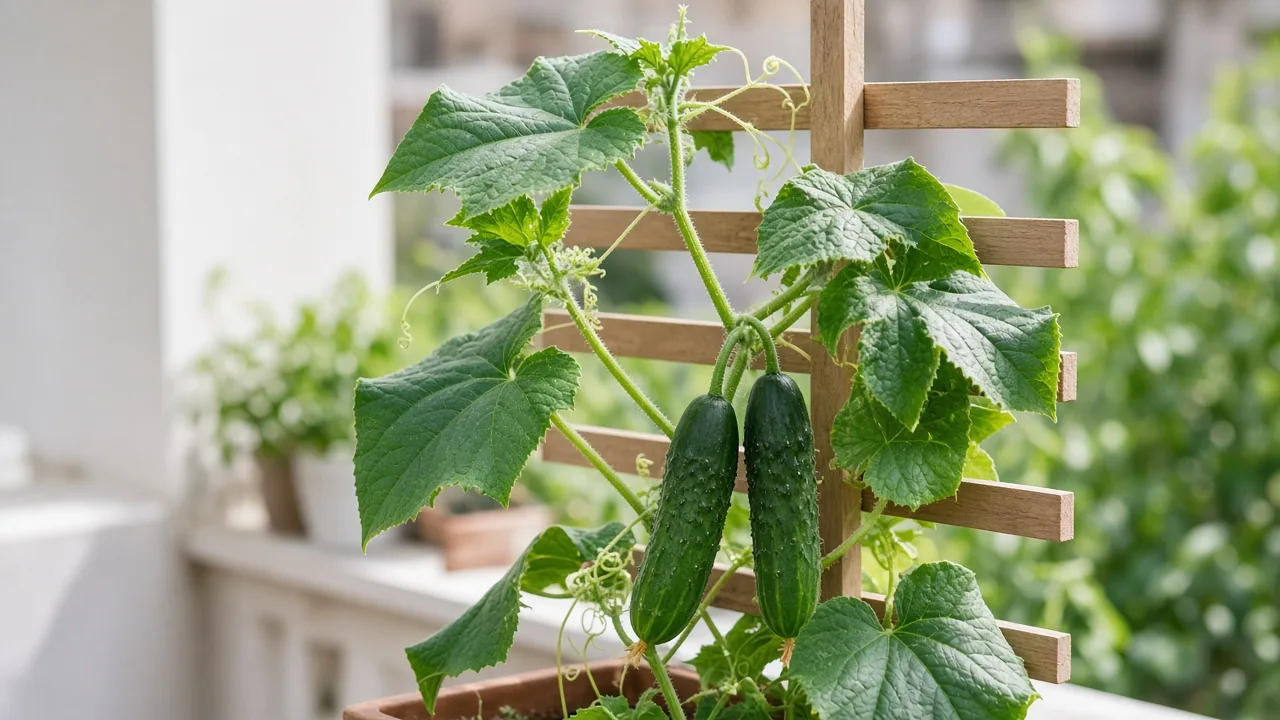
Cucumber Pruning Guide: Vines, Suckers & Trellis Training
Cucumber Pruning Guide: Vines, Suckers & Trellis Training
First, snip only yellow, mildew-streaked, or clearly damaged leaves and stems with clean scissors or pruners. Do not start stripping healthy suckers or pinching the main tip until the vine has four to six true leaves and looks settled after sowing or transplant. For whole-plant context—trellis setup, kheera timing, and harvest rhythm—see the Cucumber overview.
Quick answer
Cucumber (Cucumis sativus) is pruned by training the vine and thinning crowded growth, not by cutting back woody branches. After a quick cleanup of damaged tissue, your next judgment call depends on cultivar type: greenhouse parthenocarpic vines often grow on a single trained stem with laterals removed, while typical monoecious garden cucumbers (Marketmore, pickling types, many Indian slicing varieties) set female flowers on lateral shoots—so removing every sucker can erase your harvest. NC State Extension notes that trellising increases air circulation and can reduce disease while keeping fruit straighter. RHS recommends pinching the outdoor growing tip after seven leaves to encourage side-shoots, then managing flowerless laterals after seven leaves on each shoot. Match cut intensity to your seed packet, keep watering steady after foliage loss, and rely on full sun so regrowth stays strong.
What cucumber pruning actually does
A cucumber vine is an annual climber with a main stem, tendrils, and leaves at each node. Flowers—and fruit—appear where leaves join the stem. UF/IFAS Gardening Solutions explains that plants produce male and female yellow flowers on monoecious types; the female bloom carries a tiny cucumber-shaped ovary behind the petals. The vine keeps extending on new growth, so pruning and training redirect energy toward fruit you can reach, improve airflow, and keep leaves drier.
Four jobs show up on most home vines:
Cleanup removes diseased, sun-scorched, or broken foliage whenever you spot it. Basal thinning strips crowded suckers and lower leaves near the soil or pot rim to open airflow. Tip pinching slows rampant height and shapes side-branching on outdoor types. Harvest cuts remove mature fruit at the stem, which signals the plant to keep flowering.
Pruning improves air movement and makes scouting for pests easier, but it cannot compensate for six hours of weak light, flooded roots, or missing pollinators on outdoor varieties.
Monoecious garden types vs greenhouse-style vines
Read the seed packet before you copy greenhouse pruning videos:
| Type | Typical use | Female flowers | Pruning approach |
|---|---|---|---|
| Monoecious outdoor (most slicing & pickling) | Beds, terraces, open pollination | Often on lateral shoots after early male blooms | Selective: clear the base, keep fruiting laterals in the middle canopy |
| Parthenocarpic / gynoecious greenhouse | Poly tunnels, some balcony seed | Along the main stem at many nodes | Single-stem: remove most laterals; follow greenhouse pinching rules |
| Bush or patio | Small pots | Short laterals on a compact plant | Minimal: damaged leaves only; avoid heavy stripping |
If the packet says parthenocarpic or gynoecious, train one main leader up the trellis and remove competing suckers as they appear. If it lists a standard heirloom or hybrid for open gardens, treat aggressive sucker removal as a last resort—not a default.
When to prune or train cucumbers
Establishment window
Delay structural pinching until seedlings have four to six true leaves and are past transplant shock. UF/IFAS stresses that cucumbers dislike root disturbance; direct sowing is often safest, but if you transplant, let new growth resume before stripping foliage.
Active warm-season growth
Cucumbers are a warm-season crop—UF/IFAS lists roughly 80–85°F (27–29°C) as ideal for growth. On Indian terraces after soil has warmed, vines can add inches of stem weekly. That is when trellis tying, basal sucker removal, and tip pinches heal fastest.
Check trellised plants every five to seven days in peak summer. A 1-inch sucker left alone can become a branch within a week.
What you can remove anytime
Dead leaves, obviously infected tissue, and broken stems can come off whenever you see them—bag heavily mildewed material instead of composting it in humid climates. Delay large-scale stripping during cold rain, right after transplant, or when vines are wilting from dry soil; fix watering first.
What to check before you cut
Run a one-minute inspection:
- Cultivar clues — packet keywords (monoecious, gynoecious, parthenocarpic, bush) decide whether laterals are friends or competitors.
- Node health — firm stems, no oozing lesions at the crown; wet crowns after heavy rain need fewer cuts, not more.
- Flower types — female blooms show a miniature fruit behind the flower; male blooms are on thin stalks without fruit. On outdoor vines, do not remove males if you need pollination (RHS).
- Trellis attachment — tendrils should hold the vine without constricting the stem; loosen tight loops before you prune so the plant does not snap.
- Soil moisture — limp vines from thirst recover poorly from heavy pruning; water deeply if the upper 2–3 cm is dry (Cucumber overview).
If growth is pale and vines stretch toward the brightest window or wall, improve light placement before you blame suckers for poor fruit set.
The first cut to make
After cleanup of yellow or damaged leaves, focus on the lowest 12–18 inches (30–45 cm) of stem. Pinch or snip small basal suckers (about 1–3 inches long) that sprout from leaf axils near the soil or pot edge. These shoots rarely carry early female flowers, but they trap humidity against the mulch or container rim—exactly where cucurbit powdery mildew spores thrive in warm, shaded, moist leaf interiors.
Use fingernails on tender suckers or bypass pruners on thicker tissue. Cut just above the node, leaving the main stem intact.
This single basal pass is deliberately narrow. Wait three to five days and watch for new tendrils above the cleared zone before you thin the middle canopy.
How to prune and train by goal
Trellised monoecious vines (typical terrace and kitchen garden)
- Install the trellis at planting so you are not lifting a heavy vine later (NC State Extension).
- Guide the main stem vertically with soft ties; let tendrils grab mesh or string.
- After seven leaves on the main stem, pinch the growing tip outdoors to encourage side shoots (RHS).
- In the middle canopy, keep laterals that carry female flowers; remove only crowded, leafless, or diseased shoots.
- Pinch flowerless side shoots after they develop about seven leaves if they run wild without blooms (RHS).
Greenhouse or parthenocarpic single-stem culture
For thin-skinned indoor types:
- Pinch the main growing point when it reaches the roof or top wire.
- Pinch side-shoot tips two leaves beyond a female flower.
- Pinch flowerless side shoots once they reach about 60 cm (2 ft) (RHS).
- On all-female lines, remove occasional male flowers so fruits stay mild and seedless; outdoor monoecious vines need those males—do not copy this step on open-terrace plants.
Bush and container cultivars
Compact patio types rarely need lateral stripping. Remove damaged leaves, harvest fruit promptly, and focus on soil fertility and pot size instead of canopy reduction.
Where to cut—and what to leave
Cut:
- Suckers at the base when they are small and clearly redundant.
- Leaves with advanced mildew, mosaic mottling, or wet rot—dispose off-site.
- The main tip (outdoor types) after the seventh leaf if you want branching.
- Side-shoot tips on greenhouse vines per the rules above.
- Fruit stems at harvest with a clean knife or snips.
Leave:
- Lateral shoots carrying female flowers on monoecious garden cucumbers.
- Male flowers on outdoor plants until fruit set is reliable.
- Enough upper foliage to shade developing fruit from intense midday sun on exposed terraces.
- Healthy tendrils that are actively pulling the vine toward support.
Cut just above a node on shoots you are terminating. Do not tear stems—cucurbits have hollow vines that crush easily.
How much is safe at one time
Think in zones, not percentages:
| Zone | Stem position | Typical action |
|---|---|---|
| Base | Lowest 1–7 nodes | Remove suckers + 1–2 lowest leaves once plants are established |
| Middle | Main fruiting height | Keep fruiting laterals; thin only duplicates and disease |
| Top | Near trellis peak | Pinch or redirect per cultivar; allow umbrella draping on long tunnels |
Removing more than one-third of healthy leaves in a single session rarely helps monoecious vines and can sun-scald fruit. If you need tighter spacing in a small tunnel, favor parthenocarpic seed rather than scalping a standard slicing vine.
Tools, sanitation, and handling
Use sharp bypass pruners or harvest knives. Dull blades crush hollow stems and slow healing.
Wipe blades with 70% isopropyl alcohol or a dilute bleach solution when moving between plants, especially if powdery mildew is present—spores ride on tools.
Garden cucumber is non-toxic to cats and dogs, but bag trimmings if pets shred vines on the terrace.
Prune in the morning when leaves are dry so wounds callus before evening humidity rises.
Aftercare and recovery
After pruning:
- Resume deep watering at the soil line, not overhead sprays (watering guide).
- Mulch pots and beds to keep the cleared stem zone from splashing soil onto leaves.
- Pause high-nitrogen feeds briefly; shift toward fruiting nutrition per your fertilizer plan once new growth appears.
- Re-tie stems within 48 hours so regrowth does not kink.
Expect new leaves and tendrils within three to seven days in warm weather. If nothing emerges for two weeks, roots may be stressed—check moisture and drainage before cutting again.
Signs pruning helped—or hurt
Good signs: cleaner air gap at the vine base, fewer new mildew spots on lowest leaves, easier harvest reach, steady new tendrils, continued flower production.
Warning signs: wilting after a sunny afternoon with bare fruit exposed, aborted flowers, stalled vine tip, or mosaic-like mottling spreading after cuts—remove affected plants rather than chasing sterility on virus-suspected vines.
Mistakes to avoid
- Stripping all suckers on monoecious garden cucumbers and wondering why no fruit forms.
- Removing male flowers on outdoor varieties that require pollination.
- Pruning wet plants at dusk, which invites fungal entry.
- Letting the vine sprawl on damp soil while only trimming the top—train upward first (NC State Extension).
- Harvesting by yanking fruit, which tears vines; cut stems cleanly.
- Ignoring the packet and treating bush, slicer, and greenhouse types identically.
When not to prune heavily
Skip aggressive thinning when nights are cool, soil is waterlogged, plants were just transplanted, or vines are under drought stress. Replace severely virus-infected plants instead of defoliating them repeatedly. At season’s end, compost finished vines after harvest rather than trying to rejuvenate an annual like a perennial shrub.
Can you use pruned material?
Soft tip cuttings rarely root as easily as seed propagation for cucumbers. If you pinch tender tips, compost them unless you are experimenting—most home growers restart from seed each warm season.
Conclusion
Cucumber pruning is cleanup first, then cultivar-specific training: clear diseased tissue, open the base for airflow, trellis early, and pinch according to whether your vine is a monoecious garden sprawler or a greenhouse single-stem type. The wrong sucker strategy costs fruit; the right one pairs with steady moisture, strong sun, and frequent harvest cuts. Read the seed label once, then prune with that biology in mind—not every internet trellis tutorial.