Cucumber Fertilizer Guide: When and How to Feed
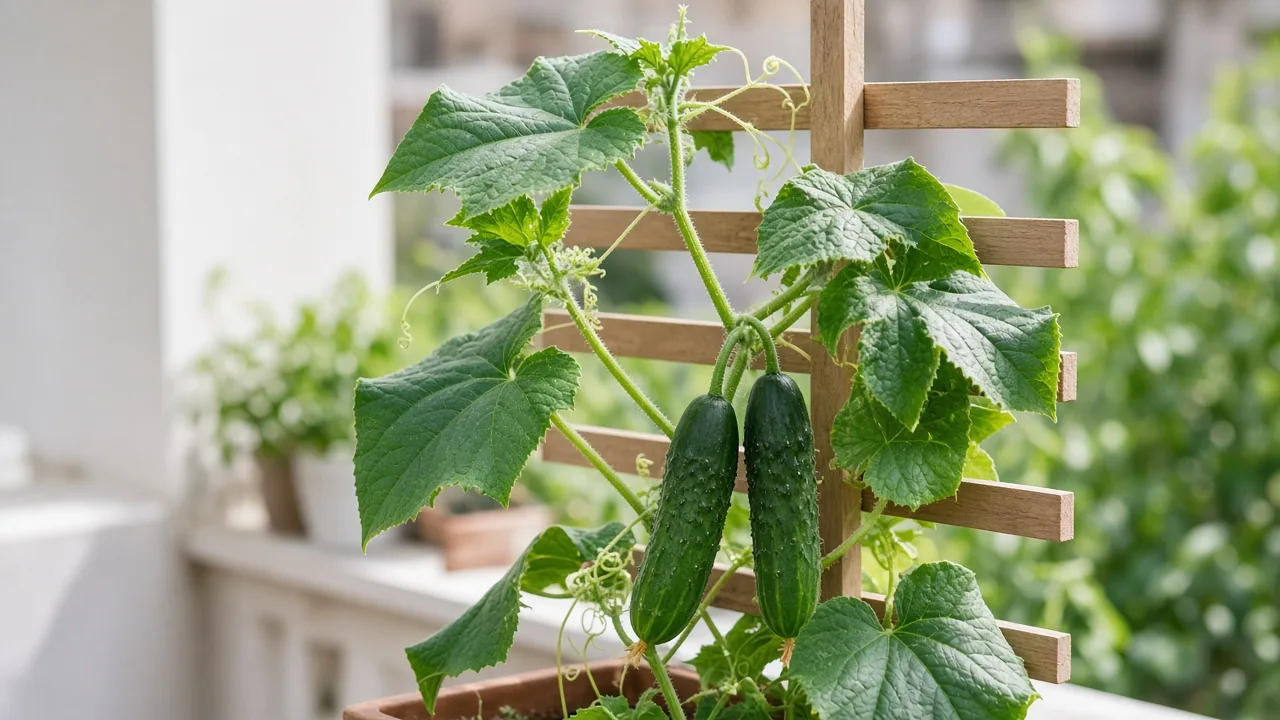
Cucumber Fertilizer Guide: When and How to Feed
Cucumber Fertilizer Guide: When and How to Feed
Cucumber (Cucumis sativus) is grown for crisp fruit on a vine that can double in leaf area within weeks on a warm terrace. That speed makes feeding feel urgent, yet the most common nutrition mistake is not starvation — it is too much nitrogen at the wrong time, which pushes leaves while flowers and young fruit stall. Kheera and slicing types both need rich soil and steady moisture, but fertilizer should follow vine establishment, then flowering and fruit fill, not a flat “feed every week” calendar copied from leafy greens.
Start with what is already in the bed or pot. Mature compost, well-rotted manure worked in before planting, and a well-drained mix described in the Cucumber soil guide supply slow nitrogen and improve water-holding capacity. Add bottled products only to fill a gap you can see, measure, or confirm with a soil test — especially on balconies where every dose stays in a small root zone.
Why cucumber feeding is not “more nitrogen”
Cucumbers are often called heavy feeders because they build large leaves and continuous fruit on new growth. Heavy feeding does not mean unlimited nitrogen. UF/IFAS Gardening Solutions warns that for fruiting crops like cucumbers, too much nitrogen can cause excessive leafy growth and negatively affect flower and fruit production, while phosphorus and potassium can improve flower and fruit production. That single extension point should shape your whole season: enough nitrogen to run the vine, not so much that the plant forgets why you planted it.
A heavy feeder with a fruit-set ceiling
Unlike spinach or kale, cucumber does not stay in a leafy-only phase for months. Once female flowers and tiny fruit appear at the leaf joints, nutrition should support pollination success and fruit sizing, not just taller stems. If your trellis is a wall of dark green leaves with few pickles or slicers, review nitrogen rate and timing before buying another product. Pollination, shade, and cold nights can also limit fruit — the Cucumber overview and Cucumber light guide help separate those issues from pure fertility.
Build fertility before you reach for bottles
Long before choosing an NPK ratio, improve the root zone. Epic Gardening’s cucumber culture notes recommend adding compost to the soil about a month before planting for outdoor cucumbers, because both cucumbers and close cucurbit relatives need organically rich, fertile, well-draining soil to maximize yield. On Indian kitchen-garden beds, that usually means spreading mature compost or well-rotted manure across the planting zone when you prepare soil, not dumping fresh manure against the stem the day you sow.
Compost and soil tests
Compost releases nitrogen slowly, buffers moisture, and feeds soil biology — benefits a soluble feed cannot replace. It is still possible to overdo fresh or hot manure, which can burn seedlings and skew salts. Where beds are reused every season, a soil test is the most reliable way to learn whether phosphorus or potassium are already high; UF/IFAS recommends using a test report to decide what nutrients, if any, are necessary before applying more balanced fertilizer.
Macronutrients cucumbers use through the season
Think in three macronutrients, but apply them across time, not all at maximum strength at once.
Nitrogen for leaves — until it costs you fruit
Nitrogen drives chlorophyll and stem extension — exactly what you want while a young vine is climbing a trellis in warm weather. Pale, yellowing older leaves on an otherwise thirsty plant in full sun can indicate shortage, especially in sandy beds or pots leached by daily watering. Once the vine is well leafed and flowering, continuing a high-nitrogen program often produces the classic cucurbit problem: lush canopy, weak fruit set.
Phosphorus and potassium when flowers appear
Phosphorus supports root establishment early; potassium helps overall vigor and fruit quality as harvest repeats. Epic Gardening suggests compost or a balanced fertilizer early, then shifting to a product with only moderate nitrogen and higher phosphorus and potassium once flowering begins, to favor flower and fruit production over more leaves. You do not need a separate product for every week — you need a deliberate shift when the first open flowers show.
Read the NPK label without guessing
The three numbers on a bag describe percentages of nitrogen, phosphate, and potash in that product, not what your soil already holds (Gardening Know How on NPK numbers). A 10-10-10 and a 20-20-20 are both “balanced,” but the second is twice as concentrated; dose must follow the label and your area, not the biggest number on the shelf.
Balanced vs lower-nitrogen “fruiting” blends
For establishment through early vine run, a balanced vegetable fertilizer or compost-heavy soil often suffices. After flowers open, many growers move to a lower-first-number analysis (less nitrogen relative to P and K) or continue balanced feed at reduced rate if soil was heavily composted. Avoid automatically using high-nitrogen lawn or leafy-green formulas on fruiting cucumbers in pots — they are a common cause of all-leaf vines on terraces.
Organic options — compost tea, fish emulsion, seaweed extracts — release nutrients more gradually and demand careful dilution. Synthetic soluble feeds act faster but raise salt risk in containers. Either can work if measured and paired with consistent watering from the Cucumber watering guide.
When to feed from sowing to harvest
Align feeding with warm active growth, not cool, wet soil when seeds rot or sit idle.
A simple season schedule
At planting: Incorporate compost or a measured dose of granular vegetable fertilizer into the top few inches of bed or potting mix, away from direct seed contact. Many mixes already include starter fertilizer — read the bag before doubling up.
Vine run (true leaves to first flowers): Maintain moderate nutrition if leaves are pale and growth is steady in full sun. Side-dressing compost a few centimetres from the stem, followed by irrigation, suits in-ground beds. Skip extra nitrogen if vines are already deep green and rank.
Flowering and fruiting: Shift emphasis toward phosphorus and potassium as above; keep moisture even because drought during fruit swell causes bitter or misshapen fruit regardless of fertilizer.
Late season / declining vines: Taper feeds as plants slow, powdery mildew pressure rises, or you are finished harvesting. More nitrogen cannot revive a spent annual vine.
India plains and monsoon leaching
On most Indian plains, sow or transplant kheera after cool nights pass and soil stays warm — often late winter into spring for a main crop, with some growers trying a second window where nights stay mild. Heavy monsoon rain can wash soluble nutrients from raised beds and pots; that is a reason to favor compost structure and occasional measured feeds rather than one huge pre-season dump that leaches away. If vines pale after weeks of rain, a light balanced or bloom-stage feed after soil drains — not while pots sit waterlogged — is safer than repeated high-nitrogen doses on saturated roots.
Side-dressing, liquids, and organic options
Granular feeds worked shallowly into moist soil release over days to weeks; liquids reach roots quickly but need half-strength or label dilution for weekly use in heat. Apply at the soil line, not over hairy leaves, to reduce scorch and disease entry points. Well-aged compost used as mulch supplies slow nitrogen and suppresses weeds without a salt spike.
Manures and homemade “tea” can work but vary wildly in strength; never pour concentrated solutions on seedlings. If you use them, treat them like potent liquids — dilute, test on one plant, and keep pets away from runoff on terraces.
Terrace pots and trellis vines
Containers magnify both deficiency and excess. Roots cannot roam into neighboring soil, and trellised vines transpire heavily in sun and wind, so pots dry and leach faster than ground beds.
Slow-release plus soluble feeds
Penn State Extension’s container vegetable guidance notes that potted vegetables depend on a limited soil volume and generally need slow-release fertilizer at planting plus soluble fertilizer every two to four weeks during the season. The same resource allows blending up to about 50% finished compost into a soilless mix, which can partly substitute for slow-release nutrition. For cucumber, use a large, stable pot (often 20 L or more for a full slicing vine) with a trellis anchored separately, as noted in the Cucumber repotting guide — tiny pots run out of both water and nutrients mid-season.
Salt crust and burned leaf margins
Fertilizers are salts. Brown leaf edges shortly after feeding, white crust on the medium surface, or wilting despite wet mix often mean pause feeding, confirm drainage holes are open, and water to runoff only when the plant truly needs moisture. Trellised plants on hot paving need more frequent watering, which also washes salts — another reason to feed on a modest schedule instead of weekly full-strength doses.
Read the plant before the next dose
A stalled cucumber is not automatically hungry. Root damage at transplant, compacted mix, spider mites on new growth, or nights too cool for pollen all slow progress without a nutrient gap.
Deficiency signs that are not always hunger
Uniform paleness starting on older leaves in warm weather can suggest nitrogen shortage. Yellowing with persistently wet soil usually points to oxygen loss and root stress — fix drainage and watering before adding nitrogen. If new leaves are small and vines stretch toward shade, check light before fertilizer. Cross-check sowing depth and transplant timing in the Cucumber propagation guide when seedlings stall early.
Vines with flowers but no fruit
Open flowers with no swelling ovary often reflect pollination, not NPK. Outdoor cucumbers rely on bees; greenhouse types may differ. Adding nitrogen will not replace pollinators. Hand pollination and companion flowers belong in your cultural plan, not the fertilizer bottle.
Overfeeding, lush leaves, and pest pressure
Excess nitrogen produces soft, rapid growth that can attract sap-feeding pests and worsen mildew pressure in crowded, humid canopies. If margins scorch after every feed, you are likely overdosing or applying to dry roots. Stop soluble feeds for two to three weeks, verify watering rhythm, and resume at lower strength only if new growth pales.
UF/IFAS also recommends scouting frequently for caterpillars, thrips, and mildew on cucumber — nutrition cannot substitute for airflow, trellis spacing, and early disease management tied to wet foliage.
When soggy soil meets fertilizer plans
Cucumbers need frequent water but suffer in flooded soil. UF/IFAS lists sensitivity to flooding alongside high water demand. Fertilizing waterlogged roots adds salt stress without improving uptake. If monsoon rain keeps pots saucers full, address outlets and raised placement first; hold feeds until the upper 2–3 cm of mix dries slightly between waterings as described for irrigation.
When to use this page vs other Cucumber guides
Use this page to decide whether, when, and how much to fertilize through vine run, flowering, and harvest. Use the Cucumber watering guide when wilting, saucer water, or trellis drying dominate, because moisture moves nutrients. Use the Cucumber soil guide for mix, compost, pH, and drainage before stacking products. Use Cucumber light when vines stretch or fruit set fails in shade.
For sowing, spacing, and transplant handling, see Cucumber propagation and Cucumber repotting. Canopy thinning and harvest cuts live in the Cucumber pruning guide. Fertilizer cannot fix cold soil, poor pollination, or a pot that is too small for the cultivar.
Related Cucumber guides
- Cucumber overview — season, trellis planning, and the full warm-season picture.
- Cucumber soil — compost-rich mixes, drainage, and bed prep before feeding.
- Cucumber watering — even moisture for fruit quality without waterlogging.
- Cucumber light — full sun for strong vines and workable fruit set.
- Cucumber propagation — direct sowing and gentle transplant timing.
Conclusion
Good cucumber nutrition is staged and measured. Build fertility with compost and a suitable mix, use balanced feed while the vine establishes, then shift toward moderate nitrogen with enough phosphorus and potassium as flowers and fruit appear — especially in pots that leach with every drain event.
Read the vine, the mix label, and the season together. Deep green leaves with steady harvests mean you are close; rank growth with few fruit, salt crust, or scorched margins usually call for less nitrogen and better timing, not another strong dose.