How to Grow Cucumbers From Seed: Timing and Advice
Learn how to grow cucumbers from seed with frost timing, soil-temperature cues, seed depth, spacing, indoor starts, hardening, trellising, and harvest advice.
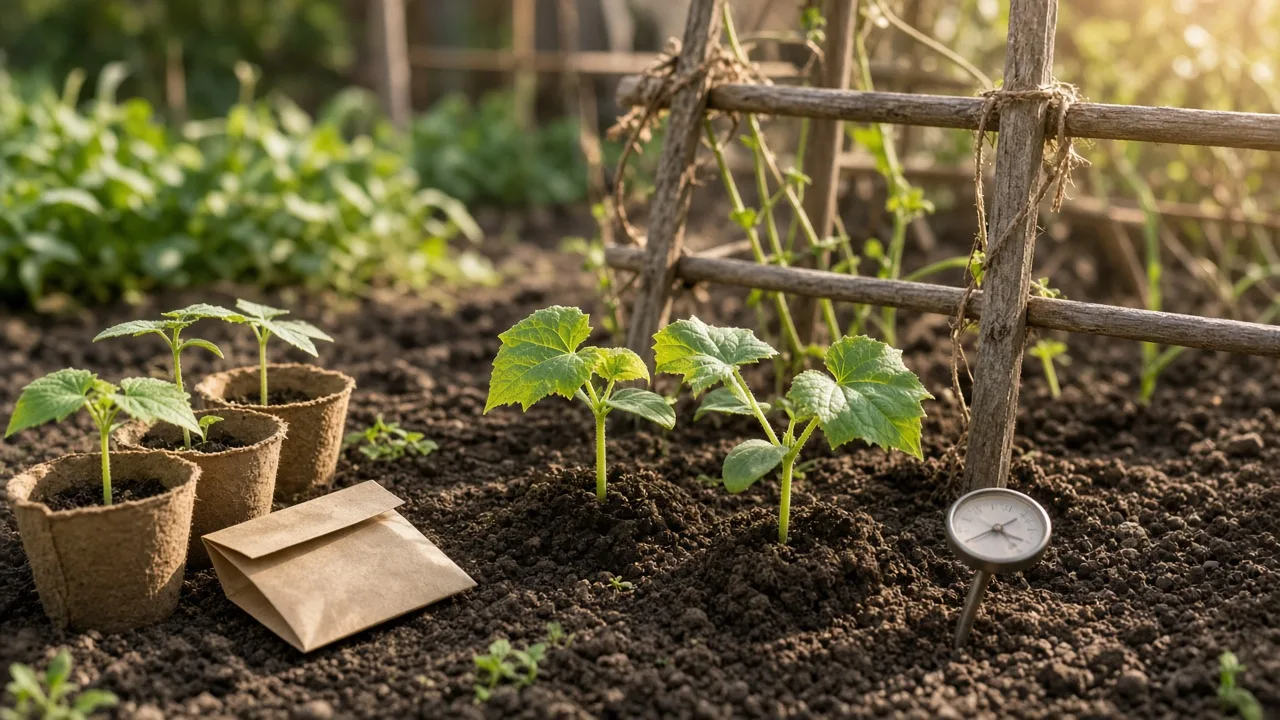
Cucumbers are easy to start from seed once warmth, timing, and root handling line up. For most home gardens, direct sowing is the simplest route: wait until frost danger has passed and the soil has warmed, plant into the bed where the vine will grow, and thin the seedlings without pulling at their neighbors.
Starting seeds indoors can make sense when your frost-free season is short or you want a modest head start. Cucumbers do not recover from rough transplanting as readily as tomatoes, so choose this route only if you can move a young plant with its roots and surrounding mix intact. In either case, the packet’s variety notes and your local conditions matter more than a national calendar date.
Make the seed decision before you plant
Before buying seed, decide what you want to harvest and how much room you have. A cucumber’s label can tell you whether it is meant for slicing, pickling, a greenhouse, or outdoor beds; it may also list vine habit, days to maturity, disease resistance, and whether the plant sets fruit without pollination. Those traits affect where and when you sow, not just how the finished cucumber tastes.
If space is limited, look for a compact or bush type and confirm its mature spread. A vining cucumber can use a smaller footprint when trained up a sturdy trellis, but it still needs room for roots and foliage, plus access for harvesting. A sprawling cultivar may be a poor fit for a narrow bed even if the fruit sounds ideal.
Pick a variety for the job you want
Slicing cucumbers are commonly picked larger for fresh eating; pickling varieties are usually harvested smaller and more frequently. Mini and snack cucumbers offer a compact fruit size, while greenhouse or “English” types are often selected for protected growing and may have different pollination needs from outdoor varieties. The seed packet’s description is the useful distinction: common labels are not always standardized across sellers.
Growth habit is another separate choice. Bush types stay more compact, though “bush” does not mean no spacing or care; vining types send long stems and tendrils that can climb. The Royal Horticultural Society distinguishes outdoor cucumbers from greenhouse varieties and notes that seedless or mostly female-flowering greenhouse types can have different pollination requirements, so check the packet before mixing plant types or choosing a protected site (RHS cucumber growing guide).
Choose direct sowing or indoor starts
Direct sowing is the lower-risk default when your season is long enough. The seed germinates in its final bed, so you avoid root disturbance, indoor light problems, leggy seedlings, and an extra move outside. If you can wait for warm soil and still have enough growing season for the variety to mature, sowing directly is usually more reliable than trying to gain a few days by starting too early.
Starting indoors is useful when the season is short, outdoor beds warm late, or you want only one or two plants and prefer to control germination. It can give the crop a head start, but that advantage is not guaranteed: a cold garden bed can stall a transplant, and a root-bound or damaged cucumber may lose the lead. Utah State University Extension notes that cucumber transplants can mature earlier than seeded plants, while also warning that cucurbits are sensitive to transplant shock and should be handled carefully (Utah State University Extension; USU transplant production guidance).
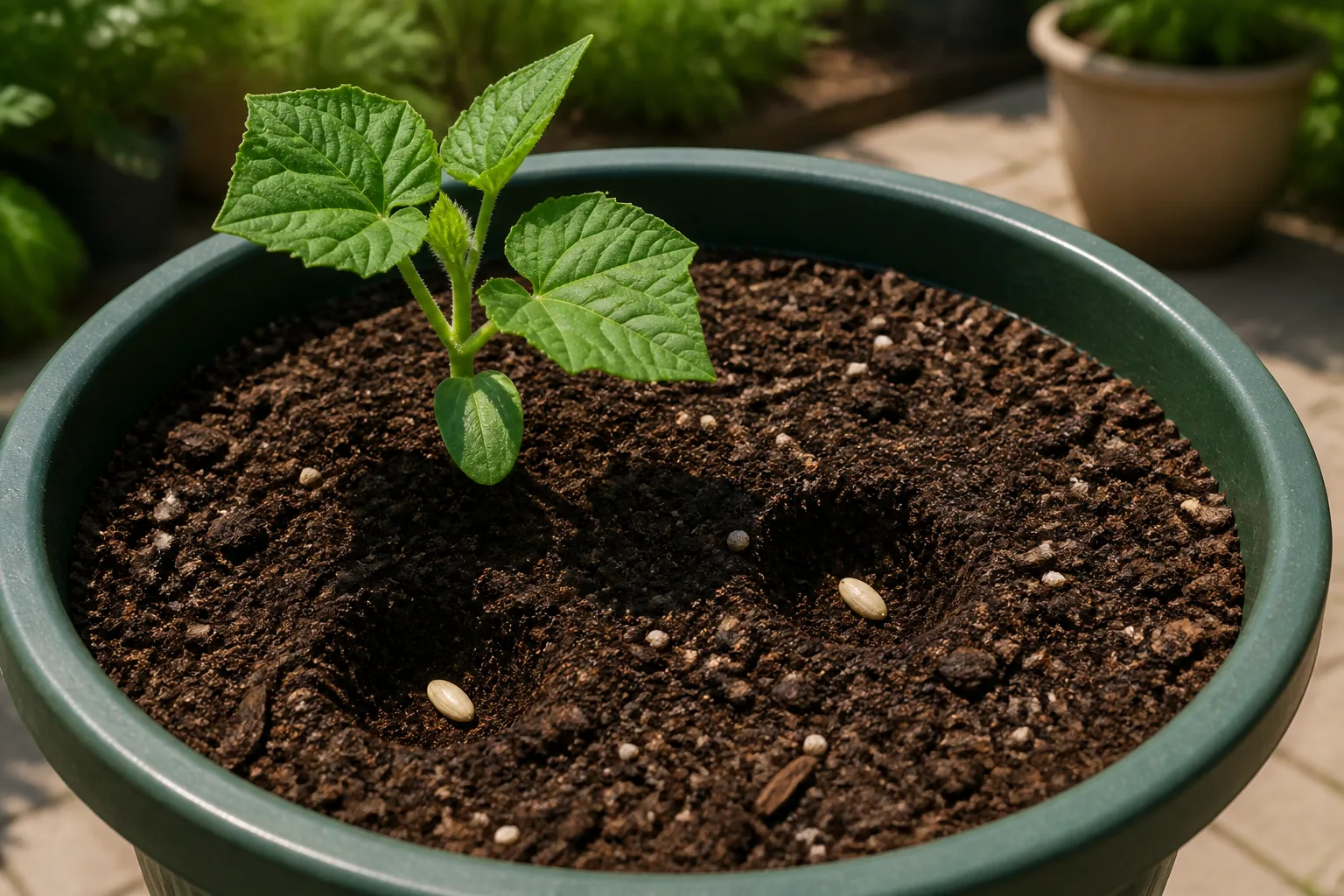
A useful rule is to start indoors only when you can plant outside soon after the seedlings become sturdy. Cucumbers grow quickly in warm conditions, so sowing many weeks ahead often creates oversized plants that are harder to move. A few healthy young seedlings are more valuable than a crowded tray of vines that have outgrown their cells.
Time planting by your last frost and soil warmth
Use two checks before you plant outside: the forecast should no longer show a likely frost for your garden, and the soil should be warm enough for cucumber seeds to germinate promptly. The last frost date is a planning estimate, not a promise; a sheltered city yard, exposed rural plot, raised bed, and low-lying garden can warm and cool differently. Local extension calendars can narrow the window, but measure your own bed when spring weather is inconsistent.
This is why “plant cucumbers in May” can be right in one region and wrong in another. In a short-season climate, you may need an indoor start or a temporary warming cover; in a long, warm season, direct sowing after the soil warms can work well. In a frost-free climate, use the local growing season and avoid sowing into cold winter soil or at the peak of punishing summer heat.
Check soil temperature at seed depth
Air temperature rises and falls faster than soil temperature. Insert a simple soil thermometer about 2 inches into the bed in the morning for several days; a warm afternoon reading alone can make a cold bed look ready. If the bed is still cool, wet, and slow to drain, wait rather than asking the seed to sit in conditions that encourage slow emergence or decay.
Extension guidance differs because it describes different thresholds and settings. Alabama Cooperative Extension lists 60°F as the minimum soil temperature for cucumber seed germination and a much warmer optimal range, while Utah State recommends planting when soil reaches about 65°F; Johnny’s Selected Seeds uses at least 70°F for direct seeding in its field-production guidance (Alabama Cooperative Extension System; Utah State University Extension; Johnny’s Selected Seeds). For a home garden, treat 60°F as a lower germination limit, not the ideal planting target; a steady 65–70°F gives a more dependable start, and the seed packet takes priority for a specific cultivar.
Prepare the bed and sow outdoors
Choose the warmest sunny part of the garden that also drains well. Cucumbers need steady moisture once they are growing, but seeds in cold, saturated soil can struggle before they emerge; if your soil stays waterlogged after rain, use a raised bed or improve drainage before sowing rather than adding more water. Work in finished compost if the soil needs organic matter, and avoid heavy fresh manure or a high-nitrogen fertilizer that can push leafy growth at the expense of flowering later.
Plan the layout before the seed goes in. Vines can spread several feet, so decide whether they will run along the ground or climb a support; place a trellis before planting if possible, because driving stakes through established roots later is avoidable damage. Leave paths wide enough to inspect undersides of leaves and harvest without stepping on vines.
Sow at packet depth and mark each station
Follow the seed packet for depth and spacing because cucumber size and habit vary. Home-garden instructions commonly fall around ½ to 1 inch deep; Utah State Extension specifies 1 inch, while the RHS recommends ½ to ¾ inch for its indoor and direct-sown instructions. In heavier soil, use the shallower end of the packet’s range; in light, fast-draining soil, a seed can be planted toward the deeper end so it stays moist.
Plant a small number of seeds at each station rather than filling the row densely. Two or three seeds gives you a backup if one fails; space stations according to the cultivar and the layout, then thin to the number of plants that can grow without crowding. Water gently after sowing so the seed stays covered, and keep the top layer consistently moist until the seedlings emerge without leaving the bed soggy.
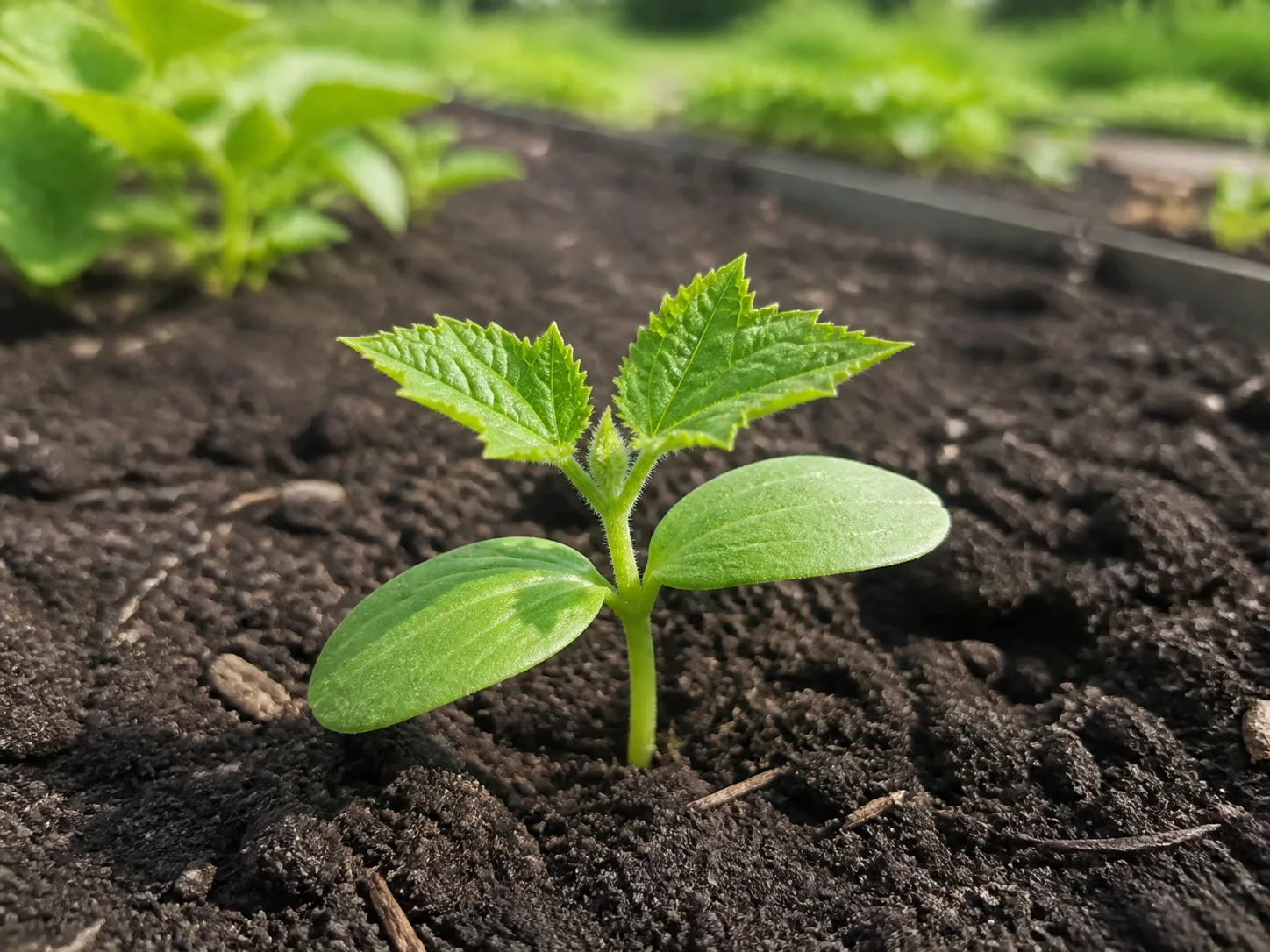
Mark each station and note the sowing date. Cucumber seed often emerges within about 5–10 days in warm conditions, but the clock stretches in cooler soil; Utah State University Extension gives that range for soils from 65–85°F (Utah State University Extension). If you do not see seedlings after a week, check the soil temperature and moisture before digging up every station; a gentle inspection at one edge can show whether the seed is swelling, rotting, or simply still waiting.
Start cucumber seeds indoors without tangling roots
Use individual cells or small pots so you do not need to separate a mass of cucumber roots. Fill them with a clean, free-draining seed-starting mix, pre-moisten it, and sow one or two seeds at the depth on the packet; if both emerge, snip the weaker one at soil level. Do not pull it out, because the roots may be tangled with the seedling you are keeping.
Warmth matters indoors too. A warm propagator or a comfortably warm room helps cucumber seed germinate; the RHS recommends about 70°F for indoor sowing, then moving seedlings into bright light after they emerge. If a windowsill is dim or cool, the seedlings may stretch toward the light and become weak before they can go outdoors, so use a bright grow light close above the leaves rather than increasing fertilizer.
Cucumber seedlings do not need a rich feeding program while they are still using the seed’s stored reserves. Once true leaves appear, follow the mix or fertilizer label and avoid keeping the cells constantly waterlogged. The aim is a short, sturdy plant with a root ball that holds together—not the largest seedling in the tray.
The RHS recommends sowing cucumber seeds in individual pots and growing them on for roughly a month before planting, while Utah State advises using transplants with two to three mature leaves and a well-developed root system (RHS cucumber growing guide; Utah State University Extension). These are better cues than a fixed number of weeks alone: if outdoor weather is not ready, hold the seedlings in bright light and do not let them become crowded or root-bound.
Harden off and transplant while plants are young
A seedling raised indoors has not experienced outdoor sun, wind, or cool nights. Move it outside gradually in a sheltered spot, starting with short daytime exposure and increasing the time and light over the next couple of weeks; bring it in or protect it when nights are chilly. The RHS describes hardening off tender plants over about two to three weeks and stresses that acclimating a plant does not make it frost-hardy (RHS hardening-off guide).
Wait to transplant until both the plant and the bed are ready. Choose a mild, overcast day if possible, water the seedling beforehand, and set it at the same depth it grew in its pot. Slide out the root ball intact and handle the plant by the leaves or pot, not by squeezing the stem; do not tease, wash, or trim the cucumber roots to make them fit.
This care matters because cucumbers cannot replace damaged roots as freely as tomatoes can. University of Delaware Extension explains that cucurbit transplants rely on the existing root system when first planted and that torn or detached roots can make them fail to establish (University of Delaware Extension). If the root ball is brittle, tangled, or falling apart, direct sowing another seed is often a better choice than trying to rescue a badly stressed transplant.
Water the new plant in gently and shade it from harsh afternoon sun for a day or two if it wilts. Do not bury a long bare stem deeply or compensate for a rough move with a strong fertilizer dose; the first job is to keep the existing roots moist while they resume growth. Remove any cover before it traps too much heat, and check the forecast for a late cold night.
Thin seedlings and set their final spacing
Seed spacing and plant spacing are not the same thing. You can sow two or three seeds close together at one marked station for insurance, but once the seedlings have true leaves, keep only the strongest plant or the number recommended for that planting method. In a row, cut the extras at soil level instead of pulling them, which protects the roots of the plant you leave.
Final spacing depends on whether the variety is bush or vining and whether you will train it vertically. Utah State’s home-garden guide recommends 12–18 inches between seed stations in rows, then thinning to two plants per location; it spaces transplants 2 feet apart in rows 4 feet apart. Those numbers illustrate why a seed packet should guide the final layout: a compact variety, a sprawling vine, a hill planting, and a trellised row do not use space in the same way.
Do not crowd plants just because small seedlings look far apart. Mature leaves need room to dry after dew or rain, and dense growth makes it harder to spot beetles, wilt, or fruit hidden under foliage. If your garden is small, a vertical-growing vining cultivar can save ground area, but choose a support and variety that are designed for that setup.
Give vines support before tendrils need it
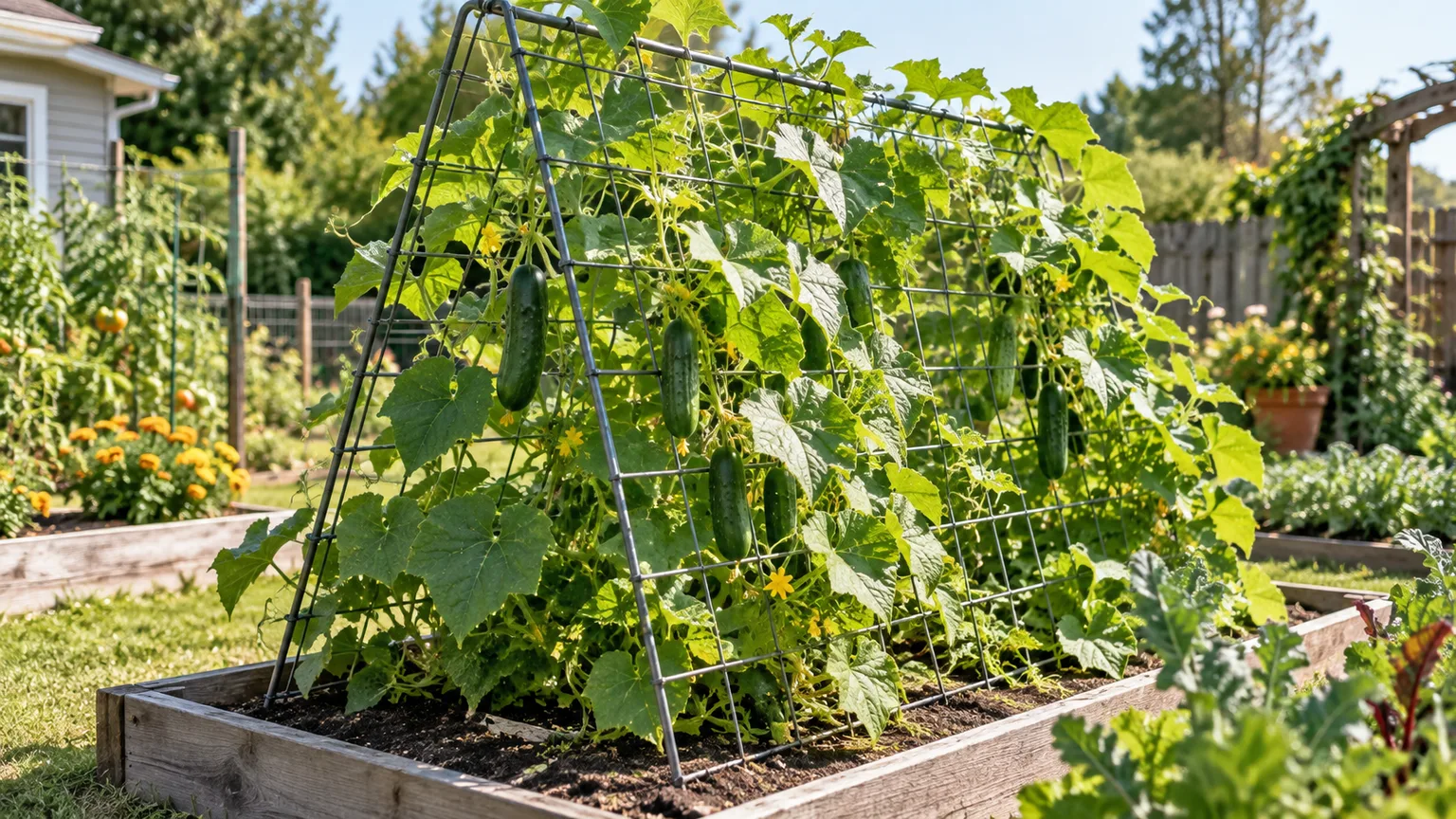
A trellis is optional, but it helps vining cucumbers use vertical space and keeps fruit easier to find. Install a sturdy panel, net, or frame before seedlings spread; once the vines are several feet long, moving a support can break tender stems or disturb roots. Tie only the main stem loosely when needed and let the tendrils grip naturally rather than winding the vine tightly around the structure.
Match the support to the plant. A short bush type may need only a low cage or a little room to sprawl, while a vigorous vining cucumber needs a tall, anchored support that can carry wet foliage and fruit. If you grow on the ground, leave enough space around the planting row for vines to run without crossing paths or smothering nearby crops.
Training a vine upward improves visibility, not immunity. Fruit can still develop misshapen if water is inconsistent or pollination is poor, and leaves can still get disease in humid weather. Check the plant as it grows and guide new stems gently while they are flexible; do not wait until a heavy vine has tangled itself into neighboring plants.
Water and feed for steady early growth
Keep the seed zone evenly moist until emergence, then water deeply enough to reach the developing roots. Once vines begin to grow, a thorough watering is more useful than a quick daily sprinkle that wets only the surface; adjust frequency for rainfall, heat, soil texture, and whether you garden in a raised bed or container. Letting young plants dry out repeatedly can slow them just as surely as keeping the roots waterlogged.
Avoid adding fertilizer before the seed has germinated. The seed already contains energy for its first growth, and extra fertilizer can make a concentrated patch around the seed or seedling. After true leaves develop, use compost or a balanced vegetable fertilizer according to a soil test and product label; too much nitrogen often produces abundant vine growth without improving the harvest.
A thin mulch layer can limit evaporation and weeds after the soil has warmed, but keep it from pressing against the stem. Mulch cannot replace correct spacing, drainage, or regular observation. If leaves wilt in the afternoon, check the soil before feeding or watering automatically; dry soil, cold roots, and transplant stress need different corrections.
Protect young plants from pests and cold
Cucumber seedlings are tender, and a cold snap or chewing pest can wipe out a small planting before the vines have a chance to recover. Watch the bed daily during emergence, especially if slugs, cutworms, or cucumber beetles are common in your region. Remove damaged debris, use a physical barrier where suitable, and identify the pest before choosing a treatment.
Row covers can protect young plants from insects and some cold wind, but they need management. Secure the edges so pests cannot crawl underneath, vent or lift covers during hot days, and remove them once flowering begins if the variety needs insect pollination. If your cucumber type is parthenocarpic and grown under protection, read the variety instructions rather than assuming every cover has to come off at the same time.
Do not plant cucumbers in the same patch year after year if bacterial wilt or cucumber beetles have been a recurring problem. Rotate crops away from cucurbits when the garden layout allows it, and inspect leaves early for chewing, spots, or sudden wilt. Utah State University Extension lists cucumber beetles and disease among the recurring growing problems; identify the cause before treating, and follow local extension guidance and the product label if a pesticide is ever needed (Utah State University Extension).
Know what kind of flowers your variety will make
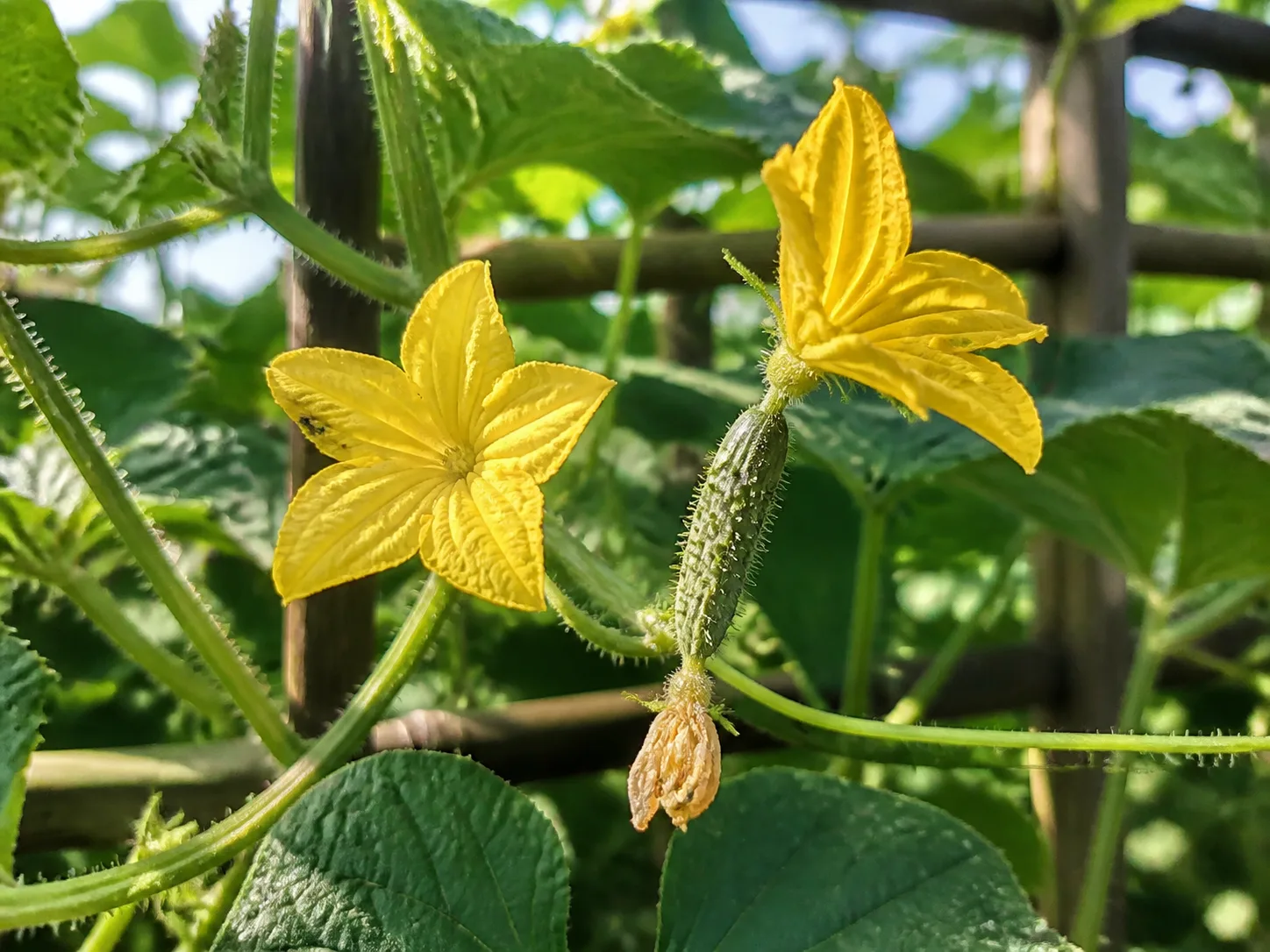
Most traditional outdoor cucumber varieties produce separate male and female flowers on the same plant. The female flower has a small cucumber-shaped ovary behind its petals; the male flower sits on a thin stem. Male blossoms often appear first, so a few flowers without fruit at the beginning do not automatically mean something is wrong.
Some greenhouse cucumbers are mostly or entirely female-flowering, and parthenocarpic varieties can set fruit without pollination. Those traits are useful under cover where pollinators may not reach the plant, but the seed packet should make the behavior clear. The RHS advises that outdoor cucumber flowers need pollination while many greenhouse types are all-female and should not be pollinated, so do not remove male flowers or hand-pollinate until you know what you planted (RHS cucumber growing guide).
For a standard outdoor cucumber, leave access for bees when flowers open. If a female flower shrivels without the tiny fruit developing, check pollinator access, heat, water stress, and the cultivar’s pollination notes before assuming the plant needs fertilizer. A row cover that was helpful at the seedling stage can become the reason fruit fails to set if it blocks pollinators from a variety that needs them.
Follow the packet’s maturity clock and harvest young
A seed packet’s “days to maturity” is a planning estimate, not a guaranteed harvest date. The count can start at sowing or at transplanting depending on the seed company and growing method; Johnny’s Selected Seeds explicitly labels its cucumber maturity figure as counted from transplanting. The Farmers’ Almanac gives a broad 50–60 day range for common cucumbers, but the packet’s definition is the right reference when comparing varieties or planning a local planting (Johnny’s Selected Seeds; Farmers’ Almanac).
Harvest size also depends on whether you chose a slicing, pickling, or mini type. Use the packet’s mature fruit size and pick while the cucumber is firm and still young; leaving one oversized fruit on the vine can divert energy from new flowers and fruit. Check under leaves every day or two once production starts, because hidden cucumbers can grow quickly in warm weather.
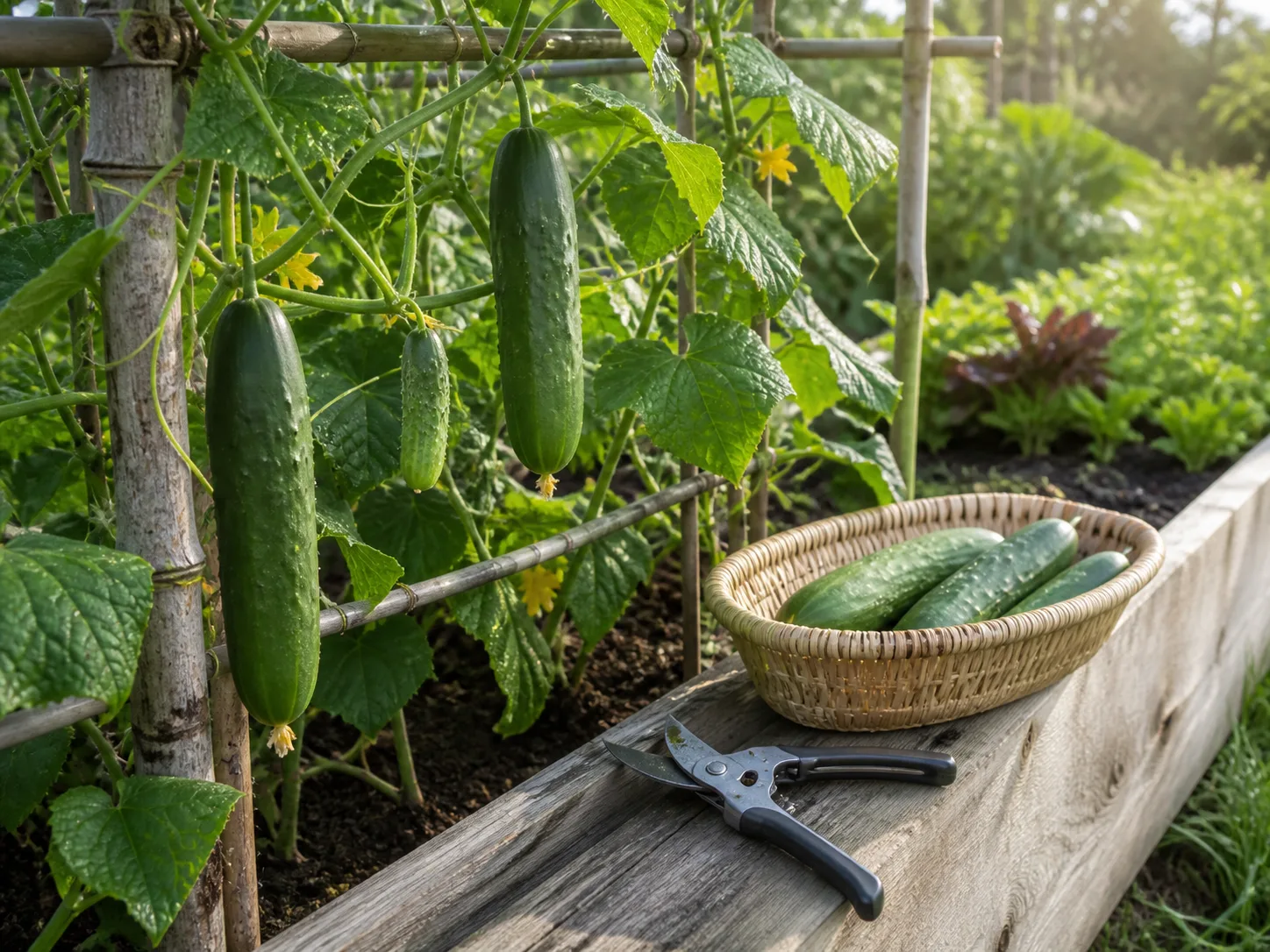
Use clean snips or a knife to cut the stem rather than pulling on the vine. Frequent harvesting keeps the plant from carrying overripe fruit and makes it easier to notice new flowers, pests, and drying soil. A healthy vine can continue producing over time, but heat, disease, pollination, variety, and the length of your season all affect how long the harvest lasts.
Troubleshoot poor emergence and stalled seedlings
If cucumber seeds have not emerged, start with the bed rather than buying more seed. Check whether the soil stayed in the mid-60s or warmer, whether it dried around the seeds, and whether heavy rain packed the surface into a crust; cold, waterlogged soil can slow or rot seed, while dry soil interrupts germination. Wait a reasonable interval in cool conditions before replanting, and test one seed station gently rather than disturbing the whole row.
If seedlings emerge and then collapse, look for a persistently wet stem base, damaged roots, chewing, or an abrupt drop in temperature. Thin seedlings by snipping, not pulling; keep the soil moist but not saturated, and protect a young planting from frost. If only a transplanted plant stalls, shade it briefly from extreme sun, keep the root ball evenly moist, and give it time rather than applying a concentrated feed.
Long, pale indoor seedlings usually need more light or a cooler growing environment after germination. Move the light closer according to its instructions, rotate the tray if growth leans toward a window, and avoid starting the next batch as early. If a plant is already root-bound or the root ball falls apart, replacing it with a direct-sown seed may save more time than trying to force a damaged transplant to catch up.
A row of strong leaves without flowers may reflect a young plant, poor light, excessive nitrogen, heat stress, or variety timing—not one universal deficiency. First confirm the cultivar, sunlight, and water routine; then check whether flowers have opened and whether the plant needs pollinators. Correct the limiting condition before changing several things at once, so you can tell which adjustment helped.
Conclusion
To grow cucumbers from seed, wait for a frost-safe forecast and warm soil, then direct sow into a sunny, well-drained bed whenever your season allows. Choose indoor starts only when you need the head start, and move young plants outside gradually with the root ball intact.
A reliable harvest starts with a variety that suits your space and climate, then depends on steady moisture, sensible spacing, support for vining types, and picking at the packet’s recommended size. Use your local planting calendar and seed label to tune the details; the soil thermometer and the seedling’s growth will tell you when to take the next step.