How to Grow and Care for Carrots Successfully
Learn how to grow carrots from seed with the right variety, loose soil, steady moisture, careful thinning, and practical fixes for common problems.
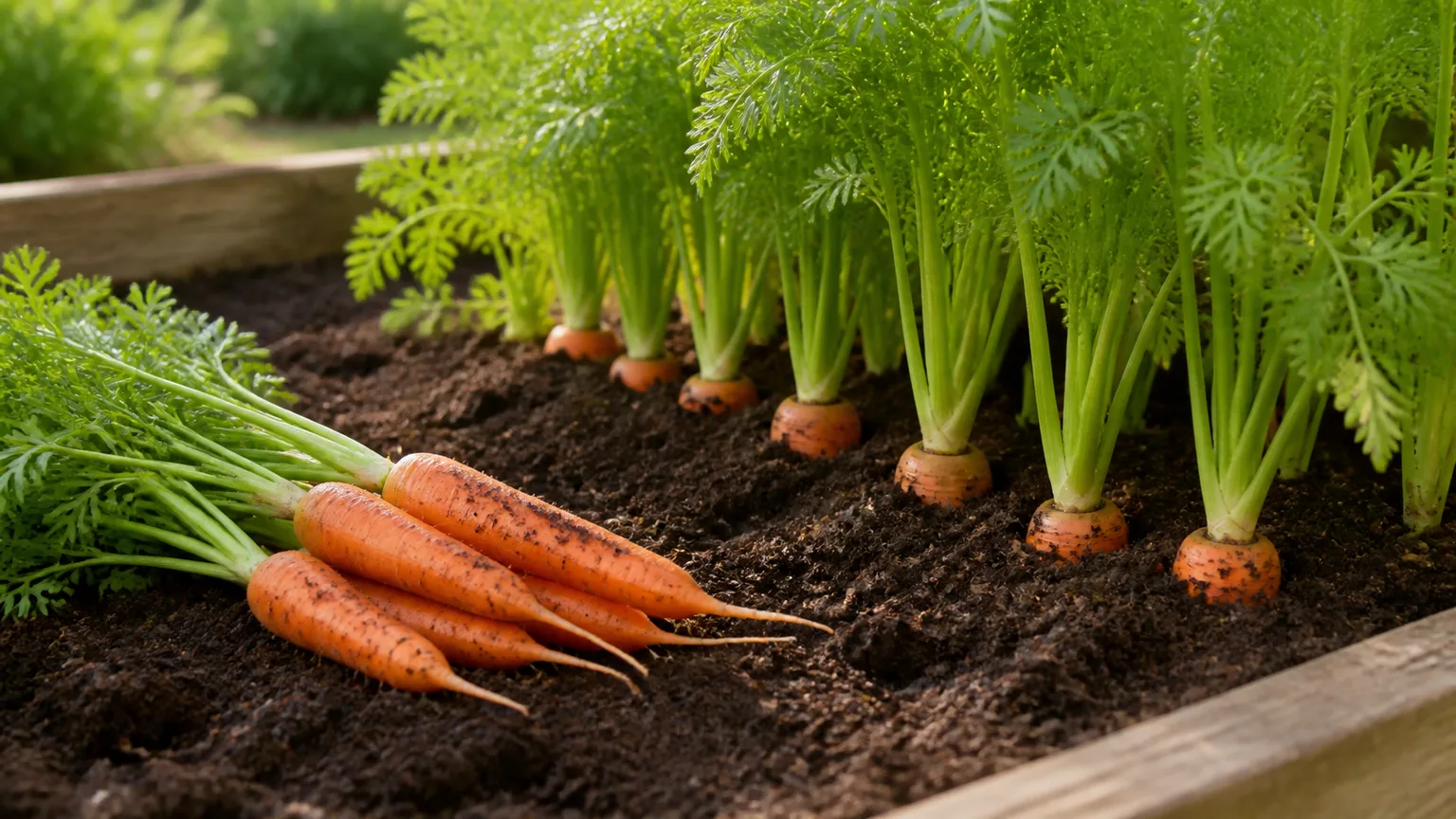
Carrots reward preparation more than rescue. Their edible taproot grows underground, so a little stone, compacted layer, dry crust, or crowded neighbor can shape the crop before you notice anything above the soil. The reliable approach is to choose a variety suited to your ground, make a fine and open seedbed, sow directly, and keep the small seed zone evenly moist until the feathery seedlings appear.
Carrots are cool-season biennials usually grown as annual vegetables. You do not need perfect, supermarket-straight roots to have a successful crop: short, forked, or oddly shaped carrots are usually still edible if they are healthy and clean. What you can control is the likelihood of getting a row that germinates evenly and develops roots of a useful size.
Choose a carrot variety that fits your soil and season
Start with the soil you have, not the carrot shape in a catalog photo. Long-rooted types such as Imperator need deep, stone-free soil to reach their expected length. Nantes and Danvers types are generally more forgiving for home beds, while Chantenay and short-rooted cultivars are sensible choices where soil is shallow, heavier, or difficult to loosen. Small round types such as Paris Market can suit containers and compact beds, though seed descriptions vary by cultivar.
The Royal Horticultural Society’s carrot guide makes the same practical distinction: long-rooted carrots do best in deep, sandy ground, while short-rooted varieties are better suited to stony, shallow, or heavy soil. That does not mean short types will thrive in waterlogged clay; drainage still matters. It means you can adapt the crop to the space rather than trying to force a long carrot through unsuitable soil.
Look at the seed packet for root shape, expected length, days to maturity, and recommended spacing. “Early” and “main-season” labels may reflect a particular region or seed company, so use them as comparisons among varieties rather than a universal calendar. If you want a steady supply, sow a small row every few weeks during the locally suitable season instead of planting the whole packet at once.
Give carrots sun and a workable growing site
Choose an open site that receives several hours of direct light, ideally most of the day. Carrot foliage needs light to fuel root growth, but a slightly shaded bed can still produce a crop; expect slower growth if the plants receive substantially less sun. Avoid a spot where water stands after rain or where nearby plants will shade the feathery tops.
A raised bed is useful when native soil is dense, compacted, or full of stones because you can control the depth and texture of the root zone. It is not automatically better: a shallow raised bed over hard subsoil still limits long roots, and a very exposed bed may dry out quickly. Before choosing one, check how deep you can loosen soil and how often you can water during dry spells.
Carrots fit well into a small garden because they do not need a trellis or much aboveground space. Plan rows where you can reach them for careful weeding and thinning without stepping on the bed. If a previous crop in the same spot had root disease or a serious soil pest, rotate carrots to another bed when possible rather than repeating them in the affected patch.
Prepare loose soil before sowing
Carrot roots lengthen best through a deep, fine-textured, well-drained soil without rocks, hard clods, or compacted layers. Before sowing, loosen the ground at least 8 to 12 inches where the variety’s roots may grow, then remove stones and break apart large clumps. Texas A&M AgriLife Extension recommends deep preparation and removing rocks; the goal for a home garden is a continuous, open root zone, not a fluffy surface over a dense layer below.
Do not work soil when it is saturated. Wet soil compacts under a spade or foot and can turn into hard clods as it dries, which creates the very obstacles you are trying to remove. If a handful sticks together as a wet lump and smears rather than crumbling when pressed, wait until it is drier. If soil is extremely sandy and drains quickly, add mature compost to improve water retention; in heavier soil, use finished compost to improve structure over time, not fresh manure immediately before sowing.
Fresh manure can add uneven nutrients and encourage forked or hairy roots, while excess nitrogen often produces lush tops at the expense of root quality. If a soil test shows low fertility, incorporate a moderate amount of finished compost or a balanced vegetable fertilizer according to its label. Do not add lime or fertilizer simply because carrots are being planted: adjust pH or nutrients based on a soil test and local recommendations.
Make the top few inches fine and even so tiny seeds do not fall into deep cracks. Rake out clods, water the bed if it is very dry, and let the surface settle before making furrows. This small preparation step helps seed stay at a consistent depth and makes it easier to keep the entire row moist.
Time sowing for cool conditions in your region
Carrots grow best when they establish and size up in cool to mild weather. In many temperate U.S. gardens, the main crop is sown in spring as soon as the soil is workable, with another sowing timed so roots develop during fall. In warmer regions, growers may use fall, winter, or early spring windows to avoid the hottest part of the year. The suitable dates depend on local climate, soil temperature, and the cultivar’s days to maturity.
Use your local extension planting calendar and the seed packet instead of following a single national date. A spring sowing made into cold, wet soil can sit for a long time, while a late sowing in hot, dry weather may struggle to germinate or produce poor-quality roots. Short successions spaced a few weeks apart can reduce the risk of losing your only crop to one stretch of bad weather.
For a crop-specific planting calendar, see our guide to when to plant carrots. Choose a date that leaves enough cool growing time for the variety you selected, and plan the bed so you can water regularly during the early establishment period. If summers become hot before the roots mature, prioritize an earlier sowing or a fall crop rather than expecting extra fertilizer to compensate for heat.
Sow carrot seed directly and evenly
Sow carrots where they will grow because their young taproots dislike disturbance. Transplanting seedlings can bend or damage the developing root, leading to forked or misshapen carrots. Commercial plug plants can work if handled gently and planted before roots become crowded, but direct sowing is simpler and usually gives the root more uninterrupted space.
A packet may recommend a particular depth and spacing. A practical general range is a shallow furrow roughly 1/4 to 1/2 inch deep, followed by a light cover of fine soil; seed size and soil texture affect how quickly seedlings can reach the surface. Texas A&M AgriLife Extension describes sowing about 1/2 inch deep and notes that germination can take 14 to 21 days. In cooler ground, allow more time rather than digging up the row to look for seed.
Make shallow furrows and cover lightly
Mark straight rows so you remember exactly where to water and weed. Sow seeds thinly along the furrow; they are small, so “evenly” may still mean more seedlings emerge in some places than others. Cover lightly, press the surface just enough to make good seed-to-soil contact, and water with a fine rose or gentle spray so the seed is not displaced.
Leave enough space between rows to reach the plants, following the seed packet when it provides a recommendation. Wide rows may need more area but make thinning and weed control easier. If you garden in a narrow bed, a staggered block can use space efficiently, but do not cram seeds so tightly that you cannot thin the crop without pulling up its neighbors.
Keep the seed zone moist until emergence
Carrot germination is often slow and uneven because the seeds are tiny and usually planted near the soil surface. The top layer must stay damp until seedlings emerge, which can take up to three weeks under some conditions. Water lightly when the surface begins to dry; a deep soak that washes seeds into a channel can create a dense clump at the low end of the row.
Wind, sun, and coarse soil can dry the seed zone between waterings. A thin layer of fine compost or a temporary board over the row can help hold moisture, but check the row at least daily and remove a board as soon as seedlings begin to appear. Do not let a cover remain over emerging tops in warm weather, and do not use a thick mulch that blocks the tiny seedlings.
A hard crust after rain can trap seedlings. Prevent it by using a fine seedbed and gentle watering rather than repeatedly flooding the row. If a crust forms, moisten it and break only the surface very lightly between rows; digging directly above the seeds can injure seedlings that are about to emerge.
Thin and weed without injuring roots
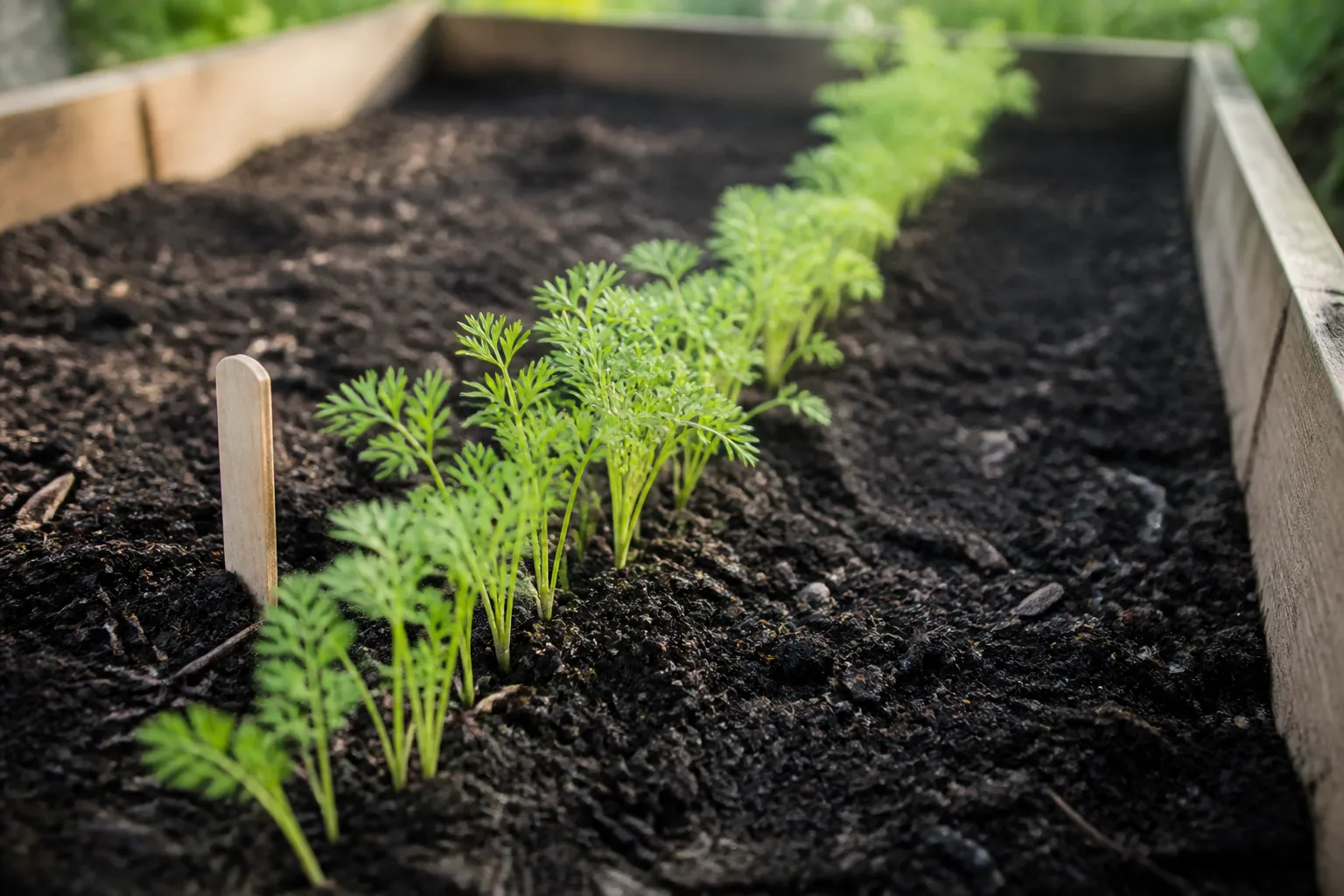
Once seedlings are established, thin them to the spacing the packet recommends for the root size you want. Many full-size varieties need a few inches between plants; baby carrots can be closer, while larger roots need more room. Thin in stages if seedlings are tiny and crowded: remove enough to reduce competition, then make a final adjustment as the tops become easier to distinguish.
Snip unwanted seedlings at soil level with clean scissors instead of pulling them upward. Pulling can loosen the soil around the roots you plan to keep, particularly when plants are crowded. Thin on a calm day or after watering so fewer crushed leaves release a strong scent; where carrot rust fly is a known problem, dispose of thinnings away from the bed rather than leaving them in the row.
Weed early and shallowly. Carrot seedlings are easy to confuse with fine grass or small weeds, and deep hoeing can slice roots or disturb the seed row. Mark the row at sowing, remove weeds while they are small, and cultivate only the soil surface between rows. Once the carrot foliage fills in, it shades some weeds, but hand-check the row edges so weeds do not compete for water.
Do not let the tops touch simply because the row looks green and full. Crowding creates competition for light, moisture, and root space, so a lush-looking bed may still contain undersized carrots. If you thin edible seedlings, use the small roots promptly; a tiny transplant is unlikely to become a straight full-size carrot.
Water consistently as roots develop
Carrots need steady moisture from sowing through root enlargement, but the right amount depends on rainfall, soil texture, and weather. Check moisture a couple of inches below the surface rather than judging only from the top. Water when that root zone is beginning to dry, then soak deeply enough to moisten it without leaving standing water.
Frequent light sprinkling is useful while seeds are germinating, but after seedlings establish, deeper watering encourages roots to grow down through the bed. Sandy soil may need water more often than loam, and containers dry much faster than an in-ground row. During hot or windy periods, check more frequently; after rain, skip irrigation if the soil is already moist.
Repeated drying followed by heavy watering can stress roots and contribute to splitting as they expand. A thin layer of organic mulch between established rows helps slow evaporation, but keep it away from tiny seedlings until they are large enough to push through. The aim is even moisture, not permanently saturated soil; if the bed stays soggy, improve drainage or move the next crop.
Fertilize cautiously
Carrots are not a crop to push with repeated high-nitrogen feeding. Too much nitrogen can favor leaves over roots and may contribute to rough or forked growth, especially where the soil is already fertile. Start with a soil test if you are unsure what the bed needs; mature compost may be enough in a well-maintained vegetable garden.
If a test or local extension recommendation calls for fertilizer, mix it into the soil before sowing at the labeled rate and keep granules from contacting seed. Avoid side-dressing by guessing from the height of the tops. Pale foliage can indicate several issues—including waterlogged roots, poor soil, or disease—not simply a lack of fertilizer, so check soil moisture and growing conditions before feeding.
Grow carrots in containers
Choose a container according to the expected root length. Long carrots need a deep column of loose mix; short, round, or baby varieties fit more easily in a container with less depth. A container around 12 inches deep can work for many shorter types, while deeper pots give long-rooted cultivars more room. Check the variety description rather than relying on container diameter alone.
Use a clean pot with several unobstructed drainage holes and a fresh, fine-textured potting mix. Garden soil is often too heavy in a pot and may compact as it settles. Fill the container close to the top, water the mix before sowing, and leave a little headroom so irrigation does not wash seeds over the rim. The BBC Gardeners’ World Magazine carrot guide likewise recommends deeper containers for most varieties and shorter types for smaller pots.
Sow directly into the final container and thin to the spacing listed on the packet. Containers can dry quickly, so check moisture daily during germination and in hot weather. Water until excess drains from the bottom, then allow the surface to begin drying before watering again; never let the mix become bone dry during root growth.
Pots are helpful if your garden soil is stony or if you want to raise carrots on a patio, but they are not maintenance-free. A small pot heats and dries faster than a deep bed, and a cramped container produces short roots even when watered well. If the roots come out stubby, choose a shorter cultivar next time or move to a deeper pot rather than adding more fertilizer.
Prevent and identify pests and disease
Start with prevention that does not depend on a spray: rotate carrot-family crops, remove old roots and foliage after harvest, control nearby host weeds, and keep the row accessible for inspection. Rotation is most useful when repeated crops have had a particular pest or disease; it is not a guarantee against insects that fly in from nearby gardens. Avoid sowing carrots beside a known heavily infested patch when you can choose another bed.
Carrot rust fly larvae can tunnel into roots, leaving narrow rusty-brown tracks, while damaged plants may wilt or become stunted. Utah State University Extension notes that the fly’s timing and generations vary with local conditions; its guidance describes spring emergence and a later generation in Utah, not a calendar that applies everywhere. Use your local extension service to learn when adults are active in your region.
Floating row cover can prevent adult flies from reaching the crop if it is installed before egg laying and the bed has no pest-infested host plants trapped underneath. Secure the edges and leave the cover in place through the vulnerable period, while checking that the fabric does not overheat the crop. A cover placed after larvae are already inside the roots will not solve that damage. Remove thinnings and crop residue promptly, and harvest ready roots in blocks if local guidance recommends it.
Leaf spots, yellowing, and stunting are symptoms rather than diagnoses. Remove badly affected foliage or plants, avoid wetting leaves late in the day, and improve air movement between rows. If the problem recurs, take a clear photo and a sample to your local extension office; pesticide choice and timing depend on the identified pest or disease, and any product must be labeled for the crop and used exactly as directed.
Harvest by root size and condition
Use the seed packet’s days-to-maturity range as a signal for when to start checking, not as a deadline. Carrots often take several weeks to emerge, then need additional time to reach the size and flavor you want. The date varies with cultivar, soil temperature, moisture, and how the packet counts maturity. Our guide to when carrots are ready to harvest explains how to inspect the shoulders and lift a test root.
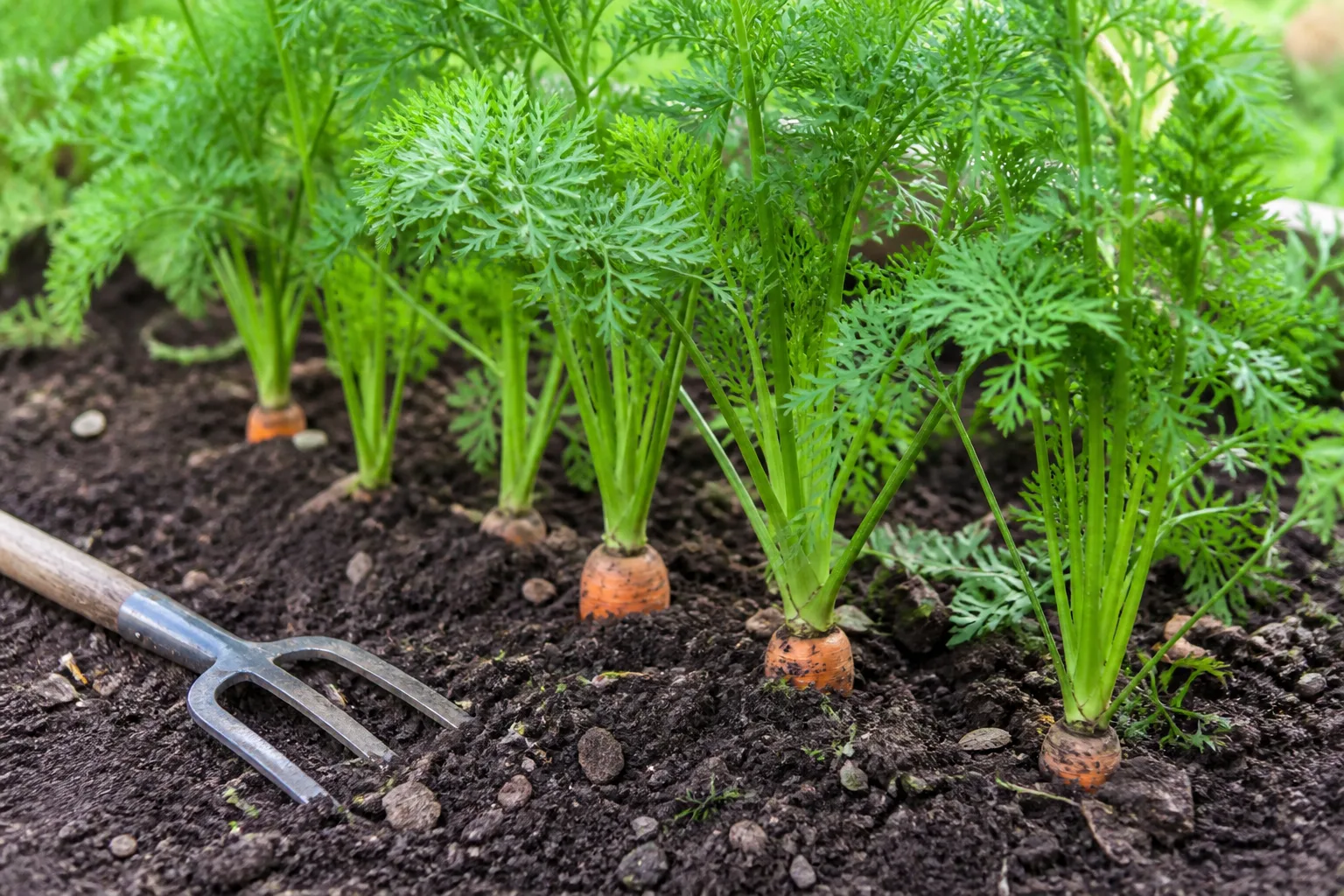
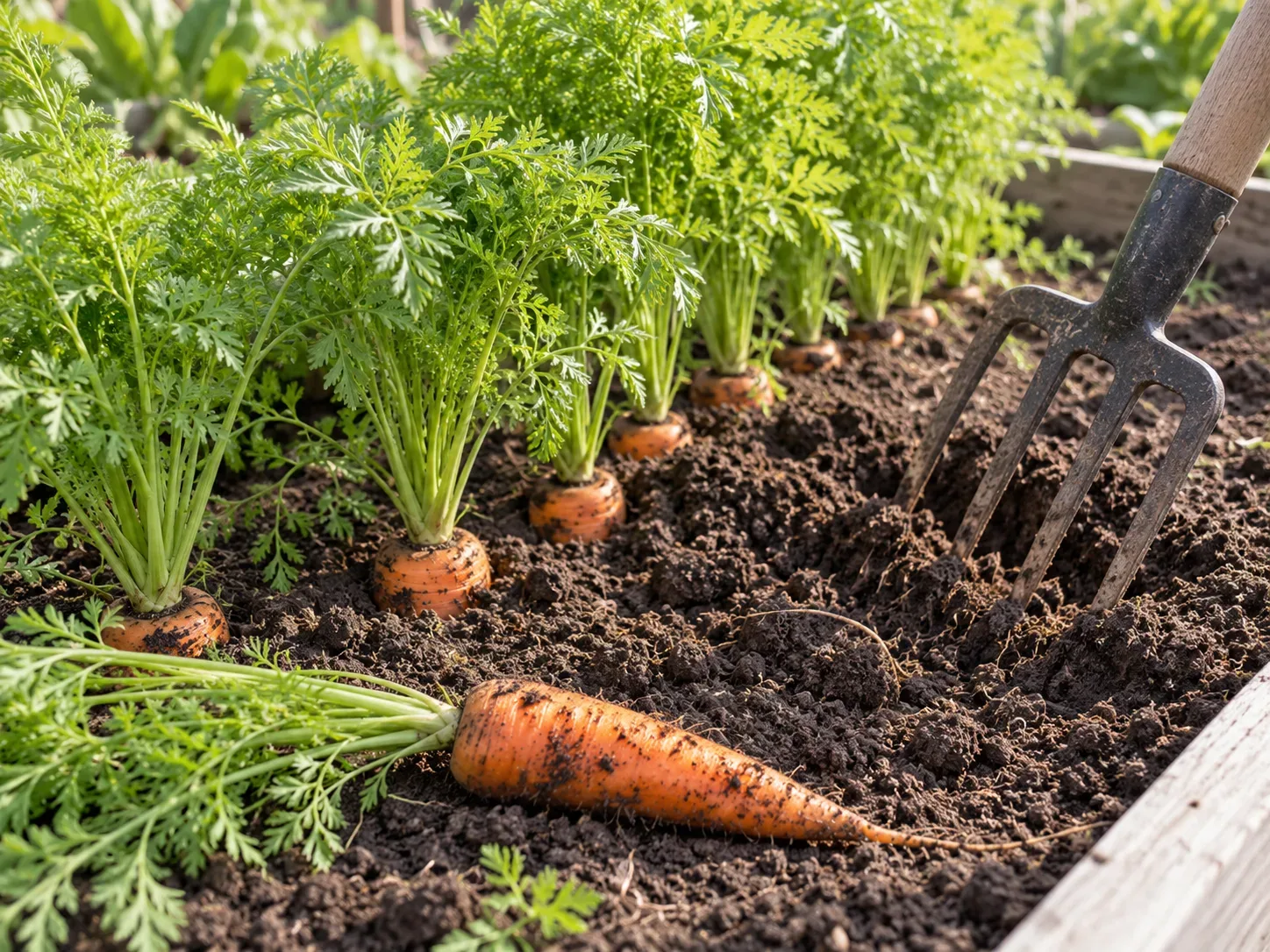
Brush soil away gently to see the top of a root without pulling the entire row. If the shoulder looks close to the expected size, loosen one carrot with a hand fork and taste it. Harvest a few early if you prefer tender roots, or let the rest continue sizing up while conditions remain cool and the soil is workable.
Water dry soil before harvesting, then loosen around the root rather than pulling hard on the foliage. Carrots can snap if the soil is compacted or the root is long. Lift the crop in sections so smaller roots have time to grow, but avoid leaving mature carrots too long in hot soil or in a bed where pests are spreading.
Store carrots after harvest
Twist or cut off the foliage soon after lifting because leaves continue to draw moisture from the root. Brush off loose soil and keep the roots cool. If you need to wash them, dry the surface before packing; damp storage encourages decay. Store undamaged carrots in a perforated bag or a humid refrigerator drawer.
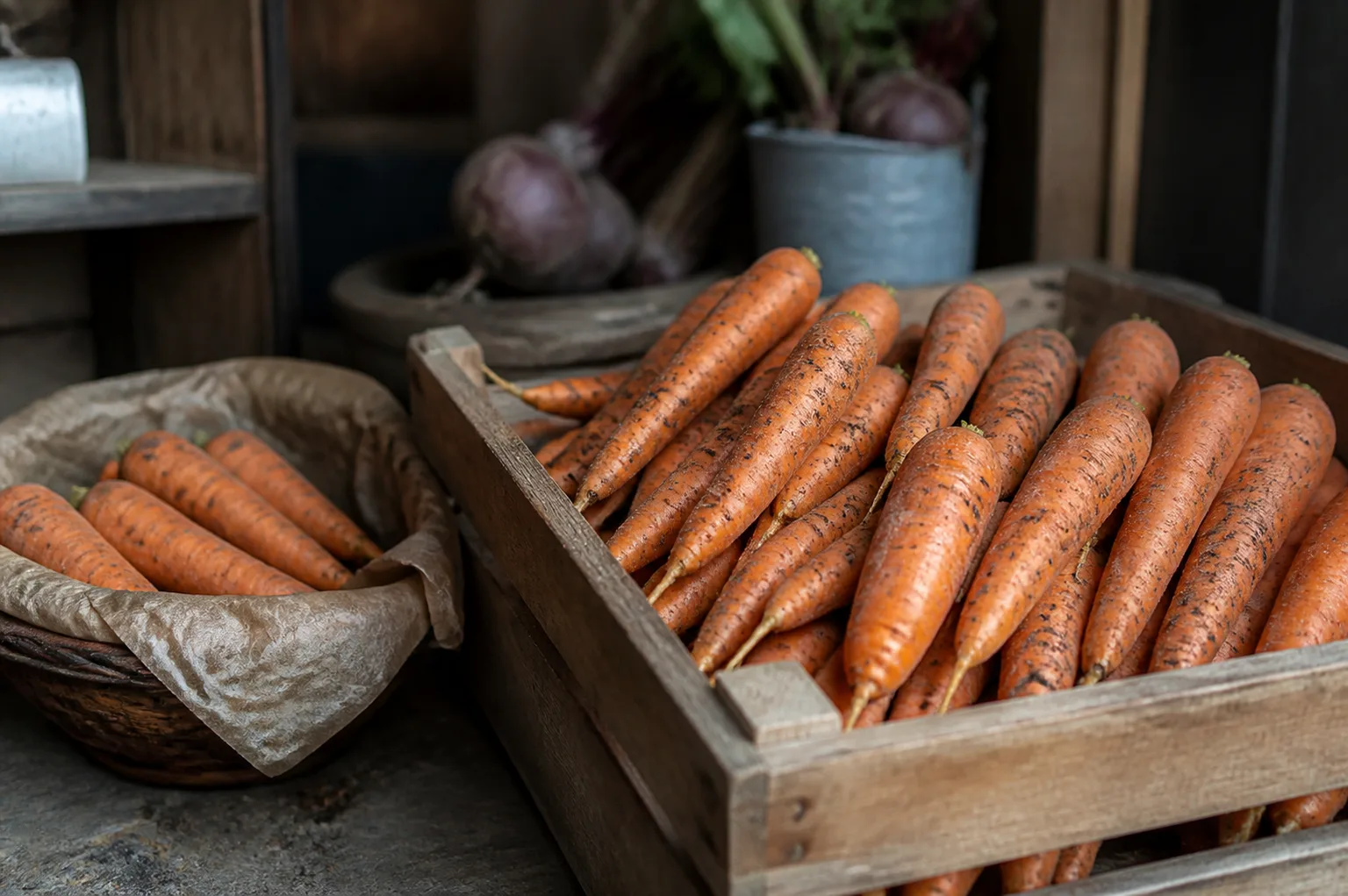
For a larger harvest, remove the tops, sort out cracked or pest-damaged roots for immediate use, and store sound roots in a cool, humid location appropriate to your climate. Do not store carrots that are soft, slimy, or visibly rotting beside healthy ones. Check stored roots periodically and use any that begin to shrivel or soften.
Troubleshoot weak, misshapen, or uneven crops
A problem with carrot roots often starts earlier than the symptom becomes visible. Use this table to match what you see to the most likely conditions, then make one change at a time in the next sowing.
| What you see | Likely causes | What to change |
|---|---|---|
| Few seedlings or gaps in the row | Seed zone dried out, crusted soil, seed sown too deeply, old seed, or seed washed away | Resow a short test section in fine soil, cover lightly, and maintain surface moisture with gentle watering. |
| Forked or twisted roots | Stones, hard clods, compaction, fresh manure, transplanting, or root injury during thinning | Loosen the full root zone, use finished compost, sow directly, and snip seedlings instead of pulling them. |
| Large tops with small roots | Crowding, too much nitrogen, insufficient light, or slow growth from stress | Thin to packet spacing, stop feeding, check sun and root-zone moisture, and give the crop time in suitable weather. |
| Roots are split | Soil repeatedly dried and then soaked, or roots remained in the ground as they grew large | Keep moisture steadier and harvest when roots reach the size you want. |
| Rust-colored tunnels inside roots | Possible carrot rust fly larvae; other root damage can look similar | Remove affected roots, rotate crops, and ask local extension staff about regional flight timing and row-cover use. |
Do not assume that every crooked carrot is diseased or unsafe. Forked roots are commonly a response to physical obstacles or root disturbance; trim the damaged area and use the rest if it is firm, clean, and free of decay. If roots are soft, foul-smelling, or extensively tunneled, discard the damaged portion and correct the cause before the next crop.
If seeds failed to emerge, wait long enough to account for cool soil before digging up the row. You can gently inspect one small area after the expected germination window; if seeds are missing or rotted, reseed rather than flooding the entire bed. For a later crop, prepare a finer seedbed and use a marker or short cover to help hold moisture without blocking new seedlings.
Conclusion
The best carrot harvest starts below the surface. Match the variety to your soil depth, remove stones and compaction, sow directly into a fine seedbed, and keep the seed zone moist until the slow seedlings appear. Then thin carefully, weed shallowly, and maintain even moisture as roots develop.
Carrot growing dates, harvest size, and pest pressure differ by region and cultivar, so use local planting guidance and the packet as your starting point. When a crop goes wrong, look first for a fixable growing condition—soil, moisture, spacing, or timing—before adding fertilizer or reaching for a treatment. That approach gives the next row a better chance at straight, flavorful roots.