When Are Carrots Ready to Harvest? Three Clear Signs
Know when carrots are ready to harvest by checking days to maturity, root shoulders, and a test pull. Then lift, trim, and store them gently to prevent damage.
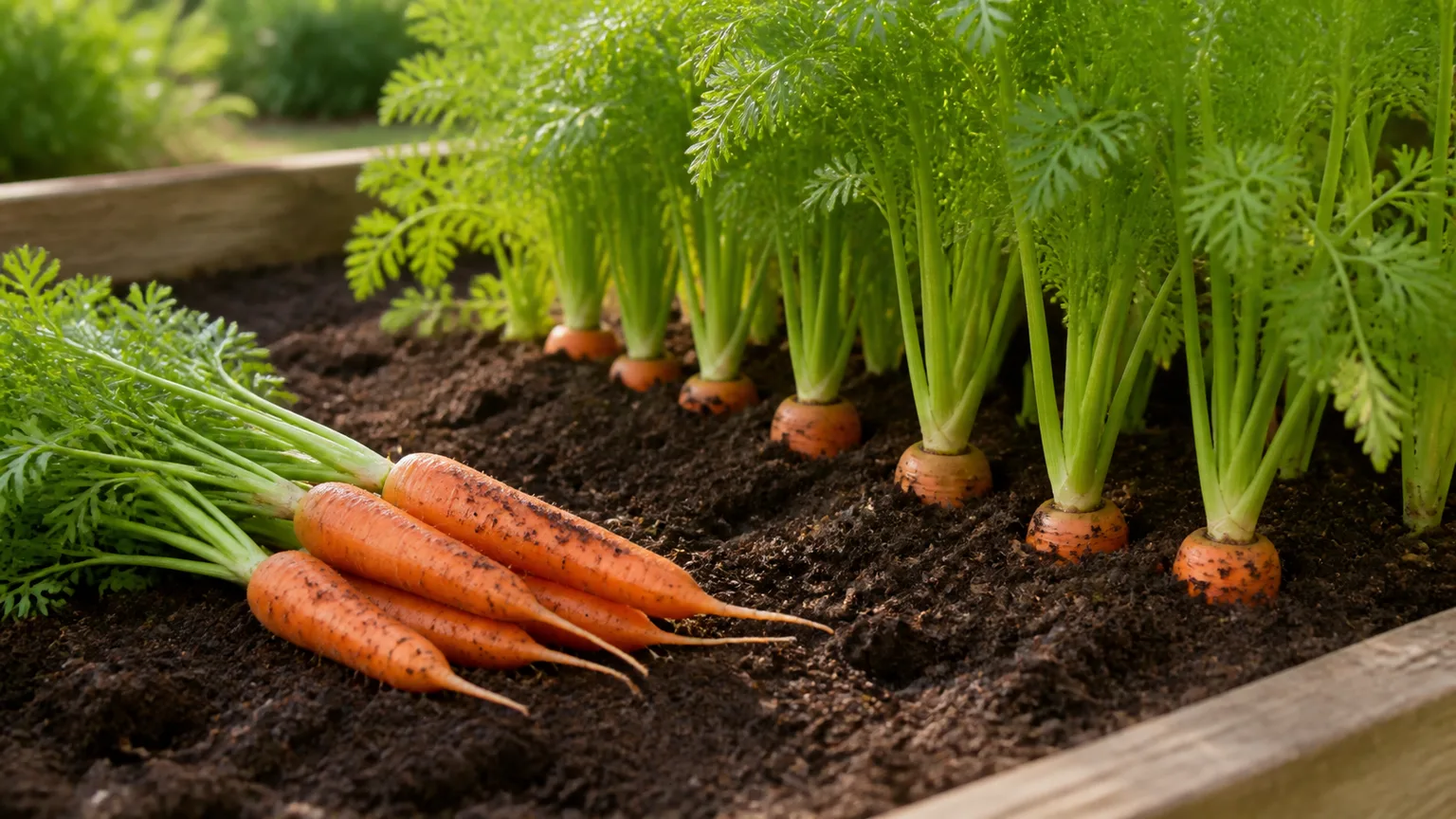
Carrots are ready when their roots have reached a useful size for their variety and taste tender—not on one universal day after sowing. Start checking around the maturity window on the seed packet, look at the width of the root shoulder just below the leaves, and pull one carrot as a sample. If it is the size and texture you want, harvest the row selectively or lift the crop; if it is still thin, cover the shoulder again and give the rest more time.
That three-part check works better than relying on foliage alone. Carrot greens can look lush while the root is still narrow, or start declining because of heat, drought, disease, or frost even though the root itself is usable. The goal is not to wait for the largest possible carrot. It is to choose the point when the crop suits what you plan to cook, eat fresh, or store.
The quick answer: use three cues together
Use the seed packet to decide when to begin checking, not as a guaranteed harvest date. Count from sowing, then compare the plants with the variety’s expected size and inspect one root. Many carrots are ready in roughly 55 to 80 days, but some take longer; the Virginia Cooperative Extension lists 55 to 80 days for its regional guidance, while the Royal Horticultural Society (RHS) gives about 12 to 16 weeks for its broad growing guide. Those estimates reflect different varieties and conditions, so your own packet is the better clock for a known cultivar.
Next, check the shoulder—the top of the orange, purple, yellow, or white root where it meets the greens. A shoulder that has widened to the size you want is a useful clue, but its color and visibility are not enough by themselves. Finally, test-pull one carrot. That sample tells you more than a guess based on the foliage: you can judge diameter, length, tenderness, and flavor before deciding whether to pull more.
| Harvest goal | Approximate shoulder cue | What to do |
|---|---|---|
| Baby carrots | Pencil-thin to about ½ inch, depending on variety | Pull a few early for tender eating; do not expect long storage |
| Fresh eating | Often about ½ to ¾ inch or the size stated for the variety | Test one and harvest as needed |
| Larger roots for cooking or storage | Often around ¾ inch or more; some cultivars are intended to grow larger | Confirm with the packet and a test pull, then lift carefully |
These are practical ranges, not a grading standard. Virginia Cooperative Extension describes typical harvest at about ½ to ¾ inch in diameter, while Texas A&M AgriLife Extension gives 1 to 1½ inches for its local guidance. The variation is a reminder to consider carrot type, intended use, climate, and personal preference rather than forcing every root to meet one measurement.
The three signs that matter most
1. The seed-packet window has arrived
The “days to maturity” on a seed packet gives you a date to start inspecting the crop. It is an estimate for that variety under favorable growing conditions, not a countdown that overrides everything happening in your bed. Cool weather, inconsistent moisture, dense planting, competition from weeds, or a compacted root zone can slow development. Warm weather can also reduce quality, so a crop may not benefit from waiting longer simply because it has not reached a calendar target.
Carrots are usually sown directly where they will grow because disturbing the taproot can lead to forked or bent roots. Count the maturity period from the sowing date unless the seed company defines it another way. If you sowed in several batches, note each date separately; a row planted three weeks later should not be judged by the first row’s schedule.
Use the estimate as a reminder to check weekly, then more often as roots approach the packet’s expected size. The RHS crop planner emphasizes recording sowing and harvest timing as part of crop planning. A simple label with the variety and sowing date is enough to make a staggered planting much easier to read.
2. The root shoulder has reached your target size
The shoulder is the exposed or just-below-soil top of the edible root. As a carrot swells, this section often becomes visible at the soil line. Gently brush away only enough soil to see its width. Do not yank the plant upward for a preview or dig down alongside the root with a sharp tool; either can injure a carrot you intended to leave growing.
Diameter is more useful than how much of the root sticks above the surface. Rain, settling soil, shallow sowing, or erosion may uncover a shoulder before the root has finished enlarging. If the top is exposed to sunlight for a while, it can turn green and develop a less pleasant flavor. If the carrot is still too small, push loose soil or mulch back over the shoulder after inspecting it.
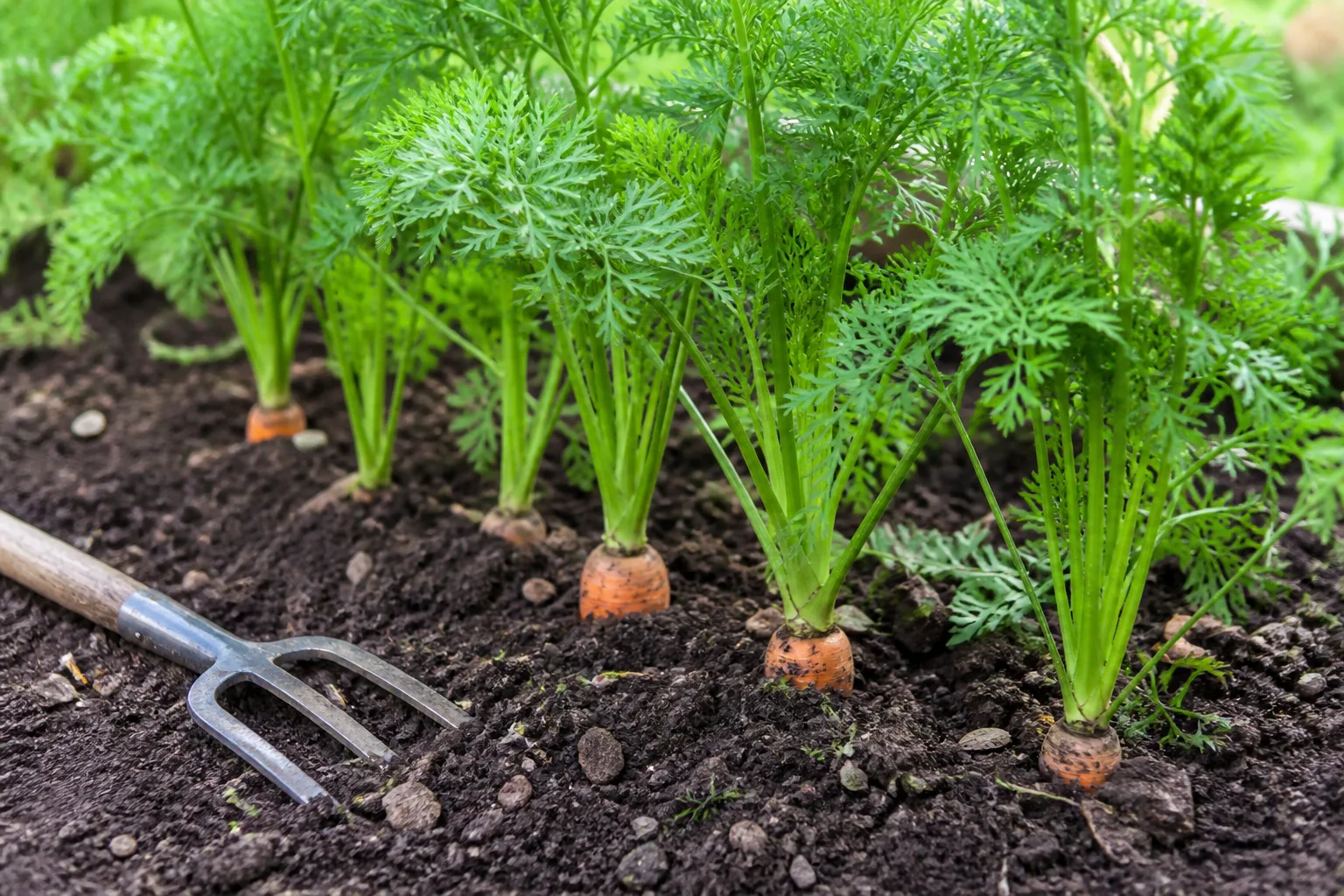
For a rough starting point, many gardeners begin tasting at about ½ inch across and let roots grow toward ¾ inch or more if they want larger carrots. The Virginia Cooperative Extension guide says roots may be harvested once they reach an acceptable size and gives ½ to ¾ inch as a usual diameter. Larger types, including long-rooted Imperator carrots, may have a different mature shape and need deeper, looser soil than short or finger varieties. Read the variety description before treating the shoulder as a strict size limit.
3. A test pull shows the size and flavor you want
When the calendar and shoulder suggest readiness, pull one carrot from a representative part of the row. Choose a plant that looks typical, not the smallest seedling or the one at the sunny edge of the bed. If it is small but crisp and pleasant, you can harvest young carrots for immediate use. If it is narrow, woody, cracked, or still has a strong raw flavor, use that information to adjust the rest of the harvest.
One sample cannot predict every root in a crowded or uneven row. Soil depth, spacing, shade, irrigation, and seed germination vary across a bed. If the sample is too small, leave the remaining plants in place and test another one in several days to a week. If you want a mix of sizes, pull the largest shoulders first and give smaller roots more room to develop.
This is also the simplest way to learn your own variety. A short Nantes carrot can be ready well before a long Imperator reaches its full length, and both may have a shoulder that looks mature at a different point. Savvy Gardening’s harvesting guide likewise recommends combining the calendar with visual checks and the gardener’s preferred eating size; the useful takeaway is to use the test root to calibrate your row rather than depend on a generic photo.
Choose a harvest size for how you will use the carrots
Pick baby carrots while they are small and tender
You can harvest carrots before they reach full size. Young roots are edible and often tender, so pull a few when you want a small, crisp snack or an early crop. The trade-off is yield: each early pull is a smaller carrot than that plant could have produced later, and small roots are less suited to long storage because they lose moisture more quickly.
Do not confuse garden baby carrots with the uniformly shaped, peeled pieces sold as “baby-cut” carrots. Those grocery pieces are usually made from mature carrots cut and polished to size. In a home garden, a baby carrot is simply an immature root harvested young. Thin a dense row by pulling a few usable roots if the remaining carrots have enough space; avoid disturbing the roots you leave behind.
Let storage carrots mature, but do not chase maximum size
If your plan is to store a harvest, wait until roots are well developed for their variety rather than lifting the smallest usable carrots. Bigger is not automatically better, however. Overgrown carrots can become fibrous or woody, and some roots crack after uneven water supply or prolonged growth. Harvest when the test carrot is mature and still has a texture you like, then keep an eye on the remaining row instead of leaving it indefinitely.
The RHS advises harvesting carrots when they are large enough to use and notes that flavor can decline if you aim only for the biggest roots. For a steady kitchen supply, lift a few at a time while the weather and soil allow, or sow short rows at intervals so the harvest is spread out. That is often more dependable than trying to keep one entire mature crop perfect for months.
What carrot tops can and cannot tell you
Healthy, leafy tops confirm that a plant has been growing, but they do not reveal the root’s exact size. Carrot foliage varies by cultivar and growing conditions, and dense or vigorous tops can coexist with small roots when plants are crowded or receive excess leafy growth relative to root development. Treat the tops as a reason to inspect below the soil, not proof that every carrot is ready.
Yellowing or drooping leaves are even less precise. Older outer leaves naturally age, while heat, drought, waterlogging, pests, or disease can cause foliage to decline. A yellow top might prompt you to test a carrot, but it is not a harvest signal on its own. If the whole row suddenly turns yellow or stunted, inspect the plants and soil for a growing problem; harvesting may save usable roots, but it will not correct the underlying cause.
Carrot shoulders that peek above the soil are easier to assess, yet exposure does not mean the root is fully mature. Epic Gardening notes that shoulder development and cultivar size can help judge readiness, while exposed crowns may need soil cover. Use a light hand to uncover one shoulder, return the soil if the root needs more time, and confirm the decision with a test pull.
How weather changes the harvest window
Carrots are cool-season crops, and moderate temperatures generally favor steady root development. In spring, harvest tender roots before a heat wave or the crop may become less pleasant to eat. For a fall planting, cool weather can extend the harvest period, but local rain and soil drainage matter as much as the thermometer.
A light frost is not an automatic reason to pull every carrot. A cold-tolerant crop may remain in the bed for continued harvest where the ground does not freeze solid and soil drains well. Some gardeners find late-season roots sweeter, but sweetness varies with cultivar and growing conditions; do not rely on frost as a guarantee. If a hard freeze is forecast and you will not be able to dig later, lift the crop before the soil becomes unworkable.
Wet winter ground changes the decision. Carrots can be damaged or rot in saturated soil, so a poorly drained bed is a poor place to keep a crop for winter storage. The RHS guidance recommends lifting roots for storage if the ground becomes waterlogged and describes covering in-ground carrots with straw or cardboard in suitable conditions. In a cold region, mulch may help protect the bed and keep soil workable, but the right approach depends on your winter and drainage.
How to harvest carrots without snapping the roots
Loosen the soil before lifting
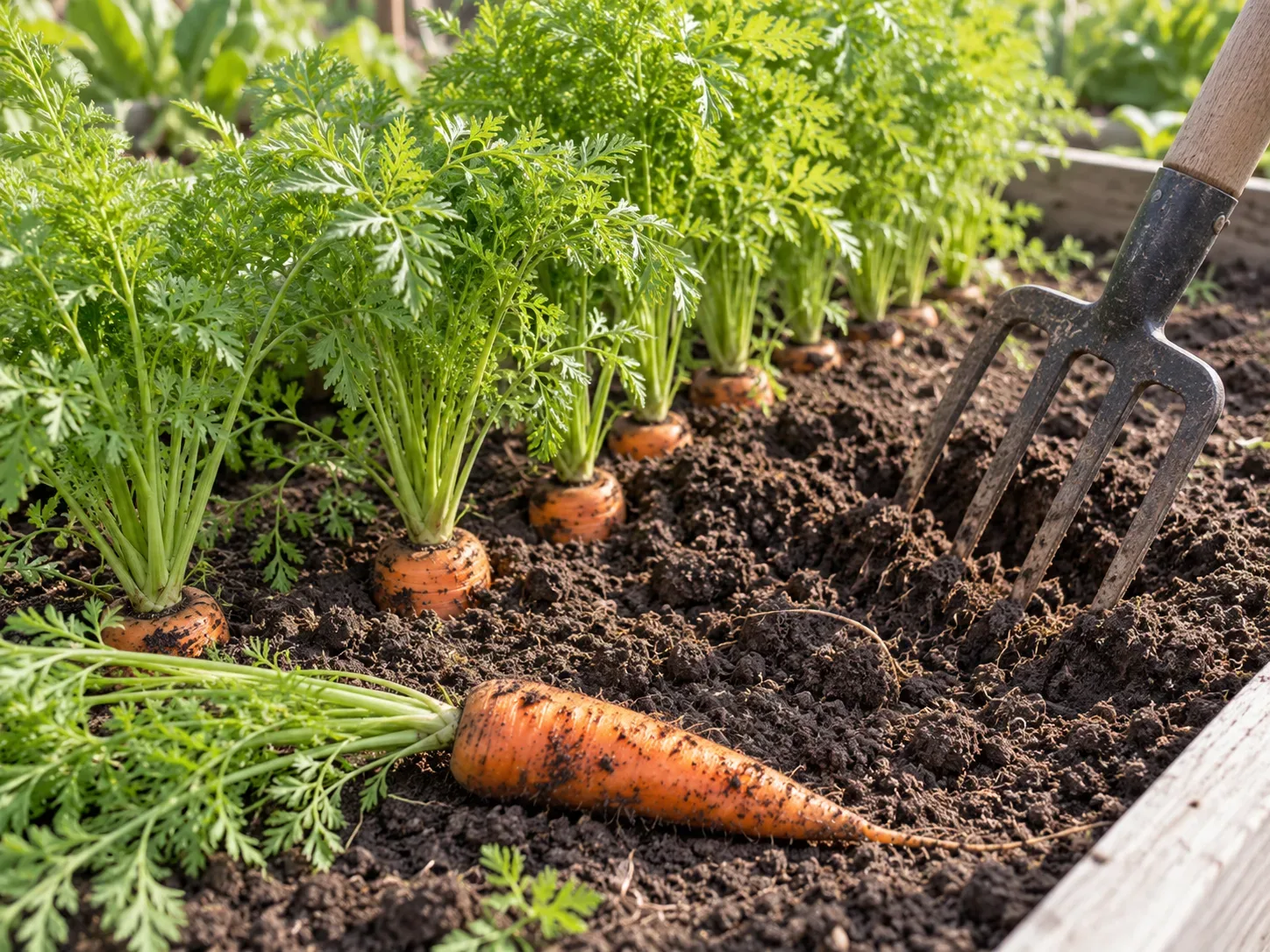
Carrots break when the top is pulled against soil that grips the long root. Watering the bed beforehand can help if the soil is dry and hard, but wait until the surface is workable rather than muddy. A moist, friable bed releases roots more gently; saturated clay can smear, compact, and make digging unpleasant.
For a single carrot in loose soil, hold the greens close to the crown and ease the root upward with a gentle rocking motion. If the tops begin to separate or the root resists, stop pulling. Slide a garden fork or narrow trowel into the soil a few inches to the side of the row, angle it beneath the root zone, and lift the soil to loosen it. Keep the tool away from the carrot itself, then lift the root by its crown.
For a row, loosen a short section at a time so the exposed roots do not sit in direct sun while you work. Heavy or stony soil needs more care and may favor shorter carrot varieties in future plantings. Texas A&M AgriLife Extension specifically recommends loosening soil around carrots to prevent breakage; the RHS also advises careful fork-lifting, particularly in heavy ground.
After harvest: trim, clean, and store the roots
Refrigerate a small harvest for everyday use
Twist or cut the leafy tops off soon after lifting, leaving a short stub rather than cutting into the crown. Greens continue to draw moisture from the roots, so separating them helps the carrots stay firm. Use the tops promptly if they are clean and healthy, or compost them; do not store them attached to the roots for an extended period.
For carrots you will eat soon, wash away soil under cool running water, let the surface dry, and refrigerate in a bag or container that helps limit moisture loss. A crisper drawer is convenient, but avoid sealing damp roots in a way that traps condensation. Check the bag periodically and remove roots that become slimy, soft, or moldy. Texas A&M AgriLife Extension recommends storing washed carrots in a plastic bag in the refrigerator; household conditions vary, so use the carrots’ condition rather than a promised number of weeks as your guide.
Store a larger crop in a cool, humid place
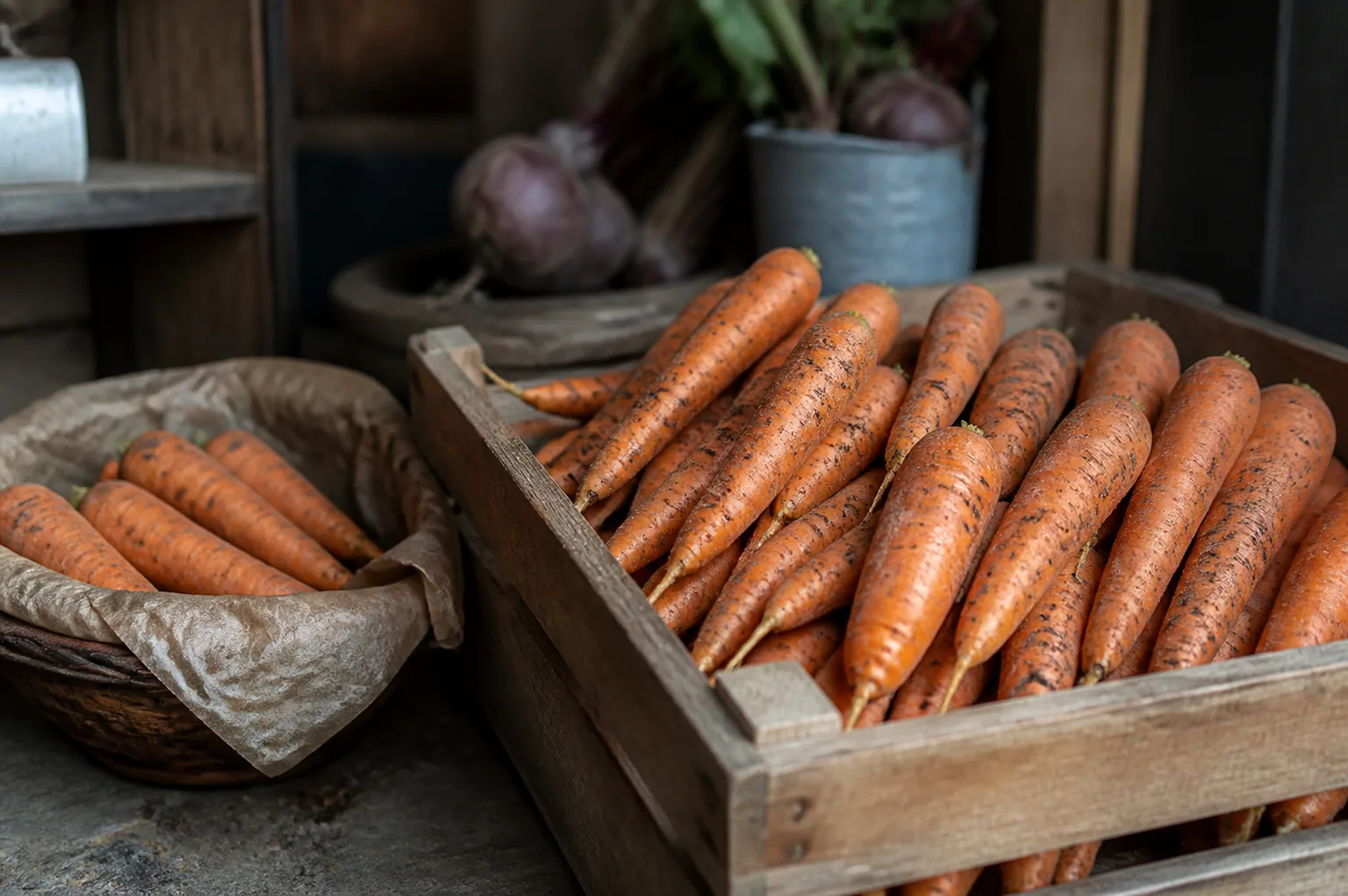
If you have a root cellar or another reliably cold, humid storage space, mature carrots can keep longer when their greens are removed and the roots are protected from drying. Brush off loose soil and pack sound, unwashed carrots so they are separated by a slightly damp medium such as clean sand. The medium should feel damp, not wet; excess moisture encourages decay. Inspect the box regularly and remove any root that begins to rot.
Virginia Cooperative Extension lists cool conditions near 33°F and high relative humidity for carrot storage, with different expected storage periods for immature and mature roots. A typical home basement may be too warm or dry to match those conditions, so do not assume a dark room is a root cellar. If you cannot maintain cool, humid storage, the refrigerator is the safer choice for a homegrown harvest.
Can carrots stay in the ground?
Yes, sometimes. Leaving carrots in the garden is a form of short-term storage when the soil is cool, well drained, and still diggable. Remove the tops if you are protecting a mature bed for later harvesting, and cover the row with a loose insulating mulch where appropriate. Mark the row before foliage dies back so you can find the roots.
This option becomes less practical when heavy rain keeps the bed saturated, pests are damaging the roots, warm spring weather is returning, or the ground is likely to freeze solid before you can dig. Roots that overwinter may start new growth in spring; as the plant shifts toward flowering, the root can become less tender. Harvest remaining carrots before new growth develops, and do not leave a crop in place simply because a mild frost occurred.
What if carrots are small, split, woody, or misshapen?
Small carrots may simply need more time, but they can also reflect a short-rooted variety, close spacing, poor germination, weeds, compact soil, or inconsistent water. Test one root and compare it with the packet description before deciding. If it tastes good, eat it young; if it is still firm and undersized, let the others grow while keeping moisture reasonably steady.
Cracks often follow swings between dry soil and a sudden increase in water. Virginia Cooperative Extension cautions that moisture should support steady growth and be reduced as carrots approach maturity to help prevent cracking. That does not mean withholding water until plants wilt; avoid alternating a parched bed with a deep soak, and harvest cracked roots promptly for use if they remain sound.
Forked or twisted roots usually point to root disturbance, rocky soil, or obstacles in the growing medium, rather than a special harvest date. They may still be perfectly edible after trimming around damaged areas. Woody texture can mean the carrot was left too long, grew through difficult heat, or belongs to a variety with a firmer mature texture. A test pull is the quickest way to distinguish “not ready yet” from “past the best eating stage.”
Common carrot-harvest mistakes to avoid
The most common mistake is treating one signal as decisive. A packet date is an estimate, visible shoulders can be exposed too early, and top color can reflect stress rather than maturity. Pair the three cues and let one test root settle the question.
Another mistake is pulling hard before loosening the soil. If the greens snap, the carrot may still be buried, and digging around it blindly risks cutting the root. Use a fork beside the row, not through it. Also avoid washing carrots intended for cool cellar storage unless you can dry them thoroughly; surface moisture can encourage rot in a packed box.
Finally, do not wait for every carrot to reach the same size or assume frost always improves flavor. Harvest the largest roots when they suit your needs, leave smaller ones if the weather and soil favor continued growth, and lift the crop before waterlogged soil, a hard freeze, or spring regrowth makes waiting a bigger risk than harvesting.
Conclusion
The best time to harvest carrots is when the variety has had enough time to develop, the shoulder matches your preferred size, and a test root tastes and feels right. Use the packet date to begin checking, not to dictate the final day, and do not judge readiness from the leafy tops alone.
Pull selectively if you want fresh carrots over several weeks. Loosen the soil before lifting, remove the greens, and choose refrigerator or cool, humid storage based on what you can actually provide. When weather or soil conditions threaten the crop, harvest the usable roots rather than waiting for a perfect size that may never come.