10 Best Vegetables to Grow in Containers for a Patio
Choose the best vegetables for pots, from quick salad greens to tomatoes and potatoes, with clear advice on light, container size, watering, and support.
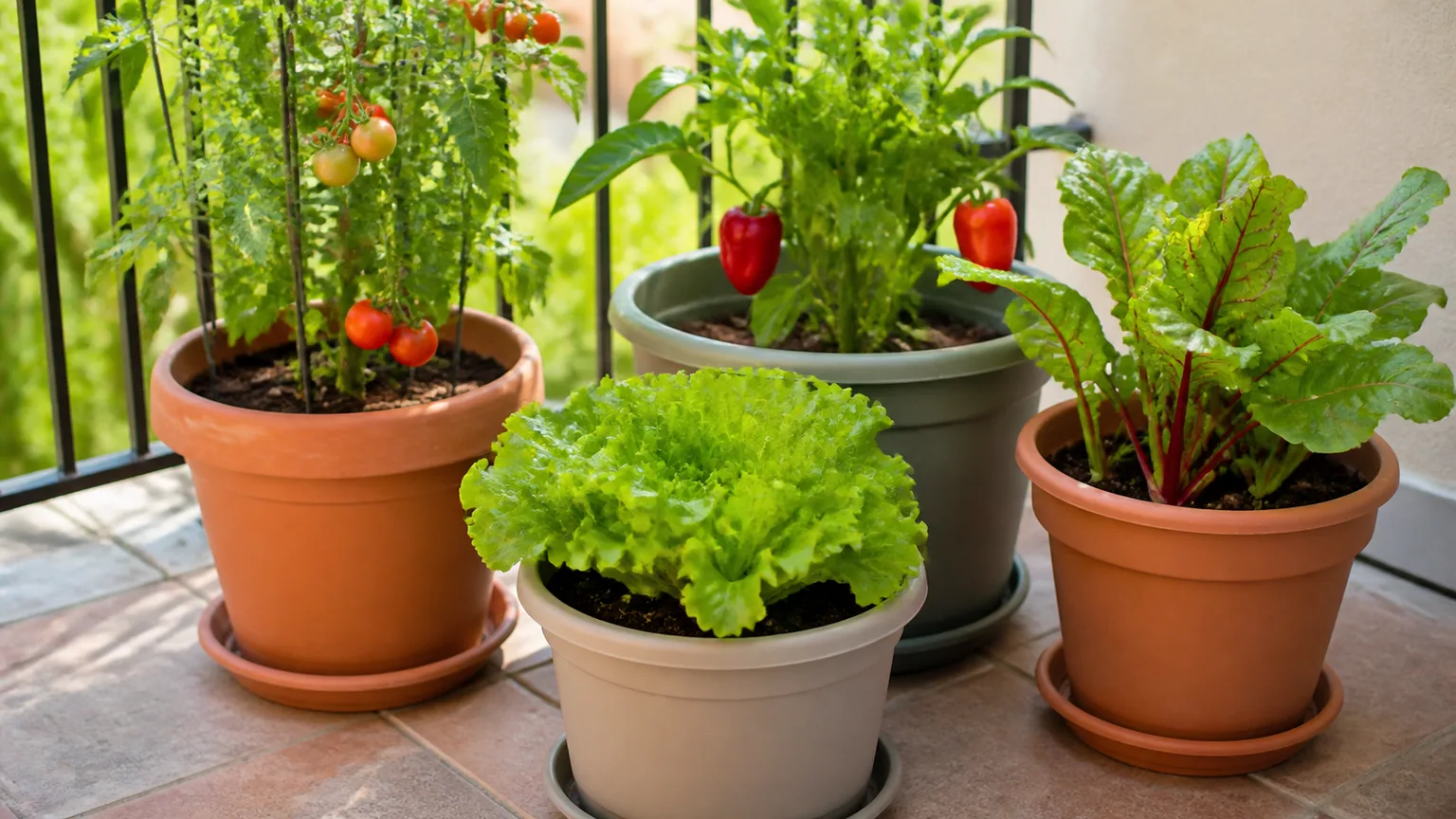
A productive vegetable garden does not need a raised bed or a patch of ground. A few well-chosen pots can supply herbs and salad greens for weeks, or support larger crops such as tomatoes, peppers, and cucumbers through summer. The key is to match each crop to the sun, root room, and watering attention you can provide.
If you have only a few hours of sun, start with lettuce, arugula, or radishes. With a bright, warm patio and a large container, you can grow fruiting vegetables that need more energy and root space. The ten choices below cover both situations, with practical container sizes and the trade-offs that are easy to miss when shopping for seed packets.
Plan around light and container footprint
Watch the spot where you plan to garden for a full day before buying plants. Count direct sun on the leaves, not just brightness in the room or on the balcony; a wall, railing, tree, or roof can block more light than it first appears. Most fruiting crops in this guide need at least six hours of direct sun, and tomatoes, peppers, eggplant, and squash often do best with more.
Leaf crops can tolerate less, particularly in spring and fall. The University of Maryland Extension recommends about six to eight hours for warm-season crops and three to five for cool-season greens, while local conditions and varieties still matter (University of Maryland Extension’s container guide).
A warm, sunny location is not automatically easier. Containers on exposed balconies dry faster in wind, dark pots can heat up, and tall vines can act like sails; a sturdy, wide pot and a support anchored before planting are safer than a narrow tower improvised after the plant grows.
If your sunny hours are limited, reserve them for fruiting crops and put salad greens where they receive morning sun and some afternoon shade. You can also move a planter as the season changes, but a large wet pot quickly becomes too heavy to lift.
Choose containers, mix, water, and feed by crop
Container vegetables share a few needs, but the amount of root room differs sharply between a radish and a squash plant. Think of pot size as a water reservoir as well as a place for roots: a little extra volume gives you more time between checks and makes care less punishing during a hot spell. The ranges below are practical starting points for a single plant or modest planting; choose the larger end when space allows.
Size the pot for harvest, not survival
| Vegetable | Practical starting container | Light and support |
|---|---|---|
| Patio or determinate tomato | 5 gallons or larger, one plant | 6–8+ hours; cage or stake |
| Peas | 2–3 gallons, about 8 inches deep | Full sun; short trellis for climbing types |
| Potatoes | 10–15 gallons, opaque and well drained | Full sun; add mix around stems |
| Compact summer squash | 10 gallons or larger | Full sun; leave room for leaves |
| Leaf lettuce and salad greens | Wide pot or trough, 6–8 inches deep | 3–6 hours; cooler conditions |
| Pepper | 5 gallons or larger, one plant | 6–8 hours; stake if fruit-heavy |
| Cucumber | 5 gallons or larger, one plant | Full sun; trellis for vining types |
| Radishes | Trough 6–8 inches deep | Sun to light shade; sow thinly |
| Arugula | Wide pot or trough, 6 inches deep | Sun to partial shade; cooler weather |
| Eggplant | 5 gallons or larger, one plant | Full sun; stake compact plants if needed |
Extension charts do not agree on one universal minimum. For example, University of Maryland lists a smaller minimum for cherry tomatoes than for standard tomatoes, while other guidance recommends larger pots because they hold more water and encourage sturdier plants.
Use a seed packet’s mature size as a clue, then size up if the plant is vigorous, the spot is windy, or you cannot check moisture daily. University of Wisconsin Extension’s container vegetable guidance makes the same useful distinction between smaller leafy crops and larger fruiting plants.
Choose a container that is food-safe, stable, and has clear drainage holes; a grow bag, plastic pot, glazed ceramic pot, or food-grade bucket can work. Porous fabric and unglazed clay often dry sooner than plastic or glazed pots, so they may need more frequent watering.
Put a saucer underneath only to catch runoff, empty it after watering, and raise the pot slightly on feet so holes do not sit in a puddle. On a balcony, think about the combined weight of wet mix, containers, and supports before adding a row of large planters.
Use potting mix, not garden soil
Use a lightweight potting mix labeled for containers or vegetables. Garden soil compacts in a pot, holds too much water around roots, and may bring weed seeds or soil-borne pests; University of Maryland Extension explains that container roots cannot explore beyond the limited volume and need air as well as water.
Do not try to improve drainage by putting gravel, shards, or packing material under the mix. A continuous column of potting mix drains more reliably than a coarse layer at the bottom, according to Wisconsin Horticulture Extension.
Before planting, moisten dry mix in a tub so water spreads evenly rather than running down the sides. Fill the container close to the top, leaving enough space to water without spilling, and keep the potting surface below the rim.
Check whether the bagged mix already contains fertilizer; adding a full dose on top of a pre-fertilized blend can give seedlings more than they need. After the first few weeks, follow the mix and fertilizer labels for feeding, and use a vegetable fertilizer rather than a lawn product that may include weed killer.
Build a dependable watering routine
Do not water by weekday or assume a container needs the same amount every time. Push a finger about an inch into the mix; if it feels dry there, water slowly until moisture reaches the root zone and excess runs from the drainage holes.
Check again during heat, wind, and fruiting, when a large plant may use water quickly. A small lettuce box may need less than a tall tomato, while a fabric bag on a sunny balcony can dry between morning and evening.
The aim is evenly moist mix, not a permanently flooded pot. Repeated drought followed by a drenching can split tomatoes, make greens harsh, and stress flowering plants; constantly wet roots can lose access to air and decline.
A self-watering planter or a thin surface mulch can buffer moisture swings, but neither makes a pot maintenance-free. If water runs straight down the pot’s sides without soaking the mix, rewet it in several slow passes rather than soaking only one small spot.
Ten vegetables that earn their space
The best vegetables for a container garden depend on the harvest you want. Greens and radishes give quick returns in small pots, while tomatoes, peppers, and eggplant take longer but can produce over an extended season. Pick two or three crop types that suit your site first; a manageable mix is usually more rewarding than ten crowded pots.
1. Tomatoes
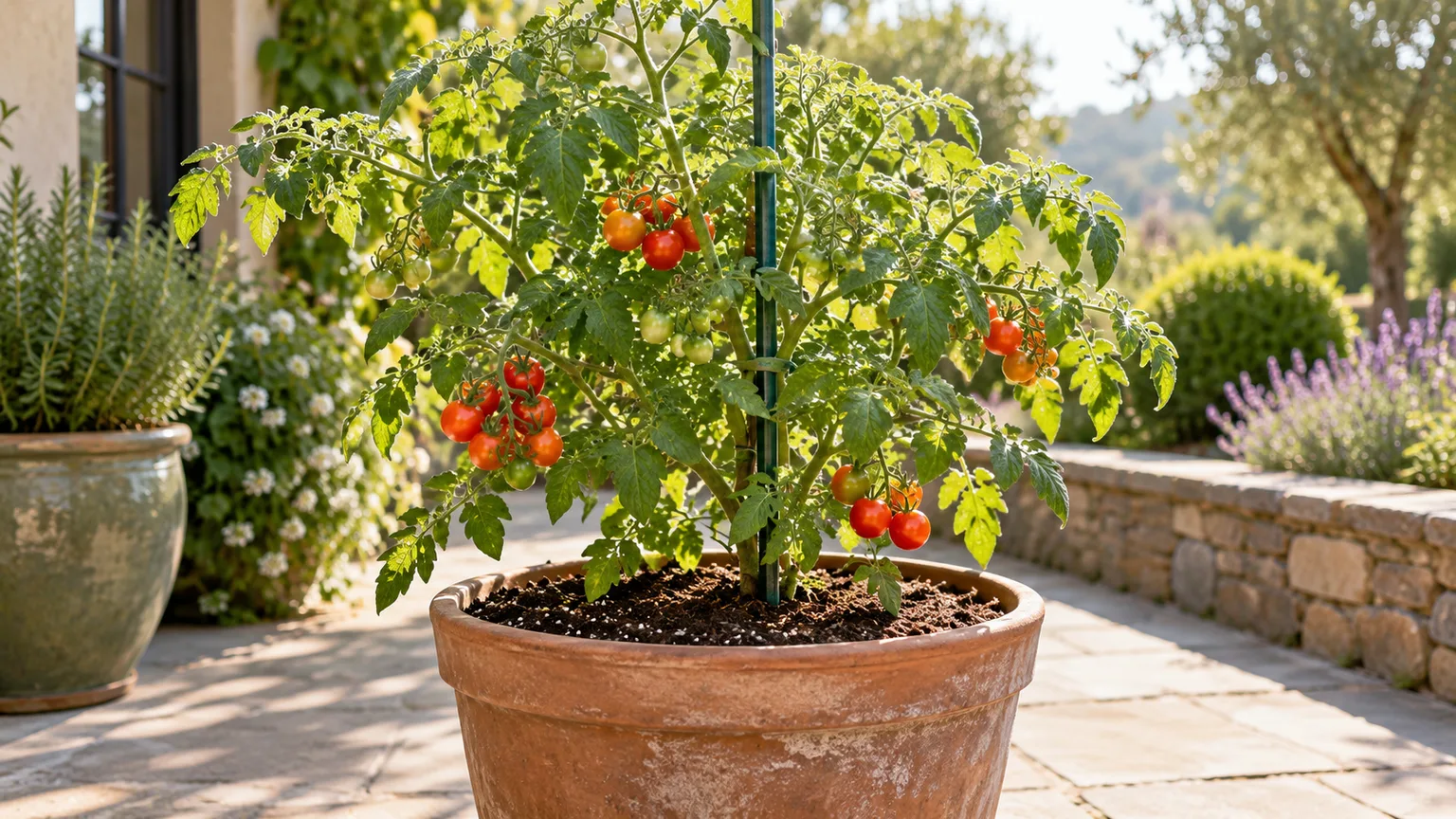
Tomatoes are the classic container crop because one healthy plant can keep producing ripe fruit over a long stretch of summer. For a balcony or small patio, choose a patio, dwarf, or determinate type with a listed mature size that fits the spot.
A compact cherry tomato is easier to support and harvest than a vigorous indeterminate vine, although a large pot and strong cage can make the latter workable. Give each full-size plant its own container instead of combining it with several thirsty vegetables.
Use a pot of at least five gallons for a compact tomato and go larger if the variety is tall or vigorous. Set the cage or stake at planting time so you do not drive it through developed roots later, and keep the plant in the sunniest position available. Water deeply and consistently; shallow, erratic watering is harder on a container tomato than a small missed feeding.
The RHS guide to growing tomatoes in pots also recommends a generous container and regular feeding once fruit begins to form. If pets can reach the planter, keep them from chewing the leaves, stems, or green fruit; Pet Poison Helpline notes that ripe tomatoes contain much less of the plant’s toxic compounds, while green fruit and foliage can cause symptoms after ingestion (tomato plant safety).
2. Peas
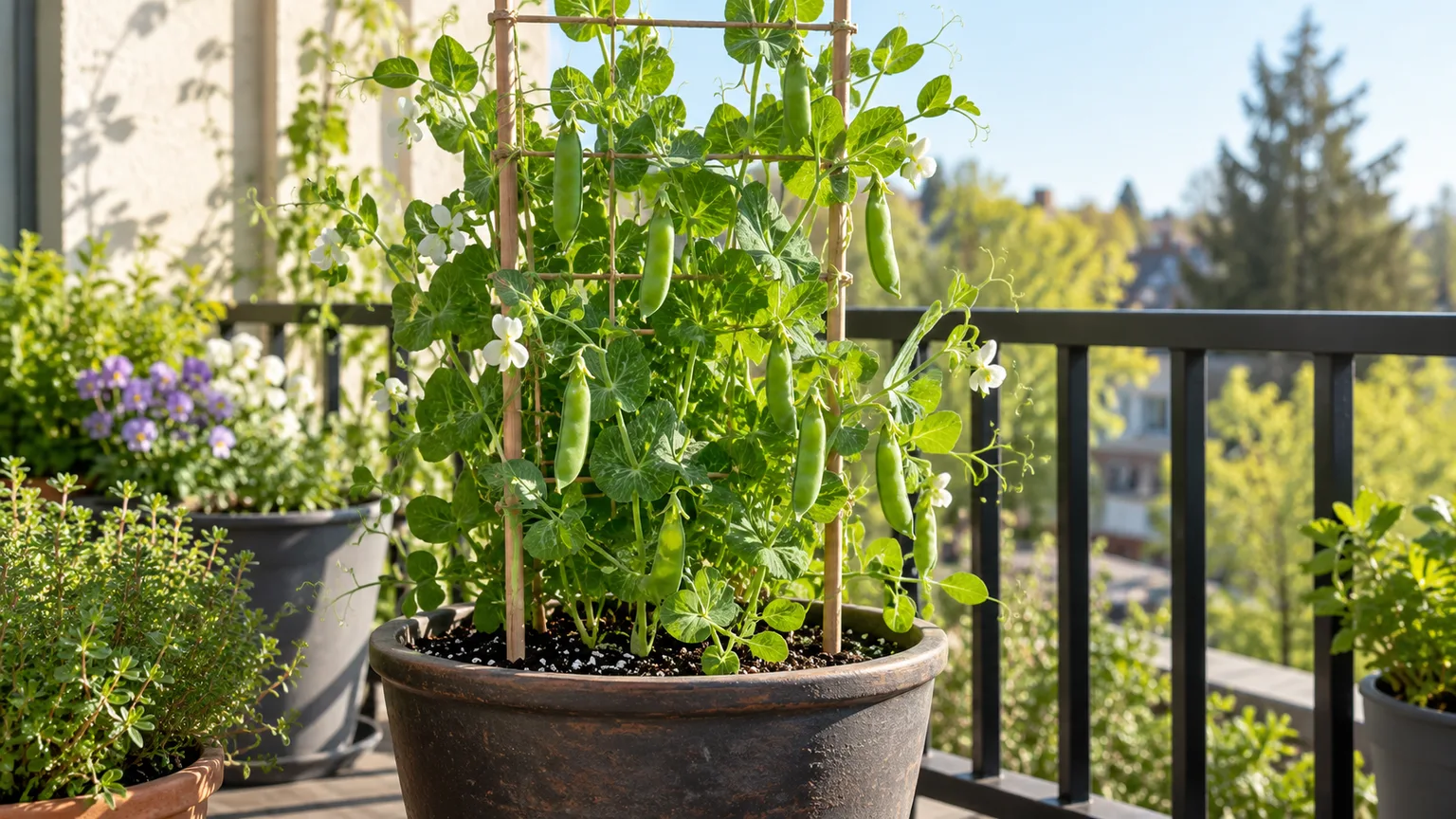
Peas are a smart choice for a cool spring or fall window, especially if you want an edible screen that grows upward instead of spreading across the floor. Choose a compact or dwarf snap or snow pea when your trellis height is limited; tall shelling peas need more vertical support.
Sow seed directly into the final pot, because seedlings can be awkward to move once their roots are established. A broad trough or 2- to 3-gallon container around eight inches deep gives a modest planting room to develop.
Add the support before the vines start reaching, and water often enough that the mix does not dry during flowering and pod growth. Heat ends the season faster than a small pot does, so do not keep trying to force a spring crop through hot weather; pull spent vines and use the container for a warm-season crop after refreshing the mix.
Pick pods while they are tender and check vines every few days, because missed pods mature and the plant may slow down. Colorado State Extension describes peas as a cool-season crop and notes that containers give them less margin for dry soil (vegetable container growing guide).
3. Potatoes
Potatoes are a rewarding container project if you have floor space for a deep, opaque grow bag or tub and do not mind watering a large volume of mix. Use certified seed potatoes when possible, and choose an early or salad type if you want a quicker harvest of small potatoes.
A 10- to 15-gallon container is a useful starting range; the RHS suggests one seed potato for a container about 12 inches across, while a wider grow bag can hold more if you can keep the plants spaced. The University of Maryland container guide warns that a potato container should not be so tall that the top dries long before the lower soil.
Set seed tubers on a few inches of mix, cover them, and add more mix around the stems as they grow, leaving the leaves exposed. This process protects developing tubers from light, which can turn potatoes green; do not mistake “hilling” for burying all the foliage.
Keep the mix evenly moist, and when the vines yellow and die back, stop watering and check whether the skins have set before emptying the bag. Avoid elaborate towers that make watering uneven or leave tubers exposed. RHS container-potato advice explains the gradual top-up method; University of Minnesota Extension details why light protection and steady early moisture matter.
4. Compact summer squash
Squash can produce a generous harvest, but it is the least space-efficient choice on this list. Pick a bush or patio summer squash rather than a long-vining winter squash, and reserve a stable container of at least ten gallons with room around it for broad leaves. Compact cultivars such as ‘Bambino’ may suit a container better than a standard zucchini, but read the packet for mature spread because “compact” does not mean tiny.
Squash needs warmth, sun, and regular moisture. It also makes separate male and female flowers, so a plant can look lush before it sets fruit; bees need access to the blooms, or you may need to transfer pollen by hand if small fruits repeatedly shrivel.
Pick fruits young and often to keep the plant producing, and remove damaged leaves only when needed rather than stripping the plant. Colorado State’s container guide notes that compact summer squash still needs substantial room and may need hand pollination when bee activity is poor (CSU Extension).
5. Lettuce and cut-and-come-again greens
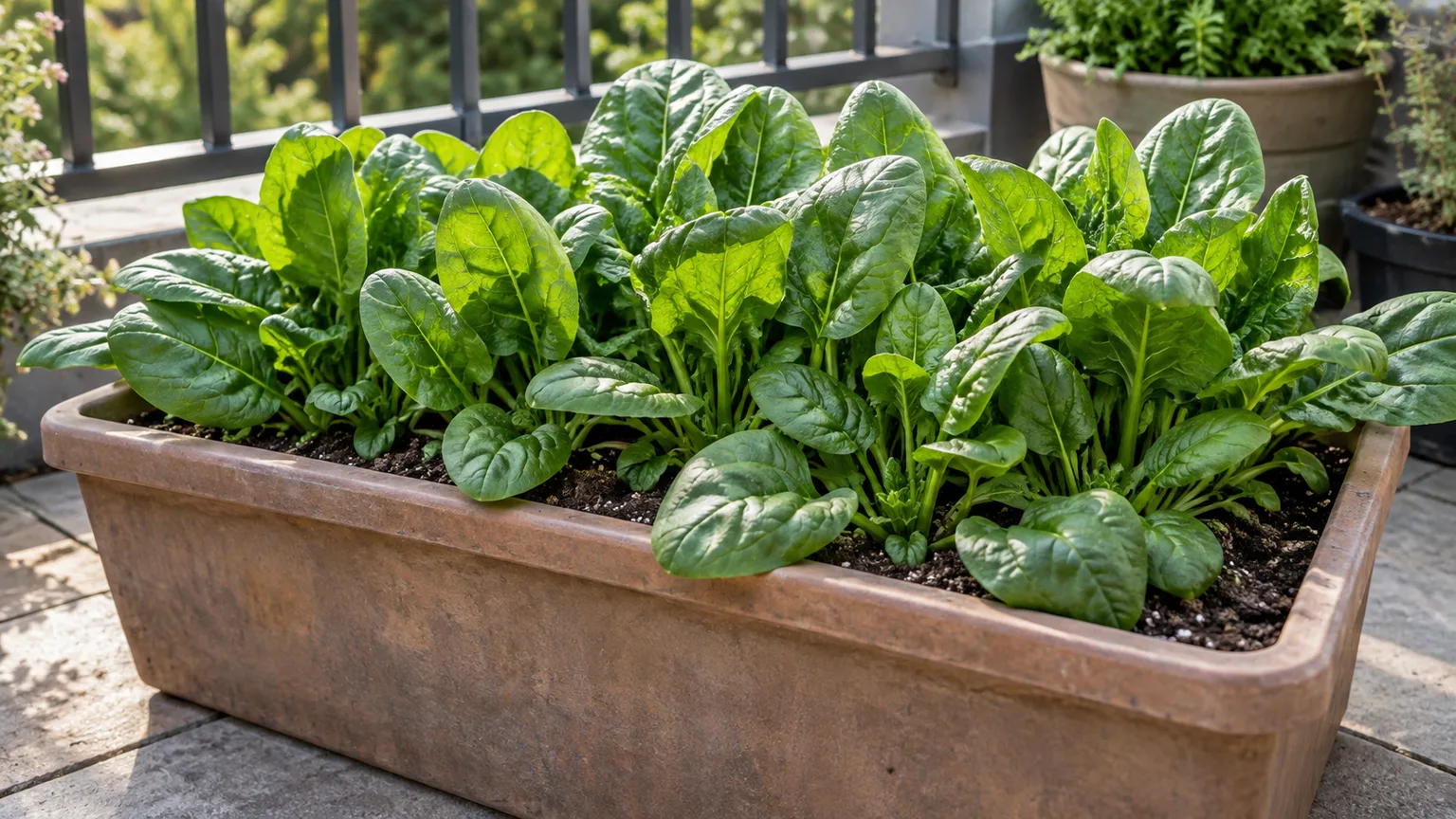
Leaf lettuce, spinach, and mixed salad greens are the best use of a wide, shallow planter when your space is brighter than sunny. A trough six to eight inches deep can hold a succession of seedlings, and you can begin cutting outer leaves while the center keeps growing.
Choose loose-leaf varieties over full-size heads if you want a longer harvest from one pot. University of New Hampshire Extension lists lettuce and arugula among crops that can be sown densely and harvested repeatedly, with new sowings every three to four weeks for continuity (UNH’s container fact sheet).
Sow a short row every couple of weeks instead of filling every container on one day. That spreads the harvest and gives you a fresh pot after an older planting becomes bitter or bolts.
Greens usually taste better in cool weather; during summer heat, move the pot out of harsh afternoon sun and keep the mix from drying completely. They will not compensate for too little light by growing indoors in a dim corner, so check actual direct sun before deciding this is a shade crop.
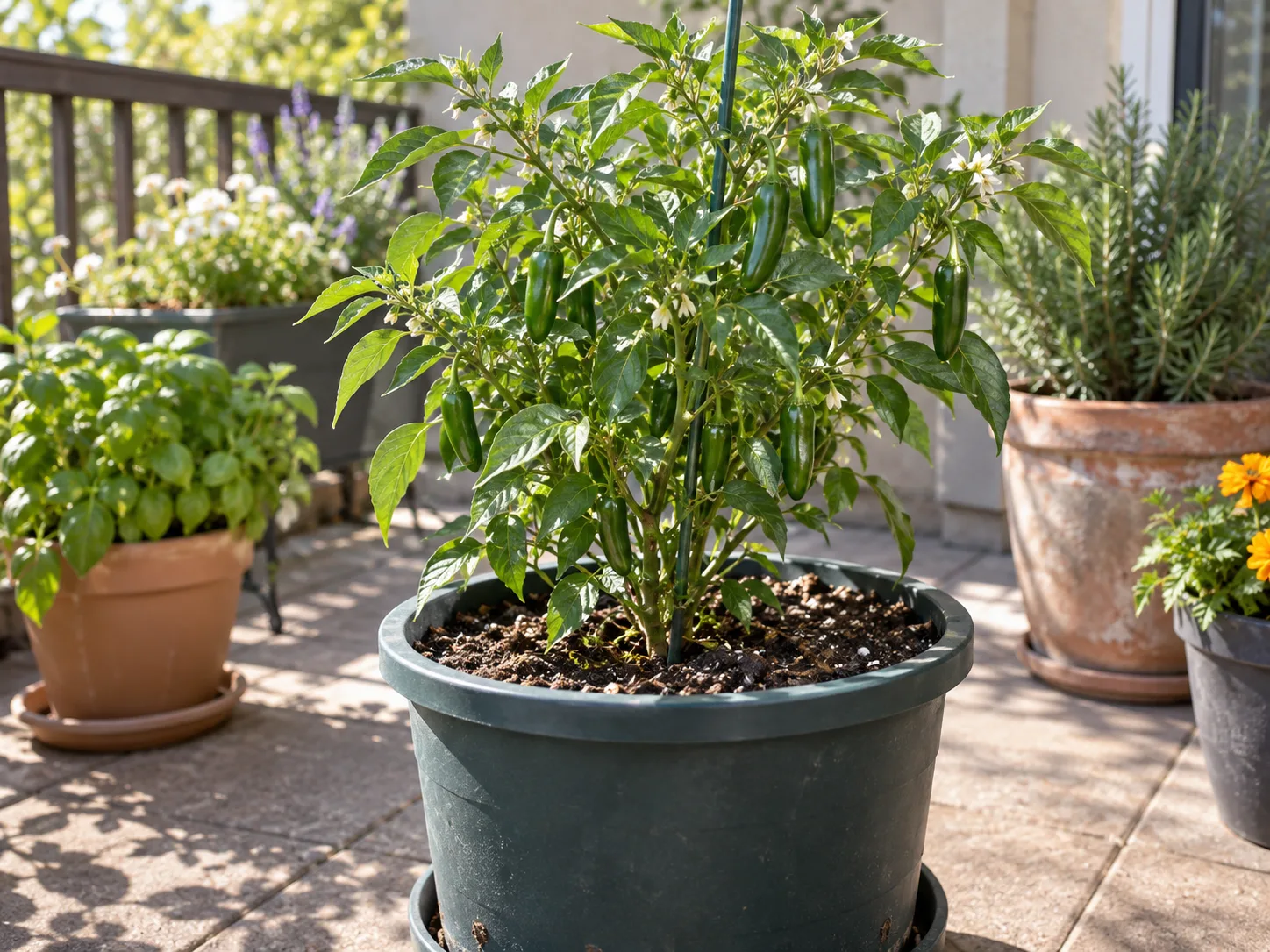
6. Peppers
Peppers reward a warm, sunny position with colorful fruit and a compact footprint. One plant can fill a five-gallon pot, and compact sweet or hot cultivars are easier to manage than a tall, heavily branched variety.
A pepper’s fruit color depends partly on how long it stays on the plant; green peppers are often simply less ripe than red, orange, or yellow forms of the same cultivar. If the plant sets a heavy crop, a small stake can stop branches from bending or breaking.
Plant after cold weather has passed and the potting mix warms. Keep moisture reasonably even while flowers and fruit develop, but do not let the roots sit in a saucer of water.
In very hot, exposed locations, a plant may pause or drop flowers; moving the pot where it still receives strong morning light but avoids extreme afternoon heat can help. University of Wisconsin’s container guidance recommends a larger pot for peppers than for small salad crops, and the RHS container vegetables guide likewise emphasizes choosing a variety and pot size that match the mature plant.
7. Cucumbers
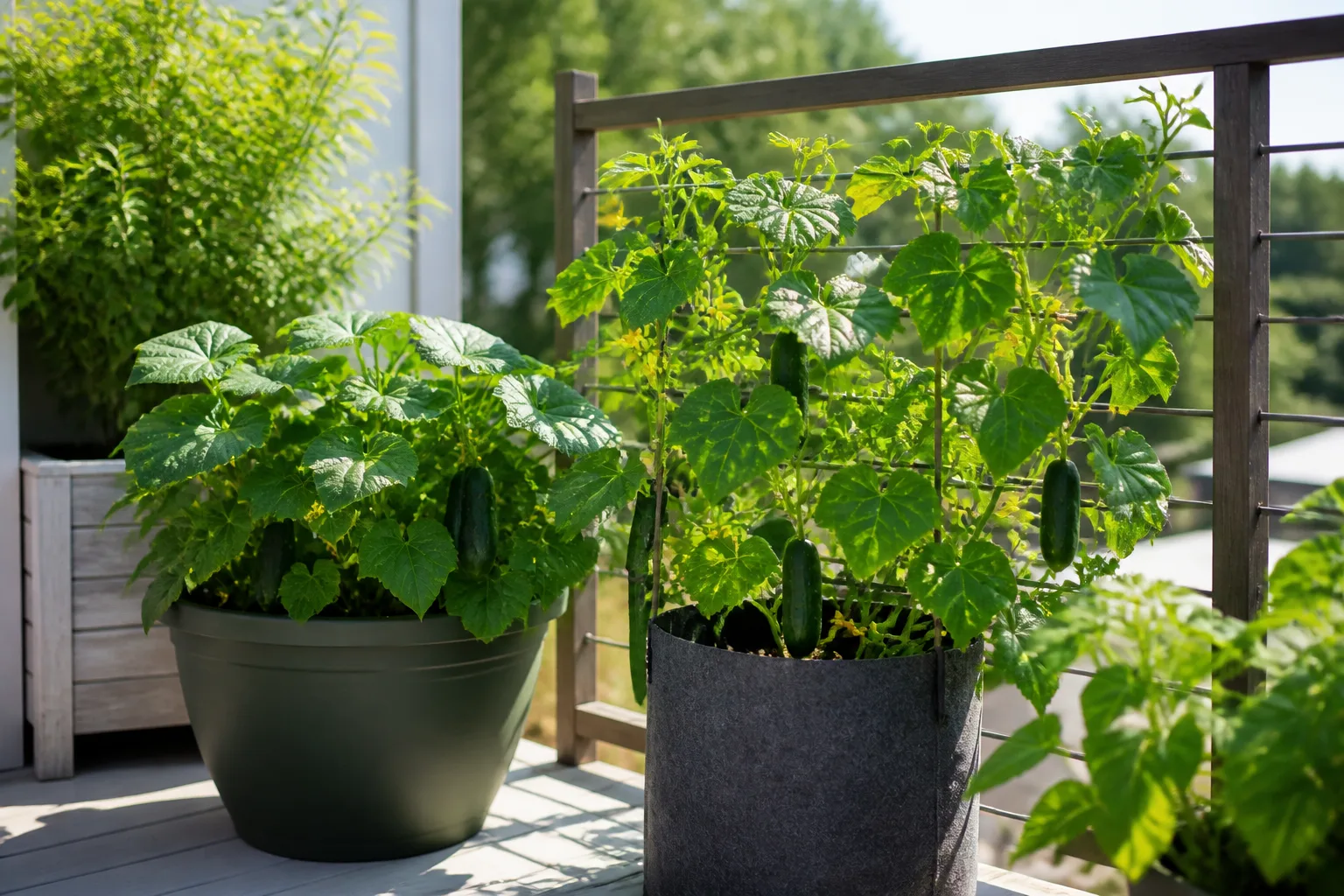
Cucumbers suit a sunny balcony when you can train a vine vertically. Choose a bush cucumber for a compact pot or a vining cultivar if you have a sturdy trellis; either way, give one plant a five-gallon or larger container and enough room for leaves to breathe.
Trellising keeps fruit off the patio and makes it easier to spot cucumbers before they become oversized. A guide on growing cucumbers in pots has a fuller setup sequence if you want to grow several vines.
Cucumbers need warmth and consistent water, particularly when fruit is swelling. A small immature fruit behind a flower that shrivels can signal incomplete pollination or stress, not a need for extra fertilizer. Most cucumbers rely on insects moving pollen between male and female flowers; if pollinators cannot reach an enclosed balcony, select a parthenocarpic type sold for protected growing.
The distinction matters because some greenhouse types produce fruit without pollination, as University of Minnesota Extension explains. Harvest regularly while fruit is crisp and tender instead of waiting for every cucumber to reach its maximum size.
8. Radishes
Radishes are a quick, low-cost way to learn how your container dries and how much sun the balcony actually gets. Use a trough at least six inches deep, sow seeds directly, and thin seedlings to the spacing on the packet instead of leaving a dense mat.
Round types such as ‘Cherry Belle’ fit shallow containers; longer roots need a deeper pot. A small succession planting every couple of weeks gives you roots at different stages instead of one oversized batch.
Keep the root zone evenly moist while the radishes swell. Heat, crowding, or a dry spell can make roots woody, split, or hotter tasting, so a little shade in warm weather is useful and regular harvest matters.
Pull one test root when the shoulders look full rather than waiting for all the leaves to become large. The RHS lists radishes among reliable container crops and recommends repeat sowing and crop changes to keep a pot productive (RHS vegetables in containers).
9. Arugula
Arugula, also called rocket, is an excellent crop for a narrow railing planter because its leaves are useful young and the plant does not need a large root zone. A six-inch-deep trough with drainage is usually easier than a small round pot, since you can sow a short band and harvest a few leaves at a time. It tolerates partial shade better than tomatoes or peppers, but still needs outdoor light to grow compact, flavorful leaves.
Treat arugula as a cool-weather crop and sow again every few weeks rather than expecting one planting to last all summer. Cut the outer leaves while they are tender and leave the growing point intact; if the plant stretches, produces a flower stalk, or tastes too sharp, harvest what remains and sow a new patch when temperatures ease. A mixed salad trough with lettuce can work if both crops receive enough space and similar moisture, but do not let faster arugula crowd slower seedlings.
10. Eggplant
Eggplant is a strong choice for a hot, sunny patio where you want one substantial plant with a long season. Choose a compact variety and give it a five-gallon or larger pot; one plant per container leaves room for roots and air to move around the canopy.
Small-fruited types can be easier to support and harvest than large plants carrying heavy fruit. Set a stake early if the plant is exposed to wind, and avoid placing it where a railing shades it for much of the day.
Let the fruit reach its cultivar’s mature size while the skin is still glossy, then cut it with a short piece of stem rather than pulling. Dull skin and oversized fruit usually mean it has been left too long and may have tougher seeds.
Eggplant can pause in cool conditions, so it belongs with the warm-season crops, not with spring lettuce and peas. The University of Maryland container crop chart lists eggplant as a larger, full-sun crop, and the RHS advice on container vegetables recommends matching a crop’s mature size to its pot.
Create combinations without crowding
A mixed pot saves space only when its plants ask for similar light and water and do not compete for the same root room. Lettuce can be tucked around a young tomato for a short early harvest, but remove it before the tomato canopy closes.
Peas and leafy greens share a cool-season window; once the peas finish, replace them with a warm-season crop rather than asking both to thrive in summer heat. The Old Farmer’s Almanac also recommends grouping container vegetables with similar needs, but in a small pot, compatible care is more important than a fashionable companion-planting claim (container gardening guide).
For a simple combination, use one deep pot for a tomato and a separate shallow box for lettuce or radishes. Grow cucumbers or peas up a trellis at the back of the arrangement, keeping the trellis from shading the shorter crops; put large-leafed squash in its own container so it does not take over the walkway. Do not combine two large fruiting plants in one standard pot just because they are sold together as a “patio recipe.” A single healthy crop in enough soil is usually more productive and easier to water than an overfilled display.
Set up your first season and solve common failures
Start with the two facts that decide most of the plan: how many hours of direct sun the site receives, and how often you can check the pots in warm weather. If you have less than six hours, plant a wide trough of lettuce, arugula, and radishes first. If you have a sunny, sheltered area and can water consistently, add a compact tomato or pepper; choose potatoes or squash only if you can spare a larger container and more floor space.
Put containers where they will stay before filling them, because wet mix is heavy. Install cages and trellises early, check that water drains freely, and arrange the tallest support where it will not shade smaller pots.
A practical first-year layout might be one five-gallon pepper, one patio tomato in a separate large pot, one pea trough for spring, and one salad box that you reseed every few weeks. This gives you quick harvests and a longer crop without requiring ten containers at once.
When something looks wrong, check the root zone before adding fertilizer. A plant that wilts at midday but recovers by evening may be struggling with heat or a small reservoir; a plant that stays limp in wet mix may have poor drainage or damaged roots.
Yellowing lower leaves can reflect normal aging, overwatering, or nutrient shortage, so inspect moisture and growth pattern before treating it. If a fruiting plant flowers but produces little fruit, consider light, heat, and pollinator access before blaming the pot size alone.
At the end of a crop, remove roots and old foliage, refresh the mix as needed, and sow a replacement suited to the current weather. Cool-season greens can follow peas; a warm-season pepper or cucumber should wait until local frost risk has passed.
Regional calendars differ, so use your seed packet and local extension service for planting dates rather than copying a month from a different climate. The complete beginner’s guide to container vegetable gardening covers the broader setup if you need a full planting plan.
Conclusion
The most reliable container garden starts with the conditions you already have. Choose greens and radishes for a cooler or partly sunny spot, and reserve your biggest, sunniest containers for tomatoes, peppers, eggplant, potatoes, cucumbers, or squash. Match pot volume to the mature plant, keep drainage open, and check moisture by touch so a brief hot spell does not undo weeks of growth.
You do not need ten crops to make a small garden worthwhile. Start with two or three that fit your schedule, harvest often, and use what you learn about sun and watering to choose the next round. A small, well-managed set of pots can be more productive—and more enjoyable—than a crowded collection that outgrows its containers.



