How to Grow Cucumbers in Pots: Pot Size, Care, and Harvest
Learn how to grow cucumbers in pots with the right variety, container, trellis, watering, feeding, pollination, and harvest routine for a steady crop all summer.
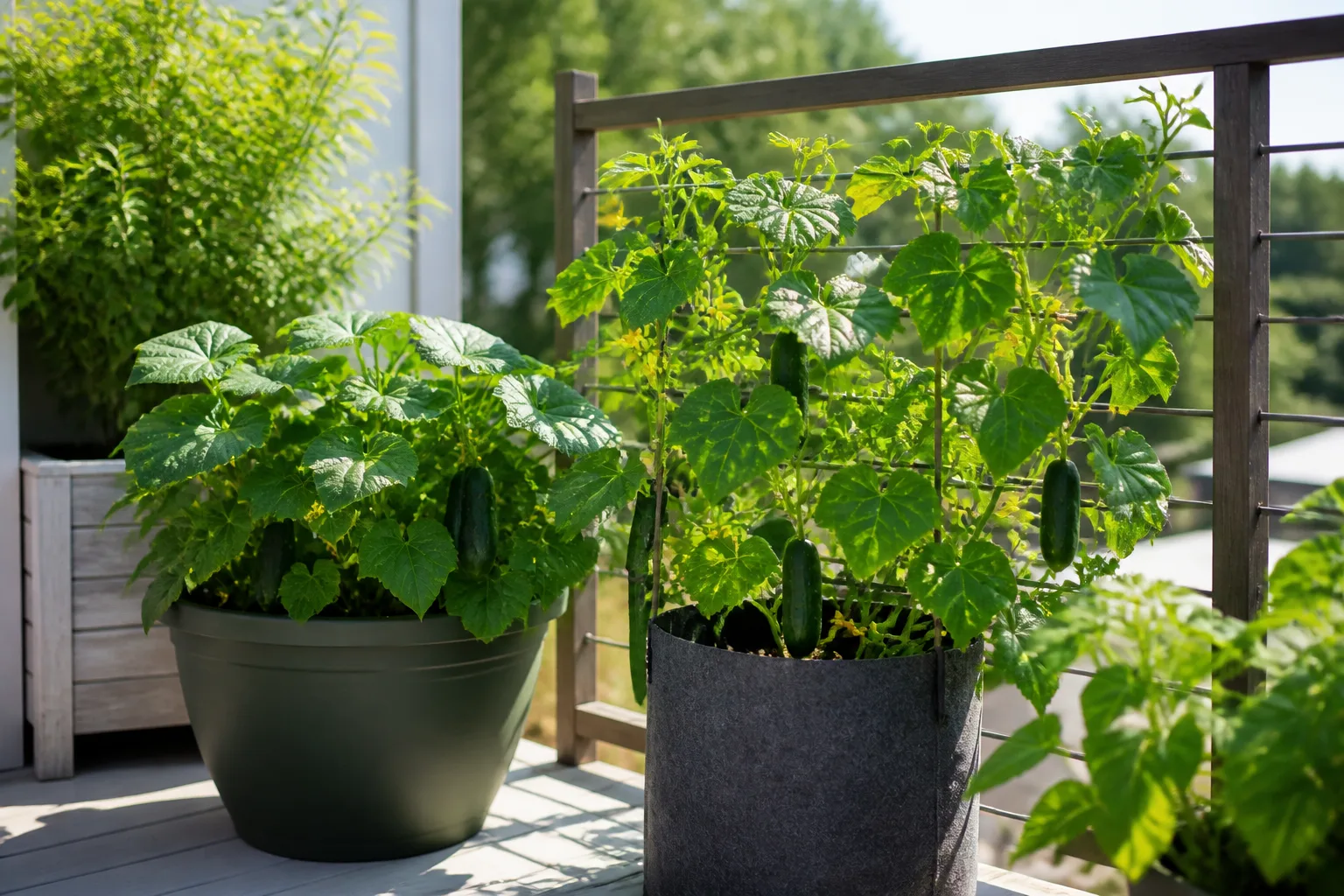
Yes, cucumbers grow well in pots—but the container has to keep up with a fast-growing, thirsty vine. The most reliable setup is one compact or container-suitable variety in a pot at least 12 inches wide and deep, filled with airy potting mix, placed in full sun, and paired with a support that cannot topple when the vine is heavy.
The hard part is not getting a cucumber seed to sprout. It is preventing the small root zone from swinging between bone-dry and waterlogged while the plant is flowering and filling fruit. Choose the right variety first, then manage pot volume, moisture, support, and harvest frequency as one system.
What Makes a Container Cucumber Setup Work
A potted cucumber needs the same basics as one in the ground—warmth, light, water, nutrients, and pollination when the variety requires it—but a pot magnifies mistakes. A hot balcony can dry a container by afternoon, while a decorative pot with one tiny hole can keep the roots wet for days.
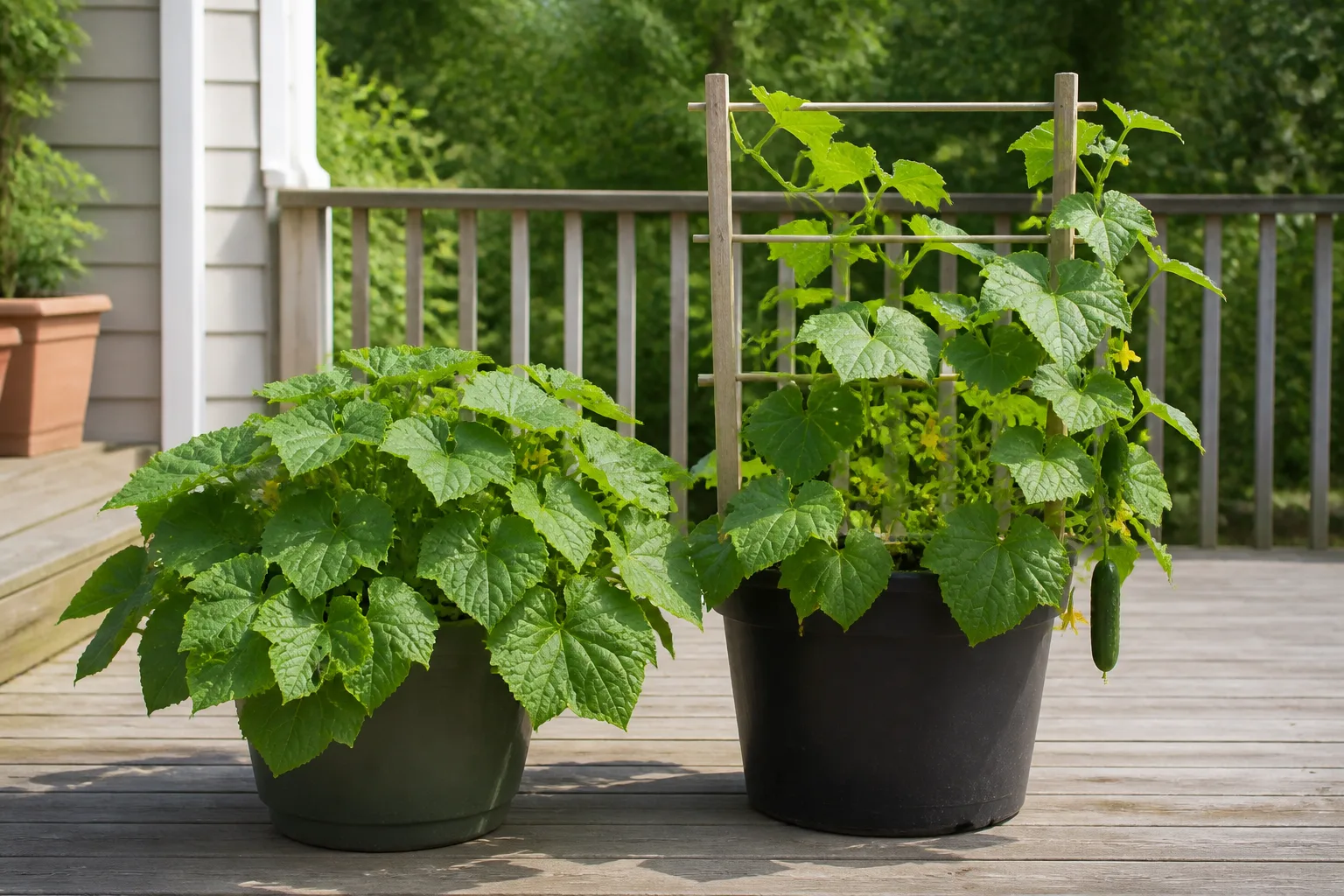
Before buying seed, decide how much floor space you have, whether bees can reach the flowers, and how often you can check the pot. A bush cucumber is a sensible choice for a single patio pot, while a vining plant can produce a longer harvest if you can anchor a trellis and guide the growth.
Pick the Variety for Your Space
Read the seed packet for bush, compact, mini, container, or patio language, but also look for days to maturity and disease resistance. Compact varieties such as ‘Spacemaster’ can suit small spaces, while ‘Mini Munch’ and other mini-fruited types give you a useful harvest without waiting for a full-sized slicer to reach its final length. The Utah State University cucumber guide lists ‘Spacemaster’ among varieties suited to home gardens, and the Royal Horticultural Society’s cucumber guide notes that small-fruited varieties are often ready sooner.
If you have limited pollinator activity, look for a parthenocarpic variety that sets fruit without pollination under the conditions for which it was bred. A gynoecious variety produces mostly female flowers and may need a compatible pollen-producing cucumber nearby. Those labels matter more than a generic promise that the plant is “self-pollinating,” so keep the seed packet until the plant is flowering.
Decide Between Bush and Vining Growth
Bush types stay shorter and can spill over a pot rim, making them easier to manage when you have no structure. They still need room around the container for leaves and fruit, and a short cage can keep the canopy from resting on a hot patio. Do not pack a second plant into the same small pot just because the vines look compact at first.
Vining cucumbers use vertical space efficiently and are usually easier to inspect and harvest when trained upward. Their stems may run several feet, so they are a good match for a large pot on a balcony railing or against a sunny wall only when the support is secured independently or firmly anchored in the container. Penn State Extension’s container vegetable guidance recommends shorter or bush-type vegetables for containers while recognizing that cucumbers may still need a trellis.
Choose and Prepare the Pot
The pot is the cucumber’s root environment, water reservoir, and ballast. Treat it as part of the growing system rather than choosing a container for appearance alone.
Get Size, Drainage, and Stability Right
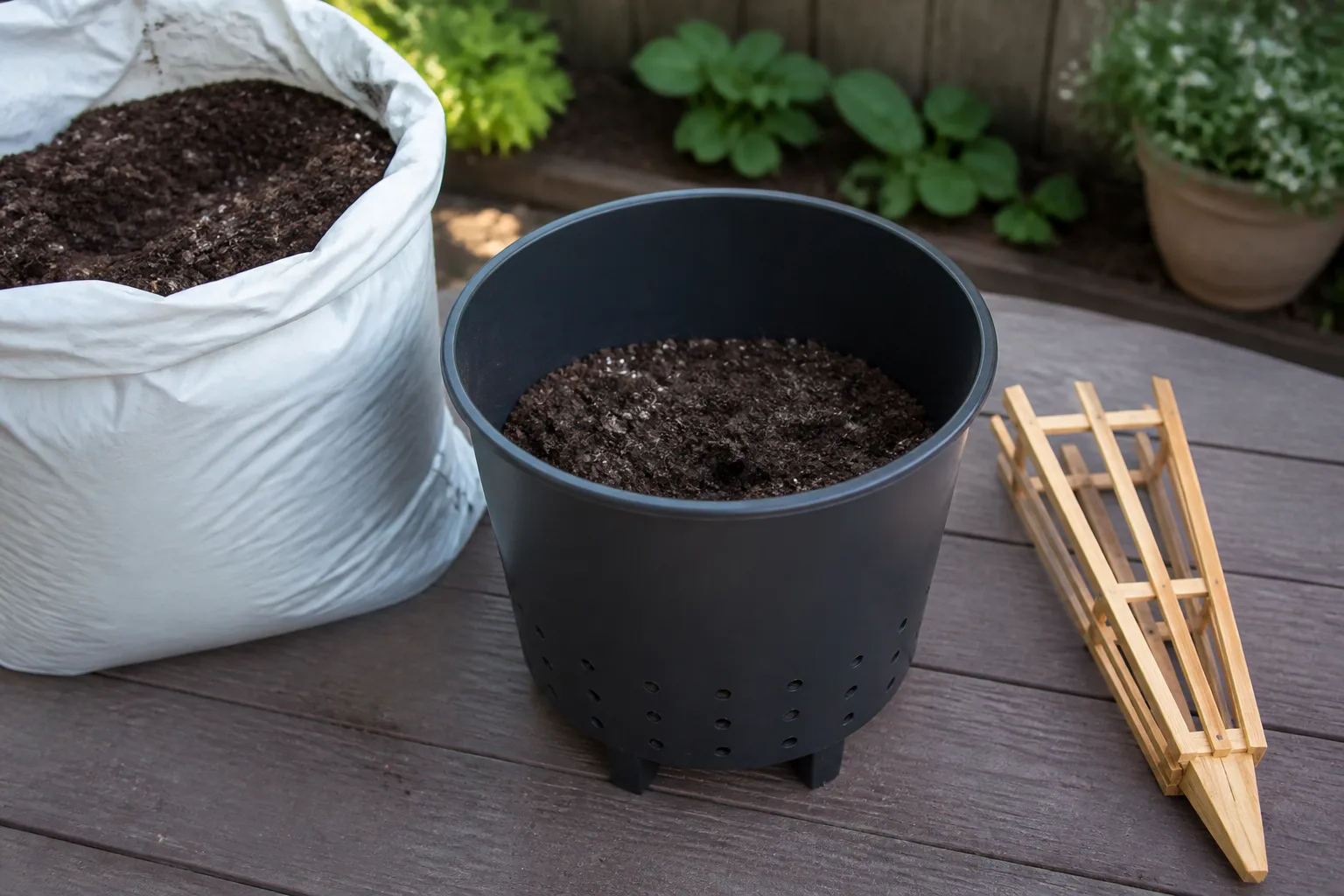
Use a container at least 12 inches wide and 12 inches deep for one cucumber plant. That is a workable minimum, not a target for every situation. For a vining cucumber in full sun, a 5-gallon container or larger is more forgiving because it holds more moisture and nutrients between checks. The RHS recommends a pot at least 30 cm, or about 1 foot, wide and deep, while Penn State emphasizes that container vegetables need a pot with effective drainage and enough height for healthy roots.
Every pot needs several open drainage holes. Water should leave the bottom freely, and the pot should sit on feet or a firm surface rather than in a saucer of standing water. If a decorative cachepot has no drainage, use it as an outer cover for a draining nursery pot instead of planting directly into it.
Material changes the watering rhythm. Plastic usually holds moisture longer than porous terracotta, while a heavy ceramic or stone container is less likely to blow over when a trellis fills with leaves. On a roof, balcony, or exposed deck, weigh the stability of the complete setup before the vine gets large; a support that is adequate in calm weather can become a sail in a gust.
Fill With Mix and Install Support Before Planting
Use a quality potting mix made for containers, not straight garden soil. Garden soil can compact in a pot, reduce air around roots, and drain poorly. A mix containing materials such as composted bark, coir or peat-free fiber, and perlite or another coarse component can hold moisture while still leaving air spaces. Penn State Extension explains why soilless container mixes drain and breathe better than garden soil.
Moisten the mix before sowing so water does not channel around a dry root ball. Fill the pot to leave an inch or two below the rim for watering, and add a thin mulch layer later if the surface dries quickly. Keep mulch away from the stem so the crown does not stay constantly damp.
Install a trellis, cage, or other support now. Pushing a stake through an established root ball is an avoidable injury, and trying to untangle a mature vine around a late support usually breaks tender stems. A support should be taller than the expected vine, wide enough for the tendrils to grip, and anchored so the pot—not just the plant—carries the load.
Plant Cucumbers at the Right Time
Cucumbers are warm-season plants with no useful tolerance for frost. Soil temperature is a better planting signal than a date on the calendar: Oklahoma State University recommends waiting for at least 60°F soil, with warmer conditions improving emergence, and Utah State University recommends planting around 65°F. A dark pot in sun may warm quickly, but cold nights can still stall a young plant.
Direct Sow With Minimal Root Disturbance
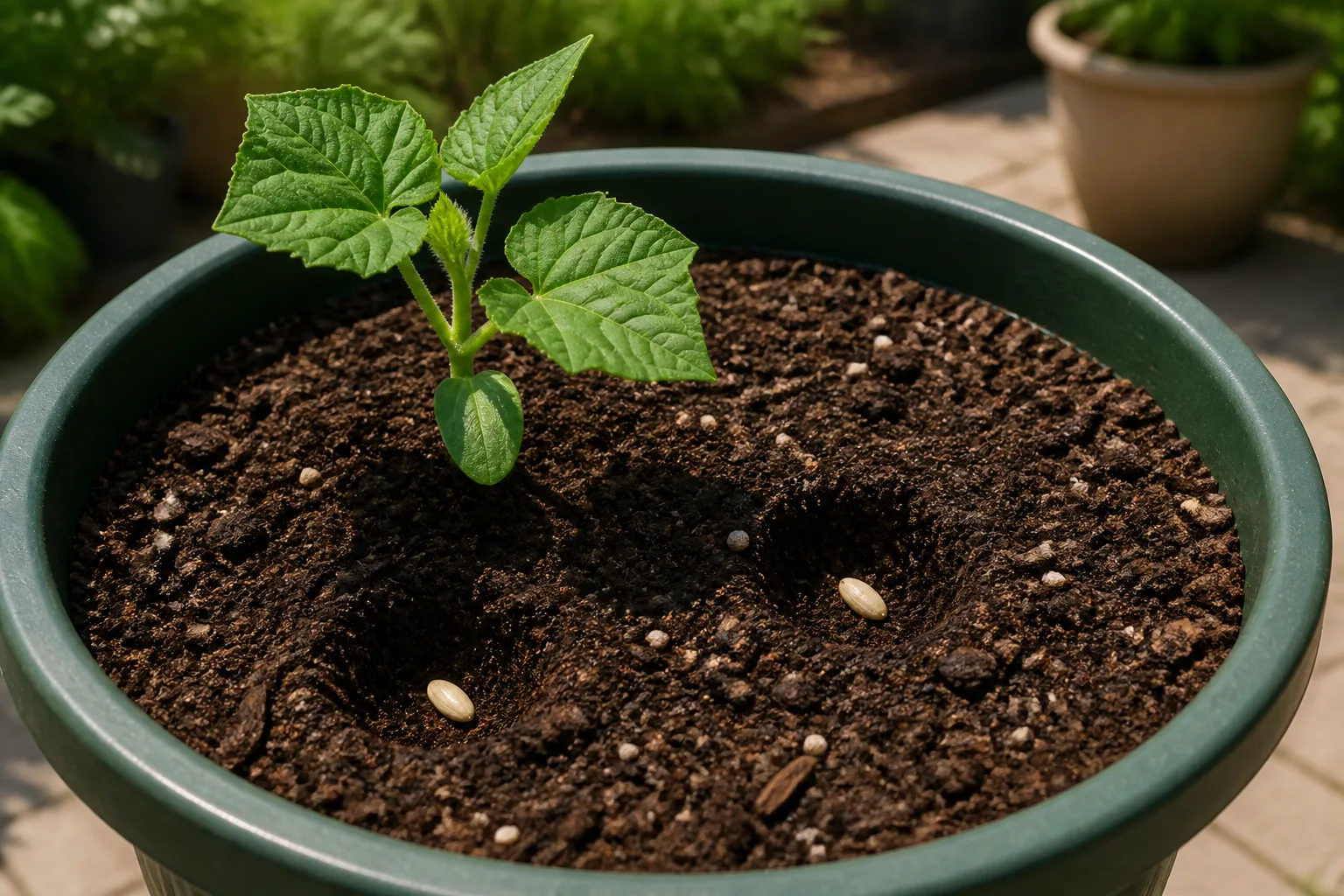
Direct sowing is often the simplest route because cucumber roots dislike being disturbed. After frost danger has passed and the mix is warm, sow two or three seeds about ½ to 1 inch deep, then water gently. Once seedlings have true leaves, snip the extras at the mix line and keep the strongest plant; pulling them can disturb the roots of the seedling you want.
Keep the seed zone evenly moist, not saturated. If the top inch dries repeatedly before emergence, germination can become uneven. If the mix stays wet and cold, the seed may rot or emerge weakly. A bright, sheltered location helps, but do not move a freshly emerged seedling from shade into harsh afternoon sun without acclimating it.
Transplant Young Plants Without a Stall
Buying a young plant can shorten the wait, but size is not everything. Choose a transplant with a sturdy stem, healthy leaves, and roots that hold the mix together without circling densely around the pot. The plant should be young enough to move without a tangled root system and large enough to recover from outdoor conditions.
Harden it off over several days by increasing exposure to outdoor light and wind. Water the plant before transplanting, slide out the root ball without pulling the stem, and set it at the same depth it was growing. Water thoroughly after planting, then give it a few days of protection from intense wind and the hottest reflected surface.
Do not respond to transplant shock with a heavy dose of fertilizer. Broken or chilled roots cannot use extra nutrients efficiently. Let the plant rehydrate and resume growth first. Seed Savers Exchange advises direct sowing because cucumbers are prone to transplant shock, while still giving indoor-started plants a place in the growing plan.
Give Potted Cucumbers Enough Light and Heat
Aim for six to eight hours of direct sun for the strongest flowering and fruit production. A south- or west-facing balcony can supply enough light but may also heat the pot and dry the mix quickly. A pale wall, reflective railing, or dark container can raise the temperature around leaves and roots beyond what the weather app suggests.
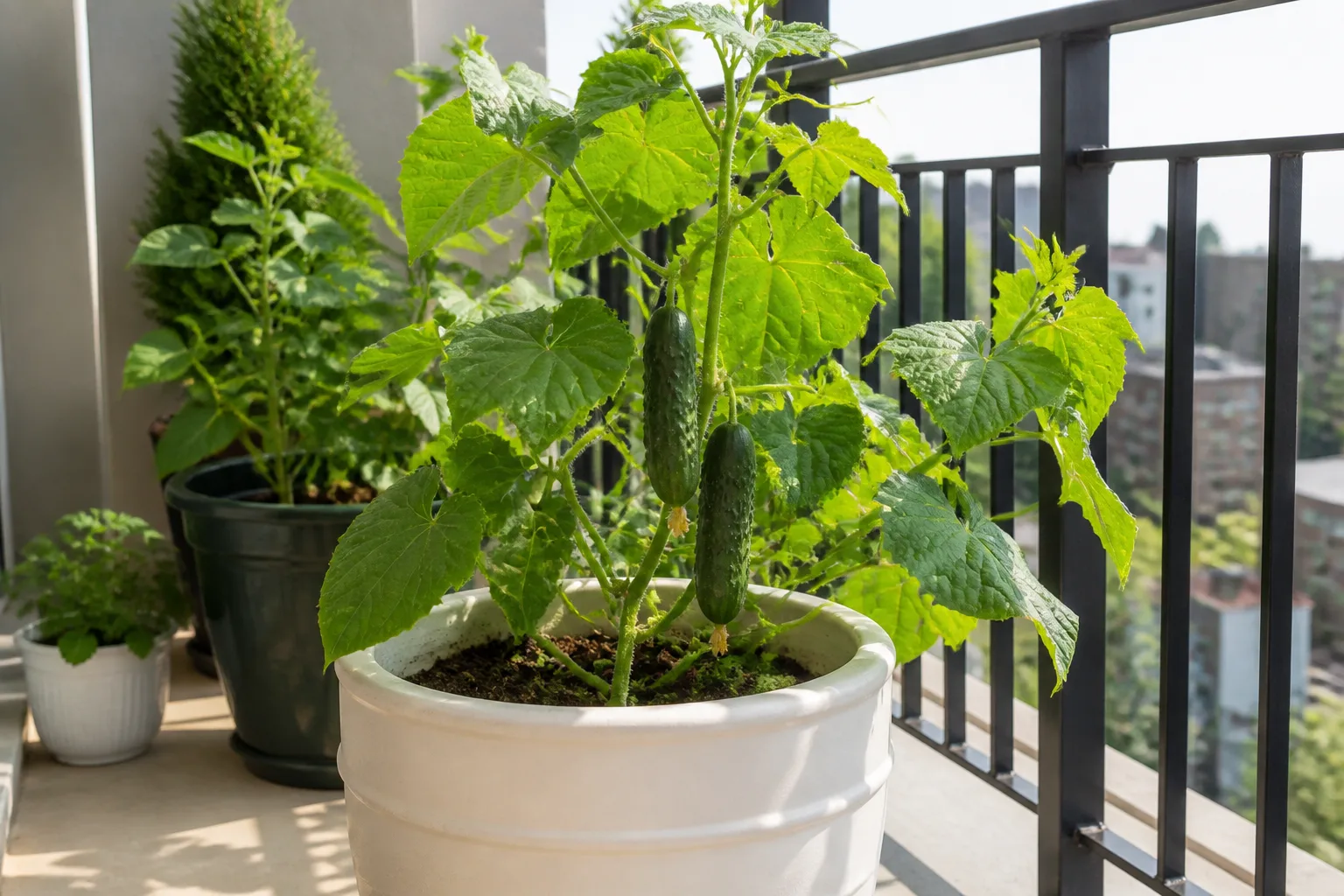
Watch the plant rather than chasing a perfect temperature number. If leaves wilt every afternoon but recover by evening, check the pot before assuming disease; the root zone may simply be overheating or running out of water. Move the container where it still receives strong morning and midday light but gets relief from the hottest reflected heat, and use a light-colored outer pot or shade the container itself if the roots are baking.
Do not place a fruiting cucumber in deep shade to solve heat. Too little light can make the vine leafy and slow to flower. The better correction is a warm, bright position combined with enough pot volume, a moisture-retentive mix, and protection from the harshest reflected surfaces.
Water by Root-Zone Moisture, Not the Calendar
Container cucumbers need consistent moisture, especially when flowers and fruit are developing. A useful routine is to check the mix with a finger about 1 to 2 inches down each morning. If that zone feels dry, water slowly until some drains from the bottom; if it is still moist, wait and check again later rather than watering on schedule.
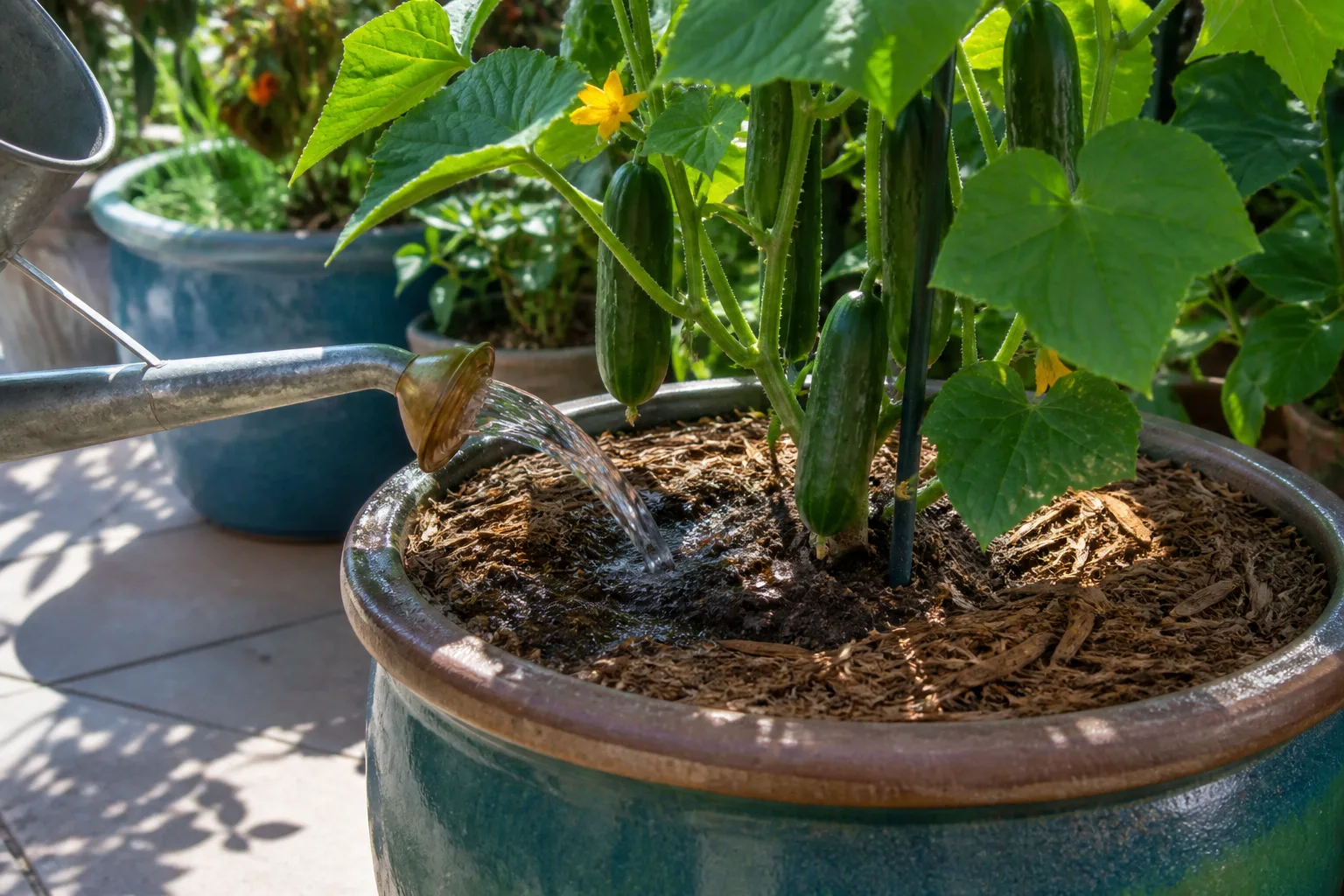
The container may need water daily in hot weather and sometimes twice daily in a small, windy pot. A larger container, mulch, cloud cover, or a cooler position may stretch the interval. This is why “one inch per week” is a starting comparison for garden irrigation, not a reliable volume for a pot. The RHS advises keeping container cucumber compost evenly moist and watering at the base, especially while fruit is forming.
Water at the soil surface, not over the leaves and flowers. Wet foliage that stays damp in a dense canopy can raise disease pressure, while spraying open flowers can interfere with the visits of pollinating insects. Morning watering gives the plant a supply for the day and leaves time for incidental moisture to dry.
Mulch the surface with a thin layer of clean straw, shredded leaves, or finished compost once the pot is warm. Leave a clear ring around the stem. Mulch slows evaporation, but it cannot rescue a pot that is too small or has blocked drainage. If water runs straight down the sides and out without wetting the center, the mix may have dried away from the pot; water in two or three slow passes instead of flooding it once.
Feed for Leaves First, Then Fruit
Potting mix contains a limited nutrient supply, and a vigorous cucumber can use it quickly. Start with a complete vegetable fertilizer mixed into the pot according to the label, or use a controlled-release product intended for containers. Do not assume that more fertilizer equals more cucumbers: excessive nitrogen can produce a large, dark-green vine with delayed flowering and soft, overly leafy growth.
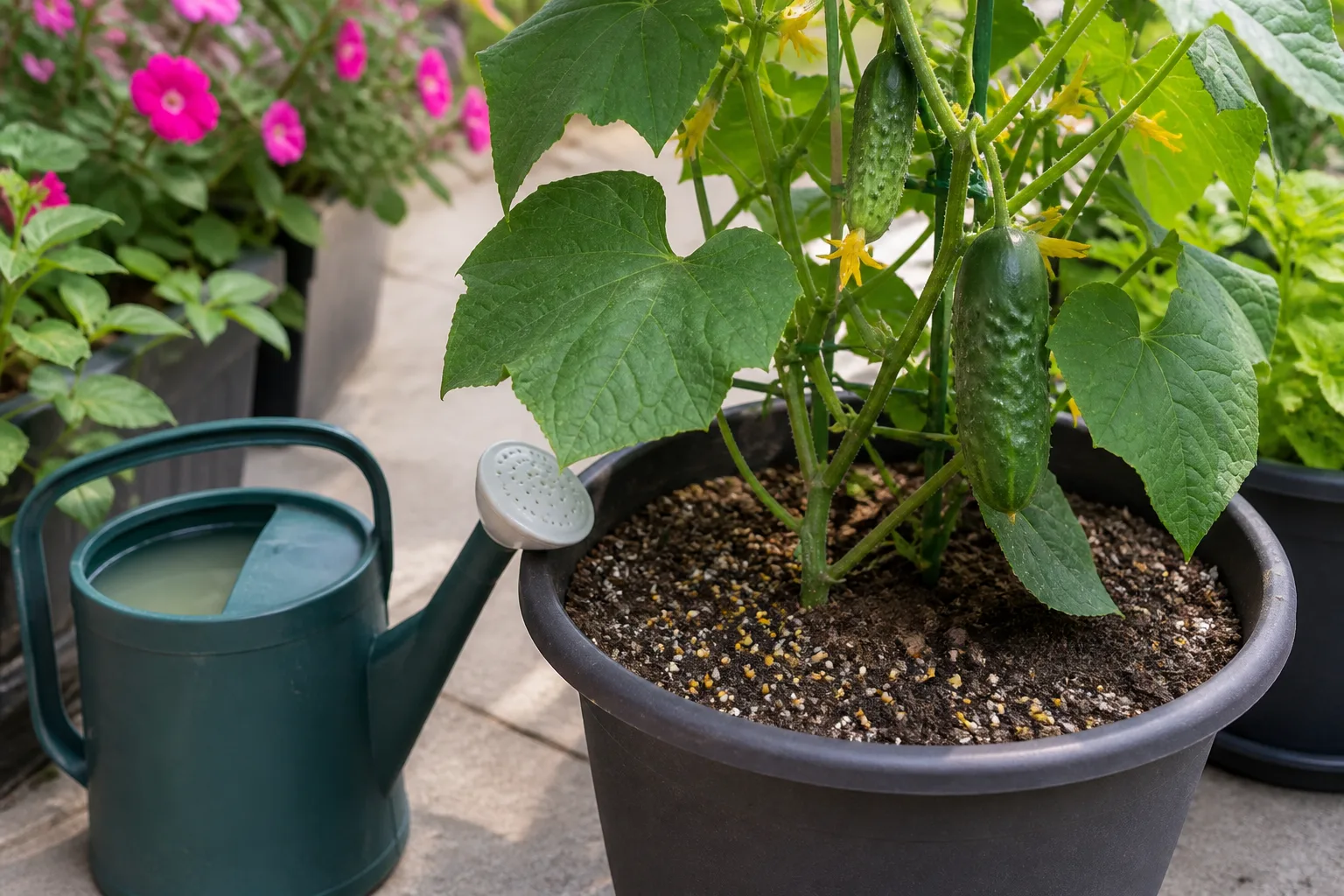
Once the plant is actively growing, use a dilute liquid feed at the interval on the product label. Penn State’s general container guidance pairs a slow-release fertilizer at planting with a soluble fertilizer every two to four weeks, while the RHS recommends feeding container cucumbers every 10 to 14 days and switching to a high-potash liquid feed when flowering begins. Those are useful frameworks, but the label and the plant’s response come first.
If leaves are pale, compare several clues before adding nitrogen. Low light, cold roots, waterlogged mix, and a root-bound plant can all reduce growth. If the plant is lush but has no flowers, stop escalating fertilizer and check light, variety, temperature, and age. Always water a wilted plant before feeding it, and never pour concentrated fertilizer onto dry roots.
Trellis, Prune, and Pollinate With Less Damage
Guide young vining stems onto the support while they are flexible. Cucumbers use tendrils to grip, but a new tendril cannot wrap around a support it cannot reach. Loosely tie the stem with soft material or weave it through a large mesh opening; never cinch a tight loop around a fast-thickening stem. Trellising keeps fruit cleaner, opens the canopy for inspection, and makes it easier to find cucumbers before they become oversized.
Choose a support with openings large enough for fruit to hang through rather than becoming trapped. A sturdy cage is convenient for a short bush or semi-bush variety; a panel, net, or tall frame is better for a vigorous vine. Secure the top and the base, and check the balance again after the first heavy fruit develops. Practical trellis guidance from Savvy Gardening and the University of Maryland’s climbing-cucumber example both illustrate the value of strong supports and regular retraining rather than forcing a mature vine into place.
Prune sparingly. Remove yellow or diseased leaves, leaves resting on wet soil, and a few crowded lower leaves that block airflow. Keep enough healthy foliage to shade fruit and make carbohydrates. Do not strip the plant because it looks untidy, and do not make a major pruning cut while it is already wilted, heat-stressed, or recovering from transplanting.
Know When Hand Pollination Helps
Inspect the flower before reaching for a brush. A male flower has no swollen cucumber-shaped ovary behind the petals; a female flower has a small swelling that can enlarge into fruit. Ordinary outdoor cucumbers usually have both on the same plant, and male flowers often appear first. That early male phase is normal, not a sign that the plant is sterile.
For a standard outdoor variety, hand-pollinate when female flowers open but bees are absent because of a sheltered balcony, rain, or cool conditions. In the morning, use a freshly opened male flower or a small clean brush to pick up pollen from the anther, then dab it onto the sticky stigma inside an open female flower. Repeat with the other open female flowers, using a light touch rather than rubbing the flower apart.
Do not hand-pollinate automatically. A parthenocarpic variety is selected to set fruit without pollen, and some greenhouse types can produce poor-quality or misshapen fruit when pollinated. A gynoecious variety may need a compatible male-flowering plant instead. Check the packet or plant label before adding pollen, and do not remove male flowers from an outdoor variety that needs them.
When a tiny cucumber turns yellow and drops a few days after flowering, failed pollination is one possibility, but it is not the only one. Check for severe heat, a recently dried-out pot, saturated roots, disease, or a variety mismatch. Remove failed fruit, stabilize the root-zone moisture, and watch the next flowers rather than trying to save an ovary that has already stopped growing.
Diagnose Common Container Problems
The fastest diagnosis comes from combining the plant symptom with the pot’s recent conditions. Note whether the problem affects new or old leaves, whether the mix is wet or dry below the surface, and whether flowers or fruit are involved.
| What you see | Likely causes to check | First action |
|---|---|---|
| Leaves wilt during the day but recover after watering or evening | Small pot, hot surface, wind, or inadequate water | Check moisture 1–2 inches down, water deeply if dry, and reduce reflected heat without sacrificing light. |
| Leaves stay limp in wet mix and the stem base looks weak | Poor drainage or damaged roots | Stop routine watering, confirm that holes are open, and let excess water drain; do not add fertilizer. |
| Flowers appear but no fruit enlarges | Male-only early flowers, missed pollination, heat, moisture stress, or variety type | Identify the flower, read the packet, and hand-pollinate only if the variety needs it. |
| Fruit is bitter, hollow, pointed, or misshapen | Uneven moisture, heat stress, poor pollination, or overripe fruit | Improve moisture consistency, check pollination, and pick at the packet’s recommended size. |
| White powder spreads across leaves | Powdery mildew, favored by crowding and poor airflow | Remove badly affected leaves, improve airflow, water at the base, and use only an edible-crop treatment whose label fits the situation. |
| Leaves have yellow mottling, distortion, or the whole vine declines | Nutrient/root trouble, insect injury, or a virus | Inspect leaf undersides and stems, isolate a suspicious plant, and contact a local extension service before treating blindly. |
| Small striped or spotted beetles chew leaves and flowers | Cucumber beetles, which can also spread bacterial wilt | Inspect every few days, use a crop cover before flowering where practical, and follow edible-crop and pollinator label directions for any treatment. |
The Utah State University cucumber fact sheet describes water stress as a cause of bitter, pointed, and misshapen fruit and identifies cucumber beetles, aphids, powdery mildew, wilt diseases, and virus symptoms as separate problems. That distinction matters: watering a plant with a virus will not cure it, and spraying an insecticide will not fix a pot that drains poorly.
If a vine suddenly wilts while the pot is moist, look closely for beetle feeding and damage around the stems. A persistent mosaic pattern, severe distortion, or rapid decline also deserves caution; do not compost a plant you strongly suspect is diseased. Remove it from the growing area and ask your local extension office about diagnosis and disposal in your region.
Harvest Often and Keep the Vine Productive
Start checking the vine daily once the first female fruits begin to swell. Cucumbers can gain size quickly, and a fruit that stays hidden under leaves diverts resources while becoming seedy and tough. Regular picking also keeps the plant in a productive cycle instead of allowing one oversized cucumber to dominate the crop.
Use the variety’s packet as the final size guide. As a broad cue, mini cucumbers may be ready around 3 inches, small pickling types around 3 to 6 inches, and standard slicers around 8 to 10 inches, but color, diameter, and intended use vary. The RHS harvest guidance recommends picking fruit when it is firm and uniformly colored, before it becomes yellowish, bulbous, or soft.
Cut the stem with clean snips or a knife, leaving a short piece of stem attached. Pulling and twisting can tear the vine, especially when it is trained tightly against a trellis. Harvest in the cool morning when possible, wipe away soil, and refrigerate only if you will use the cucumbers soon; very cold storage can reduce quality.
When production slows, check the cause before pulling the plant. A vine may be finished because of age, heat, disease, or the first frost, but it may also be stalled by an empty pot, missed harvests, or a damaged support. If the leaves are broadly healthy and new flowers still appear, correct moisture and harvest more frequently. If the vine has severe disease, repeated collapse, or frost damage, replace it rather than trying to force another flush.
Conclusion
The best way to grow cucumbers in pots is to give one plant enough root volume, warmth, sun, and support to stay productive without making the container difficult to manage. Start with a variety that fits your space and pollination conditions, sow or transplant gently, and install the trellis before the vine needs it.
Then let the pot tell you what it needs: check moisture below the surface, feed lightly and consistently, inspect flowers before hand-pollinating, and pick fruit while it is firm and young. That routine prevents the most common container failures—dry roots, crowded growth, toppled supports, missed pollination, and oversized fruit—before they turn a promising vine into a disappointing season.