How to Grow Parsley Without Bolting or Fading Early
Parsley bolts in heat and fades when harvest or water is wrong. Learn variety choice, succession sowing, shade timing, and harvest cuts that keep leaves tender for months.
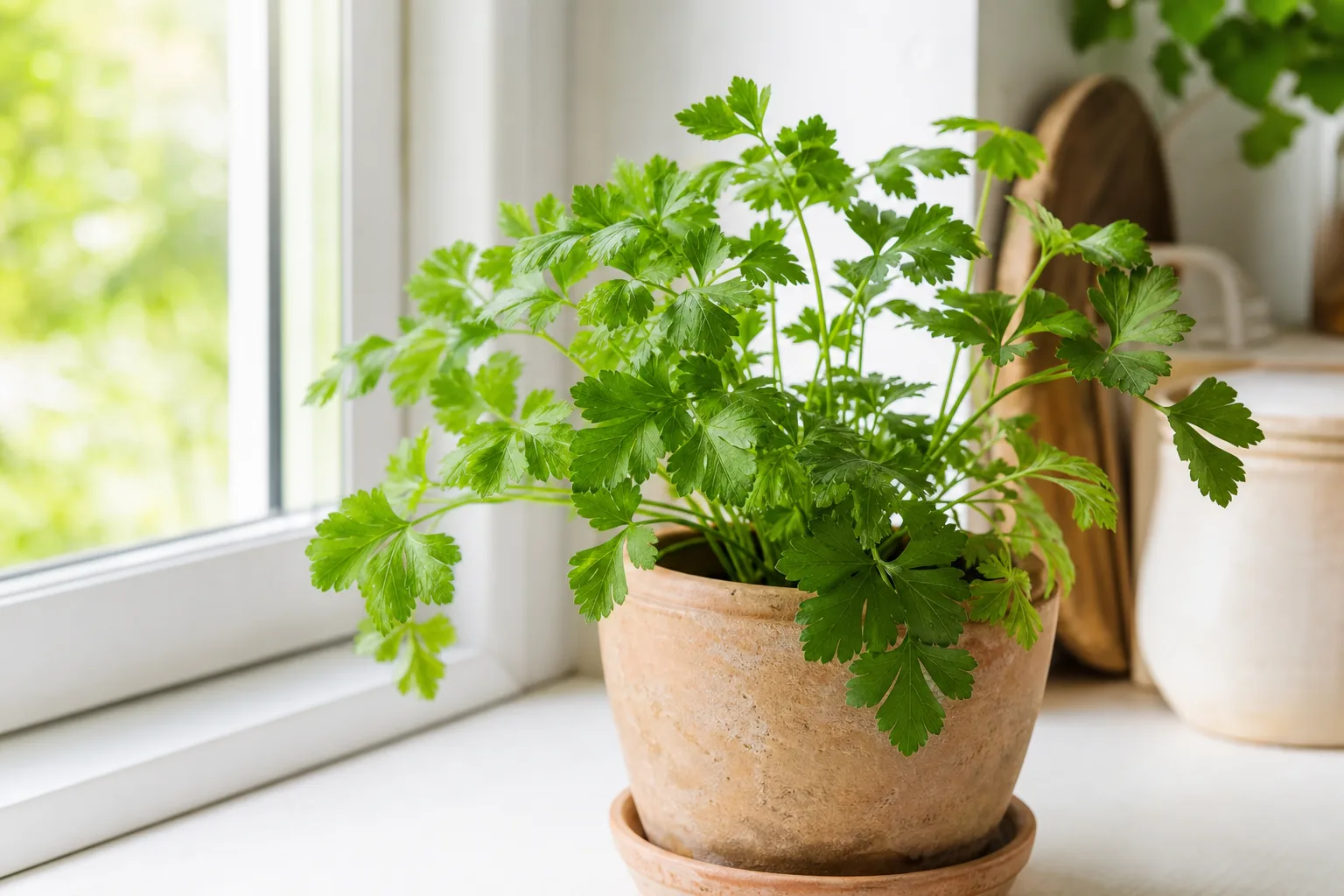
Parsley looks easy until it is not. One week the pot is full of bright green leaves; a few hot days later the center shoots up a flower stalk, the foliage turns bitter, and you are back at the grocery store. Grow parsley for months—not a few garnish sprigs—by treating it as a cool-season biennial, harvesting outer stems correctly, and always having a younger plant coming online.
The short answer: cool roots, steady harvests, and a backup sowing
Parsley (Petroselinum crispum) is a biennial: leafy the first year, flowering the second. For cooking, most gardeners treat it like a long-season annual and replace plants once flower stalks take over. You extend the harvest by sowing in cool weather, giving afternoon shade in hot climates, keeping soil evenly moist, and cutting outer stems at the base while leaving the center intact.
No single plant stays perfect forever. The reliable fix is succession sowing—a small new batch every three to five weeks in active season—so when one plant bolts or fades, another is already leafing out. Pair that with the harvest method in our parsley pruning guide and you get months of usable leaves instead of one short flush.
When fading is not bolting
Fading means yellow lower leaves, stunted new growth, or a pot that dries out every afternoon—usually water, light, or root stress. Bolting means a thick central stalk, tighter leaf spacing, and flowers or buds forming. Fading often recovers with better watering and a larger pot. Bolting means shift to seed-saving or pollinator mode and start your next sowing.
Why parsley bolts and fades before you are ready
Bolting is not random bad luck. It is the plant switching from leaf production to reproduction. Once that shift is far along, leaves turn tougher and more bitter whether or not you keep pinching flowers.
First-year leaves vs second-year flowering
The RHS parsley guide describes the usual kitchen pattern: plenty of leaves in year one, then flowers and seed in year two. Many gardeners never see a proper second-year crop because summer heat can push even first-year plants to bolt, especially after a cool spring. That is why “months of parsley” depends more on planting timing and succession than on keeping one specimen alive for years.
Second-year parsley can still feed black swallowtail caterpillars and pollinators. If that matters to you, leave a plant or two to flower. If you only want tender leaves, plan on fresh sowings instead of nursing old ones.
Heat, day length, and stress that trigger flowers
Gardening Know How’s bolting guide and practical growers like Growing in the Garden agree on the main triggers: rapid heat, long days, drought, root crowding, and repeated dry cycles in pots. Parsley performs best roughly in the 50–75°F (10–24°C) band; above that, especially with strong sun all day, flowering accelerates.
Stress matters as much as temperature. A supermarket pot with two dozen seedlings competing in three inches of soil will bolt or fade fast no matter how often you water. So will a bed that bakes dry every afternoon. Cool roots and steady moisture buy time; they do not repeal biology.
Flat-leaf vs curly: pick the variety that matches your season
Both types grow the same way, but they behave differently in the kitchen and in heat.
Italian flat-leaf (flat-leaf, single Italian) has stronger flavor, bigger leaves, and is the default for cooking. In many gardens it also holds up slightly longer in warm weather before quality drops, which makes it the better pick if your summers run hot.
Curly parsley is milder, tighter, and excellent as a garnish or border plant. It can be slower to regrow after heavy harvests because there are fewer large stems per plant. In hot regions, treat curly parsley as a cool-season crop (spring and fall) rather than a midsummer workhorse.
Root parsley (Petroselinum crispum var. tuberosum) is a different project—grown for the root as much as the leaves—and is not the best choice if your goal is months of cut-and-come-again foliage.
When and how to plant for the longest harvest window
Timing beats optimism. Parsley is not a basil-style heat lover. Think cool soil, moderate air temperatures, and enough weeks of growth before summer stress.
Soaking seeds and surviving slow germination
Parsley seeds are famous for slow, uneven germination—often three to six weeks—because they carry a natural germination inhibitor. The RHS advises patience; do not assume a failed tray after ten days.
Soak seeds 12–24 hours in room-temperature water before sowing. That softens the seed coat and improves sprouting. Sow about ¼ inch (6 mm) deep in moist seed compost or garden soil. Indoors, start six to eight weeks before your last frost if you want an early harvest; outdoors, sow after frost danger passes in spring, or in late summer for a fall crop in mild areas.
A practical trick from extension offices: sow fast-germinating radishes in the same row to mark where slow parsley is still waking up, so you do not hoe your future plants by mistake.
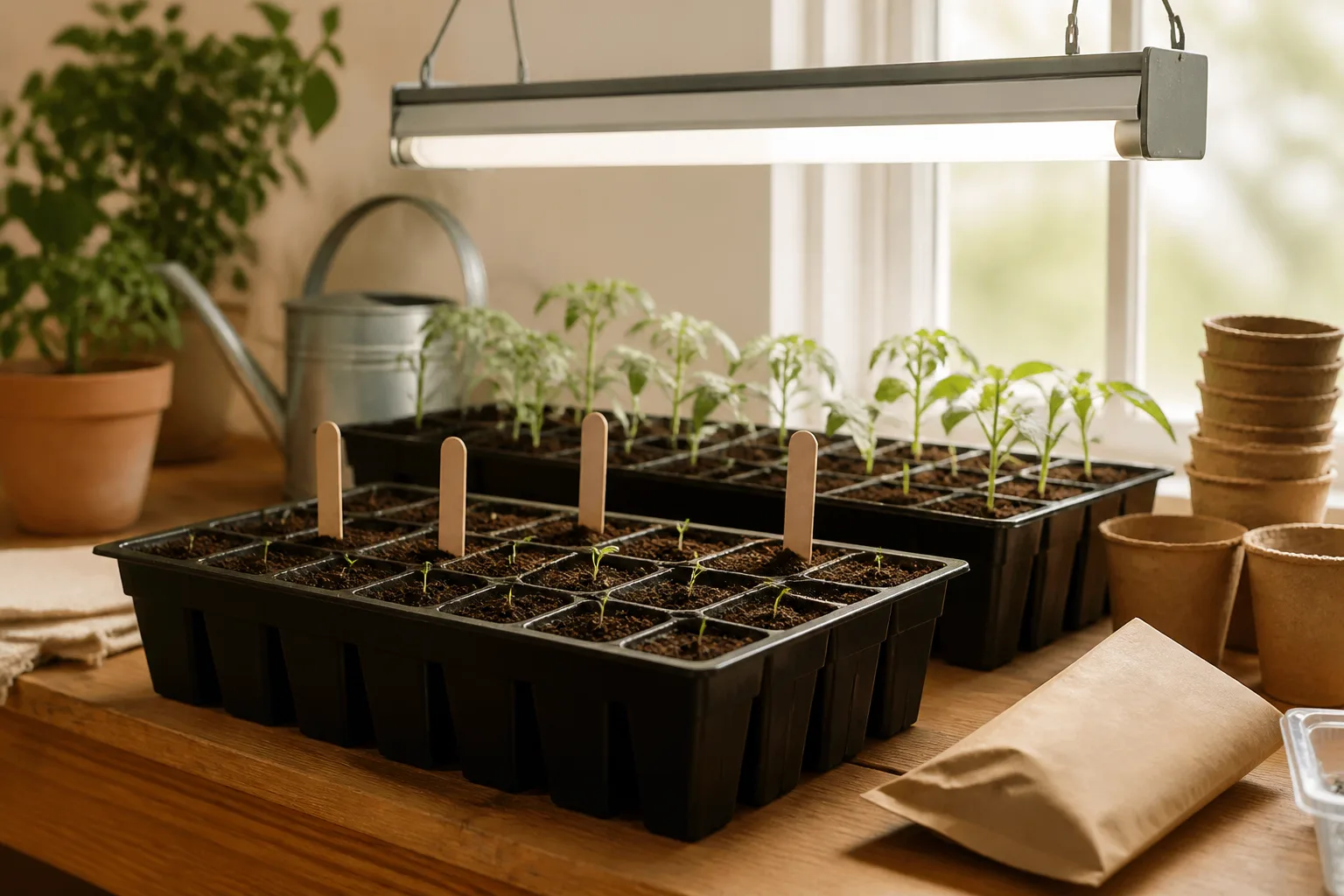
Succession sowing calendar by climate
Use your local frost dates, but the logic is consistent:
| Your pattern | First sowing | Keep sowing until | Notes |
|---|---|---|---|
| Cold winters, warm summers | Indoors 6–8 weeks before last frost; transplant after hardening off | Midspring, then again in late summer for fall | Summer plants bolt; fall crop is often the sweetest |
| Mild winters | Early fall transplants or direct sow | Late winter | Longest leaf window before spring heat |
| Hot summers | Late summer / early fall | Stop before hard frost | Treat summer as off-season; grow in light shade |
| Indoor windowsill | Anytime with strong light | Start a new pot every 4–6 weeks | Cooler room temps (60–70°F) last longer than a hot sill |
Staggering by three to five weeks overlaps harvests so bolting on one plant is a minor gap, not a kitchen crisis. For other quick cool-season herbs to pair in the same plan, see fastest-growing herbs to direct sow.
Light, soil, and spacing that keep leaves tender
Parsley wants full sun in cool weather and morning sun with light afternoon shade where summers are intense. The UF/IFAS parsley guide notes that in hot regions, afternoon protection slows wilting and can delay flowering.
Soil should be fertile, moist, and well drained, with pH roughly 6.0–7.0. Mix in compost before planting. Space plants 8–12 inches (20–30 cm) apart in beds so air can move and leaves stay clean. In containers, the RHS recommends pots at least 10 inches (25 cm) wide and deep—shallow pots heat and dry quickly, which pushes bolting.
Parsley is a strong companion plant near tomatoes, carrots, and asparagus, and it attracts beneficial insects—just know black swallowtail larvae may eat the leaves. Plant an extra parsley if you want both butterflies and garnish.
Watering and feeding without pushing parsley to flower
Parsley likes even moisture, not swings from swamp to desert. Aim for about an inch of water per week from rain or irrigation in beds; check containers daily in summer because they dry first.
Water at the soil line, not over the foliage, to reduce leaf spot and mildew. Mulch around in-ground plants to cool the root zone and hold moisture. In pots, move plants to a shaded spot during heat waves before the leaves crisp—recovery is slower once stress triggers flowering.
Feeding is light. Rich garden soil often needs nothing extra. In containers, a half-strength balanced organic liquid feed once or twice in spring is enough; heavy nitrogen late in a hot season can encourage soft growth that bolts faster under stress.
Harvesting the right way so the plant keeps producing
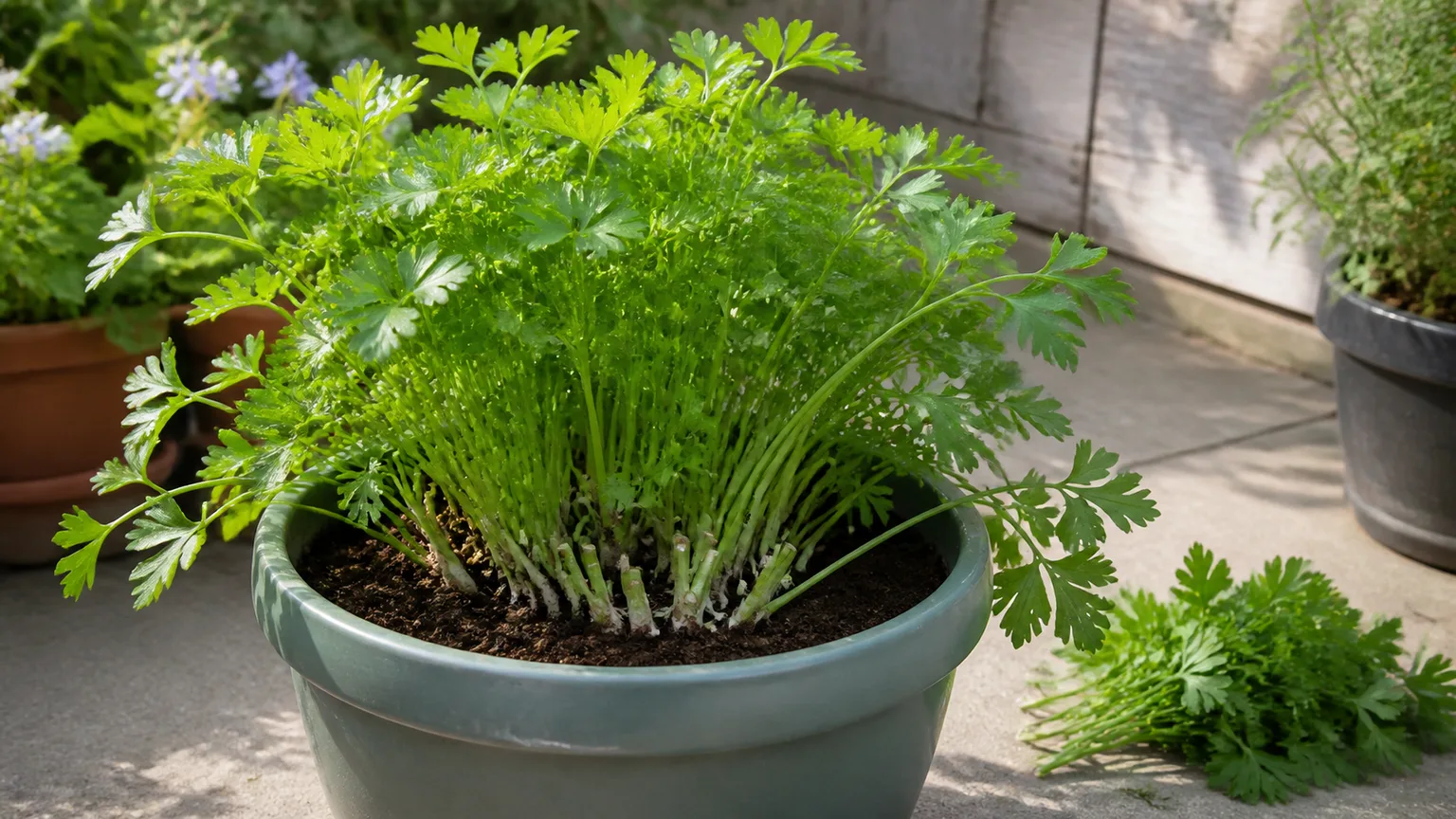
Harvest technique is the difference between a plant that keeps sending up leaves and one that stalls. Wait until stems are about 6–8 inches tall with several leaf segments.
Cut whole outer stems at the base with clean scissors, leaving the center growing point alone. Take no more than one-third of the stems in a session, then give the plant one to two weeks to refill before another big cut. Light, regular harvests beat occasional stripping.
Never shave only the leaf tips off the top—that leaves bare stalks and weak regrowth. For step-by-step cuts and bolt-stalk removal, use how to prune parsley. Regular harvesting also removes older tissue that is first to turn bitter and bolt.
Extending the season indoors and through mild winters
Outdoor parsley often dies back in hard frost, but you can stretch production with cloches, cold frames, or by moving pots indoors before freezes. Indoors, place plants in the brightest window or under a grow light; weak light produces leggy, pale growth that fades fast.
Indoor temperatures around 60–70°F (15–21°C) suit parsley better than a hot radiator ledge. Expect slower regrowth in winter even with good light—you are maintaining supply, not matching summer volume. Starting a fresh indoor sowing every month is more reliable than expecting one pot to last all year.
In mild climates, fall-planted parsley can produce through winter into spring; plan to replace it when spring heat arrives. That fall-to-spring window is often the longest single-plant run gardeners see.
What to do when flower stalks appear
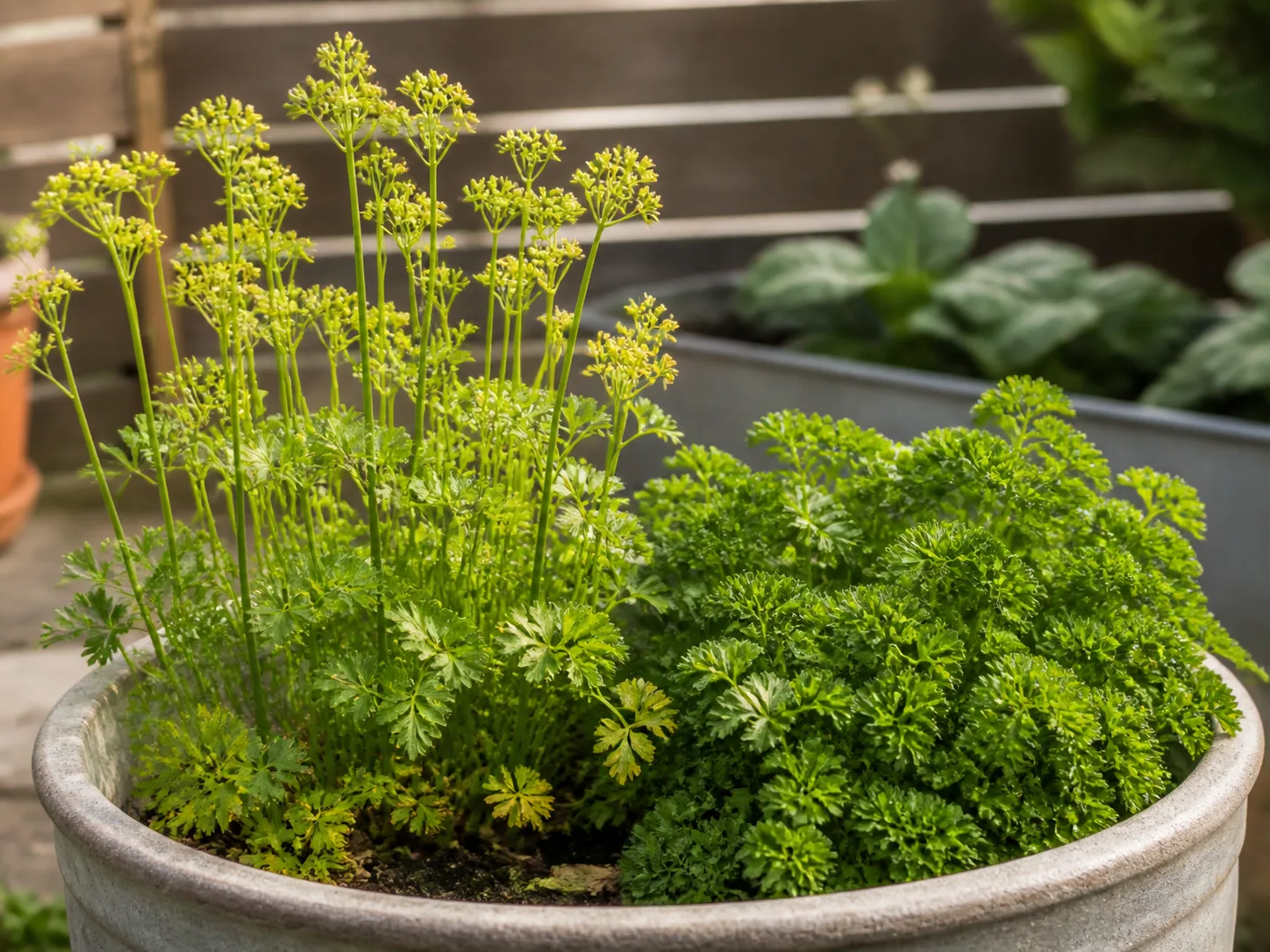
When you see a thick central stem and bud clusters forming, you have three honest choices:
If you want more leaves: Cut the flower stalk at the base as soon as you notice it. The plant may produce another flush of foliage for a few weeks, but quality usually declines—start your next sowing now, not later.
If you want seeds: Let flowers mature, then collect dry seed heads for next year’s tray. Label the variety; curly and flat types cross if neighbors flower at the same time.
If you want pollinators: Leave the plant. Swallowtails and bees use parsley blooms; swap cooking plants for fresh seedlings in another bed or pot.
Once flowering is extensive, leaves turn bitter and tough. Pinching individual buds cannot reverse that shift—it only buys a little time.
Pots vs garden beds for months-long production
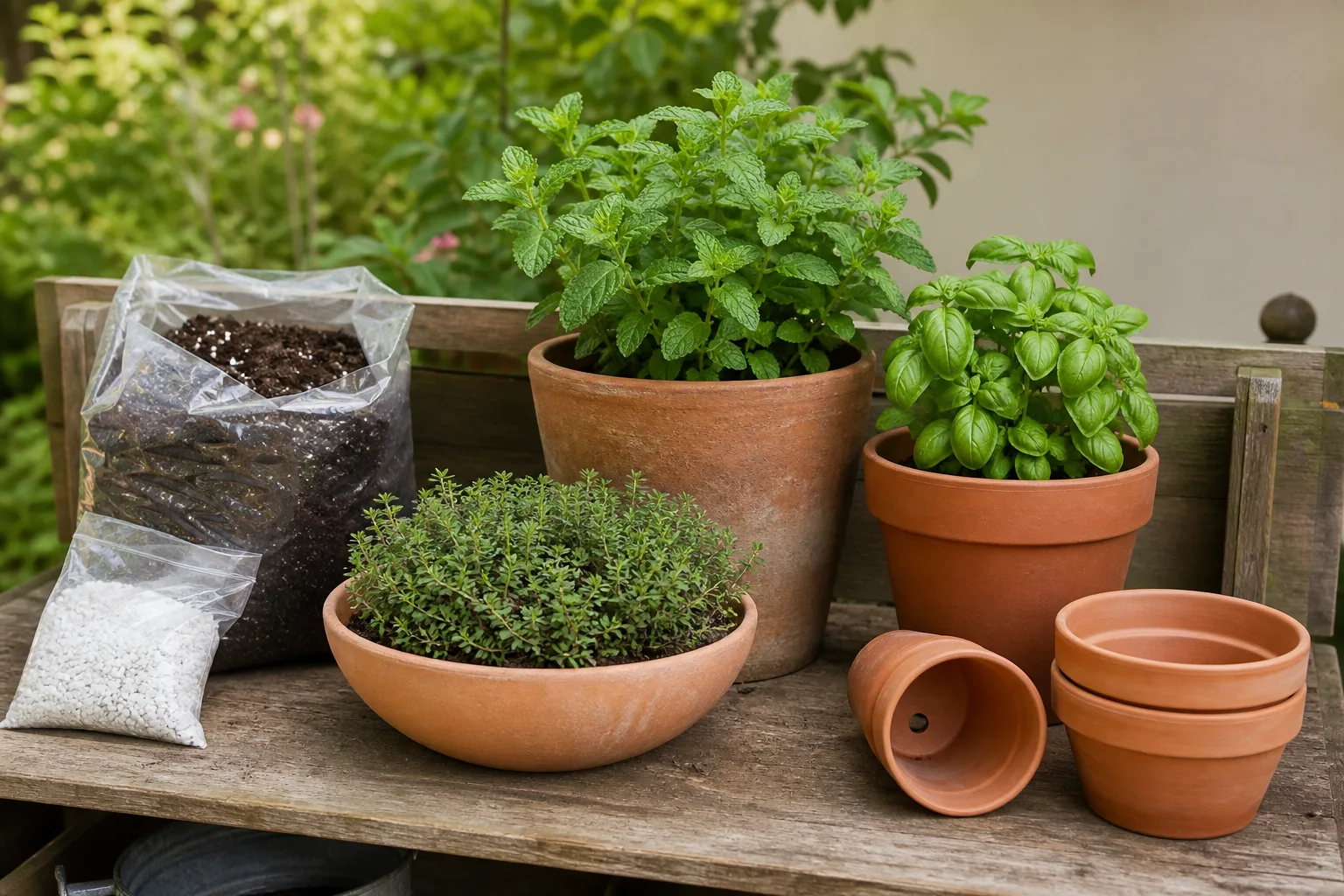
Both work. Beds offer cooler, deeper root runs and easier moisture stability. Pots let you move plants to shade and bring them indoors—valuable in heat and frost.
For months of production in containers, depth matters more than width. A 12-inch-deep pot with drainage supports the taproot better than a wide, shallow bowl that heats every afternoon. One well-spaced plant per pot beats an overcrowded supermarket clump every time.
If you are deciding between herbs in pots or in the ground generally, read should you grow herbs in pots or in the ground—parsley follows the same rule: pots for control and mobility, ground for maximum root room and less frequent watering.
Common problems that shorten the harvest
Yellowing leaves: Often old lower leaves aging out, but widespread yellow after heat or overwatering points to root trouble. Ease off harvest, check drainage, and look for aphids on new growth.
Aphids and carrot fly: Rotate planting spots away from last year’s carrot family crops when possible. Wash aphids off with a strong spray; row cover on young plants can exclude carrot fly in high-pressure areas.
Leaf spot and powdery mildew: Improve spacing and stop overhead watering. Remove badly spotted leaves; do not compost if disease was severe.
Parsley worms (swallowtail larvae): Green caterpillars with black bands—they are butterflies in training. Relocate to a dedicated “sacrifice” plant or enjoy the tradeoff.
Supermarket pots: Dense seedlings exhaust soil in weeks. Split or repot one strong seedling per container, or compost the lot and sow properly.
For seed-starting hygiene and light setup when you restart indoors, how to start seeds indoors and container garden tips for beginners cover the basics parsley inherits.
Storing parsley so your work does not go to waste
Use parsley fresh when you can. For the fridge, treat stems like cut flowers: trim ends, place in a jar with an inch of water, loosely cover leaves, and refrigerate—often one to two weeks.
Freeze chopped leaves in ice cube trays with water or oil for soups and sauces. Air-dry small bundles in a warm, dark, airy spot; dried parsley is milder than fresh but fine for cooked dishes. Freezing captures flavor better than drying for most home cooks.
Conclusion
Months of parsley is a system, not a single heroic plant. Choose flat-leaf for heat-prone summers, sow in cool windows, soak slow seeds, space plants generously, water evenly, harvest outer stems at the base, and always have a younger backup coming. When flower stalks rise, cut them if you must—but replant without guilt. Parsley is telling you the leafy chapter is ending; your job is to have the next chapter already sprouting.