Grow Herbs in Pots or in the Ground: Which Wins?
Pots or ground for basil, mint, rosemary, and thyme? Compare drainage, watering, yield, and containment with a herb-by-herb placement guide.
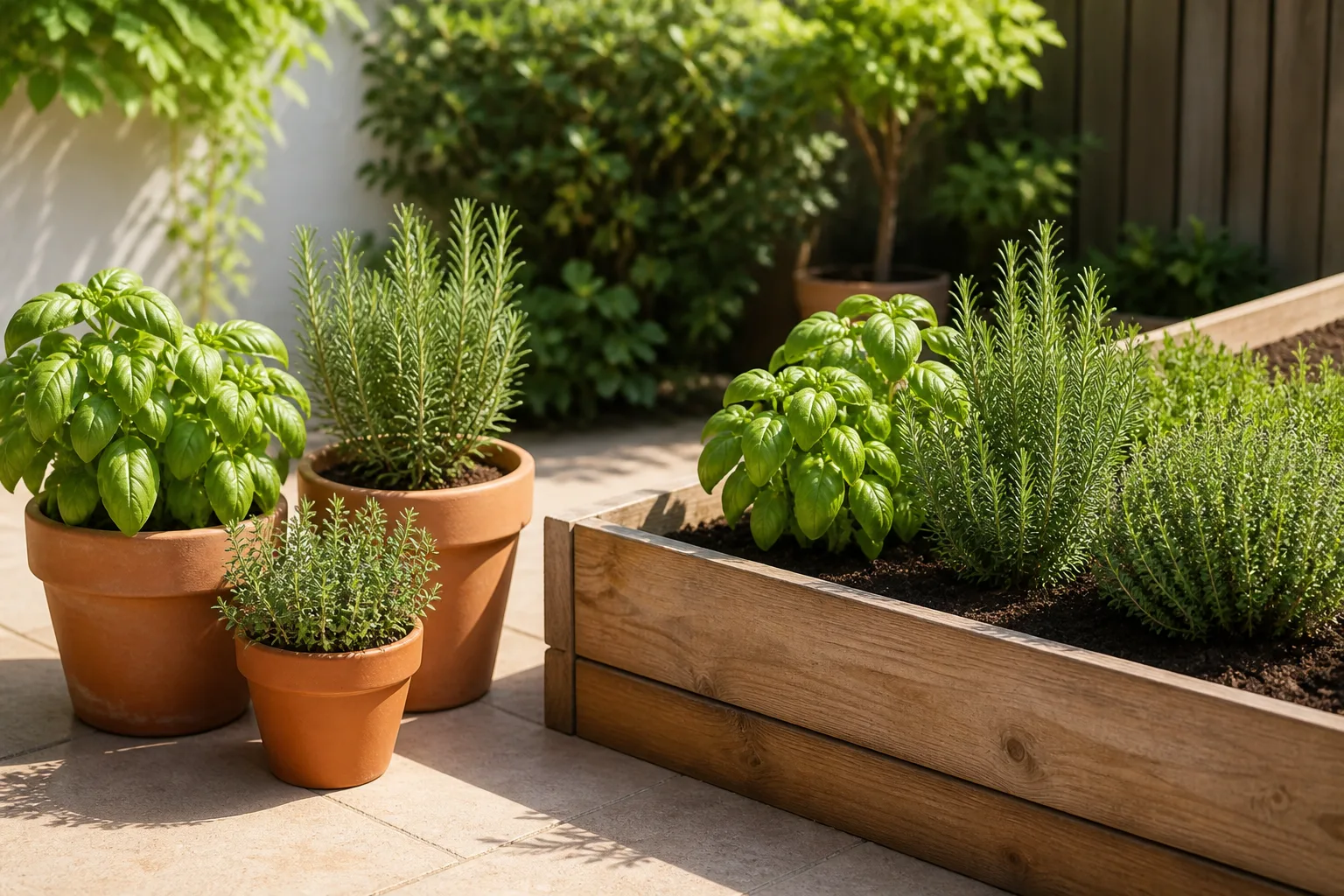
Fresh herbs are one of the easiest edible wins in a home garden, but the planting method you choose changes everything from how often you water to whether mint quietly takes over the entire yard. The honest answer is not pots or ground—it is which herbs, in which spot, with which soil and watering routine you can actually keep up.
Most ranking pages stop at two variables: soil type and climate. Those matter, but they are not the whole story. Space, drainage, your willingness to water in July, and whether you need to stop invasive runners also decide the outcome. The goal here is a practical routing guide so you plant once in the right place instead of rescuing the same basil all summer.
The Short Answer: Soil, Climate, and How Often You Water
If your native soil is heavy, acidic, or stays wet for days after rain, grow herbs in pots or raised beds where you control the mix. If you live in a rainy climate with poor surface drainage, in-ground planting without amendment is a slow death for Mediterranean herbs like rosemary and thyme.
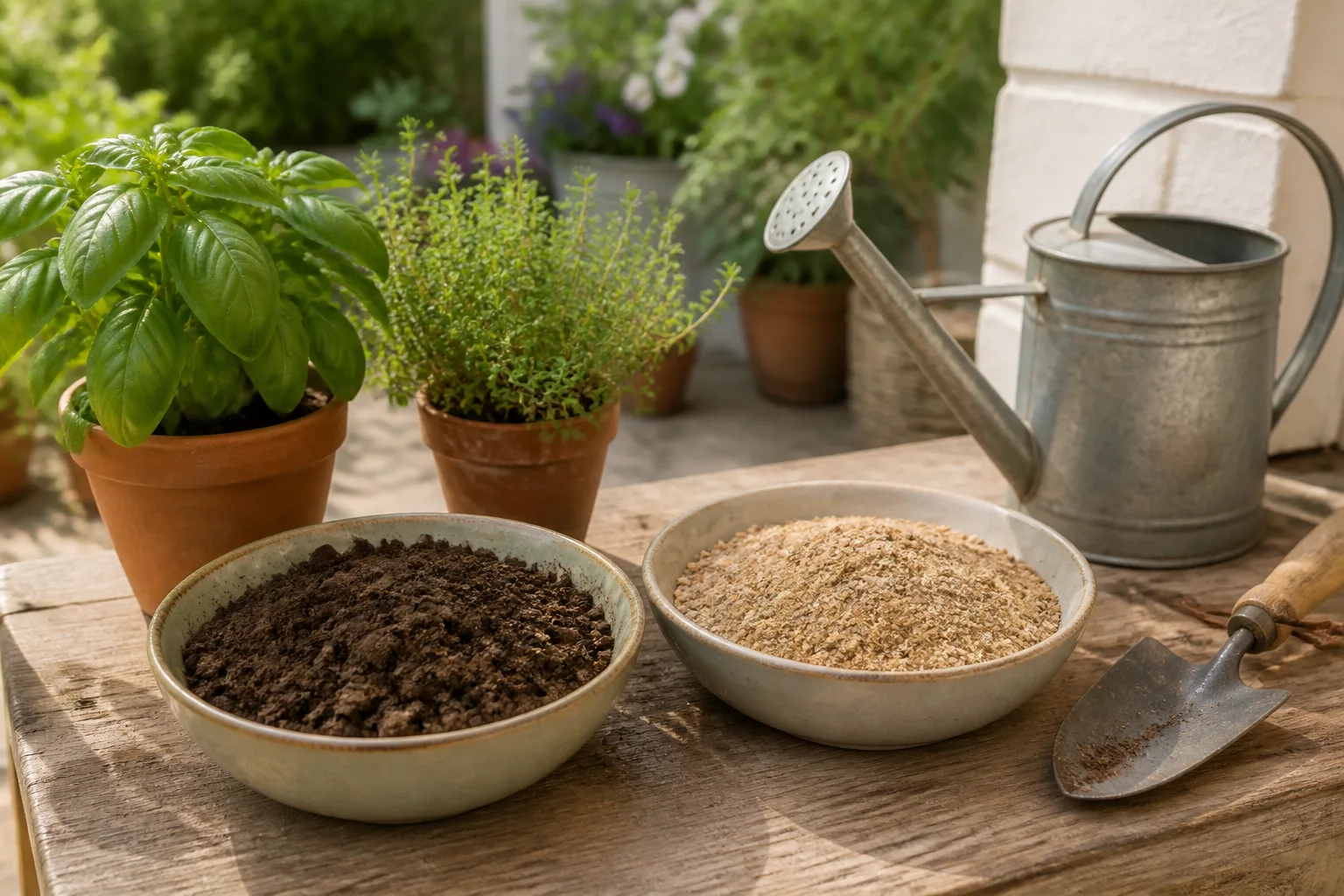
If your soil is light, well drained, and reasonably fertile, many hardy herbs will grow larger and need less daily attention in the ground. That is especially true for rosemary, sage, thyme, and oregano once they are established.
Then add two practical filters. How much space do you have? A balcony or front step is a container garden by default. How often will you water? Container mix dries faster than garden soil; in hot weather, potted herbs may need water every day while established in-ground plants coast through dry spells.
When containers are usually the smarter choice
Choose pots when you need control over soil, drainage, and placement. Containers also win for herbs that spread aggressively, tender annuals you harvest constantly, and any plant you want at counter height beside the kitchen door. The RHS herb-growing guidance recommends keeping containers near the house for easy picking and potting stronger growers such as mint and sage when space is tight.
When in-ground planting usually wins
Choose open ground when you have well-drained soil, full sun, and room for roots to spread. Hardy perennials produce more leaf and stem volume in borders than in small pots, and they tolerate heat waves better because the soil volume buffers moisture and temperature swings. NDSU Extension horticulturist Esther McGinnis notes that container herbs may need more frequent watering in summer heat—an important trade-off if you travel or dislike daily watering rounds.
Pots vs Ground: What Each Method Does Best
Neither method is morally better. They solve different problems.
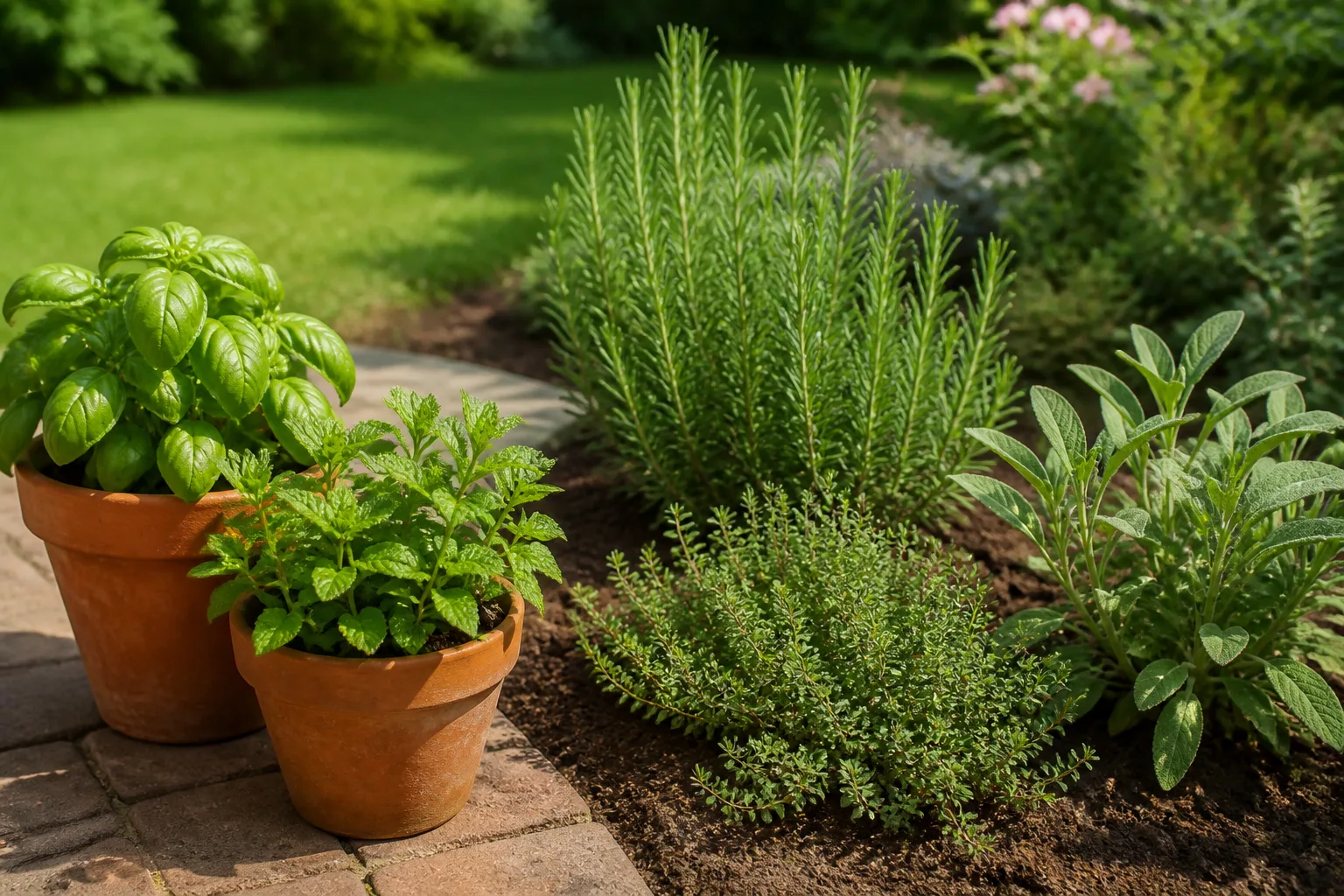
| Factor | Containers | In-ground beds |
|---|---|---|
| Soil control | Total—you choose mix and pH | Limited unless you amend heavily |
| Drainage in wet weather | Excellent if pots drain freely | Depends on site grading and soil texture |
| Watering workload | Higher; daily checks in summer | Lower once plants establish |
| Yield per plant | Capped by pot size | Higher for shrubs like rosemary |
| Invasive herbs | Easy to contain | Risky without barriers |
| Winter flexibility | Move tender pots indoors | Hardy perennials stay put |
| Best for | Mint, basil, coriander, small spaces | Rosemary, thyme, sage, large harvests |
Control, containment, and kitchen access
Pots let you chase sun through the season, lift tender plants before frost, and keep harvest within arm’s reach. That last point sounds minor until you realize you will actually clip parsley when it sits by the door—and ignore it when it is across the yard.
Containment is the other big win. Mint spreads by rhizomes and rooting stems. Utah State University Extension is blunt: mint is best planted in containers or where roots are confined, because it out-competes most garden plants once established. If you love the look of mint in a border, sink a pot so the rim stays above soil level and runners cannot escape—a method also endorsed in mint culture guides from extension services and the RHS.
Root room, resilience, and lower daily maintenance
Given decent soil, in-ground herbs build deeper root systems and access a larger water and nutrient reservoir. A mature rosemary in a border can sail through a heat wave with little help, while the same plant in a one-gallon pot may wilt by afternoon. Ground planting also suits pollinator value: NDSU Extension points out that flowering herbs such as chives, thyme, and lavender feed bees and butterflies even after leaf flavor declines post-bloom.
The cost is less control. You inherit your site’s pH, compaction, and winter wetness. Heavy clay that holds water will rot Mediterranean roots faster than intermittent neglect ever will.
Read Your Soil Before You Choose
Culinary herbs share a few baseline needs: bright light, air around foliage, and soil that drains well enough that roots breathe between waterings. Most common kitchen herbs prefer slightly acidic to neutral soil, roughly pH 6.0 to 7.0, though lavender and some Mediterranean species tolerate leaner, more alkaline conditions.
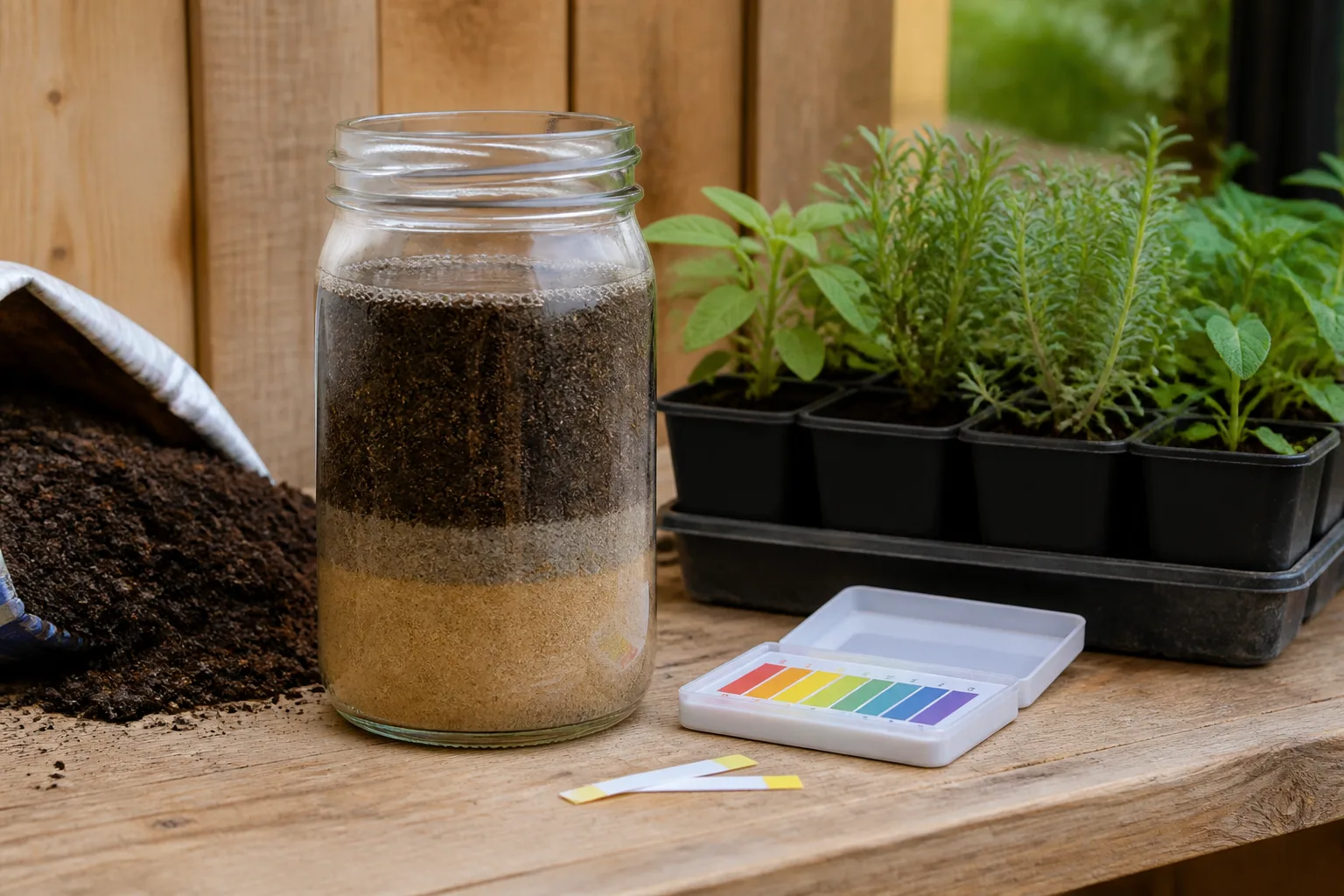
You do not need a laboratory test to make a good decision, but a simple jar test or home pH kit helps. Dig a small sample, note whether it crumbles (sandy), forms a ribbon (clay), or feels silky (silt). Smell and color tell you about organic matter. If water pools on the surface hours after rain, assume drainage is poor until proven otherwise.
Drainage, texture, and pH for culinary herbs
Rich, moisture-retentive soil suits basil, parsley, dill, chervil, and cilantro when paired with full sun and steady moisture. Gritty, fast-draining soil suits rosemary, thyme, sage, and lavender. Planting rosemary in soggy clay is one of the most common herb failures; the leaves brown, growth stalls, and beginners blame the plant instead of the site.
If a soil test shows very low pH (acidic) and you want a broad herb bed, lime according to your extension office’s local recommendations before planting moisture-loving herbs. For pots, adjust the mix instead of the yard.
What to do with heavy clay or constantly wet ground
You have three honest options: amend a dedicated in-ground patch with compost and coarse grit, grow in raised beds filled with imported mix, or use containers. Trying to “fix” an entire wet backyard for one rosemary is usually slower than giving Mediterranean herbs a raised mound or pot with sharp drainage.
For wet climates, unamended in-ground beds stay saturated too long for thyme and lavender. Containers—or raised beds on free-draining bases—let you engineer fall-away moisture even when the lawn squelches.
Match Herbs to Moisture and Climate
Climate changes watering math more than beginners expect. A rainy spring can rot potted Mediterranean herbs if saucers hold water, while a dry, windy balcony can desiccate parsley in an afternoon. Group herbs by water and drainage needs before you group them by recipe.
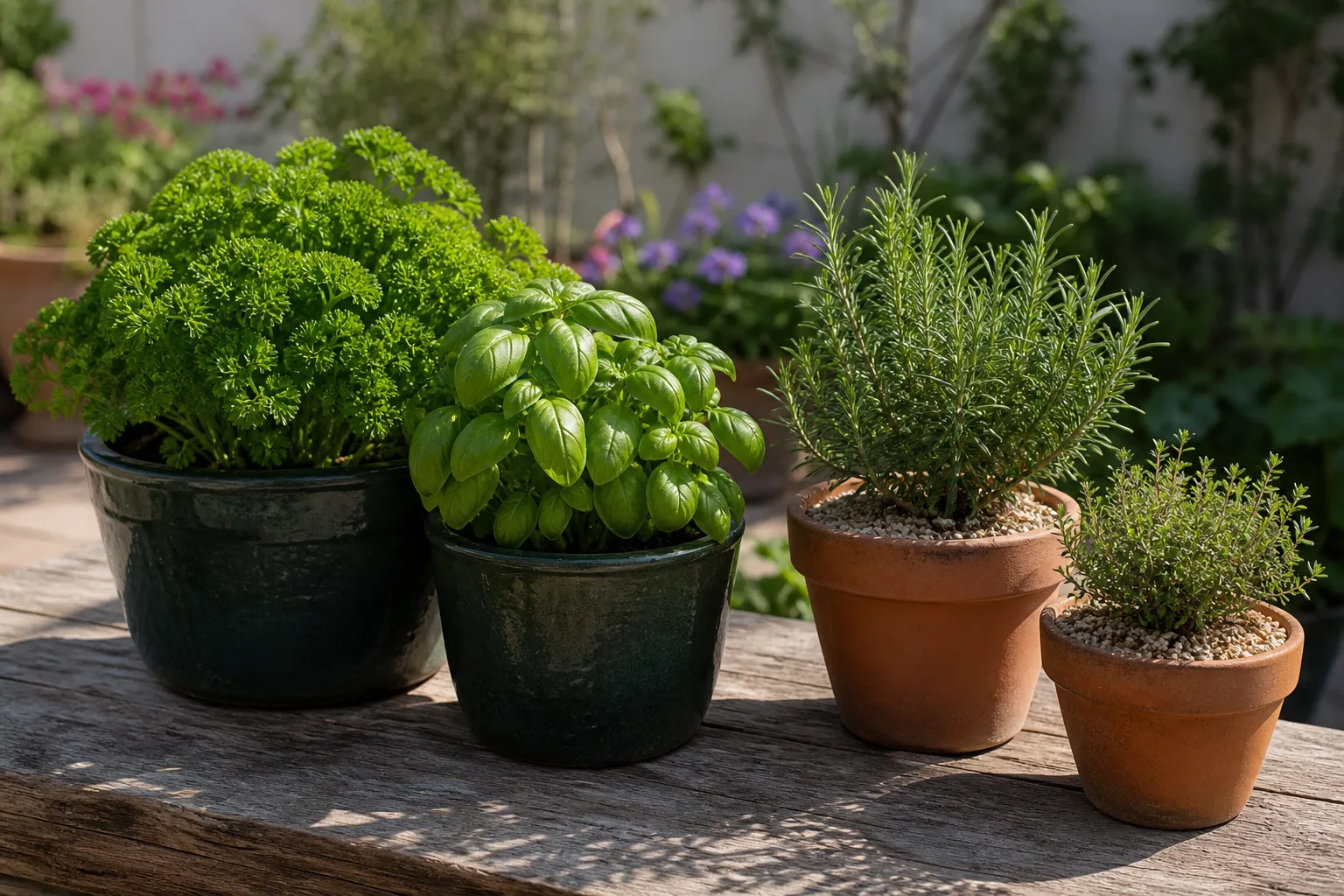
Most culinary herbs want at least six hours of direct sun daily. NDSU Extension lists full sun and well-drained soil as baseline requirements, with container plants needing extra water in heat. In hot-summer regions, afternoon shade can prevent basil and cilantro from bolting instantly, but deep shade produces leggy, weak-flavored growth.
Moisture-friendly herbs for richer, steadier soil
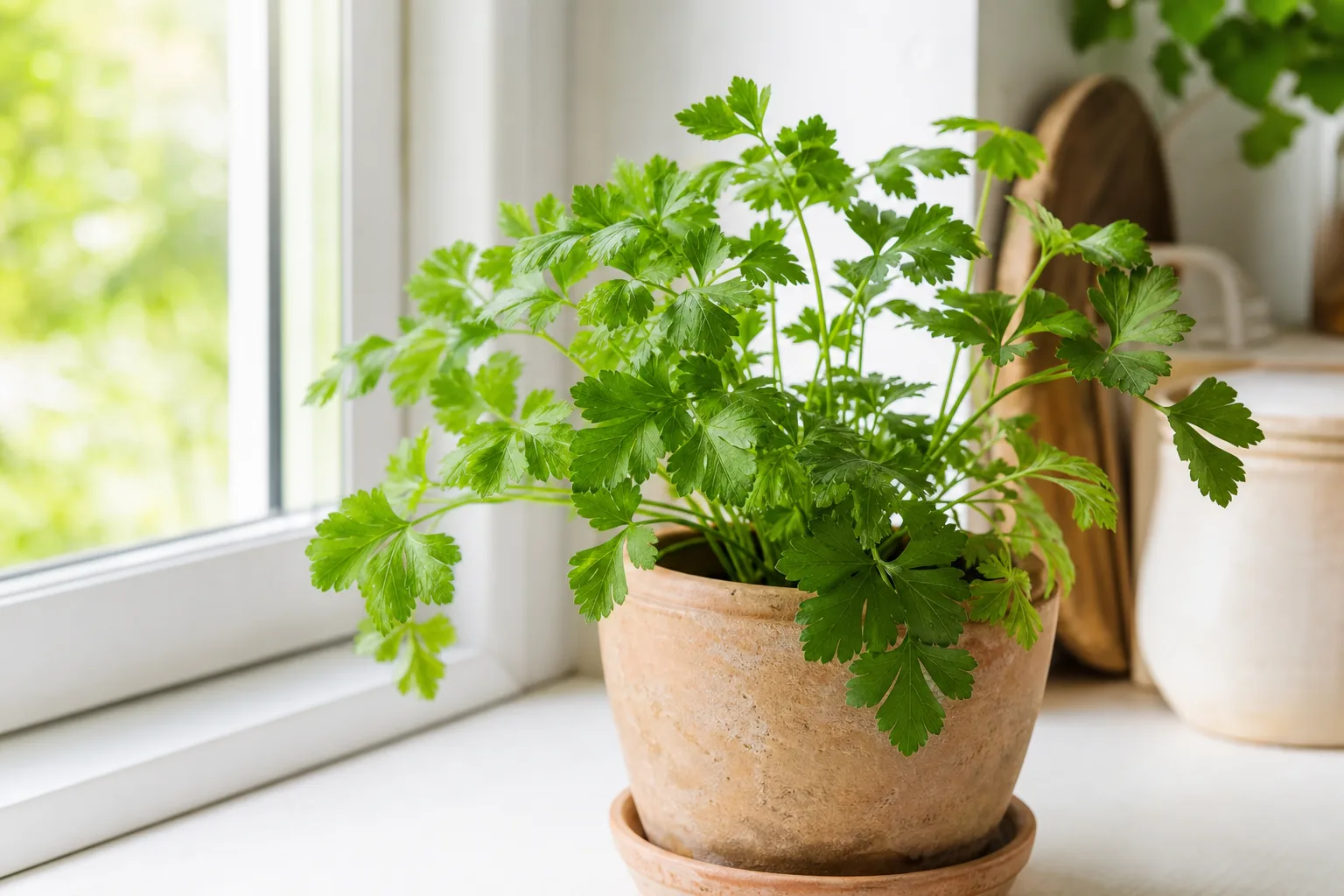
Basil, parsley, dill, fennel, chervil, and cilantro tolerate more organic matter and steady moisture. Basil is a tender annual that dies with frost; keeping it in a pot lets you move it indoors or under cover when nights drop. Parsley and chives are forgiving in ground or pots and suit beginners who are still learning watering rhythm.
These herbs reward rich but still draining soil. The mistake is equating “moist” with “soggy.” Roots need oxygen. In containers, that means potting mix—not heavy garden soil—and holes that drain freely.
Mediterranean herbs for fast-draining, drier sites
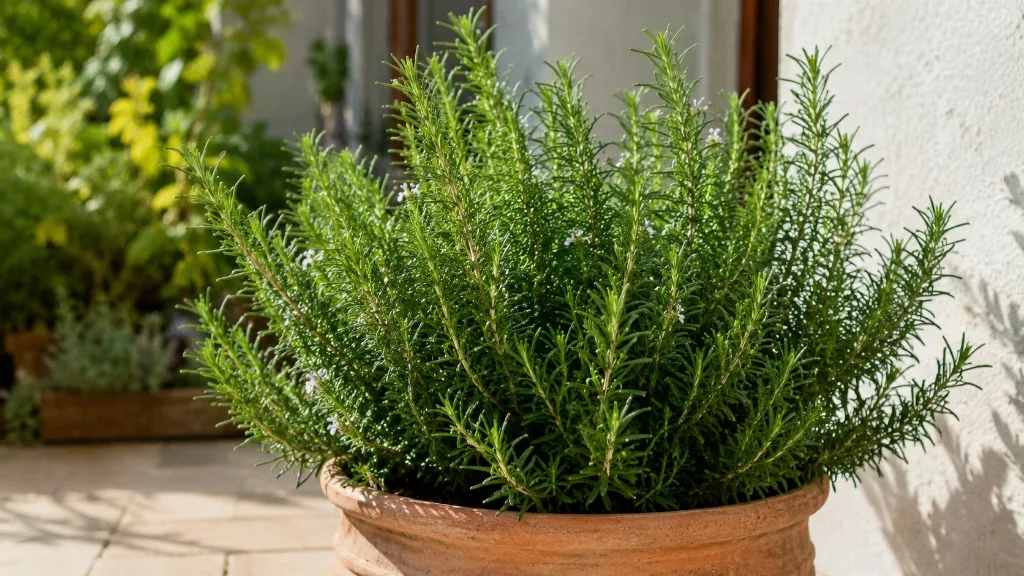
Rosemary, thyme, sage, oregano, and lavender evolved on lean, sunny, quick-draining ground. They suffer in wet feet, especially in winter. In the ground, give them a slope, a raised berm, or a sand-and-gravel amended bed. In pots, use a gritty mix, skip water-holding crystals, and never let pots sit in full saucers after rain.
Lavender is often happiest in poor, alkaline, very well-drained soil. A rich, wet border is the wrong love language. If your yard is clay, lavender belongs in a pot or raised bed with added grit—not in a low spot that collects runoff.
Herb-by-Herb Placement Guide
Use this as a default routing chart. Local microclimate still wins, but these starting points prevent most avoidable mistakes.
Grow in pots (or sunk pots) by default: mint and spearmint; lemon balm if you dislike self-seeding; basil and cilantro for kitchen access; any herb you have not tested in your native soil yet.
Grow in ground when drainage is good: rosemary, thyme, sage, oregano; chives and parsley if soil stays moist but not waterlogged; dill and fennel if you have space and do not mind self-seeding.
Either works with the right soil: chives, parsley, oregano, and smaller thyme cultivars. Scale the container to the plant—thyme in a six-inch pot is a bonsai project, not a harvest plan.
For deeper mint containment tactics, see our mint care guide and why open-ground mint spreads. For indoor winter culture, our herbs to grow indoors guide covers light and watering when pots come inside.
Annuals and spreaders that belong in pots
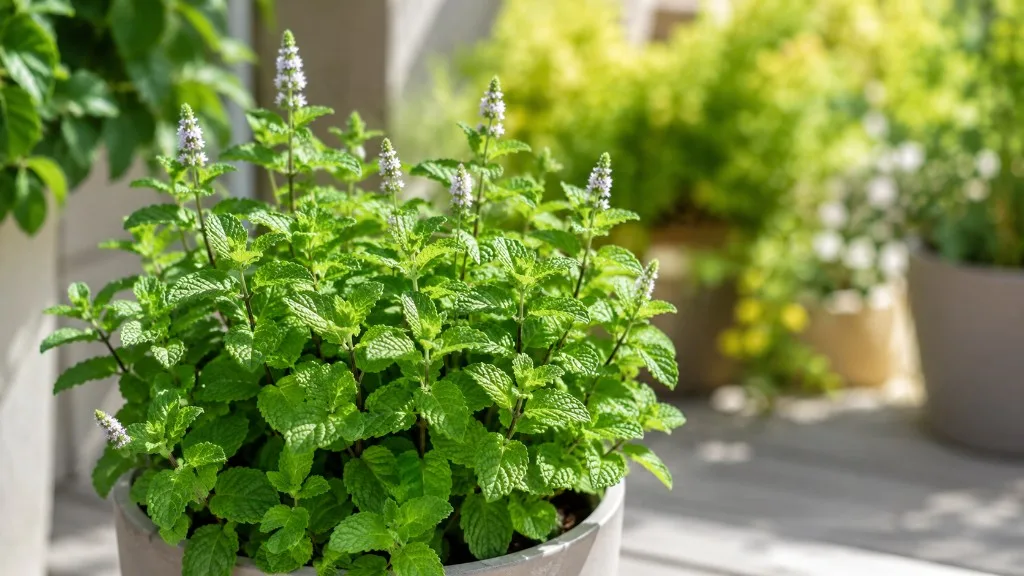
Mint is the non-negotiable container herb unless you install a root barrier. USU Extension advises containers extending several inches above and well below the soil surface if you sink them in-ground. Even then, check yearly for escapees.
Basil is short-lived and picked constantly. A pot by the kitchen beats a distant bed you forget. Pinch tips to delay flowering, but plan on successive sowings for a long season—basil is about fresh leaf turnover, not decade-long structure.
Cilantro/coriander bolts quickly in heat. Pots let you start a new batch in partial shade while an in-ground patch might bake. Treat it as a relay crop, not a one-and-done planting.
Hardy perennials that reward open ground
Rosemary can become a shrub in warm climates. Give it sun, drainage, and winter protection where margins are cold. Containers work, but upgrade pot size as the plant grows or accept lower yield.
Thyme and sage develop woody bases that harvest better when roots are not cramped. In pots, use wide, shallow containers with excellent drainage rather than tall, narrow ones that stay wet at the bottom.
Chives tolerate heavier soil than rosemary and return yearly. They are excellent edging plants in vegetable beds if you accept that the clump expands slowly over time.
Container Setup That Actually Works
A pretty four-inch herb pot is a marketing photo, not a production system. Small volumes dry in hours and restrict flavor development. Colorado State University Extension container guidance emphasizes adequate root volume, drainage holes, and quality potting media—principles that apply directly to herbs even when the publication focuses on vegetables.
Pot size, mix, drainage, and saucer habits
Basil and parsley: at least 8–10 inches deep and wide for one plant; bigger is better in heat.
Mint: one plant per 12-inch pot minimum; crowded mint competes with itself and dries unevenly.
Rosemary and sage: 12–16 inch pots for long-term growth; dwarf cultivars can go slightly smaller.
Thyme and oregano: wide bowls beat skinny towers; shallow roots still need air at the crown.
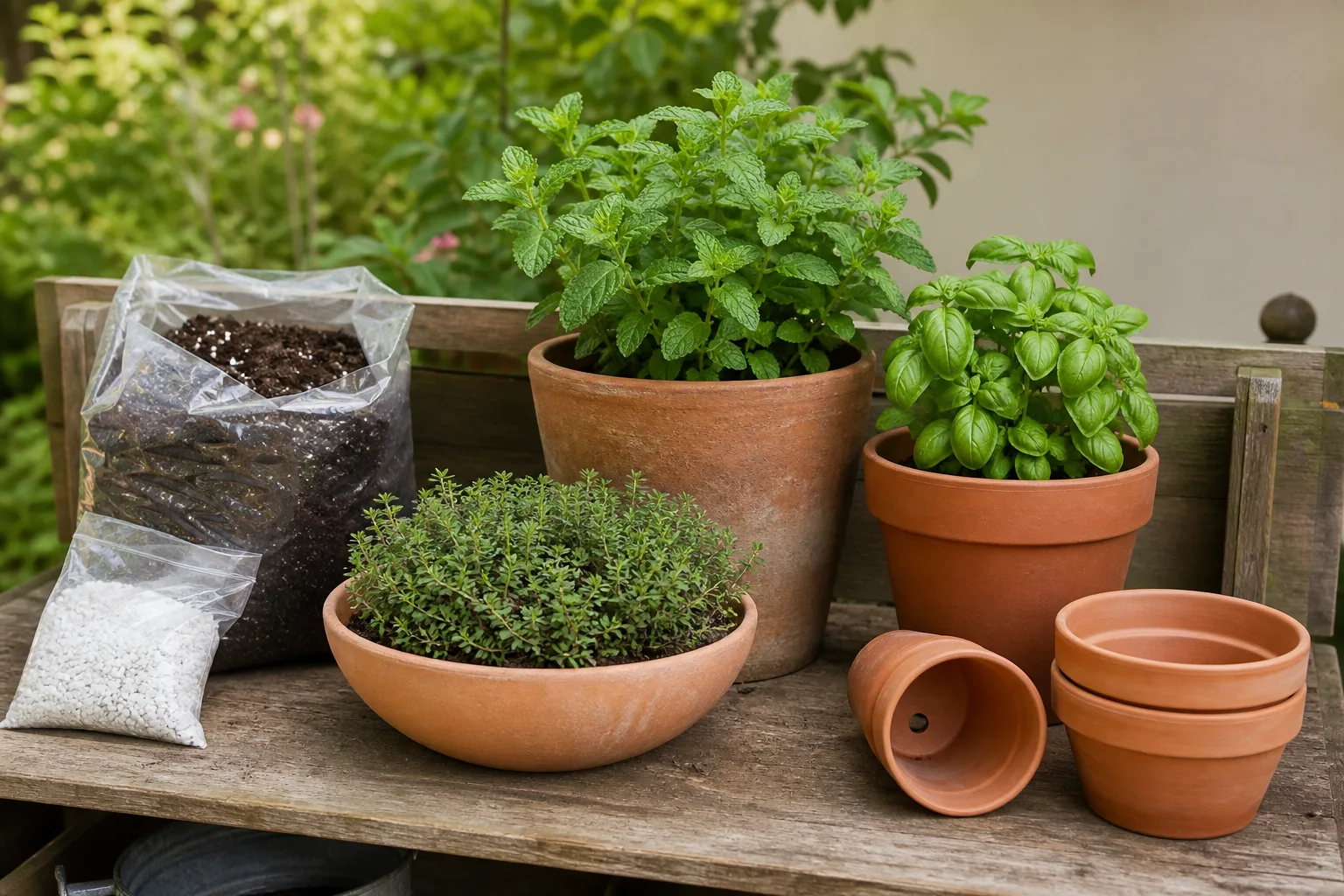
Use bagged potting mix labeled for containers. Garden soil compacts in pots, choking roots and holding too much water. Mix in perlite or fine grit for Mediterranean herbs. Unglazed terracotta breathes and helps prevent winter rot in mild climates, but it dries faster—plan on more frequent watering.
Drainage holes are mandatory. If a decorative pot lacks them, use it as a cachepot and grow in a plain inner pot. After watering, empty saucers so roots are not marinating. In rainy weeks, tilt pots or move them under eaves so Mediterranean herbs do not drown.
Unglazed clay, grow bags, and window boxes
Terracotta suits rosemary, thyme, and sage because the wall porosity releases extra moisture. Plastic and glazed ceramic retain water longer—useful for basil in a hot, windy site if you still check moisture daily. Fabric grow bags air-prune roots and store flat off-season, but they dry from all sides; group them where you can water efficiently.
Window boxes work for shallow-rooted annuals like basil and leaf lettuce companions, but group plants with similar water needs. Do not pair thirsty basil with drought-loving thyme in one narrow box unless you enjoy watching one side suffer.
Raised Beds as a Practical Middle Ground
Raised beds split the difference between pots and open ground. You import better soil, improve drainage on wet sites, and gain root volume without giving mint the run of the property. They are especially useful when native soil is heavy clay but you want a permanent thyme hedge or a row of sage.
Build or buy beds deep enough for roots—12 inches is a practical minimum for most herbs, deeper if your native soil is compacted below. Fill with a blend of topsoil, compost, and grit for Mediterranean sections; keep richer mixes for basil and parsley zones if you mix families in one bed, or segregate by water needs.
Raised beds still require watering in drought, but they forgive missed days better than six-inch pots. They are harder to move than containers, so place them in full sun before filling. If you use our winter herb cutback guidance, hardy bedded herbs get seasonal pruning while pots come indoors or under cover.
Watering, Feeding, and Harvest Differences
Container herbs live on your watering calendar. In-ground herbs live on your weather—and then on you only during dry spells.
Daily checks in pots vs seasonal attention in beds
For potted herbs in summer, poke your finger into the top inch of mix. If it is dry, water slowly until a little drains out. On windy balconies, that may be daily; in mild coastal weather, every two or three days. Mediterranean pots prefer drying slightly between waterings; basil and parsley prefer steady moisture without sogginess.
Established in-ground herbs on loamy soil may need supplemental water only during heat waves. Watch for wilting in morning—afternoon limp on hot days can be normal for some plants, but repeated morning wilt means roots are dry.
Harvest in the morning when stems are fully hydrated, as NDSU Extension recommends. Frequent clipping encourages bushiness in basil, mint, and thyme. For mint, cut back hard a few times a season if plants become leggy; USU Extension notes mint tolerates aggressive pruning.
Why over-fertilizing dulls flavor
Herbs produce essential oils responsible for aroma and taste. Excess nitrogen pushes soft, leafy growth with diluted flavor and more pest problems. A light spring feeding or compost top-dress for in-ground plants is usually enough. In pots, a diluted balanced liquid feed every few weeks mid-season beats constant heavy feeding.
If leaves pale despite good care, check roots first—waterlogging, tiny pots, and low light mimic hunger. Our basil watering and mint watering pages walk through species-specific moisture cues.
Common Mistakes That Ruin Herb Gardens
Using garden soil in pots leads to compaction, poor drainage, and sour roots. Always use container mix outdoors.
Undersized pots turn every hot day into a crisis. Upsize once at planting instead of repotting weekly in July.
Planting mint loose in a bed creates years of digging. There is no graceful undo. Contain it from day one.
Matching drought herbs with wet soil kills rosemary and lavender slowly enough that beginners think the variety is “difficult.”
Ignoring saucers and cachepots after rain rots Mediterranean roots in climates that feel dry between storms.
Treating supermarket herbs as permanent landscape plants without hardening off or repotting. They are often root-bound and grown in peat-heavy mix that dries unevenly outdoors.
Skipping successive sowings for basil and cilantro, then declaring the herb “does not work here” when one bolted patch finishes.
The Mixed Setup Most Home Cooks Prefer
The most productive real-world herb gardens are rarely all pots or all border. They are a split layout: aggressive and tender herbs in containers near the kitchen; hardy, shrubby herbs in the sunniest well-drained bed or raised planter; mint in its own pot forever.
A workable starter plan on a typical suburban lot:
- Pots by the back door: basil, cilantro, and mint (three separate pots—never combine mint with anything else long term).
- Raised bed or sunny border: rosemary, thyme, sage, and chives.
- Optional window box: cut-and-come-again parsley if raccoons or rabbits browse ground level.
Move tender pots indoors or into a bright cool room when frost threatens. Hardy bedded herbs stay put with mulch in cold zones. If you lack in-ground space entirely, you are not missing out—you are running a legitimate container kitchen garden, provided pots are sized honestly and watered consistently.
Conclusion
Growing herbs in pots or in the ground is not a loyalty test. It is a routing problem. Heavy, wet, or unknown soil points to containers or raised beds where you control drainage. Light, well-drained garden soil with daily sun rewards hardy perennials in the open ground with less watering and bigger harvests.
Mint belongs in a pot. Basil and cilantro belong where you will actually pick them. Rosemary, thyme, and sage belong where water drains fast and roots can spread. When in doubt, start in a properly sized pot, observe how the plant responds for one season, then promote winners to a permanent bed. That single season of testing costs less than replacing dead shrubs—or digging mint out of your lawn for the next decade.