16 Herbs That Grow Indoors All Year
Grow 16 culinary herbs indoors all year with light groups, watering rules, pet-safe placement, and species-by-species care for basil, mint, rosemary, and more.
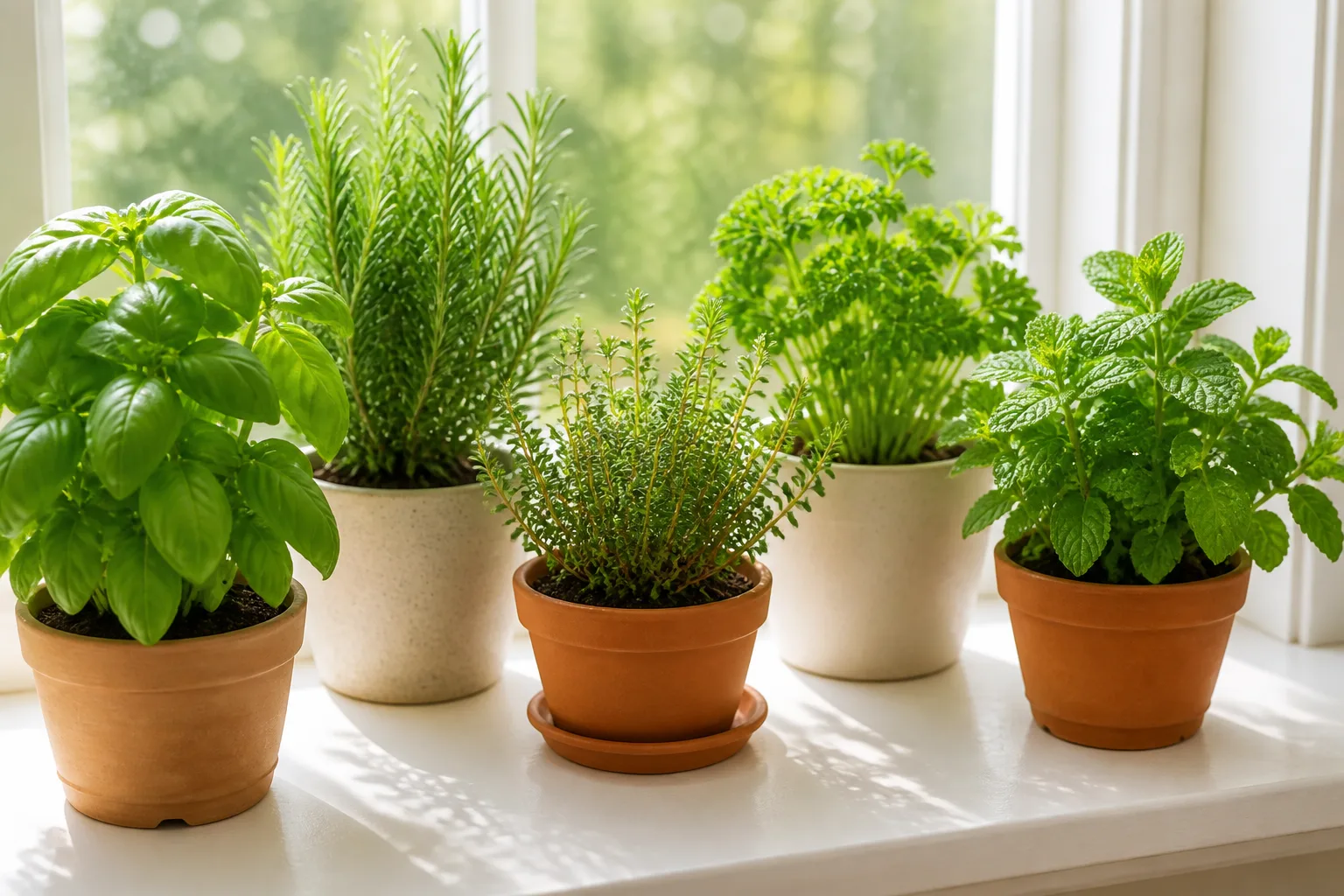
Fresh herbs on a windowsill are one of the few indoor gardening projects that pay off every week. You do not need a greenhouse or a perfect south window. You need the right herbs for your light, separate pots for different water needs, and realistic expectations about which plants are long-lived housemates versus short kitchen cycles.
These 16 herbs that grow indoors all year—basil, catnip, chives, lemon balm, oregano, parsley, rosemary, sage, spearmint, thyme, bay laurel, lemongrass, marjoram, cilantro, dill, and chervil—cover everyday cooking, tea, and pet-friendly greens when placed correctly. Some are nearly foolproof in a bright kitchen. Others, especially rosemary and bay laurel, reward patience more than enthusiasm.
The 16 Herbs at a Glance
Use this table to match herbs to your window before you buy pots. “Year-round” here means the species can live indoors continuously if light, temperature, and watering fit the group—not that every plant lasts forever without replanting.
| Herb | Light group | Water group | Difficulty | Typical indoor lifespan | Best kitchen use |
|---|---|---|---|---|---|
| Basil | Bright; warm | Moist, even | Medium | 2–4 months; resow | Pesto, pasta, Thai dishes |
| Catnip | Bright to moderate | Moist, even | Easy | 6+ months | Cat enrichment (not cooking) |
| Chives | Bright to moderate | Moist, even | Easy | 12+ months | Eggs, potatoes, dips |
| Lemon balm | Bright to moderate | Moist, even | Easy–medium | 6+ months | Tea, salads, potpourri |
| Oregano | Very bright | Mediterranean dry | Medium | 12+ months | Pizza, sauces, roast veg |
| Parsley | Bright to moderate | Moist, even | Easy | 6–12 months | Universal garnish |
| Rosemary | Very bright | Mediterranean dry | Hard | 12+ months if humidity managed | Roasts, potatoes, bread |
| Sage | Very bright | Mediterranean dry | Medium | 12+ months | Poultry, stuffing, brown butter |
| Spearmint | Bright to moderate | Moist, even | Easy | 6+ months | Tea, drinks, desserts |
| Thyme | Very bright | Mediterranean dry | Medium | 12+ months | Soups, meat, roasted vegetables |
| Bay laurel | Very bright | Mediterranean dry | Medium–hard | Years (slow growth) | Soups, stews, braises |
| Lemongrass | Very bright | Moist, even | Medium | 6+ months | Curries, tea, marinades |
| Marjoram | Very bright | Moist–dry middle | Medium | 6–12 months | Soups, stews, gentle seasoning |
| Cilantro | Bright; cool | Moist, even | Medium | 4–8 weeks per sowing | Salsas, curries, fresh sauces |
| Dill | Bright | Moist, even | Medium | 6–10 weeks per sowing | Pickling, fish, salads |
| Chervil | Bright to moderate | Moist, even | Medium | 8–12 weeks per sowing | Eggs, fish, French sauces |
Penn State Extension groups bay, rosemary, and thyme among herbs that want the strongest indoor light, while chives, cilantro, and lemon balm tolerate lower light better—though “tolerate” still means bright room, not a dark hallway. (Penn State Extension)
Why Some Herbs Thrive Indoors While Others Struggle
Indoor herb failure usually comes from one mismatch: you treated a drought-loving Mediterranean plant like a thirsty basil, or you kept basil on a cold windowsill all winter. Herbs are not interchangeable houseplants. They carry outdoor climate preferences into your kitchen.
Warm-season herbs such as basil, cilantro, and dill grow fast, bolt toward seed, and often need succession planting even indoors. Woody Mediterranean herbs such as rosemary, thyme, oregano, sage, and bay laurel grow slowly, hate wet roots, and need more light than most windows provide without help. Mint-family plants spread aggressively outdoors but behave well in pots indoors if you keep soil evenly moist and harvest often.
Temperature matters as much as light. Penn State Extension recommends daytime room temperatures around 65–70°F and cooler nights near 55–60°F for most herbs. Basil is the notable exception: it declines below about 50°F, so a drafty winter windowsill can kill it even when the rest of the room feels fine. (Penn State Extension)
What You Need for a Year-Round Indoor Herb Garden
Before you choose among the 16 herbs, assemble the basics. The same setup supports mint on a moderate sill and rosemary under a lamp—you adjust placement, not the whole system.
Light, windows, and grow lights
Most culinary herbs want about six hours of direct sun daily indoors. South- or west-facing windows are the default target in winter; east windows work for cool-season leafy herbs that prefer morning sun, including cilantro and chervil. Brooklyn Botanic Garden notes that many windowsills behave like part shade, which is why leafy herbs often outperform sun-demanding Mediterranean types unless you add supplemental light. (Brooklyn Botanic Garden)
If leaves look pale, stems stretch, or aroma fades, assume light is insufficient before you change fertilizer. Penn State Extension suggests placing herbs 6–12 inches below two 40-watt cool white fluorescent tubes (or an equivalent full-spectrum LED) for 14–16 hours daily when natural sun is weak. A dedicated grow light guide helps you size LEDs for a windowsill tray without guessing wattage.
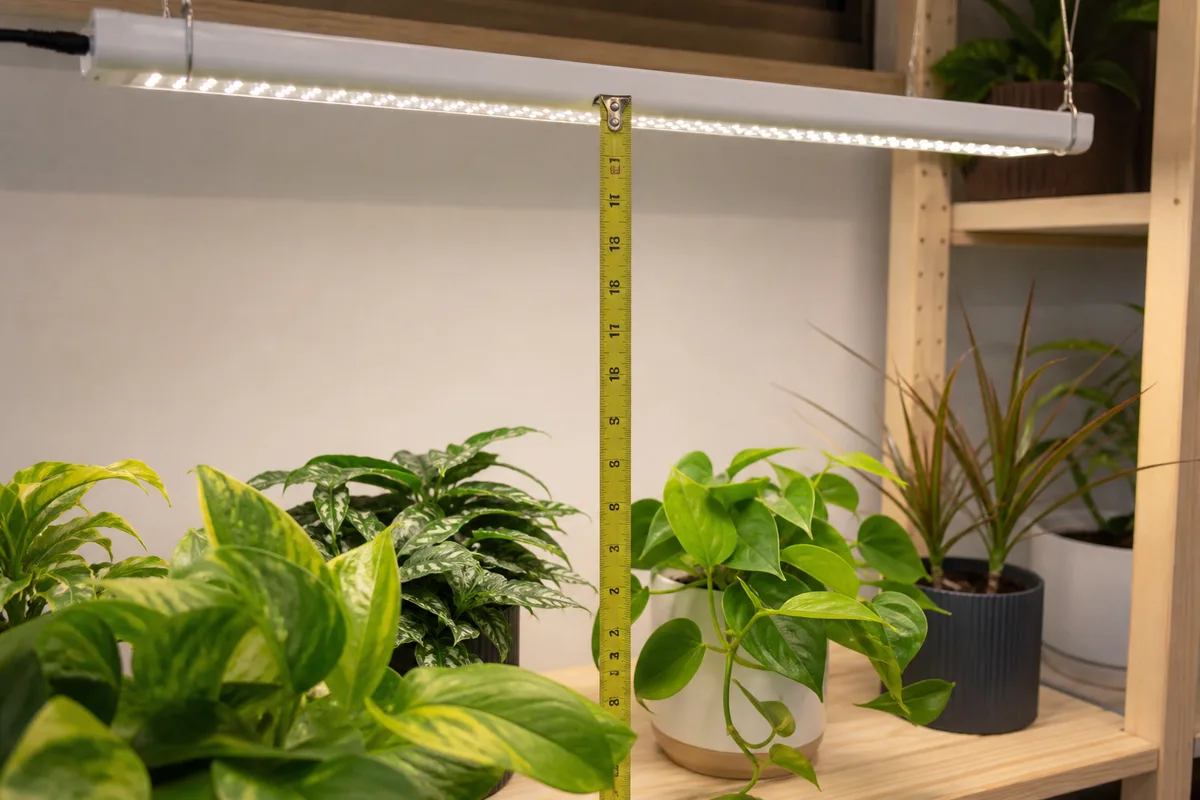
Rotate pots a quarter turn every few days so all sides get light and growth stays even. RHS advises that poor light produces thin, weak, less flavorful growth—especially in sun-loving herbs. (RHS)
Pots, soil, and separate containers
Every herb pot needs a drainage hole and fast-draining potting mix—not garden soil, which compacts and invites root rot indoors. Depth matters: dill and other taprooted herbs need at least 12 inches of depth; bay laurel and rosemary benefit from larger, stable pots as they age.
Grow each herb in its own container whenever possible. Basil wants evenly moist soil; rosemary wants to dry between waterings; mint will outcompete neighbors if roots share space. A decorative tray can hold multiple small pots while keeping care separate. Penn State Extension explicitly warns that Mediterranean herbs should dry slightly between waterings while basil should never fully dry out. (Penn State Extension)
Fertilize lightly. A low dose of water-soluble fertilizer every two weeks during active growth is enough; overfeeding can dull flavor. Penn State Extension notes that some organic fertilizers smell unpleasant indoors—check labels before you pour fish emulsion beside your coffee maker. (Penn State Extension)
Pet Safety Before You Bring Herbs Inside
Several common kitchen herbs are toxic to cats and dogs if chewed in quantity. Keep these out of reach on wall shelves or closed rooms: chives, bay laurel, lemongrass, parsley, and marjoram. The ASPCA lists chives as toxic to both cats and dogs; bay laurel and lemongrass are also flagged for pets. (ASPCA — Chives)
That does not mean you must abandon parsley if you cook with it daily. It means do not leave pots on a counter where a cat treats them as salad. Catnip is the opposite story: Nepeta cataria is grown specifically for feline enrichment and is safe for cats in moderation, though dogs may react differently—still keep any herb away from pets that gorge on plants.
Mediterranean and Woody Herbs for Bright Windows
These five herbs share a preference for strong light, sharp drainage, and drier soil between waterings. They are excellent indoor candidates if you have a bright sill or a grow light—and frustrating if you treat them like basil.
Rosemary, thyme, oregano, sage, and bay laurel
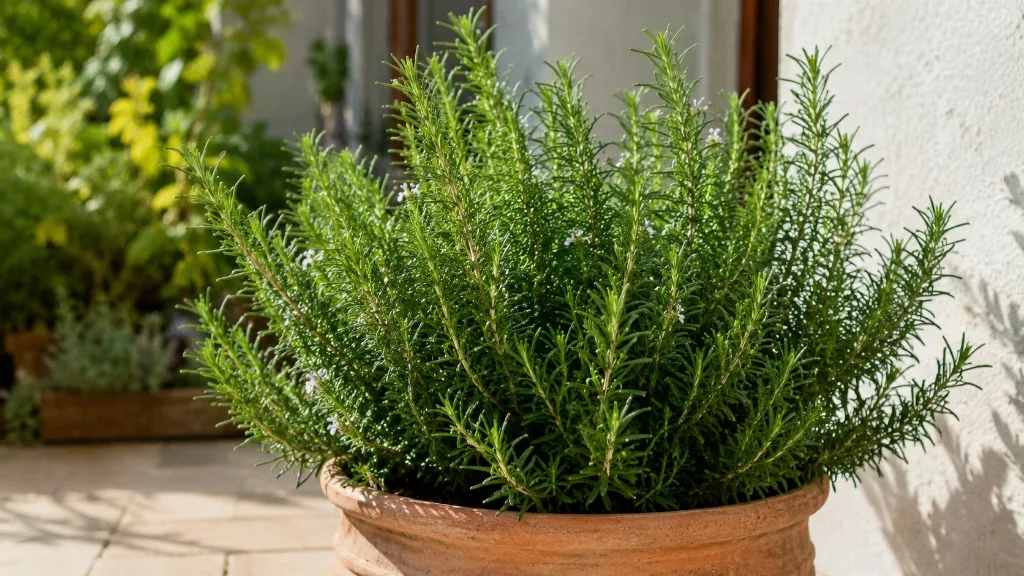
Rosemary is the fussiest of the group indoors because it wants sun plus humidity higher than many heated winter rooms provide. If needle tips brown while soil stays appropriately dry, raise humidity with a pebble tray or temporary clear tent after watering—not by soaking the pot. Use a large, heavy pot so top-heavy woody stems do not tip.
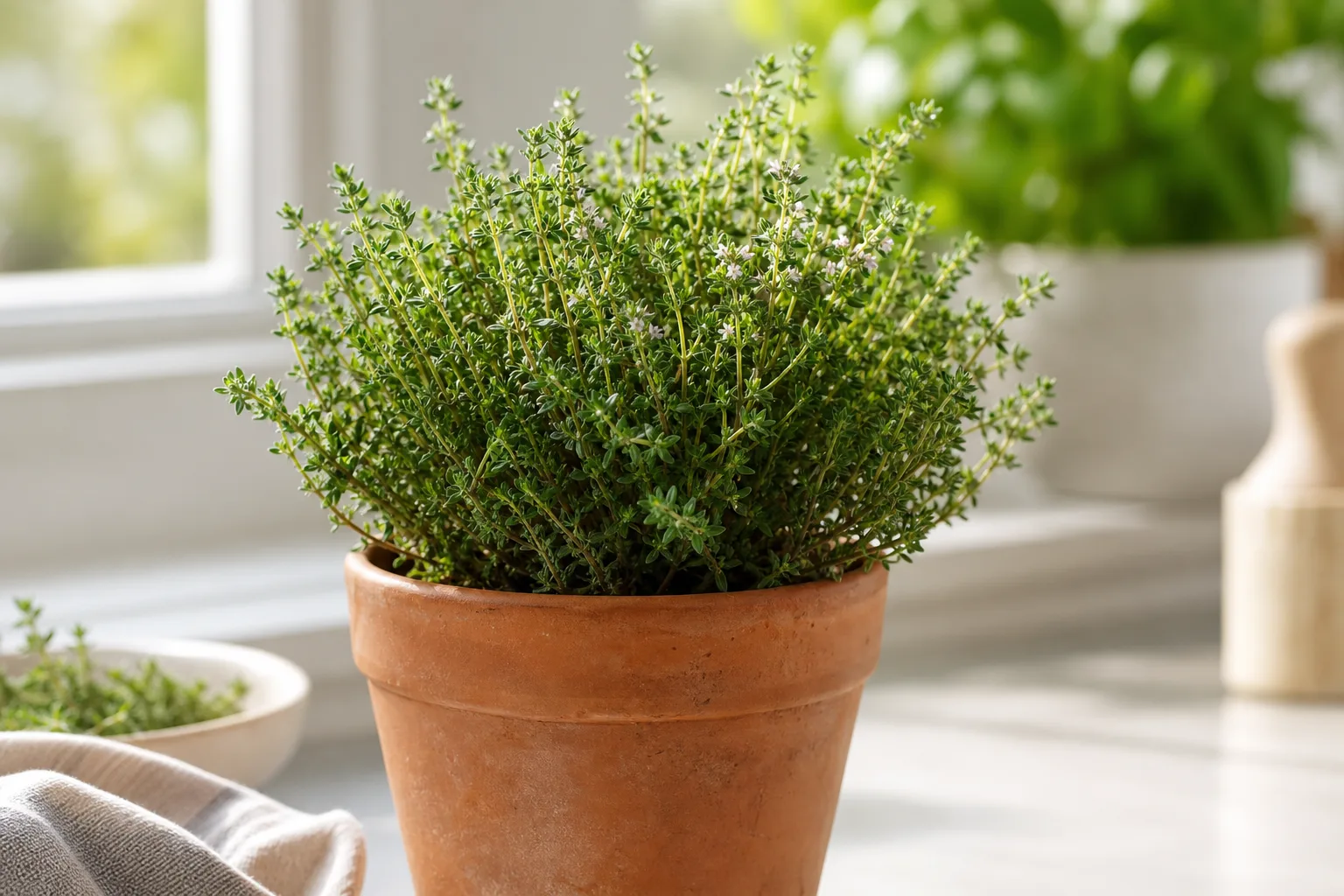
Thyme prefers lower humidity than rosemary; a dry room away from the stove often suits it better. Let the top inch of soil dry before watering. Creeping thyme types stay compact; culinary Thymus vulgaris stays small enough for a 6-inch pot.
Oregano and Greek oregano (Origanum vulgare subsp. hirtum) need strong light; leggy stems mean add a lamp, not more water. A pebble tray helps if leaf edges crisp in dry air.
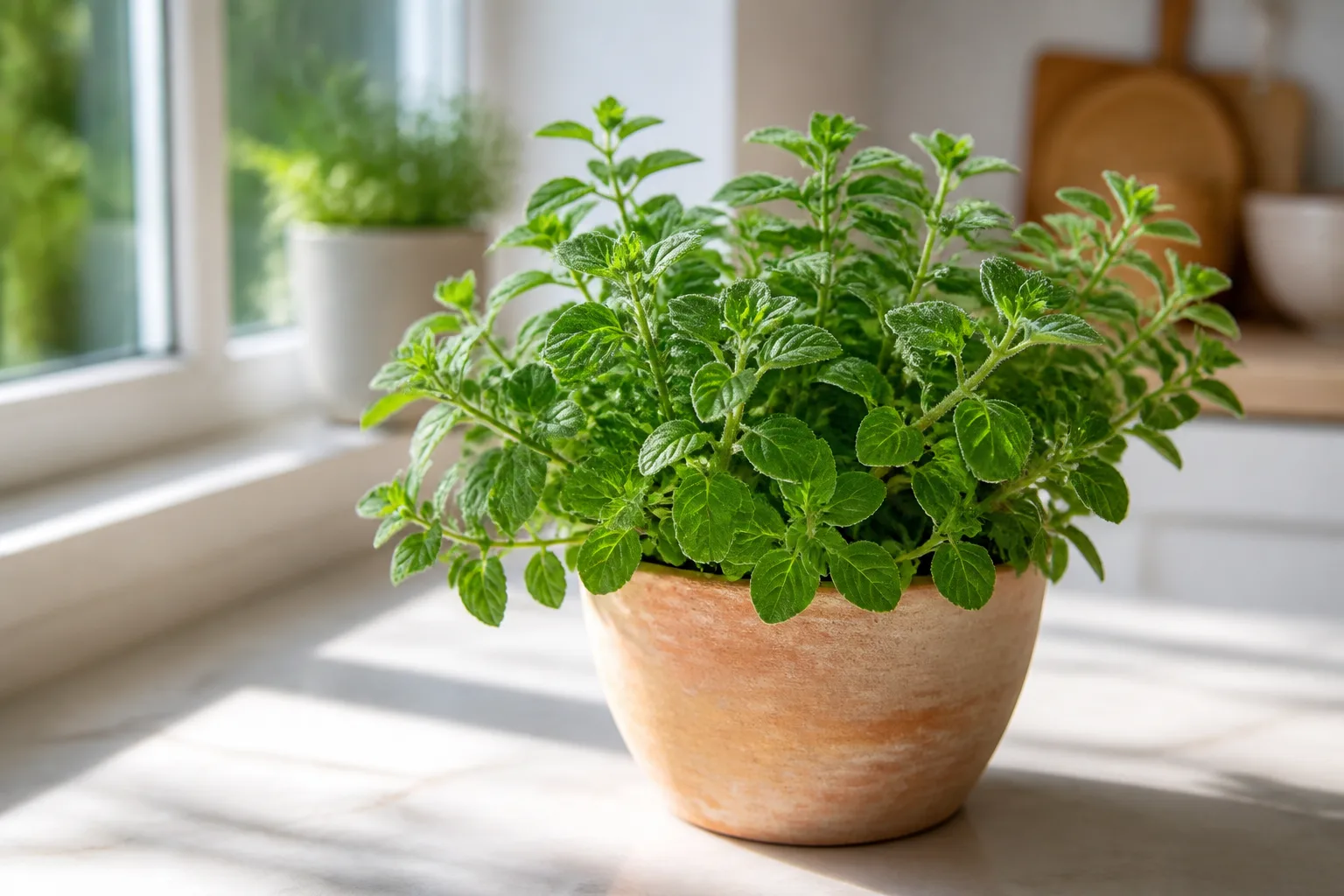
Sage (Salvia officinalis) rots easily when overwatered. Harvest lightly the first year so the plant can build woody structure. Tricolor sage is pretty but needs the same bright, dry conditions as green culinary sage.
Bay laurel (Laurus nobilis) grows slowly indoors but can live for years in a large pot. Protect it from hot and cold drafts near doors. Fresh leaves are stronger than dried; remove whole leaves before serving. Expect a shrubby tree shape only if you have space and light for a big container.
Leafy Herbs That Tolerate Moderate Indoor Light
These four herbs forgive slightly less sun than rosemary—though “moderate” still means the brightest spot you have, not a bathroom with a frosted window.
Parsley, chives, chervil, and cilantro
Parsley—flat-leaf (Petroselinum crispum neapolitanum group) for flavor, curly for garnish—roots deeply for its size. Keep soil evenly moist and cool when possible. It is biennial but usually treated as a long-lived annual indoors.
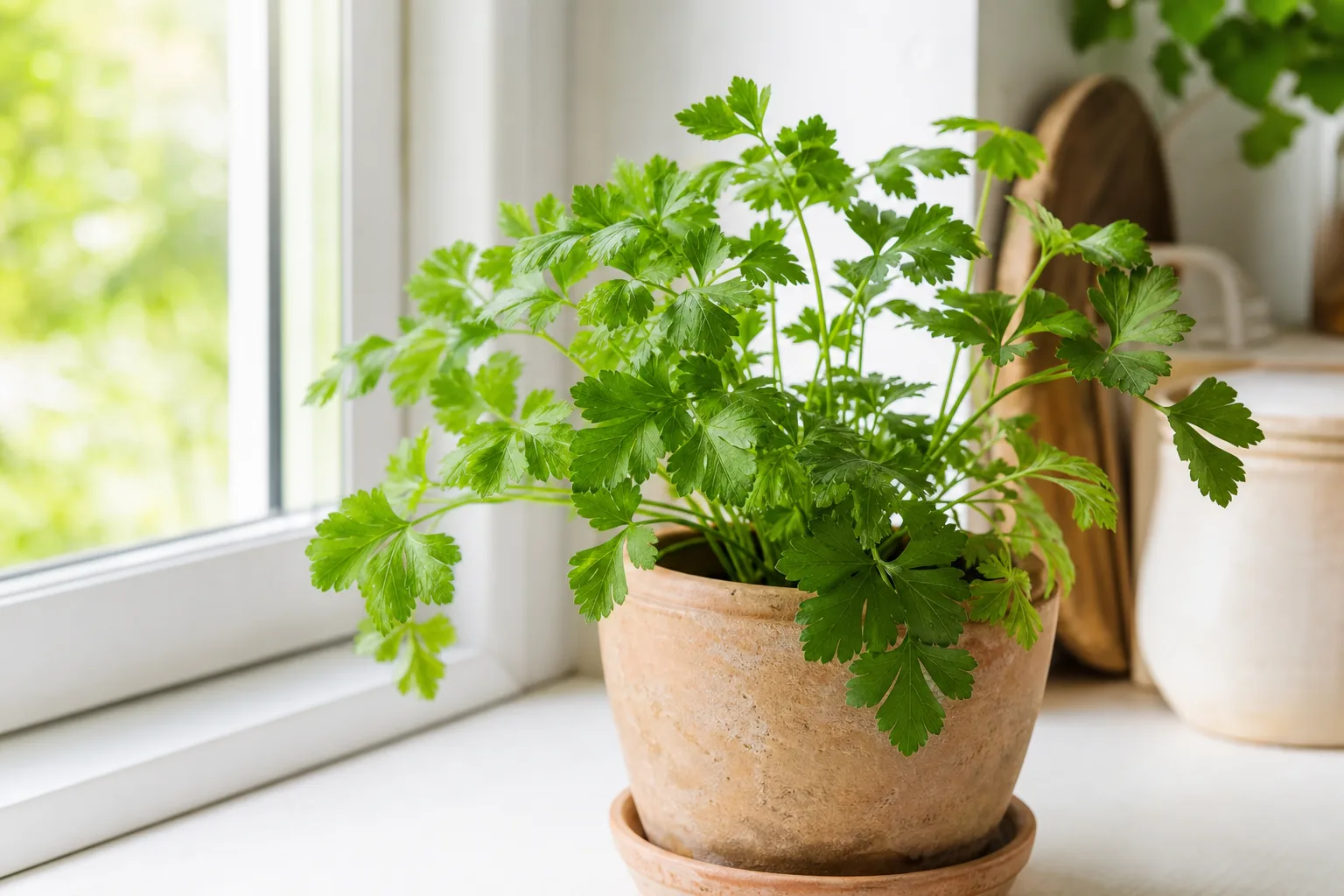
Chives (Allium schoenoprasum) behave like grass: cut bundles from the base and they regrow. Divide overcrowded clumps in spring into fresh pots. Remember pet toxicity if you have cats or dogs.
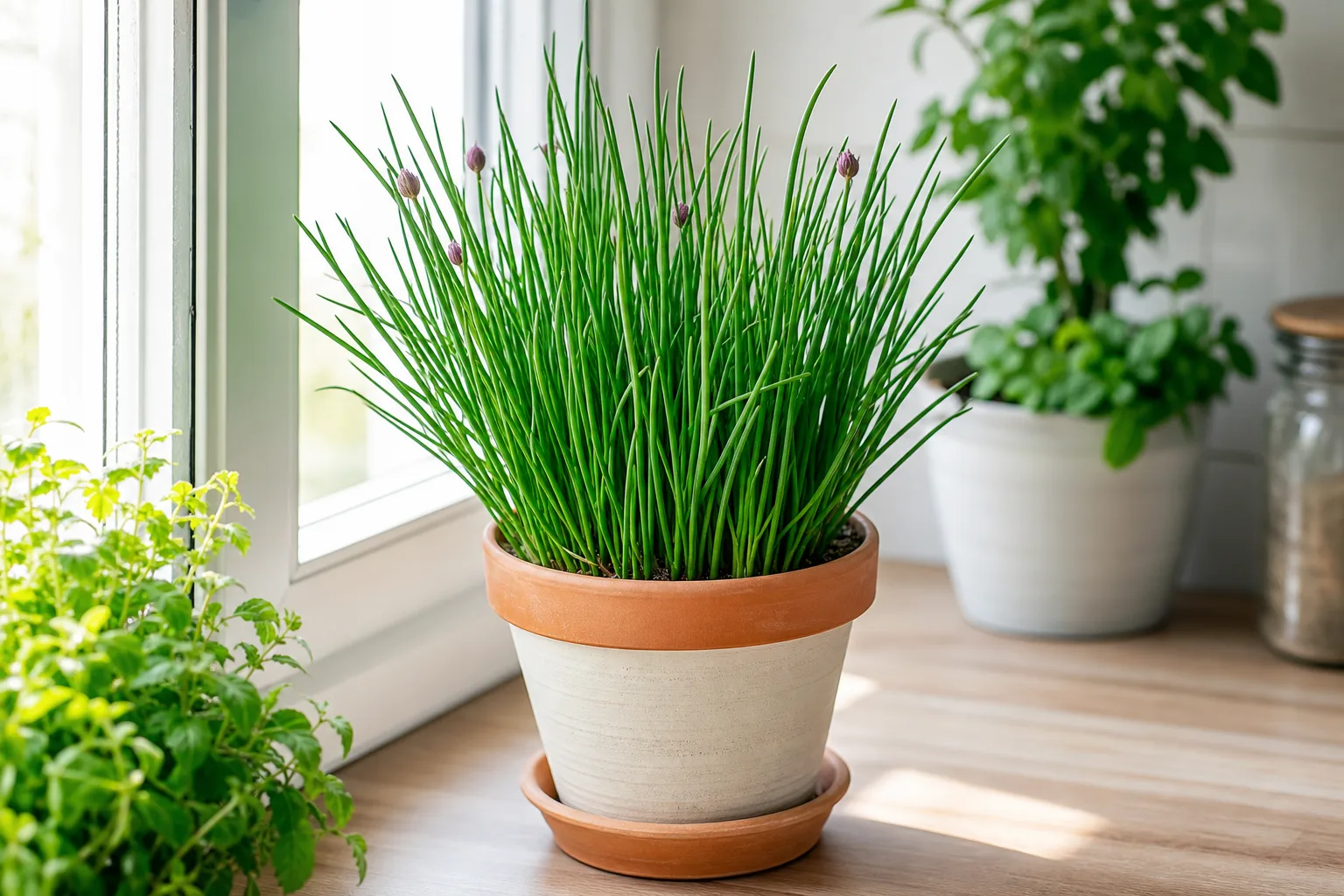
Chervil (Anthriscus cerefolium) is delicate, cool-season, and bolts in heat. Treat it like cilantro: sow small batches every few weeks, keep away from radiators, and pinch flower stalks early. Its light anise flavor suits eggs and fish.
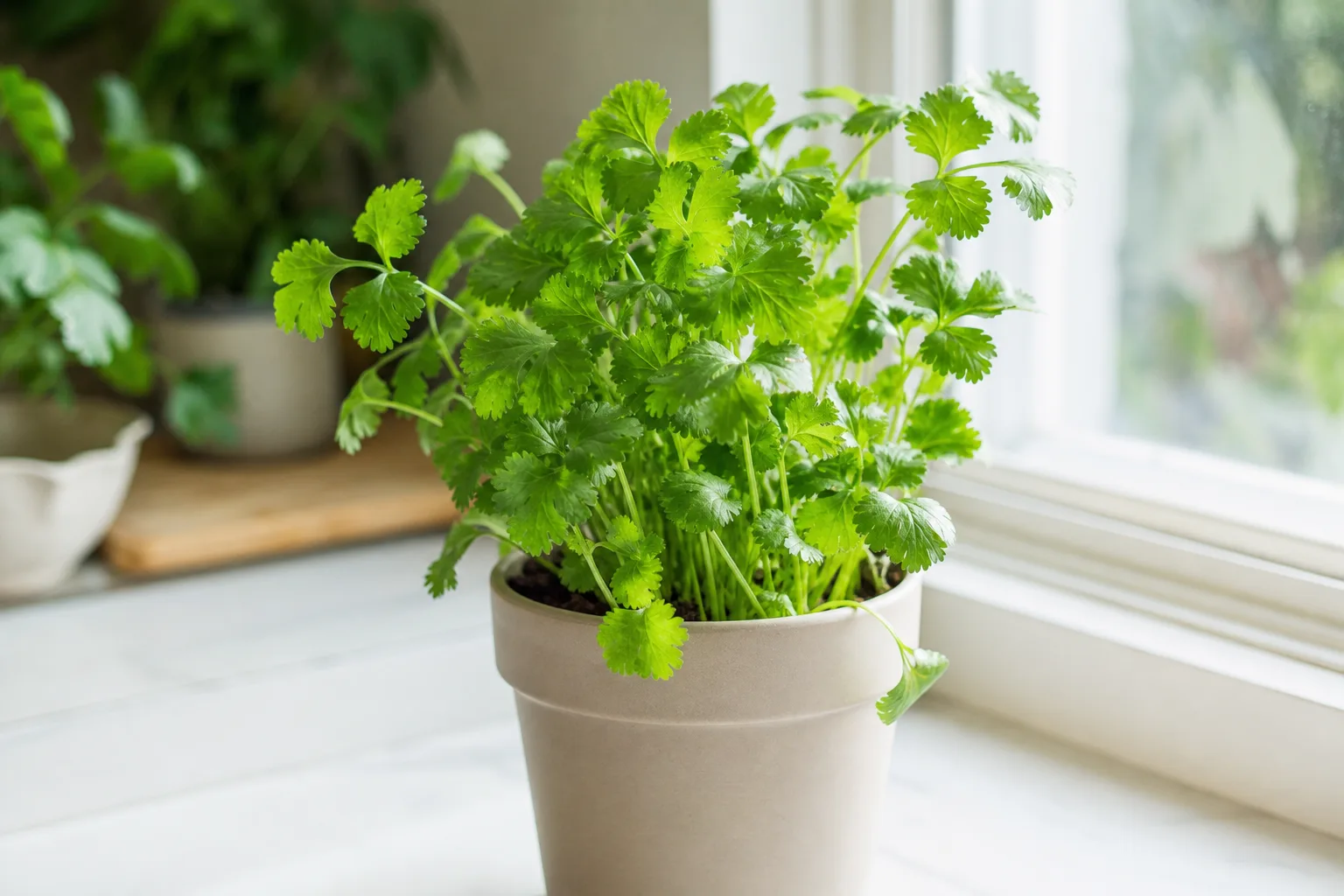
Cilantro bolts quickly indoors when days lengthen or pots overheat. Sow every three to four weeks for continuous leaves. Morning sun or very bright indirect light works better than baking afternoon sun on a south sill.
Warm-Season and Fast-Cycling Kitchen Herbs
These herbs power summer cooking—and they still belong indoors year-round if you accept replanting as part of the routine.
Basil, dill, and marjoram
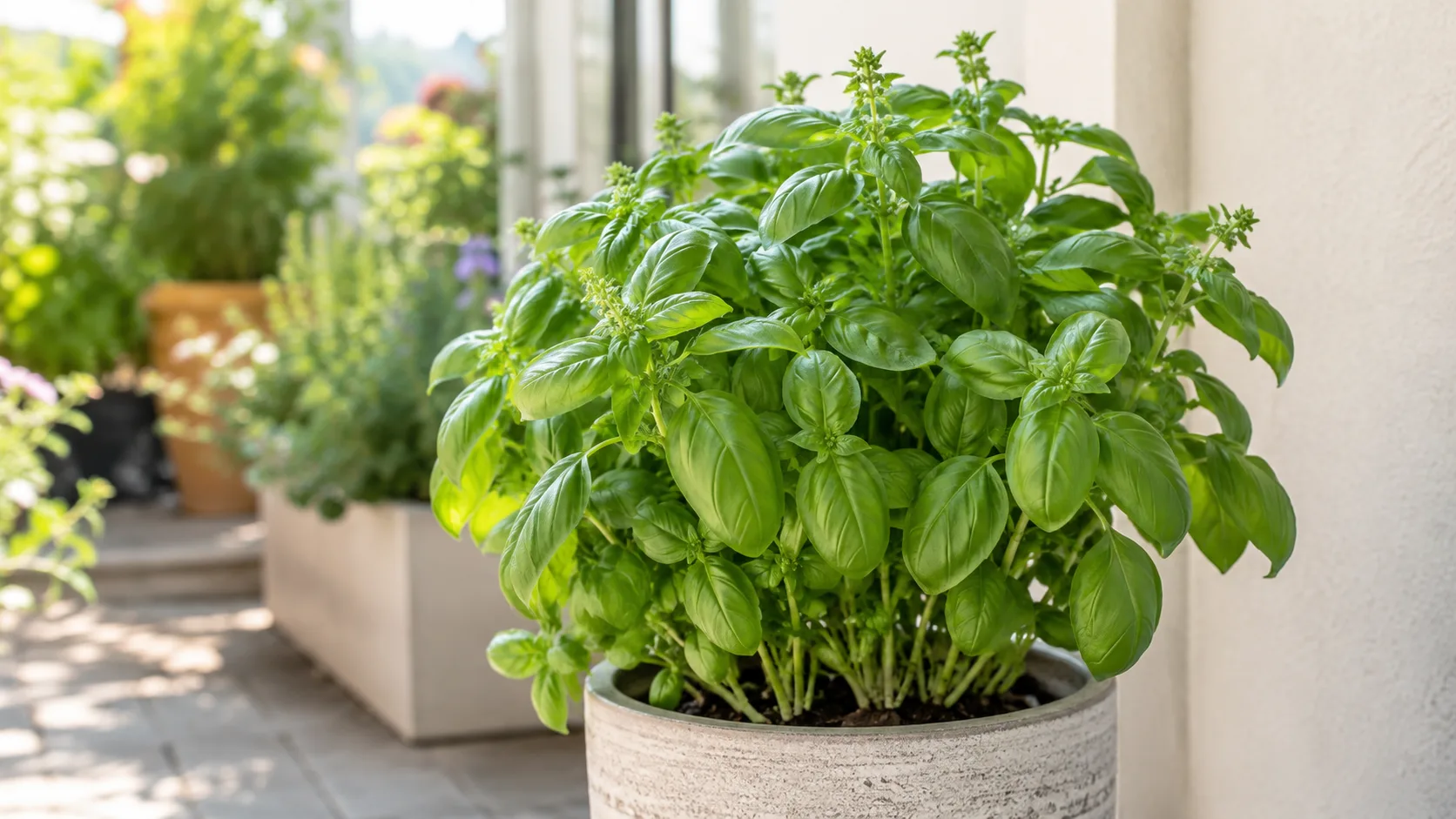
Basil wants warmth, bright light, and steady moisture. Start pinching when plants reach 6 inches to delay flowering; once basil blooms, leaf flavor shifts and production drops. Use deep pots (at least 8–10 inches) and space multiple plants 12 inches apart if sharing a window tray for airflow. Fungal issues follow wet leaves and stagnant air—water at soil level.
Dill needs depth for its taproot. Choose dwarf ‘Fernleaf’ or similar container varieties rather than tall garden types that flop indoors. Harvest leaves until flower umbels form; let seeds mature brown if you want pickling spice.
Marjoram (Origanum majorana) is milder and sweeter than oregano but wants similar bright light. It is listed as toxic to pets by the ASPCA, so treat placement like parsley if you have animals. Keep soil lightly moist—not soggy—and avoid cold drafts.
Mint Family and Citrus-Scented Herbs
Mint relatives are among the easiest herbs to grow indoors because they tolerate a wider light range and recover from harvest stress. Containing them in pots prevents the garden takeover problem outdoors.
Spearmint, catnip, and lemon balm
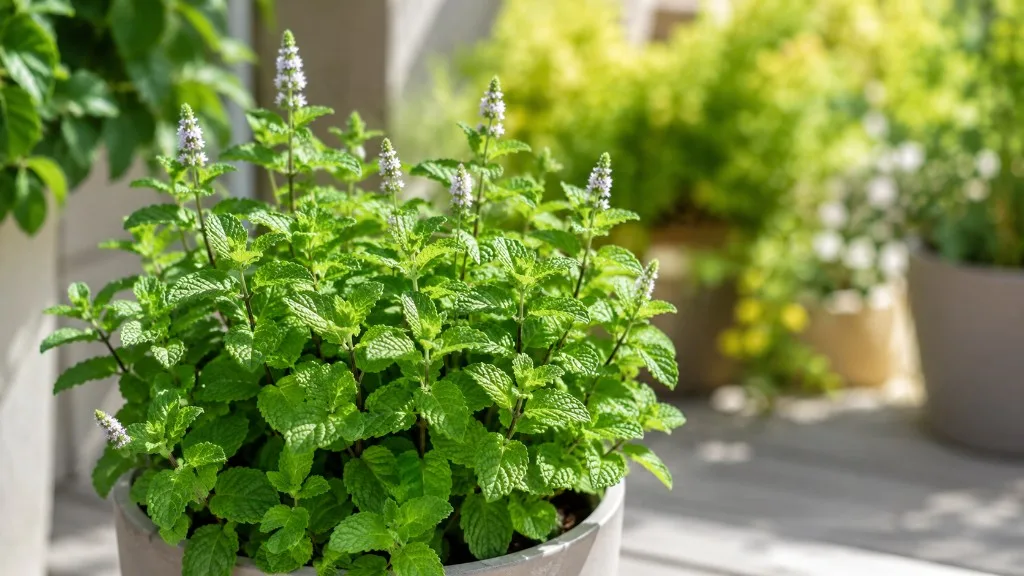
Spearmint (Mentha spicata)—not peppermint unless you want stronger menthol—likes evenly moist soil and regular cutting. Flavor peaks before flowering; pinch tips weekly during active growth.
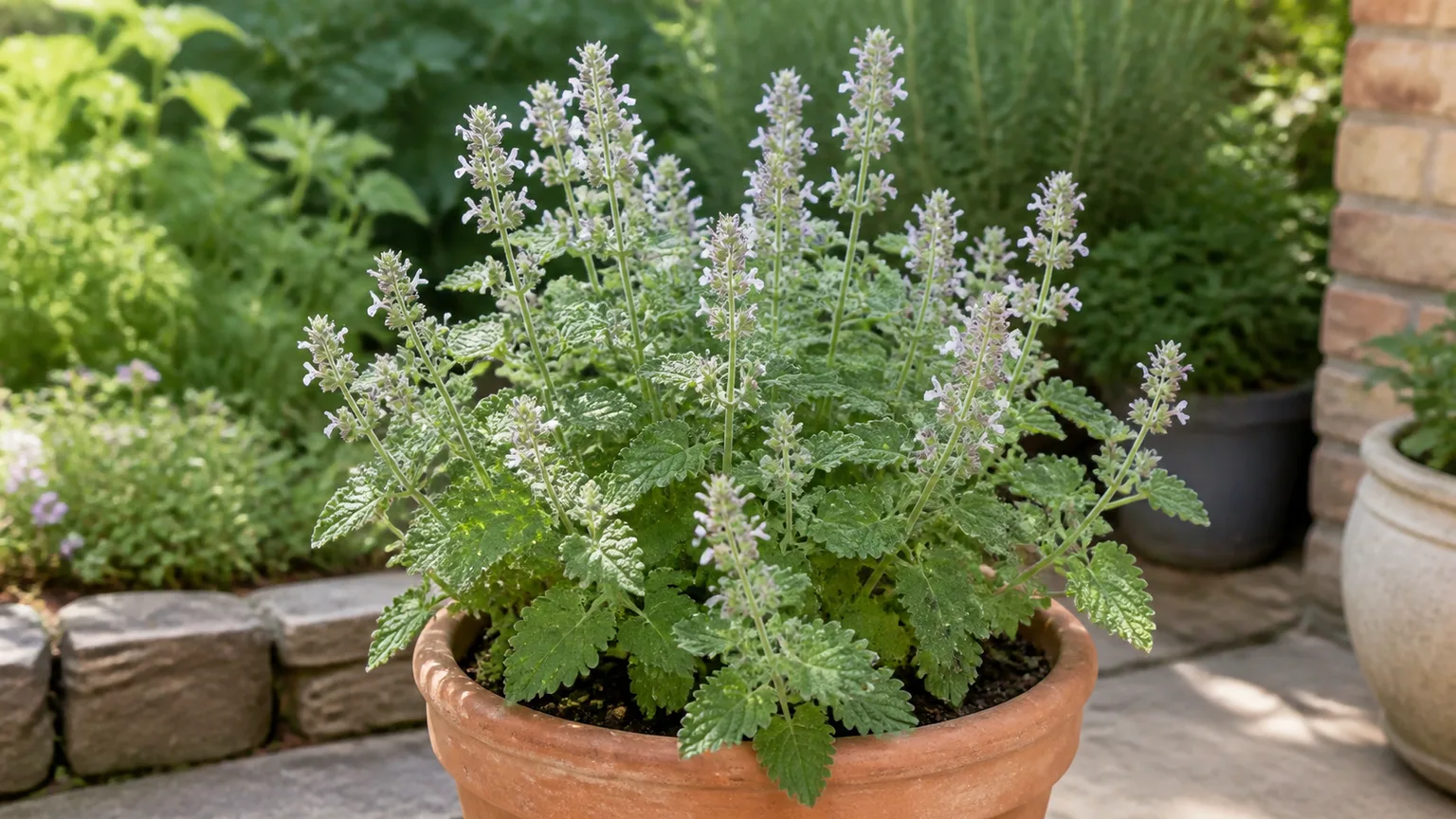
Catnip grows vigorously with less fuss than basil. Pinch young plants to bush them out and share trimmings with cats if you grow it for them. It is not a culinary substitute for mint in drinks.
Lemon balm (Melissa officinalis) shares mint’s moisture preference but is prone to powdery mildew when airflow is poor. Treat it like basil for spacing and avoid wetting foliage at night. Lemon balm tea is the main indoor use; it also adds citrus notes to fruit salads.
Lemongrass in Pots
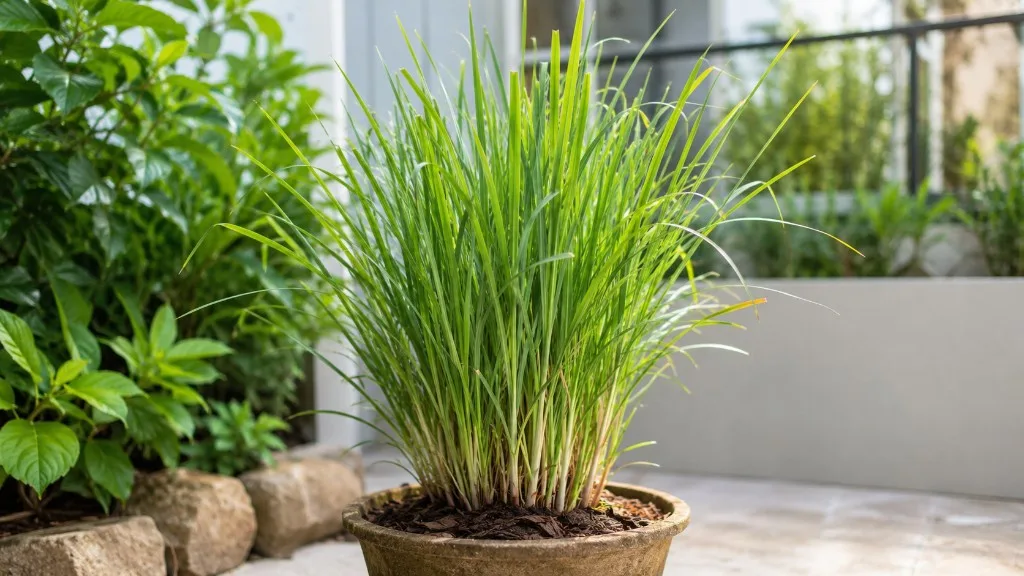
Lemongrass (Cymbopogon citratus) is a grass, not a woody herb. Indoors it wants a very bright window, consistent moisture, and a pot wide enough for multiple stalks. You harvest by cutting outer stalks at the base; the inner core flavors curries and tea.
It is toxic to pets according to ASPCA listings, so elevate pots securely. In cold climates it is often treated as a container plant moved indoors for winter; indoors it will not reach outdoor tropical size but still produces usable stalks when light is strong.
Starting, Harvesting, and Troubleshooting Indoor Herbs
Starting: Spring is the easiest season to start seeds or rooted cuttings because natural light is increasing, but indoors you can start anytime if you supply light. Cover seed trays briefly to boost humidity for germination, then ventilate once seedlings emerge to prevent fungus gnats—yellow sticky traps and letting the surface dry slightly help control adults. (Penn State Extension)
Harvesting: Never strip more than one-third of a plant at once. For woody herbs, cut above a leaf node; for chives and mint, shear bundles near soil level. Wash leaves only right before use if you have used any pest control; Penn State Extension recommends cultural controls first and cautious use of soft insecticides only in severe cases. (Penn State Extension)
Troubleshooting quick fixes:
- Leggy pale growth: Add light or move closer to the window; rotate pots.
- Yellow lower leaves on Mediterranean herbs: Usually overwatering—let soil dry farther down before the next drink.
- Basil black spots or wilt with wet soil: Improve airflow, reduce overhead splashing, repot if mix stays soggy.
- Cilantro or dill bolted: Resow; do not fight flowering on the same plant.
- Rosemary dry needles with dry soil: Underwatering—or if soil is wet, root rot from earlier overwatering.
- Gnats: Let top soil dry slightly; avoid saucers holding standing water.
Repot when roots exit drainage holes, ideally in early spring before the heaviest growth push. Perennial herbs can move up one pot size; taprooted dill gets a deeper container instead of a wider one.
Conclusion
Sixteen herbs can grow indoors all year when you match each plant to its light and water group, keep toxic species away from pets, and replant fast-cycling herbs instead of mourning bolted cilantro. Start with the easy wins—chives, spearmint, catnip, and parsley on a bright sill—then add basil, rosemary, and thyme once you know whether your window or a grow light delivers enough intensity.
Separate pots, drainage, and honest harvest limits matter more than buying sixteen matching terracotta pots on day one. Build a small tray that fits your cooking, light, and pet reality; expand as you learn which herbs your kitchen actually uses every week.