6 Smart Ways to Hide Yard Eyesores on a Budget
Hide AC units, bins, fences, and messy views with six low-cost screens, plants, and containers—plus the access and maintenance checks that matter.
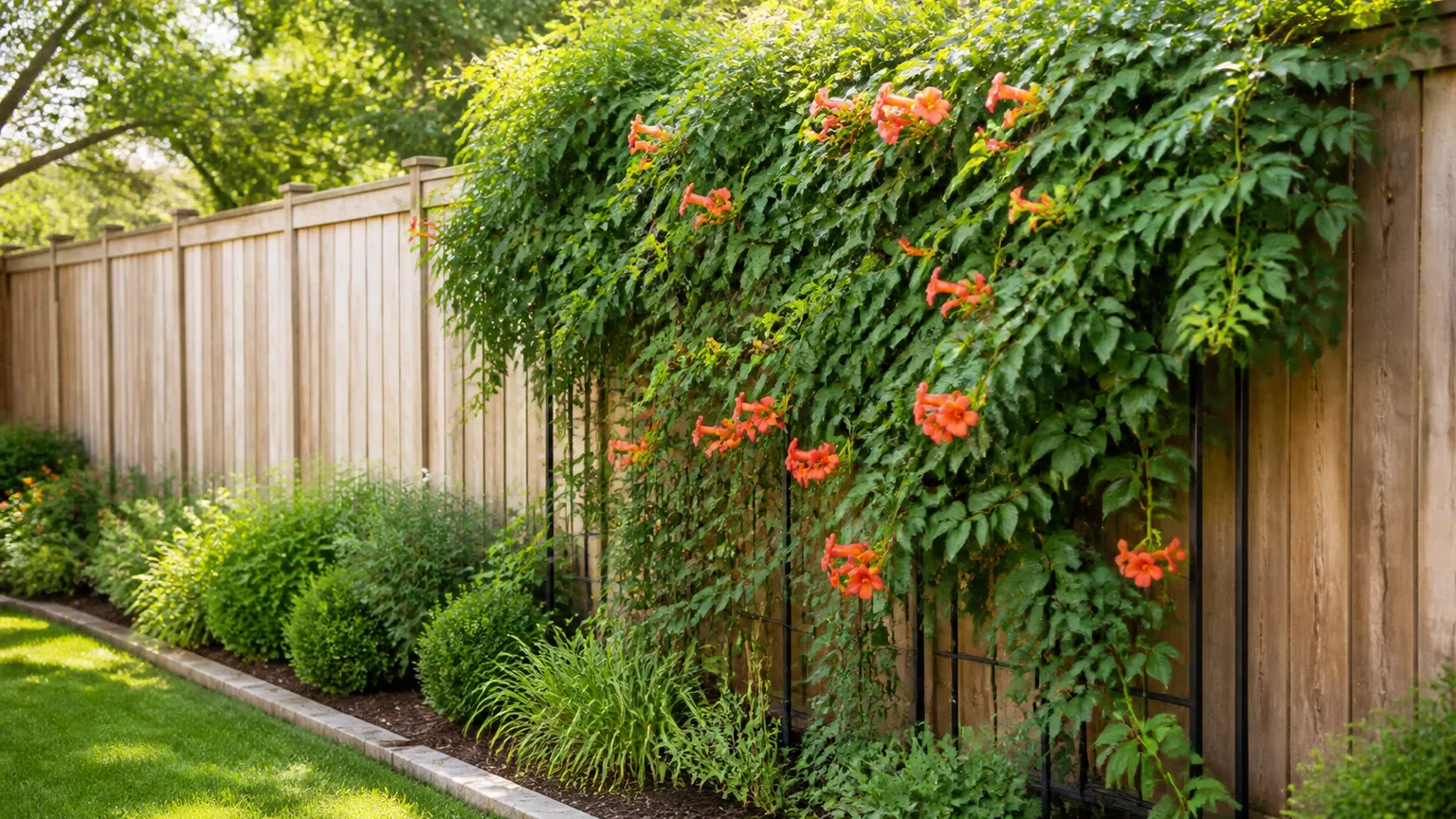
An outdoor AC condenser, generator, trash bin, hose reel, chain-link fence, or neighbor’s view does not have to dictate the look of your yard. The cheapest successful fix is usually not a full enclosure. It is a deliberately placed layer—a slatted panel, open trellis, shrub, grass drift, raised planter, or group of containers—that blocks the sightline while keeping the thing you still need to reach easy to service.
The key is to decide what the feature needs to do before you buy materials. A generator needs safe air movement and exhaust clearance; a pair of bins needs a wide opening and a hard surface; an ugly fence may only need vertical color. The six ideas below cover those jobs without assuming every yard has the same climate, soil, budget, or maintenance time.
Start With the Job, Not the Cover-Up
The University of Wisconsin–Madison Extension describes a successful home landscape as an extension of the house that should be planned around how people use the space, the architecture, the neighborhood, and the effect you want to create (University of Wisconsin–Madison Extension). That is a useful standard for eyesores: the best screen improves the yard’s function as well as its view.
First identify the object and the angle from which it bothers you. A utility box visible only from the kitchen window may need a narrow planting wedge, while bins visible from the patio may need a three-sided screen with a gate. If you solve the wrong sightline, you can spend money on a beautiful screen that hides nothing important.
The One-Photo Sightline Test
Take three photos: from the place you sit most often, from the main path, and from the street or neighbor-facing side. In each photo, mark the first object your eye lands on. That is the target; do not screen every visible object just because it is visible.
Measure the target’s height and width, then measure the clear space around it. Record doors, latches, disconnects, vents, hose connections, meter reads, wheels, and the path a technician or sanitation worker needs. A cheap screen becomes expensive when it must be dismantled every time the equipment is serviced.
Match the Screen to the Eyesore
Screening is a design term, not a promise of total concealment. The Royal Horticultural Society recommends choosing plants by the ultimate height needed, soil, exposure, maintenance capacity, and proximity to structures; it also warns that roots and future growth need to be considered before planting near buildings and services (RHS screening guidance). Those checks matter even when the project is only a small backyard corner.
Equipment Needs Airflow and Access
For an outdoor AC or heat-pump unit, think visual baffle, not box. Use a freestanding screen with open sides or slats, keep plants from leaning into the coil or fan discharge, and preserve the manufacturer’s required clearances on every side. The owner’s manual and the installing technician’s advice control the exact spacing; there is no one universal number that is safe for every model.
Generators deserve even more caution. Never wrap one in a tight fence, cover its exhaust path, or place combustible material where the unit’s manual or local code prohibits it. Before building anything, check the installation guide and ask the installer where service panels, airflow, exhaust, and fuel connections must remain clear. If the only way to hide it is to enclose it, the right answer may be to relocate the screen or accept partial visibility.
Bins, Hoses, and Views Need Different Coverage
Trash and recycling bins need a wide, level approach and enough room to roll out without scraping a post. A narrow evergreen hedge may hide them beautifully in summer but turn into a weekly obstacle if it grows into the lid or blocks the wheels. A short screen with a hinged or open front is usually more practical.
For an ugly view or chain-link fence, you can use more continuous coverage: a trellis, hedge, grass layer, or mixed bed. The RHS notes that dense foliage and multiple rows can improve a planting’s ability to intercept airborne particles, but the same layered structure also creates a more convincing visual screen than one lonely shrub (RHS plants for pollution filtering).
1. Use a Slatted Wood Screen for Fast Coverage
A slatted cedar or pressure-treated-wood panel is the most predictable budget fix for a small, fixed eyesore. It works immediately, can be stained to disappear into a fence or painted a dark green to recede behind planting, and does not require waiting for roots to establish.
Use two or three panels in an L or shallow U rather than building a solid cube. The gaps reduce the visual heaviness and let wind pass through. Gardens Illustrated’s design guidance makes a similar point about semi-permeable timber fencing: boards with gaps reduce wind speed more effectively than a solid lightweight panel that catches the wind (Gardens Illustrated screening guidance).
Set the screen on posts or feet that can be repaired without moving the equipment. Use exterior-rated screws, separate the wood from wet soil, and add a gravel or paved strip where splashback is a problem. If you are screening an AC unit, keep the top and sides open enough for the unit’s manual and avoid attaching anything to the condenser itself.
This option is best when you need privacy or visual relief now, the object does not move often, and you can measure the maintenance opening before cutting. It is less suitable on an exposed, windy corner unless the posts and footings are designed for the site. A panel that falls over is not a budget improvement.
2. Add a Trellis When You Need Height in a Tight Space
A trellis gives you vertical coverage without using the horizontal footprint of a hedge. It is useful beside a narrow patio, in front of a chain-link fence, or at the back of a raised bed where the eyesore is tall but the planting strip is shallow.
Choose a freestanding lattice, cattle-panel-style support, wire grid, or narrow wood frame based on the plant and the wind. Attach it securely to a wall or fence only when that structure can carry the load; a mature vine becomes heavy, especially after rain. Gardening Know How describes trellises as a way to divide garden zones, improve privacy, screen ugly views, and keep flexibility with wheeled planters (Gardening Know How trellis ideas).
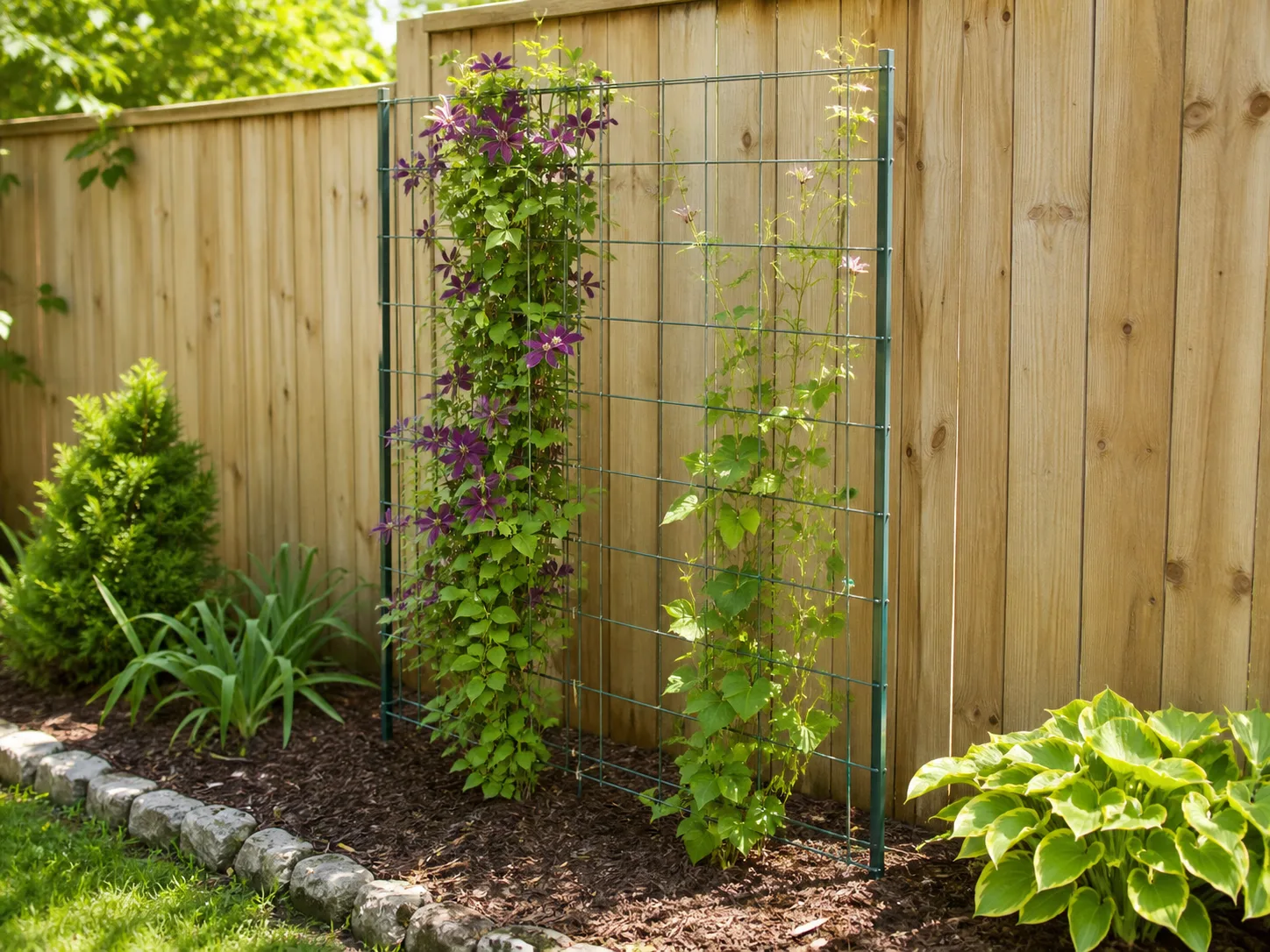
Choose a Climber That Will Not Become the Next Eyesore
Match the vine to your climate, sun, mature size, and willingness to prune. Clematis can give flowers on a relatively light support, star jasmine can provide evergreen coverage in warm climates, and a well-behaved honeysuckle can bring flowers and wildlife value. Wisteria and trumpet vine can be vigorous and heavy; they need a strong structure and regular training, not a flimsy decorative trellis.
Do not plant a climber against an AC unit and hope foliage will “fill the gap.” Train it on a support that sits outside the equipment’s service zone, and keep stems from reaching vents, coils, wires, rooflines, or gutters. If the plant needs frequent cutting to keep machinery clear, a simpler wood screen is cheaper over time.
3. Build a Living Screen With Evergreen Shrubs
Evergreen shrubs are the best fit when the eyesore is visible year-round and you have enough soil for roots. They soften a hard object more naturally than a panel, can support birds and insects when chosen well, and often hide multiple small features at once—a bin bay, hose reel, and bare fence corner, for example.
The trade-off is time. A nursery plant that looks full in a pot may need several seasons to close the gaps, while a fast-growing shrub can outgrow the area and demand frequent pruning. Start with the mature width and height printed on the plant label, not the size of the plant in the shopping cart.
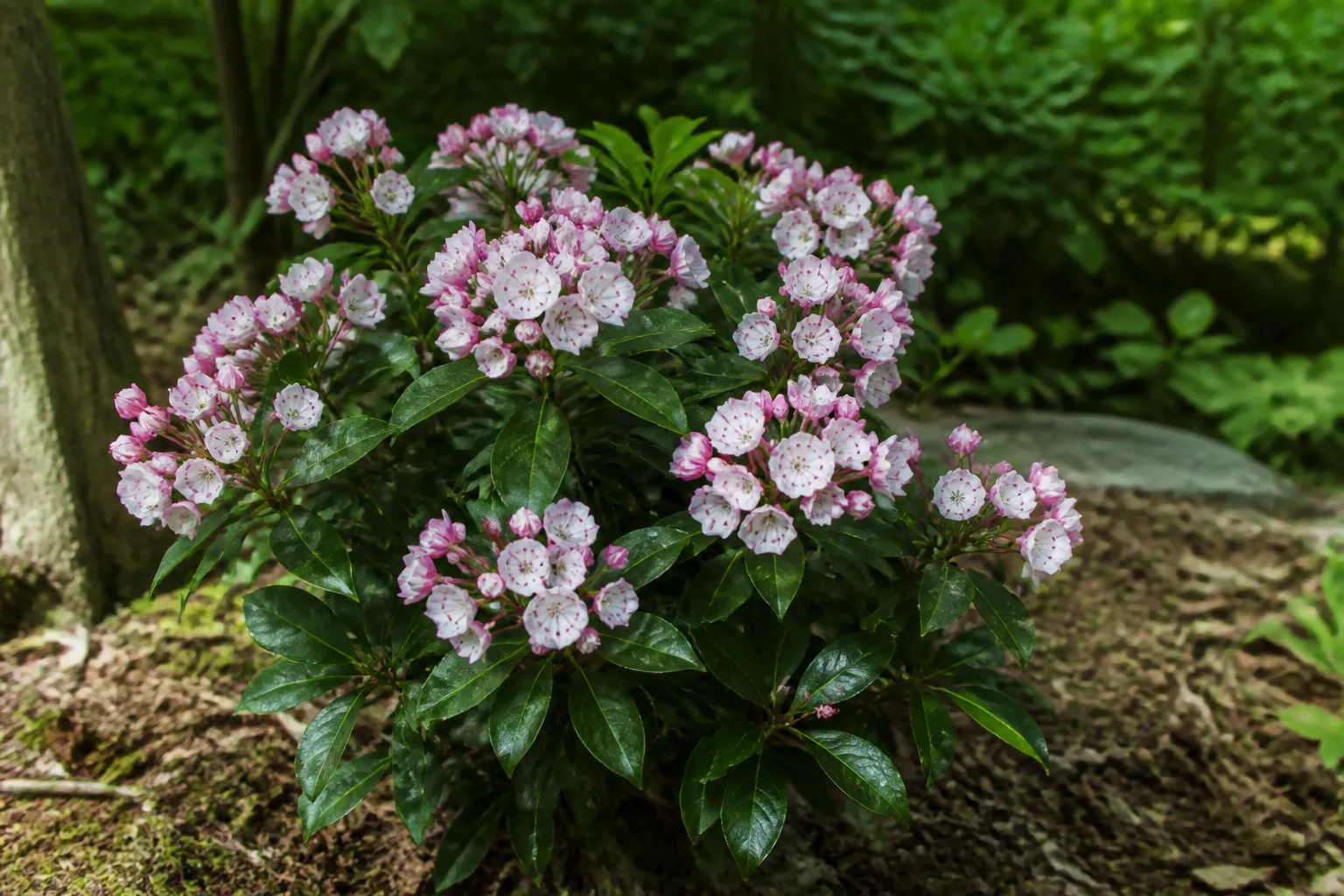
Choose Mature Size Before Buying
For a narrow screen, look for naturally columnar or compact cultivars rather than planting a broad hedge and planning to shear it into submission. Boxwood, juniper, compact yew, holly, and regionally appropriate native evergreens can work in the right site, but availability, hardiness, disease pressure, toxicity, and invasive status vary by region. Ask a local extension office or knowledgeable nursery for alternatives if a popular plant is poorly suited to your climate.
Use a simple spacing rule: the screen should overlap visually at the height you want, but each plant should still have room for its mature width and airflow. Staggering two smaller rows can produce a denser view than one crowded row. If you need the plants to hide an object immediately, combine them with a temporary slatted screen instead of planting too close and creating a pruning problem.
Roots deserve their own check. Do not plant large trees or aggressive shrubs over drains, soakaways, buried lines, or tight foundations simply because the foliage looks perfect. Mark utilities, confirm local setback rules, and keep a maintenance path between the planting and the object you are hiding.
4. Tuck the Problem Behind a Raised Bed or Planter Box
A raised bed can turn an eyesore into the back edge of a purposeful garden. Use it to hide the lower half of bins, a short fence, an empty view, or a bare utility corner while giving herbs, annuals, or upright plants a clear place to grow.
The strongest version has a visible front edge, a repeatable material, and a planting plan with more than one height. Put low foliage or herbs at the front, medium plants in the middle, and one upright plant or trellis at the back. The bed should read as a garden feature—not a box placed in front of a problem.
Keep the box away from equipment panels, hose bibs, meters, and bin lids. A planter full of wet soil is heavy, so do not use a large box to bridge a drain cover or rest against siding. For a rental or short-term fix, use lightweight resin or a pair of movable planters, but confirm they have drainage and will not tip in wind.
Raised beds are also a good way to reuse materials. Salvaged cedar boards, a leftover paver edge, or a simple galvanized stock-tank-style planter can look intentional when repeated elsewhere in the yard. Avoid untreated scrap wood that is already soft, painted wood with unknown coatings near edible crops, and a complicated shape that costs more to edge and weed than it saves in materials.
5. Layer Ornamental Grasses for Movement and Texture
Ornamental grasses are useful when you want to soften rather than completely erase an eyesore. Their vertical leaves and flower plumes break up a hard view, move in the breeze, and can make a screen feel like part of the garden instead of a wall. They also offer more seasonal texture than a uniform evergreen hedge.
Use upright grasses for a narrow strip and arching grasses where you can spare more width. Feather reed grass is known for an upright habit, while maiden grass and other Miscanthus cultivars can provide taller seasonal plumes; exact height, spread, and winter behavior vary by cultivar and climate. Gardening Know How highlights feather reed grass as a compact, upright screening option, while RHS recommends choosing grasses and bamboos carefully for the height and spread the site can support (Gardening Know How privacy plants; RHS screening plants).
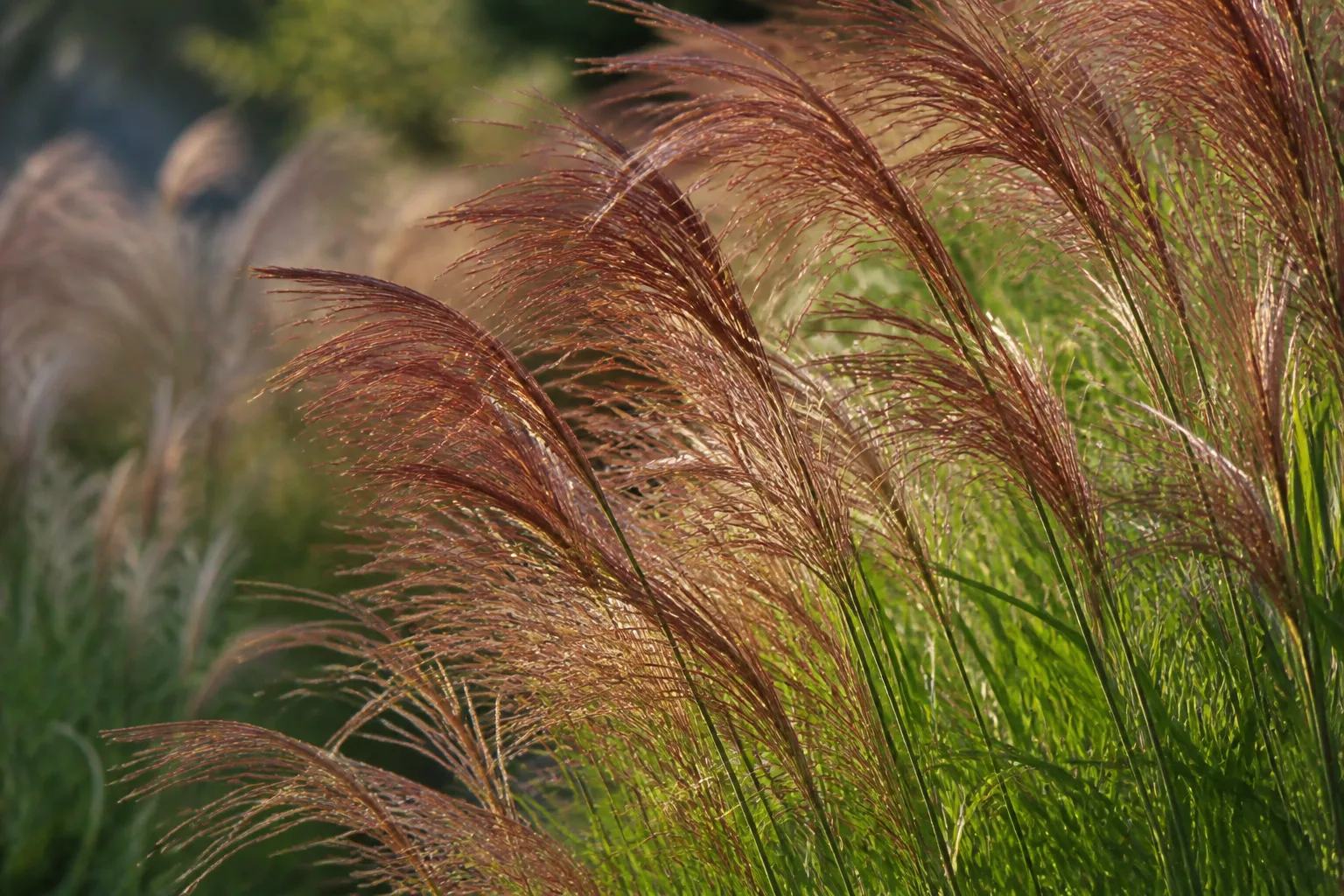
Grass is not automatically low-maintenance. Some spreads by runners or seed, some flops after heavy rain, and many need a late-winter cutback that can be awkward beside equipment. Choose clump-forming varieties where possible, keep the planting outside service access, and check whether the foliage stays upright through the season you most need the screen.
For the best visual effect, plant in a drift of three or more rather than one isolated clump. Repeat the grass elsewhere in the yard or echo its color with a container. This is often less expensive than buying a row of large shrubs and looks more intentional than a single plant trying to hide a six-foot fence.
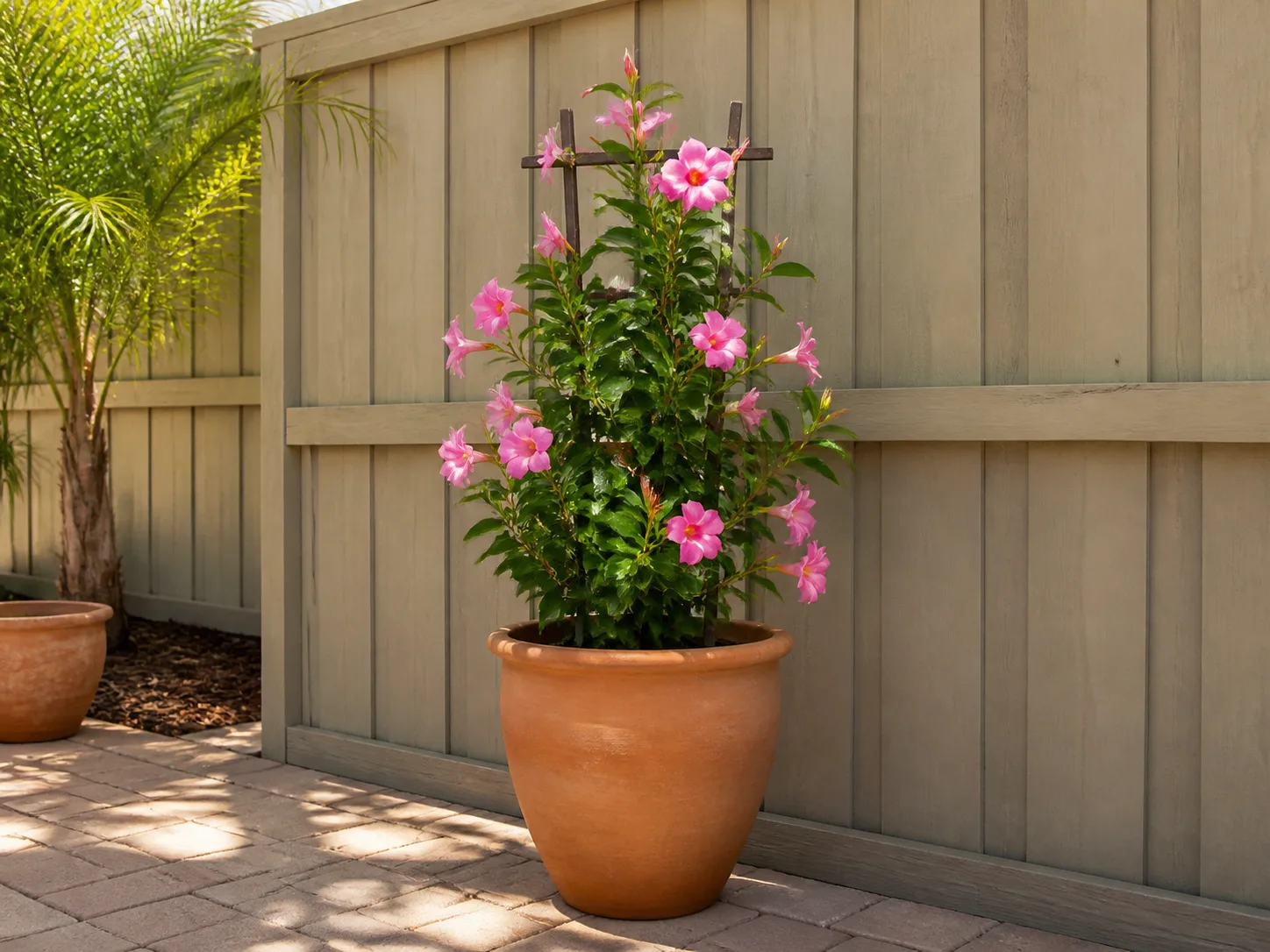
6. Group Containers for a Flexible Seasonal Screen
Containers are the fastest choice for renters, small patios, and objects that need occasional access. Group two or three large pots in different heights, place the tallest toward the eyesore, and leave enough space to roll bins or open a gate. When the season changes, you can move the containers instead of rebuilding the landscape.
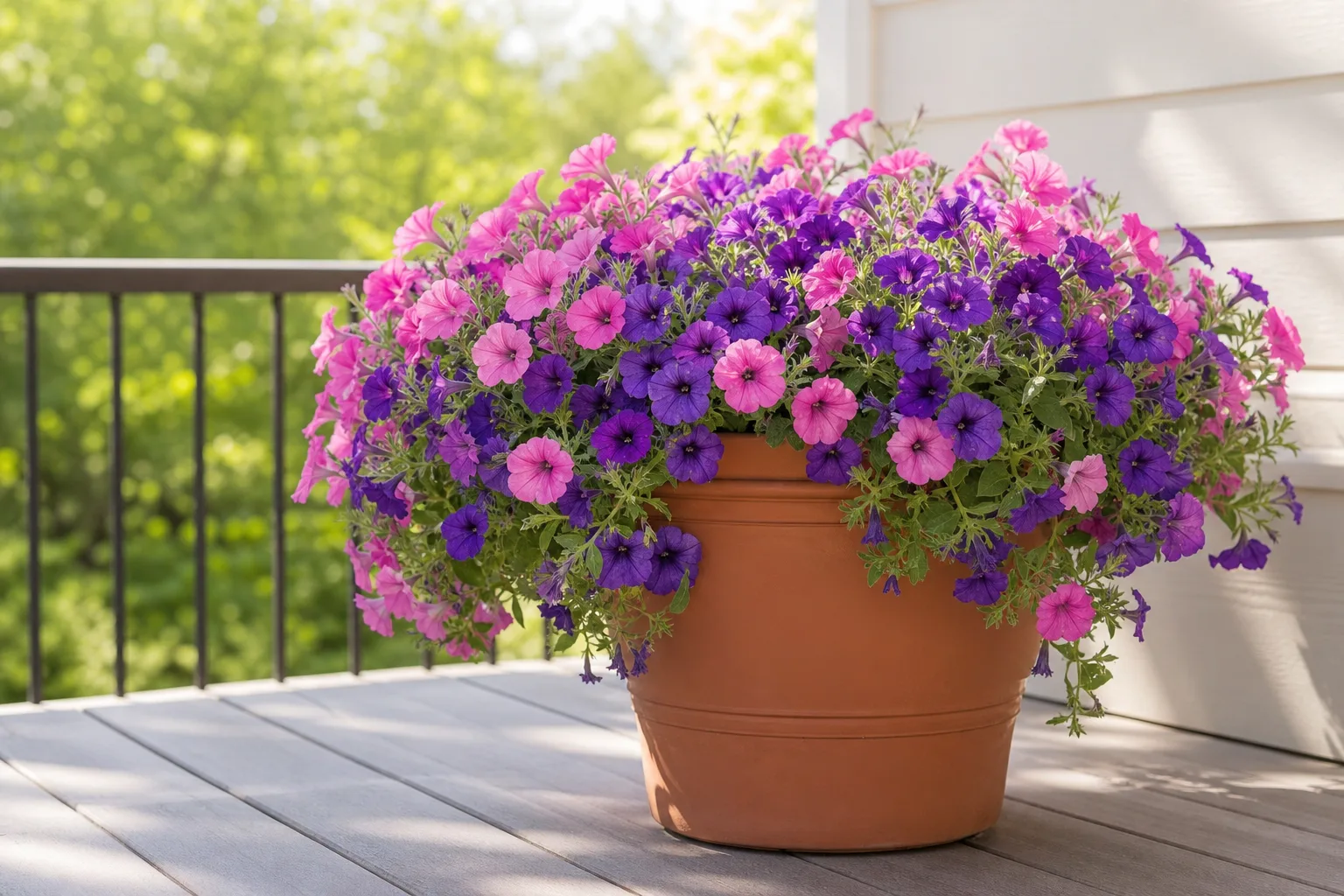
Use a consistent visual language: matching pots, one material in different sizes, or a repeated foliage color. A random collection can work in a cottage garden, but it still needs a shared scale and a clear grouping. Place a tall narrow pot behind low bowls, or use a plant stand only when it is stable on the surface and safe in wind.
The maintenance cost is the part people underestimate. Containers dry faster than beds, especially on hot paving or a windy balcony, and a plant that looks full at the nursery may need daily attention in summer. Choose drought-tolerant plants for a sunny bin screen, use saucers only where runoff will not stain or create standing water, and install simple drip irrigation if the group is too large to hand-water consistently.
Containers also let you test a permanent idea. Live with a movable shrub or trellis for a month, photograph it from the important sightlines, and measure how often it blocks access. If the placement works, you can later invest in a permanent bed or screen with much less guesswork.
A Budget Decision Table for Common Yard Eyesores
Choose the smallest intervention that solves the real problem. A screen that hides a bin but blocks the lid is not a success, and a shrub that looks beautiful but cannot survive the site’s light will become a new eyesore.
| Eyesore or job | Best first low-cost option | Main watch-out |
|---|---|---|
| AC condenser or heat pump | Open slatted baffle or narrow trellis placed outside the service zone | Never block airflow, coil access, disconnect, or the manufacturer’s clearance |
| Standby generator | Freestanding visual screen only after checking the manual and installer requirements | Do not trap exhaust or use prohibited combustible materials |
| Trash and recycling bins | Short screen with a wide opening, gate, or movable planters | Preserve the wheel path, lid swing, and collection-day access |
| Chain-link fence | Trellis plus a manageable climber, or a raised bed with upright plants | Heavy vines need strong support; check mature spread and pruning |
| Neighbor’s messy view | Layered evergreen shrubs, grasses, and one focal plant | A single fast-growing hedge may outgrow the yard and require constant trimming |
| Hose reel, tools, or small storage | Slatted panel, painted cabinet, or container grouping | Keep valves, hose connections, and drainage reachable |
| Bare patio corner | Three containers or a raised planter with seasonal height | Wind, drainage, and summer watering can erase the budget savings |
Mistakes That Make a Screen More Expensive
The most common mistake is building before measuring. A screen that is two inches too close to a condenser, a bin bay that is too narrow for the wheels, or a trellis that sits directly over a drain creates rework that costs more than the original materials.
The second mistake is choosing by the plant’s current appearance. RHS guidance stresses the importance of ultimate height, soil, exposure, maintenance, and root proximity; those constraints matter more than whether a shrub looks full in a one-gallon pot. A bargain plant that needs replacement in two years is not cheaper than a smaller, right-sized plant that settles in slowly.
Avoid these shortcuts:
- Solid walls around powered equipment: They can restrict airflow, trap heat, and complicate service.
- Vines planted directly against machinery: Stems, leaves, and fallen debris can interfere with access and ventilation.
- Fast-growing hedge species chosen for instant privacy: Speed usually comes with more pruning, water, or width.
- Bamboo without a spread plan: Choose a clumping type only when it is suitable for your region, and ask local experts about containment.
- Planters with no drainage: Standing water damages roots and can stain paving or attract pests.
- One oversized screen in an exposed spot: Wind loads the structure and can make it look more conspicuous than the original object.
- Hiding every service point: Utility workers and technicians need a clear route, even if you do not use it every day.
Also check local restrictions before installing a tall fence, hedge, or permanent structure near a property line, sidewalk, road, or easement. Gardens Illustrated notes that height limits, conservation rules, and site-specific planning restrictions can apply to boundary screening; your local authority and property documents determine what is allowed.
A Low-Cost Installation Sequence That Holds Up
You can usually improve one eyesore over a weekend if you separate the design decision from the shopping trip. The order below prevents the most expensive failures.
- Photograph the sightlines. Mark the object that actually draws attention and ignore lower-priority clutter for now.
- Map function. Mark service panels, vents, doors, latches, wheels, utilities, drainage, and the route people use to reach them.
- Measure the mature solution. For plants, record mature height and width; for screens, plan the post footprint and wind exposure.
- Choose temporary or permanent. Use containers or a freestanding panel when you are renting, testing a placement, or waiting for plants to establish.
- Prepare the surface. Level a paved or gravel base, improve soil before planting, and keep wood above standing water.
- Install access first. Set the opening, gate, or removable panel before filling the planting bed. If you cannot demonstrate how the object will be serviced, pause.
- Plant and repeat. Use a small group of compatible plants rather than one crowded specimen. Repeat one material, foliage color, or shape elsewhere so the screen looks designed.
- Schedule maintenance. Put pruning, watering, seasonal cutback, staining, and access checks on the same calendar as the feature they protect.
For a very small budget, start with editing: move the bins to the least visible practical location, coil the hose neatly, paint a mismatched panel, divide an existing plant, or relocate a pot to interrupt the sightline. Then spend money only on the part that remains visible after those free fixes.
Conclusion
The most affordable way to hide yard eyesores is to match the solution to the job. Slatted screens solve immediate coverage, trellises use vertical space, evergreen shrubs provide year-round softness, raised beds make an obstruction look intentional, grasses add movement, and containers buy flexibility while you test the layout.
Start with a photo, preserve every access and airflow requirement, and choose plants by their mature behavior rather than their shopping-day size. A screen that remains serviceable, wind-safe, and easy to maintain will make the yard look better for years; a decorative cover-up that creates a new obstruction will not.



