Italian Basil Care Guide for Pots and Garden Beds
Ocimum basilicum
Learn how to grow Italian basil in warm sun, keep its soil evenly moist, pinch stems for bushy growth, and harvest fragrant leaves through summer.
Italian Basil Care Guide for Pots and Garden Beds
Start with wateringThe most common care mistake for Italian BasilWatering guide →Italian Basil care essentials
Light
Water
Keep the root zone evenly moist but well-drained. Water when the upper layer of soil or potting mix begins to dry; do not leave the roots sitting in water.
Soil
Moderately rich, fertile soil that holds moisture while draining freely; use a quality multipurpose potting mix for containers.
Humidity
Temperature
Fertilizer
About Italian Basil
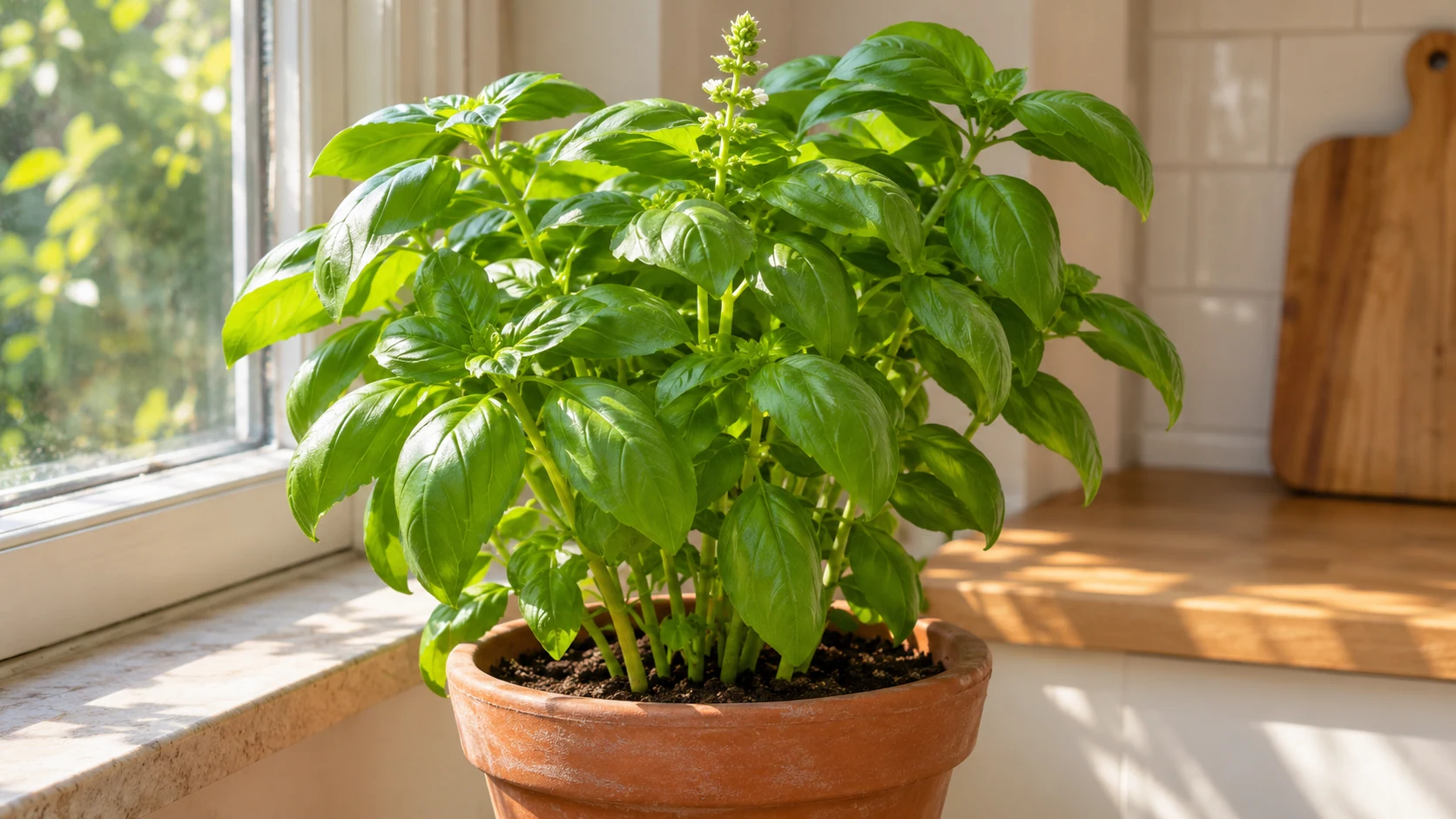
Italian Basil is native to Tropical regions of Africa and Asia, typically reaches Usually about 30–60 cm (1–2 ft) tall; spread and leaf size vary by cultivar and pruning indoors, with fast in warm weather growth. Italian Basil has a tender, bushy herbaceous annual culinary herb with aromatic, glossy leaves and square stems growth habit and part of the Lamiaceae family. It is also known as Sweet basil, Common basil, Genovese basil, and Italian Large Leaf basil.
| Detail | Information |
|---|---|
| Also known as | Sweet basil, Common basil, Genovese basil, Italian Large Leaf basil |
| Native region | Tropical regions of Africa and Asia |
| Mature size | Usually about 30–60 cm (1–2 ft) tall; spread and leaf size vary by cultivar and pruning |
| Growth rate | Fast in warm weather |
| Growth habit | Tender, Bushy Herbaceous Annual Culinary Herb With Aromatic, Glossy Leaves And Square Stems |
| Scientific name | Ocimum basilicum |
| Family | Lamiaceae |
Italian Basil Care Guide for Pots and Garden Beds
Italian basil is easiest to keep productive when you treat it as a warm-season crop: give it strong light, a fertile but freely draining root zone, and regular picking. When a plant wilts, first check whether the soil is actually dry; basil likes steady moisture, but its roots should not sit in a soaked pot.
What “Italian basil” means
“Italian basil” is a common gardening and cooking label, not a separate botanical species, as the National Garden Bureau guide explains. The classic Genovese type and Italian Large Leaf basil are forms of sweet basil, Ocimum basilicum; they differ in leaf shape and flavor, so check the seed packet or plant label if you want a particular pesto basil. The National Garden Bureau’s basil guide distinguishes Genovese from Italian Large Leaf and other basils, including Thai basil, which has a different flavor profile.
This distinction matters because “basil” can also mean Thai basil or holy basil (tulsi), which are not interchangeable culinary types, as the National Garden Bureau cultivar guide shows. If a label only says “basil,” look for Ocimum basilicum and a Genovese or Italian Large Leaf description when you want the familiar Italian-style leaves.
What to expect from the plant
Sweet basil is a tender, aromatic herb with opposite leaves and square stems. It is usually grown as an annual outside frost-free tropical regions, although the species can behave as a short-lived perennial in warm conditions; a plant’s lifespan and final size depend on cultivar, temperature, and how often you harvest. The Missouri Botanical Garden profile describes sweet basil as frost-intolerant, full-sun loving, and variable in size, while the RHS species profile lists a bushy habit and a typical height of roughly 30–60 cm.
A compact plant with frequent new shoots usually stays leafier than an older stem allowed to flower and stretch, consistent with the National Garden Bureau’s pinching guidance. Do not judge it only by height: a vigorous Genovese basil may grow broader or taller than a small-leaved cultivar, and regular pinching changes its shape.
Start with warmth, not the calendar
Basil grows best in warm weather and is damaged by frost. In a cool climate, wait until cold nights have passed before setting a young plant outside; in India or another tropical climate, use the local weather instead of copying a spring-frost date from a North American or UK guide. Start with a warm, settled spell and shelter a small pot from unusually cool nights or prolonged rain. The RHS growing guide recommends a warm, sunny, sheltered position and keeping young plants protected until frost risk has passed.
Give it strong light with a heat adjustment
Aim for at least six hours of direct light when conditions are moderate. A sunny balcony, patio, or bright window suits Italian basil better than a dim corner; weak light can produce stretched stems and sparse leaves. The National Garden Bureau recommends six to eight hours of direct sun for basil.
In very hot weather, all-day afternoon sun can make a container dry quickly and leave a plant limp during the hottest hours. Keep the morning sun, then move the pot into light afternoon shade if leaves repeatedly wilt despite moist soil or show scorched patches. This is an adjustment for heat stress, not a reason to grow Italian basil in deep shade; Savvy Gardening also recommends afternoon shade where sun and temperatures are intense.
Water when the mix begins to dry
Keep the root ball evenly moist, not constantly wet. Feel the top 2–3 cm of potting mix; if that layer is dry, water at the base until excess drains from the holes, then empty the saucer. Do not use a fixed daily schedule: a small pot in hot wind may need checking every day, while a larger pot in cloudy or rainy weather can stay moist much longer. The RHS basil guide advises keeping container compost evenly moist, while avoiding saturation.
Garden beds need a deep watering during a dry spell when the soil begins to dry, rather than frequent shallow splashes. Water at soil level when possible, especially in humid weather, so leaves are not left wet overnight. If heavy monsoon rain is forecast, shift a movable pot under a bright roof edge; keep it airy, and return it to strong light when the rain passes.
Choose fertile soil that drains freely
Use a moderately rich, freely draining mix that holds some moisture but releases excess water quickly. A peat-free multipurpose compost works for containers; in a garden bed, improve poor soil with a modest amount of mature compost and choose a spot that does not stay waterlogged. Basil does not need a special heavy feeding regime in rich soil, and soggy roots are a more urgent problem than a slightly lean mix.
Most home growers do not need to test soil pH unless plants repeatedly struggle in otherwise suitable soil. If a container mix stays wet for days, replace it with a lighter, better-draining medium rather than adding more fertilizer.
Pick a container that can dry evenly
Choose a pot at least 20 cm wide and deep, with unobstructed drainage holes. That gives a leafy basil plant enough root space without making the container difficult to move when weather changes. The RHS recommends a 20 cm minimum container for basil and peat-free multipurpose compost; use a larger pot for several plants, but leave room for air to move between them.
Avoid leaving the pot in a water-filled saucer or using a decorative cachepot that traps runoff. If you have a crowded grocery-store basil, splitting it into a few pots often gives the seedlings more room than moving the whole clump into one oversized pot.
Keep the plant branching and productive
Once a young plant is established and has several pairs of leaves, pinch or snip the central shoot just above a pair of leaves. Two side shoots commonly grow from that node, making a fuller plant with more harvest points. Savvy Gardening’s basil-trimming guide shows where to pinch above a leaf pair; use clean fingers or snips and avoid removing most of the plant in one session.
Harvest stem tips regularly instead of stripping only the biggest leaves. Cut just above a healthy node and leave enough leafy growth below the cut for the plant to keep photosynthesizing. Frequent small harvests are easier on a container plant than one heavy cut, and they give you a steady supply for cooking.
Decide what to do when it flowers
Basil flowers are normal, especially as plants mature or dry out, and they are not a sign that the plant is diseased, as described in the RHS growing guide. If you want a longer leafy harvest, pinch flower buds when they appear and keep the plant watered consistently; the RHS explains that removing flower stems can maintain leaf quality. Flowering can change the balance of new leaf growth and flavor, so harvest more often when buds start forming; the National Garden Bureau notes that flowering affects leaf flavor.
You can also let one plant bloom if you have several; the flowers attract pollinators, although that stem will produce fewer tender leaves.
Grow basil indoors with enough light
A sunny windowsill can keep Italian basil going for kitchen harvests, but indoor light is often weaker than outdoor sun. Place the pot at your brightest window, turn it every few days so one side does not lean, and use a grow light if new stems become long and weak. Gardening Know How recommends a bright southern or western window for indoor basil.
Indoor pots still need drainage and careful watering. Check the surface before watering, keep the leaves from pressing against a cold window, and avoid placing the plant directly beside an air-conditioner or heater. A warm, bright kitchen can work well; a low-light countertop usually cannot support a dense harvest for long.
Adjust for seasonal and tropical conditions
On an Indian balcony, adapt the care to local weather rather than copying a frost-based calendar. Use a movable pot so you can keep the roots from staying saturated during prolonged showers and offer a little afternoon shade when a west-facing balcony becomes punishingly hot. After rain, check that the pot drains freely and that crowded stems have enough airflow; do not compensate for cloudy weather by watering on the old sunny-day schedule.
In cooler parts of the country, keep pots in a sheltered bright spot during cold spells and take fresh cuttings before growth declines. In warm regions where the plant remains active, continue light harvesting and pinching rather than treating a calendar month as the end of its season. These are practical adjustments to basil’s need for warmth, sun, and drained soil, not a promise that every cultivar will grow year-round in every microclimate.
Read the warning signs before changing care
A wilted plant can be thirsty or struggling in saturated soil, so check the mix before you water, as the Savvy Gardening guide recommends. Dry mix with limp leaves points to a need for a thorough drink; wet mix with limp leaves means check drainage and let the root zone recover before adding more. Yellowing lower leaves can have several causes, so look for a pattern across the whole plant and review light, water, and root conditions together; the Gardening Know How guide lists several basil diseases.
Crowded, persistently damp foliage is also a reason to improve spacing and airflow. Basil downy mildew is a known problem for sweet basil; the Missouri Botanical Garden recommends resistant varieties, avoiding overhead watering, and removing infected plants rather than treating home-grown leaves with unlabelled products. If the plant is badly affected, remove it from nearby herbs and discard infected plant material rather than composting it.
A quick first check for a wilted plant
Check the top of the soil and the drainage holes before reaching for the watering can. If the mix is dry, water slowly until it runs through; if it is already wet, move the pot out of further rain and confirm that water can escape. Then give the plant strong indirect or morning light while it recovers, and do not fertilize a stressed plant.
Is Italian basil safe for pets?
The ASPCA lists basil (Ocimum basilicum) as non-toxic to cats and dogs. The listing is specific to those two animals and does not classify every pet species; keep the plant out of reach if your animal tends to chew greenery. See the ASPCA basil listing for the exact scope of its classification.
When to use this page vs other Italian Basil guides
Use this overview to set up the plant and decide what to check first. For a placement decision, read the Italian Basil light guide; for symptoms tied to dry or soggy soil, use the Italian Basil watering guide. The Italian Basil soil guide covers mix and drainage in more depth, while the Italian Basil fertilizer guide explains feeding without encouraging soft, overfed growth.
If roots fill the pot or supermarket seedlings are crowded, follow the Italian Basil repotting guide. For seed or cutting methods, use the Italian Basil propagation guide; the overview here only covers the quick care choices that keep an established plant productive.
Related Italian Basil guides
- Italian Basil light guide — choose a sunny location and judge when afternoon shade helps.
- Italian Basil watering guide — check moisture and respond to wilt without guessing.
- Italian Basil soil guide — compare container mixes and improve drainage.
- Italian Basil fertilizer guide — feed container plants carefully through active growth.
- Italian Basil repotting guide — move crowded seedlings and root-bound plants.
- Italian Basil propagation guide — start new basil from seed or cuttings.
Conclusion
Give Italian basil warmth, strong light, a draining root zone, and regular small harvests. When the plant looks stressed, inspect the soil and the recent weather first; that tells you whether the next step is water, better drainage, more light, or shelter from heat and rain.
How to care for Italian Basil?
When should you water Italian Basil?
Keep the root zone evenly moist but well-drained. Water when the upper layer of soil or potting mix begins to dry; do not leave the roots sitting in water.
- Feel the top 2–3 cm of soil or potting mix. If it is dry - Water when the upper layer of soil or potting mix begins to dry; do not leave the roots sitting in water.
- water at the base until the root zone is moist and excess drains away - Water when the upper layer of soil or potting mix begins to dry; do not leave the roots sitting in water.
- Drain excess water - Keep the root zone evenly moist but well-drained.
What soil works best for Italian Basil?
Moderately rich, fertile soil that holds moisture while draining freely; use a quality multipurpose potting mix for containers.
- Peat-free multipurpose potting compost - Moderately rich, fertile soil that holds moisture while draining freely; use a quality multipurpose potting mix for containers.
- Add a small amount of mature compost for garden beds that lack organic matter - Moderately rich, fertile soil that holds moisture while draining freely; use a quality multipurpose potting mix for containers.
- Use a container at least 20 cm wide and deep with drainage holes - Moderately rich, fertile soil that holds moisture while draining freely; use a quality multipurpose potting mix for containers.
Grower notes for Italian Basil
Italian basil is a type of sweet basil
Italian basil is a culinary form of sweet basil within Ocimum basilicum, not a separate botanical species. The National Garden Bureau describes Genovese as the classic Italian basil and also distinguishes Italian Large Leaf cultivars. Check the seed label because leaf size, flavor, and plant shape vary among cultivars.
Give it warmth and full sun
Set basil in a warm, sheltered spot with around six or more hours of direct sunlight. It is tender and frost-intolerant, so start seeds indoors or wait until frost risk has passed before moving young plants outside. In very hot regions, a little afternoon shade can reduce stress.
Keep the soil moist, not waterlogged
Basil grows best with steady moisture and free drainage. Check the top few centimetres of a pot before watering, then water at soil level and let the excess drain. Avoid splashing leaves and leaving pots in standing water; water needs rise in hot, sunny weather.
Use a fertile mix and a roomy container
Moderately rich, well-drained soil supports fast leaf growth. A container at least 20 cm wide and deep gives the roots room while staying easy to move indoors before cold weather. Separate overcrowded supermarket basil plants soon after purchase so each seedling has room and airflow.
Pinch shoot tips to keep the plant bushy
When the plant is established, pinch or cut the stem just above a pair of leaves to encourage side shoots. Remove flower buds if you want to extend leafy harvests; flowering slows new leaf production and can change leaf flavor, while the flowers still provide nectar for bees.
Harvest stems regularly for fresh leaves
Harvest young stem tips through the warm season, cutting above a healthy pair of leaves rather than stripping individual leaves from the stem. Regular, moderate picking encourages branching. Use leaves fresh or freeze extra harvests to preserve their aroma.
Is Italian Basil Safe for Pets?
ASPCA lists basil as non-toxic to cats and dogs. Its listing does not establish safety for every animal species, and eating any plant material may cause stomach upset; contact a veterinarian if a pet eats a large amount or becomes unwell.
ASPCA classifies basil as non-toxic to cats and dogs. The ASPCA page does not establish safety for horses or other pet species. As with any plant, ingestion may cause gastrointestinal upset, so keep pets from eating large amounts and consult a veterinarian if symptoms occur.
Watering Italian Basil
For Italian Basil, feel the top 2–3 cm of soil or potting mix. If it is dry, water at the base until the root zone is moist and excess drains away. and water check container plants often in warm, sunny weather and water when the top 2–3 cm of mix feels dry. In garden beds, water during dry spells when the surface begins to dry. Water more often during hot, bright weather and less during cool or rainy spells. Italian basil is frost-tender; bring pots indoors before cold weather rather than trying to overwinter it outdoors.
| Detail | Information |
|---|---|
| How often | Check container plants often in warm, sunny weather and water when the top 2–3 cm of mix feels dry. In garden beds, water during dry spells when the surface begins to dry. |
| How to check | Feel the top 2–3 cm of soil or potting mix. If it is dry, water at the base until the root zone is moist and excess drains away. |
| Seasonal changes | Water more often during hot, bright weather and less during cool or rainy spells. Italian basil is frost-tender; bring pots indoors before cold weather rather than trying to overwinter it outdoors. |
Signs of overwatering
- Potting mix stays soggy between waterings
- Growth weakens in persistently wet soil
- Water collects in the pot saucer or the container has no drainage
Signs of underwatering
- Leaves wilt as the root zone dries
- The container mix dries completely between checks
- New growth slows during hot, dry weather
Soil & potting for Italian Basil
Use a mix of Peat-free multipurpose potting compost, Add a small amount of mature compost for garden beds that lack organic matter, Use a container at least 20 cm wide and deep with drainage holes for Italian Basil. Good drainage is essential. Choose a pot with drainage holes and avoid boggy soil or a saucer that stays full of water. Target soil pH around 6.0–6.5. Repot repot when roots fill the pot, the mix dries unusually quickly, or the plant is crowded. Divide crowded supermarket herb pots promptly into individual containers., ideally in spring or early summer, once the plant is growing actively and conditions are warm.
| Detail | Information |
|---|---|
| Recommended mix | Peat-free multipurpose potting compost, Add a small amount of mature compost for garden beds that lack organic matter, Use a container at least 20 cm wide and deep with drainage holes |
| Drainage | Good drainage is essential. Choose a pot with drainage holes and avoid boggy soil or a saucer that stays full of water. |
| Soil pH | 6.0–6.5 |
| Repotting frequency | Repot when roots fill the pot, the mix dries unusually quickly, or the plant is crowded. Divide crowded supermarket herb pots promptly into individual containers. |
| Best season to repot | Spring or early summer, once the plant is growing actively and conditions are warm. |