Italian Basil Light Needs: Sun, Shade & Indoor Tips
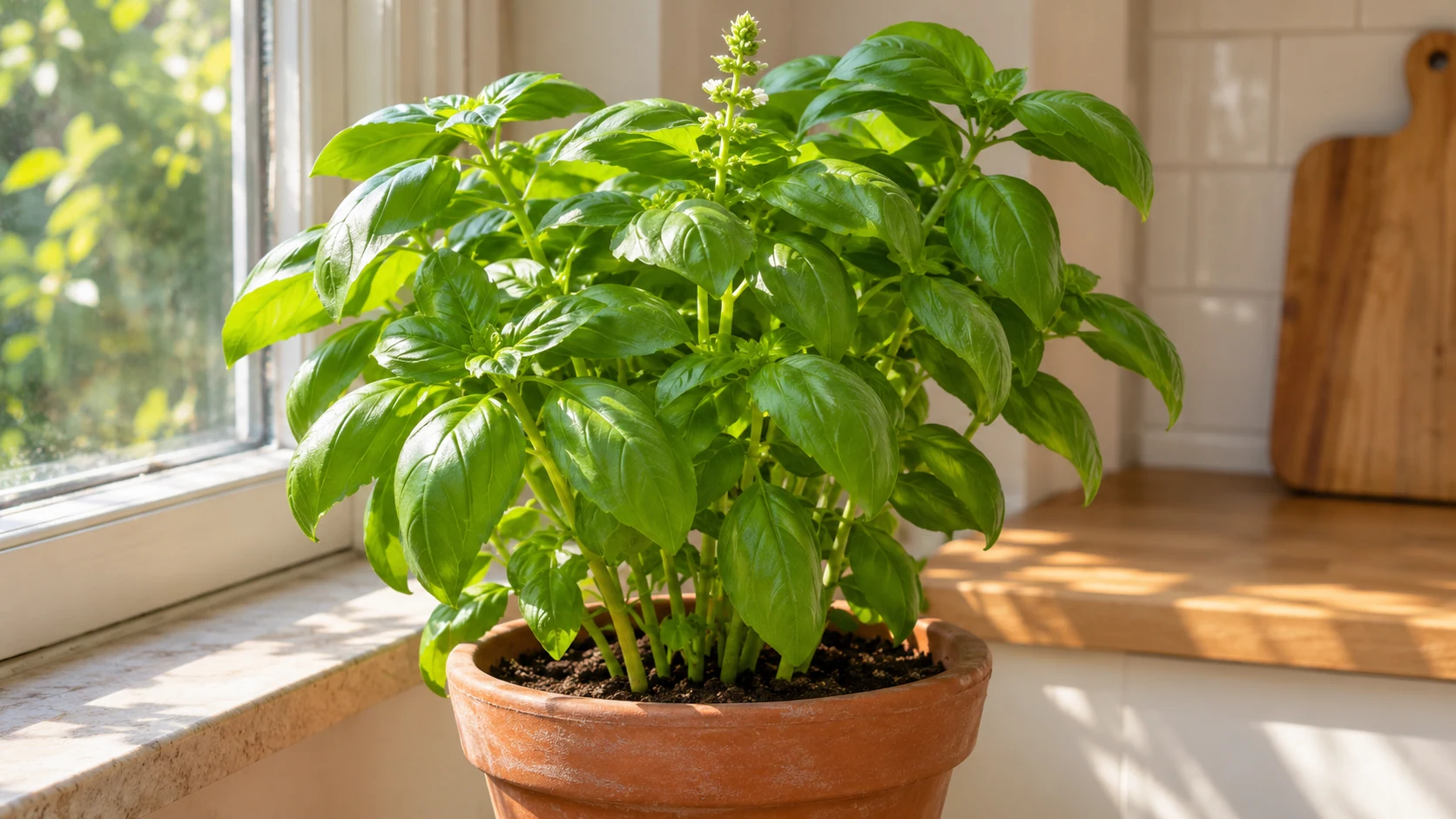
Italian Basil Light Needs: Sun, Shade & Indoor Tips
Italian Basil Light Needs: Sun, Shade & Indoor Tips
Italian Basil grows best in a warm, bright position with several hours of direct sun. Use six to eight hours of direct light as a practical daily target, then adjust for heat: a plant can need strong light and still benefit from brief afternoon shade when a pot is baking on a hot balcony. The Missouri Botanical Garden profile lists sweet basil as a full-sun herb, and the RHS species profile also places Ocimum basilicum in full sun.
The first useful step is to watch the actual sun on your plant for a day. Count the hours when sunlight reaches the leaves directly, note when the container gets hottest, and make one placement change at a time. That helps you avoid solving a hot, dry root ball by putting the basil in deep shade.
The quick answer for Italian Basil light
Give Italian Basil an outdoor spot with at least six hours of direct sun when temperatures are moderate; six to eight hours is a common horticultural target for basil. The National Garden Bureau recommends six to eight hours of direct light, while the RHS and Missouri Botanical Garden describe the species as full-sun loving. These are useful growing targets, not a promise that every balcony or cultivar will respond identically.
In very hot weather, keep the strongest morning light and offer light afternoon shade if the plant repeatedly droops during peak heat or develops damaged patches despite moist soil. A shaded corner that receives little direct sun is not an equivalent substitute. Basil needs the light for compact, leafy growth; shade is a temporary heat adjustment, not the default position.
What “full sun” means for Italian Basil
Italian Basil usually refers to sweet basil cultivars such as Genovese and Italian Large Leaf, all within Ocimum basilicum. The RHS species profile specifies full sun and lists south- or west-facing exposure in its UK guidance. That compass detail is specific to its setting; choose a position by checking how long direct sun actually reaches the leaves.
Think of direct sun as sunlight that lands on the leaves, not just a room or balcony that feels bright. A bright room several feet from a window may look sunny to you but still provide fewer hours of usable light than a sill where the sun reaches the plant. If you grow more than one basil type, check the label: Thai basil is a different culinary type, and Gardening Know How notes its greater shade tolerance compared with other basils. Do not use that exception to place Italian sweet basil in deep shade.
Does Italian Basil need direct sunlight?
For the strongest outdoor growth, yes: give it direct sun rather than relying on bright shade alone. The RHS and Missouri Botanical Garden both categorize sweet basil as a full-sun plant, and the National Garden Bureau’s six-to-eight-hour recommendation is explicitly for direct light. A little less sun can still keep a plant alive, but it is a compromise if your goal is steady, leafy harvests.
Avoid treating the number as a rigid pass-or-fail threshold. A healthy plant receiving six hours of morning sun may do better through a hot afternoon than one exposed to harsh sun all day in an undersized pot. Conversely, a plant in a cool, cloudy spot may need the brightest position available even if its light is not as intense as midday sun.
Choose an outdoor spot that stays bright
Start with an open balcony, patio, or garden edge where direct sun reaches the leaves for much of the morning. Italian Basil is also suited to containers, which makes it easier to follow the sun or protect the pot from a heat wave. The RHS growing guide recommends a sunny, sheltered position, while the Missouri Botanical Garden pairs full sun with evenly moist, well-drained soil.
Check for shade cast by neighboring buildings, railings, awnings, or a large tree. A balcony can be bright at noon yet shaded for most of the day; a few hours of direct light followed by open shade is different from a spot where sun reaches the plant only briefly. Move the pot in small increments and give new leaves several days to show whether the new position is working.
Morning sun, afternoon shade, and hot weather
In a mild climate, Italian Basil can take a sunny position through the day. In places where afternoon temperatures and sunlight become intense, retain morning sun and use bright shade for the hottest part of the afternoon if the plant shows repeat heat stress. Savvy Gardening describes this regional adjustment, and Epic Gardening notes the heat trade-off of afternoon shade and increased sunburn or wilting risk in hotter weather.
Use the plant’s response to decide whether shade is needed. A brief midday wilt on a hot day does not automatically mean the light is excessive; first feel the potting mix and check whether the container itself has become very hot. If the mix is moist and the leaves recover as the day cools, temporarily shifting the pot out of the harshest afternoon exposure may help. If it is dry, water thoroughly and allow the excess to drain before changing the light routine.
Grow Italian Basil indoors without guessing
Indoors, put Italian Basil at the brightest window you have, where the sun reaches the leaves directly for several hours. Gardening Know How recommends a sunny window for indoor basil. The window’s direction matters less than the sun it actually receives in your home; nearby buildings, trees, screens, and seasonal sun angles can all reduce the light.
Rotate the pot occasionally if the stems lean strongly toward the window, and keep the leaves from being crowded behind other plants. If new growth remains stretched or sparse, bring the pot closer to the glass or add a grow light rather than trying to fix the shape with fertilizer. The RHS growing guide is written for UK seasons, so use its sunny-window principle while adapting the timing and compass direction to your own latitude.
Pick the brightest usable window
A south- or west-facing window is a useful starting point in many Northern Hemisphere homes, but it is not a universal guarantee. In India, observe which window gets the longest direct exposure rather than assuming the same orientation as a US or UK guide.
Do not judge a window only by how bright it looks from across the room. Put the pot close enough for direct sun to reach the leaves, then watch whether fresh growth stays compact and green. If the window is shaded for most of the day, a bright artificial source can make the setup more dependable than moving the plant repeatedly between dim rooms.
When a grow light helps
Use a grow light when the home does not have a sunny window or when short, cloudy days leave the plant with little direct sun. Gardening Know How suggests about ten hours under fluorescent lights for indoor basil, but bulb type, strength, distance, and room conditions change how much light reaches the leaves. Treat that duration as a starting point from its indoor basil guidance, and follow the fixture’s instructions for placement and safe operating time.
Position the lamp so it illuminates the canopy evenly, then check new growth instead of extending the schedule every time an older leaf yellows. A grow light can supplement a bright window; it cannot correct waterlogged soil, cold drafts, or a pot that has dried out. If you also grow cuttings or seedlings, the Italian Basil propagation guide covers the separate steps for establishing young plants.
Move seedlings into stronger sun gradually
Seedlings raised indoors should not be placed straight into a full day of outdoor sun. Their leaves have been growing under gentler conditions, so introduce the outdoor light in stages over about a week: begin in a sheltered bright spot, add short periods of morning sun, and increase exposure gradually if the leaves remain healthy. The RHS recommends hardening basil plants before planting out.
Do the same with a supermarket basil that has spent its life inside a shop. Set it outdoors in bright shade first, then move it toward morning sun over several days. If the leaves suddenly wilt or develop pale, dry areas after the move, return to the last comfortable position and slow the transition; do not assume the cultivar cannot grow in full sun.
Adjust light for seasons and Indian balconies
In India and other warm climates, use local sunlight and heat rather than a calendar copied from a frost-prone region. On a bright, moderate day, give Italian Basil its full-sun position. During a stretch of punishing afternoon heat, keep morning sun but move a container to open shade for those hottest hours; once the weather eases, return it to the brighter spot.
During cloudy or monsoon periods, place the pot where it still gets the clearest available light while staying out of prolonged heavy rain. A roof edge or sheltered balcony can help protect the root zone, but a permanently dark corner will not replace direct sun. The RHS recommends a sheltered sunny position and containers for basil; the local adjustment is to keep that principle while responding to intense heat and rainfall at your site.
Remember that the sun path shifts through the year. A windowsill or balcony that receives direct sun in one season may be shaded in another, so recheck the plant’s exposure when growth slows. If light is still strong but the plant is limp, compare its watering and drainage conditions using the Italian Basil watering guide before moving it again.
Signs Italian Basil is not getting enough light
Look for growth that leans toward a window, unusually long spaces between leaves, or new stems that stay thin instead of filling out. One symptom alone does not diagnose light shortage, but a plant in a dim position with sparse new growth is a good reason to improve the light before changing its fertilizer.
Move the plant closer to a bright window or give it more direct morning sun, then judge the next flush of growth. Older stretched stems will not necessarily become compact again, so use the new leaves and side shoots to evaluate the change. If the potting mix is staying wet or the roots have filled the container, address those conditions too; the Italian Basil soil guide explains how drainage and mix affect root health.
Signs sun and heat are overwhelming the plant
Strong sun is normal for basil, but sun and heat can combine with a dry or overheated pot to cause midday wilting or leaf damage. Epic Gardening notes basil’s heat-related sunburn or wilting risk. Consider the full situation before moving the plant: a dry container needs water, while a moist root ball that repeatedly wilts in the hottest hours may need a cooler afternoon position.
If a plant recently moved from indoors develops damage after a sudden jump into direct sun, back it into bright shade and acclimate it again more gradually. Do not move it to deep shade for the rest of the season unless the spot still receives substantial light. For new leaves that remain healthy but look pale, also review feeding and root conditions; the Italian Basil fertilizer guide covers nutrition without treating every pale leaf as a light problem.
Troubleshoot a basil plant that wilts in sunlight
Start with the root ball, not the leaves. If the top layer of mix is dry, water slowly at soil level until excess drains, then see whether the plant recovers. If the mix is already moist, check whether the pot is hot, blocked from draining, or sitting in afternoon sun that is much harsher than its morning exposure. The National Garden Bureau recommends steady moisture for basil, while the Missouri Botanical Garden calls for evenly moist but well-drained soil.
Change one factor at a time: move a hot pot into open shade for the afternoon, improve drainage if water is trapped, or increase light gradually if the plant has been in a dim position. Avoid watering on a fixed schedule just because the leaves wilted; wet roots can wilt too. If the container dries too quickly or is crowded with several plants, the Italian Basil repotting guide can help you decide whether a larger or less crowded pot is the next step.
When to use this page vs other Italian Basil guides
Use this page to choose where the plant sits and how much direct sun reaches its leaves. The Italian Basil overview gives the wider growing picture, including warmth, pruning, and harvest; the watering guide is the better place to troubleshoot dry or saturated mix. If the plant is struggling despite suitable light, use the soil guide to assess drainage and the fertilizer guide when nutrient needs are the more likely question.
Light does not replace good container care. A sunny location will not compensate for a pot without drainage, and a short afternoon shade period will not solve roots kept constantly wet. Check the specific guide for the care factor you plan to change, then make one adjustment and observe the next growth.
Related Italian Basil guides
- Italian Basil overview — the broad care routine for this warm-season herb.
- Italian Basil watering — how to check moisture before watering a sunny pot.
- Italian Basil soil — how mix and drainage affect a plant exposed to heat.
- Italian Basil fertilizer — when feeding is relevant to weak or pale growth.
- Italian Basil repotting — how to choose a container when the root ball dries quickly.
- Italian Basil propagation — how to raise new basil plants and acclimate them outside.
Conclusion
Give Italian Basil a bright position with roughly six to eight hours of direct sun as your starting point. In hot weather, keep the morning light and offer brief afternoon shade only when the plant and pot are overheating; indoors, use the sunniest window and supplement it if the leaves receive too little direct light. If the plant wilts, check the mix and container temperature before changing its location, then adjust gradually and watch how the next growth responds.