Italian Basil Watering Guide
Italian Basil Watering Guide
Italian Basil Watering Guide
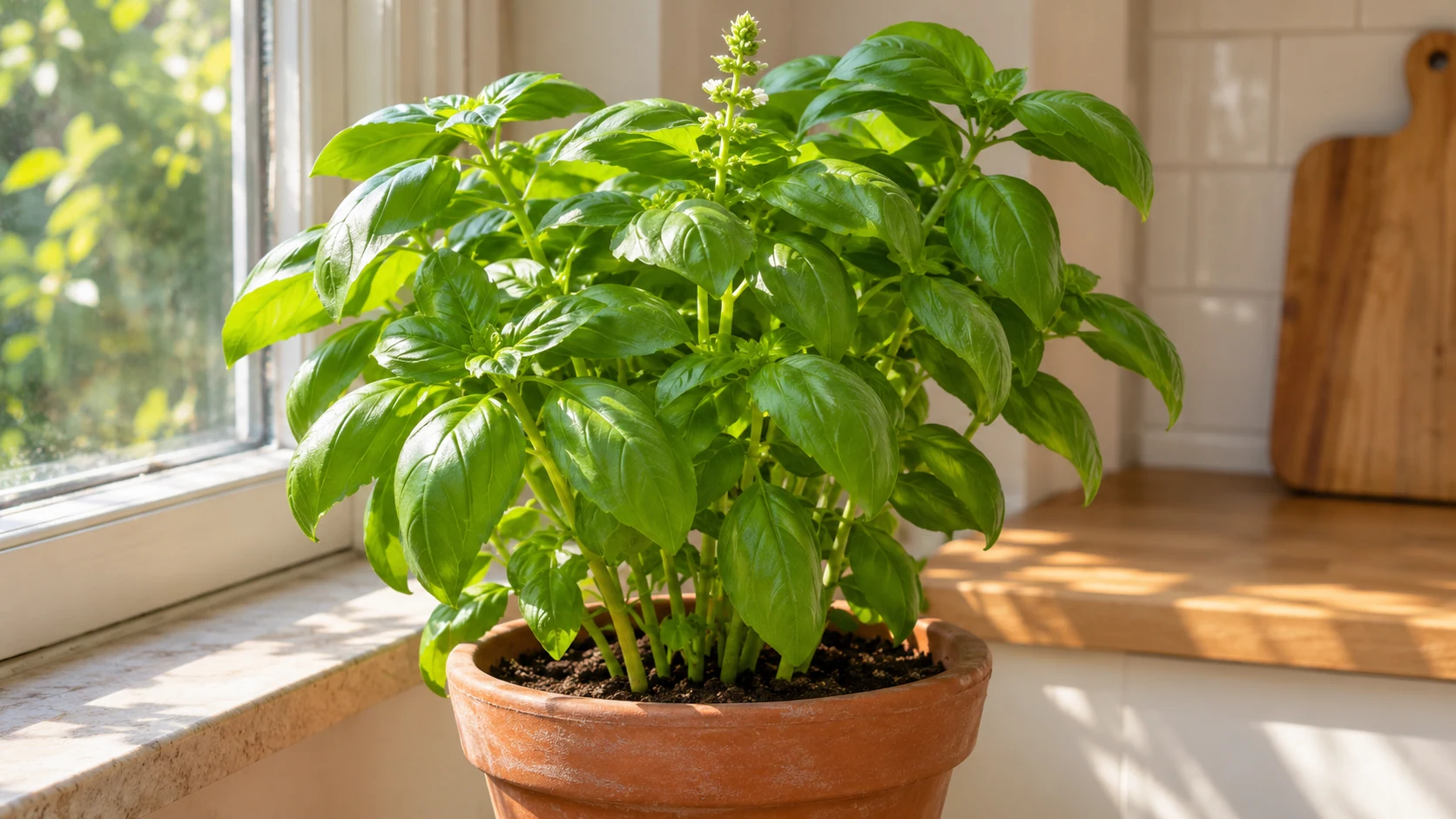
Italian basil (Ocimum basilicum, including Genovese and Italian Large Leaf types) grows best when its roots have steady access to moisture and air. Keep the mix evenly moist while letting excess water drain away. The Italian basil profile gives a practical check for containers: feel the top 2–3 cm of mix and water when that layer begins to dry. The exact interval changes with pot size, soil, sun, temperature, wind, plant growth, and rain, so a weekly calendar cannot fit every home or season.
The quick watering rule
Check the growing medium before you water. In a container, press a finger into the upper 2–3 cm of potting mix. If it feels dry at that depth, water slowly around the soil surface until moisture reaches the root ball and a little drains from the bottom. If the mix still feels cool and damp, check again later instead of watering because a calendar says it is time.
Sweet basil needs regular moisture, but its roots also need well-drained soil. UC IPM’s basil cultural guide says basil prefers moist soil and recommends regular watering, well-drained raised beds, and mulch to conserve moisture. The University of Florida IFAS basil guide similarly recommends deep, consistent watering while avoiding soggy or waterlogged soil. Use those principles together: wet the root zone thoroughly, then allow excess to escape.
How to check a pot before watering
Look at more than the surface. A dry crust can sit over damp mix, especially in a large pot, while a small container can dry through quickly on a sunny balcony. Push a finger into the top layer near the edge of the root ball, or use a clean wooden skewer if the pot is too narrow for a finger. Compare the feel and weight of the pot with how it feels just after watering. These simple observations help you learn how quickly that particular container dries.
The University of Illinois Extension’s container-watering advice recommends checking pots daily and using soil feel or a moisture probe to decide when to water. It also notes that clay, fabric, and unglazed ceramic can dry faster than plastic or glazed containers. Treat daily checking as a quick inspection, not a command to water every day.
When the mix is ready, water evenly over the soil rather than pouring in one spot. Pause briefly if water runs down a gap between the root ball and pot wall; very dry mix can repel water at first, so a slower second pass may wet it more evenly. Let the container drain fully. If a saucer catches runoff, empty it so the pot is not left standing in water.
If a pot has no drainage holes, move the basil into one that does. A decorative outer pot can still be used, but lift out the inner nursery pot to water and drain it before returning it. The soil guide covers the free-draining mix and container setup that make this routine work.
Watering basil in a garden bed
For basil planted in a bed, check the soil around the root zone rather than judging by a dry-looking surface alone. Water during a dry spell when the upper soil is beginning to dry, then apply enough to moisten the area where the roots are growing. A mulch layer can slow evaporation and help the bed hold moisture more evenly. Keep mulch a little away from the stems so the crown is not packed against wet material. Illinois Extension notes that annual herbs benefit from moist soil and that mulch helps conserve moisture in an herb garden (herb-growing guidance).
Raised beds and heavy ground soils behave differently. A raised bed may drain and dry sooner; dense clay can stay wet after rain. UC IPM recommends well-drained, amended soil and notes that drip or furrow irrigation on raised beds helps maintain drainage. If your bed remains saturated or puddled, improve drainage rather than adding a more frequent watering routine. The University of Minnesota basil guide gives a 7–10 day deep-watering interval for its Minnesota garden context, depending on regular rainfall, and separately warns that containers dry faster. Use that interval as a regional example, not a universal schedule for warmer Indian weather or a different soil.
Adjust for heat, rain, and growth
Hot, bright, or windy weather
Warm weather and active growth can make a pot dry quickly. Check it more often during a heat wave, especially if it sits in direct sun, on concrete, or beside a warm wall. A small pot and a porous clay or fabric container can lose moisture faster than a large plastic pot. University of Minnesota Extension’s container guide notes that container needs change with pot size and temperature, and that some containers need more than one watering on a hot, dry day. That is a reason to inspect the mix again, not to water on a fixed twice-daily schedule.
If the potting mix is moist but leaves droop only during the hottest hours, do not immediately add more water. Move the container out of the harshest afternoon heat and check again as temperatures ease. Italian basil needs good light, but intense heat around a small root ball can outpace water uptake. See the light guide for placement adjustments.
Rainy or humid periods
During monsoon weather, skip irrigation when rain has already kept the root zone moist. Check sheltered pots separately: a balcony roof may block rain, while a garden bed may be wet several centimetres below the surface. Confirm that drainage holes are open and remove water from saucers or cachepots. Persistent wetness can stress roots even when the air feels hot.
Water at the soil line when possible. UF/IFAS advises avoiding overhead watering and keeping air moving because wet foliage and humid conditions can favor disease. This is particularly useful when basil is crowded or rain has kept leaves wet. If the mix is still damp, wait; humidity in the air does not tell you whether the roots need water.
Seedlings and recently transplanted basil
Small seedlings have shallow roots and can dry out faster than an established plant. Keep the seed-starting medium evenly moist while seeds germinate, using a gentle pour or a fine stream so you do not dislodge them. After seedlings establish, continue checking the root zone, but avoid leaving the tray or pot immersed in runoff.
After transplanting, water the root ball to settle the mix around the roots. For the next several days, check moisture more often while the plant establishes. A transplant may wilt briefly from heat or handling; confirm whether the mix is dry before watering again. Once new growth resumes, return to the normal soil-check routine rather than continuing to keep the mix constantly wet.
Tell thirst from too much water
Wilting is a signal to inspect, not a diagnosis. A plant in dry mix may perk up after thorough watering, while basil in saturated mix can also wilt because stressed roots cannot take up water properly. Check the moisture below the surface, smell the mix, look for standing water, and review whether the pot drains. If the medium is wet and leaves keep yellowing or stems soften, stop adding water and correct drainage first.
Do not leave the plant in a tray of runoff or make a habit of watering just the top few millimetres. A thorough watering followed by free drainage is easier to evaluate than repeated small splashes. The watering-stress symptom guide can help compare wilting patterns; the yellow-leaves guide covers other possible causes. If you cannot tell whether the problem is water, light, roots, or pests, use the plant problem diagnosis tool to narrow the next check.
A simple weekly routine without a fixed schedule
Build a short observation habit instead of tying watering to particular weekdays:
- Check the soil or mix before you water, especially in a small container.
- Note whether the pot feels light, whether recent rain reached it, and how hot or windy the last day was.
- Water only when the root zone is beginning to dry, then let excess drain away.
- Recheck after repotting, a heat wave, a move indoors, or a change in pot material; each changes how quickly the medium dries.
- If the plant repeatedly wilts despite moist mix, investigate heat, drainage, roots, or disease rather than increasing water automatically.
Italian basil grows quickly in warm conditions, so a young plant in a small pot may need closer monitoring than a mature plant in a roomy bed. Regularly harvesting and pinching the plant also changes its leaf area and water use over time. Keep the approach flexible: maintain even moisture, preserve drainage, and let what you find in the root zone guide the next watering.