How to Grow Purple Basil: Planting, Pruning, and Care
Grow purple basil in beds or pots with warm soil, sun, drainage, and pruning. Get planting dates, cultivar tips, harvest advice, and fixes for common problems.
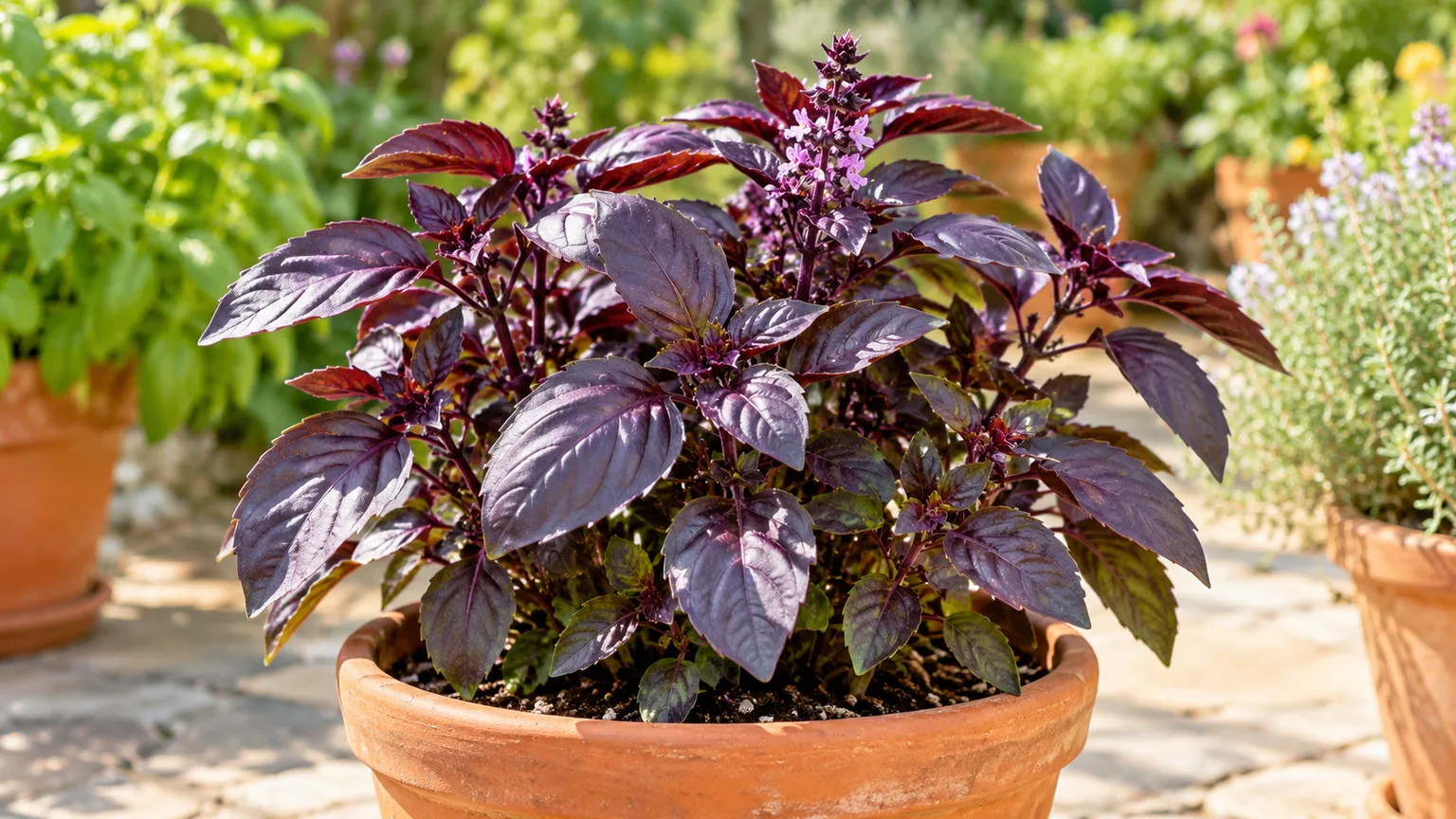
Purple basil brings the familiar scent of sweet basil to a pot or bed with deep red, burgundy, or nearly black leaves. It is also useful in the kitchen: the leaves are edible, and their pigments can tint vinegar pink. The practical difference from green basil is mostly in the cultivar, not a special hardiness or a completely different care routine.
Treat purple basil as a warm-season crop. Start it indoors if you want an earlier harvest, but wait for settled warmth before moving it outside. Then give it bright sun, soil that drains freely, steady moisture, and regular tip pinching. Those steps produce a fuller plant; understanding cultivar variation and common disease symptoms helps you keep its color and leaves looking their best.
What purple basil is and what it tastes like
Purple leaves come from sweet basil cultivars
Most purple basil sold for kitchen gardens is a purple-leaved cultivar of sweet basil, Ocimum basilicum, in the mint family. Its burgundy coloring comes from anthocyanin pigments in leaf tissue, the same broad pigment group responsible for red and purple colors in many plants. Purple basil is not one uniform variety: the color can range from red-purple to dark violet, and some plants show green patches or stems. A plant with purple stems but green leaves may also be a different basil type, such as Thai basil, rather than a purple-leaf sweet basil.
The leaves are edible. Their aroma and taste depend on the cultivar, maturity, weather, and growing conditions; some gardeners describe a particular purple selection as more clove-like or peppery, but that is not a reliable rule for every seed packet. Taste a small fresh leaf before choosing a variety for a recipe. Purple basil works anywhere you want basil flavor, although its color is most striking in a fresh garnish or a vinegar infusion. Heat can dull purple pigments, so do not expect cooked leaves to keep the same jewel tone.
A peer-reviewed study of purple basil describes anthocyanin accumulation as the source of its characteristic color. That helps explain why a purple cultivar may show variation in color as leaves mature or as growing conditions change, but a green-leaf cultivar will not become a true purple basil simply by receiving more sun. (Study of anthocyanins in purple basil )
Match a variety to your space and cooking
Choose by mature habit and intended use, not by the word “purple” alone. Seed descriptions are useful starting points, but weather and local disease pressure affect the final plant. Several common options include:
| Variety | What to expect | A practical fit |
|---|---|---|
| Dark Opal | Classic dark purple foliage; often grown as both an edible herb and an ornamental annual | A border, mixed container, or vinegar infusion |
| Purple Ruffles | Ruffled, textured purple leaves and a more ornamental outline | A focal pot or a garnish where leaf shape shows |
| Red Rubin (often sold as Rubin) | Broad, deep-colored leaves with a sweet-basil profile | General kitchen use when consistent purple foliage matters |
| Amethyst | Large, dark leaves and a sturdy upright habit | A roomy pot or garden bed |
| Prospera Red | A named F1 hybrid selected for production traits and downy mildew resistance | Growers who want a resistant option and can buy new seed each year |
| Purple Ball | Compact, rounded growth suited to smaller spaces | A small container or low edging |
The Royal Horticultural Society describes a wide range of basil leaf shapes and colors, including purple and ruffled forms. NC State Extension lists Dark Opal, Purple Ruffles, and Rubin among purple basil cultivars and notes that size, foliage, and pest or disease susceptibility vary. The North Dakota State University trial records Amethyst Improved as a dark-purple foliage selection, while the breeder’s catalog describes Purple Ball as compact and globular. ‘Prospera Red’ is an F1 hybrid sold with intermediate resistance to downy mildew and Fusarium; that label does not make it immune, and resistance should not be assumed for other purple varieties. Check current seed descriptions for mature dimensions because offerings and performance vary. (RHS: How to Grow Basil; NC State Extension: Purple Basil; NDSU: Bedding Plant Trial; Hem Genetics: Purple Ball Basil; Johnny’s Selected Seeds: Prospera Red )
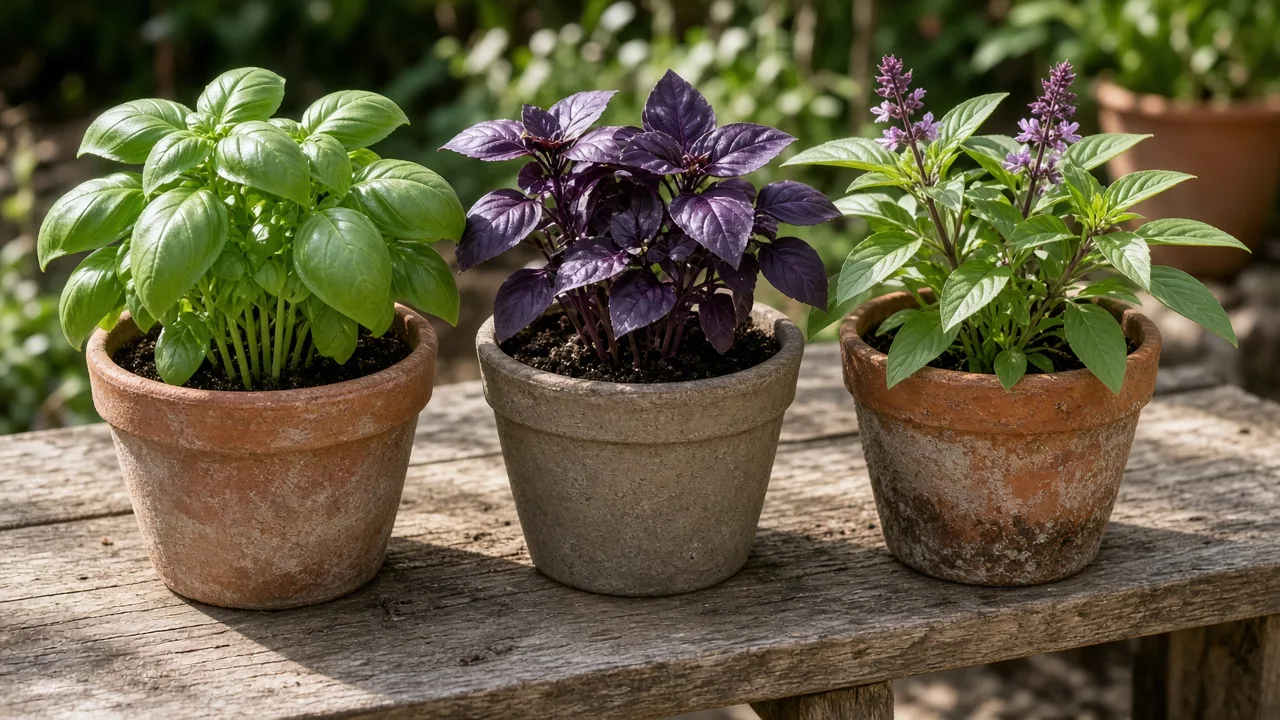
If foliage color is the priority, look at photographs and descriptions for the specific cultivar and ask whether the seed is an F1 hybrid. If flavor is the priority, sample a leaf before harvesting a large batch. For a patio pot, prioritize compact branching and check whether the plant will outgrow the container. A purple variety can be both ornamental and edible; you do not need to choose between a useful herb and a decorative annual.
When to plant purple basil
Purple basil is tender and frost-sensitive. In climates with winter freezes, gardeners usually grow it as an annual, sowing new plants each spring. In frost-free climates it may persist longer, but heat, flowering, and the plant’s natural life cycle still affect productivity. Do not use a universal month or USDA hardiness zone as the sole signal for planting. Follow your local last-frost date, overnight forecast, and soil warmth.
Start indoors before the season warms
To get an early start, sow seeds indoors about four to six weeks before the expected last spring frost. Some extension schedules recommend a wider six-to-eight-week window, particularly where the growing season is short; very early sowing can leave seedlings cramped and leggy while they wait for outdoor weather. If you use a heat mat, follow its instructions and remove it after germination. Basil germinates best in warm conditions, commonly around 70–75°F (21–24°C), and seedlings usually emerge within about a week when seed is fresh and moisture is even.
Sow seeds roughly ¼ inch deep in clean, moistened seed-starting mix. Keep the mix lightly moist, not waterlogged, and give seedlings strong light as soon as they emerge. A sunny windowsill may not provide enough winter brightness; a grow light positioned close to the foliage and used for roughly 12–14 hours a day can help seedlings stay compact. Turn a tray if light comes from one direction, and avoid leaving the cover on after most seeds sprout, since stagnant, wet air encourages seedling problems.
When seedlings have several true leaves, thin crowded cells so air reaches the foliage. Before planting outdoors, harden them off over seven to ten days: start in a protected bright-shade spot for a short period, then gradually extend outdoor exposure and sun. Bring them inside on cold or windy nights. Hardening off reduces shock; it does not make basil cold-hardy.
Direct-sow or transplant after cold passes
For direct sowing, wait until frost danger has passed and the soil has warmed. University of Illinois Extension recommends a soil temperature of at least 60°F (16°C) for basil and notes that cold near 50°F (10°C) can damage plants. Iowa State advises waiting until night temperatures remain above about 50°F. These thresholds are more useful than a date on a general calendar; a cold spell after transplanting can stall growth or blacken leaves even when daytime afternoons feel pleasant. (Illinois Extension: Basil; Iowa State University Extension: Growing Basil in the Home Garden )
Plant seedlings at the same depth they grew in their cells and water them in gently. Follow the spacing on the seed packet; many garden basils need roughly 6–12 inches between plants, while vigorous selections may need more room for airflow. Sow a small second batch two or three weeks later if you want younger plants later in the season. In short-season regions, direct sowing can delay harvest, so transplants are usually the better route.
Choose the right site, soil, and container
Sun supports compact growth and color
Choose a warm site receiving at least six hours of direct sun; six to eight hours is a useful target for strong growth. Purple cultivars generally show their deepest color in good light, but genetics determine whether the plant is purple in the first place. More afternoon sun will not turn a green basil into ‘Dark Opal.’ If a plant is already purple but its new growth looks more reddish or green, compare the newest leaves with the cultivar description and consider whether the spot is shaded. Do not scorch a wilting plant by moving it abruptly from indoors to the hottest full sun; harden it off gradually.
In a very hot climate, morning sun with some protection from intense late-afternoon heat may help a container avoid rapid drying. The goal is bright light and active growth, not to bake the root ball. Avoid placing basil against a hot wall or on dark paving where a pot overheats. A few hours of shade may reduce color intensity or make stems stretch, so use the plant’s growth and the pot’s moisture to adjust rather than following a rigid “full sun at all costs” rule.
Drainage matters more than a rich fertilizer schedule
Basil grows best in fertile, moisture-retentive but well-drained soil. A garden bed that stays soggy after rain is a poor site, even if it is rich in compost. If drainage is slow, improve the bed structure with organic matter or use a raised bed; do not try to solve persistent waterlogging by repeatedly adding fertilizer. A soil pH near 6 to 7.5 suits basil, according to Minnesota Extension, but most home gardeners do not need to adjust pH unless a test shows a real problem. (University of Minnesota Extension: Growing Basil )
Containers are convenient because they can be moved to follow light and brought indoors ahead of cold weather. Select a pot with multiple drainage holes, large enough to hold the plant’s roots and a buffer of potting mix; a tiny decorative pot dries out too quickly. Use a quality container mix rather than dense garden soil, which compacts in a pot. If growing several plants together, leave room between them instead of packing the container for an instant full look. Overcrowding traps humidity around leaves and makes harvest harder.
Set the pot where water can drain freely and empty any saucer after irrigation. A layer of gravel at the bottom does not improve drainage; the hole and an open, airy mix do. Clay pots dry faster than glazed ceramic or plastic, while a large plastic pot may stay wet longer after rain. Choose the material to match how often you can check moisture, then adjust the watering rhythm as weather changes.
Water and feed without weakening flavor
Keep the root zone evenly moist while plants are establishing, then water when the upper inch of soil begins to dry. Check with a finger rather than relying on a fixed schedule: a small pot in sun can dry in a day, while a large bed after rain may need no water for several days. Water deeply enough to moisten the root zone, then allow excess to drain. Frequent shallow splashes encourage roots to stay near the surface and leave foliage wet without solving a dry root ball.
Water at the soil line in the morning when possible. Morning irrigation gives leaves time to dry and helps reduce the long, humid leaf-wetness periods that favor disease. Drip irrigation or a watering can at the base is more reliable than repeated overhead sprinkling. In hot weather, check containers daily, but do not interpret every midday droop as a need for water; a plant can wilt briefly in heat even when the soil is moist. Feel the mix before watering, and check that drainage holes are not blocked.
Purple basil needs nutrients, but more fertilizer is not automatically better. Prepare a garden bed with mature compost if the soil is poor, then watch plant growth. Pale, slow growth in a container may respond to a balanced liquid fertilizer used at the label rate during active growth. Avoid heavy nitrogen feeding, which can produce soft, lush foliage at the expense of the concentrated aroma gardeners want. Iowa State Extension specifically cautions that excessive nitrogen may reduce flavor. Do not fertilize a dry or heat-stressed plant; water first and wait until it resumes growth.
A mulch layer can slow evaporation and keep soil from splashing onto leaves, but keep it a little away from the stems so the crown does not stay wet. In a container, refresh mix or repot when roots circle densely or water runs straight through without wetting the root ball. Good drainage, regular checks, and restrained feeding usually matter more than a complex fertilizer program.
Pinch, prune, and manage flowers
Pinching redirects growth from one tall stem into side branches. Wait until a young plant is established and has several sets of true leaves. Then use clean fingers or snips to remove the growing tip just above a pair of leaves. The two buds at that node can grow into branches, and later pinches repeat the process to build a fuller plant. Avoid cutting below all leafy growth; basil needs leaves to keep photosynthesizing and recover.
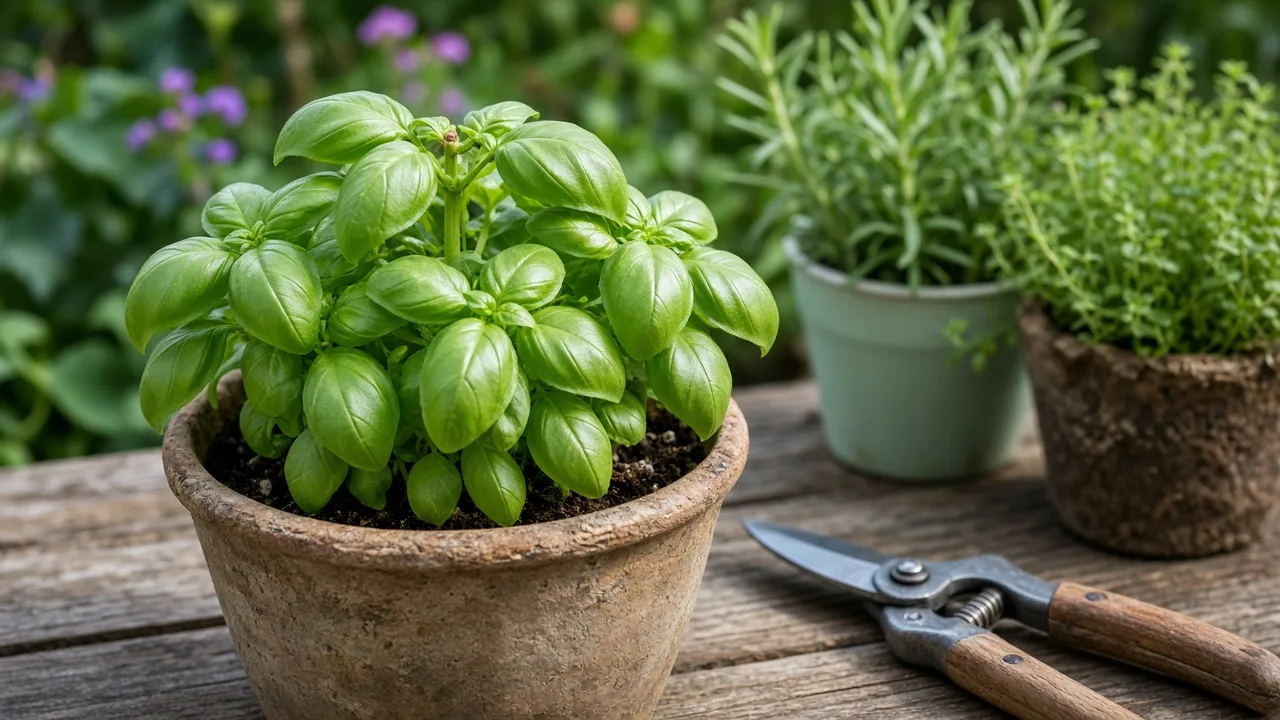
Make the cut above a node rather than halfway down a bare stem. If you remove only the topmost leaf pair, the plant may grow a single replacement tip. Cutting above a well-developed pair gives side shoots room to form. As the plant matures, prune long stems selectively and harvest those tips for the kitchen. Do not remove so much at once that the plant is left with only a few leaves; regular light cuts are easier to recover from than a severe late-season haircut.
Basil produces flower spikes as it matures or encounters stress. If your goal is repeated leaf harvest, pinch buds when they first appear. Removing flowers can delay the decline in leaf production, but it will not stop the plant’s life cycle indefinitely. If you want to attract pollinators or collect seed, let a few flower spikes remain on a healthy plant and harvest the rest. Flowers are edible, too, although their flavor and texture differ from young leaves.
Harvest and store leaves for the best flavor
Begin harvesting when the plant is established, has multiple branches, and stands roughly 6–8 inches tall. Take the upper few inches of a stem and cut just above a leaf pair. That leaves nodes below the cut to branch and keeps the plant producing. Harvest whole tips rather than stripping individual leaves from the lower stem. A young plant needs its foliage to build roots and branches, so take only a small amount at first and increase harvest as it fills out.
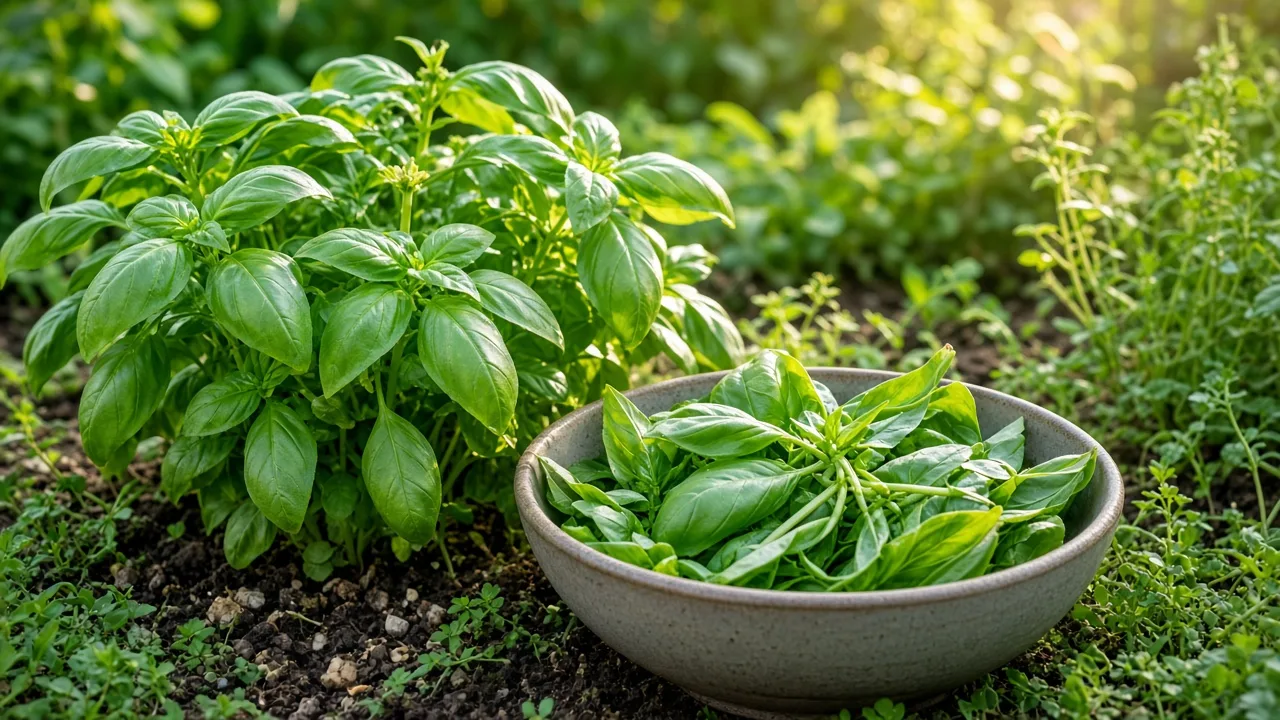
During peak growth, inspect plants often and pinch or harvest the tips before flower spikes open. Frequent cutting encourages branching and gives you tender new leaves. A purple cultivar’s stems and leaves can stain or bruise; use clean scissors and handle them gently. If you need a large harvest, cut a few stems from different parts of the plant rather than cutting every branch to the same low point.
Use leaves soon after cutting for the strongest aroma. To hold a small harvest for a day or two, trim the stem ends and stand them in a glass of water at room temperature, away from direct sun. Avoid treating basil like a hardy salad green in a very cold refrigerator; chilling can blacken leaves. For longer storage, freeze whole leaves or chopped basil in small portions. Freezing preserves useful flavor but softens texture, so frozen leaves are better for sauces, soups, and cooked dishes than for a fresh garnish.
Purple basil is especially suited to a quick vinegar infusion because its water-soluble pigment can color the vinegar pink to burgundy. Use a tested herb-vinegar method, clean equipment, and an appropriate food-safe vinegar ratio rather than improvising a long room-temperature oil infusion. Extension recipes from the University of Georgia and Purdue describe herb-vinegar methods and the color purple basil can impart. The final shade varies by leaf and vinegar. (University of Georgia Extension: Herb Vinegars; Purdue Extension: Growing Herbs )
Propagate plants and save seed
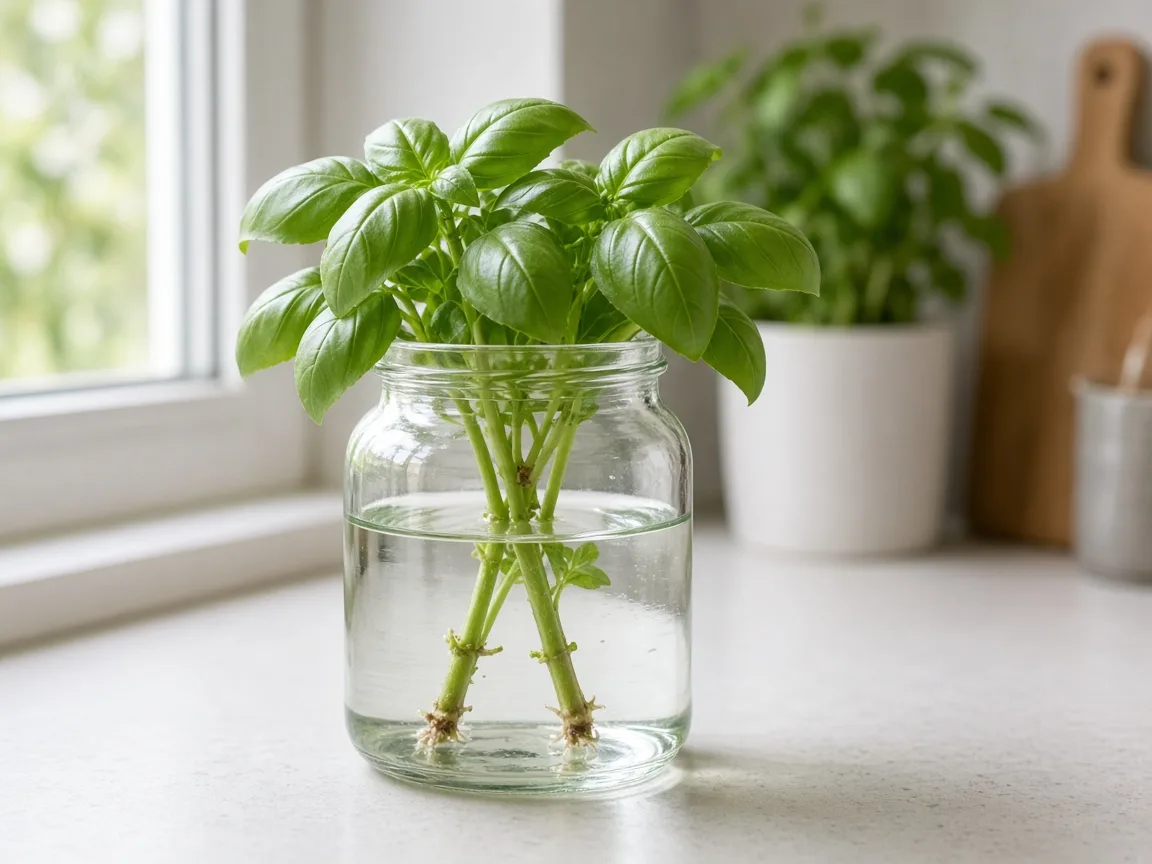
Stem cuttings are a simple way to carry a favorite cultivar forward. Snip a healthy 4–6-inch nonflowering tip just below a leaf node, remove leaves from the lower portion, and place the bare nodes in clean water or a moist propagation medium. Keep the cutting warm in bright, indirect light. Change the water regularly if rooting in a jar. Once roots are several inches long and branching, pot the cutting into a draining mix and keep it evenly moist while it adjusts. The Royal Horticultural Society includes stem cuttings among the propagation options for basil and other herbs. A cutting is a clone, so it preserves the parent plant’s leaf color and growth habit more reliably than seed from an unknown cross. (RHS: Propagating Herbs )
Seed saving takes more care. Let flower spikes mature until seed heads dry, then collect the small dark seeds before they scatter. Save seed only from a healthy, accurately identified open-pollinated variety. An F1 hybrid such as Prospera Red will not reliably produce seedlings identical to the parent. Basil flowers can cross-pollinate with other basil varieties; Clemson Extension recommends substantial isolation for maintaining varietal purity, a distance impractical for many home gardens. If you want the same color and habit next season, take cuttings or buy fresh seed from a reliable source. Do not save seed from plants affected by serious disease. (Clemson Cooperative Extension: Basil )
Keep basil growing indoors or through winter
A potted purple basil can move indoors before a cold night, but it needs a sunny window or supplemental grow light to stay compact. Wash or inspect the foliage before bringing the plant in, check leaf undersides for aphids, and ease it through the change in light. Indoors, a south-facing window may work where it receives several hours of direct sun; in a dim season, use a grow light for about 10–12 hours daily and keep it close enough to illuminate the canopy without heating it.
Indoor basil often grows more slowly and may produce smaller, less aromatic leaves than an outdoor plant. Rotate the pot periodically, give it room around the foliage, and water only when the surface begins to dry. Lower winter light plus wet mix invites weak growth and root trouble. Pinch flowers and leggy tips, but remember that basil is not a permanent houseplant. In regions with frost, it is typically grown as an annual; an indoor plant may keep producing for a while but will eventually flower and decline. Starting new seed or rooting a cutting each season is often more dependable than trying to keep one mature plant indefinitely. (Minnesota Extension: Growing Basil )
Diagnose common purple basil problems
Purple basil shares most problems with green sweet basil. A stressed plant can lose vigor, yellow, wilt, or develop leaf spots. Start diagnosis by checking both leaf surfaces, the growing conditions, and the pot’s drainage instead of treating color change as a disease by itself.
Distinguish natural color from stress and disease
Normal purple pigmentation is usually distributed across leaves in a pattern characteristic of the cultivar. A cultivar may show green patches, lighter new growth, or color variation as leaves mature. If an established purple plant’s newest leaves are unexpectedly green, first confirm its identity and compare the light exposure. Low light can contribute to weaker, greener growth in some cultivars, but color alone does not diagnose a nutrient deficiency. Do not add fertilizer or move it into harsh midday sun until you check the growing conditions and the leaf surfaces.
Basil downy mildew is more specific: look for yellow areas on the upper leaf surface, often bounded by veins, and gray-purple fuzzy growth on the underside. It often starts on lower leaves and spreads upward during warm, humid weather. The organism is an oomycete, not a true fungus, and purple basil is not automatically resistant. Minnesota Extension describes red-leaf types as moderately susceptible, while certain bred cultivars have stronger resistance. Resistance varies by named variety and is not immunity. (Minnesota Extension: Basil Downy Mildew; Rutgers: Four New Downy Mildew-Resistant Basil Varieties )
If downy mildew is likely, remove and discard affected plants promptly; do not save seed from them. Avoid handling wet foliage, water at the base, and leave space for air movement. Inspect new transplants before bringing them home because the disease can travel on infected plants. Home remedies and ordinary fungicides may not control an oomycete disease effectively; choose resistant cultivars where the disease is a recurring local problem and follow your local extension’s advice. Rutgers research also notes that pathogen populations continue to evolve, so even a resistant label should not replace monitoring.
Other clues point elsewhere. Aphids gather on tender tips and leaf undersides, where they leave sticky honeydew; a strong stream of water can dislodge small populations. Japanese beetles chew leaves between veins, while slugs may leave ragged holes. Yellowing throughout the plant can follow cold exposure, soggy soil, or a root-bound container. Brown leaf edges often point to inconsistent watering or heat stress. Match the symptom to the conditions before changing several things at once, and remove badly damaged leaves with clean tools.
Conclusion
Grow purple basil as a warm-season sweet basil and let the local weather—not a fixed date—tell you when it is safe to plant outside. Choose a cultivar for its mature size and intended use, provide at least six hours of sun and draining soil, keep moisture steady, and pinch above leaf nodes to create branches. Harvest lightly while plants establish, then take regular stem tips before flowers open if leaves are your priority.
Color is cultivar-driven, so sunlight improves growing conditions but cannot turn a green variety purple. Keep that distinction in mind when troubleshooting, and inspect both sides of leaves for downy mildew rather than diagnosing by color alone. With a few deliberate checks, purple basil can serve as a productive kitchen herb and a vivid container or garden accent through the warm season.