String of Dolphins Care for Full, Healthy Vines at Home
Learn string of dolphins care: set the right light, water by soil dryness, choose a draining mix, propagate cuttings, and diagnose shriveled or soft leaves.
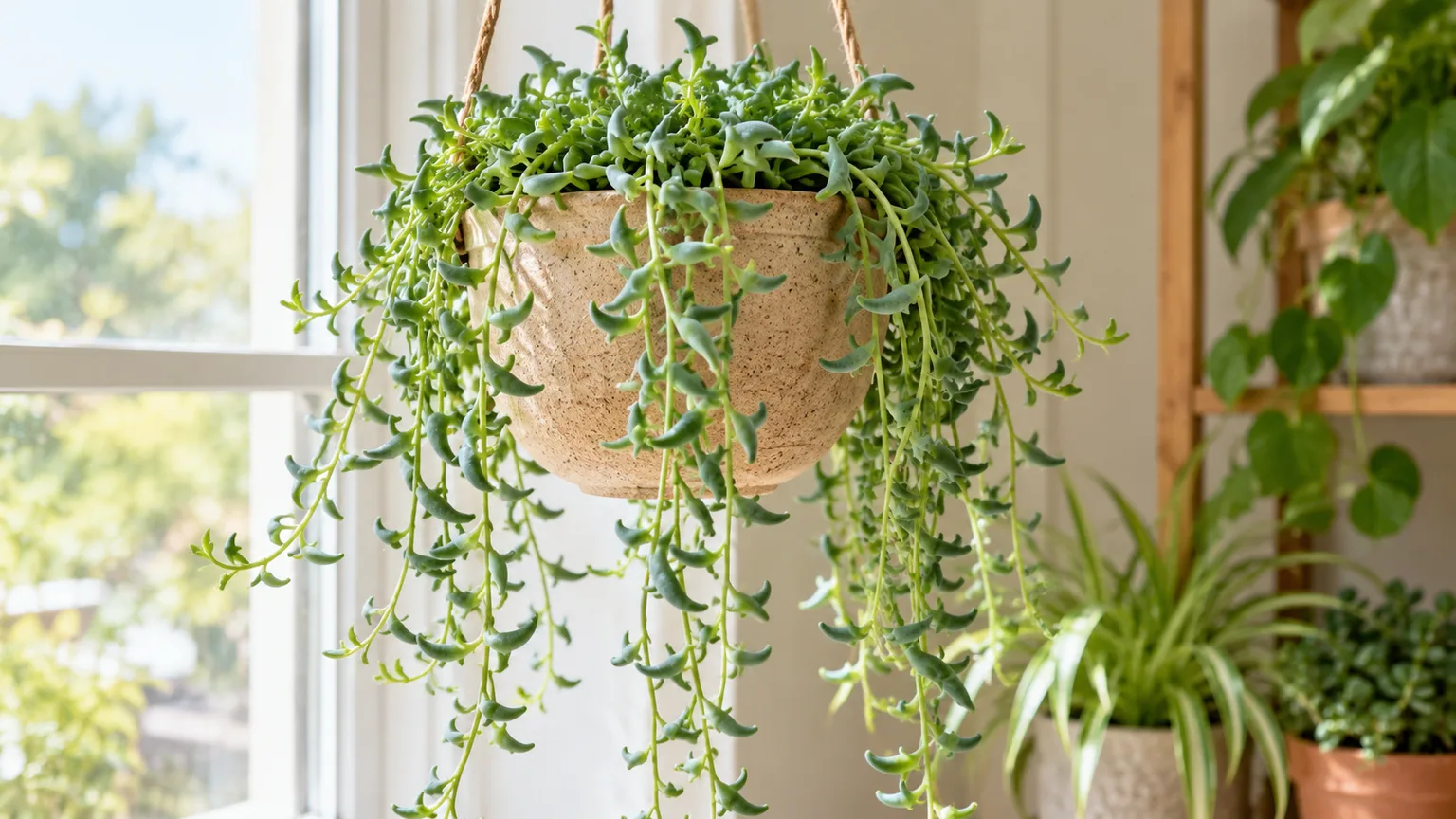
String of dolphins is a trailing succulent prized for fleshy leaves that curve like tiny leaping dolphins. Its care is straightforward once you balance two needs that can seem to conflict: bright light helps the plant keep compact, well-shaped growth, while dry-down between waterings protects its roots from rot. A pot that drains freely, a warm bright position, and a quick check of the mix before each watering will take you farther than a strict weekly schedule.
The quick care pattern: bright light, dry roots, complete drainage
| Need | Practical starting point | Adjust when |
|---|---|---|
| Light | Bright light by an east- or west-facing window; some gentle direct sun can work | Move gradually if new growth stretches or leaves scorch |
| Water | Wait until the growing mix is dry through, then water thoroughly | Check more often in warm bright weather and less often in winter |
| Soil | Airy succulent mix with added pumice or perlite if the mix stays damp | Improve drainage before increasing watering |
| Pot | Drainage hole, snug fit, and a saucer you can empty | Repot one size up when roots crowd the pot or mix breaks down |
| Temperature | Warm, frost-free room conditions | Bring an outdoor plant in before cool nights |
Think of those as a starting point rather than a care calendar. The same plant can dry in a few days in a small terracotta pot near a warm, bright window, or stay damp much longer in a large plastic pot in a dim room. Light and potting conditions change how quickly the mix dries, so test the plant you have.
Identify the plant—and make sense of its names
The plant sold as String of Dolphins, dolphin plant, flying dolphins, or dolphin necklace is a small-leaved, trailing succulent. Its fleshy, notched leaves resemble dolphins in profile, and mature stems can cascade from a shelf or hanging pot. It is related to the better-known String of Pearls, but their leaf shapes and growth habits are not interchangeable.
You may see Senecio peregrinus or Curio × peregrinus on a nursery label. Botanical names have shifted as this hybrid’s classification has been studied. Kew’s Plants of the World Online accepts × Bacurio delphinatifolius, with the hybrid formula Baculellum articulatum × Curio rowleyanus. Retailers and older references still commonly use the Senecio or Curio names, so the names can point to the same familiar “dolphin” plant. Keep the label with the pot if you need to check plant-specific safety information.
The RHS lists String of Dolphins among the related “string of beads” succulents, while Mountain Crest Gardens gives advice specifically for String of Dolphins. You may notice those sources phrase light requirements differently. The practical answer is to give the plant a bright position, introduce direct sun gradually, and watch the new growth rather than assuming that every south-facing window or outdoor exposure is safe.
Give it bright light without scorching the leaves
Indoors, start near a bright east- or west-facing window, where the plant can receive strong daylight and perhaps gentle morning or late-day sun. A bright south-facing window can work in some homes, especially in winter or behind a sheer curtain, but the same window can deliver harsh midday heat in summer. Window direction is only a proxy: latitude, season, glazing, nearby trees, and the distance between the plant and glass all change the intensity.
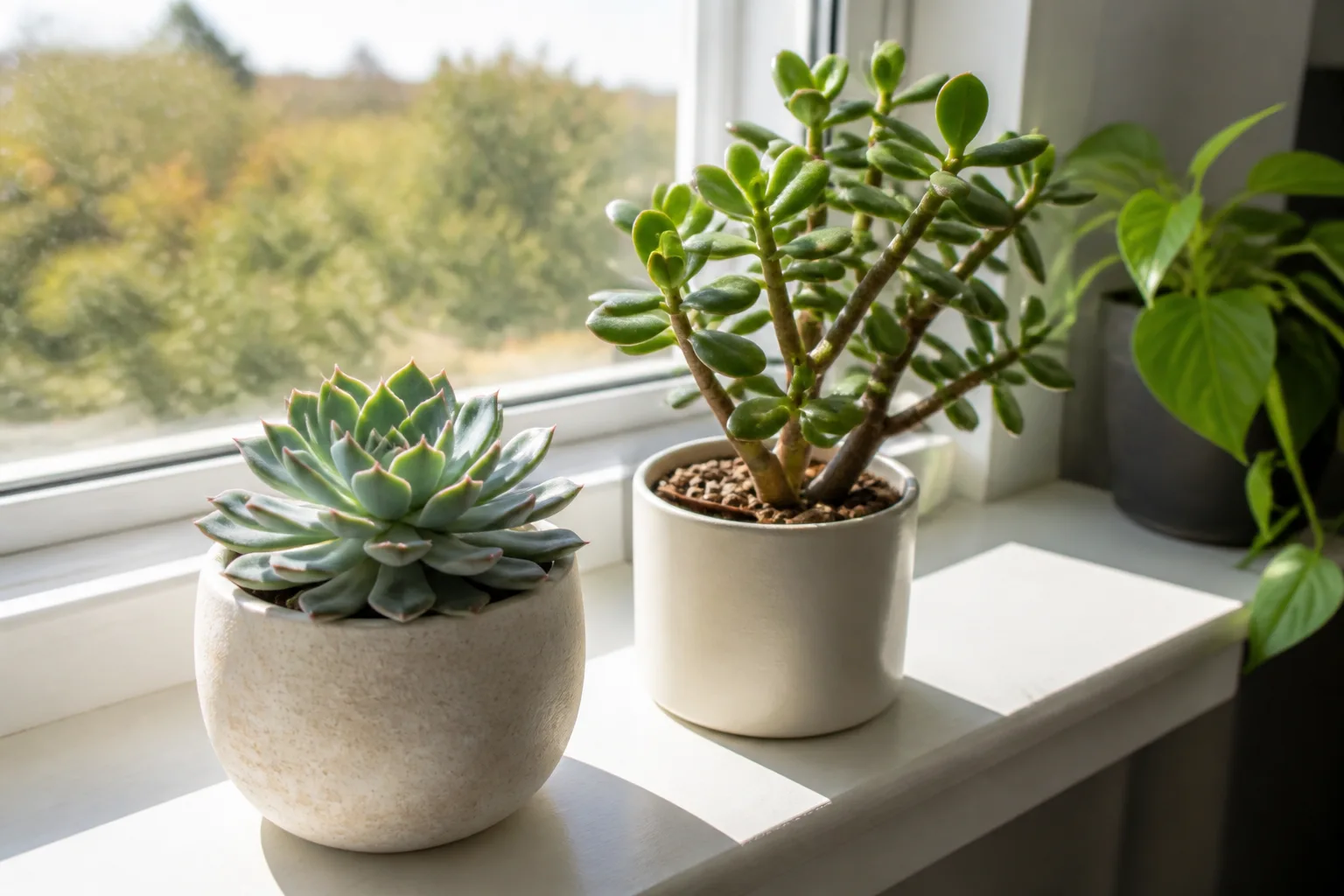
This general succulent-care scene illustrates a bright window position; use the plant’s response to fine-tune exposure.
Bright light supports close spacing between leaves and stronger stems. When the plant sits too far from a window, new growth may become thinner, longer, and more widely spaced; the “dolphins” may also look less distinct. RHS guidance for this group warns that too little light can produce weak, straggly stems and smaller leaves. Rotate the pot a quarter turn every week or two if growth leans toward one side, but turning cannot compensate for a location that is too dim.
Acclimate before increasing direct sun
Direct sun should be an acclimated option, not a sudden cure for stretched growth. The leaf tissue that developed in shade can scorch when moved straight to hot sun. Begin with an hour or two of gentle morning light, then add exposure over a week or two while checking for bleached patches, reddish stress color, or crisp brown areas. If the leaves pale or dry on the window-facing side, pull the pot back a little or soften the light with a curtain. If new stems keep stretching after a few weeks, move it closer to the brightest window or use a plant light according to the fixture’s distance and timing instructions.
Outside, a sheltered bright-shade spot or gentle morning sun is a safer starting point than an exposed afternoon position. The nursery trade’s advice may favor more sun than RHS houseplant guidance because an outdoor plant is acclimated and receives a different light profile. In either setting, adjust gradually and protect the plant from hot reflected light, heavy rain, and freezing weather.
Water by the pot’s dry-down, not by the calendar
String of Dolphins stores some moisture in its fleshy leaves, so it can tolerate a dry spell better than constantly wet roots. At the same time, a densely rooted pot can dry faster than expected under bright light, and the thin trailing stems may show stress before larger succulents do. The useful rule is not “water every Sunday” or “wait until the leaves wrinkle”; it is check the mix, then water only when it has dried through.
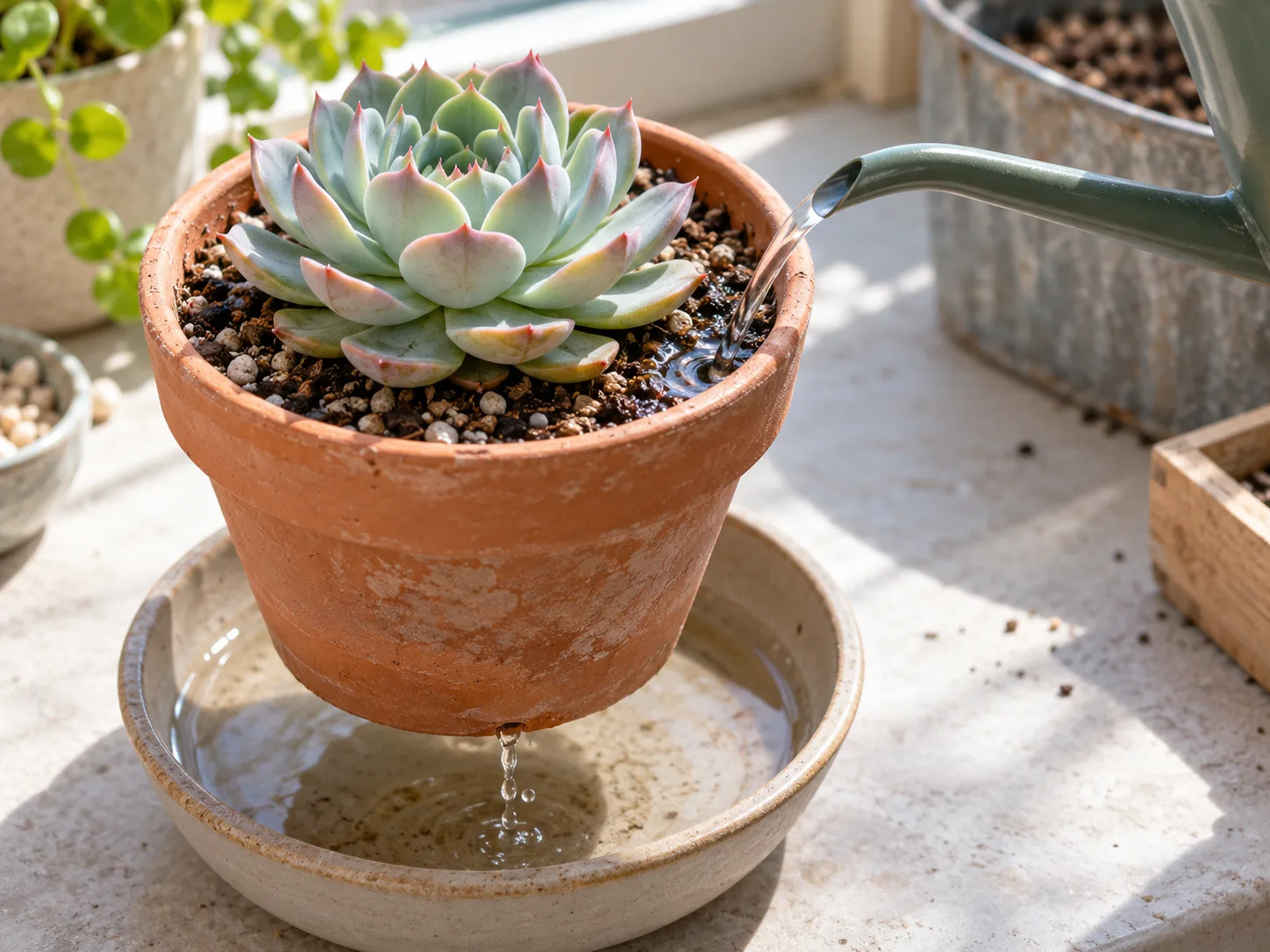
A general succulent watering example: wet the root ball evenly, then let excess water drain away.
How long that takes depends on conditions. A small, porous clay pot in warm bright light may dry quickly. A large pot in cool, low light may remain wet for weeks. In winter, shorter days and slower growth often mean the plant uses less water. The University of Wisconsin–Madison Extension describes the same full-dry-down approach for the related String of Pearls; treat that as related-species context, not a precise timetable for every Dolphin plant.
Check below the surface, then soak and drain
Check the top layer with a finger or a wooden skewer. Push a skewer several inches into the mix, leave it briefly, then pull it out: damp particles or a cool, darkened skewer mean there is still moisture deeper down. A moisture meter can be helpful if you learn how it behaves in your specific mix, but readings vary with the probe and substrate. When you are unsure, wait a day or two and check again rather than watering by habit.
When the mix is dry through, water slowly over the entire surface until water exits the drainage hole. That wets roots across the pot instead of encouraging roots to cluster near one splash point. Let the pot finish draining, empty the saucer or decorative cachepot, and do not leave the base sitting in runoff. If the mix has become so dry that water races down the sides without soaking it, apply a small first pass, wait a few minutes, then water again.
Avoid frequent little sips that keep only the top damp while the bottom stays wet. Do not mist the leaves as a substitute for watering; it does not rehydrate the root zone and can leave water trapped around crowded foliage. If the plant looks wrinkled but the mix is wet, do not add more water: inspect the roots and stems for signs of rot first.
Choose a gritty mix and a pot that can dry
The goal is not a magic ingredient ratio. It is a mix that takes up water when you irrigate, then lets extra water drain and air return to the root zone. A commercial cactus-and-succulent medium is a convenient base. If it feels dense, stays cool and damp for many days, or packs into a hard block, blend in a coarse mineral component such as pumice or perlite. A simple starting blend is roughly two parts potting medium to one part pumice or perlite; adjust it to your room and container rather than treating the ratio as a prescription.
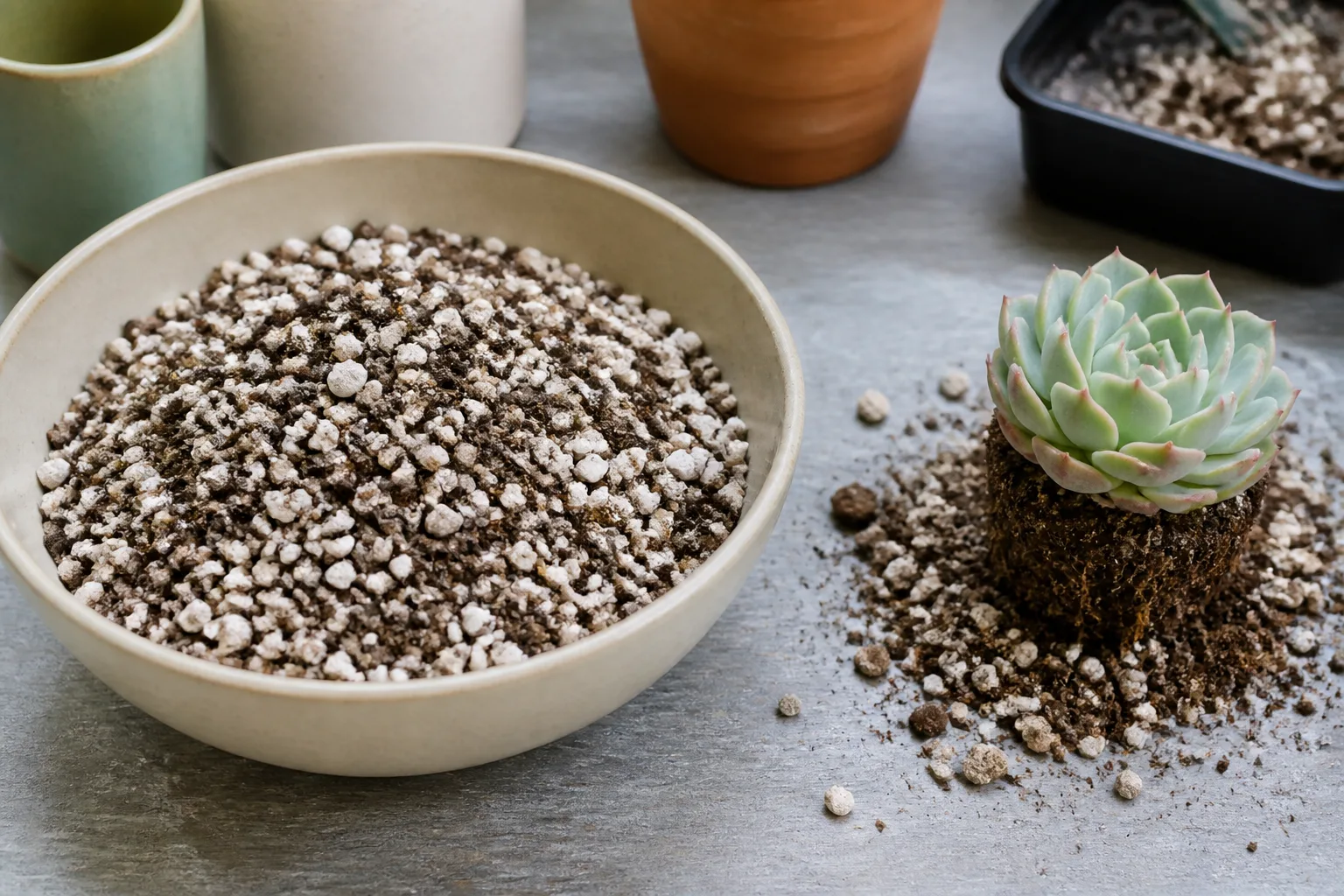
This is a general gritty-mix example, not a species-specific potting demonstration.
Do not add fine beach sand to “improve” drainage. Fine particles can fill air spaces and make a mix denser. If you use sand, choose a coarse horticultural grade and use it sparingly. The right feel is loose but supportive: it should hold the plant upright while leaving visible mineral particles and not forming a sticky, waterlogged mass.
Drainage and pot size matter more than a recipe
Choose a container with at least one unobstructed drainage hole. Decorative cachepots without holes are fine as an outer cover only if you lift out the nursery pot to water and drain it. Terracotta can help the mix dry faster through its sides; plastic retains moisture longer. Neither material is automatically best. If you move from clay to plastic, check the soil more often at first; if you use clay in a dry, warm room, it may need more frequent checks.
Avoid a pot much wider than the existing root ball. Unrooted mix around the plant can stay wet after the small root system has taken up what it needs. A shallow pot is often easier to manage for a trailing plant with a modest root mass, but depth should still allow the roots to sit comfortably without bending sharply. UW–Madison Extension recommends a shallow, fast-draining container for String of Pearls; for String of Dolphins, use that as a sensible related-succulent starting point and let the roots determine the final fit.
Keep temperature and humidity steady
An ordinary comfortable room suits this succulent. Aim for a warm, frost-free spot with air moving gently around the stems, and keep it away from icy drafts, cold window glass, radiator blasts, and hot air vents. Specialist grower guidance places String of Dolphins in a moderate temperature range and describes it as a soft succulent rather than a frost-hardy outdoor plant. The RHS group guidance similarly cautions against temperatures below about 50°F (10°C), so do not rely on the occasional report that a related plant survived a brief chill.
If you set the pot outside for summer, wait until nights are reliably mild and bring it inside before cold weather. A balcony, patio, or porch can deliver excellent air movement and light, but it can also expose the plant to downpours, sun reflected off glass or concrete, and a sudden temperature drop. Place it where rain cannot keep the pot saturated, and check the forecast instead of assuming that a succulent can tolerate whatever the garden does.
Normal household humidity is usually adequate. You do not need to mist, group it in a humid cabinet, or use a pebble tray. Low humidity and good airflow help the mix dry between waterings; persistently humid air combined with wet soil is a more useful warning than a room that simply feels dry. If a heater dries your room, adjust watering only after checking the soil, not by spraying the leaves.
Feed lightly and treat flowers as a bonus
Fertilizer is optional when the plant is growing in fresh, reasonably fertile succulent mix. If it has been in the same potting medium for a long time and is actively growing in spring or summer, a conservative feed can help replace nutrients. RHS advice for the broader string-of-beads group suggests a diluted liquid feed during its growing season; follow the label for a liquid houseplant or succulent fertilizer and err on the weaker end. Do not feed dry roots, a recently repotted plant, or a plant that is cold, dormant, or already declining.
Extra fertilizer cannot compensate for poor light or wet roots. If growth is slow, check the season, exposure, root health, and drainage before feeding.
Healthy mature plants may produce small, clustered flowers, often in spring or summer. Growers describe String of Dolphins blooms as pale, fluffy heads and sometimes note a sweet or cinnamon-like scent, but bloom timing and fragrance vary. Flowers are a bonus rather than a reliable measure of success; do not force a plant into drought or keep it root-bound just to make it flower. Continue the same sensible light and dry-down routine, and remove a spent flower stalk with clean scissors if it becomes untidy.
Prune and arrange stems for a fuller pot
Long trailing stems are part of the plant’s appeal. If the base looks sparse, however, pruning can redirect the display and provide cuttings for the pot. Use clean, sharp scissors to shorten a few healthy stems during active growth. Cut just above a node or leaf joint, where growth can branch, and leave enough foliage on the parent plant to keep it growing. Avoid removing most of the plant at once, especially if it is already weak or struggling with root problems.
Before cutting, decide whether the vine is actually too long or merely leaning toward light. If new leaves are small and stems are widely spaced, improve light gradually first; pruning the stretched section without correcting its cause just produces another stretched vine. If a long, healthy stem is bare near the pot but leafy toward its tip, you can coil part of it across the soil surface and pin several nodes in place. Once those nodes root, the parent pot may fill in without sacrificing the entire vine.
Wipe the scissors before and after use. Because the milky sap of related Curio plants can irritate skin, avoid touching your face and wash hands after trimming. Set cut material out of reach of pets and children, then choose healthy tip sections for propagation rather than composting everything.
Propagate from a healthy stem
String of Dolphins is usually propagated from stem cuttings or by layering a still-attached stem. A single detached leaf is not the dependable route: the stem node is the part that can establish roots and new shoot growth. Spring and summer, when the plant is actively growing and temperatures are warm, are convenient times to try. Use several short cuttings if you want a fuller new pot; one cutting makes a slower, less bushy start.
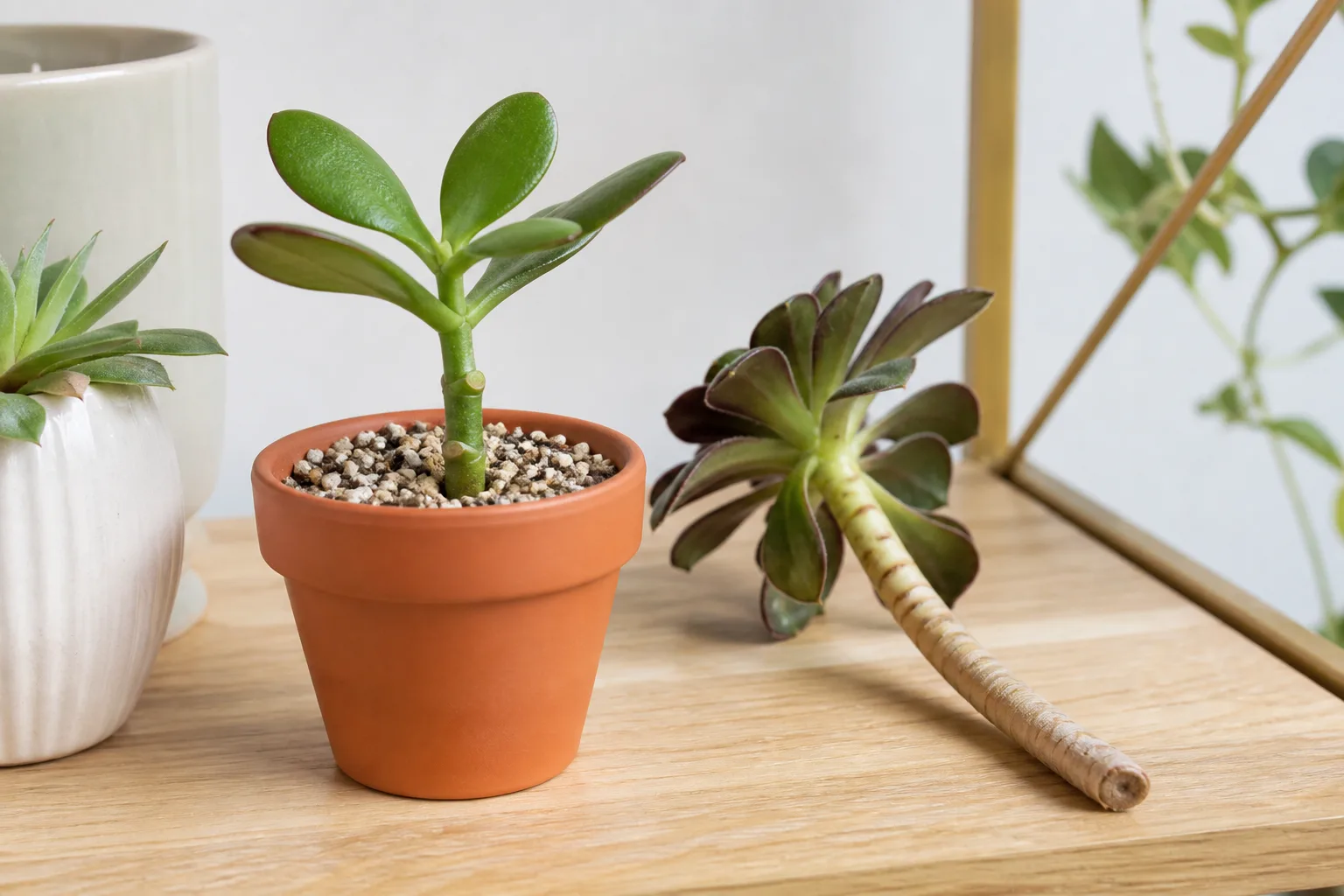
This photo shows a general succulent cutting setup; the steps below describe the String of Dolphins stem and node.
Choose a firm, healthy length with several nodes and make a clean cut. Remove the lowest one or two leaves so a bare section of stem and its nodes can contact the rooting medium. Let a fresh cut surface dry briefly if it is wet, but do not leave a thin cutting out for days until it is shriveled. Lay it on top of a lightly damp, gritty mix and gently pin the exposed nodes against the surface, or tuck one or two nodes just under the mix while leaves remain above it. Keep the container in bright indirect light and warm conditions.
Compare soil rooting, water rooting, and layering
Soil rooting keeps the eventual roots in the medium where the plant will grow, so you avoid a water-to-soil transition. Keep the rooting mix lightly moist, not saturated; a small pot and careful watering make that balance easier than soaking a large planter. Check for resistance with a gentle tug after a few weeks rather than digging up the cutting to look every day. New growth is a better sign of establishment than a cutting that simply remains green.
Water rooting lets you see roots develop. Suspend the bare nodes in a clean glass of water while keeping the leaves above the waterline. Replace the water if it becomes cloudy, and pot the cutting into a draining succulent mix once it has a small set of roots. Water-grown roots are adapted to water and may need a careful transition; keep the mix slightly more attentive at first, then return to a full dry-down before watering again. The water method is convenient, not automatically faster or safer.
Layering is the lowest-disturbance option. Place a node from a still-attached vine against the mix, pin it lightly, and leave the parent connection intact while roots form. Once the node is anchored and new growth appears, cut the stem between the rooted section and the parent. This method is useful for filling a bare pot because the vine is already receiving water and energy from its original roots while it establishes.
Keep new cuttings out of strong direct sun and do not seal them in a humid plastic bag. Warmth, light, clean tools, stem-node contact, and controlled moisture matter more than rooting powder. If a cutting turns translucent or black at the buried section, remove the damaged portion, let the remaining healthy stem dry briefly, and restart in cleaner, drier mix.
Repot only when the plant or mix needs it
Repot when roots fill the container, water runs through without wetting the mix, the growing medium has collapsed or become salty, or the plant repeatedly dries too fast for your routine. A plant that hangs past the rim is not automatically root-bound; trailing length is a normal growth habit. Slide the root ball out gently and inspect it rather than sizing up just because the vines are long.
Choose a clean pot only a little wider than the root mass, refresh the mix, and keep the trailing stems supported while you settle the plant. If you find soft, dark, or foul-smelling roots, trim those away with clean scissors and repot the healthy portion into fresh, dry, airy medium. Let damaged roots and cut surfaces dry before resuming normal watering. For a healthy root ball, use a mix that is barely damp or dry and wait to water until the plant has settled and the medium approaches its next dry-down; there is no benefit to leaving water pooled around disturbed roots.
Diagnose the common problems before changing care
One symptom can have two opposite causes. A shriveling leaf may signal a dry root ball—or a wet mix that has damaged roots and stopped them taking up water. Before you change the schedule, note whether the soil is wet or dry, whether the affected growth is old or new, and whether the problem is concentrated on the sunny side of the pot. Those clues will narrow the cause much faster than adding fertilizer or watering “just in case.”
Shriveling, yellowing, soft stems, and sparse growth
Shriveled leaves with dry mix: Water thoroughly and let the pot drain. If water beads off or runs down a gap at the edge, moisten the root ball in two passes. Then confirm the pot is not so root-bound that nearly no mix remains. Check again after the plant has had time to take up water; old damaged leaves may not plump back up.
Shriveling while the soil is damp: Stop watering and inspect the stems and roots. Roots that are brown, mushy, or foul-smelling point toward rot, often encouraged by a dense mix, blocked drainage hole, or oversized pot. Remove the rotten parts, save firm healthy tips as cuttings, and restart them in a fresh, free-draining mix. A plant with rot does not need “more humidity” or another deep drink.
Pale, crispy patches on the window side: Suspect sun stress if the plant was recently moved into stronger direct light. Move it a short distance back, keep the new position bright, and reintroduce direct sun more slowly later. Brown damage will not turn green again, so judge the adjustment by new growth.
Yellow or translucent leaves and a soft stem: Check for wet soil, cold exposure, or both. A few old leaves can age out, but spreading yellowing combined with a soft base is a warning to inspect roots and drainage. Remove fallen leaves from the soil surface and do not leave the pot in standing water.
Long, thin stems or poorly defined “dolphins”: Increase useful light gradually. The most recent leaves tell you whether the new location is better. Young shoots, stressed growth, and trade-name differences can also affect the exact dolphin shape, so do not judge the whole plant by a single misshapen leaf. Avoid trying to correct a light problem with extra fertilizer.
Sticky residue, cottony clusters, or fine webbing: Isolate the plant and inspect leaf joints, stem undersides, and the pot rim. Aphids, mealybugs, scale, and spider mites can feed on houseplants. The Missouri Botanical Garden’s succulent pest guide recommends close inspection and physical removal or washing for several pests. On a delicate vine, test any soap or alcohol treatment on one small area first, follow the product label, and repeat inspections because hidden insects or eggs can remain. Keep treated plants away from pets until products are dry and safe according to their label.
Protect children and pets; handle sap carefully
Keep String of Dolphins where a child or animal cannot pull down, chew, or play with its trailing stems. The RHS includes String of Dolphins in its related “string of beads” guidance and warns that these plants are toxic and their sap can irritate skin. The ASPCA also warns that common names can overlap and that succulent toxicity varies by species; its page discusses String of Pearls, a relative, rather than making a species-specific entry for String of Dolphins. Because shop labels may use different names and a curious pet may chew an unidentified plant, the cautious choice is to prevent access rather than assume the plant is safe.
Wear gloves if you are sensitive to plant sap, and avoid rubbing your eyes while pruning or repotting. Wash exposed skin with soap and water after handling. If a pet chews the plant, remove any plant material from its mouth if you can do so safely, keep the label or a clear photo for identification, and contact your veterinarian or animal poison service for individualized advice. The ASPCA recommends contacting a veterinarian or its Animal Poison Control Center when a pet may have ingested a potentially toxic plant. For a child who has chewed the plant or developed irritation, contact a local poison center or medical professional rather than trying a home remedy.
Conclusion
The most reliable String of Dolphins routine is simple but responsive: give it bright light, let its mix dry through, water the root ball fully, and make sure every drop can drain away. Protect it from frost and hot, abrupt sun; use pruning and node-rooted cuttings to encourage a fuller pot; and diagnose shriveling by checking the soil before reaching for the watering can. With the right placement and a potting setup that dries at a reasonable pace, this unusual trailing succulent can keep producing healthy, dolphin-shaped growth without a rigid care calendar.



