How to Grow and Care for String of Rubies Year-Round
Learn how to grow String of Rubies with the right light, watering, soil, and propagation steps—and tell healthy ruby color from warning signs all year.
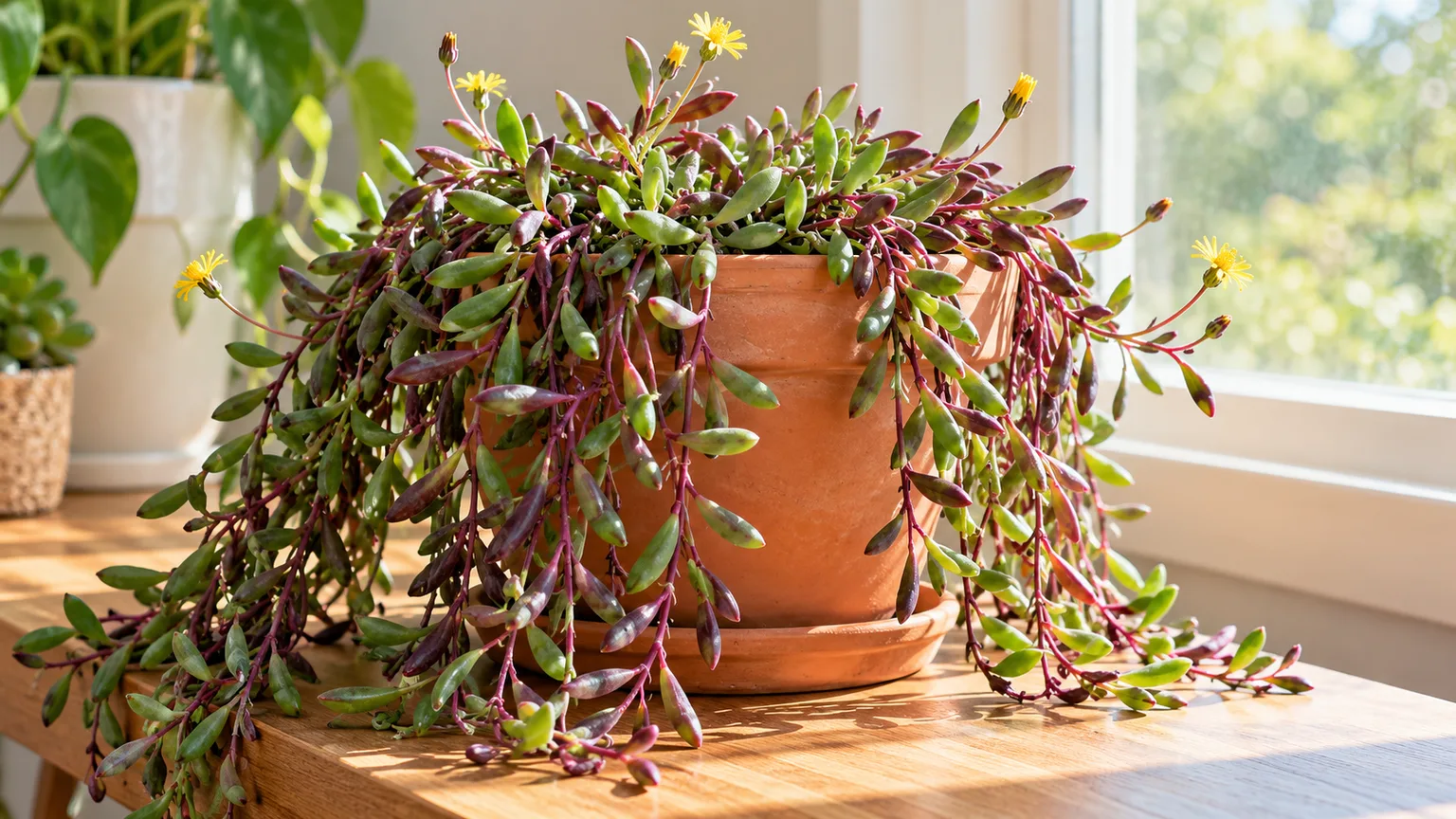
String of Rubies is a trailing succulent that can look green, burgundy, or nearly ruby red depending partly on how much light it receives. Give it strong light, a potting mix that drains freely, and a thorough drink only after the root zone dries; a fixed watering schedule is less useful than checking the plant and its soil. Those basics help you encourage compact growth while avoiding the rot, scorch, and cold damage that are harder to reverse.
The plant is commonly sold as Othonna capensis, but Kew’s Plants of the World Online accepts Crassothonna capensis and lists Othonna capensis as a synonym. Its other familiar names include Ruby Necklace and String of Pickles. The Royal Horticultural Society’s species profile describes it as a quick-growing, trailing succulent with cylindrical leaves and yellow, daisy-like flowers. In a hanging pot, those stems can drape well beyond the rim; in lower light, they tend to stay greener and stretch toward the brightest window.
Get to Know String of Rubies
This South African succulent belongs to the daisy family, Asteraceae. Its fleshy, narrow leaves sit along reddish stems, and the whole plant often grows outward before cascading. A mature plant is usually appreciated for the long stems rather than for a tall upright shape. Small yellow flowers can appear when conditions suit it; the blossoms open in good light and may close when the light fades.
You may see two botanical names on labels. Othonna capensis remains common in nurseries and care articles, while Kew currently treats Crassothonna capensis as the accepted name. Those names refer to the same plant, not to a different cultivar. “String of Rubies” is a common name, not a guarantee that every plant will stay red in every room. Epic Gardening’s overview also describes its colorful trailing stems and yellow flowers.
The useful care distinction is that red coloration can be a normal response to brighter light, while other kinds of stress can damage the plant. A firm leaf with a red or purple cast is not the same as a limp, translucent, or mushy leaf. Learn the plant’s baseline after it settles in, then judge changes alongside the light, soil moisture, temperature, and stem condition.
Give It Bright Light, Then Acclimate Gradually
String of Rubies needs a bright position to keep stems compact and encourage the ruby tones many growers want. Indoors, a sunny east-, south-, or west-facing window can work, depending on climate and how much direct sun reaches the glass. The RHS lists full sun to partial shade and says direct light brings out red coloring, while lower light can leave the plant greener and leggy. A bright window is a starting point, not a guarantee: a shaded porch, tinted glass, or a distant windowsill may deliver much less usable light than it appears to.
If the plant has been grown under shade cloth or fluorescent nursery lights, do not move it straight into hours of harsh afternoon sun. Increase exposure over one to two weeks: begin in bright indirect light, then add a short period of gentler morning sun, extending it gradually if the leaves stay firm and unmarked. Sudden exposure can scorch succulent leaves, a risk University of Minnesota Extension notes when houseplants are moved outdoors. In very hot climates, protect it from intense late-afternoon sun even after acclimation.
Rotate the pot periodically if one side leans toward the window, and do not let stems rest against hot glass. If natural light is limited, a grow light can help; follow its distance and schedule guidance, then watch for compact new growth. 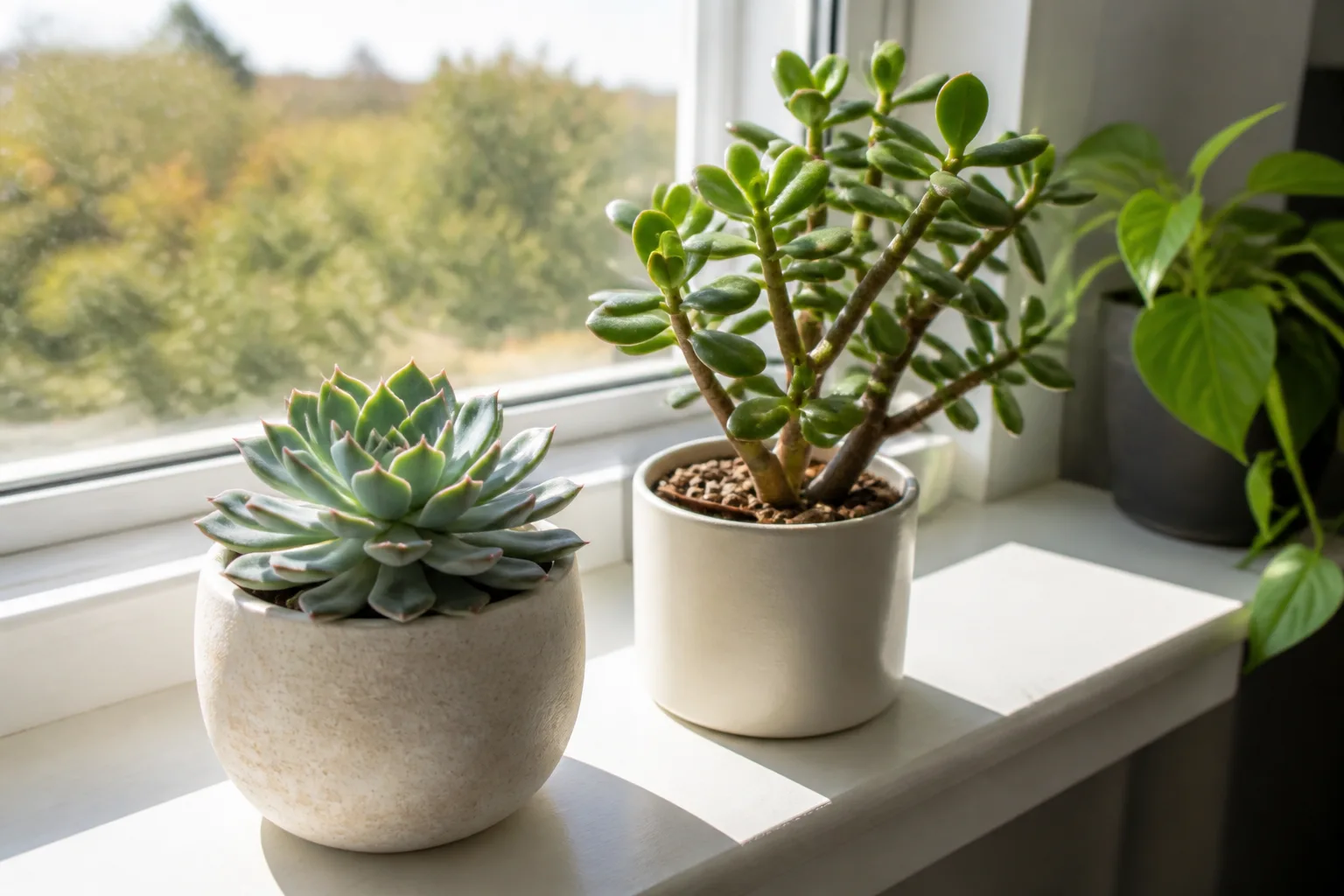
Build up to stronger light gradually, especially after moving a plant from a sheltered nursery or dim room.
Read Leaf Color Without Chasing Red
Red stems and leaves are part of the plant’s appeal, and direct sun commonly intensifies those tones. A healthy, well-lit String of Rubies can show red, purple, and green at the same time; color varies with the growing conditions and with the individual plant. The RHS notes that foliage may shift among gray-green, yellow, purple, and red as light levels differ or the plant is stressed. That description is a reason to look at the whole plant, not to deliberately dehydrate or overheat it for color.
A green plant is not necessarily unhealthy. If the stems are firm and the spacing between leaves is compact, it may simply be growing in gentler light. If new growth is pale, sparse, and widely spaced, the plant is stretching for light; move it brighter in stages. By contrast, bleached tan patches on the window-facing side suggest scorch, while soft yellow leaves at the base and persistently wet mix point toward excess moisture or failing roots.
Color is not a precise meter. A red flush can be normal, but a sudden change paired with shriveling, limp stems, or leaf drop calls for a broader check. Feel the leaves and stems, then inspect soil moisture and drainage. Adjust one condition at a time so you can tell what helped.
Water by Soil Condition, Not the Calendar
Water thoroughly when the potting mix is dry through most of the root zone, then let every drop of excess drain away. Do not add a small splash every few days, and do not use a fixed “every 12 days” rule as a substitute for checking the pot. A small plant in a warm, bright terracotta pot can dry much faster than a larger plant in plastic in a cool room; the season, mix, pot shape, and airflow all change the interval.
To check, press a clean wooden skewer or chopstick a few inches into the mix and pull it out. If it feels cool or carries damp particles, wait and check again later; if it comes out dry and the pot feels light, water evenly until water runs from the drain hole. Empty the saucer after the pot has drained. The University of Minnesota Extension succulent guide recommends letting succulent mix dry between thorough waterings and warns that excess water trapped in a pot can quickly cause decay.
During low-light winter months, growth and water use usually slow, so expect longer gaps. In a warm, bright summer window, it may need water sooner. If a dry peat-based mix repels water, apply water slowly in two passes so it absorbs instead of racing down the pot’s edge. 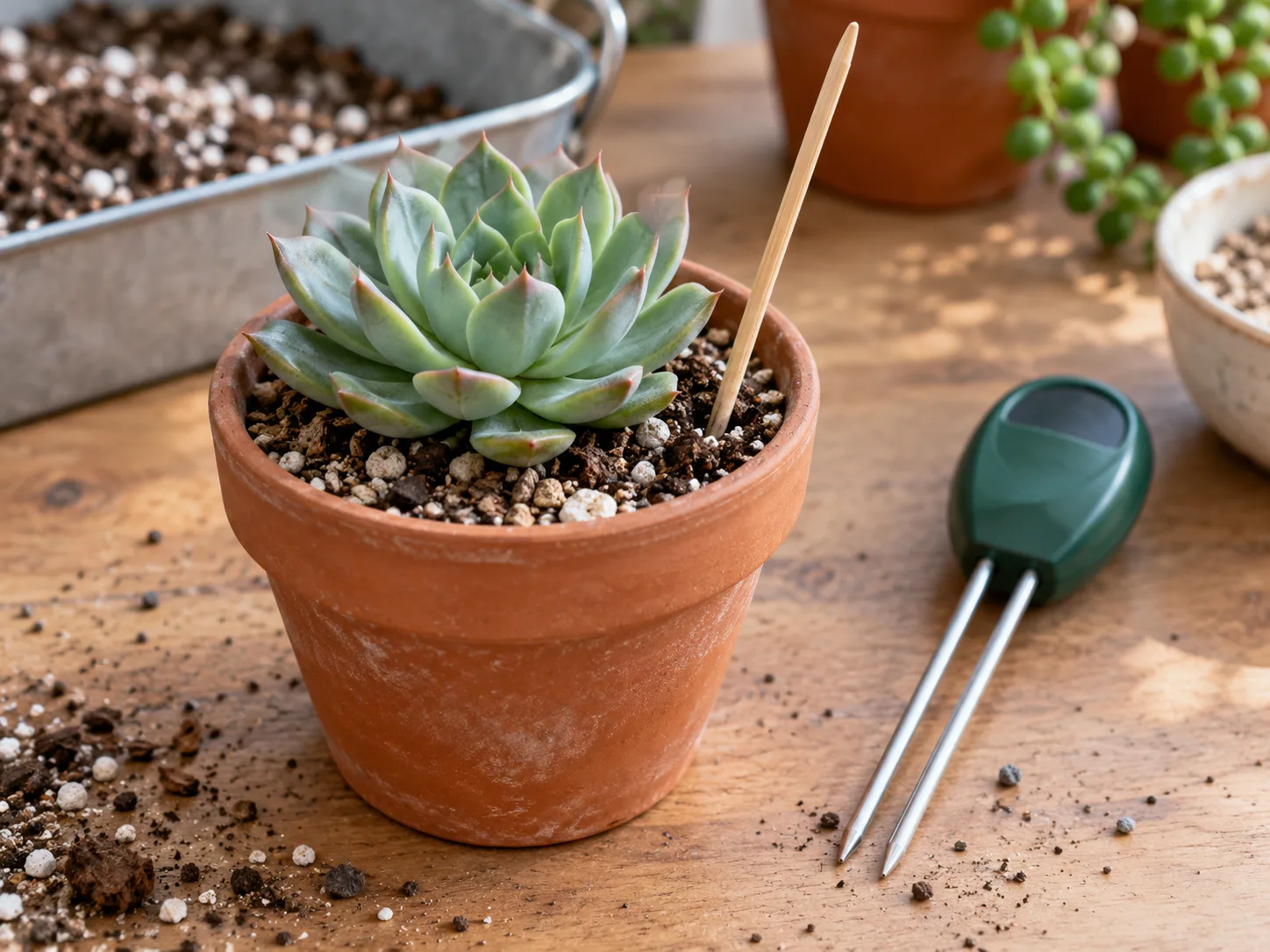
Check below the surface before watering; a dry-looking top can hide moisture around the roots.
Use an Airy, Fast-Draining Potting Mix
Choose a commercial cactus-and-succulent mix, then improve it if it stays wet too long in your home. Perlite, pumice, or small horticultural grit can add air spaces and help water move through the root zone. There is no universal ratio because bagged mixes differ; as a practical starting point, blend about one part mineral amendment with two parts succulent mix, then adjust if the combination stays soggy or dries in a day. The finished mix should hold the plant upright while still crumbling rather than packing into a dense, wet block.
Avoid ordinary garden soil in a container. It may compact, retain too much moisture, or contain unwanted organisms. A little organic matter is useful—the aim is not to grow the plant in bare gravel—but the mix should not feel swampy a day after a normal watering. If the mix dries extremely fast and shrinks from the sides, it may contain too much coarse material or be difficult to rewet; add a modest amount of potting mix rather than responding with frequent shallow watering.
The RHS lists acidic conditions and well-drained cactus or succulent soil for this species. Most growers do not need to test and alter the pH of a small houseplant pot: prioritize drainage and avoid extreme lime-rich amendments. 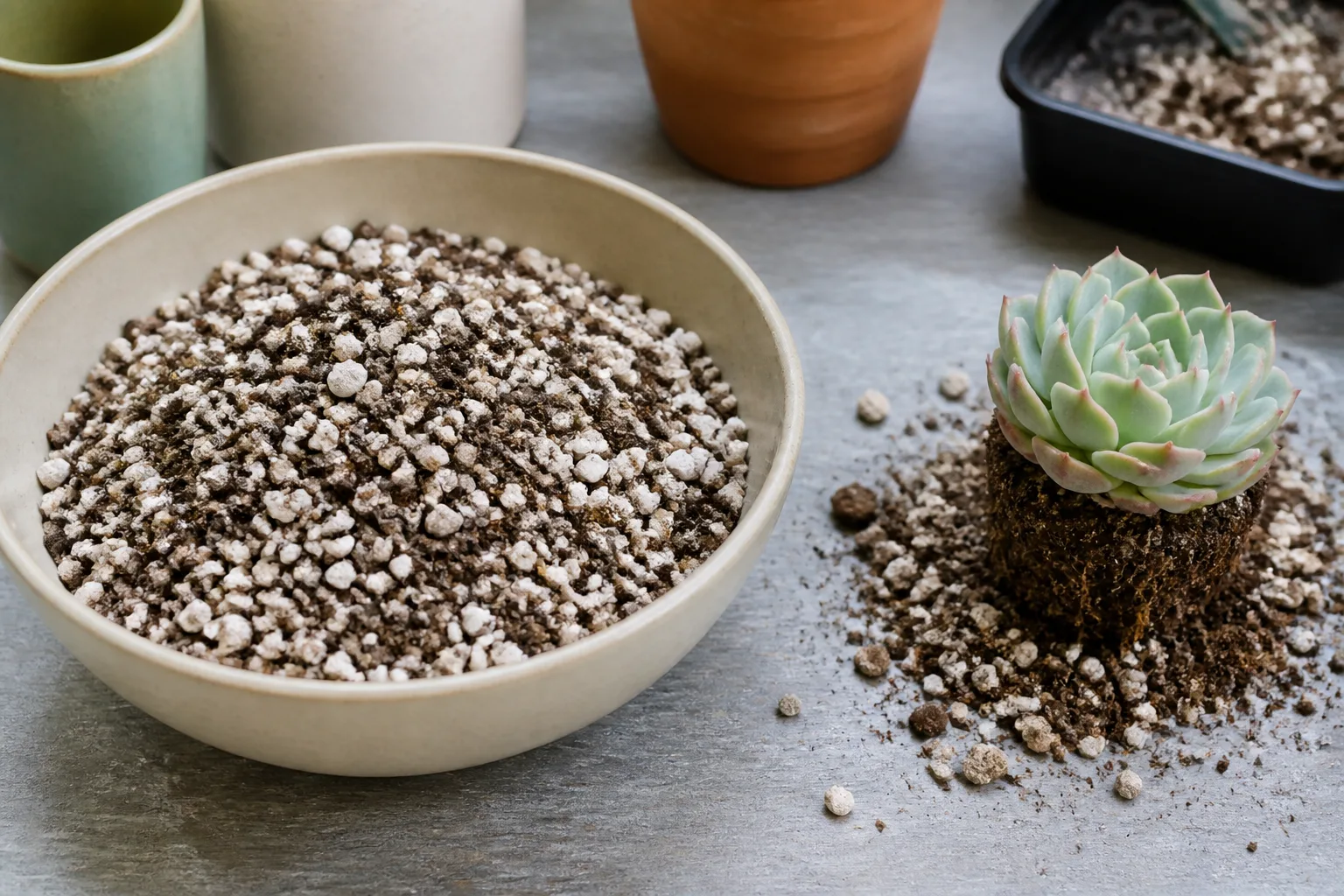
A porous mix should drain quickly but still hold the roots in place.
Choose a Pot That Lets Water Escape
A drainage hole is essential for the easiest, most forgiving routine. After watering, the water should pass through the mix and leave the pot; a decorative cachepot can hold the nursery pot, but remove the inner pot to water and let it finish draining before returning it. A pot with no hole is harder to manage because there is no clear way for excess water to escape or an obvious signal that the root ball has been saturated.
Terracotta is useful because its porous walls lose moisture, which can help in humid rooms or for growers who tend to overwater. It also dries faster than plastic, so it can require more frequent checks in a hot, sunny spot. Plastic or glazed ceramic holds moisture longer and is not inherently wrong; choose it if you tend to underwater or the room is warm and dry, but allow for a longer drying period. Do not cover the drainage opening with a thick layer of stones. A small mesh square can keep mix from spilling without blocking the hole.
Match the pot to the root ball, not the length of the stems. An oversized container holds more wet mix around a small root system and can extend drying time. Choose a container wide enough to support the roots while leaving stems free to trail.
Keep It Warm and Protect It From Cold
String of Rubies prefers warm growing conditions and is not a plant to leave outside through freezing weather. Keep indoor plants away from a cold, drafty window in winter and from a heating vent that repeatedly blasts hot, dry air. A short chill near a cold pane can damage foliage even if the thermostat elsewhere in the room reads comfortably. Where the room is bright and temperatures are stable, routine household conditions generally work well.
RHS hardiness ratings are tied to United Kingdom conditions and should not be treated as a universal guarantee for a garden elsewhere. Its listing places the species in a mild-climate category, but containers, wind, wet soil, and the length of a cold spell all affect survival. For a conservative home-gardening rule, bring a potted plant inside before frost or a sustained cold spell, and do not rely on a brief minimum-temperature claim to justify leaving it exposed.
If you keep it outdoors in summer, choose shelter and inspect stems for pests before bringing it back inside. Make the transition gradually: outdoor sun to a dim room can lead to weaker new growth even when the plant survives the move.
Grow It Indoors or Move It Outdoors Safely
Indoors, the easiest placement is a bright sill, a sunny plant shelf, or a hanging container close enough to a window that its stems receive strong daylight. South-facing windows can be excellent in cooler climates, but may need a sheer curtain or a little distance from the glass in hot summers. East- and west-facing windows offer gentler direct sun. Watch new growth: short spaces between leaves and sturdy stems usually mean the light is adequate; long, bare stretches signal that it is reaching.
In a frost-free or reliably mild climate, you can grow the plant outside in a sheltered pot or as a trailing accent among other drought-tolerant plants. The RHS lists it for full sun or partial shade, but exposed garden placement depends on local heat, wind, drainage, and rainfall. Choose a site where rain does not keep the roots wet for days and where the stems can cascade without being trampled. In a mixed container, pair it with plants that have similar light and drying needs rather than moisture-loving annuals.
Harden it off before its first outdoor stay. Begin in bright shade for several days, then add morning sun before leaving it in stronger light. A pot can warm and dry quickly outdoors, so recheck the soil rather than carrying over an indoor schedule. Before bringing it back inside, inspect for pests, remove debris from the pot surface, and move it to a bright indoor location. The shift is easier on the plant when both light and temperature change gradually.
Understand Its Trailing Growth and Flowering
This is a low, spreading succulent, not a shrub that needs to be kept upright. With enough light, healthy stems lengthen and drape over the edge of a pot; an established plant can spread substantially, while its height remains modest. The RHS gives a potential spread of roughly 1 to 1.5 meters under favorable conditions, but a container plant may grow more slowly or remain smaller depending on its light, pot volume, and pruning.
Small yellow, daisy-like flowers can appear on slender stalks, often when the plant receives enough light. The blooms may open in sunshine and close as light falls, so a closed flower is not automatically a sign of a problem. Flowering is a bonus rather than a dependable indoor schedule. Do not reduce watering to “force” blooms or feed heavily to make flowers appear; stable light and healthy roots matter more than a bloom promise.
Give the stems room for airflow. A crowded plant can hide dry leaves or pests, so clear debris from the soil surface and trim only where growth shades the center.
Fertilize Lightly During Active Growth
String of Rubies is not a heavy feeder. If the plant is growing actively in spring or summer, a balanced liquid houseplant fertilizer diluted to half the label rate can be applied occasionally; one or two light feedings during the brighter growing season are usually enough for a modest houseplant. Water the plant first if the mix is bone dry, because concentrated fertilizer in dry soil can stress roots. Follow the label rather than combining several products.
Do not fertilize a plant with soft stems, suspected root rot, or a major pest infestation. First correct the underlying care issue and wait for fresh healthy growth. Too much nitrogen can encourage lush, weak stems at the expense of a compact trailing habit, and fertilizer salts can accumulate in a small pot. If a white crust appears on the soil or rim, flush the mix with clean water during the next watering and let it drain fully.
A new or recently repotted plant may not need extra food right away; commercial mixes sometimes include starter nutrients. Skip winter feeding. If the plant grows steadily without fertilizer, keep the routine simple: light and appropriate watering matter more for its shape and color.
Prune for Shape and Healthy Cuttings
Routine pruning is optional. Trim only when stems are damaged, tangled, bare near the base, or so crowded that new growth gets shaded. Use clean, sharp scissors or pruners and make a neat cut just above a leaf node, where a side shoot may branch. If you want to shorten a long stem, take several smaller cuts rather than removing most of the plant at once; leaving healthy foliage helps it recover and keeps the pot balanced.
Spring or early summer is convenient because active growth can replace removed tips, but remove broken or rotting sections whenever you see them. Clean the blade between plants. Let cut surfaces dry before a heavy watering, and keep healthy cuttings out of harsh sun while preparing them.
Leggy stems are usually a light problem, not a pruning problem. Cutting back can make the plant look tidier, but new shoots may also stretch if the light remains dim. Move it to a brighter location gradually, then prune if you want a fuller outline. Save several healthy tips for propagation rather than discarding all the removed growth.
Propagate String of Rubies From Stem Cuttings
Stem cuttings are the most practical way to make another plant or fill a sparse pot. Use healthy, firm growth with several leaf pairs and at least a few nodes—the points where leaves attach to the stem. Cut below a node with clean scissors. Remove leaves from the lowest section so they will not sit on damp mix, and let the cut end air-dry until the surface feels sealed; in a dry room this may take a day or two, while humid conditions may take longer.
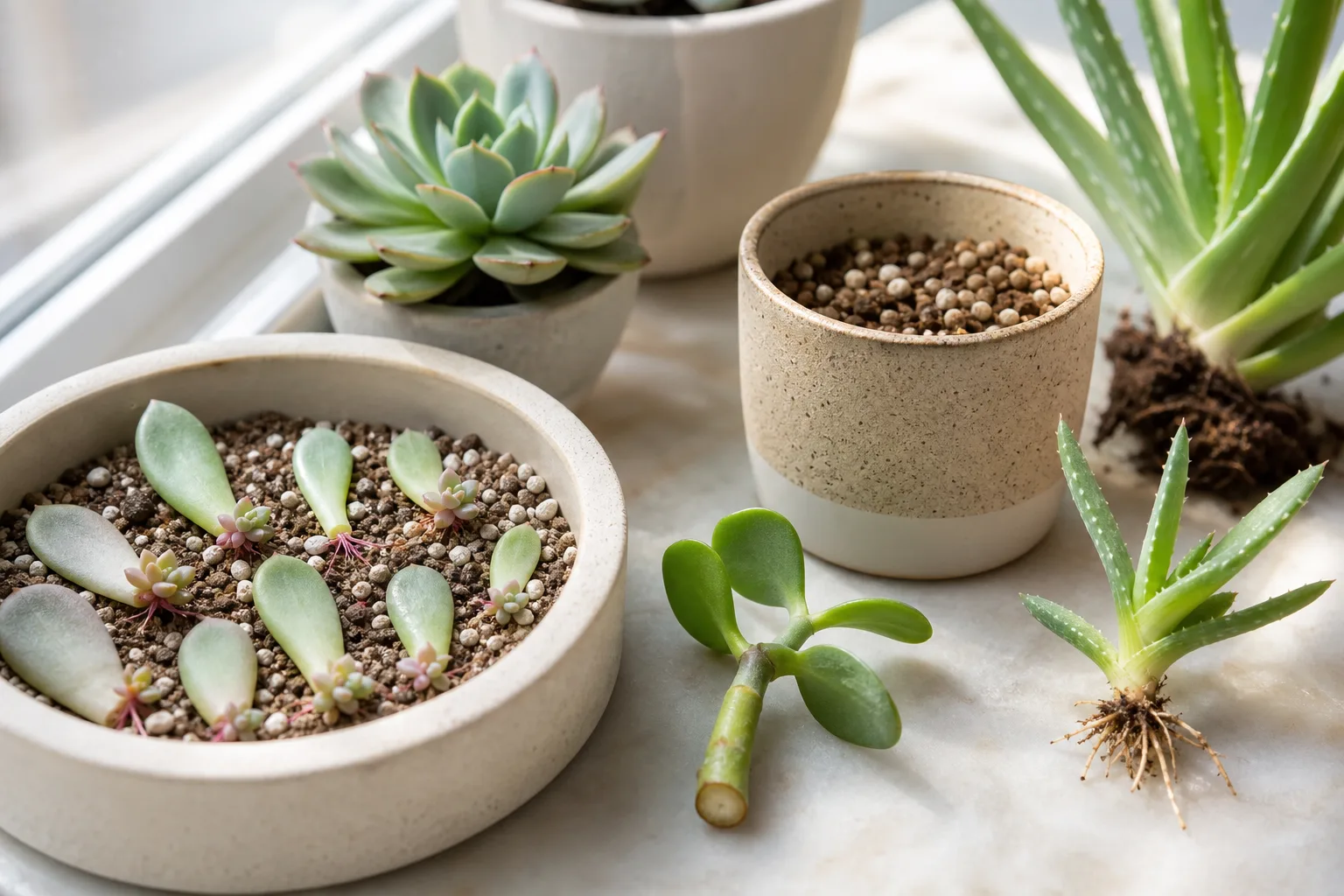
For a trailing succulent, several healthy stem tips can root in the same shallow pot once their cut ends have dried.
Fill a small container with fresh, lightly moistened succulent mix. Lay each cutting on the surface and press one or two nodes gently into contact with the mix; do not bury the leaves or the whole stem. Set the tray in bright indirect light and keep the mix barely damp rather than wet. Check for resistance with a very gentle tug after a few weeks; new roots and firm new growth indicate establishment. Once rooted, water more normally, letting the mix dry between thorough drinks.
If a cutting shrivels, improve contact with the medium and avoid very dry air. If the base turns mushy, cut back to firm tissue and try again in fresh, drier mix. Water propagation is possible, but submerged leaves and stems can rot, and water-grown roots must adjust after transfer. The University of Minnesota Extension succulent guide advises letting succulent cutting wounds dry and watering sparingly as roots form.
Repot Only When the Plant Needs It
Repot when roots crowd the container, the mix has broken down and stays wet, or water runs through immediately because the root ball has displaced most of the soil. A plant that is slightly root-bound may still be healthy; moving it to a much larger pot simply because stems are long can slow drying and increase the risk of rot. Many growers find that checking every couple of years is enough, but there is no need to repot on a strict two-year schedule if roots and mix are in good shape.
Choose a container only one size wider than the current root ball and make sure it has a drainage opening. Gently loosen the outer roots, remove loose old mix, and trim only dead or blackened roots with clean scissors. Set the plant at the same depth it was growing before and fill around it with fresh succulent mix without packing it hard. Let any disturbed roots settle before resuming a full watering routine; if roots were cut or bruised, keep the mix on the drier side for a short period.
After repotting, use bright indirect light for several days, then resume its usual brighter exposure. Wait to fertilize and recheck how quickly the new mix dries before watering on your old schedule.
Check for Mealybugs and Scale
Inspect the joints where leaves meet stems, the underside of leaves, and the center of dense growth. Mealybugs look like small white cottony clusters; scale can look like fixed tan or brown bumps. Sticky residue or black sooty growth may be an early clue that sap-feeding insects are present. A stressed plant may also lose vigor or develop wrinkled leaves, so confirm pests by looking closely rather than treating every limp stem as an insect problem.
Isolate an affected pot so pests do not move to nearby plants. For a small infestation, dab visible insects with a cotton swab and keep checking new growth over the next few weeks. The Missouri Botanical Garden’s succulent pest guidance recommends careful inspection and notes that alcohol, insecticidal soap, or other treatments can injure sensitive succulent surfaces; test a small area first and follow the product label. Avoid saturating a succulent with oil or alcohol without testing, especially in bright sun.
If pests return, inspect neighboring plants and the pot rim as well as visible leaves. Root mealybugs can hide in the mix and appear as white deposits around roots. Discard heavily infested mix, clean the pot, and use only labeled indoor products if additional treatment is needed.
Troubleshoot Color, Drooping, and Leaf Drop
Start with the full pattern, not one symptom. Red coloring on firm leaves can be a light response. Green or elongated new growth often means the plant needs more light. A few older leaves drying at the base may be ordinary replacement, but widespread leaf loss suggests a change in moisture, temperature, light, or root health. Compare the affected leaves with the newest growth and check whether the potting mix is wet, dry, or slow to drain.
| What you see | Likely direction to check | First response |
|---|---|---|
| Green leaves and long gaps between them | Too little light | Move to brighter light gradually |
| Red or purple leaves that stay firm | Often normal bright-light coloring | Keep conditions stable; avoid forcing more stress |
| Soft, translucent, yellowing leaves with damp mix | Excess water or poor drainage | Stop watering, drain the pot, inspect the root zone |
| Dry, wrinkled leaves with a very light, dry pot | Prolonged dryness | Water fully, then observe whether leaves firm up |
| Bleached or tan patches on the sun-facing side | Abrupt sun exposure or heat | Step back to gentler light and re-acclimate |
| Sudden leaf drop after a move | Temperature or light shock, or wet roots | Stabilize conditions and check moisture before watering |
If stems at the soil line are black, soft, or collapsing, unpot the plant and inspect the roots. Healthy roots are generally firm; black or mushy roots and a sour smell suggest rot. Remove affected roots with clean scissors, let cuts dry, and repot the remaining healthy stems in fresh dry mix. Take salvage cuttings from firm sections if the crown is badly damaged. Do not water on the assumption that every drooping succulent is thirsty: saturated roots cannot take up water normally, and additional water can worsen decay. A University of Arizona Cooperative Extension indoor-plant guide similarly recommends checking soil condition and container drainage when diagnosing indoor plant watering problems.
Change one condition at a time and give the plant time to respond. Remove fully collapsed stems, but keep firm green or red growth; periodic photos can help you spot whether the trend is improving.
Conclusion
String of Rubies is easiest to manage when you focus on light, airflow, and how quickly its potting mix dries. Give it a bright spot, acclimate it before stronger sun, use a freely draining mix in a pot with a hole, and water thoroughly only after the root zone has dried. The leaves may stay green or turn ruby-toned; do not trade healthy roots for color by deliberately stressing the plant.
As it grows, let healthy stems trail, prune only when there is a reason, and use sound cuttings to start another pot. Bring outdoor plants inside before frost, inspect the stems for pests, and read symptoms together rather than treating color or drooping as a diagnosis on its own. With those few checks, you can keep the plant attractive and have a clear next step when its growth changes.