How to Grow and Care for Wishbone Flowers in Shade
Grow wishbone flowers in morning sun and afternoon shade. Learn when to sow Torenia seed, how to water pots, and how to keep plants blooming through summer.
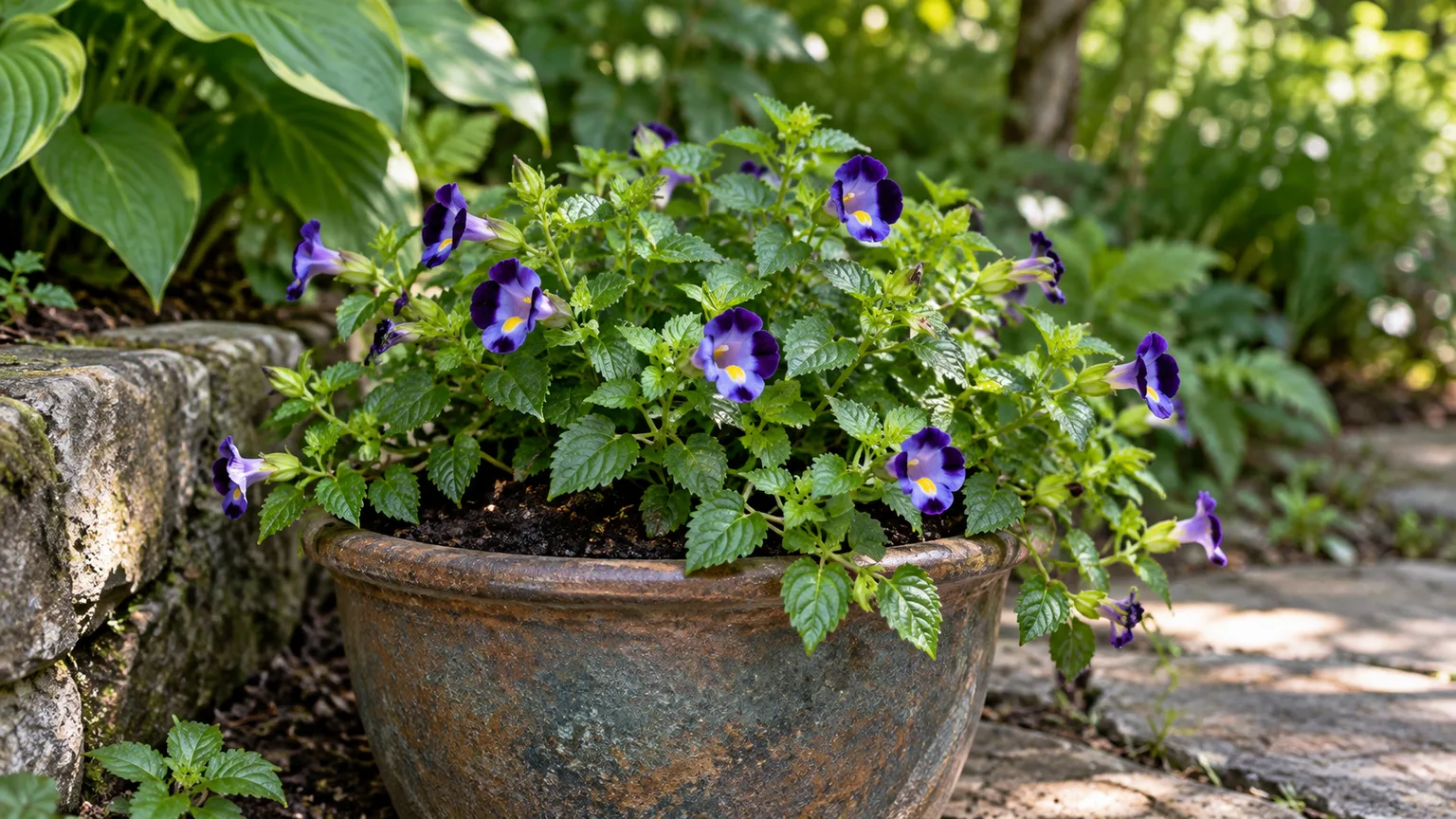
Wishbone flower is a compact, long-blooming annual for the parts of a garden where many summer flowers fade in heat or struggle without direct sun. The key is to match the plant you buy to the job: classic seed-grown Torenia tends to stay upright and mounded, while newer trailing series spill over basket edges and are often sold as vegetative starts.
Give wishbone flowers bright shade or gentle morning sun, fertile soil that drains freely, and steady moisture. Plant outdoors after frost danger has passed, and use the cultivar label for final size and feeding directions; Torenia includes forms with different habits and heat tolerance.
Identify the Torenia you bought
The common name usually refers to Torenia fournieri, a tender annual native to Asia and now placed in the family Linderniaceae. Its small, trumpet-like flowers often have contrasting lips and a yellow throat; inside, two stamens meet in a shape like a wishbone. Colors range from violet and blue to pink, white, and yellow, depending on the variety (North Carolina State Extension’s Plant Toolbox; Clemson Cooperative Extension’s wishbone flower guide).
The name also appears on modern hybrids with different growth habits. A photo may show a trailing plant labeled “Torenia” even though a seed packet sells compact T. fournieri. That distinction matters: a seed-grown plant is a sensible choice for a small border or a pot with an upright center, while a trailing variety is better for a hanging basket or the rim of a wide container.
Compact seed-grown plants and trailing series
Compact forms such as Kauai and Little Kiss generally grow into low mounds. Clemson Extension lists common compact types at about 6 to 8 inches tall and 8 inches wide; individual cultivars can be larger, so treat the plant tag as the final sizing guide. They suit bed edging, grouped containers, and the front of a part-shade border.
Trailing cultivars such as Summer Wave, Catalina, and some Moon selections can spread much farther than the compact species. Some series are sold as plants because they do not produce seed, and newer hybrids may be propagated vegetatively to preserve their selected flower color and habit. Clemson reports that its trailing types can reach 24 inches or more in length, while UF/IFAS describes Summer Wave selections that tolerate heat, heavy rain, and occasional dry spells better than older forms (Clemson Extension; UF/IFAS Extension: Torenia).
| Type | Best use | What to check |
|---|---|---|
| Compact T. fournieri | Shaded bed edge, small pot, grouped color | Seed availability, mature width, and whether a named cultivar comes true from seed |
| Trailing Summer Wave or similar | Hanging basket, window box, container edge | How far it trails, heat tolerance, and whether it is sold as a plant rather than seed |
| Catalina series | Compact-to-spreading containers and borders | Cultivar-specific height and spacing; not every selection has the same vigor |
Clemson Extension notes that the wishbone-shaped flower is visited by small carpenter bees (Clemson Extension), but pollinator visits depend on the local garden and the cultivar. Do not buy Torenia on the assumption that every plant will attract hummingbirds or butterflies; treat it as a useful flowering annual, not a guaranteed wildlife magnet.
Choose light according to your climate
Torenia is flexible about light, but “shade plant” does not mean “put it in the darkest corner.” A site with bright indirect light or a few hours of gentle sun usually produces denser growth and more flowers than deep darkness. North Carolina State Extension lists T. fournieri for dappled, deep, and partial shade; the Royal Horticultural Society also notes that it can perform in sun while tolerating some shade (NCSU Extension; RHS plant profile).
Give hot afternoon sun a different answer
In a mild coastal or northern summer, plants may flower well with more direct light, especially if their roots remain cool and moist. In a hot inland or southern climate, start with morning sun and afternoon shade, or bright dappled light. Clemson and UF/IFAS both recommend partial shade for strong performance, while UF/IFAS notes that certain Summer Wave cultivars were selected for hotter, humid conditions.
If you are unsure about a new plant, use the first two weeks as a light trial. If it holds its leaves through midday and continues producing buds, keep the position; if flowers bleach, leaf edges crisp, or stems droop in the afternoon despite moist soil, move a container to brighter shade or add temporary protection. Conversely, long stems with fewer flowers in a very dark spot often indicate that the plant needs more usable light, not more fertilizer.
Plant after frost in fertile, draining soil
Torenia is frost-sensitive, so wait until the danger of frost has passed before planting nursery starts outside. In regions with short summers, buy a well-branched plant or start seed indoors early enough to get a full flowering season; in warm climates, the planting window may be longer, but heat and monsoon-like rain still affect placement. Calendar dates differ by region, so use your local frost outlook rather than a universal month.
Choose soil that stays evenly moist but does not remain waterlogged. In a garden bed, work compost into the broader planting area if the soil is poor, and avoid a low spot that collects runoff. A raised bed or container is a better choice than trying to keep roots alive in compacted clay. The RHS describes Torenia as suited to fertile, moist but well-drained soil, and NCSU Extension lists high organic matter and good drainage as preferred conditions.
Space upright and trailing plants by mature spread
Set each starter at the same depth it grew in its nursery cell and loosen only roots circling the outside of the plug. Wishbone flower has delicate roots and dislikes disturbance, so do not tear apart a small root ball or bury the stem deeply to make it stand upright. Water it in, then add a light mulch around bed-grown plants to moderate soil temperature; keep mulch off the crown so the stem base can dry between rains.
For compact forms, use the spacing on the tag; a loose group can close into a low carpet, while tight spacing in a humid spot traps moisture and reduces airflow. Trailing plants need room to spill from a basket or window box without being crowded by more vigorous companions. Estimate final spread from the cultivar name, not from the small starter you see at planting time.
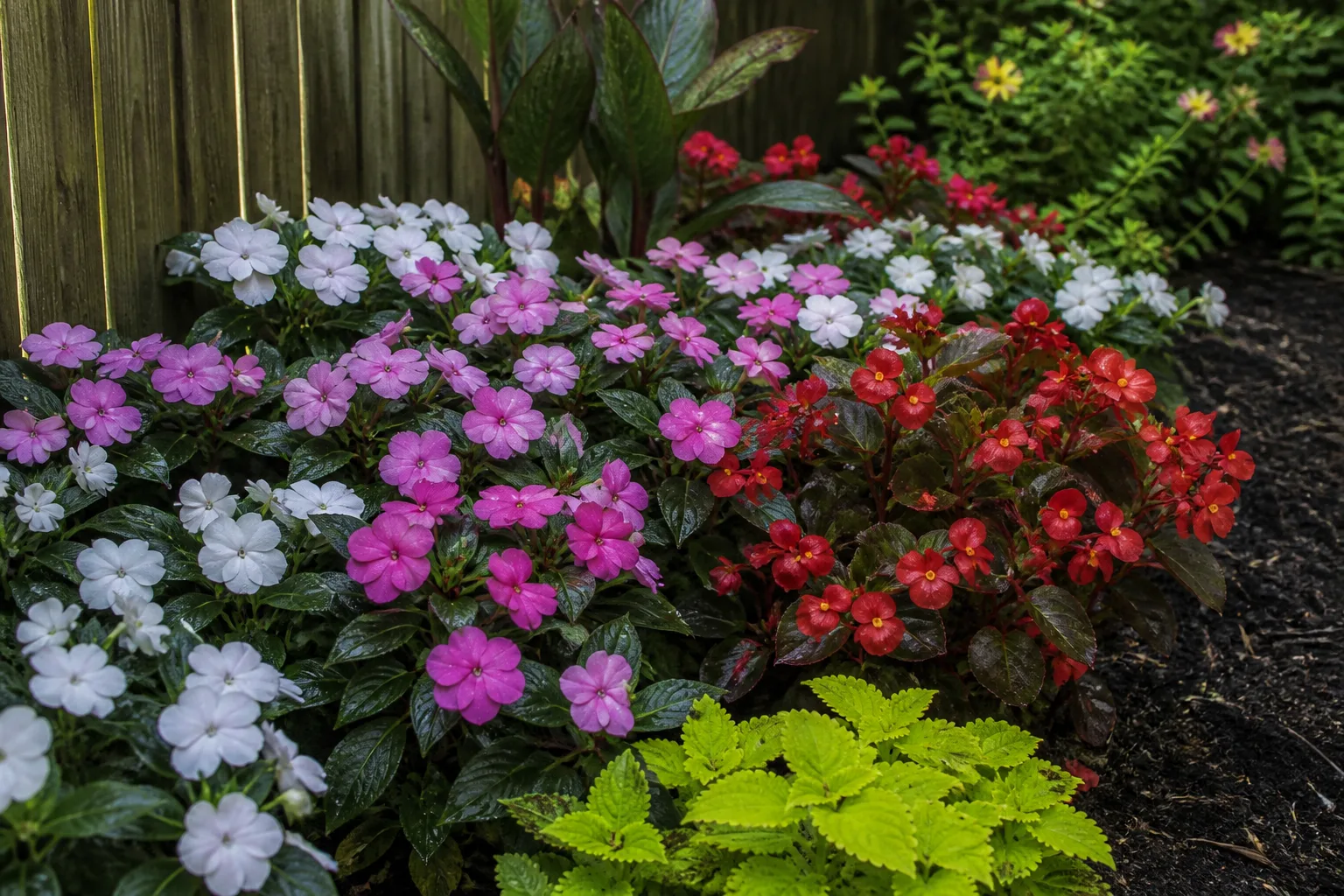
This photo shows impatiens in a shade border, not Torenia. It illustrates the layered, bright-shade setting where wishbone flowers can also add summer color.
Grow wishbone flowers from seed
Seed is a good route to compact T. fournieri, but it is not a reliable way to reproduce every Torenia sold in garden centers. Many trailing series are vegetative or seedless selections; if you want the same flower color and long trailing habit, buy a named cultivar as a plant or take cuttings only if the supplier permits it. A seed packet should identify the series and whether the plant is expected to come true from seed.
Start seed indoors about 6 to 8 weeks before your expected last frost, as Clemson Extension and Fine Gardening advise for compact wishbone flowers. Seed-depth directions are less consistent: the National Parks Board of Singapore says Torenia’s very fine seed needs light and should not be covered, while a general Gardeners’ Path guide recommends sowing it more deeply. For uncoated T. fournieri seed, press it onto the surface; follow the packet if a named cultivar is pelleted (Clemson Extension; Fine Gardening; NParks species profile; Gardeners’ Path growing guide).
Surface-sow fine seed and protect young roots
Use clean cells or small biodegradable pots filled with pre-moistened seed-starting mix. Scatter a few seeds on the surface, press gently for contact, and keep the mix damp with a mister or careful bottom watering; a clear cover can slow drying before germination, but remove or vent it once seedlings appear. Give the tray bright light, and turn it if seedlings lean toward a window.
Seedlings begin small, so avoid pulling them up to check for roots. When they have true leaves, thin crowded seedlings by snipping extras at the soil line rather than tugging them out. Keep the remaining plants in bright light and moderately moist mix; constantly wet trays encourage weak growth and damping-off.
Before transplanting, acclimate seedlings to outdoor conditions over about a week. Start with a short period in sheltered shade, lengthen the time outside gradually, and keep them out of harsh midday sun during the adjustment. Transplant after frost danger has passed, carrying the whole plug into the hole so the roots are disturbed as little as possible. A biodegradable pot is useful only if its rim is buried and the pot stays moist; exposed peat edges can wick water away from the root ball.
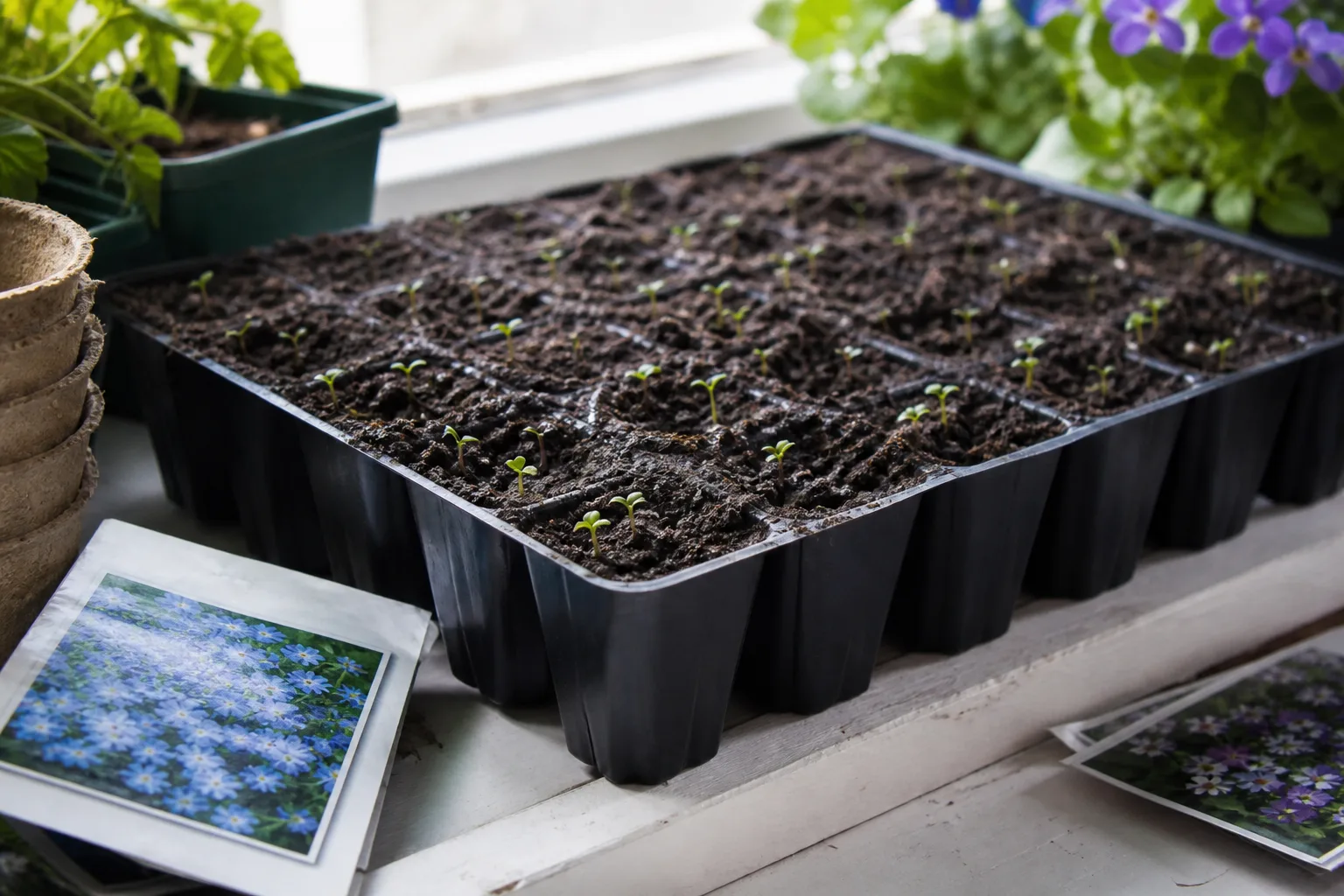
This is a general seed-starting scene rather than Torenia seedlings. Wishbone flower seed should remain on the mix surface unless the packet gives different instructions for a pelleted cultivar.
Water for steady growth without soggy roots
Torenia uses moisture steadily while it is actively growing, but soggy soil can still damage roots. Check the bed or pot before watering: if the top layer is beginning to dry and the plant is still growing, water deeply enough to moisten the root zone. If the soil is wet, wait and check drainage rather than adding more water because leaves droop.
A small hanging basket can dry much faster than a garden border, especially in wind or afternoon heat. In summer, check containers daily and water when the mix begins drying; in cooler or cloudy spells, that may be less often. Water until excess drains from the base, then empty any saucer so the pot does not sit in standing water. The timing changes with pot size, shade, mix, plant size, and weather, so a fixed “every few days” schedule is less reliable than checking moisture.
Use the plant’s response as a second clue. If it wilts in dry mix, water thoroughly and move it out of hot afternoon sun while it recovers. If it wilts while the soil is wet, inspect the drainage holes and root zone; continued irrigation can worsen the problem. In a bed, water the soil near the plant rather than repeatedly splashing foliage, and avoid keeping the crown crowded under wet leaves.
Feed lightly, especially in containers
At planting, a modest amount of compost or a slow-release fertilizer formulated for flowering annuals can support growth. Follow the product label and account for fertilizer already mixed into commercial potting soil; adding a second full dose can burn roots or push soft, leafy growth instead of a balanced plant.
Container-grown annuals may need supplemental feeding because frequent watering can carry nutrients out through drainage holes, a trade-off also described in UGA Extension’s guidance for annual containers. Clemson Extension suggests regular feeding for vigorous trailing types, while UF/IFAS recommends feeding every two to four weeks; the exact interval depends on the fertilizer formulation and whether the mix already contains nutrients (UGA Extension: Flowering annuals). If you use a liquid feed, dilute and apply it at the labeled interval rather than stacking liquid fertilizer on top of slow-release granules.
Do not assume phosphorus-heavy fertilizer is a bloom switch. If a plant is healthy but flowering poorly, first review light, root moisture, and temperature; feeding cannot correct saturated soil or deep shade. In a garden bed with fertile soil, a light application at planting may be enough for the season.
Use Torenia in pots, baskets, and shade borders
The compact habit works well along a shaded path or at the front of a border, where the flowers can be seen without being swallowed by taller foliage. Trailing types are better for hanging baskets, window boxes, and wide pots, where stems have room to cascade. A single plant can fill a small pot, but larger containers allow the roots to stay evenly moist and make it easier to combine Torenia with compatible companions.
Choose a container with open drainage holes and use potting mix made for containers rather than garden soil. Position it in bright shade or morning sun in hot weather; a hanging pot exposed to late-afternoon sun can heat and dry faster than a bed. If the mix has a starter fertilizer, follow its feeding directions before adding more, and lift the pot occasionally to make sure the drain holes are not blocked.
Pair its growth habit with compatible plants
Torenia prefers similar moisture and light to several common shade annuals, so it can be mixed with plants that will not dry out while Torenia stays moist. Use upright companions as a center or backdrop and let trailing varieties soften the edge. Avoid combining it with drought-loving succulents or Mediterranean herbs in the same pot; their watering needs conflict.
| Torenia form | Useful companions | Design role |
|---|---|---|
| Compact, upright T. fournieri | Impatiens, lobelia, coleus, begonias | Color near the front of a part-shade bed |
| Trailing series | Upright coleus, compact begonia, shade-tolerant foliage | Spill over basket or window-box edges |
| Mixed shade planter | Ferns or hostas in a large bed, not a small hot pot | Foliage backdrop and cover for gaps |
Clemson Extension specifically recommends companions such as coleus, impatiens, lobelia, and begonias, and suggests using wishbone flowers with hostas and ferns in shade gardens. Keep enough space between plants for air to move, and trim neighbors back if they begin shading or crowding the Torenia.
Pinch for fullness and prune only when needed
A young plant may branch more densely after you pinch the growing tip above a pair of leaves. Pinch once when it has settled in and is actively growing, especially if you want a compact mound for a bed or mixed pot. A naturally branching cultivar may not need pinching, and repeatedly removing the tips can delay the first flowers or keep a trailing selection from spilling over the container.
If a plant becomes leggy midseason, first ask whether it is getting enough bright light and whether it is receiving excess nitrogen. Correct those conditions, then trim long stems back by up to about half if the plant is still healthy and the growing season is long enough for it to regrow. The RHS recommends cutting back leggy Torenia by half; avoid hard pruning just before frost because there may not be time for new growth.
Skip routine deadheading
Many wishbone flowers are self-cleaning: old blooms drop as new ones open, so removing each faded flower is usually unnecessary. If a cultivar holds dry flowers or seed capsules that look untidy, snip only those parts while leaving healthy stems and leaves in place. For seed-grown plants you want to save, leave a few capsules to mature instead of deadheading the whole plant.
Do not confuse a spent flower with a plant that has stopped blooming. A Torenia that slows during extreme heat, dries repeatedly, or sits in water will not be fixed by removing old flowers. Restore a suitable exposure and moisture balance first.
Diagnose wilt, weak flowering, pests, and disease
Wishbone flowers are usually manageable when their light and moisture are right, but a drooping plant can have several causes. Check soil and drainage before changing fertilizer, and compare the affected plant with nearby plants in the same exposure. A single drooping container beside a healthy bed plant may be showing a pot-specific problem rather than a disease affecting all Torenia.
| What you see | First check | Practical first response |
|---|---|---|
| Whole plant droops; potting mix is dry | Root-ball moisture and late-day heat | Water thoroughly; move the pot to bright shade during a heat spell |
| Plant wilts while soil is wet | Blocked drainage, standing water, soft roots | Stop watering until the mix drains; open blocked holes or replace a badly rotted plant |
| Long stems and few flowers | Very deep shade or excess nitrogen | Move toward brighter shade; avoid another fertilizer dose |
| Crisp edges or bleached flowers | Strong afternoon sun or drying wind | Give afternoon shade and check containers more often |
| White powdery patches | Powdery mildew and crowded foliage | Remove badly affected leaves, improve spacing, and avoid overfeeding |
| Sticky leaves or white insects that fly up | Aphids or whiteflies under leaves | Rinse pests off early; reassess before using a labeled soap product |
Separate dry-root wilt from rot and sun stress
Dry-root wilt often improves after a thorough watering, especially in a basket that has been exposed to wind and sun. If the mix is wet through but the plant remains limp, adding more water is the wrong first move; make sure the pot drains, then look for soft, dark roots or a sour smell. A badly rotted annual may not recover, so remove it rather than keeping the whole container saturated.
Hot-weather wilt can happen even when the root zone is moist because leaves lose water faster than roots can replace it. If the plant recovers overnight, but droops again in hot afternoon sun, shift a portable container to shade and check the mix more often. A Torenia that is in full shade but grows thin and sparse may need more light instead, so use both soil moisture and stem growth to decide.
Powdery mildew can appear as white, dusty patches on leaves. The RHS lists powdery mildew and root rot among possible Torenia problems; UMN Extension recommends spacing plants for airflow and avoiding excess fertilizer as general flower-garden disease prevention (RHS Torenia profile; UMN Extension: Powdery mildew in the flower garden). Remove a few affected leaves, thin crowded growth, and water at soil level; do not treat every white mark as mildew without checking whether it wipes away or is dried spray residue.
Aphids cluster on tender tips and may leave sticky honeydew; whiteflies rise in a small cloud when an infested plant is disturbed. Inspect leaf undersides early, before populations build. A firm water spray can knock exposed aphids and whiteflies off, but use insecticidal soap only if necessary, only on a product label that lists the plant and pest, and after testing a small area; avoid spraying a wilted plant or applying treatment in hot sun. UC IPM notes that soaps and oils need direct contact and can injure stressed plants, so repeat inspection is often more useful than a single blanket spray (UC IPM: Aphids; UC IPM: Whiteflies).
Extend the season and save plants or seed
Torenia is treated as an annual in most gardens because frost ends the outdoor display. It may persist in frost-free regions, and UF/IFAS notes that plants can overwinter in very warm zones, but gardeners in colder climates should not expect it to return reliably outside. If you want to keep a favorite plant, take cuttings before frost or bring a container indoors to a bright, warm place; expect indoor bloom to depend on light and plant health rather than assuming it will perform like it did outdoors.
Compact seed-producing forms can provide seed for another season. Let a few seed capsules dry on the plant, collect them once mature, and store them cool and dry in a labeled envelope. Seed from a hybrid may not produce plants identical to the parent, and some trailing cultivars do not set seed at all, so a cutting or a new nursery plant is the better way to keep a specific color and trailing habit. The RHS lists both seed and stem cuttings as propagation methods, while Clemson distinguishes its seedless trailing types from compact seed-grown wishbone flowers.
After frost blackens the foliage, remove the spent annual and roots from the bed or pot. If the plant had powdery mildew or a serious pest infestation, discard affected material rather than saving seed or composting diseased leaves. Clean the container before replanting, refresh old potting mix, and choose the next Torenia for the space you have—compact in the border, trailing over an edge, and protected from the harshest summer sun.
Conclusion
For reliable flowers, start with the correct Torenia form, plant after frost, and give it bright shade with soil that stays moist but drains. Check containers more often than beds, feed according to the mix and fertilizer label, and pinch only when a fuller shape is worth delaying flowers.
Compact T. fournieri is the easiest choice if you want seed; trailing hybrids are often better purchased as named plants. When a plant wilts or stops blooming, check exposure and root moisture before reaching for fertilizer or pesticides. Those simple checks keep wishbone flowers flowering through the warm season with less guesswork.