How to Grow and Care for Guzmania Bromeliads Indoors
Learn how to care for Guzmania bromeliads with practical light, cup-watering, soil, seasonal, bloom, and pup advice—plus fixes for common problems year-round.
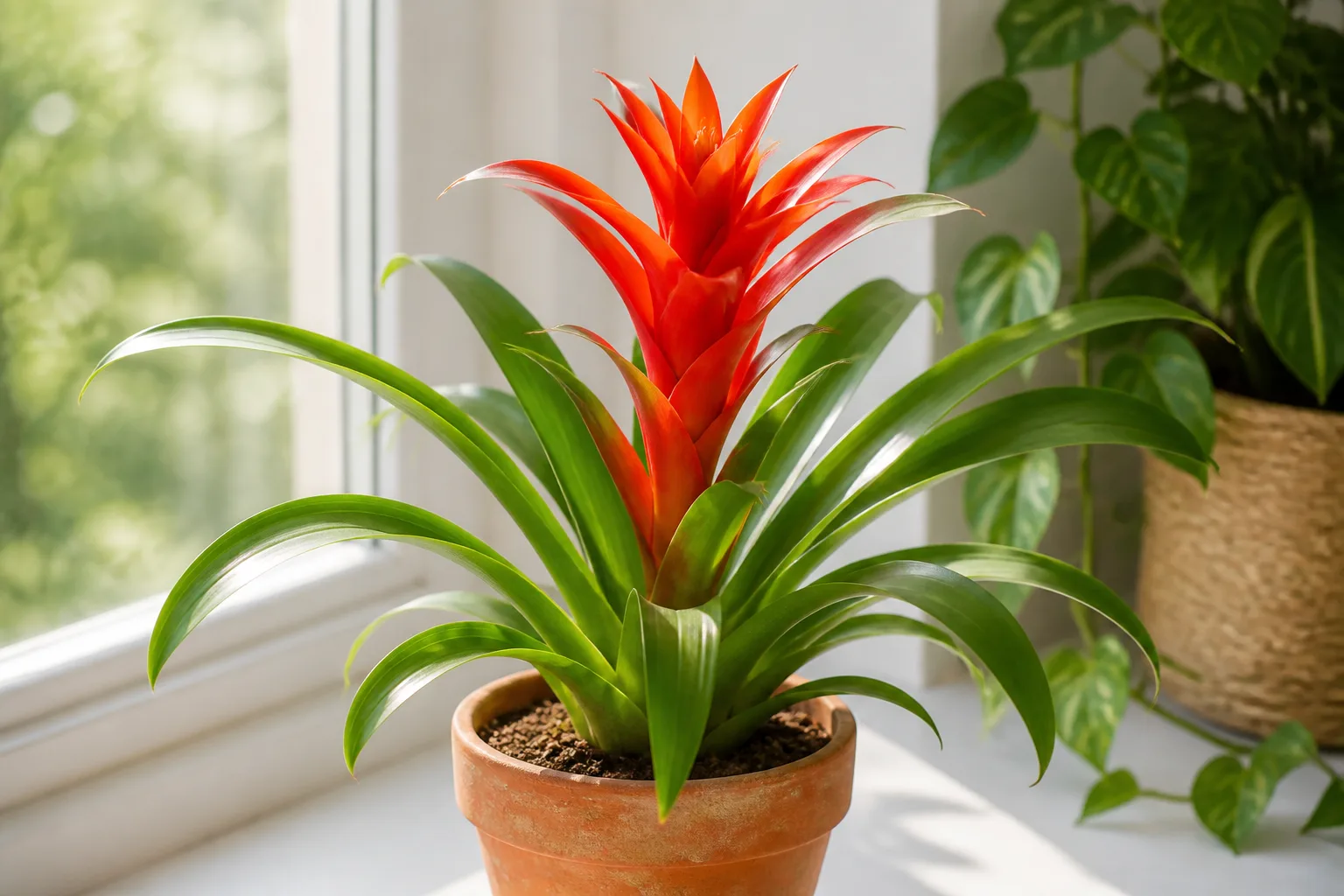
A Guzmania is often bought for the bright red, orange, or yellow “flower” rising from its green rosette. The colorful display can remain attractive for months, but the plant’s unusual water tank and one-rosette flowering cycle call for a slightly different routine from an ordinary foliage houseplant. The dependable approach is simple: give it bright light filtered through a curtain or reflected from a nearby wall, keep fresh water in the central cup, and let excess water drain freely from a small, airy pot. Then keep caring for the plant after the color fades; the mother rosette will gradually decline while young offsets take over. Homes & Gardens’ overview of epiphytic houseplants likewise emphasizes keeping the cup supplied and supporting pups after a bromeliad flowers; the root-zone advice below is specific to Guzmania grown in a pot.
Guzmania is a genus of tropical bromeliads in the pineapple family, Bromeliaceae. The common indoor plants are usually cultivars or hybrids, and their exact species may not be listed on a retail tag. Guzmania lingulata, often sold as Scarlet Star or Orange Star, is a familiar example with glossy strap-shaped leaves and orange or red bracts around small yellow or white flowers. The Royal Horticultural Society’s profile of Guzmania lingulata describes that rosette-and-bract form and lists partial shade; this is a useful starting point, not a claim that every Guzmania cultivar has identical light needs.
Identify the Plant and Understand Its One-Rosette Life Cycle
Look for long, smooth leaves that arch from a compact central base. The overlapping leaf bases form a cup, sometimes called a tank or vase. In habitat, many Guzmania grow as epiphytes on trees rather than in deep ground soil. Their roots help anchor them and still need oxygen in a pot, while the leaf tank collects water and debris. A potted plant is not an air plant that can be ignored at the roots: it needs a free-draining medium, some moisture around the root zone, and regular emptying or flushing of the cup.
The vivid “flower” sold in shops is mostly a colorful group of bracts—modified leaves. The small true flowers emerge between them and may be white or yellow. Those flowers are comparatively short-lived; the bracts are the long-lasting display. Different cultivars produce different colors, shapes, and sizes, so use the plant’s label when available and treat broad care advice as a range rather than a precise species diagnosis. The NC State Extension plant profile identifies Guzmania as a tank-forming bromeliad and notes the breadth of the genus and its hybrids.
Each rosette flowers once. That is called monocarpic growth: after flowering, that particular crown gradually ages and dies, often producing pups at its base first. The plant as a clump can continue through those offsets, but the original crown will not send up a second bloom. If the bracts begin to fade, that alone is not a signal that watering has failed. Check the center, leaves, and pups before deciding whether the plant is sick.
Give Guzmania Bright, Filtered Light
Set the plant near an east-facing window or a few feet back from a bright south- or west-facing window where a sheer curtain softens direct sun. Bright filtered light supports compact leaf growth and gives an immature pup a better chance of eventually maturing. The goal is strong ambient daylight without the heat of an unfiltered midday beam on the rosette. Guzmania lingulata is commonly recommended for partial shade, and horticulture guidance describes the dappled light of a tropical understory as a useful model for many Guzmania. A practical Gardening Know How care guide likewise recommends filtered, indirect light for most indoor Guzmania while recognizing species differences.
A dim corner may keep a blooming plant looking acceptable for a while, but it is not a reliable long-term growing position. In too little light, new leaves may emerge darker, longer, and softer; growth slows, and the plant may take longer to produce mature offsets. Move it closer to a window in small steps over a week or two rather than shifting it directly from a dark shelf into full sun. Pale, bleached patches or crisp tan areas on the window-facing side point to too much direct light. Move the plant farther from the glass or diffuse the light; damaged patches will not turn green again.
Artificial light can supplement a room without a useful window. A broad-spectrum grow light above the plant for a regular daytime period can maintain growth, but keep the lamp far enough away that leaves do not heat up.
Water the Central Tank and the Potting Mix Separately
Guzmania has two moisture zones, and treating them as one is the source of many watering problems. The central tank should hold clean water during warm, active growth. The potting mix should become lightly moist when watered and then drain; it should never remain waterlogged. RHS guidance for bromeliads with a central well specifically includes Guzmania lingulata: top up the well, empty and refill it every month or two to prevent stagnation, and water the compost in summer without letting it become soggy. In winter, water the compost more sparingly and let it dry between waterings.
Use that as a baseline, not a calendar alarm. In a warm, bright room, the cup may evaporate or be used more quickly; in a cool, dim room it may remain wet for a long time. Check the tank every few days. If it is empty, add enough water to refill the cup without overflowing the pot. If the water smells stale, contains debris, or has sat unchanged for weeks, tip it out gently and refill with fresh water. Once a month or two, flush the cup by pouring clean water through it and letting the old water run out. If hard water leaves a white film or the leaf tips brown despite sensible watering, try rainwater, distilled water, or low-mineral filtered water. Letting tap water stand may reduce some disinfectant, but it does not remove dissolved minerals or sodium from softened water.
Do not neglect the root zone simply because the tank is full. Feel the medium near the surface. When the top layer has begun to dry, water the mix thoroughly enough that a little drains from the bottom, then empty the saucer or cachepot. The exact interval depends on the pot, mix, temperature, and light; a dense nursery mix in a cool room may stay wet far longer than bark-rich mix near a bright window. If the pot is still heavy and the medium feels damp, wait. If it is nearly dry and the leaves feel limp, water the medium and refill the cup.
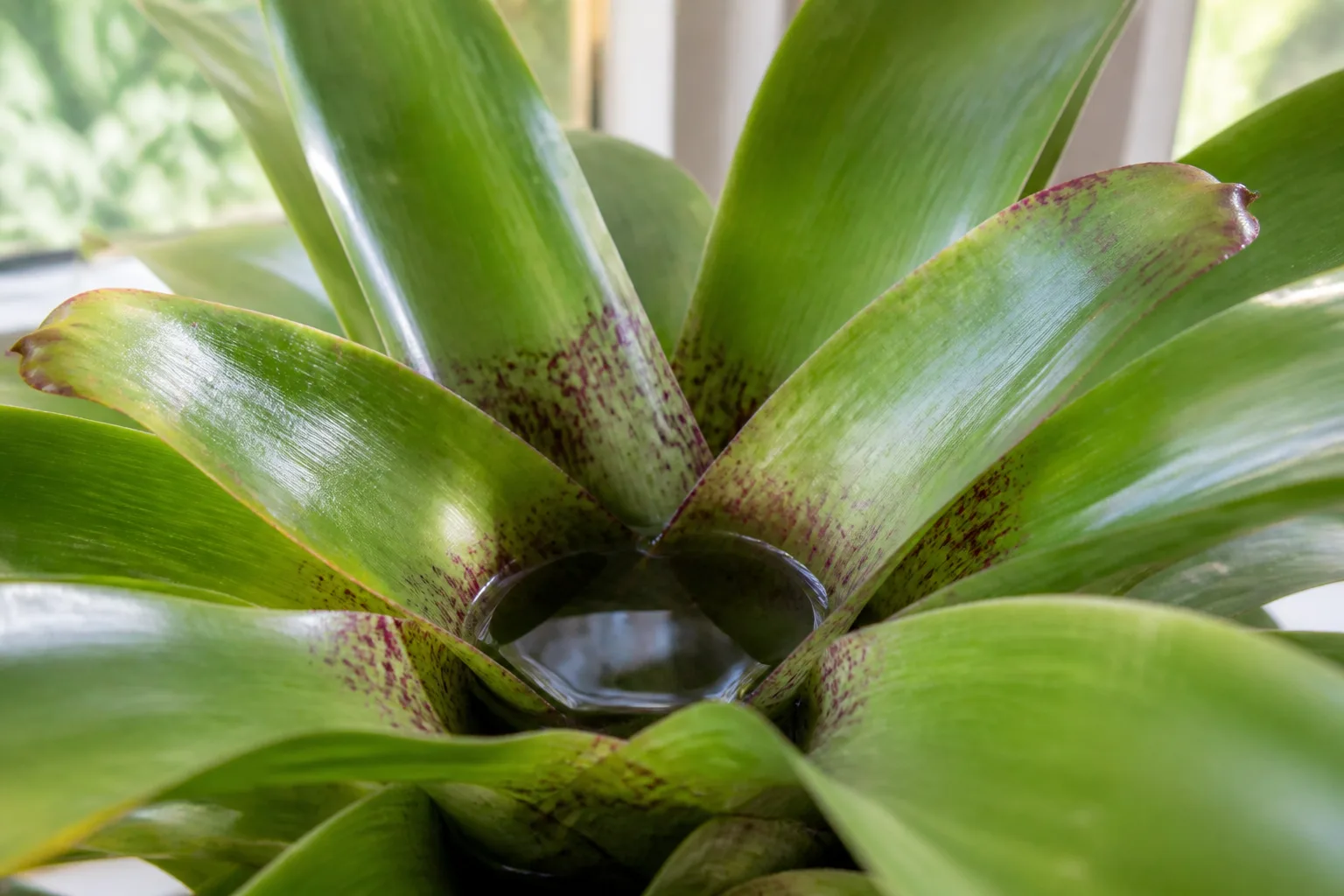
In a cold room, do not leave the cup full if the plant is exposed to chilly temperatures. UF/IFAS cautions that water held in bromeliad cups can contribute to cold injury and recommends removing it when temperatures below 40°F are expected outdoors. Indoors, the safer practice is to keep Guzmania away from cold windows, open doors, and air-conditioning drafts rather than letting its crown chill while wet.
Choose a Small Pot and an Airy Medium
A Guzmania does not need a deep pot to support a tall flower. Its roots are relatively compact, and a large volume of wet mix can remain saturated around them long after the plant has used the available water. Pick a container with unobstructed drainage holes that is only large enough to hold the root mass and keep the rosette upright. Never leave the base sitting in a puddle.
Use a loose bromeliad or orchid medium rather than dense garden soil or moisture-retentive all-purpose potting mix by itself. A practical blend combines fine orchid bark with perlite or pumice and a smaller amount of peat-free potting mix or coir, so it drains quickly while holding a little moisture. The RHS bromeliad guide gives a container option of fine composted bark, grit, and coir, or bark with peat-free multipurpose compost. The best blend is the one that stays open after watering in your home; if it collapses into a wet, compact mass, increase the coarse material.
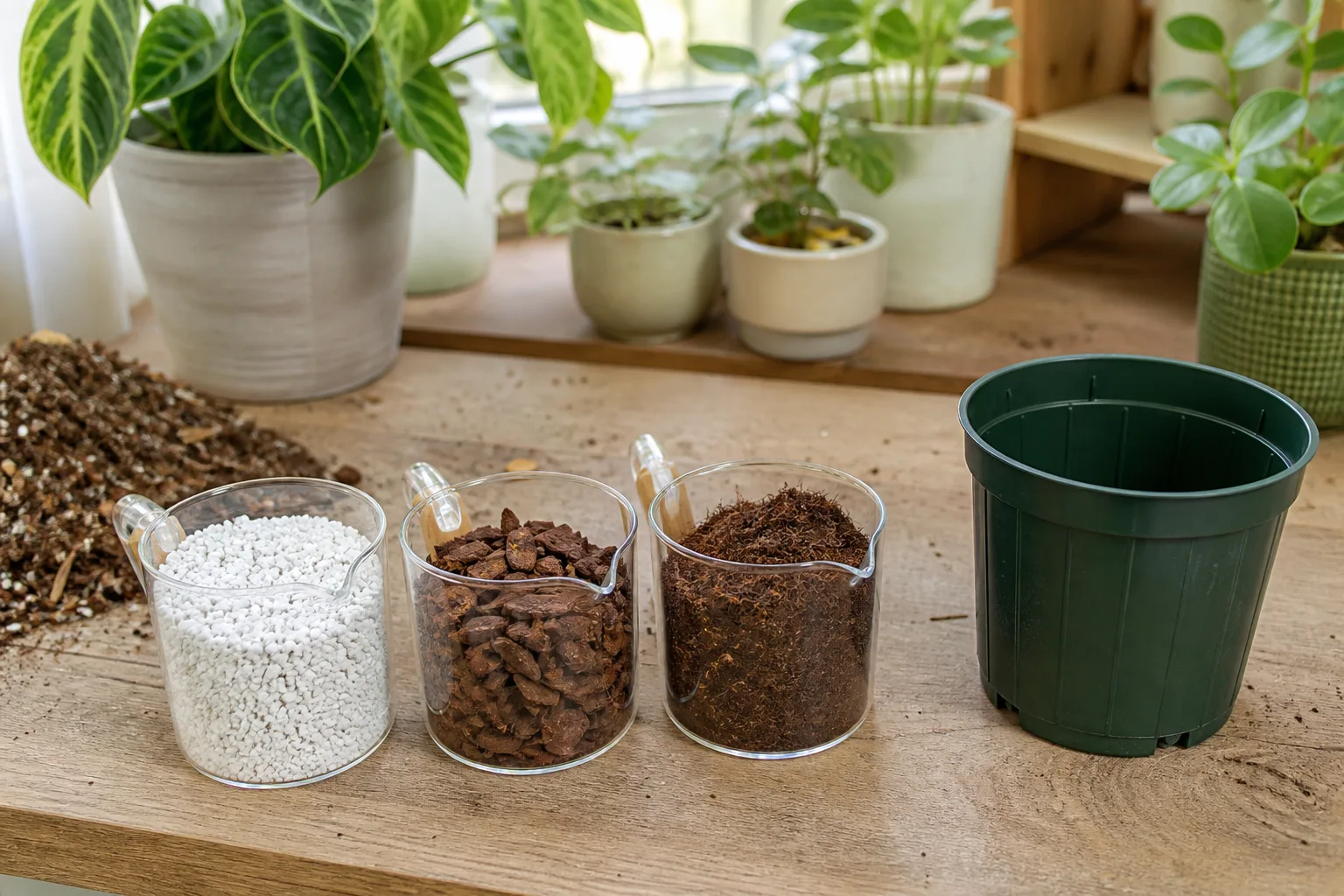
When the nursery medium is extremely dense, smells sour, or stays wet for days, repotting into a more open mix can prevent further damage. Otherwise, do not disturb a healthy plant simply because its roots are not filling the container. A Guzmania is not a fast-growing foliage plant that needs annual pot upgrades. Keep the crown at the same height it was growing before; burying the base of the leaf rosette invites rot. NC State Extension also recommends bark-based orchid mix or a houseplant blend amended with bark and perlite for Guzmania.
Keep Temperatures Warm and Humidity Practical
Guzmania is a tropical houseplant, so a typical warm room is usually suitable. Aim to keep it comfortable at ordinary indoor temperatures, away from a cold sill in winter, hot radiator, heat vent, or air-conditioning stream. The RHS advises bringing container-grown bromeliads indoors before nighttime temperatures fall to about 10°C (50°F), and frost will injure or kill tender plants. That outdoor threshold is a useful line for moving a pot inside, not a target for prolonged indoor growing.
Average household humidity is often adequate if the plant is well-watered and not directly over a heater. If leaf tips repeatedly dry in a heated room, first check water quality, light, and root conditions; tip browning can have several causes. A humidifier can help in an especially dry room, but avoid enclosing a wet plant in stagnant air. Occasional morning misting with soft water is optional, not a substitute for filling the tank, and spraying late in a cool room can leave water sitting in the crown for too long.
Adjust Care Through the Year
Guzmania does not need a rigid seasonal schedule indoors, but room conditions change with the seasons. In spring and summer, brighter days, warmer air, and faster evaporation usually mean checking the cup and medium more often. Keep the central tank fresh and water the mix when its upper layer begins to dry. If the plant is growing new leaves or pups, this is also the best time to refresh compacted mix or divide a large offset.
In fall and winter, shorter days and cooler rooms slow growth. Water the potting medium less often and allow more time between waterings; do not keep pouring into a cup that remains full. If you use a grow light or the plant sits in a heated bright room, it may continue growing, so let the actual moisture and growth tell you what to do. Skip or reduce fertilizer when light is low. A seasonal reduction means fewer watering events, not deliberately drying the crown and roots to the point of wilting.
Do not assume that a Guzmania has a dormant season that guarantees flowering later. Indoor flowering depends on maturity and growing conditions, and blooms can appear at different times. A pup is not ready to flower just because its parent did. Give it several seasons of steady light and root health rather than changing fertilizer or water in hopes of a quick spike.
Fertilize Lightly, or Skip It
Guzmania grows in habitats where nutrients are not concentrated in deep, rich soil, and indoor plants usually need little feeding. If the plant is producing leaves or pups in bright conditions, a balanced liquid houseplant fertilizer can be applied to the potting medium at a diluted rate during spring and summer—about one-quarter to one-third of the label rate every month or two is a conservative home routine. Water the mix first if it is dry, and occasionally flush the medium with plain water to reduce mineral buildup. Do not feed a plant with a rotting base, badly dried roots, or a recently divided pup until it resumes growth.
Extension recommendations differ on whether to feed through the central cup. The RHS permits some very dilute liquid feed in a bromeliad well, but UF/IFAS recommends keeping fertilizer out of the cup because salts can concentrate there and burn emerging leaves. For a low-risk indoor routine, apply a weak solution to the medium instead of the tank. Avoid solid fertilizer pellets in the cup, concentrated orchid sprays, compost tea, or repeated feeding intended to intensify bract color. More fertilizer does not make the same rosette bloom again, and salt damage can resemble dehydration.
Read the Bracts and True Flowers
A Guzmania’s display is an inflorescence: the central flowering structure and its surrounding bracts. The colorful red, orange, pink, or yellow parts are modified leaves, not petals. The actual flowers are small, often yellow or white, and open between the bracts. The RHS profile of G. lingulata describes short-stemmed yellow and white flowers with spreading orange or red bracts. Knowing the difference helps set expectations: the true flowers may wilt while much of the colorful display remains.
Bracts usually hold color for weeks or months, but the exact duration depends on cultivar, how mature the plant was when purchased, light, heat, and handling. Direct sun and hot dry air can fade or crisp them sooner. A bract that slowly loses color while the green leaves and center remain firm is often reaching the end of its normal display.
Retail Guzmania may be sold with a colored stem already mature, so a recently purchased plant might not produce another showy spike for years. The next bloom will come from one of its mature pups, not the old crown. Good growing conditions support that timeline; forcing with extra fertilizer is not a shortcut. UF/IFAS research on commercial flowering induction reports ethephon treatments on mature Guzmania and related bromeliads, but the study involved controlled horticultural use on plants 1.5 to 2 years old. It is not a home recipe or evidence that a young pup can be pushed into bloom.
Care for the Plant After Flowering
When the bracts fade, leave the mother plant in place if its base is firm and the leaves are still partly green. It continues to support the pups growing around it. Remove only the spent flower stalk once it has turned brown, cutting close to its base without nicking the central leaves or offset. Keep the tank and medium on the same sensible routine; as the old rosette slows, it will use less water, so check before topping up rather than following a weekly reminder.
A few outer leaves may yellow and die gradually as the mother declines. That is different from the whole crown suddenly turning soft or the base becoming black and foul-smelling. Remove dead leaves gently when they detach easily; do not strip green leaves or pull on pups while they are small. Eventually the old rosette may dry out enough to snip away, leaving the offsets. If there are no pups and the crown is completely brown and hollow, it has completed its life cycle and can be discarded.
Decide When and How to Separate Pups
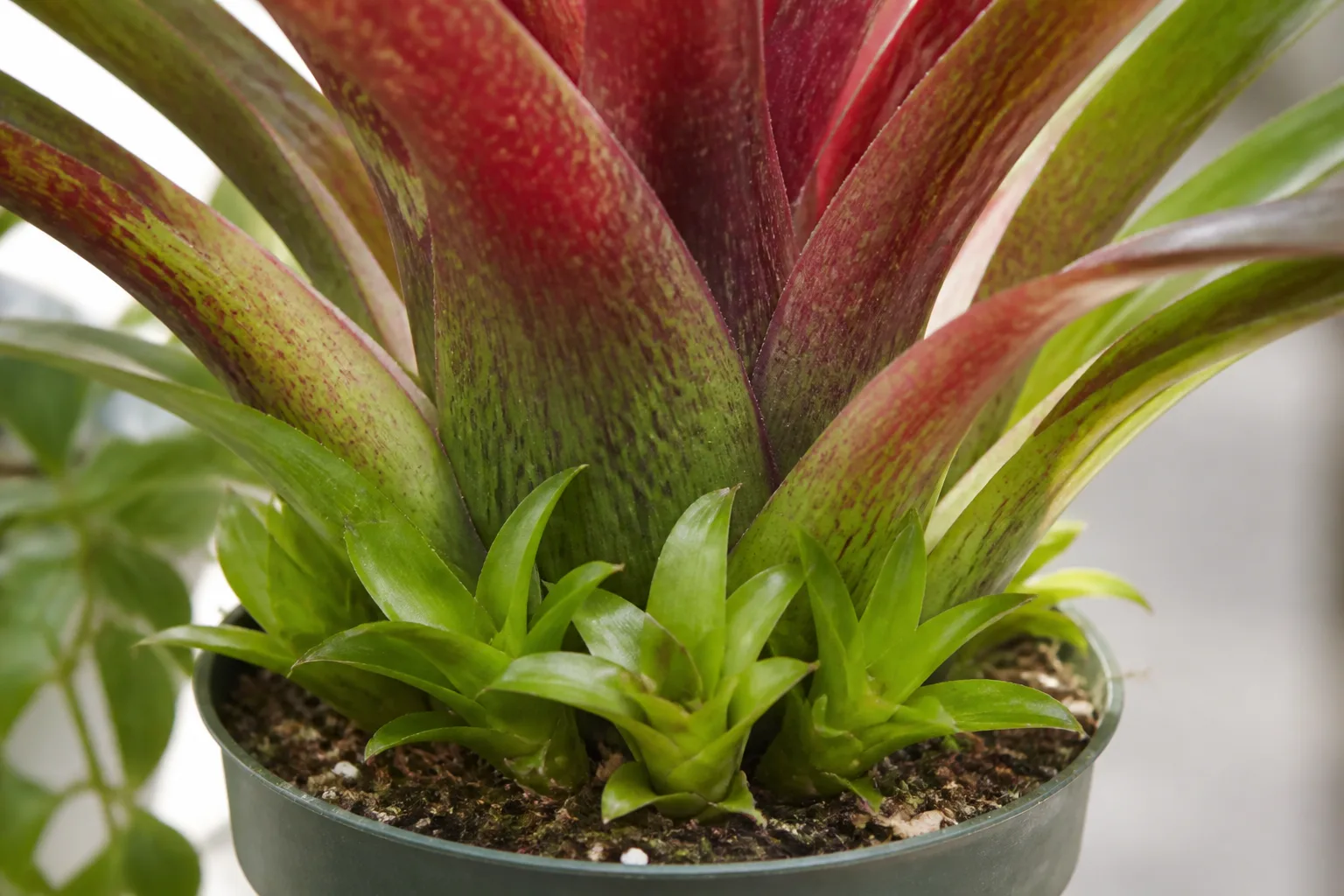
Let an offset grow until it is roughly one-third to one-half the size of the parent rosette. Waiting for the larger end of that range gives a pup more leaves and a better chance of standing on its own, especially if you are new to bromeliad division. UF/IFAS suggests separating pups at about half the parent’s size; other propagation guidance uses roughly one-third. Neither figure is a deadline. If the mother is healthy, leaving offsets attached is a valid choice and creates a fuller cluster.
To divide one, slide the root ball from its pot and brush away just enough mix to see where the pup joins the mother. With a clean, sharp knife, cut through the narrow connecting base, taking a small portion of the pup’s base without slicing its growing center. Some pups have roots and some do not; roots are helpful, but a firm, adequately sized offset can root after potting. Set it in a small draining pot with airy bromeliad mix, keeping the base and leaf center above the medium. Stabilize a wobbly pup with a loose support rather than burying it deeper. Water the mix lightly, keep some fresh water in the cup if one has formed, and place it in warm filtered light. Do not add rooting hormone or fertilizer as a routine requirement. Keep the mix just lightly moist while new roots establish, then return to normal watering.
Repot Only When the Plant Needs It
Repot when the mix has broken down and stopped draining, the pot has cracked, the rosette is unstable, or a mature clump has outgrown its container. Choose a pot just one size larger, not a deep oversized planter. Move the plant in warm weather if possible, preserve the crown’s original planting depth, and water enough to settle the medium before allowing it to drain. If the roots are healthy and the pot is a snug nursery container, it can stay there; a decorative cachepot can provide weight without giving the root zone excess wet soil.
A dense plug around the roots is more urgent than a few roots at the drainage holes. Gently loosen only what comes away easily; avoid aggressive root washing. If roots are dark, mushy, or smell sour, trim damaged tissue with a sterile blade and use fresh, open mix. Wait to fertilize until the plant shows new growth. Guzmania roots are small and primarily anchoring, so being a little rootbound is usually safer than moving into a pot that dries slowly.
Diagnose Brown Tips, Yellow Leaves, and Rot
Use the pattern of damage before changing care. One brown tip on an old leaf is not the same problem as several yellow lower leaves in soggy mix. A fading bract is expected after flowering; a soft center is not. First check whether the crown is firm, whether the pot drains, whether the medium is still wet, and whether the cup water smells fresh. Then make one targeted change and watch new growth instead of making several drastic changes at once.
Match Visible Symptoms to the First Fix
- Dry brown tips with otherwise firm leaves: check for mineral-rich water, irregular drying, or hot dry air. Switch to lower-mineral water and keep the plant away from heating vents. Trim only the dead tip if appearance bothers you, following the natural leaf shape.
- Bleached or crispy patches on the window side: suspect direct sun or heat. Move it back from the glass and maintain filtered light; burned tissue will not recover.
- Dark, soft lower leaves and constantly wet mix: the root zone is likely staying too wet. Empty standing water, improve drainage, and inspect the roots if the decline continues.
- Brown, mushy center or unpleasant smell: suspect crown rot. Remove the plant from standing water, keep unaffected pups if they are firm, and discard severely rotted tissue rather than trying to mask it with fertilizer.
- One or two yellowing outer leaves on an old flowering rosette: this can be normal decline. Check the mother’s base and pups; if the center is firm, continue caring for the offsets.
White crust on the potting mix or leaves often points to mineral residue from hard water or excess fertilizer. Rinse the medium with low-mineral water if drainage is good, wipe leaf surfaces with a damp soft cloth, and stop feeding until new growth is clean.
Manage Pests Without Stressing the Leaves
Scale insects and mealybugs are occasional bromeliad pests noted by UF/IFAS; aphids and spider mites can also arrive from neighboring plants. Look where leaves overlap, beneath leaves, and around the base of pups. Mealybugs look like small cottony patches; scale appears as fixed bumps; mites may leave fine stippling or webbing. Isolate an infested plant so pests do not spread to nearby houseplants.
Start with a gentle rinse or wipe, taking care not to damage the bracts. Remove visible insects with a cotton swab or soft damp cloth. If the infestation persists, use an insecticidal soap labeled for indoor ornamental plants and follow its label, testing a small area first because tender foliage can react. Repeat only as directed; one treatment may miss insects tucked into the crown. Do not pour pesticide into the water tank unless the product label explicitly allows that use. Recheck weekly for several weeks, and keep the plant out of harsh sun while wet foliage dries.
Move Guzmania Outdoors Only in Suitable Climates
Guzmania can spend warm weather outdoors in a frost-free climate, but an abrupt move from a room to direct sun can scorch its leaves. Start it in bright shade under a covered patio or tree canopy, then increase exposure only if the plant remains firm and unbleached. Protect it from driving rain that keeps the pot saturated and bring it indoors before nights fall near 50°F (10°C), following the RHS guidance for tender container bromeliads. Do not plant it permanently in an exposed garden unless your climate is genuinely tropical and the specific cultivar is suited to local conditions.
Outdoors in warm, rainy regions, the tank can collect leaves and organic debris. Flush it regularly so stagnant water does not become a mosquito-breeding site; UF/IFAS recommends weekly flushing of outdoor bromeliad cups during Florida’s summer and fall rainy season. That regional advice reflects the local mosquito issue, so use your county extension or public-health guidance where you live. Indoors, the main reason to flush is to remove old water and mineral deposits. Bring container plants in before cold snaps rather than hoping a short frost will pass without damage.
Check Pet Safety by Exact Plant Name
The ASPCA lists Orange Star, scientifically named Guzmania lingulata minor, as non-toxic to cats, dogs, and horses. That entry supports the safety of that named plant; it does not establish that every Guzmania species or unidentified cultivar has been evaluated. Check the exact label against a current veterinary poison-control list if a pet chews the plant. Even foliage listed as non-toxic can cause stomach upset when an animal eats a large amount, so place the pot where curious pets cannot topple or shred it. Seek veterinary advice if your pet develops symptoms after chewing any plant.
Conclusion
Place Guzmania in bright filtered light, keep its central cup supplied with fresh low-mineral water, and water the airy potting mix only when it begins to dry. Drain the pot fully, feed sparingly if at all, and protect the plant from cold and hot direct sun. When the bracts fade, do not throw out a firm green rosette: it flowers only once, but its pups can carry the plant forward. Wait until an offset is a substantial fraction of the parent, then either leave it attached or pot it shallowly in a small, free-draining container. Those few checks—light, clean cup, oxygen around roots, and patience with the bloom cycle—solve most Guzmania care problems before they become serious.