17 Types of Basil: The Best Variety for Every Dish
Compare 17 types of basil by flavor, leaf color, size, cooking use, and container fit, then choose the varieties most likely to thrive in your garden.
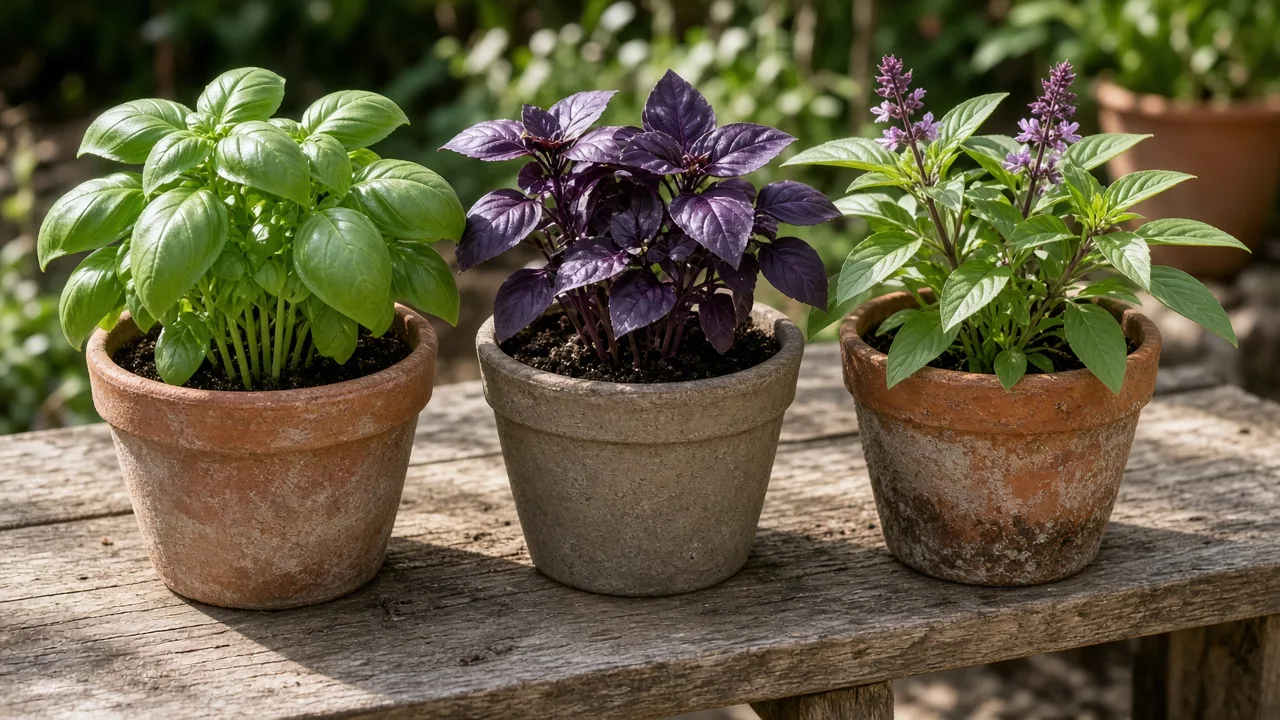
The right basil depends less on its label than on what you want to do with it. Genovese basil is the dependable pesto choice, Thai basil keeps its anise character in hot dishes, Greek basil makes a tidy pot, and African Blue basil earns space when flowers and pollinators matter as much as leaves.
“Basil” also covers different species, hybrids, cultivars, and loosely used market names. The result is a useful range of leaf sizes, aromas, colors, growth habits, and flowering behavior. Penn State Extension’s Penn State Extension basil profile groups familiar choices by large leaf, dwarf, Thai-style, purple leaf, lemon, spice, and holy basil types, which is a better starting point than assuming every basil tastes like the supermarket kind.
Choose basil by kitchen use, space, and harvest goal
You do not need to grow 17 kinds. Start with one variety for your main dish, then add a contrasting type for a different flavor or garden role. A small trial of three plants—classic sweet, Thai, and a compact or colorful type—will teach you more than a long list of seed descriptions.
Match flavor to the food you cook
For pesto, caprese salad, tomato sauce, and pizza finished with fresh leaves, choose Genovese, Sweet, Napoletano, or another large-leaf sweet basil. For pho, Thai curries, stir-fries, and other dishes where the herb is heated, Thai sweet basil has a stronger anise profile and a firmer leaf that stays recognizable.
Lemon and lime basil bring citrus fragrance without adding acidity. Cinnamon and Christmas basil suit fruit, tea, infused vinegar, desserts, or savory recipes where a warm spice note makes sense. Purple basils are often best used fresh as accents, because cooking can mute their color even when the flavor remains useful.
Match growth habit to your garden
Look at mature width, not just the height printed on the packet. A standard sweet basil that fits a six-pack cell in spring can become a broad, branched plant by midsummer, while Greek, Globe, and French types stay more naturally rounded. African Blue can become a substantial, woody-stemmed plant in a warm climate and is a poor choice for a tiny windowsill.
Flowering is another selection decision. If your goal is a long supply of tender leaves, choose a leafy type and harvest often. If you want bees, butterflies, cut stems, or an ornamental focal point, Cardinal and African Blue make more sense than removing every flower from a Genovese plant.
| If you want… | Start with… | Why |
|---|---|---|
| Classic pesto | Genovese or Napoletano | Broad, tender leaves and familiar sweet-clove flavor |
| Thai or Vietnamese dishes | Thai sweet basil | Assertive anise character that holds up in cooked food |
| A small patio pot | Greek, Globe/Pistou, or French basil | Compact, rounded growth and easy tip harvesting |
| Citrus fragrance | Lemon or lime basil | Bright aroma for fish, drinks, fruit, and salads |
| Purple color | Dark Opal or Osmin Purple | Edible burgundy foliage and contrasting flowers |
| Pollinators | African Blue or Cardinal | Flowering is part of the plant’s value |
| Humid-garden reliability | A current downy-mildew-resistant sweet basil | Resistance can protect harvest when susceptible types collapse |
17 basil types worth growing
The descriptions below use the names a home gardener is most likely to see on seed packets and nursery labels. Flavor notes are comparisons, not guarantees: soil moisture, light, heat, harvest age, and your own palate all change the experience of a fresh leaf.
Classic sweet and large-leaf basils
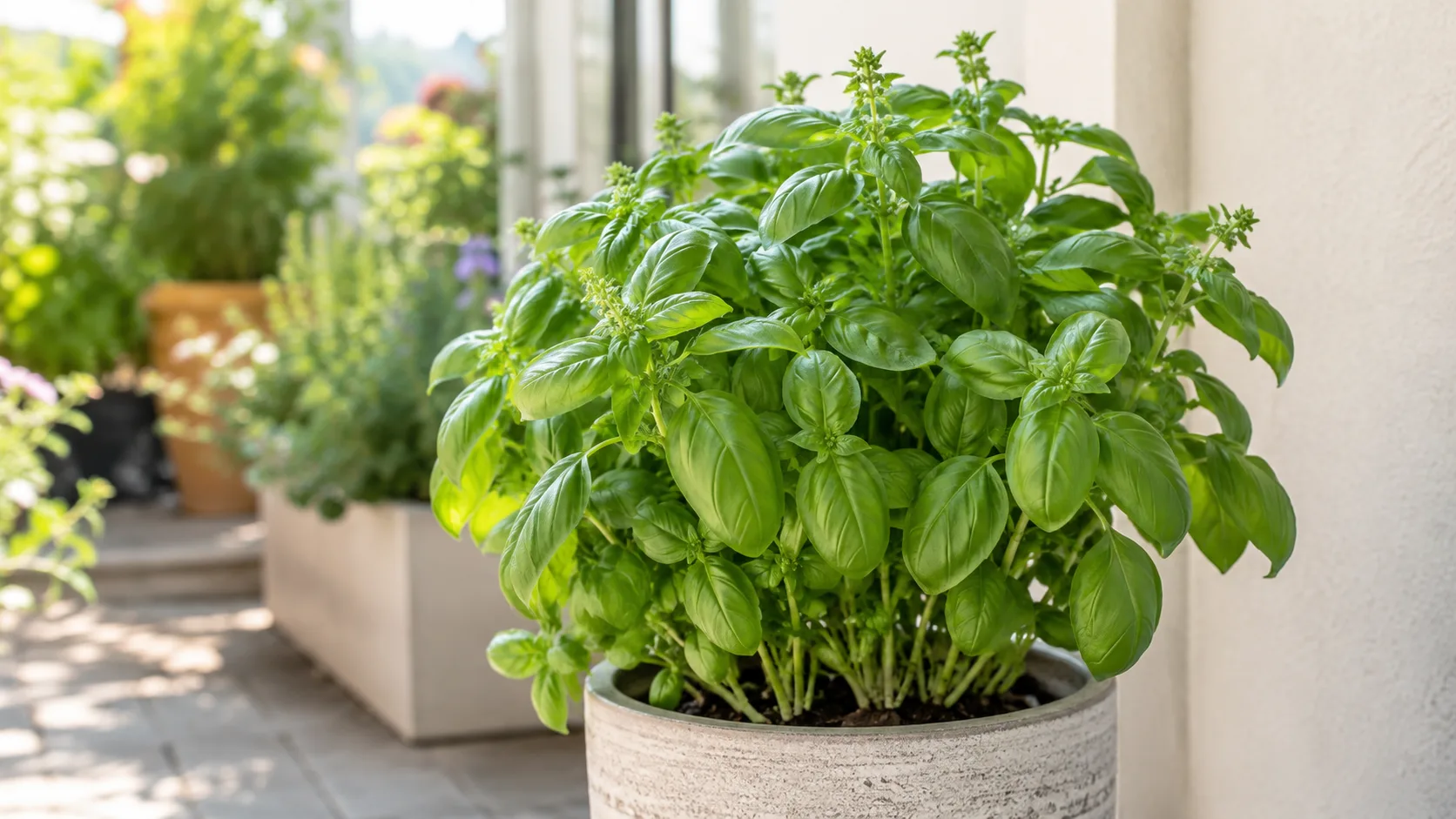
1. Genovese basil (Ocimum basilicum ‘Genovese’). This is the classic Italian basil for a reason. Its broad, glossy green leaves are tender, aromatic, and balanced between sweet, clove-like, peppery, and lightly anise-like notes. It is the safest first choice when a recipe simply says “fresh basil.”
Genovese is excellent for pesto, caprese salad, bruschetta, tomato sauce added near the end, and sandwiches. It grows quickly when warm and well fed, but its generous leaf mass can crowd a container or stay wet after rain. Give it room, cut stems above leaf pairs, and grow a disease-resistant version if basil downy mildew is common in your area.
2. Sweet basil (Ocimum basilicum). Sweet basil is often a broad group rather than one exact cultivar, and the name overlaps with Italian basil in garden centers. Compared with Genovese, a packet labeled simply “Sweet” may produce slightly lighter, more pointed leaves and a softer, sweeter anise-and-clove aroma, but the distinction is not consistent across suppliers.
Choose it for everyday cooking, especially when you want a flexible plant rather than a highly specialized flavor. Read the rest of the packet description for mature size, bolting tendency, and disease resistance; “sweet basil” alone does not tell you whether the plant is compact, large-leaf, or resistant.
3. Napoletano basil (Ocimum basilicum ‘Napoletano’). Also sold as large-leaf or lettuce-leaf basil in some catalogs, Napoletano has oversized, puckered green leaves and a classic sweet-basil flavor. Its leaves are useful when you want to tear a few large pieces into a salad, layer them over tomatoes, or make pesto with less individual picking.
The broad, soft foliage is also its limitation. Wind and rough handling can tear it, and dense plants need spacing for air movement. Choose Napoletano when leaf size and a mild Italian profile matter more than a tidy, compact silhouette.
4. French or Marseilles basil (Ocimum basilicum ‘Marseilles’). French basil is a compact globe type with small leaves and a strong, pleasant basil fragrance. It is associated with pistou, the Provençal sauce made by pounding basil with ingredients such as garlic, olive oil, and cheese, but it is also useful as a fresh garnish.
Its rounded habit makes it easier to place near a kitchen door or in a mixed herb container. It will not deliver the same handful of giant leaves as Napoletano, so its strength is convenience and shape rather than maximum pesto volume.
Purple and ornamental basils
5. Osmin Purple basil (Ocimum basilicum ‘Osmin Purple’). Osmin Purple is valued for very dark purple foliage, narrow leaves, and a spicy clove-like aroma. The color turns a row of green herbs into a deliberate garden feature, and the flowers can be used as edible accents when grown without sprays that are not labeled for edible crops.
Use the leaves fresh in salads, herb vinegar, garnishes, and dishes where a little stronger flavor is welcome. The plant still needs the same warmth, drainage, and steady moisture as green basil; purple leaves do not make it cold hardy or drought tolerant.
6. Dark Opal basil (Ocimum basilicum ‘Dark Opal’). Dark Opal is another classic purple basil, with deep burgundy to blue-black leaves and pinkish-purple flowers. Its color is dramatic in a pot or edible border, while its flavor tends to be more assertive and clove-forward than a mild sweet basil.
The best use is usually fresh garnish, purple herb vinegar, salads, or a small amount stirred into a dish for contrast. If you want the foliage to stay dark, provide strong light; in shade, purple cultivars may look greener and become more stretched.
7. Green Ruffles basil (Ocimum basilicum ‘Green Ruffles’). Green Ruffles has frilled, serrated leaves that look closer to curly lettuce than to smooth Genovese basil. The flavor is lighter and sweet, with descriptions that often include cinnamon, citrus, or licorice notes.
This is a good choice when texture and appearance matter in addition to flavor. Use the ruffled leaves in salads, with tomatoes, as a plate garnish, or in recipes where a mild basil will not overpower delicate ingredients. Its larger, more open habit needs more room than a miniature globe basil.
8. Cardinal basil (Ocimum basilicum ‘Cardinal’). Cardinal is grown for its large, showy flower heads as much as for its edible green foliage. Purple-red flower spikes rise above the plant and add a strong vertical accent to a vegetable bed, cutting garden, or mixed container.
Do not choose Cardinal if you plan to remove every flower for maximum leaf production. Letting it bloom is the point, although you can still harvest young leaves and use them in herb vinegar, oils, sauces, or salads. Place it where the flowers can be seen and where pollinating insects are welcome.
Citrus and warm-spice basils
9. Lemon basil (Ocimum × citriodorum). Lemon basil combines familiar basil aroma with a clear lemon fragrance and a lighter, narrower leaf. It is especially useful with fish, rice, fruit, salads, iced drinks, vinaigrettes, and Southeast Asian dishes where a citrus note belongs beside the herb.
The plant is usually a good container candidate because it is more compact than many large-leaf sweet basils. Taste a leaf before planning a large harvest: some plants lean sharply citrusy, while others are more softly lemon-scented. Frequent tip harvest also helps keep a heat-stressed plant from becoming a flower-first plant.
10. Lime basil (Ocimum americanum). Lime basil is close to lemon basil in garden use but brings a sharper, greener citrus impression. Narrow, pointed leaves work well muddled into drinks, chopped into fruit salads, added to fish or soups, or paired with marinades where a lime-like lift is useful.
Grow it beside lemon basil if you are curious about the difference. Fresh fragrance is the meaningful comparison here, and a side-by-side tasting is more reliable than choosing solely from a catalog adjective.
11. Cinnamon basil (Ocimum basilicum ‘Cinnamon’). Cinnamon basil has green leaves, often with purple stems or veins, and a warm aroma that blends cinnamon, clove, mint, and basil. It brings a noticeably different character to fruit, tea, chutney, baked goods, infused syrup, stir-fries, and herb vinegar.
It can also be used in savory cooking, but do not expect it to disappear into a tomato sauce the way Genovese does. Grow it when you want one plant that makes you rethink basil as a dessert or beverage herb; Epic Gardening’s basil variety guide describes its warm-spice profile and broad culinary range.
12. Christmas basil (Ocimum basilicum hybrid). Christmas basil is a specialty type with green leaves, purple stems or flowers, and a fruity-spicy aroma that some gardeners compare with mulled spice. The name is a useful hint about its aromatic mood, not a promise of one exact flavor across every seed source.
Use it in sauces, fruit dishes, infused oils, teas, and arrangements where fragrant stems are welcome. Availability can be patchy, so buy from a reputable source and label the plant. Because hybrid names are not always used consistently, taste a leaf and record how your own plant performs.
Thai, Greek, globe, and compact basils
13. Thai sweet basil (Ocimum basilicum var. thyrsiflora). Thai sweet basil has narrower green leaves, purple stems, purple flower spikes, and a pronounced anise or licorice aroma. It is the variety to reach for when you want basil in Thai curries, pho, noodle dishes, stir-fries, or a Southeast Asian-style pesto.
Its flavor stands up better than tender Italian basil when added to a hot dish, but it is not a neutral substitute. Use Thai basil in a classic Italian pesto only if you want the anise note to lead. Leave a few flower spikes for the bees if you have enough plants to spare, or pinch them when leaf harvest is the priority.
14. Greek basil (Ocimum basilicum var. minimum ‘Greek’). Greek basil forms a compact mound of small, pointed, highly aromatic leaves. It is naturally suited to a pot, window box, patio edge, or the front of an herb bed where a tall Genovese plant would block neighboring herbs.
Small leaves take longer to pick individually, so harvest the tender tips with scissors instead. Greek basil is useful for salads, tomato dishes, pizza, tea, and small amounts of pesto. Choose it when neat shape and easy placement matter more than large leaves.
15. Globe or Pistou basil (Ocimum basilicum ‘Pistou’). Globe basil, also called Pistou, is a dwarf sweet basil with dense branching and tiny leaves that form a rounded, almost boxwood-like plant. It provides a strong basil aroma from a small footprint and is attractive enough for a pot near the dining table.
Snip whole tips rather than plucking one leaf at a time. The plant may look slow to harvest because each leaf is small, but a light shear across several stems gives you a useful handful while leaving nodes below the cut for regrowth. It is one of the easiest choices for a small container garden.
Distinct species and long-flowering hybrids
16. Holy basil or tulsi (Ocimum tenuiflorum). Holy basil is not simply another name for Thai sweet basil. Tulsi is a distinct species with textured or slightly toothed leaves, branching stems, and a deep, spicy aroma that may include clove, pepper, licorice, or citrus depending on the type, such as Rama, Krishna, or Vana.
Grow it for its culinary, fragrant, cultural, and tea uses. Traditional medicinal significance is important to many communities, but a garden article should not turn that tradition into a treatment claim; concentrated preparations and supplements deserve qualified medical guidance, especially with medicines or pregnancy. In the garden, treat tulsi like other warm-season basil: give it sun, warmth, drainage, and regular harvest.
17. African Blue basil (Ocimum kilimandscharicum × O. basilicum ‘Dark Opal’). African Blue is a sterile hybrid with purple-tinged foliage, purple flower stems, and abundant blue-lavender flowers. NC State Extension’s African Blue basil plant profile notes that its camphor-basil parent gives it a distinctive flavor and that the plant is perennial in tropical Zone 10 and warmer but can be grown as an annual elsewhere.
This is the basil for a pollinator garden, large pot, or flowering herb border—not the best choice for a tiny pesto crop. Its flowers do not need to be pinched to prevent seed production because the hybrid is sterile, and its mature stems can become woody or flop under their own weight. Buy a plant or root cuttings rather than expecting useful seed, and taste the leaves before using a large amount because the camphor note is stronger than classic sweet basil.
How to choose basil for containers
Choose the plant first, then the pot. Greek, Globe/Pistou, and compact French basil are forgiving starting choices for small containers; a standard Genovese, Thai, or lemon basil can also thrive in a pot, but it needs enough root volume, a drainage hole, and more frequent checking in hot weather.
Do not pack several large seedlings into one decorative pot simply because they fit in May. Overcrowding makes the root zone dry unevenly and reduces air movement through the foliage. A single vigorous plant in a well-drained pot is often more productive than a crowded cluster that looks full for two weeks and then stalls.
The potting mix should hold moisture without staying saturated. Place containers where plants receive strong light and shelter from cold wind, and move them before a cold night rather than trying to rescue blackened leaves afterward. Penn State Extension recommends full sun, warm conditions, and spacing that allows airflow; those same principles matter even more when several pots are grouped together.
How to grow any basil for a steady harvest
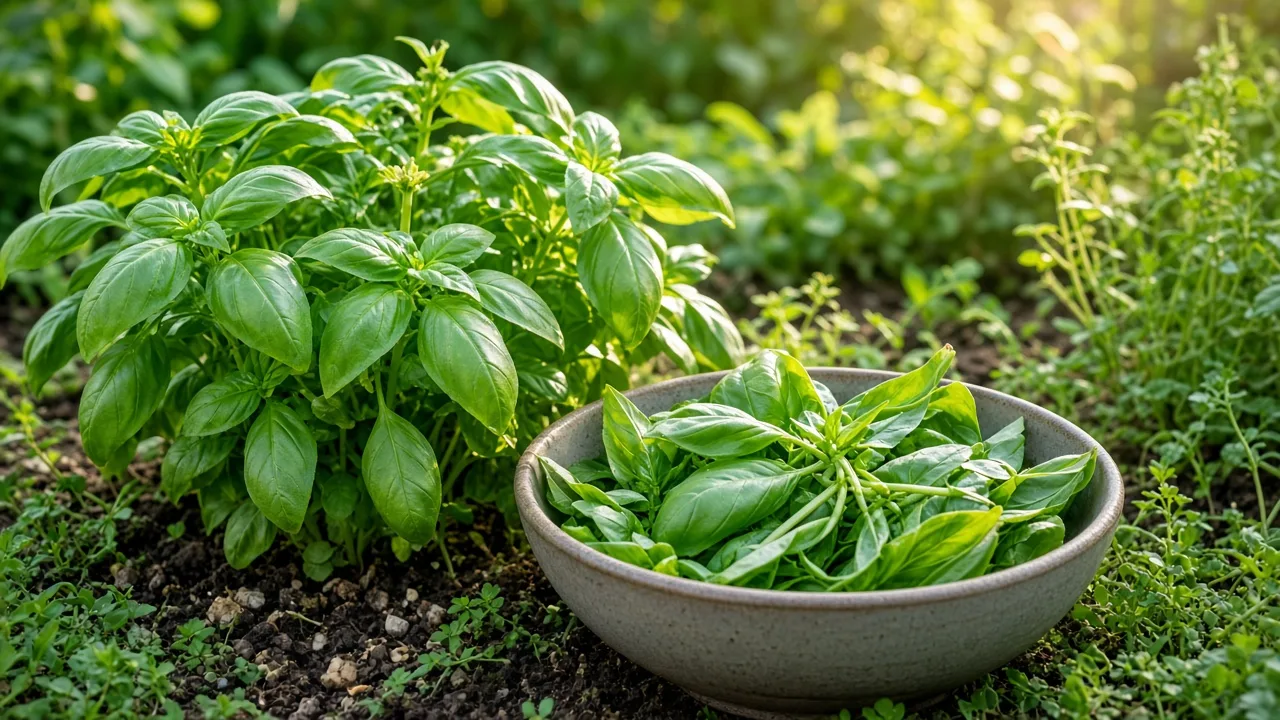
Most of these basils share a basic routine: fertile, well-drained soil; strong light; warm temperatures; and moisture that does not swing from bone-dry to waterlogged. The useful differences appear in how much space they need, how quickly they flower, how their leaves taste, and whether you want to harvest or celebrate the blooms.
Start warm and keep the root zone evenly moist
Basil is a warm-season herb, not a plant to rush into cold spring soil. Penn State Extension advises waiting until frost danger has passed and soil is at least about 60°F; Utah State University Extension reports best seed germination around 75–85°F. Direct-sow about ¼ inch deep, or start seed indoors several weeks ahead and transplant only after the weather has settled.
Give plants full sun when possible, but interpret “full sun” through your climate. In a very hot container on concrete, afternoon shade can prevent a root ball from overheating; in a cool or cloudy climate, reducing light usually produces slower, leggier growth and weaker flavor. Water the soil when the surface begins to dry, then let excess drain instead of keeping the pot in a saucer of standing water.
Utah State University Extension’s home-garden basil guidance uses roughly 1 to 1½ inches of water per week as a starting point while emphasizing that soil and temperature change the requirement. Use that figure as a weather-adjusted benchmark, not a calendar command: a small pot in a heat wave may need checking daily, while an established garden bed after rain may need nothing.
Feed according to the soil and the container. Basil needs enough nutrition to replace the leaves you harvest, but a heavy flush of nitrogen can create soft, oversized growth without making the flavor better. In a garden, a soil test can prevent unnecessary fertilizer; in a pot, use a balanced, diluted fertilizer according to its label rather than guessing from leaf color.
Harvest above nodes to build a bushier plant
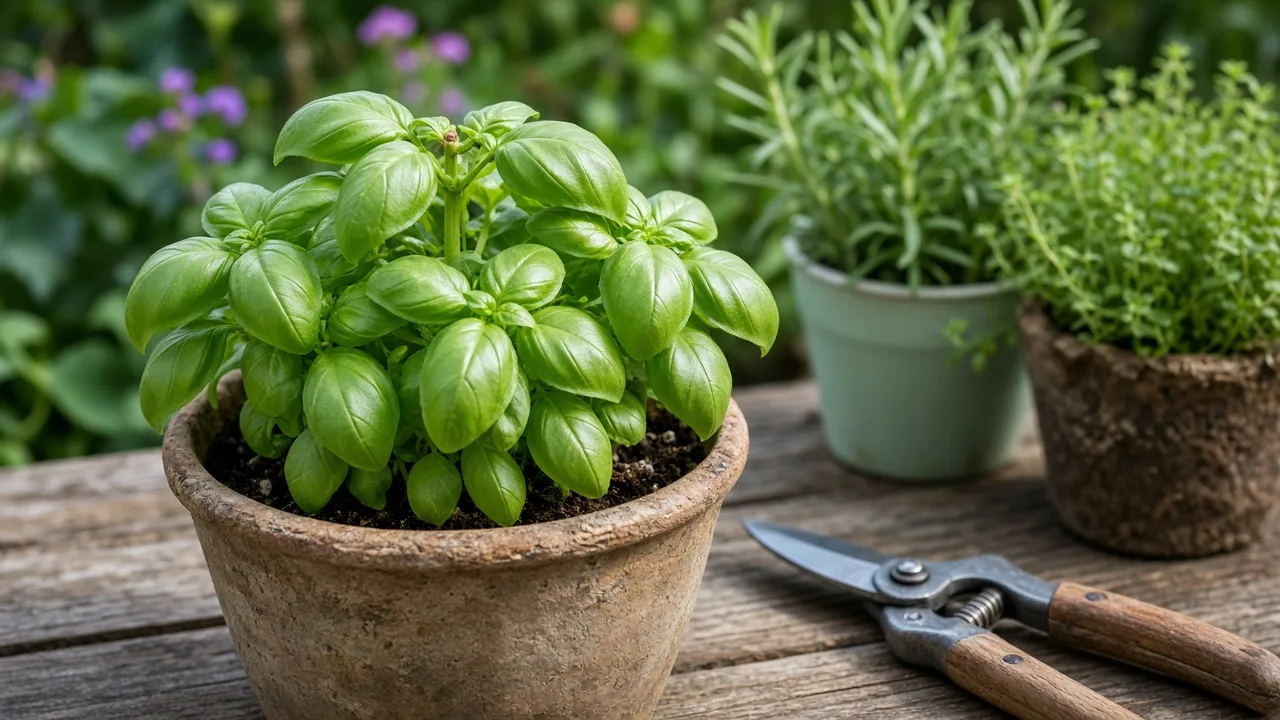
Wait until a young plant has several pairs of true leaves before taking a serious harvest. Then cut a stem just above a pair of healthy leaves or visible nodes, leaving enough green growth below the cut for the plant to branch. Each cut changes one upright stem into two possible growing points, which is why regular tip harvest produces a bushier plant than stripping isolated leaves from the bottom.
Harvest in the morning when leaves are crisp, and use clean scissors or snips for thick stems. Penn State Extension recommends harvesting before bloom for the best leaf quality, while BBC Gardeners’ World Magazine’s basil guide emphasizes regular cutting above a leaf pair and leaving side shoots so the plant can regrow.
Do not remove nearly every leaf at once from a small plant. A good rule is to take the longest tips while leaving several active leaf pairs on each branch, then rotate among plants if you have more than one. That gives you a steady supply instead of forcing one plant through a cycle of shock, weak regrowth, and premature flowering.
Decide when flowers are a feature, not a problem
Basil flowers are not poisonous or a sign that the plant has failed. They are a sign that the plant is shifting toward reproduction, and leaf texture and flavor may become less tender as flowering advances. For a pesto crop, pinch or cut flower spikes as soon as you notice them and keep harvesting the tips; for African Blue, Cardinal, or a pollinator planting, allow selected stems to bloom.
Pinching flowers cannot make a stressed plant ignore its environment. Heat, dry soil, a cramped root system, and declining day length can all push basil toward flowering. If buds appear repeatedly, first check water, root space, and light before simply cutting more flowers. A succession sowing every few weeks is often more reliable than expecting one plant to produce perfect leaves forever.
When disease resistance should decide the variety
Basil downy mildew is a major reason to choose a variety by performance rather than novelty. It often begins as yellowing on the upper leaf surface, with gray, brown, or purplish downy growth on the underside; the disease can spread quickly in humid weather and is not fixed by merely removing one ugly leaf.
Penn State Extension recommends healthy seed, air circulation, sanitation, resistant varieties, and avoiding overhead watering. It also notes that Thai, lemon, lime, purple, and spicy basils have shown less susceptibility than many traditional sweet basils. Remove badly infected plants and do not put diseased material into a small home compost pile.
For gardeners who repeatedly lose Genovese-style basil, look for a current cultivar specifically sold as downy-mildew resistant, such as Rutgers ‘Devotion’, ‘Obsession’, ‘Passion’, ‘Thunderstruck’, Prospera, Amazel, or other locally available resistant lines. The exact list and availability change, and resistance is not immunity, so read current seed descriptions and do not crowd even a resistant plant. A resistant cultivar plus dry foliage and airflow is a stronger plan than either choice alone.
Fusarium wilt and root rot call for a different response. If the lower stem browns, the whole plant collapses, or roots smell sour in wet soil, changing to a purple basil will not solve the underlying drainage or soil problem. Improve the site, rotate the planting area where possible, use clean transplants, and discard plants with severe disease rather than spreading the problem through cuttings.
How to store and use different basil leaves
Fresh basil is most aromatic soon after harvest. Keep stems in a glass of water at room temperature, away from harsh direct sun, and use the leaves within a few days; cold storage can blacken tender basil leaves. If you must refrigerate, protect the leaves from condensation and chilling injury rather than treating basil like a hardy leafy green.
Match preservation to the variety’s strength. Freeze Genovese, Sweet, Napoletano, Thai, lemon, or lime basil in chopped portions with water or oil, or freeze pesto in small containers so you can use only what a recipe needs. Purple leaves can also be frozen, but expect their texture and color to change after thawing.
Drying is convenient for storage but does not preserve the bright character of every type equally. Broad sweet basil loses some of its fresh aroma when dried, while strong cinnamon, holy, or spicy types can remain interesting in tea blends and cooked dishes. Dry leaves in shade with good airflow, and store them airtight in a cool, dark place once they are crisp.
When cooking, add tender sweet, lemon, and lime basil late so their volatile aromas remain noticeable. Thai, cinnamon, holy, and African Blue can tolerate more assertive dishes, but their distinctive notes are easiest to appreciate when you start with a small handful. Label frozen portions by variety; “basil” is not specific enough when one cube tastes like Genovese and the next tastes like anise or camphor.
Conclusion
The best type of basil is the one that matches your plate and your growing conditions. Genovese and Sweet are dependable all-purpose choices, Napoletano and French basil cover large-leaf and compact Italian uses, Thai sweet basil belongs in hot Southeast Asian dishes, lemon and lime basil add citrus, and cinnamon and Christmas basil bring warm spice.
For color, choose Osmin Purple, Dark Opal, or Green Ruffles; for flowers, Cardinal or African Blue; for a small pot, Greek or Globe/Pistou; and for a culturally distinct plant, holy basil or tulsi. If downy mildew has ended your season before, make resistance part of the decision and pair it with good airflow, careful watering, and clean garden habits.
The most useful first planting is usually three contrasting basils: one classic sweet type, one specialty flavor, and one compact or disease-resistant option. Grow them side by side, taste leaves at the same age, label them, and let actual harvest, not the seed packet alone, decide which varieties return to your herb garden next year.