Thai Basil Care Guide: Light, Water, Soil & Growth
Ocimum basilicum var. thyrsiflora
Grow Thai basil in warm weather with bright light, fertile well-drained soil, and steady moisture. Learn container care, pinching, harvesting, and pet safety.
Thai Basil Care Guide: Light, Water, Soil & Growth
Start with wateringThe most common care mistake for Thai BasilWatering guide →Thai Basil care essentials
Light
Water
Keep the root zone evenly moist but well-drained. Water when the upper layer of soil or potting mix begins to dry, and let excess water drain; avoid keeping the roots waterlogged.
Soil
Fertile, moisture-retentive but well-drained soil; a loose potting mix amended with mature compost suits container plants.
Humidity
Temperature
Fertilizer
About Thai Basil
Thai Basil is native to Southeast Asia, typically reaches About 30–45 cm (12–18 in.) tall and around 30 cm (12 in.) wide; cultivar and climate affect its final size indoors, with fast in warm weather growth. Thai Basil has a aromatic, bushy herbaceous basil; a tender perennial in frost free climates and usually grown as an annual where winters are cold growth habit and part of the Lamiaceae family. It is also known as Horapha, Hun que, and Thai sweet basil.
| Detail | Information |
|---|---|
| Also known as | Horapha, Hun que, Thai sweet basil |
| Native region | Southeast Asia |
| Mature size | About 30–45 cm (12–18 in.) tall and around 30 cm (12 in.) wide; cultivar and climate affect its final size |
| Growth rate | Fast in warm weather |
| Growth habit | Aromatic, Bushy Herbaceous Basil; A Tender Perennial In Frost Free Climates And Usually Grown As An Annual Where Winters Are Cold |
| Scientific name | Ocimum basilicum var. thyrsiflora |
| Family | Lamiaceae |
Thai Basil Care Guide: Light, Water, Soil & Growth
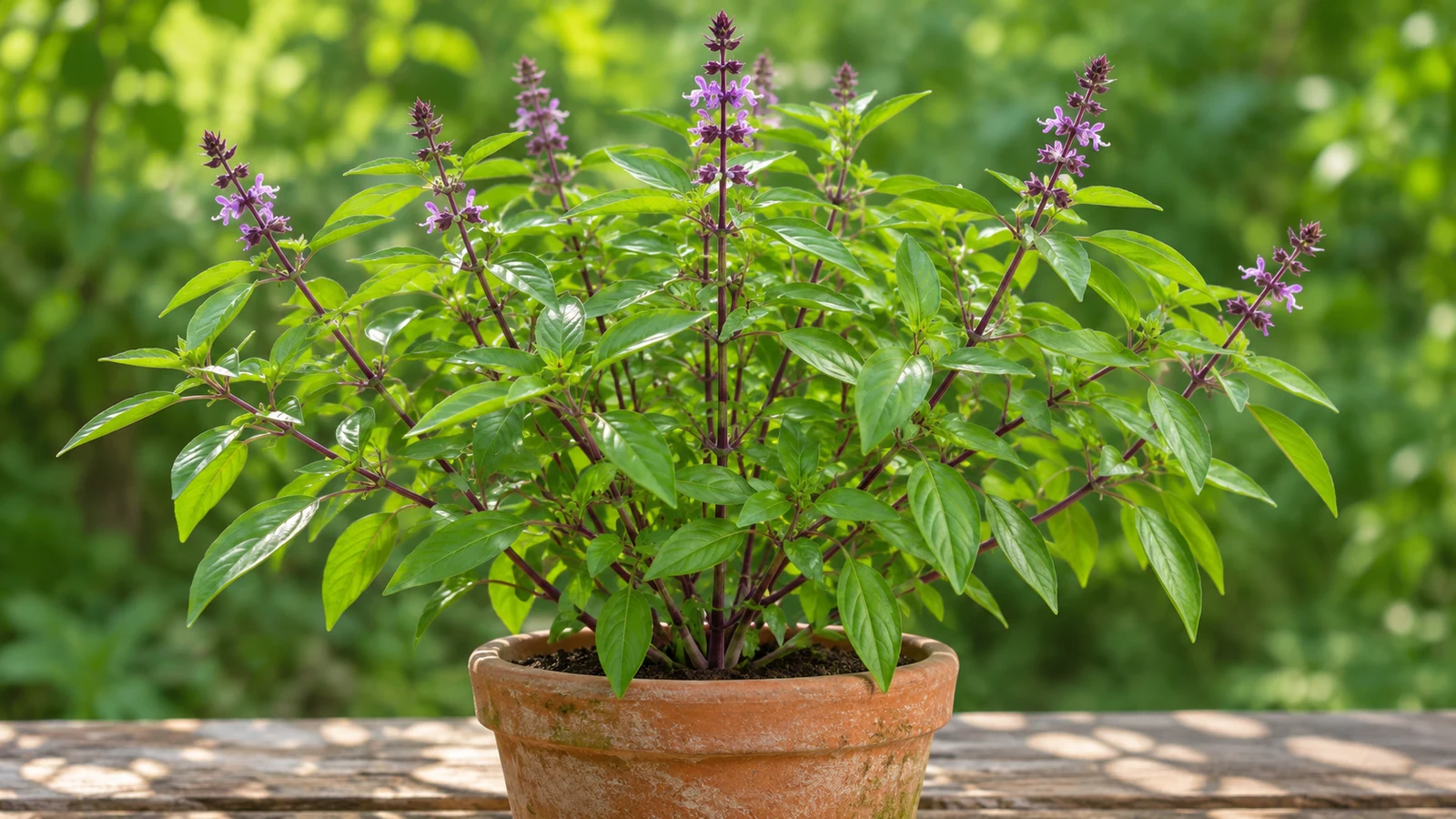
Thai basil is a warm-season culinary herb with glossy green leaves, purple stems and a sweet, spicy aroma. Give it strong light, warm conditions and soil that stays lightly moist while draining freely; when something looks wrong, check the roots and growing conditions before adding water or fertilizer.
What makes Thai basil different?
Thai basil is sold under the botanical name Ocimum basilicum var. thyrsiflora, though references may group it more broadly under Ocimum basilicum. The common-name listing at NC State places Thai basil among the cultivated forms of O. basilicum, while specialist horticulture sources use the variety name. For care at home, the useful distinction is the culinary Thai type with its characteristic aroma and purple stems, rather than a label alone. NC State Extension describes Thai basil within O. basilicum.
Its narrow, aromatic leaves are used in Southeast Asian cooking, where their sweet, spicy, licorice-like aroma is a familiar trait. The cultivar can differ in leaf shape, flower color and final size, so use the plant label and its growth habit rather than expecting every Thai basil to look exactly alike. The Spruce’s Thai basil profile describes its aroma and common cultivar differences.
Thai basil, sweet basil, and tulsi
Thai basil and Genovese or sweet basil are closely related cultivated forms of O. basilicum, but Thai basil is usually more anise-like and has purple stems. Holy basil, often called tulsi, is a different species, O. tenuiflorum; similar spicy aromas can make the two easy to confuse when a nursery label only says “basil.” Check the botanical name and leaf-and-stem appearance if the distinction matters for a recipe or care advice. The Spruce comparison of Thai and holy basil distinguishes the two.
Growth habit and mature size
Thai basil grows as a bushy, branching herb when its tips are pinched and it receives enough light. In warm, frost-free climates it can live as a tender perennial, but it is commonly grown as an annual where cold weather ends the season. The Royal Horticultural Society describes Thai Sita as a tender perennial that can be grown as an annual and reaches about 30 cm; that is cultivar-specific guidance, not a promise that every Thai basil will overwinter or stop at the same height. RHS cultivar notes give its habit and size.
Thai basil care at a glance
| Need | Starting point | What to watch |
|---|---|---|
| Light | Full sun for most of the day; protect from the hottest afternoon sun in very hot climates | Weak, stretched stems suggest too little light; scorched leaves can mean harsh exposure or heat stress |
| Water | Water thoroughly when the top layer begins to dry | Keep the mix moist, not waterlogged; always empty standing water from saucers |
| Soil | Fertile, moisture-retentive, free-draining soil | Persistent wetness and sour-smelling mix point to poor drainage |
| Temperature | Warm growing conditions; protect from cold nights and frost | Growth slows or leaves are damaged when conditions become cold |
| Shaping | Pinch tips and flower spikes when you want more leafy growth | Leaving some flowers is fine if you value blooms or seed rather than a long leaf harvest |
These are starting points, not a weekly schedule. A small pot in hot sun dries more quickly than a large container in a humid, shaded spot, so use the plant and soil as your guide.
Light and warmth
Choose a bright outdoor location with about six hours or more of direct sun when temperatures are moderate. Thai basil tolerates some shade, and in very hot weather morning sun with afternoon shade can protect leaves from intense heat; this adjustment is especially useful for balconies that bake in the afternoon. The Spruce recommends afternoon shade in very hot climates.
Warmth matters as much as brightness. Put outdoor starts out only after cold nights have passed, and bring a potted plant into a sheltered, bright place when temperatures fall. Thai basil can be grown indoors near a sunny window, but a dim room rarely gives it enough light to stay compact; if the stems stretch toward the glass, move it to a brighter window or use a suitable grow light.
Water and soil
Use a fertile potting mix or garden soil that holds some moisture but drains readily. Thai basil does not want to dry out completely between waterings, yet roots that sit in saturated mix are vulnerable to decline. In a container, drainage holes are essential; a decorative cachepot should not hold runoff around the roots.
Check the upper 2–3 cm of soil with a finger. If that layer is beginning to dry, water at the base until the root zone is evenly moist, then let the pot drain completely. In hot weather check daily; in cooler or rainy weather, wait longer. Watering the soil instead of repeatedly wetting the foliage also helps keep leaves cleaner. Yates’ basil guide recommends watering at the base and cautions against keeping the potting mix too wet.
Feeding and shaping
Start with fertile soil and avoid using fertilizer as a reflex. A plant in a rich bed or fresh potting mix may not need frequent feeding, while a heavily harvested container plant may benefit from a modest, balanced feed during active growth. Follow the product label and reassess growth before increasing the dose; The Spruce notes that rich soil can reduce the need for extra fertilizer. For more detail, see the Thai Basil fertilizer guide.
Pinch the growing tips once the young plant has several pairs of leaves, cutting just above a leaf pair so two side shoots can develop. Remove flower spikes when the main goal is a steady supply of leaves; if flowers are part of the display or you want to collect seed, leave some. NC State Extension recommends pinching long stems and flower buds to promote branching and a bushy form. See the Thai Basil pruning guide for where and how much to cut. NC State Extension’s Thai basil guidance describes that pruning approach.
Where Thai basil grows best
Thai basil does well in a sunny garden bed, a balcony planter or a large indoor pot if the plant receives enough light and warmth. In garden soil, improve drainage before planting rather than trying to compensate for heavy, wet ground with more fertilizer. Leave room for air to move around the leaves, especially in humid weather.
Garden beds and balconies
In a garden bed, wait until frost risk has passed and the soil has warmed. A sheltered spot helps protect tender stems from cool wind, while a few hours of afternoon shade can reduce heat stress in very hot locations. If a balcony becomes intensely hot, shift the pot to morning sun rather than leaving it against a heat-reflecting wall all day.
Harvest from several stems instead of stripping one branch bare. Regular picking keeps the plant producing side shoots and gives you a better balance of leaf growth and flowers. If you want a step-by-step routine, the Thai Basil light guide explains how to adjust sun exposure, and the watering guide covers checks for pots and beds.
Pots and indoor plants
Use a pot with several open drainage holes and enough room for a mature root ball; a container around 30 cm deep is a practical starting size for a full-sized plant. A very small pot can dry quickly in sun and may leave the plant thirsty between checks. Gardening Channel’s Thai basil guide recommends a container about 30 cm deep; Epic Gardening’s container article discusses drainage and space for basil roots.
Indoors, place the plant at a bright, sunny window; NParks says Thai basil can be grown indoors when it receives at least six hours of sunlight daily. Turn the pot occasionally if the stems lean toward the light, and pinch back the tips to keep it from becoming top-heavy. If the mix dries within a day or the roots fill the pot, move it into a slightly larger container; the Thai Basil repotting guide explains how to size the next pot without leaving excess wet soil around the roots. NParks’ Thai basil cultivation notes cover its indoor light and moisture needs.
Seasonal care in hot and monsoon climates
In tropical and subtropical regions, Thai basil can grow through much of the year when warmth and light remain adequate. Treat local weather, not a temperate-region planting calendar, as the cue: start or transplant during a reliably warm spell, and give the plant some shade if afternoon heat is severe. In cooler hill or winter conditions, keep a container in a warm sheltered position or plan to replace the plant when cold has damaged it.
During monsoon rains, drainage becomes the main job. Raise container bases off flat surfaces, clear blocked saucer runoff, and move pots under a bright cover if repeated rain leaves the mix saturated. Do not water simply because a calendar says to; wait until the top layer begins to dry.
Common Thai basil care mistakes
The most common overview-level mistakes are giving too little light, letting water collect around the roots, or treating every wilt as a request for water. Thai basil responds to conditions rather than a fixed routine, so check the soil, pot drainage and recent heat before changing care.
Drooping leaves: check moisture first
If the soil feels dry several centimetres down and the pot is light, water slowly and thoroughly, then let it drain. If the mix is already wet, do not add more water; empty the saucer and check whether the pot has open drainage holes. A plant that stays wilted in wet soil may have a root or drainage problem, so let the surface dry slightly and inspect the root zone before feeding or repotting.
Sparse growth or early flowering
Long gaps between leaves and stems leaning toward a window usually call for more light, not heavier feeding. Move the plant gradually to a brighter location, especially if it has been indoors or in shade. If it is producing flower spikes before you have harvested much, pinch them and harvest the upper sets of leaves; the Thai Basil propagation guide is useful if you want to start a replacement plant from a healthy cutting.
Is Thai basil safe for pets?
The ASPCA lists basil, including Thai basil as a common name, as non-toxic to cats and dogs. That listing covers those animals and the plant name specified by the ASPCA; it is not a blanket safety classification for every animal or a recommendation to let pets eat large amounts. ASPCA Animal Poison Control’s basil entry is the source for this limited safety note.
When to use this page vs other Thai Basil guides
Use this overview to set a baseline for light, moisture, warmth and soil, then choose a focused guide when one part of the routine needs attention. If the plant is stretching or scorched, use the light guide; if watering is uncertain, use the watering guide and judge the mix before adding water.
For a potting problem, the soil guide covers mix and drainage, and the repotting guide helps when roots have filled the container. The fertilizer guide covers feeding decisions; the pruning guide covers pinching and harvest cuts; and the propagation guide covers starting a new plant.
Related Thai Basil guides
- Thai Basil light guide — choose a site and spot signs of too little or harsh light.
- Thai Basil watering guide — check soil moisture and adjust watering for pots, heat and rain.
- Thai Basil soil guide — select a fertile mix that holds moisture while draining freely.
- Thai Basil fertilizer guide — decide whether a plant needs feeding and how to avoid overdoing it.
- Thai Basil repotting guide — assess roots and choose a sensible next pot size.
- Thai Basil propagation guide — root cuttings or raise another plant.
- Thai Basil pruning guide — pinch tips, manage flower spikes and harvest without stripping stems.
Conclusion
For a healthy Thai basil plant, provide warmth and bright light, keep the root zone evenly moist but well drained, and pinch tips when you want a leafy, branching shape. In hot climates, protect it from punishing afternoon sun; in rainy weather, prevent the pot from staying saturated. Start with those checks before changing fertilizer or replacing the plant, and use the focused guides when you need a closer look at one part of its care.
How to care for Thai Basil?
When should you water Thai Basil?
Keep the root zone evenly moist but well-drained. Water when the upper layer of soil or potting mix begins to dry, and let excess water drain; avoid keeping the roots waterlogged.
- Feel the top 2–3 cm of the mix. If it is beginning to dry - Water when the upper layer of soil or potting mix begins to dry, and let excess water drain; avoid keeping the roots waterlogged.
- water at the base of the plant and let the pot drain fully - Water when the upper layer of soil or potting mix begins to dry, and let excess water drain; avoid keeping the roots waterlogged.
- Drain excess water - Water when the upper layer of soil or potting mix begins to dry, and let excess water drain; avoid keeping the roots waterlogged.
What soil works best for Thai Basil?
Fertile, moisture-retentive but well-drained soil; a loose potting mix amended with mature compost suits container plants.
- Use quality peat-free potting mix with mature compost for a fertile - Fertile, moisture-retentive but well-drained soil; a loose potting mix amended with mature compost suits container plants.
- moisture-retentive blend - Fertile, moisture-retentive but well-drained soil; a loose potting mix amended with mature compost suits container plants.
- Choose a pot at least 30 cm (12 in.) deep with drainage holes - Fertile, moisture-retentive but well-drained soil; a loose potting mix amended with mature compost suits container plants.
- Avoid a mix that stays waterlogged after watering - Fertile, moisture-retentive but well-drained soil; a loose potting mix amended with mature compost suits container plants.
Grower notes for Thai Basil
Check the label for Thai basil
Thai basil is Ocimum basilicum var. thyrsiflora, a Southeast Asian culinary basil with dark purple stems, green leaves, and an anise-like, licorice aroma. It is different from holy basil or tulsi (Ocimum tenuiflorum), despite the similar names and flavor notes.
Give it warmth and bright light
Thai basil grows best in full sun, but appreciates afternoon shade in very hot conditions. In cool climates, start seed indoors before the last frost and move plants outside only when nights are reliably warm; cold temperatures can stunt or damage the leaves.
Keep moisture steady and drainage clear
Use fertile soil that holds some moisture but drains freely. Water when the surface begins to dry, especially in pots during hot weather, and water at the base instead of wetting the leaves. A sunny indoor window can work if the plant receives several hours of direct light.
Pinch tips and flower buds for leafy growth
Once a young plant has several sets of leaves, pinch the growing tips to encourage branching. Remove flower buds when you want to prolong leaf production; flowering shifts the plant away from fresh leaf growth.
Harvest the upper leaves often
Pick the upper sets of leaves regularly to encourage new shoots, taking care not to cut too low on the plant. Harvesting often helps keep the plant bushy. Use the fresh leaves promptly; like other basil leaves, they are sensitive to cold storage.
Grow it in a roomy container if needed
Thai basil adapts well to containers. A pot around 30 cm (12 in.) deep gives a mature plant useful root room; use a loose, fertile mix and drainage holes. Healthy plants can also be propagated from stem cuttings in water.
Is Thai Basil Safe for Pets?
ASPCA lists basil (Ocimum basilicum), including Thai Basil as a common name, as non-toxic to cats and dogs. The ASPCA entry does not provide a horse classification.
ASPCA lists Ocimum basilicum as non-toxic to cats and dogs and includes Thai Basil among its common names. This supports the listed basil species, but the entry does not classify Thai basil for horses; do not infer an equine safety status from it.
Watering Thai Basil
For Thai Basil, feel the top 2–3 cm of the mix. If it is beginning to dry, water at the base of the plant and let the pot drain fully. and water check garden plants during dry spells and pots more often in warm weather. Water thoroughly when the surface begins to dry rather than following a fixed calendar. Water more often during hot, bright weather and less as growth slows in cool conditions. Thai basil is tender; protect it from cold nights and treat it as an annual outside frost-free climates.
| Detail | Information |
|---|---|
| How often | Check garden plants during dry spells and pots more often in warm weather. Water thoroughly when the surface begins to dry rather than following a fixed calendar. |
| How to check | Feel the top 2–3 cm of the mix. If it is beginning to dry, water at the base of the plant and let the pot drain fully. |
| Seasonal changes | Water more often during hot, bright weather and less as growth slows in cool conditions. Thai basil is tender; protect it from cold nights and treat it as an annual outside frost-free climates. |
Signs of overwatering
- Potting mix remains soggy or the pot is left standing in water
- Leaves develop brown spots, wilt, or decline while the soil is still wet
- Lower stems or roots begin to rot in persistently wet soil
Signs of underwatering
- Leaves droop during hot weather while the soil is dry
- The container mix dries quickly and the plant wilts between waterings
Soil & potting for Thai Basil
Use a mix of Use quality peat-free potting mix with mature compost for a fertile, moisture-retentive blend, Choose a pot at least 30 cm (12 in.) deep with drainage holes, Avoid a mix that stays waterlogged after watering for Thai Basil. Keep the root zone moist without leaving it saturated. Use a container with drainage holes and water at soil level to help keep foliage dry. Target soil pH around 6.5–7.5. Repot move a crowded plant into a slightly larger pot when roots fill the container; a mature Thai basil plant grows well in a pot about 30 cm (12 in.) deep., ideally in late spring, after frost risk has passed and nights are consistently warm.
| Detail | Information |
|---|---|
| Recommended mix | Use quality peat-free potting mix with mature compost for a fertile, moisture-retentive blend, Choose a pot at least 30 cm (12 in.) deep with drainage holes, Avoid a mix that stays waterlogged after watering |
| Drainage | Keep the root zone moist without leaving it saturated. Use a container with drainage holes and water at soil level to help keep foliage dry. |
| Soil pH | Around 6.5–7.5 |
| Repotting frequency | Move a crowded plant into a slightly larger pot when roots fill the container; a mature Thai basil plant grows well in a pot about 30 cm (12 in.) deep. |
| Best season to repot | Late spring, after frost risk has passed and nights are consistently warm. |
Signs it needs repotting
- Roots fill the pot or emerge from drainage holes
- The plant dries out unusually quickly in warm weather
- The potting mix has compacted and no longer drains freely