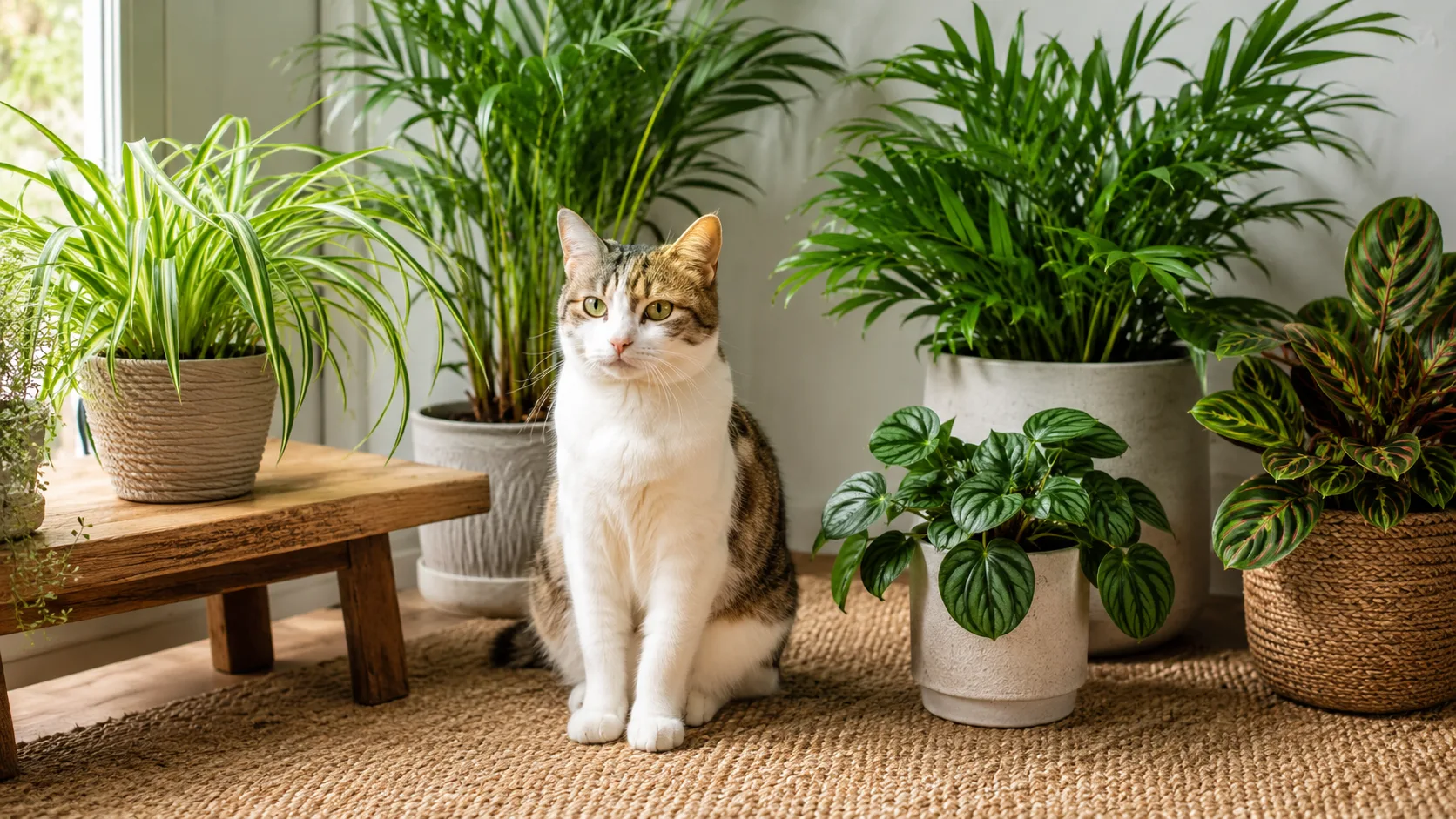
A cat-safe houseplant should do more than appear on a non-toxic list. It should fit the light you actually have, survive your watering habits, and stay reasonable to live with when a curious cat investigates every new leaf. The best pick is rarely the trendiest plant on social media. It is the plant whose growth habit, sturdiness, and care demands match your room and your cat’s behavior.
If you want a filterable quick list from LeafyPixels plant metadata, start with Best Pet-Safe Indoor Plants. This guide goes deeper: ASPCA-verified safety notes for eight common species, a comparison table by light and care level, chewing-risk context, and links to full species care on LeafyPixels. For plants to remove first, see Common Houseplants Toxic to Cats.
The eight best cat-safe indoor plants for most homes are spider plant, areca palm, parlor palm, prayer plant, peperomia, cast iron plant, haworthia, and Boston fern. All eight are listed by the ASPCA as non-toxic to cats. They are not interchangeable—some need humidity, some tolerate neglect, and some attract chewing more than others.
Non-Toxic Does Not Mean Safe to Eat
This is the most important distinction on a pet-safety page. When the ASPCA classifies a plant as non-toxic, it means the plant is not expected to cause the classic severe poisoning profile associated with known toxic houseplants. It does not mean foliage is food.
Cats that chew houseplants—even non-toxic ones—can still develop vomiting, diarrhea, drooling, or mechanical irritation from plant fiber. Potting mix, slow-release fertilizer, and pesticide residues on nursery plants create hazards separate from the plant’s toxicity listing. Pet Poison Helpline notes that gastrointestinal upset is still possible when pets ingest plant material, even from plants not classified as poisonous. (Pet Poison Helpline)
Treat cat-safe as lower consequence if a small nibble happens, not as permission to let your cat graze.
Call your veterinarian or poison control promptly if your cat shows repeated vomiting, diarrhea that does not settle, marked lethargy, difficulty breathing, swelling of the mouth or face, or if you cannot identify the plant eaten. For any ingestion concern, ASPCA Animal Poison Control is available at 888-426-4435 (fee may apply).
Editor note (chewing patterns): In typical home setups, spider plant spiderettes and Boston fern fronds attract the most batting and nibbling—not because cats are “hungry for greens,” but because dangling, moving foliage triggers play. Moving the pot up 12–18 inches often reduces damage more than swapping one non-toxic species for another.
Quick Pick: Best Cat-Safe Plant for Your Situation
For the best all-rounder in a typical cat home, choose spider plant. It is widely available, tolerates a range of indoor light, produces baby plantlets that are easy to propagate, and carries one of the strongest ASPCA non-toxic records among common foliage plants. The trade-off: many cats find dangling spiderettes irresistible, so expect chewing interest even when toxicity risk is low.
For soft tropical height in a bright room, choose areca palm or parlor palm. Areca palm fills space faster with arching fronds; parlor palm stays smaller and handles lower light. Both are ASPCA-listed non-toxic to cats. (ASPCA areca palm listing; ASPCA parlor palm listing)
For a beginner who forgets to water, choose cast iron plant, peperomia, or haworthia. Cast iron plant survives dim corners and irregular watering. Peperomia and haworthia store water in leaves and prefer drying between drinks—good for owners who tend to overwater everything else.
For pattern and movement without toxic calathea cousins, choose prayer plant—but only if you can supply steady moisture and 50–70% humidity. Prayer plant is cat-safe per the ASPCA, yet more demanding than spider plant or parlor palm.
For a humid bathroom or kitchen with a disciplined watering routine, choose Boston fern. It is non-toxic to cats, but dry air and missed waterings produce brown fronds faster than most plants on this list.
How to Choose a Cat-Safe Houseplant
Before buying, judge each plant against four practical factors: verified safety, light, care difficulty, and real exposure risk in your home.
Verify the Exact Plant
Common names cause expensive mistakes. “Prayer plant” usually means Maranta leuconeura, but the label at a nursery may not match what you think you bought. “Peperomia” covers dozens of species. “Haworthia” is sometimes sold beside look-alike succulents with different safety profiles. Always check the botanical name on the tag and cross-reference the ASPCA toxic and non-toxic plant database before placing a new plant within cat reach.
Match Light Before Pet Placement
A cat-safe plant in the wrong light becomes a stressed plant with dropped leaves—and dropped leaves become cat toys. University extension guidance on houseplants consistently treats light as the first limiting factor indoors; watering problems often follow when a plant sits in too little light and soil stays wet too long. (NC State Extension - Houseplants)
Bright indirect light means the room is comfortable to read in during the day without direct sun burning leaves. Low light means a plant may survive, not that it will look full and vigorous. Choose cast iron plant or parlor palm for dimmer rooms; choose areca palm or Boston fern when you have brighter, stable windows.
Factor in Chewing and Climbing Behavior
Cat-safe classification addresses toxicity, not household peace. Spider plant spiderettes, Boston fern fronds, and areca palm leaf tips all attract batting and chewing. If your cat treats plants as salad, even non-toxic nibbling can mean vomit on the rug and a shredded specimen. Sturdy floor pots, wall shelves with depth, or moving the plant after the first chewing episode often matters more than choosing a theoretically safer species.
Separate Plant Safety from Soil and Chemical Safety
Even ASPCA non-toxic plants grow in potting mix that is not meant to be eaten. Fertilizer salts, systemic pesticides applied at the grower, and decorative top dressings can irritate a cat’s stomach. Rinse new nursery plants gently, avoid fertilizing heavily in reach of curious cats, and keep chemical bottles off plant shelves.
How We Selected These Eight
These eight were chosen for a balance of ASPCA-verified cat safety, nursery availability, indoor adaptability, and usefulness in real cat homes—not because they are the only non-toxic houseplants in existence.
We required verified cat-specific non-toxic status in LeafyPixels plant records, each backed by an individual ASPCA listing. We then ranked for beginner-friendliness, typical indoor size, and how often the species appears in home collections where cats have shelf, sill, and floor access.
We left out popular plants that are toxic to cats (pothos, philodendron, peace lily, monstera, dracaena) because they belong on our toxic-to-cats list, not here. We also skipped plants with only partial verification or awkward indoor fit, even when some sources call them safe.
Cat-Safe Houseplant Comparison Table
Spider Plant
Best for: first cat-safe plant, bright kitchens, hanging baskets, owners who want easy propagation.
Difficulty: Easy
Light: Bright to medium indirect; tolerates some morning sun
Water: When top 2 inches of soil dry—roughly every 7–10 days in growth season
Best placement: Hanging basket, high shelf, or wide windowsill with room for spiderettes
ASPCA cat status: Non-toxic (ASPCA spider plant listing)
Typical indoor size: 12–24 inches with arching leaves and dangling plantlets
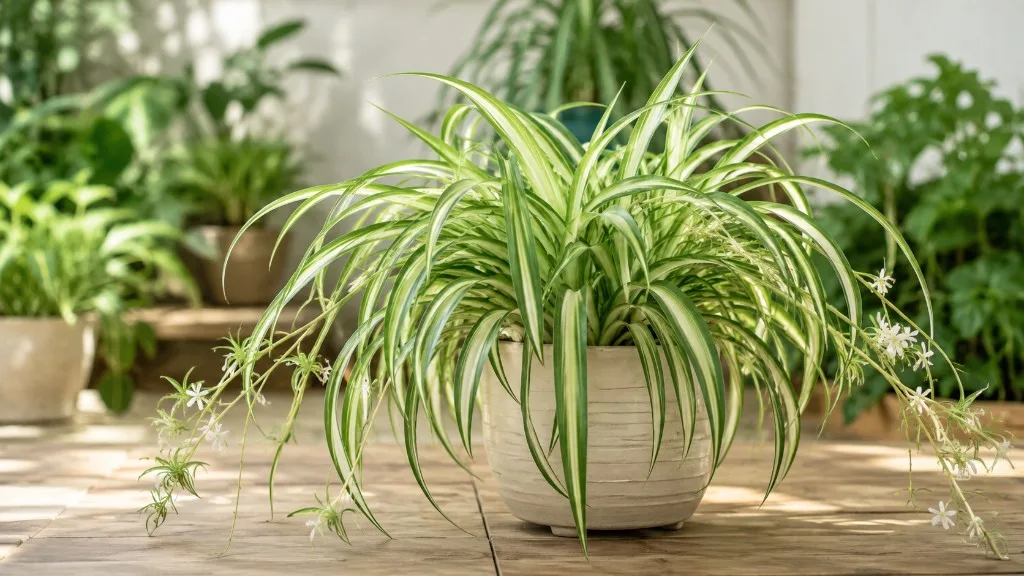
Spider plant (Chlorophytum comosum) is the default recommendation in many cat households for good reason: it is forgiving, adaptable, and one of the most clearly documented non-toxic foliage plants on the ASPCA list. Mature plants produce spiderettes on long stems—excellent for propagation, but also excellent cat toys.
The main mistake is assuming non-toxic means your cat will ignore it. Many cats chew spider plants repeatedly. That usually creates mess and occasional vomiting rather than poisoning, but it can still wreck the plant’s appearance. If chewing is constant, move the pot higher or offer distraction rather than treating spider plant as edible greens.
Why it works: Strong ASPCA safety record plus beginner-friendly care in average indoor light.
Care tip: Trim brown tips and remove spent spiderettes if your cat bats them down. See spider plant watering guide.
Common mistake: Keeping the plant in a dark corner—growth slows and variegation fades.
Avoid this plant if: You want zero chewing interest; trailing babies attract curious cats.
Useful care guides:
Areca Palm
Best for: bright living rooms, soft tropical texture, cat owners who want height.
Difficulty: Medium
Light: Bright indirect
Water: When top 1–2 inches dry; consistent moisture without waterlogging
Best placement: Floor corner with filtered window light and room for frond spread
ASPCA cat status: Non-toxic (ASPCA areca palm listing)
Typical indoor size: 6–8 feet tall indoors; 3–5 foot frond spread
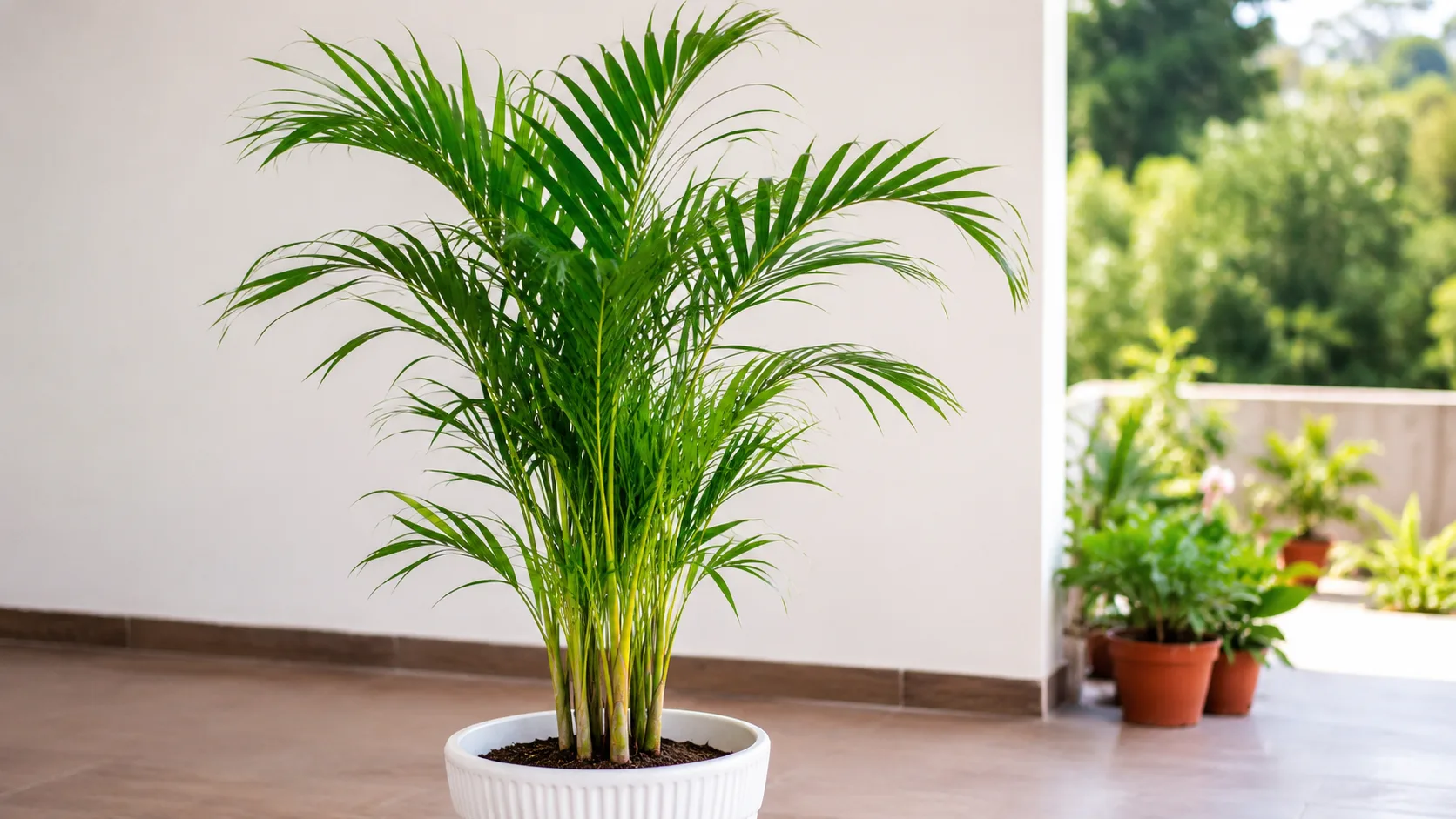
Areca palm (Dypsis lutescens) is one of the few large indoor palms with a clear ASPCA non-toxic listing for cats. Its arching fronds add movement and volume without the toxicity concerns of many popular statement plants. Also sold as butterfly palm or golden cane palm—verify the botanical name at purchase.
Care is moderate. Areca palms prefer bright indirect light and even moisture. Dry air, underwatering, and hot window sun can brown frond tips. Cats may chew soft frond ends or dig in the pot; the plant is not poisonous, but repeated damage slows growth.
Why it works: Real indoor height with verified cat safety when most tall plants are toxic.
Care tip: Inspect dense fronds for spider mites at purchase and monthly. See areca palm light guide.
Common mistake: Placing in a dim room and overwatering because the soil never dries.
Avoid this plant if: You lack floor space for frond spread or cannot keep soil moisture steady.
Useful care guides:
Parlor Palm
Best for: low-light rooms, offices, smaller cat homes, elegant tabletop-to-floor palm scale.
Difficulty: Easy
Light: Medium to low indirect; tolerates brighter light gently
Water: Every 7–10 days when top 3–5 cm dries; less in winter
Best placement: Living room side table, bedroom corner, office floor pot
ASPCA cat status: Non-toxic (ASPCA parlor palm listing)
Typical indoor size: 2–4 feet indoors over time
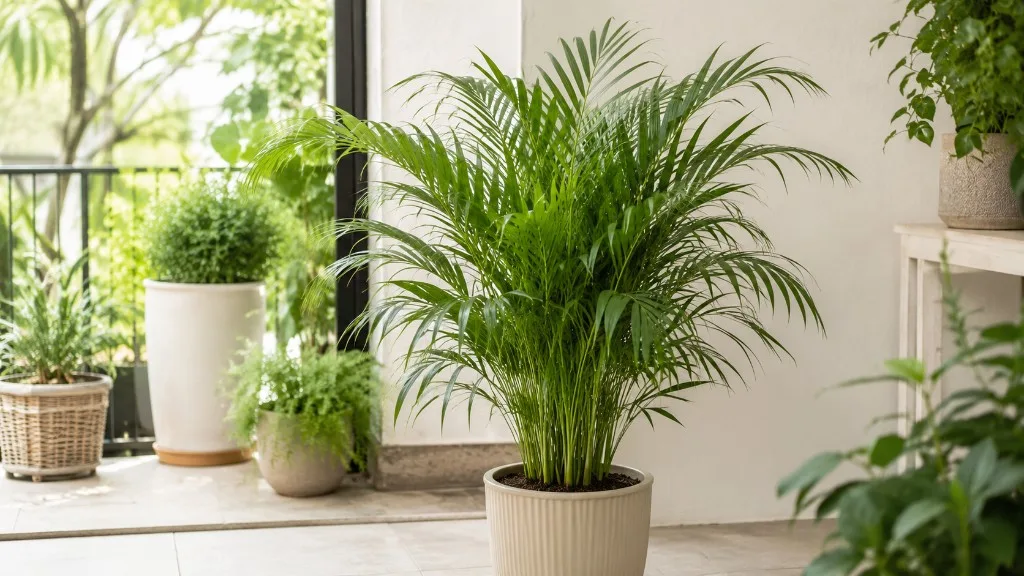
Parlor palm (Chamaedorea elegans) is the compact, low-drama palm for cat owners who do not have areca palm space. It handles lower light better than most palms and stays manageable indoors for years. The ASPCA lists it as non-toxic to cats—one of the most widely recommended safe palms in veterinary poison references.
Parlor palm declines slowly, which can hide watering mistakes. Yellow lower fronds may mean natural aging, but chronic wet soil causes root problems. Cats sometimes nest in the airy fronds or knock lightweight nursery pots; choose a heavier cachepot if your cat is a bumper.
Why it works: Palm look with lower light tolerance and verified cat safety.
Care tip: Keep away from heating vents—dry airflow browns tips faster than underwatering.
Common mistake: Repotting into an oversized container that stays wet too long.
Avoid this plant if: You need fast vertical impact—parlor palm grows slowly.
Useful care guides:
Prayer Plant
Best for: patterned foliage lovers, humid bathrooms, owners past their first easy plant.
Difficulty: Medium to demanding
Light: Medium indirect; avoid harsh direct sun
Water: When top inch dries; steady moisture without soggy soil
Best placement: Bathroom shelf, kitchen with humidity, pebble tray grouping
ASPCA cat status: Non-toxic (ASPCA prayer plant listing)
Typical indoor size: 10–18 inches; spreading clump over time
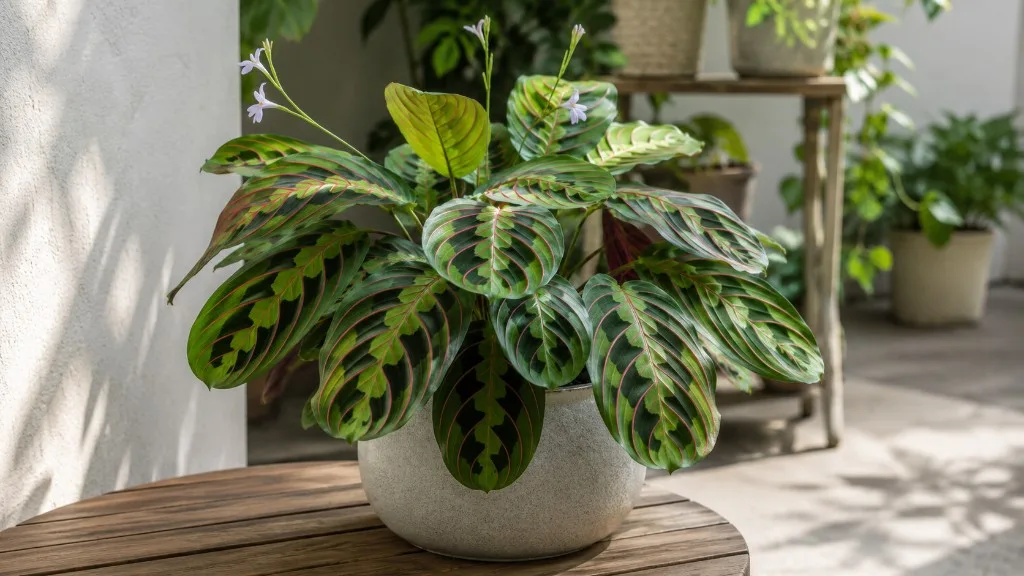
Prayer plant (Maranta leuconeura) gives you the graphic leaves people chase in calatheas—without the same toxicity worry. The ASPCA lists prayer plant as non-toxic to cats. Leaves fold upward at night (nyctinastic movement), which is normal and not a distress signal.
The care reality is stricter than spider plant or parlor palm. Prayer plants want 50–70% humidity and consistent moisture. Dry winter air, fluoride-heavy tap water, and missed waterings produce crispy brown edges quickly. They are cat-safe, not beginner-proof.
Why it works: Decorative foliage with verified safety in a genus many beginners confuse with harder calatheas.
Care tip: Use filtered or settled tap water if leaf edges crisp despite good humidity. See prayer plant watering guide.
Common mistake: Treating prayer plant like a cast iron plant in a dry living room.
Avoid this plant if: Your home is arid year-round and you will not use a humidifier.
Useful care guides:
Peperomia
Best for: desks, bookshelves, semi-succulent care style, collectors who want variety in small pots.
Difficulty: Easy
Light: Medium to bright indirect
Water: Every 10–14 days in summer when soil dries completely; less in winter
Best placement: Elevated shelf, desk, windowsill with indirect light
ASPCA cat status: Non-toxic (ASPCA peperomia listing)
Typical indoor size: 6–12 inches depending on species
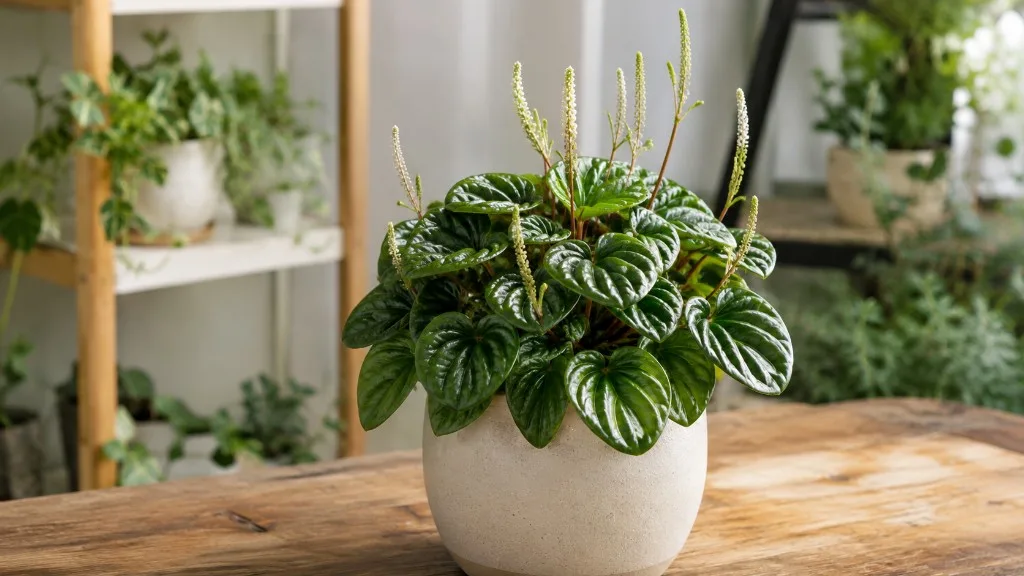
Peperomia (Peperomia spp.) covers many compact houseplants with thick, semi-succulent leaves. The ASPCA lists peperomia as non-toxic to cats. Peperomia obtusifolia is often sold as “baby rubber plant”—do not confuse it with Indian rubber plant (Ficus elastica), which is toxic.
Peperomias fail from oversized pots and slow-wet soil more often than from drought. Their roots are fine and shallow; a small container with fast drainage beats a deep decorative planter every time. Cats may knock small pots off shelves; peperomia’s safety advantage matters if a leaf gets chewed, but broken pots are still a hazard.
Why it works: Compact, collectible, and clearly non-toxic—good shelf plant in cat traffic zones.
Care tip: Lift the pot to judge weight before watering instead of following a calendar.
Common mistake: Confusing pet-safe peperomia with toxic ficus rubber plant by common name.
Avoid this plant if: You want a large floor specimen—peperomia stays small.
Useful care guides:
Cast Iron Plant
Best for: dark hallways, beginner neglect tolerance, floor pots in low-traffic corners.
Difficulty: Easy
Light: Low to medium indirect; tolerates very low light
Water: Every 10–14 days when top 3–5 cm dries; even less in winter
Best placement: Dim corner, entryway, north-facing room floor pot
ASPCA cat status: Non-toxic (ASPCA cast iron plant listing)
Typical indoor size: 18–30 inches; slowly wider clump
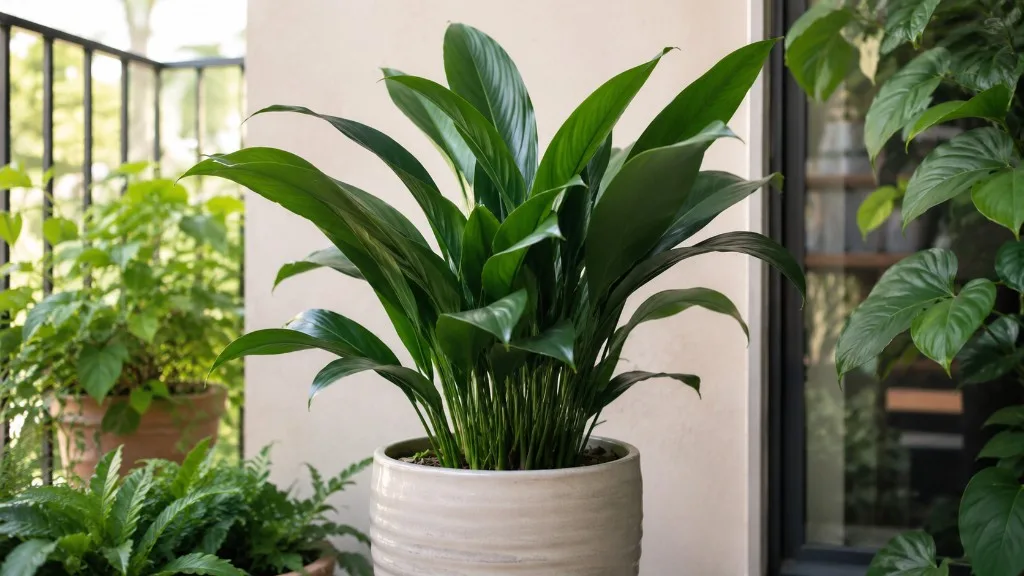
Cast iron plant (Aspidistra elatior) earns its name. It tolerates low light, irregular watering, and the kind of stable neglect that kills fussier foliage. The ASPCA lists it as non-toxic to cats—useful when you need a floor plant in a room that is too dim for areca palm or Boston fern.
Growth is slow. Do not buy cast iron plant for instant lushness. Leaves are broad and sturdy, which can survive minor cat batting better than delicate fern fronds, though chewed tips still look ragged.
Why it works: Low-light insurance policy with verified cat safety.
Care tip: Wipe dust from broad leaves so the plant uses what little light the room offers. See cast iron plant light guide.
Common mistake: Placing in direct afternoon sun—leaves bleach and scorch.
Avoid this plant if: You want fast growth or trailing habit.
Useful care guides:
Haworthia
Best for: sunny windowsills, desk succulents, owners who underwater everything else.
Difficulty: Easy
Light: Bright indirect; tolerates more light than many indoor foliage plants
Water: Soak and dry—every 10–14 days in summer when soil is completely dry
Best placement: South or west windowsill with filtered light, desk near window
ASPCA cat status: Non-toxic (ASPCA haworthia listing)
Typical indoor size: 4–6 inch rosette; spreads slowly via offsets
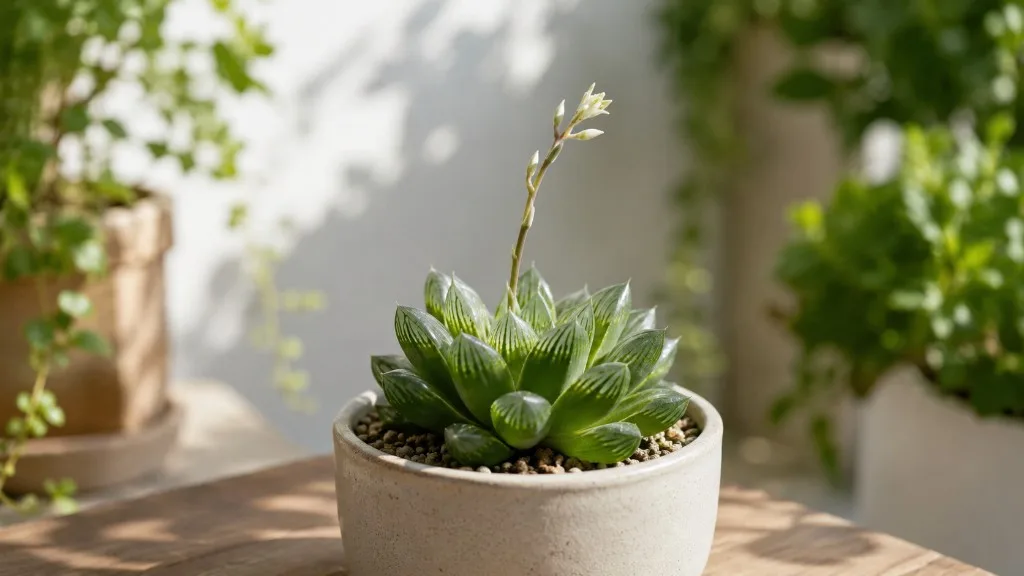
Haworthia (Haworthia spp.) is the cat-safe succulent for people who kill leafy plants but still want something small and sculptural. The ASPCA lists haworthia as non-toxic to cats. It is sometimes labeled zebra plant—verify you are not buying a toxic aloe look-alike.
Haworthia stores water in leaves. Overwatering causes mushy bases and rot faster than underwatering causes harm. Terracotta pots and gritty mix help. Cats may bat rosettes off sills; the plant is small enough to relocate quickly if chewing starts.
Why it works: Succulent form factor with clear non-toxic status—not all small succulents are cat-safe.
Care tip: Wait until soil is fully dry throughout the pot, not just on the surface. See haworthia watering guide.
Common mistake: Planting in standard peat-heavy mix with no perlite or grit.
Avoid this plant if: You need trailing or large-scale impact.
Useful care guides:
Boston Fern
Best for: humid bathrooms, kitchens, hanging baskets with steady care.
Difficulty: Medium
Light: Bright to medium indirect
Water: Every 3–5 days in growth season when top 2 cm begins to dry; keep evenly moist
Best placement: Hanging basket in bathroom, shower-adjacent shelf, grouped humidity tray
ASPCA cat status: Non-toxic (ASPCA Boston fern listing)
Typical indoor size: 12–24 inches of arching fronds; wider in ideal humidity
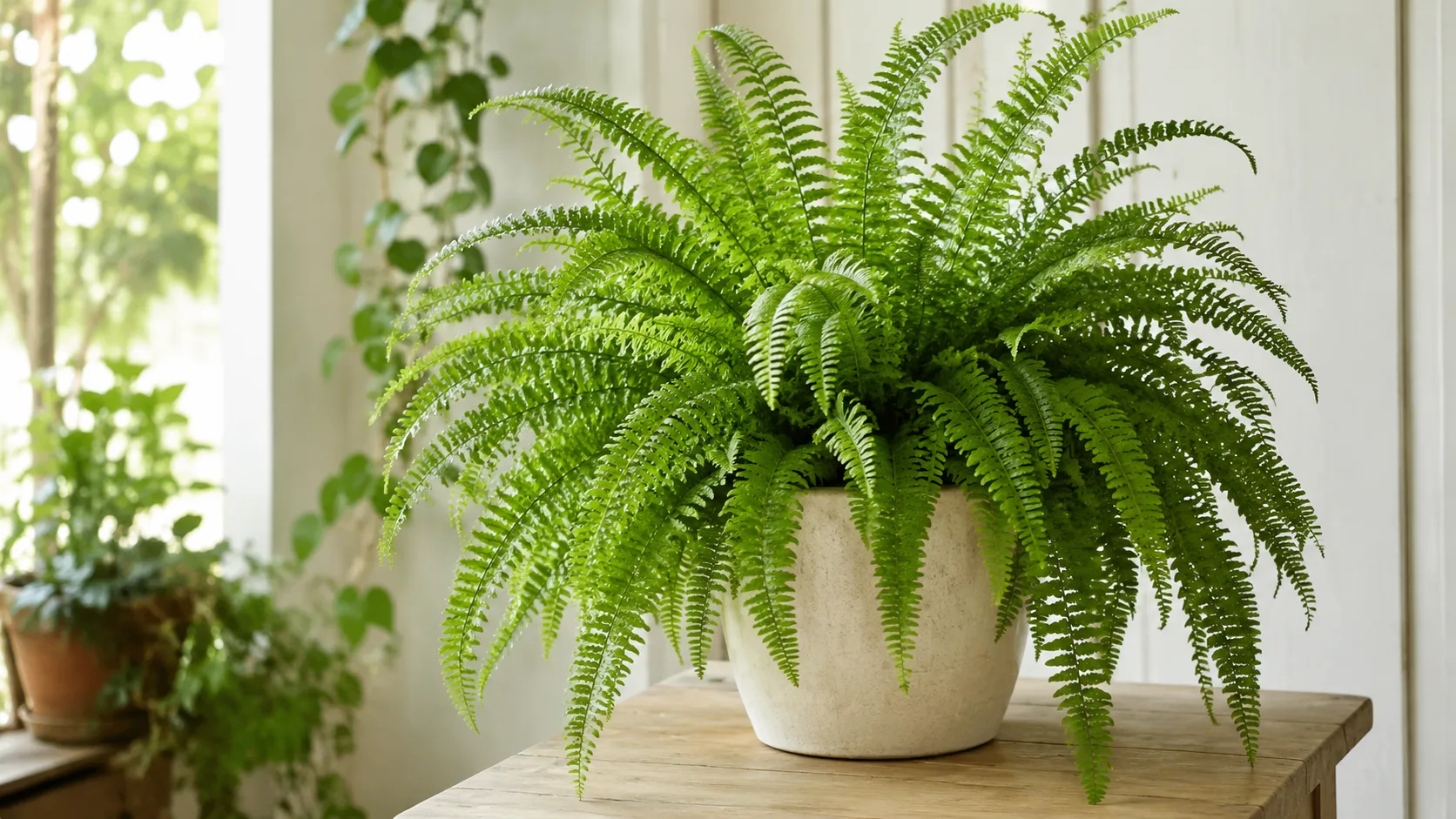
Boston fern (Nephrolepis exaltata) is a classic pet-safe foliage plant—listed non-toxic to cats by the ASPCA and often recommended by veterinarians for households that want fern texture without the risk profile of asparagus fern (which is not a true fern and is toxic).
The care contract is real. Boston ferns want steady moisture and 50–70% humidity. Dry indoor air turns fronds brown at the tips within days. They are cat-safe, but not low-maintenance in heated winter rooms. Cats also love batting soft fronds, which shreds the plant even when toxicity is not the issue.
Why it works: True fern look with verified cat safety when many fern-adjacent plants are risky.
Care tip: Run a humidifier nearby before misting alone—surface mist dries quickly. See Boston fern watering guide.
Common mistake: Buying for a dry living room because the nursery specimen looked lush under greenhouse humidity.
Avoid this plant if: You cannot commit to frequent watering and humidity support.
Useful care guides:
Common Mistakes in Cat-Safe Plant Homes
Treating non-toxic as edible. The ASPCA non-toxic label reduces poisoning concern; it does not eliminate GI upset, plant destruction, or fertilizer exposure.
Buying by common name alone. Baby rubber plant (peperomia, generally safe) and rubber plant (Ficus elastica, toxic) are not the same. Always verify botanical names.
Ignoring fallen leaves. Spiderettes, fern fronds, and palm leaflets on the floor still get chewed. Remove debris if your cat scavenges.
Skipping quarantine on new plants. Nursery pesticides are not cat food. Rinse foliage and isolate new plants for a week when possible.
Keeping toxic plants “just out of reach.” Cats climb. If a plant is toxic, see our plants toxic to cats list and remove it rather than relying on shelf height alone.
Conclusion
The best cat-safe houseplant is the one that matches your light, your care habits, and how your cat actually behaves around foliage—not the one with the most Pinterest pins. Spider plant, parlor palm, peperomia, cast iron plant, and haworthia are the most forgiving starting points. Areca palm and Boston fern reward brighter, more humid rooms. Prayer plant adds pattern for growers ready to manage humidity.
All eight species on this page are listed by the ASPCA as non-toxic to cats. That is a meaningful safety baseline in a hobby where many popular plants are not safe. It is still not a reason to let cats treat houseplants as food. Keep toxic species out of the home, verify plant IDs at purchase, and call your veterinarian or ASPCA Animal Poison Control at 888-426-4435 if ingestion or illness concerns you.
Start with one plant in the right light. Learn how your cat interacts with it for two weeks before filling a whole shelf. For a broader filterable list, visit Best Pet-Safe Indoor Plants. For species-level watering, light, and troubleshooting, follow the LeafyPixels care guides linked in each section above.