Spider Plant Problems: Causes & Quick Fixes
Quick answer
Spider Plant is prone to 32 common issues - each link below is a plant-specific fix guide.
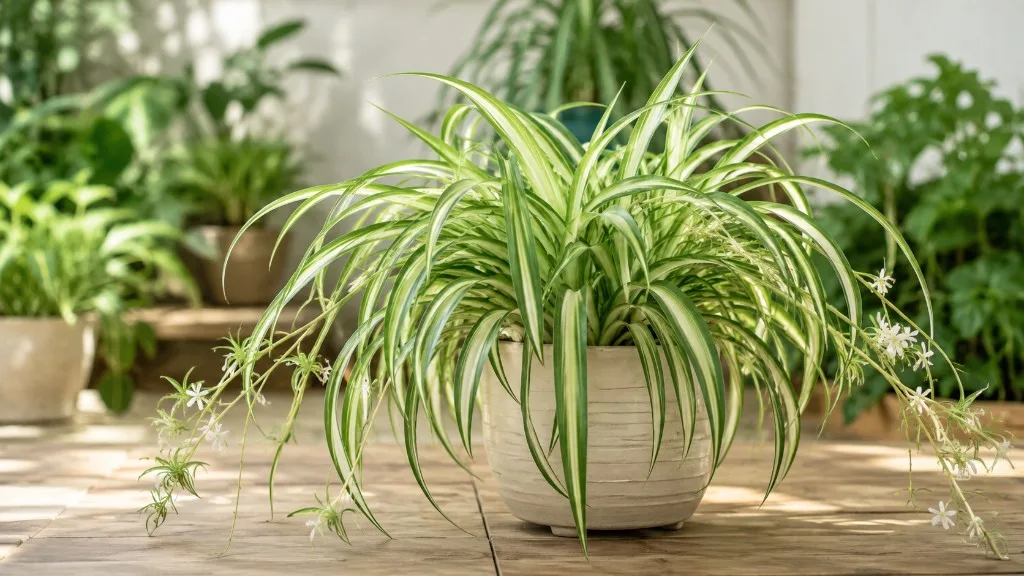
Spider Plant problems
Use the guides below to diagnose and fix common issues on Spider Plant. Each problem page explains why it happens on this species and what to do first.
Or use our problem diagnosis tool to narrow down symptoms.
Common problems on Spider Plant
Brown Tips
LowLikely cause: Fluoride or chlorine in tap water, low humidity, or inconsistent watering - spider plants are particularly sensitive to fluoride
Quick fix: Switch to filtered, rainwater, or water left overnight; increase humidity; trim brown tips
Full fix guide →Leggy Growth
LowLikely cause: Low light causes elongated pale leaves and reduced spiderette production
Quick fix: Move to a brighter indirect-light position
Full fix guide →Root Rot
HighLikely cause: Chronically wet soil rots the thick tuberous roots
Quick fix: Unpot, remove mushy tuberous roots, let dry overnight, repot in fresh mix
Full fix guide →Yellow Leaves
MediumLikely cause: Overwatering is the primary cause; also occurs in root-bound plants
Quick fix: Allow soil to dry, repot if root-bound, and ensure drainage holes are clear
Full fix guide →Aphids
MediumLikely cause: Aphids on Spider Plant cluster on new arching leaves, stolon tips, and baby plantlets, leaving sticky honeydew. First step: isolate the plant and rinse colonies off with a strong stream of water befor
Quick fix: See plant-specific guide for step-by-step fixes.
Full fix guide →Drooping Leaves
MediumLikely cause: Drooping leaves on Spider Plant usually mean inconsistent watering, root stress, or recent repotting shock-not always underwatering. Check soil moisture 2 inches deep and tuber firmness before waterin
Quick fix: See plant-specific guide for step-by-step fixes.
Full fix guide →Fungus Gnats
MediumLikely cause: Fungus gnats on Spider Plant mean the top of the mix stays damp too long-often from calendar watering or low light slowing dry-down. First step: stop watering until the top 2 inches of soil are comple
Quick fix: See plant-specific guide for step-by-step fixes.
Full fix guide →Low Humidity
MediumLikely cause: Spider Plant prefers medium air humidity and often shows brown crispy tips when heated indoor air stays too dry. Move the basket away from vents first, then raise ambient humidity with a humidifier or
Quick fix: See plant-specific guide for step-by-step fixes.
Full fix guide →Mealybugs
MediumLikely cause: Mealybugs on Spider Plant show up as white cottony masses in leaf axils, at the crown, and along stolons-often with sticky honeydew on arching leaves. First step: isolate the plant and dab every visib
Quick fix: See plant-specific guide for step-by-step fixes.
Full fix guide →Mold on Soil
MediumLikely cause: Fluffy white or gray mold on Spider Plant soil is usually harmless surface fungus fed by damp organic mix. The real risk is chronic wetness rotting fleshy tuberous roots. First step: scrape the top in
Quick fix: See plant-specific guide for step-by-step fixes.
Full fix guide →Not Enough Light
MediumLikely cause: Not enough light keeps Spider Plant alive but dull-pale strappy leaves, slow dry-down, few spiderettes, and stretched stolons. First step: move the pot to bright indirect light and rotate it weekly. O
Quick fix: See plant-specific guide for step-by-step fixes.
Full fix guide →Overwatering
MediumLikely cause: Overwatering keeps Spider Plant tuberous roots in soggy soil until they rot. Stop watering, let the top 2 inches of mix dry completely, empty saucers, and unpot only if tubers feel soft or leaves wilt
Quick fix: See plant-specific guide for step-by-step fixes.
Full fix guide →Slow Growth
MediumLikely cause: Slow growth on Spider Plant is usually too little light, a root-bound pot, or winter rest-not hunger. First step: move to bright indirect light and check whether new leaves and stolons are forming bef
Quick fix: See plant-specific guide for step-by-step fixes.
Full fix guide →Spider Mites
MediumLikely cause: Spider mites on Spider Plant show as yellow stippling and fine webbing on arching leaves, especially in dry heated rooms. First step: isolate the plant and rinse all foliage thoroughly-undersides of l
Quick fix: See plant-specific guide for step-by-step fixes.
Full fix guide →Underwatering
MediumLikely cause: Spider Plant stores water in tuberous roots, so drought stress shows late-limp arching leaves, dry soil 2 inches down, and a very light pot. First step: water thoroughly until excess drains, empty the
Quick fix: See plant-specific guide for step-by-step fixes.
Full fix guide →Wilting
MediumLikely cause: Wilting on Spider Plant usually means underwatering or overwatering with damaged tuberous roots that cannot take up water. Lift the pot, check moisture 2 inches deep, and water deeply only if the mix
Quick fix: See plant-specific guide for step-by-step fixes.
Full fix guide →Curling Leaves
MediumLikely cause: Common curling leaves pattern on Spider Plant under indoor care stress.
Quick fix: Inspect roots, watering, light, and pests; adjust one variable and monitor new growth.
Full fix guide →Brown Leaves
MediumLikely cause: Common brown leaves pattern on Spider Plant under indoor care stress.
Quick fix: Inspect roots, watering, light, and pests; adjust one variable and monitor new growth.
Full fix guide →Black Spots
MediumLikely cause: Common black spots pattern on Spider Plant under indoor care stress.
Quick fix: Inspect roots, watering, light, and pests; adjust one variable and monitor new growth.
Full fix guide →Holes in Leaves
MediumLikely cause: Common holes in leaves pattern on Spider Plant under indoor care stress.
Quick fix: Inspect roots, watering, light, and pests; adjust one variable and monitor new growth.
Full fix guide →Pale Leaves
MediumLikely cause: Common pale leaves pattern on Spider Plant under indoor care stress.
Quick fix: Inspect roots, watering, light, and pests; adjust one variable and monitor new growth.
Full fix guide →Distorted Leaves
MediumLikely cause: Common distorted leaves pattern on Spider Plant under indoor care stress.
Quick fix: Inspect roots, watering, light, and pests; adjust one variable and monitor new growth.
Full fix guide →Scale Insects
MediumLikely cause: Common scale insects pattern on Spider Plant under indoor care stress.
Quick fix: Inspect roots, watering, light, and pests; adjust one variable and monitor new growth.
Full fix guide →Thrips
MediumLikely cause: Common thrips pattern on Spider Plant under indoor care stress.
Quick fix: Inspect roots, watering, light, and pests; adjust one variable and monitor new growth.
Full fix guide →Whiteflies
MediumLikely cause: Common whiteflies pattern on Spider Plant under indoor care stress.
Quick fix: Inspect roots, watering, light, and pests; adjust one variable and monitor new growth.
Full fix guide →Leaf Miners
MediumLikely cause: Common leaf miners pattern on Spider Plant under indoor care stress.
Quick fix: Inspect roots, watering, light, and pests; adjust one variable and monitor new growth.
Full fix guide →Caterpillars
MediumLikely cause: Common caterpillars pattern on Spider Plant under indoor care stress.
Quick fix: Inspect roots, watering, light, and pests; adjust one variable and monitor new growth.
Full fix guide →Nitrogen Deficiency
MediumLikely cause: Common nitrogen deficiency pattern on Spider Plant under indoor care stress.
Quick fix: Inspect roots, watering, light, and pests; adjust one variable and monitor new growth.
Full fix guide →Iron Deficiency
MediumLikely cause: Common iron deficiency pattern on Spider Plant under indoor care stress.
Quick fix: Inspect roots, watering, light, and pests; adjust one variable and monitor new growth.
Full fix guide →Magnesium Deficiency
MediumLikely cause: Common magnesium deficiency pattern on Spider Plant under indoor care stress.
Quick fix: Inspect roots, watering, light, and pests; adjust one variable and monitor new growth.
Full fix guide →Potassium Deficiency
MediumLikely cause: Common potassium deficiency pattern on Spider Plant under indoor care stress.
Quick fix: Inspect roots, watering, light, and pests; adjust one variable and monitor new growth.
Full fix guide →Calcium Deficiency
MediumLikely cause: Common calcium deficiency pattern on Spider Plant under indoor care stress.
Quick fix: Inspect roots, watering, light, and pests; adjust one variable and monitor new growth.
Full fix guide →