Slow Growth on Spider Plant: Causes, Checks & Fixes
Quick answer
Slow growth on Spider Plant is usually too little light, a root-bound pot, or winter rest-not hunger. First step: move to bright indirect light and check whether new leaves and stolons are forming before repotting or feeding.
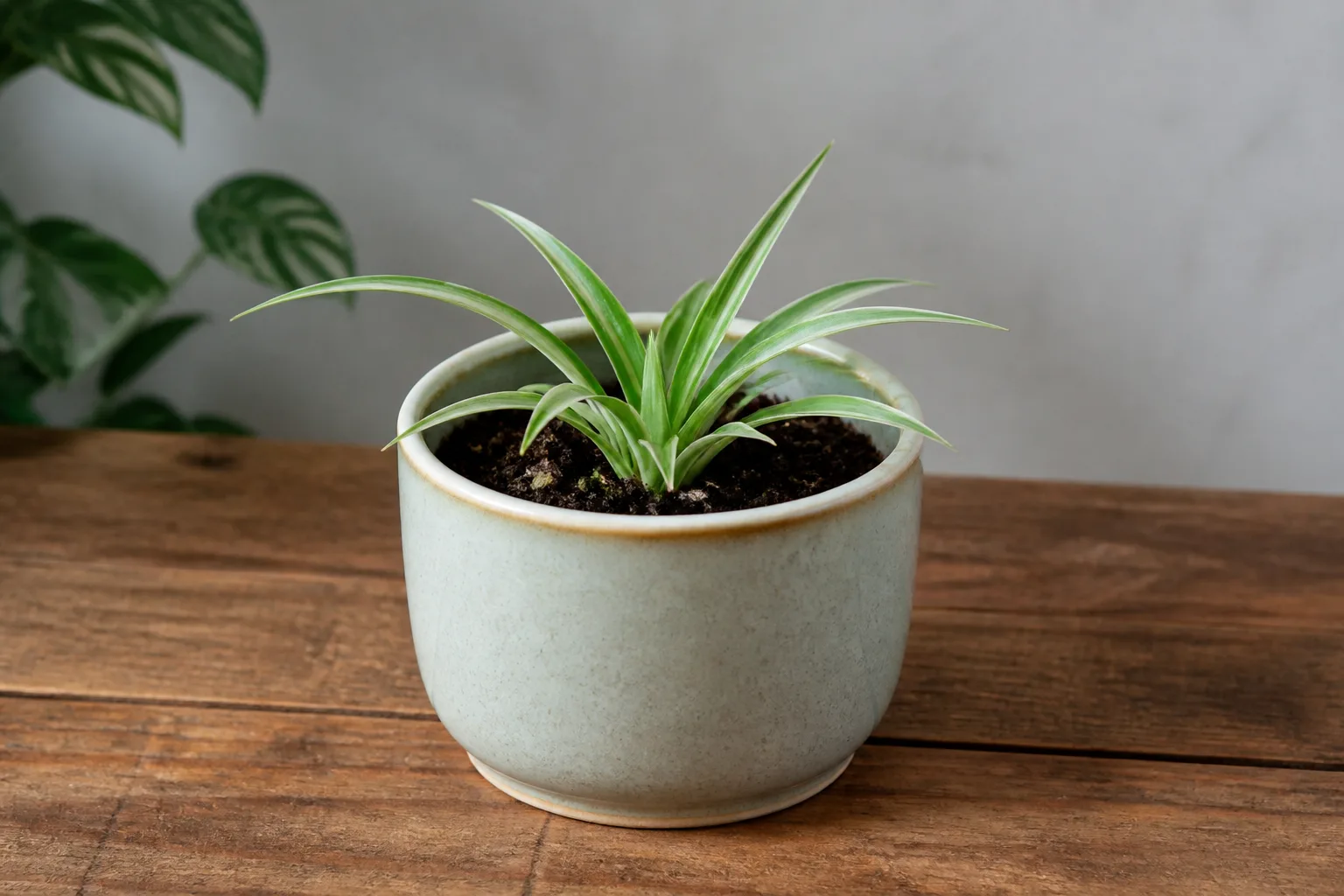
Slow Growth on Spider Plant: Causes, Checks & Fixes
This guide covers slow growth on Spider Plant. See also the general Slow Growth guide, watering, and light pages for this plant.
Slow Growth on Spider Plant: Causes, Checks & Fixes
Quick answer
Slow growth on Spider Plant (Chlorophytum comosum) is often mistaken for a fertilizer problem when the real limit is light energy, root space, or seasonal rest. This species has a medium growth rate and can look healthy for months in a dim corner while producing almost no new arching leaves or stolons. In Spider Plant light guide through spring and summer, it should push regular foliage and often trailing plantlets.
First step: improve light before changing anything else. Move the pot to the brightest indirect spot you can offer-near an east window or set back from south or west glass-and note whether you are in winter rest. If light is already strong and it is spring or summer, check whether tuberous roots have filled the pot or water runs straight through depleted mix. Do not double fertilizer on a stalled plant; Missouri Botanical Garden notes that heavily fertilized spider plants may not form as many new plantlets, and its tubers already store reserve food.
What slow growth looks like on Spider Plant
Healthy spider plants in active growth push new arching leaves on a steady rhythm-often every one to three weeks in warm months when light is adequate. Slow growth shows up as the opposite pattern:
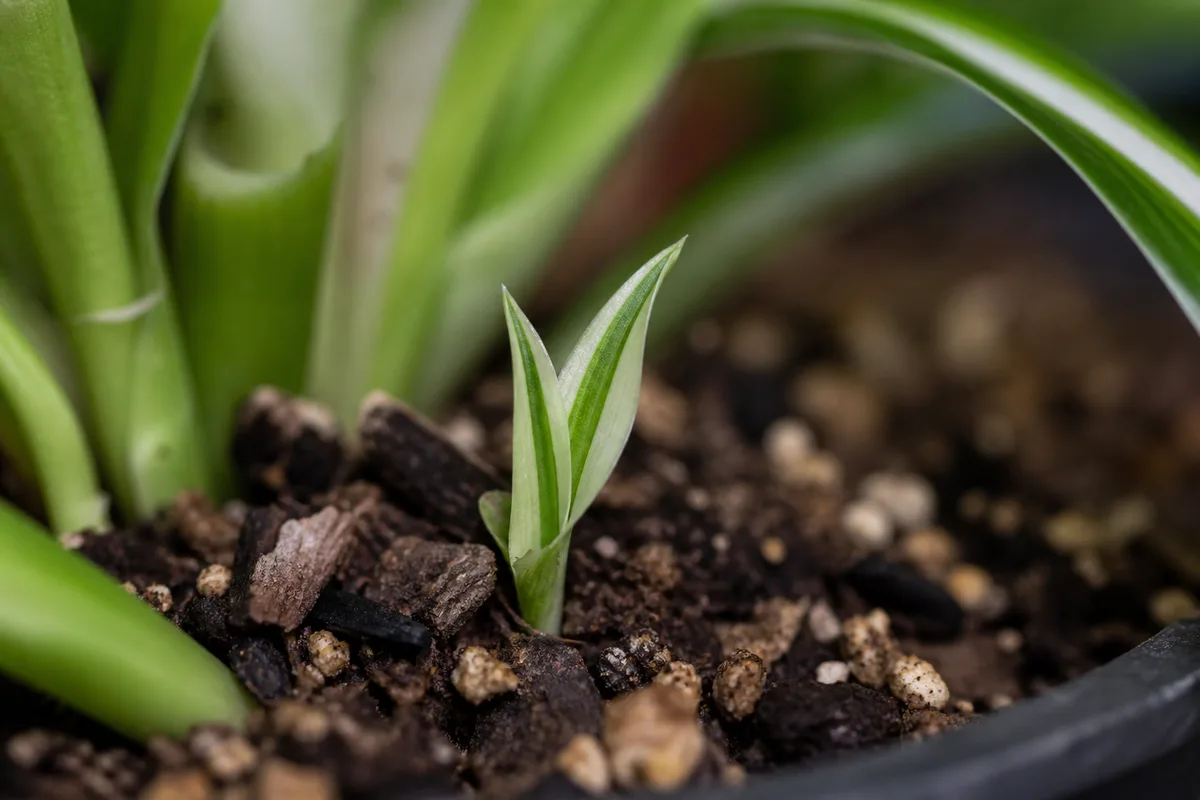
Slow Growth symptoms on Spider Plant - compare with healthy tissue on the same plant.
- No new blades for months during spring or summer, while older leaves stay green and firm
- Thin, weak new leaves that flop over the pot rim instead of standing arching and stiff
- Pale or washed-out variegation on striped cultivars like ‘Vittatum’ or ‘Variegatum’
- No stolons or plantlets through an entire warm season despite mature size
- Pot dries very fast after watering, or water channels through and out immediately-common when tuberous roots fill the container
- Static size for a year or more despite stable care-often root-bound or light-limited
Winter pause is different. From late fall through early spring, many indoor spider plants slow or stop leaf production while watering should be reduced and days shorten. That is normal if leaves stay firm, soil dries on your usual schedule, and growth picks up when light returns. Concern starts when stagnation continues through favorable months and stolons still do not appear.
Why Spider Plant gets slow growth
Insufficient light is the usual bottleneck
Light drives photosynthesis and new tissue. NC State notes that spider plant prefers medium light levels yet can tolerate deep shade-survival in dim rooms comes with reduced growth, not death. Missouri Botanical Garden recommends bright indirect sunlight for indoor plants for best performance.
In low light, the plant idles: fewer new blades, weaker variegation, and fewer stolons. NC State also notes that stolons and plantlets are light dependent and develop when the mother plant receives short days and long, uninterrupted nights for at least three weeks-conditions that are hard to meet in constantly lit rooms or deep interior corners. Variegated forms need more light than solid-green plants because striped tissue carries less chlorophyll per leaf area.
Winter rest and cool temperatures
Growth slows when room temperatures drift toward the low end of the plant’s comfort range or when daylight hours shrink. Missouri Botanical Garden advises keeping temperatures above 45°F with ideal range between 55° and 70°. Cold windowsills, drafty doors, and air-conditioning vents suppress metabolism even when leaves look fine. Soil that stays cold while leaves are warm can delay root activity and stall new shoots.
Root-bound pots and tuberous root crowding
Spider plant has a distinctive root system: thin feeder roots plus thick, fleshy tuberous roots that store water and nutrients. Missouri Botanical Garden notes the plant will need to be divided and repotted before the tuberous roots burst your container, especially plastic pots. Spider plants tolerate being slightly snug, but when roots completely fill the pot, there is little mix left to hold water and oxygen. Uptake drops, the pot dries within a day or two of watering, and growth stalls even though you water on schedule.
Water stress-both too wet and too dry
Chronic overwatering in dim light damages tuberous roots and stalls growth while leaves may yellow. Missouri Botanical Garden warns that spider plants are susceptible to root rot if waterlogged. NC State notes the species is tolerant of drought and dry soil-prolonged underwatering keeps the plant alive but growth deliberately slows. Erratic swings between soggy and bone-dry force recovery instead of new leaves.
Oversized pots and slow dry-down
A pot much larger than the root ball stays wet too long, especially in low light where the plant uses little water. Wet, airless soil suffocates tuberous roots silently and can stall growth for months without obvious rot symptoms at first.
Over-fertilizing and salt buildup
Because tubers store reserve food, spider plants rarely need heavy feeding. Missouri Botanical Garden explicitly advises not to over-fertilize-heavily fertilized plants may produce fewer plantlets and can show burned tips from salt accumulation, especially with fluoride-heavy tap water. NC State recommends avoiding watering with tap water as chlorine and fluorides can cause leaf tip burn, which adds stress on top of forced feeding.
Recent Spider Plant repotting guide or care stacking
Spider plants adjust slowly when light, pot size, and watering all change at once. Fresh repotting can pause growth for several weeks while tuberous roots settle. Stacking fertilizer, division, and relocation on the same week adds stress that looks like chronic slow growth.
Hidden pests and root rot
Low-level spider mites, mealybugs, scale, or whiteflies drain vigor before obvious leaf damage appears-Missouri Botanical Garden lists these as common problems. Root rot from wet soil stops growth entirely. Slow growth with multiple yellow leaves, soft tubers, and sour soil is a red flag, not simple stagnation.
How to confirm the cause
Work through these checks in order:
- Season and temperature - Is it late fall or winter? Are nights below about 55°F near the plant? If yes, expect slower pace before treating it as a problem.
- Light at the leaf surface - At midday, hold your hand above the newest leaves. A soft, diffuse shadow suggests usable light; almost no shadow means growth will stall and variegation will fade. East-facing windows or a few feet back from south or west glass often work; deep interior rooms usually need supplemental lighting.
- New leaf quality - Compare the last unfurling blade to one from six months ago. Thin, pale, or floppy new leaves with wide gaps between clusters confirm light stress.
- Stolon check - Mature plants in adequate light often produce trailing stems with plantlets. No stolons through a full warm season strongly suggests insufficient light or over-fertilization, not nutrient hunger.
- Pot weight and dry-down - After watering, note how many days until the top 2 inches of mix feel dry. A plant in a small pot that dries in one to two days may be root-bound; a pot that stays wet for two weeks suggests overwatering, poor drainage, or a container that is too large.
- Root inspection - Slide the plant partly out of the pot. Dense white roots and swollen tubers circling the outside, little visible mix, or roots escaping drainage holes confirm binding. Mushy brown tubers with wet soil point to rot, not simple slow growth.
- Pest scan - Check leaf undersides and crown for mites, scale bumps, cottony mealybugs, or sticky residue.
If the plant is firm, pest-free, in bright indirect light, and still barely growing in midsummer, root space or depleted mix is the next suspect-not fertilizer.
First fix for Spider Plant
Improve light first.
Move the pot to the brightest indirect spot available-within a few feet of a sunny window filtered by a sheer curtain is a common sweet spot. Spider plants are intolerant of direct sunlight, which scorches blades, but they need more brightness than a distant shelf provides for active growth. If natural light is weak, add a full-spectrum grow light above the canopy for roughly 10–12 hours daily, or rely on the fact that the species tolerates artificial light very well in offices.
Give the plant two to three weeks in the new light before repotting or feeding. Do not jump to a larger pot or heavy fertilizer on day one. Light is the cheapest, safest lever, and it rules out the most common cause on spider plants.
Step-by-step recovery
After light improves, address remaining limits in this order:
- Stabilize watering - Water thoroughly when the top 2 inches of soil dry, then empty the saucer. Reduce frequency in winter. Avoid keeping the plant constantly moist unless you have confirmed it dries fast because of root fill, not because of overwatering.
- Repot if root-bound - In spring or early summer, move up one pot size only (about 2–5 cm wider). Use well-draining general-purpose potting mix. Tease circling tuberous roots gently and divide overcrowded clumps if needed before filling around the root ball. Skip fertilizer for four to six weeks after repotting.
- Feed lightly during active growth - Once new arching leaves appear steadily and roots are healthy, apply a balanced liquid fertilizer at half strength once monthly from spring through fall. Stop if tips burn or growth was already good before feeding.
- Support plantlet formation - If you want stolons, ensure the plant gets short-day conditions: less than 12 hours of light daily for at least three weeks, with uninterrupted dark nights.
- Treat pests if found - Isolate, rinse leaf undersides, and treat confirmed infestations before expecting a growth spurt.
- Warm the root zone - Move the pot off cold windowsills at night. Keeping roots in the 55°F–70°F ideal range supports steady metabolism through the growing season.
Recovery timeline
Expect gradual improvement, not an overnight surge:
- 2–3 weeks after a light upgrade: new buds may appear at the crown if temperature and watering are stable
- 4–6 weeks: first new arching leaf unfurls; judge success by blade thickness and color on fresh tissue, not by old leaves changing
- 2–3 months in active season: leaf production becomes more regular and stolons may appear on mature plants
- Winter months: slow or zero growth is normal; do not force growth with heavy feeding in dim conditions
Old leaves will not regain lost variegation or thickness-they stay as they are. Recovery is measured by new growth frequency, blade firmness, and stolon production.
Lookalike symptoms
Leggy growth is related but not identical to slow growth. Long pale stolons with sparse plantlets usually mean low light-the plant is reaching, not idle. Spider plants can be both leggy and slow in the same dim corner. Fixing light addresses both.
No new growth after repotting is often transplant pause, not chronic stagnation. Wait four to six weeks in stable light before repotting again.
Yellow older leaves with slow growth may signal chronic overwatering, root rot, or root-bound stress-not simple light limitation. Check tuber firmness and soil moisture before assuming the plant only needs more light.
Brown tips without slow growth usually trace to fluoride or chlorine in tap water, low humidity, or salt buildup-not the same bottleneck as stalled new leaves. Trim tips after underlying care is corrected.
Mistakes to avoid
- Over-fertilizing in dim light - Salt buildup and burned tips add stress without fixing the energy bottleneck, and may reduce plantlet formation
- Upsizing to a huge pot - Extra wet soil stalls tuberous roots; go one size up only when roots are crowded
- Repotting, feeding, and moving all at once - Stack changes only after the plant shows new firm growth
- Expecting winter growth rates year-round - Reduce watering and wait for spring before diagnosing a problem
- Judging health by plantlet count alone - Young or recently divided plants may not stolon until mature and well-lit
- Ignoring fast dry-down - A pot that empties in a day often needs repotting, not more water
How to prevent slow growth next time
Place Spider Plant where bright indirect light reaches the leaves for most of the day-not just where the hanging basket looks good. Match watering to how fast the pot dries: top 2 inches dry, then soak and drain. Repot every one to two years in spring before tuberous roots burst plastic containers. Feed lightly only during active growth. Reduce watering in winter. Rotate the pot every few weeks for even growth on all sides.
When to worry
Escalate beyond light and repotting fixes if you see:
- Multiple yellow leaves on Spider Plant dropping while growth is zero and soil stays wet
- Soft, mushy tuberous roots at the base
- Sour or fungal smell from the pot
- Sticky leaves with visible pests or ant trails
- No growth through an entire warm season after light, roots, and watering were already corrected
Those patterns need root inspection, possible pruning of rotten tubers, and pest treatment-not more patience.
Conclusion
Slow growth on Spider Plant is usually a care-limit signal, not a disease. The arching leaf rhythm and stolon production are your best early warnings: when new blades stop appearing through spring and summer, light and root space deserve attention before fertilizer. Correct the bottleneck, wait for firm new foliage, and the plant’s natural vigor typically returns within a few weeks to a few months in active season.
When to use this page vs other Spider Plant guides
- Spider Plant watering guide - Use for routine moisture checks before assuming slow growth is the main issue.
- Spider Plant problems hub - Browse all 4 common issues on this species.
- Leggy Growth on Spider Plant - Different entry point when symptoms overlap with slow growth.
- Yellow Leaves on Spider Plant - Different entry point when symptoms overlap with slow growth.