Drooping Leaves on Spider Plant: Causes, Checks & Fixes
Quick answer
Drooping leaves on Spider Plant usually mean inconsistent watering, root stress, or recent repotting shock-not always underwatering. Check soil moisture 2 inches deep and tuber firmness before watering again.
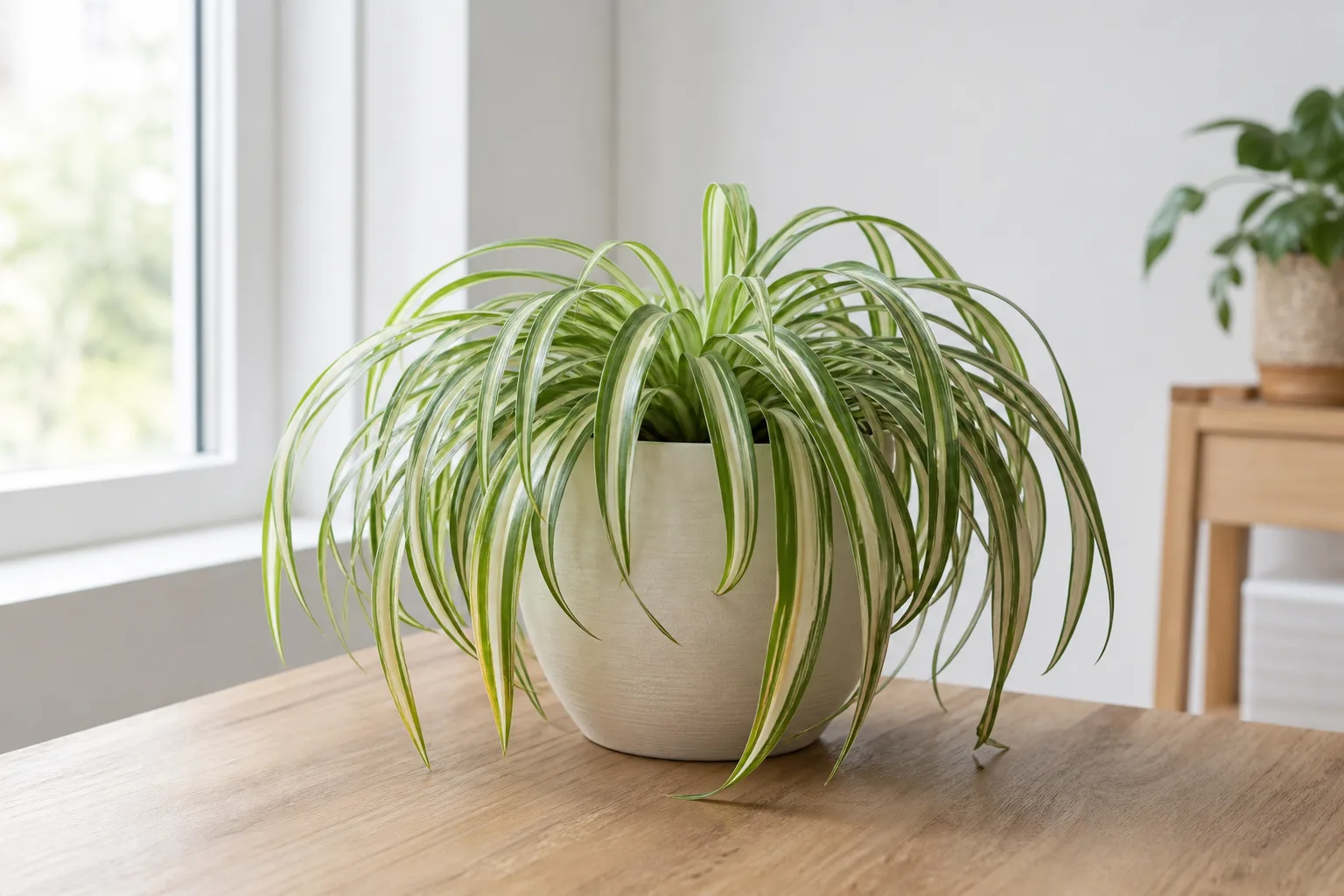
Drooping Leaves on Spider Plant: Causes, Checks & Fixes
This guide covers drooping leaves on Spider Plant. See also the general Drooping Leaves guide, watering, and light pages for this plant.
Drooping Leaves on Spider Plant: Causes, Checks & Fixes
Quick answer
Drooping arching leaves on Spider Plant mean the blades lost turgor-the internal water pressure that keeps strappy foliage stiff. Healthy plants cascade gracefully; limp, soft blades that hang straight down signal stress. The two most common causes pull in opposite directions: a light dry pot points to drought, while a heavy wet pot with limp yellow blades often means tuberous roots have failed even though the soil feels damp.
First step: push your finger 2 inches into the mix and lift the pot before you add water. Dry soil throughout calls for a thorough drink. Wet soil that has stayed saturated for days means stop watering and inspect tubers-not another splash from the watering can.
Why Spider Plant gets drooping leaves
Spider Plant stores reserve moisture in fleshy tuberous roots, so it tolerates brief dry spells better than many tropical houseplants. When those tubers run low, the long arching blades-often 12 to 18 inches on mature plants-lose rigidity first because they transpire faster than the root system can resupply water. Pale dull leaves paired with droop usually mean the plant needs a drink; the RHS notes spider plants are quick to revive after a thorough watering once drought is corrected.
The opposite failure is just as common indoors. Missouri Botanical Garden warns that spider plants are susceptible to root rot if waterlogged. Saturated mix deprives tuberous roots of oxygen; as tissue decays, uptake stops. Leaves droop despite wet soil-a pattern that tricks many owners into watering again and making rot worse.
Other spider-plant-specific triggers include:
- Root-bound crowded pots - Fleshy roots fill plastic hanging baskets quickly. The top dries fast while the core stays damp, producing limp lower leaves and stalled stolons.
- Repotting or division shock - Fine roots break during division. Temporary droop on arching blades is normal for several days while new roots grow.
- Cold exposure - NC State Extension recommends keeping temperatures above 45°F. A window draft or porch night below that range slows root function and causes limp foliage even when moisture looks adequate.
- Light mismatch - Too much direct sun scalds variegated blades and increases water loss. Too little light in winter slows evaporation, so soil stays wet longer and tubers suffocate.
- Saucers left full - Spider plants dislike standing in water. RHS guidance is to pour away excess after every watering.
What drooping leaves look like on Spider Plant
Normal cascade vs. problem droop: Healthy spider plants arch outward and downward with firm, slightly curved blades. Problem droop feels soft when you pinch a leaf-like a limp ribbon rather than a springy strap. The central groove along each blade may look flattened.
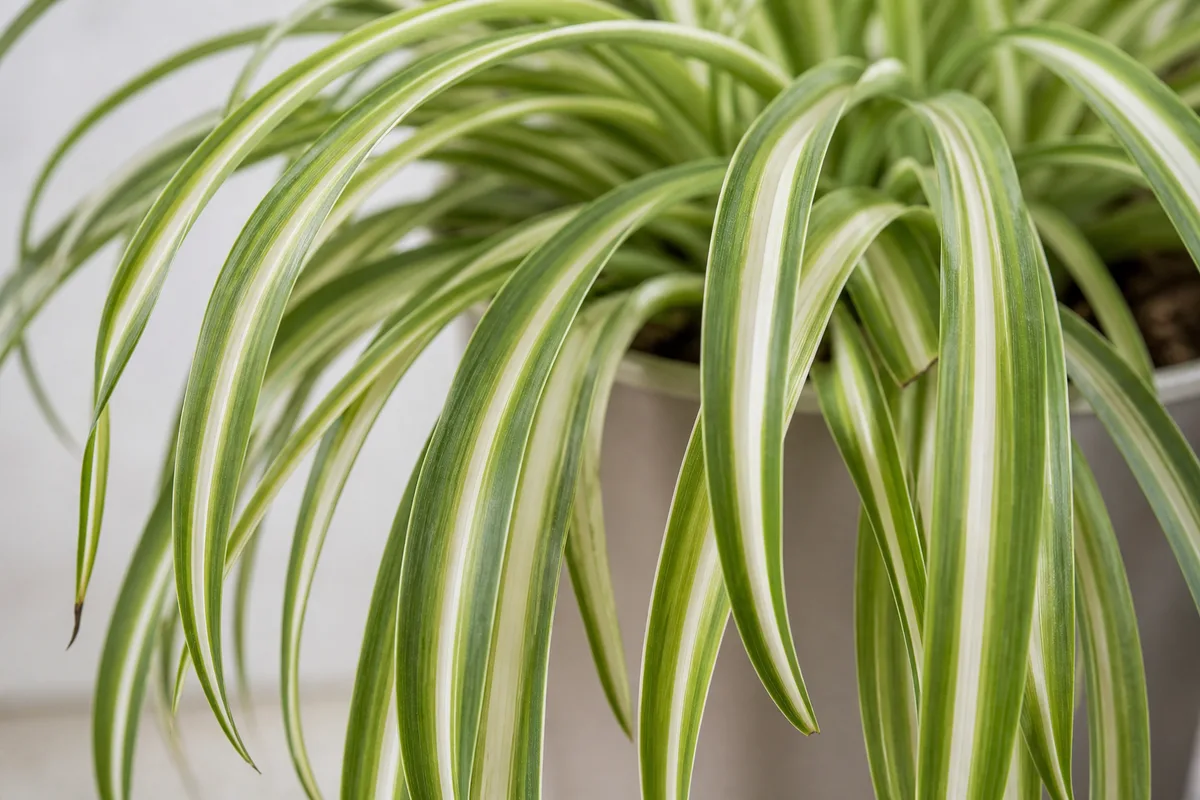
Drooping Leaves symptoms on Spider Plant - compare with healthy tissue on the same plant.
Drought droop:
- Pot feels light; soil is dry 2 inches down and sometimes pulled away from the pot edge
- Leaves may look dull or slightly pale before going fully limp
- Stolons and hanging plantlets droop at the same time as the mother rosette
- Blades often perk within hours after a deep watering if roots are still firm
Overwatering or rot droop:
- Pot stays heavy days after the last watering
- Mix smells sour or musty at the drainage hole
- Lower arching blades turn yellow while staying limp
- Stolons collapse; plantlets wilt even though soil surface looks moist
- Unpotting reveals brown, mushy tuberous roots instead of firm white storage tissue
Environmental droop:
- Sudden limpness after moving to a hot south window or cold AC blast
- Drooping within a day of repotting, with firm roots on inspection
- One side of the basket limp when leaves press against a cold pane
How to confirm the cause
Work through these checks in order before changing care:
- Moisture at depth - Surface crust can lie. Push your finger 2 inches into the mix or use a bamboo skewer. Dry throughout confirms drought. Damp or wet at depth with a heavy pot confirms saturation stress.
- Pot weight - Lift the hanging basket or pot. Light weight plus limp leaves means underwatering. Heavy weight plus limp leaves means root uptake failure, not thirst.
- Recovery test - If soil is dry and roots are firm, water thoroughly until drainage runs, then empty the saucer. Check turgor after 4 to 6 hours. Perking blades confirm drought was the cause.
- Tuber inspection - If droop persists 48 hours after proper dry-down, or soil has been wet for days, knock the plant out of its pot. Firm white tubers support recovery; mushy brown tissue confirms rot.
- Recent changes - Repotting within the last week, a new window seat, or a heat vent blowing on the basket explains temporary droop without root disease.
- Stolon pattern - When plantlets on long runners droop with the parent, the mother plant’s root zone is stressed-not an isolated leaf problem.
If dry soil, firm tubers, and quick recovery after one watering all align, drought was the cause. If wet soil, sour smell, and soft tubers align, treat as root stress before watering again.
First fix for Spider Plant
Push your finger 2 inches into the soil and note whether the pot is light or heavy-then act on that reading alone.
- Dry and light: Water until water runs from drainage holes. Empty the saucer or outer pot completely. Place the plant in bright indirect light while it rehydrates. Do not mist leaves as a substitute for root-zone water.
- Wet and heavy: Stop all watering. Do not fertilize. Move the plant to brighter indirect light so the mix dries faster. If droop continues after the top 2 inches have dried, unpot and trim mushy tubers before repotting in fresh well-draining mix.
Make one correction at a time. Do not repot, divide, fertilize, and prune on the same day a drooping basket appears.
Step-by-step recovery
After the first moisture check:
- For drought - If soil was bone dry, bottom-soak for 20 to 30 minutes if water ran straight through without absorbing. Then return to top watering when the top 2 inches dry.
- For rot - Trim every mushy tuber with sterilized scissors. Let cut surfaces air-dry overnight. Repot into a container sized to remaining roots with general-purpose well-draining mix. Wait one week before the first light watering.
- For root-bound stress - If tubers are firm but circling the pot and mix dries unevenly, repot one size up in spring using fresh mix. Water once after repotting, then let the top 2 inches dry before the next drink.
- For repot shock - Keep the plant in stable bright indirect light. Avoid moving it again for two weeks. Skip fertilizer until new firm blades emerge from the center.
- For cold draft damage - Move away from the cold pane or vent. Maintain room temperatures above 45°F. Do not overcompensate with extra water while roots recover from chill.
- Trim only after stability - Cut fully collapsed yellow blades once new growth looks firm. Older limp leaves may not re-stiffen even after the plant recovers.
If the mother plant is badly damaged but stolons carry healthy plantlets with root nubs, pot those plantlets separately as backup while you rehab the parent.
Recovery timeline
Simple drought droop often improves within 4 to 24 hours after a thorough watering when tuberous roots are healthy. Repot shock may take 5 to 10 days before arching blades regain their normal spring. Root rot recovery depends on how much firm tuber tissue remains-mild cases may show new center growth within two to three weeks; severe rot may require relying on plantlet propagation instead.
Judge success by new firm strappy leaves from the rosette center and stolons that hold plantlets upright-not by old blades returning to perfect arch.
Lookalike symptoms to rule out
Leggy pale growth - Stretched blades from low light stay somewhat firm but look thin and washed out. Move to brighter indirect light; this is not turgor loss from water stress.
Brown tips only - Spider plants are sensitive to fluoride in tap water and low humidity. Brown tips with otherwise firm arching leaves point to water quality or air dryness, not whole-plant droop.
Normal aging - One or two oldest lower blades slowly yellow and hang as the plant redirects energy. Widespread limpness across the rosette is different from gradual lower-leaf senescence.
Pest damage - Spider mites cause stippling and webbing more often than whole-plant collapse. Check leaf undersides before assuming water stress.
Mistakes to avoid
Do not water automatically because leaves look limp-wet soil plus droop means damaged roots, not thirst.
Do not leave saucers full after watering. Standing water keeps tubers anaerobic.
Do not repot into a much larger pot hoping to fix droop. Oversized containers stay wet too long in dim corners.
Do not fertilize a drooping plant to ” perk it up.” Stressed roots cannot use nutrients safely.
Do not prune all arching blades at once unless renovating a severely damaged plant. Leaves still photosynthesize during recovery.
How to prevent drooping next time
Water when the top 2 inches of soil are dry-roughly every 7 to 10 days in active growth, less in winter when growth slows. Use pots with drainage holes and empty saucers after every drink. Give bright indirect light so the mix dries predictably between waterings.
Repot every one to two years before fleshy tuberous roots burst plastic containers, especially hanging baskets where weight and drying speed matter. Avoid placing baskets against cold windows in winter or directly above heat vents.
Keep temperatures in the 55 to 70°F comfort range when possible, and never below 45°F for extended periods.
When to worry
Act within 24 hours if the entire basket collapses with sour wet soil-unpot and inspect tubers immediately. Seek backup propagation from healthy stolons if every tuber is mushy.
Droop that persists more than 48 hours after correct watering or dry-down needs a root inspection, not repeated surface checks.
Cold shock below 45°F with widespread limpness warrants moving the plant to a stable warm room and avoiding water until soil moisture is reassessed.
Single limp blades after a missed watering, with firm tubers and quick recovery after one deep drink, are routine-not an emergency.
Related Spider Plant guides
- Spider Plant overview
- Spider Plant watering
- Spider Plant light
- Wilting on Spider Plant
- Underwatering on Spider Plant
- Overwatering on Spider Plant
- Root Rot on Spider Plant
- All Spider Plant problems
Conclusion
Use this page to confirm drooping leaves on Spider Plant by pattern and pot checks-not by treating every houseplant the same. When symptoms overlap with sibling pages, follow the linked guide for the matching cause before stacking fertilizer, repotting, or pesticide.