Underwatering on Spider Plant: Causes, Checks & Fixes
Quick answer
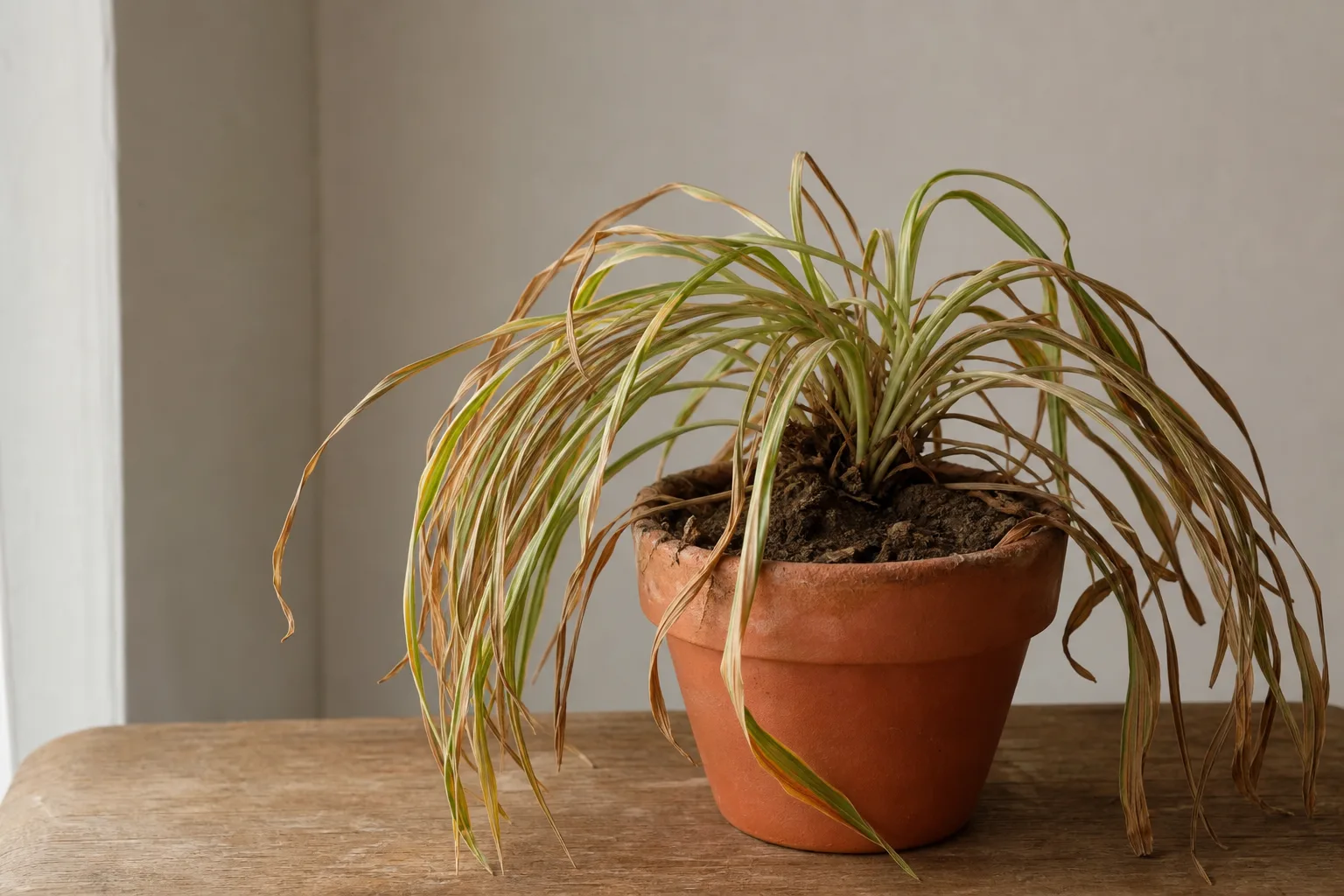
Spider Plant stores water in tuberous roots, so drought stress shows late-limp arching leaves, dry soil 2 inches down, and a very light pot. First step: water thoroughly until excess drains, empty the saucer, then wait for the top 2 inches to dry before the next drink.
Underwatering on Spider Plant: Causes, Checks & Fixes
This guide covers underwatering on Spider Plant. See also the general Underwatering guide, watering, and light pages for this plant.
Underwatering on Spider Plant: Causes, Checks & Fixes
Quick answer
Spider Plant is built for uneven moisture. Its fleshy tuberous roots store reserve food and water, and the species tolerates drought and dry soil better than most common houseplants. That storage system buys you time-but it also delays obvious symptoms until the mix has been dry long enough that even tubers cannot keep up.
Underwatering on Spider Plant usually looks like a feather-light pot, dusty dry soil 2 inches down, and limp, thin arching leaves with dry brown tips. Tuberous roots should still feel firm when you inspect them. If those signs line up, the first fix is simple: water thoroughly once until excess drains, then empty the saucer. Do not stack Spider Plant repotting guide, fertilizer, or daily half-cups on day one.
Why Spider Plant gets underwatered
Spider plants evolved along coastal margins of southern Africa with periodic rainfall rather than constant moisture. Thick, fleshy roots and rhizomes store water, letting the plant ride out dry stretches that would wilt a fern or calathea within a day. Clemson HGIC notes that spider plants form thick, fleshy tuberous roots that function as internal reservoirs.
That physiology changes how owners interpret thirst. A spider plant can look fine while soil is dry because tubers supply moisture internally-until suddenly it does not. Owners who rely on visible wilt as their only alarm often underwater repeatedly, giving a small sip when leaves finally droop, wetting only the surface while the root core stays dry.
Several home conditions push spider plants toward chronic dryness:
- Calendar neglect - forgetting the pot for two or three weeks because the plant “always bounces back”
- Hanging baskets in bright light - elevated pots with airflow on all sides dry faster than the same plant on a shelf
- Root-bound tuber masses - dense white tubers fill the pot; water channels down the sides without saturating the center
- Hydrophobic peat mix - after repeated drought, dry soil repels water and runoff fools you into thinking you watered well
- Winter misread - growth slows and you stretch intervals correctly, but heated dry air still pulls moisture from leaves while soil stays bone-dry too long
- Fluoride confusion - brown tips from tap water look like drought damage, so owners change nothing about actual soil moisture
Spider Plant uses water at a moderate rate in Spider Plant light guide and much less in cool, dim winter rooms. UF/IFAS recommends letting the upper inch of soil dry briefly between waterings-a dry-down rhythm, not perpetual dampness and not weeks of desert conditions either.
What underwatering looks like on Spider Plant
Symptoms build in a pattern that separates drought from rot or fluoride burn:
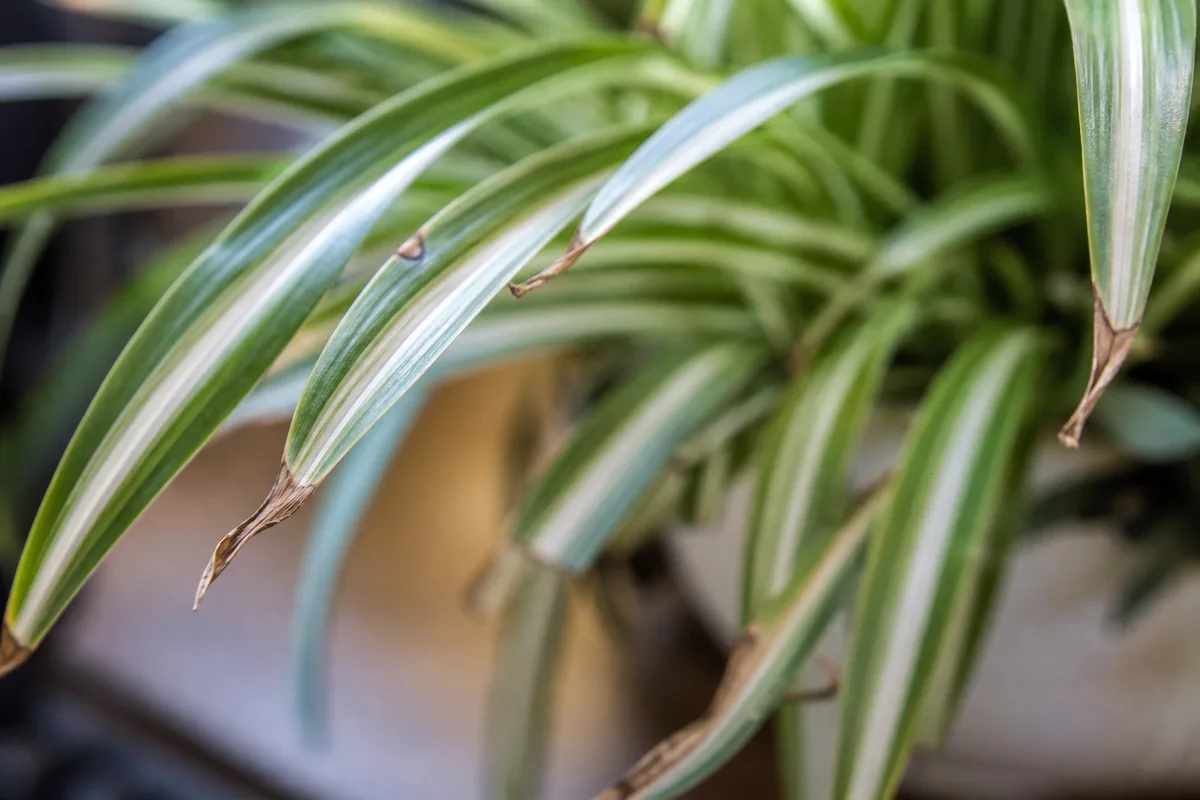
Underwatering symptoms on Spider Plant - compare with healthy tissue on the same plant.
Early to moderate underwatering:
- Arching strap leaves feel thin and flexible instead of firm
- Leaf margins or tips turn crispy and brown-dry to the touch, not soft
- Pot lifts noticeably lighter than after a fresh watering
- Top 1 to 2 inches of mix are dusty and crumbly; soil may pull slightly from the pot wall
- New leaves emerge smaller or slower during active season
- Spiderette production on stolons slows or stops
After repeated dry cycles:
- Lower leaves yellow and drop as the plant sheds tissue it cannot support
- Water runs straight through the pot in seconds without weighing it down
- Variegated cultivars like ‘Vittatum’ look pale or dull
- Stolons wilt along with foliage, not just outer leaves
What healthy tubers feel like during drought:
When you slide the plant partly out of the pot, underwatered spider plants still show white to pale tan tubers that are firm and plump, not hollow or mushy. Fine root hairs may be dry and brittle, but storage roots remain solid. That firm-tuber pattern is your best clue that thirst-not rot-is the primary problem.
Missouri Botanical Garden lists too little water as a cause of brown leaf tips, alongside low humidity and fluoride. Clemson HGIC also ties excessively dry soil to brown leaf tips. Context matters: tips on an otherwise well-watered plant with moist soil point to water chemistry; tips plus light pot and dry mix point to underwatering.
How to confirm underwatering
Work through these checks before you change your whole care routine:
- Finger or skewer test - Push into the mix to 2 inches. Dry and crumbly means water soon. Cool, clinging soil means wait.
- Pot weight - Lift the container. A very light pot after days without rain-level soaking strongly suggests dry roots.
- Drainage check - Water a small amount. If it exits the bottom in seconds and the pot still feels light, soil may be hydrophobic or channeling past a root-bound core.
- Tuber squeeze - Gently unpot or probe through the drainage hole. Firm tubers support drought diagnosis; brown mushy tissue means pivot to overwatering or rot protocol.
- Recovery test - One thorough soak should perk limp leaves within hours if roots are intact. No improvement after 24 hours with wet soil suggests root damage, not simple thirst.
- Environment cross-check - Bright south window, small hanging basket, or heating vent nearby increases dry-down speed. A floor pot in a cool north room dries far slower-compare similar placements, not generic blog schedules.
Confirmed underwatering requires dry soil at root depth plus firm tubers plus limp foliage that responds to one deep drink. Suspected drought without a recovery response after soaking means inspect roots before assuming more water will help.
First fix for Spider Plant
Water thoroughly until excess runs from drainage holes, then empty the saucer within 30 minutes.
That single action rehydrates fine roots and refills tuber reserves better than a week of shallow splashes. Move the pot to the sink or bathtub if needed so you can see drainage. Water slowly across the surface so mix wets evenly instead of tunneling down one crack.
If soil has shrunk away from the pot wall:
- Set the pot in a basin of water for 20 to 45 minutes so the mix wicks moisture upward, then let it drain fully, or
- Lightly break the dry surface crust with a fork before top-watering again.
After the soak, do not water again until the top 1 to 2 inches of mix feel dry. Spider plants prefer a real dry-down between drinks-allow soil to dry slightly between thorough waterings per Wisconsin Horticulture Extension, verified by finger checks rather than habit.
Do not fertilize a drought-stressed plant. Do not repot on day one unless the mix is completely hydrophobic and cannot be rewetted after two soak attempts.
Step-by-step recovery
After the initial thorough watering:
- Remove fully crisp leaves at the base with clean scissors. Brown tip tissue will not green up; trimming clarifies whether new growth emerges clean.
- Repeat slow top-watering once more if the first pass ran through too fast and the pot still feels oddly light.
- Move to appropriate light - bright indirect light supports recovery without scorching stressed leaves. Direct sun on dehydrated foliage worsens tip burn.
- Hold fertilizer until new leaves unfurl firm and green-usually two to four weeks in active season.
- Adjust check frequency - hanging baskets and small pots may need inspection every three to four days in warm growth season; large floor pots may go seven to ten days.
- Address water quality if tips persist on otherwise correctly timed moisture. Spider plants are sensitive to fluoridated tap water; fluoride does not evaporate from a resting jug the way chlorine can. Switch to rainwater or distilled water if tips keep browning on new leaves despite good dry-down discipline.
If the plant was root-bound and water never reached the core, plan a repot into a container one size larger with fresh well-draining mix after the plant stabilizes-typically one to two weeks post-recovery, not during acute wilt.
Recovery timeline
Mild dehydration often shows visible perk within hours of a proper soak. Leaves regain turgor overnight; brown tips remain but do not spread.
Moderate repeated drought may take three to ten days before new growth looks firm. Spiderette formation resumes once tubers refill and light is adequate.
Severe chronic dryness with shriveled but still firm tubers can need two to three weeks of consistent dry-down watering before the crown looks full again. If tubers are wrinkled and hollow or stems collapse at the soil line, recovery is uncertain-see when to worry below.
Judge success by new leaf tone and stolon vigor, not by old damaged tips turning green.
Lookalike symptoms to rule out
Overwatering - Heavy pot, sour smell, yellow soft lower leaves, wilting despite wet soil, and mushy brown tubers. Overwatering kills more spider plants indoors than drought. If soil is damp and leaves wilt, do not add more water.
Fluoride or salt tip burn - Brown tips on an otherwise turgid plant with moist soil and a normal-weight pot. University of Saskatchewan notes spider plants are sensitive to chlorine and fluoride in tap water. Tips on newest and oldest leaves alike after months of tap watering suggest chemistry, not thirst.
Low humidity alone - Dry indoor air can crisp tips while soil moisture is adequate. A humidity tray helps leaf edges but does not replace root-zone water. Confirm soil dryness before soaking.
root rot on Spider Plant from past overwatering - Wilting with damp soil means damaged roots cannot take up water. Inspect tubers; trim rot and repot dry if tissue is slimy.
Not enough light - Leggy pale growth and slow spiderette production overlap with drought stress but soil stays wet longer, not lighter. Move to brighter indirect light; watering more will not fix legginess.
Mistakes to avoid
Do not mist leaves instead of soaking dry roots-misting raises surface humidity briefly and does not rehydrate tubers.
Do not assume every brown tip means underwatering. Check soil depth and water chemistry before soaking an already-moist pot.
Do not give daily small cups that wet only the top inch. Spider plants need a full drink, then a dry-down.
Do not wait for dramatic wilt as your only trigger. Tuber storage masks thirst; use finger checks on a schedule.
Do not keep winter intervals so long that soil stays bone-dry for weeks in heated rooms. NC State advises to reduce watering during winter when growth slows-not to abandon the plant entirely.
Do not fertilize to “wake up” a dry plant. Rehydrate first; feed only after active new growth returns.
How to prevent underwatering next time
Build a check-first habit tied to Spider Plant overview’s storage roots:
- Test the top 1 to 2 inches before every drink; use pot weight as a second signal in hanging baskets.
- Expect faster dry-down in bright light, warm rooms, and small or terracotta pots.
- Stretch intervals in cool, dim winter months, but still verify soil-heated air dries surface mix even when roots use water slowly.
- Bottom-water or repot when water repeatedly runs through without weighing the pot down.
- Keep moderately moist during active growth without saturating tubers-MOBOT recommends watering well when in full growth and keeping moderately moist, which in practice means thorough soaks followed by real dry-down, not constant sogginess.
For hanging displays, take the basket to the sink on a regular check day rather than dribbling small amounts from a step stool. Spider plants in baskets often dry faster because airflow surrounds the container.
When to worry
Act urgently if stems collapse at the crown, tubers feel hollow or shriveled like deflated pods, or leaves stay limp 24 hours after a confirmed thorough soak with waterlogged saucer emptied. Those signs point to root death from past rot or extreme desiccation-not a simple missed drink.
Repotting may be necessary if hydrophobic soil cannot rewet after two soak cycles and the root ball remains dusty dry in the center. Trim any mushy tissue; keep firm tubers only.
Spider Plant is resilient when storage roots survive. One corrected soak fixes most early drought. Weeks of repeated wilt-and-sip cycles without soil checks are what turn a forgiving plant into a rescue case.
Conclusion
Underwatering on Spider Plant hides behind tuberous roots that buffer short droughts. When limp arching leaves, a light pot, and dry soil 2 inches down finally appear, one thorough watering with full drainage is the right first move-not misting, not fertilizer, and not daily shallow splashes. Confirm firm tubers, rule out overwatering and fluoride tip burn, then settle into a seasonal dry-down rhythm verified by touch and pot weight. Get that check habit right and Chlorophytum comosum will keep producing arching leaves and spiderettes with the same tolerance that made it a beginner classic-without pushing that tolerance into repeated neglect.
When to use this page vs other Spider Plant guides
- Spider Plant watering guide - Use for routine moisture checks before assuming underwatering is the main issue.
- Spider Plant problems hub - Browse all 4 common issues on this species.
- Brown Tips on Spider Plant - Different entry point when symptoms overlap with underwatering.
- Yellow Leaves on Spider Plant - Different entry point when symptoms overlap with underwatering.