Overwatering on Spider Plant: Causes, Checks & Fixes
Quick answer
Overwatering keeps Spider Plant tuberous roots in soggy soil until they rot. Stop watering, let the top 2 inches of mix dry completely, empty saucers, and unpot only if tubers feel soft or leaves wilt while soil stays wet.
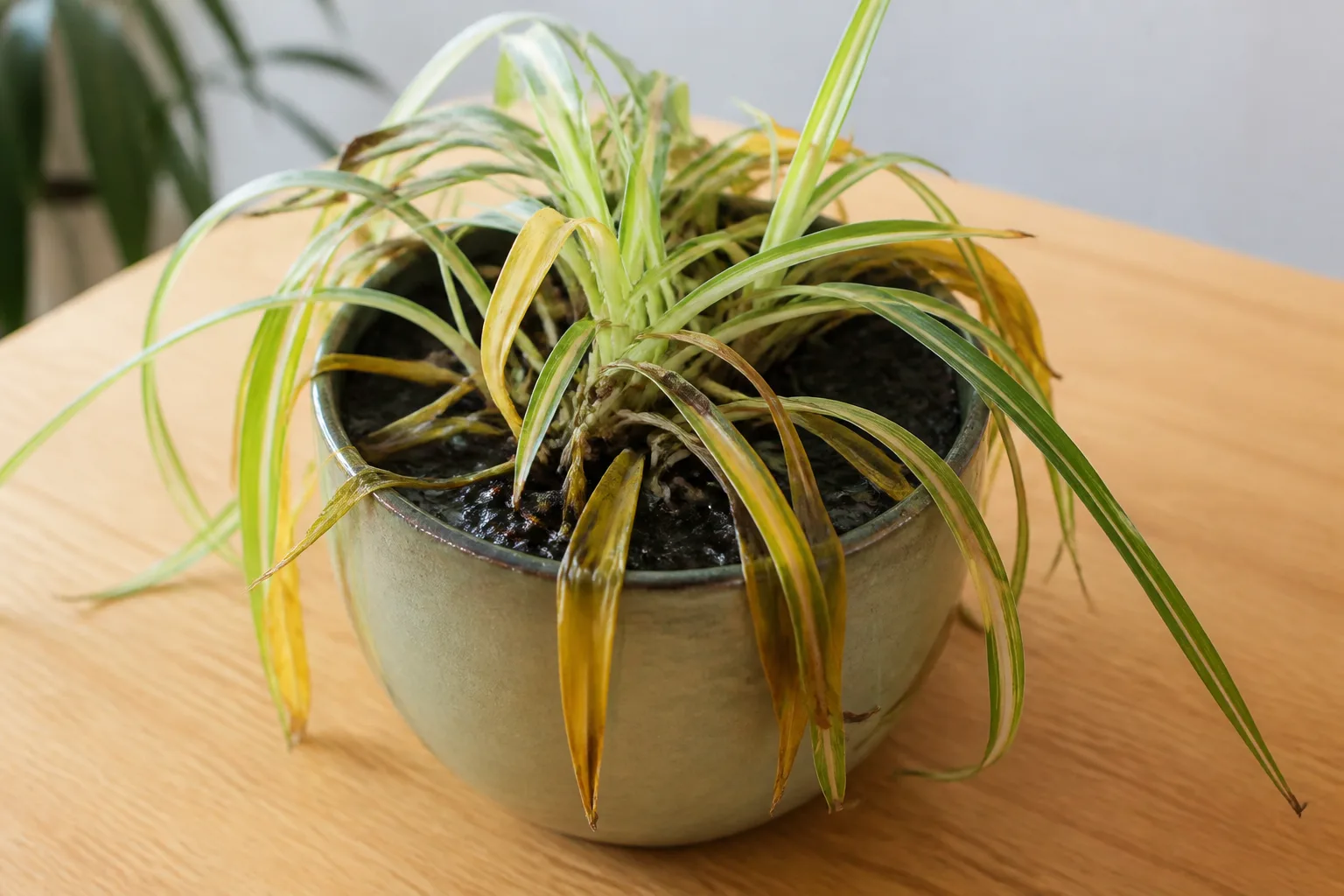
Overwatering on Spider Plant: Causes, Checks & Fixes
This guide covers overwatering on Spider Plant. See also the general Overwatering guide, watering, and light pages for this plant.
Overwatering on Spider Plant: Causes, Checks & Fixes
Quick answer
Spider Plant is drought-tolerant thanks to thick, fleshy tuberous roots that store water, but those same roots fail fast in stagnant wet mix. Overwatering is not a cosmetic issue-it is the main route to tuber rot on an otherwise forgiving houseplant.
First fix: stop watering and let the top 2 inches of soil dry completely. Empty any water sitting in the saucer. Move the plant to brighter indirect light so the remaining moisture evaporates faster. Do not repot, fertilize, or trim heavily on day one unless tubers already feel soft when you inspect the root ball.
If leaves yellow, arching foliage goes limp, or the pot stays heavy while the surface looks damp, you are past a simple dry-down-unpot and check every tuber before the next drink.
What overwatering looks like on Spider Plant
Spider Plant symptoms from too much water differ from succulents that shrivel when dry. This plant often stays plump while roots suffocate underground.
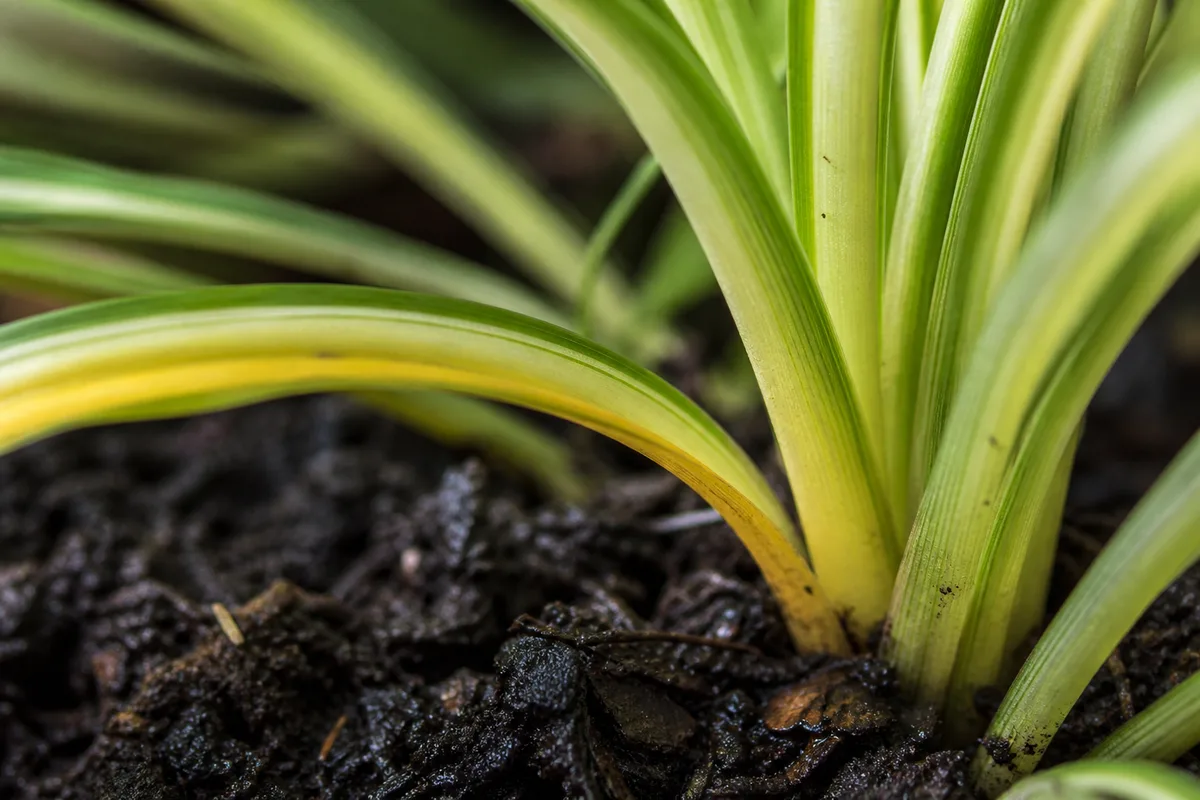
Overwatering symptoms on Spider Plant - compare with healthy tissue on the same plant.
Early signs:
- Mix stays wet on the surface for several days after you watered
- Pot feels heavy when lifted, even though you have not watered recently
- Lower arching leaves turn pale green or yellow while still soft, not crispy
- New growth slows; fewer plantlets form on stolons
- White mold on soil surface or fungus gnats hovering near the pot
Advanced signs:
- Graceful arching leaves collapse suddenly despite wet soil
- Sour or musty odor from the root zone
- Plantlets on hanging stolons wilt while the mother pot is still moist
- Black or brown mushy tubers when you knock the plant out of its pot
Yellow leaves alone do not prove overwatering-Spider Plant also yellows when root-bound or when fluoride in tap water browns tips. The pattern matters: yellow soft leaves plus soil that never dries points to waterlogged tubers, not drought.
Why Spider Plant gets overwatered
Spider Plant evolved with periodic moisture, not constant saturation. Its fleshy tuberous roots absorb water quickly and release it slowly when soil dries. That storage makes the plant look fine for days after you overdo it, which encourages more watering.
Common triggers in real homes:
Calendar watering. Watering every Sunday regardless of soil moisture fails in cool, dim winter rooms where the plant uses little water. Clemson Extension notes that root rot usually results from soil that does not drain quickly or from excessive watering-not from one accidental splash.
Low light plus wet soil. A spider plant in a dark corner evaporates moisture slowly. Leaves may look thirsty while tubers sit in anaerobic mix. Bright to medium indirect light helps the pot dry predictably between drinks.
Oversized pots and poor drainage. A decorative cache pot without holes, or a container much larger than the root ball, holds water around tubers long after the surface looks fine. NC State recommends moist, well-drained soil during active growth-moist means evenly damp after watering, not soggy days later.
Winter watering at summer rates. Shorter days and cooler rooms slow growth. Continuing the same Spider Plant watering guide from summer pushes tubers into rot while top growth stalls.
Crowded tuberous roots in plastic. Spider plants form thick fleshy tubers that eventually fill a pot. A root-bound plant in non-porous plastic can stay wet in the center even when the top inch feels dry-another reason to check 2 inches deep, not just the surface.
How to confirm the cause
Work through these checks before changing pots or cutting roots:
-
Finger test at 2 inches. Insert your finger or a bamboo skewer deep into the mix. If it comes out dark and clinging, the root zone is still wet. Bone dry at 2 inches with firm tubers suggests underwatering or hydrophobic dry pockets instead.
-
Pot weight. Lift the pot after you think it should have dried. A heavy pot days after watering confirms saturation.
-
Saucer check. Water standing under the pot keeps the bottom layer saturated even if the top looks lighter.
-
Leaf texture. Overwatered leaves feel soft and limp; underwatered leaves feel thin and may crisp at tips. Wilting with wet soil means damaged roots, not thirst.
-
Smell and pests. Sour odor, fungus gnats, or surface mold strongly support chronic wet soil.
-
Tuber inspection. Slide the plant out gently. Healthy tubers are firm and white or tan. Mushy brown or black tissue confirms advanced overwatering and possible rot-see the root rot page if most of the root system has failed.
If soil is dry, tubers are firm, and only leaf tips are brown, fluoride or chlorine in tap water may explain tip burn rather than overwatering.
First fix for Spider Plant
Stop all watering until the top 2 inches of mix are dry.
That single pause breaks the cycle that keeps tubers oxygen-starved. While you wait:
- Pour out saucer water and remove the pot from any sealed outer container
- Move to brighter indirect light-not hot direct sun-to speed evaporation
- Do not mist leaves or add fertilizer; stressed tubers need dry soil, not more inputs
After the top 2 inches feel dry, give one modest drink until a little water exits the drainage holes, then discard runoff. Resume checking depth before every future watering.
Unpot only if leaves collapse while soil is still wet, the mix smells sour, or tubers feel soft when you probe through the drainage hole with a finger. Mild overwatering often resolves with a dry-down and corrected schedule-Spider Plant repotting guide wet soil on day one spreads rot.
Step-by-step recovery
If inspection shows soft tubers or persistent wilt with wet mix:
- Knock the plant out and brush away wet soil without tearing healthy roots.
- Trim mushy tubers with clean scissors until only firm tissue remains. Sterilize blades between cuts if rot is extensive.
- Air-dry overnight on newspaper so cut surfaces callus.
- Repot into fresh well-draining general-purpose mix in a pot sized to the remaining root mass-not a much larger container.
- Wait one week before the first light watering when the top 2 inches are dry again.
- Save healthy plantlets from stolons if the mother plant lost most of its tubers. Root firm plantlets in moist mix as backup stock.
Hold fertilizer until new arching leaves unfurl firmly and the plant has gone through at least one full dry-down cycle without wilting.
Recovery timeline
Minor overwatering without tuber damage often shows improvement within two to three weeks once soil dries and watering follows the 2-inch rule. Yellow lower leaves may not green up again-judge progress by firm new growth from the center and stable stolons, not old discolored foliage.
Moderate tuber trimming adds another two to four weeks before the plant looks full again. Severe rot where most tubers were removed may take a full growing season; rely on plantlets if the mother crown stays weak.
Signs recovery is working: mix dries on schedule, new leaves emerge green and firm, plantlets on stolons stay turgid, no sour smell, firm tubers on spot checks.
Signs the problem is worsening: spreading yellowing up the plant, crown softness, stolons collapsing while soil stays wet, gnats increasing, or more mushy roots on re-inspection.
Lookalike symptoms to rule out
Underwatering leaves mix dusty dry at 2 inches, tubers still firm, and leaf tips may crisp. The plant perks up within hours after a thorough drink.
Root-bound stress causes yellow lower leaves in an otherwise healthy watering rhythm. Roots circle the pot densely; tubers are firm, not mushy. Repot when crowded-not because soil is wet.
Fluoride or chlorine tip burn shows brown leaf tips with firm green bases and no soggy soil odor. Switch water source if tips brown while moisture checks look normal.
Low light produces pale stretched leaves and slow plantlet production without sour soil. Brighter indirect light fixes structure; it does not replace fixing wet roots.
Root rot (advanced overwatering) overlaps heavily with chronic overwatering but means tubers have already decayed. Treat with trim-and-repot; prevention is the dry-down schedule above.
Mistakes to avoid
Do not keep watering because arching leaves look limp when soil is already wet-that mimics thirst while roots drown.
Do not repot into a much larger pot to “give roots room.” Extra wet mass around tubers slows drying.
Do not rely on moisture meters alone without finger checks at 2 inches; surface readings mislead in root-bound pots.
Do not mist the soil or leaves instead of fixing drainage and watering rhythm.
Do not fertilize a yellowing plant hoping to green it up. Feed only after moisture and roots stabilize.
Do not assume a hanging basket dries faster. Dense foliage can shade the pot lip and trap moisture in the center.
How to prevent overwatering next time
Build a routine around the pot, not the calendar:
- Check the top 2 inches before every major watering-the upper inch of soil should dry out briefly between waterings, roughly every 7–10 days in active growth, less in cool dim winter months
- Use pots with drainage holes and empty saucers within 30 minutes
- Keep Spider Plant in bright to medium indirect light so mix dries predictably
- Reduce watering frequency when growth slows in winter
- Repot before tuberous roots burst plastic pots that hold moisture
- Divide crowded clumps in spring so each section has room to dry evenly
Spider Plant is non-toxic to cats and dogs, so it is safe to hang while you adjust watering-but a high shelf does not fix a pot that never dries.
When to worry
Treat overwatering as urgent when soil smells sour, the crown feels soft, leaves collapse overnight with wet mix, or more than half of visible tubers are mushy after inspection. At that point, trim, repot dry, propagate plantlets, and accept that severely rotted mother plants may not fully recover.
If only the top layer was wet and tubers stayed firm, a dry-down and schedule change is usually enough-no need to panic or stack repotting, pruning, and fertilizer on the same day.
When to use this page vs other Spider Plant guides
- Spider Plant watering guide - Use for routine moisture checks before assuming overwatering is the main issue.
- Spider Plant problems hub - Browse all 4 common issues on this species.
- Root Rot on Spider Plant - Different entry point when symptoms overlap with overwatering.
- Yellow Leaves on Spider Plant - Different entry point when symptoms overlap with overwatering.