Fungus Gnats on Spider Plant: Causes, Checks & Fixes
Quick answer
Fungus gnats on Spider Plant mean the top of the mix stays damp too long-often from calendar watering or low light slowing dry-down. First step: stop watering until the top 2 inches of soil are completely dry, then resume on a dry-down schedule.
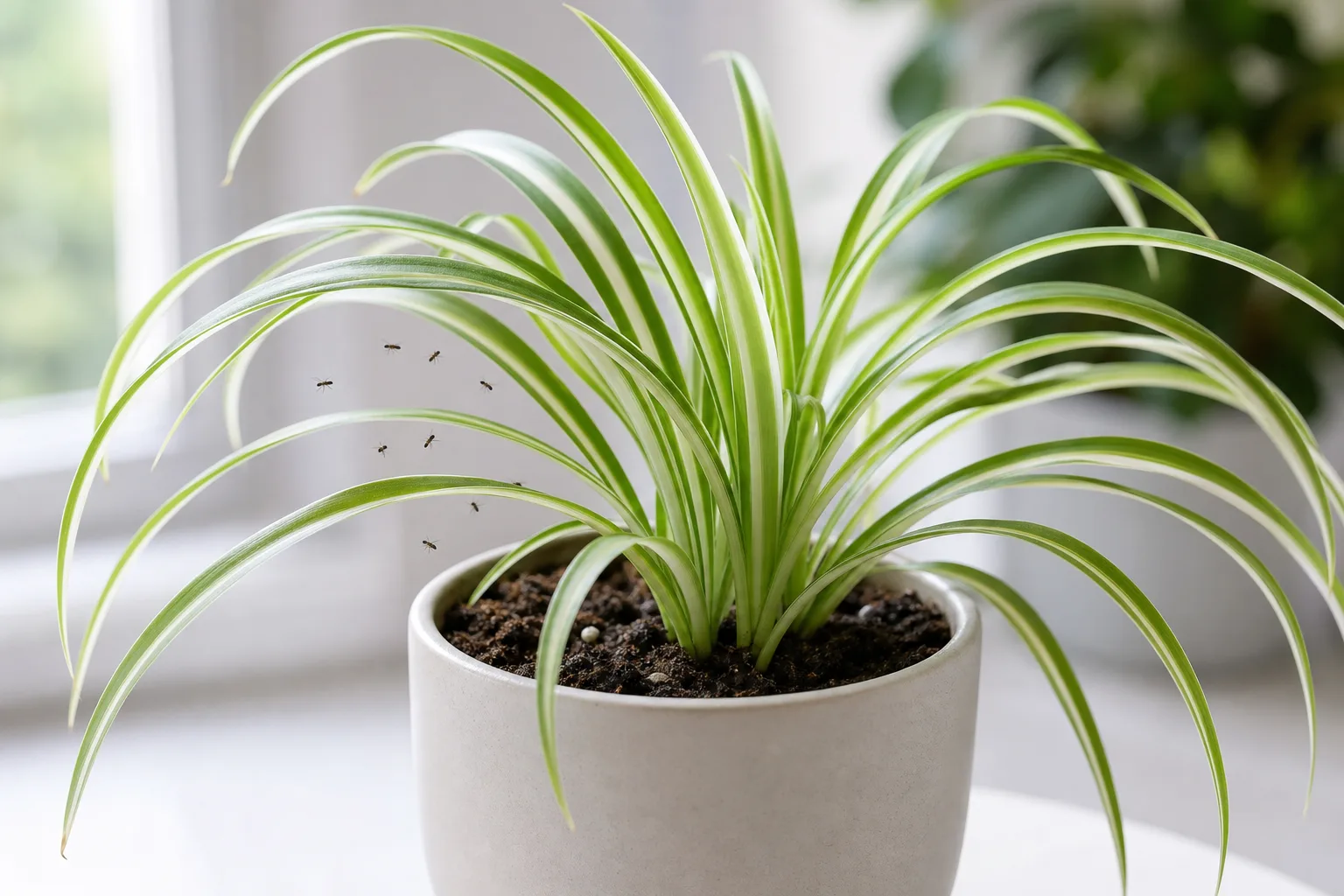
Fungus Gnats on Spider Plant: Causes, Checks & Fixes
This guide covers fungus gnats on Spider Plant. See also the general Fungus Gnats guide, watering, and light pages for this plant.
Fungus Gnats on Spider Plant: Causes, Checks & Fixes
Quick answer
Fungus gnats around Spider Plant are a moisture alarm, not a mysterious pest invasion. These tiny flies lay eggs in damp organic potting mix; their larvae feed on fungi, decaying matter, and sometimes tender roots in the top layer of soil. On Spider Plant, gnats almost always mean the surface of the mix has stayed wet too long-usually from watering on a calendar, an oversized pot, or dim light that slows evaporation around a dense clump of tuberous roots.
First step: stop watering until the top 2 inches of soil are completely dry. Spider Plant stores reserve food in fleshy tuberous roots and tolerates drought and dry soil better than it tolerates soggy mix. Once the surface dries, resume watering only when that same depth feels dry again-not on a fixed weekly schedule.
What fungus gnats look like on Spider Plant
Adult fungus gnats are small, dark, mosquito-like flies roughly 1/8 inch long. They hover near the soil surface, windows, and lamps, and they scatter when you water or bump the pot. On a hanging Spider Plant basket, you may notice them first around the drip line below the container rather than on the arching leaves themselves-the flies are tied to soil, not foliage.
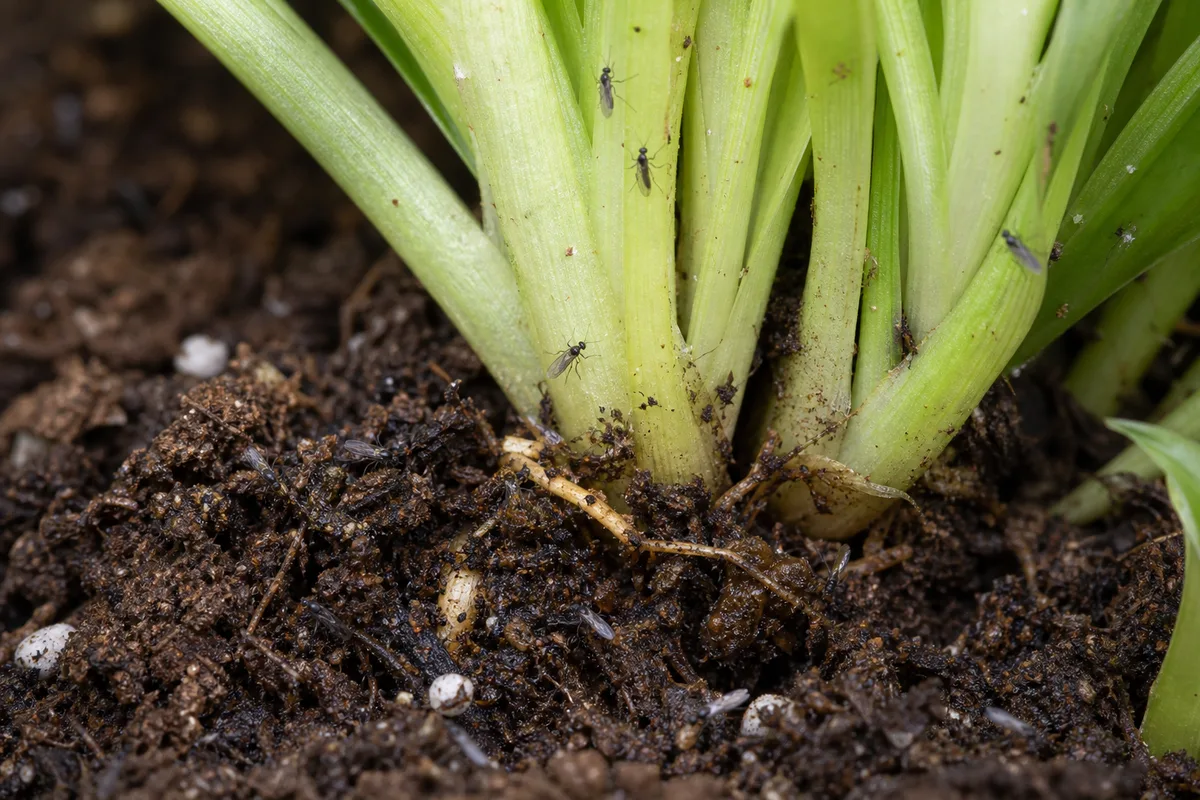
Fungus Gnats symptoms on Spider Plant - compare with healthy tissue on the same plant.
Larvae live in the top 1–3 inches of mix. They are slender, translucent, and legless with a dark head-visible if you scrape back a little surface soil with a spoon. Heavy infestations sometimes coincide with white mold on the soil surface, since both thrive in the same damp organic layer.
Spider Plant leaves rarely show direct gnat damage early on. Instead, watch for secondary stress: pale or yellow lower leaves, stalled spiderette production, or plantlets on stolons wilting while soil below stays damp. Those patterns point to root-zone moisture problems gnats share-not bite marks on the strappy blades.
Why Spider Plant gets fungus gnats
Spider Plant is not uniquely susceptible to gnats, but its typical home setup makes wet-surface breeding common.
Calendar watering in low light. Many Spider Plants live in hanging baskets or on shelves with medium to bright indirect light-but plenty sit in dim corners where water use drops sharply. If you still water every seven days because the label said so, the top of peaty general-purpose mix stays damp and becomes prime egg-laying habitat.
Dense tuberous root mass. Mature plants develop thick fleshy tuberous roots that fill pots quickly. A crowded root ball holds moisture in the center even when the surface looks dry, which encourages fungus growth that larvae feed on. The same crowded, slow-drying conditions that lead to root-bound stress also extend gnat breeding windows.
Hanging basket airflow. Baskets look airy, but the soil surface under a full cascading plant can stay shaded and humid. Saucers or drip trays that hold runoff keep the bottom of the mix wet and wick moisture upward.
Spiderettes and propagation trays. Baby plantlets rooted in small cups of moist mix, or mother plants with multiple offsets sharing one pot, add extra wet soil surfaces in the same room-gnats spread easily between containers.
Overwatering overlap with root rot. Spider Plant is susceptible to root rot if waterlogged. Chronic surface wetness that breeds gnats is the same condition that rots tuberous roots. Treat gnats as an early warning, not a standalone nuisance.
How to confirm the cause
Work through these checks before reaching for sprays:
- Fly behavior - Gnats rise from the pot when watered or disturbed. Fruit flies hover around kitchen waste, not consistently from one plant pot.
- Surface moisture - Push your finger 2 inches deep. If the top layer has stayed wet for three or more days after watering, conditions favor gnats.
- Larva check - Scrape the top half-inch of mix in one spot. Glossy white larvae confirm breeding in that pot-not a fly that wandered in from elsewhere.
- Pot weight and drainage - Lift the basket. A heavy pot days after watering suggests poor drainage or an oversized container. Confirm drainage holes are open and saucers are emptied.
- Plant health cross-check - Firm white tuberous roots on inspection mean gnats are likely cosmetic so far. Soft brown tubers or sour smell mean overwatering damage needs priority over trap placement.
- Room scan - If only the Spider Plant pot produces flies when covered overnight with a loose bag or screen, that pot is the source. Multiple wet pots in one room may all need dry-down treatment.
First fix for Spider Plant
Stop watering until the top 2 inches of soil are completely dry throughout the pot.
This single change breaks the larval life cycle-eggs and larvae in the surface layer cannot survive extended dry periods. Spider Plant’s tuberous roots buffer short dry spells better than repeated soggy cycles. Check moisture at the same 2-inch depth you use for normal care, not just the surface crust.
After the dry-down, water thoroughly until a little runs from drainage holes, then discard saucer water. Do not resume calendar watering-wait until the top 2 inches feel dry again. In most indoor homes with bright indirect light, that rhythm lands roughly every 7–10 days during active growth, but the pot-not the clock-decides.
Secondary steps if gnats persist
Once the dry-down cycle is established, add these in order if adults still appear after one to two weeks:
Yellow sticky traps. Place small yellow sticky cards just above the soil surface near the pot rim. They catch egg-laying adults and show whether numbers are falling. Replace traps when coated; they monitor progress but do not replace drying the soil.
Bottom watering for a few cycles. Set the pot in a tray of water for 15–30 minutes so roots absorb moisture from below while the surface stays drier. Useful for hanging baskets where top-down watering soaked the surface too often.
BTI drench for heavy larval loads. Products containing Bacillus thuringiensis israelensis (Bti), such as mosquito bits soaked and poured through the mix, target larvae in soil. Apply on a label schedule-typically every five to seven days for several applications-while keeping the dry-down rhythm. Bti is compatible with pet-safe Spider Plant placement when used as directed.
Surface barrier or top-dress refresh. A thin layer of coarse sand or fine gravel on the surface, or replacing the top inch of old wet mix with dry fresh mix, makes egg-laying harder. Scrape away algae, dead leaf bits, and moldy crust before top-dressing.
Repot only when mix will not dry. If the pot is oversized, drainage is blocked, or peaty mix stays wet more than a week despite corrected watering, repot into fresh well-draining general-purpose mix in a container one size up at most-but only after a dry-down cycle, not as a day-one reflex.
What not to do
Do not spray the arching leaves with insecticidal soap or neem for fungus gnats-the pest lives in soil, not on Spider Plant foliage. Do not keep watering because the plant “looks thirsty” while the top 2 inches are still damp; that extends gnat breeding and tuber rot risk. Do not rely on traps alone without fixing moisture. Do not drench repeatedly with hydrogen peroxide instead of drying soil-it may kill some larvae briefly but does not fix the habitat. Do not assume gnats mean the plant is doomed; mature Spider Plants recover well once soil dries and root tissue stays firm.
Recovery timeline and signs of improvement
Expect three to four weeks of consistent dry surface conditions before adult counts drop noticeably. Gnats overlap life stages, so flies may appear in waves even after you correct watering.
Signs the fix is working: Fewer adults on traps each week, surface mix dry within two to three days after watering, firm tuberous roots on spot checks, and new strappy leaves or spiderettes emerging without yellowing.
Signs the problem is worsening: Increasing fly numbers despite dry surface, sour-smelling mix, yellow arching leaves with wet soil, soft tubers, or wilting plantlets while the pot feels heavy. Those warrant unpotting to inspect roots and possibly trimming rot before repotting dry.
Lookalike problems
Fruit flies cluster around ripening produce or compost bins, not consistently from one houseplant pot. Cover the Spider Plant overnight-if no flies accumulate under the cover, kitchen fruit flies are the likely source.
Shore flies resemble fungus gnats but breed in algae on constantly wet surfaces; more common in greenhouse trays than typical indoor baskets.
White mold on soil often shares the same wet-surface cause as gnats. Mold alone is usually harmless to firm tubers, but it confirms the mix is staying damp too long.
Overwatering without gnats still damages Spider Plant through tuber rot and yellow leaves. The care fix-dry-down watering-is the same even when no flies are visible.
How to prevent fungus gnats next time
Match watering to how fast your specific pot dries in its actual light spot. Bright indirect light speeds evaporation; dim corners need longer intervals between drinks. Empty saucers and drip trays after every watering. Remove fallen leaf debris from the soil surface so it does not hold moisture. Quarantine new nursery plants for two to three weeks before hanging them near established baskets. When propagating spiderettes, avoid leaving small cups of saturated mix on windowsills for weeks-move rooted plantlets to proper containers and let surfaces dry between waterings. Repot before tuberous roots crowd the container so the mix dries evenly.
Spider Plant is non-toxic to cats and dogs, so yellow sticky traps and Bti drenches used as directed are practical in pet-friendly homes-place traps where curious pets cannot stick paws or noses to them.
When to worry
Escalate beyond basic dry-down and traps when gnats swarm daily for more than a month despite corrected watering, when soil stays sour or tubers feel mushy, or when the plant yellows and wilts with wet mix. At that point, inspect roots, trim any rot, repot into fresh mix, and treat larvae with Bti while the plant recovers in brighter indirect light. If every tuber is soft and no firm tissue remains, propagate healthy spiderettes from stolons and discard the rotted mother plant.
Related Spider Plant guides
- Spider Plant overview
- Spider Plant watering
- Spider Plant light
- Overwatering on Spider Plant
- Mold On Soil on Spider Plant
- Root Rot on Spider Plant
- All Spider Plant problems
Conclusion
Use this page to confirm fungus gnats on Spider Plant by pattern and pot checks-not by treating every houseplant the same. When symptoms overlap with sibling pages, follow the linked guide for the matching cause before stacking fertilizer, repotting, or pesticide.